
What was here?
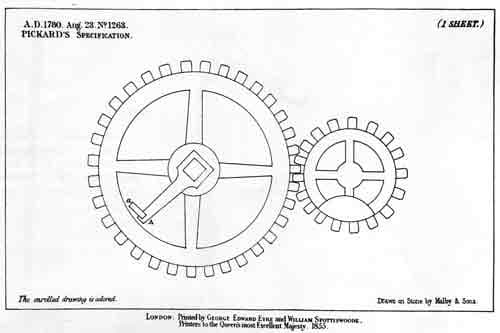
A mill, and later a bakehouse, belonging to the button maker and miller James Pickard. Its steam engine, built by Matthew Wasbrough of Bristol, was the subject of the 1780 ‘crank patent’ that pushed Boulton & Watt to use the sun-and-planet gear.
History
Matthew Wasbrough erected one of his ratchet-wheel steam engines at Birmingham in 1778 or 1779; Samuel Smiles places it with a manufacturer on Snow Hill. The ratchets kept breaking, and in 1780 the people running the engine replaced them with a simple crank, keeping the flywheel. Pickard patented a crank arrangement on 23 August 1780. Boulton called the partners the “Snow Hill Company” in a draft arbitration paper of April 1781. In June 1795 a crowd of about a thousand, many of them women, forced their way into James Pickard’s mill and bakehouse in Snow Hill, protesting against his new small loaf; troops fired and two rioters were shot. The mill was looted again in 1800.
What happened here?
Rotary steam power by crank and flywheel, 1780; bread riots, 1795 and 1800.
Why it mattered
A steam engine turning a mill directly, rather than pumping water for a waterwheel, pointed to the steam-powered factory.
Why it disappeared
Railway changes · Redevelopment
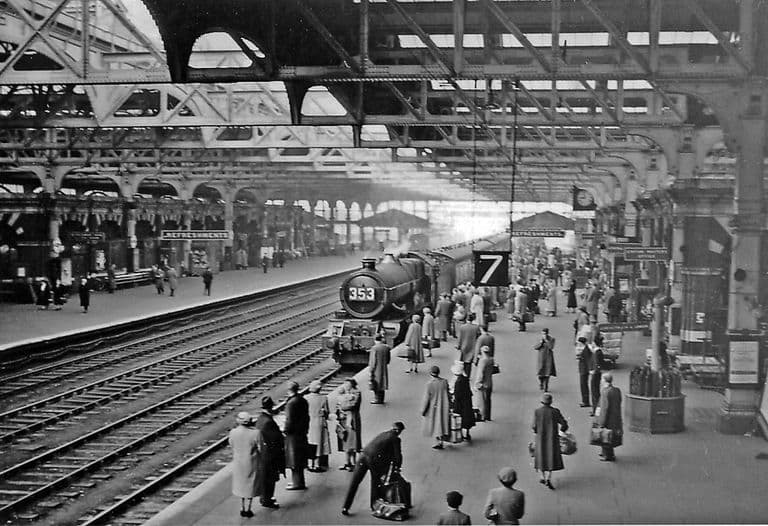
Snow Hill was transformed by the railway from 1852 and again by the inner ring road and office building of the late twentieth century.
What’s there now
What survives
Nothing known.
Today
The old street of Snow Hill is followed roughly by Snow Hill Queensway, beside Snow Hill station and its office towers.
Key dates
- 23 August 1780 — Pickard’s ‘crank patent’James Pickard of Snow Hill, button maker, patents a way of making a steam engine turn wheels (no. 1263), after a crank was fitted to Matthew Wasbrough’s engine at his mill. Watt claims the idea was leaked from Soho and avoids the crank with the sun-and-planet gear.
Sources and further reading
The Victoria County History says only “in Snow Hill”. Grace’s Guide and others say the works stood on the site of today’s Snow Hill station; we have not found the evidence for that, so the pin marks the old street. Whether the 1780 engine and the 1795 mill were on the same premises is likely but not proven.
- A Treatise on the Steam Engine, Historical, Practical, and Descriptive — John Farey, Longman, Rees, Orme, Brown and Green, London, 1827
- Lives of Boulton and Watt — Samuel Smiles, John Murray, London, 1865
- Industrial Revolution: A Documentary History, Series One, Part 12: Boulton & Watt Correspondence and Papers (MS 3147/3/1–79) — detailed listing — Adam Matthew Publications, with listings by the Archives of Soho Project, Adam Matthew. Ref. Library of Birmingham MS 3147/3
- A History of the County of Warwick, vol. 7: The City of Birmingham — Political History to 1832, pp. 270–297 — W. B. Stephens (ed.), Victoria County History, 1964
- James Pickard — Grace’s Guide to British Industrial History
Archive references: Library of Birmingham MS 3147/3/5
Comments
Comments will load here.