
What was here?
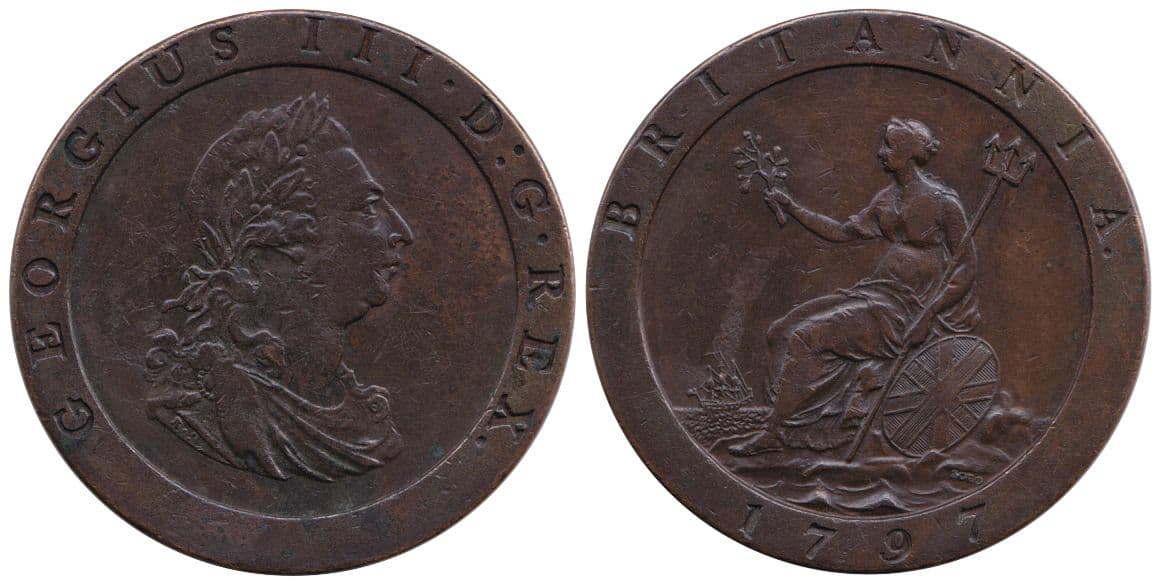
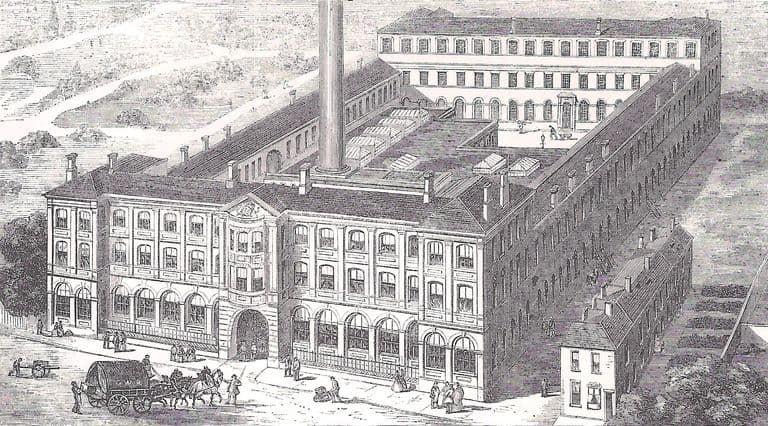
A steam-powered coining works hidden among the garden buildings between the Soho Manufactory and Soho House. From 1788–89 Boulton’s presses struck tokens, medals and coins for Britain and the world, including the famous 1797 ‘cartwheel’ penny. It closed in 1849, and its remains lie under private gardens off South Road.
History
A country awash with fakes
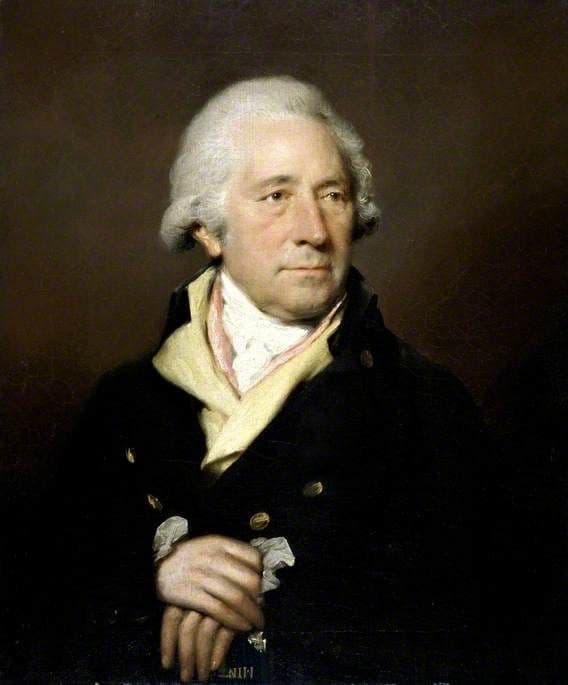
By the 1780s Britain’s small change was a joke. When the Royal Mint sampled halfpennies in 1787, it found only about eight per cent were genuine. Matthew Boulton saw a problem and a market, and his answer was machinery.
He had been striking trade tokens since 1772. In 1786 he made blanks for East India Company coin for Bencoolen in Sumatra, though the coins themselves were struck by hand in London. Now he wanted to do the whole job.
Hidden in the garden
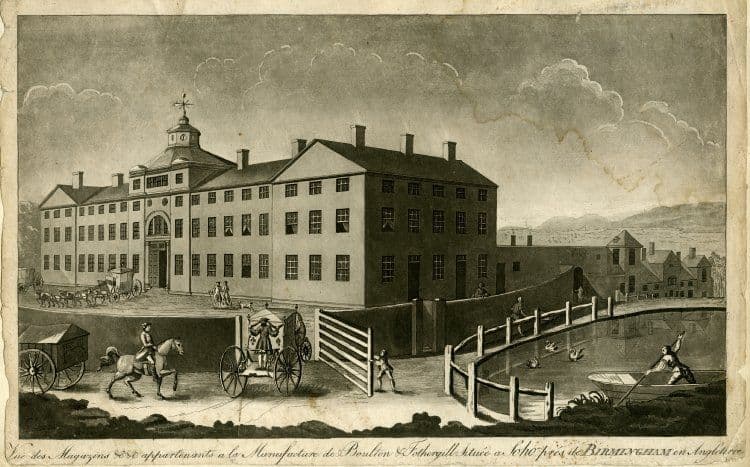
Boulton built his mint in 1788–89. He did not put it in the showpiece factory. Historian George Demidowicz places it “about 110m from the Manufactory’s principal building, hidden deliberately within Boulton’s garden buildings for secrecy”.
What made the Soho Mint new was steam. A Boulton & Watt engine drove the presses. In 1798–99 the Mint was altered so that the presses were driven by vacuum generated by the engine. It is usually called the world’s first steam-powered mint.
The cartwheel
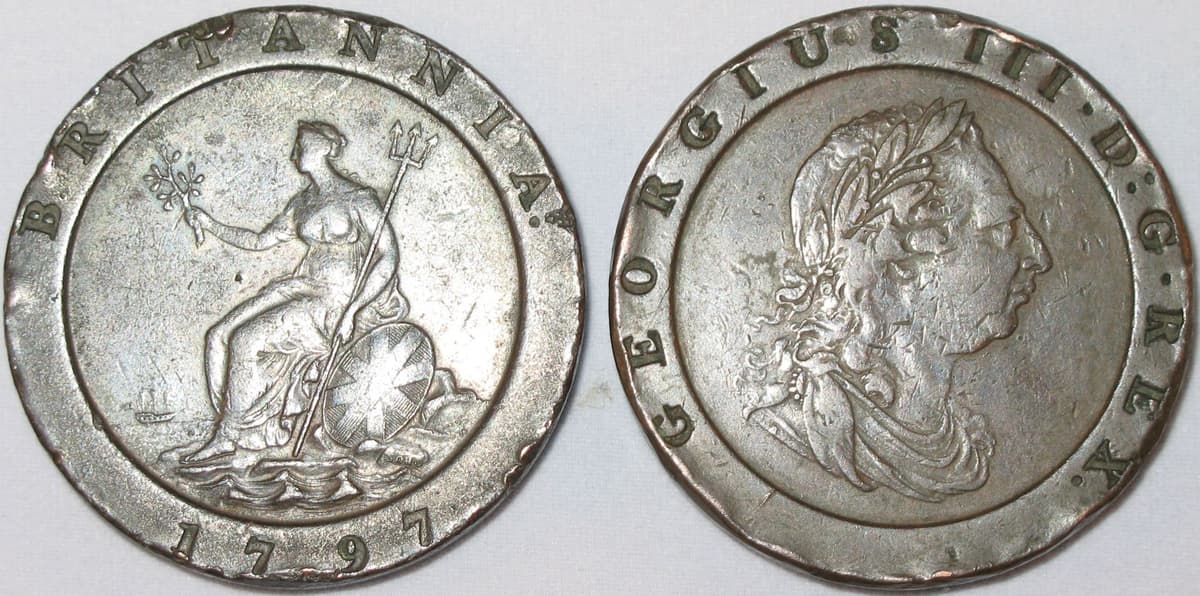
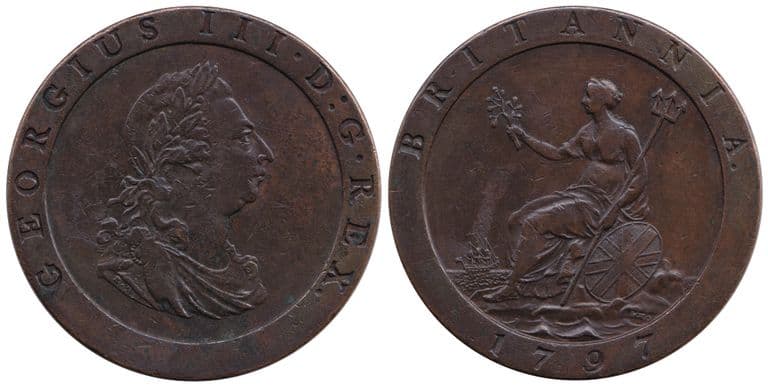
The big prize came in 1797. The government contracted Boulton to strike regal copper coins, and a proclamation of 26 July 1797 made them legal tender up to one shilling. The penny and twopence were huge, heavy coins with a broad raised rim; they became known as “cartwheels”. The Royal Mint Museum records about 44 million pennies and about 720,000 twopences, all dated 1797, each with the word “SOHO” beneath Britannia’s shield.
More regal coin followed in 1805–07, and East India Company work from 1803. The Mint also struck medals and sold complete minting machinery abroad. Soho machinery went to the rebuilt Royal Mint in London, in operation by April 1810, and to mints at Calcutta, Bombay and Mexico.
Coins and conscience
Soho’s customers reached across the empire and beyond, and some orders touched the great moral question of the age. In 1791 the Soho Mint struck coins for the Sierra Leone Company, the settlement founded by abolitionists for free Black people; the design shows a Black hand and a white hand clasped. In 1807 Soho struck a Sierra Leone medal marking the abolition of the British slave trade, inscribed “We are all brethren”. Historian Stephen Mullen, reviewing Boulton’s record for Birmingham Museums Trust in 2021, judges his attitude to slavery “equivocal”: he courted Caribbean planters as engine customers, but also subscribed to Olaudah Equiano’s book and coined for the abolitionists.
Three Boultons and an underground shaft
The same spot, then and now
1888–1913
Today
Old map: Ordnance Survey six-inch, reproduced with the permission of the National Library of Scotland (CC BY 4.0). Today: © OpenStreetMap contributors.
Matthew Boulton ran the Mint until his death in 1809, then his son Matthew Robinson Boulton until 1841, then his grandson Matthew Piers Watt Boulton until 1850. In 1824–26 the son reorganised it radically. An underground drive shaft about 60 metres long carried power to a new cutting-out room in the old crescent-shaped “Latchet Building”, and new equipment was installed in 1828.
The end
The business closed in 1849. On 29 April 1850 the equipment was auctioned. Most of it went to Ralph Heaton, whose firm became the Birmingham Mint in Icknield Street, and to James Watt & Co., who later set up a new mint at the Soho Foundry in Smethwick in 1860. Those are different places from this one. The Soho Mint buildings were demolished, and no trace was left by 1863. Early in the 20th century sand digging destroyed most of what lay underground, including the press room and engine room.
Under the patios
At Easter 1996 Time Team dug in the back gardens of South Road. They found three sections of the brick tunnel that carried the 1824–26 drive shaft, and part of the outside wall of the coin cutting-out room under patio slabs. Demidowicz says the dig “fixed precisely for the first time the location of the Soho Mint”.
Every cartwheel penny that turns up in a Birmingham garden or a coin dealer’s tray still carries the word SOHO. For a place with nothing left to see, that is quite a signature.
What happened here?
Steam-driven presses struck tokens, medals and coins here from 1788–89, including the 1797 cartwheel penny and twopence and coins for the East India Company and the Sierra Leone Company. Complete minting machinery was made for other mints. In 1824–26 it was rebuilt with an underground drive shaft. It closed in 1849 and its equipment was sold in 1850.
Why it mattered
The Soho Mint showed that steam power could make coins that were uniform, plentiful and hard to forge. Its machinery equipped the Royal Mint and mints in India and Mexico, so Birmingham’s methods shaped the money in people’s pockets around the world.
Why it disappeared
Industrial decline · Redevelopment
The Mint business closed in 1849 and its equipment was auctioned on 29 April 1850 (Tungate). The buildings were demolished, and no trace of the Mint or the Manufactory was left by 1863. Early-20th-century sand digging destroyed most of the buried remains, including the press room and engine room (Demidowicz). The site was later built over with houses.
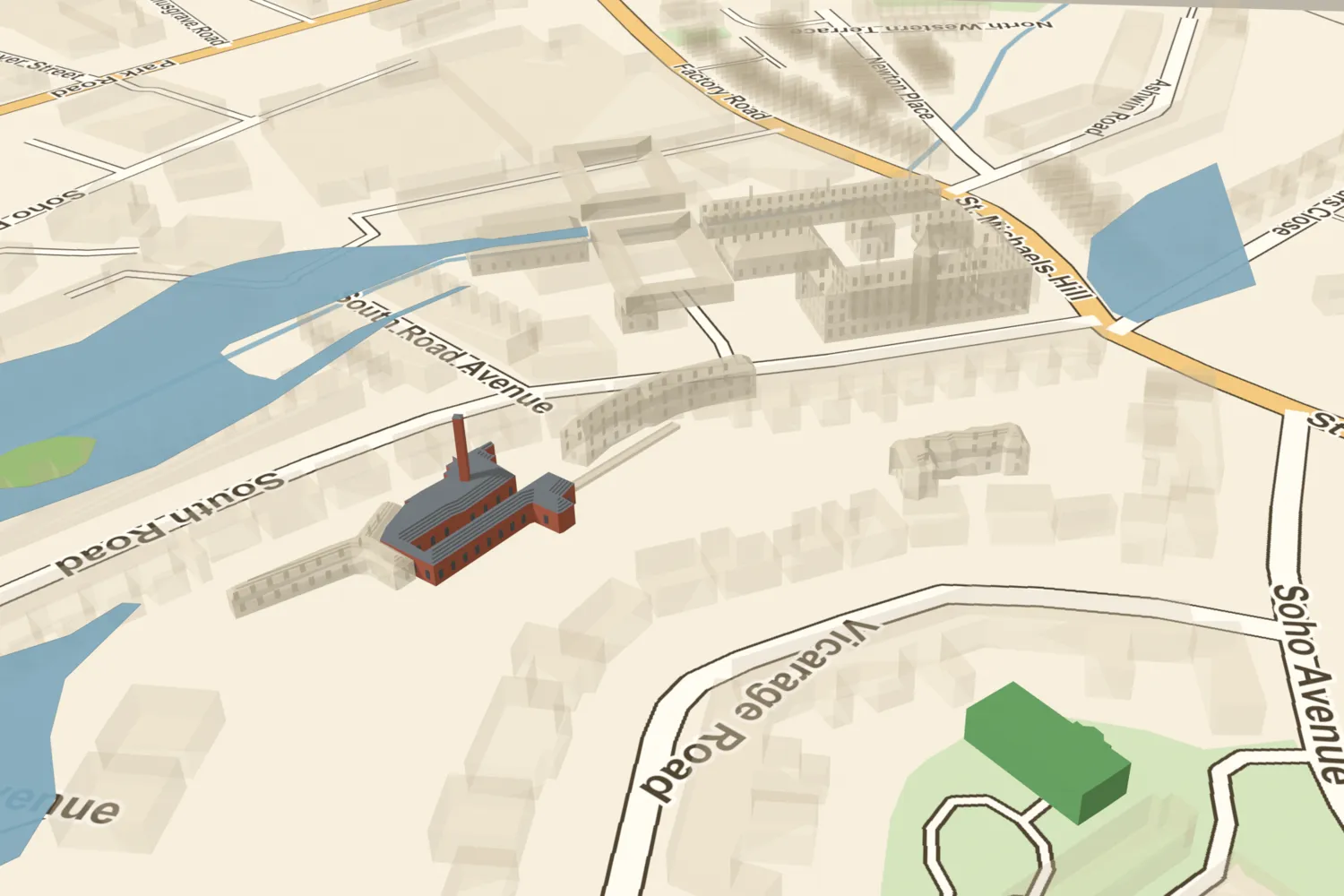
The Soho Mint, among Boulton’s works, on today’s streets
What’s there now
What replaced it
Early-20th-century sand diggings, then housing and back gardens on South Road, Handsworth.
What survives
Fragments underground: sections of the 1824–26 drive-shaft tunnel and part of the cutting-out room wall, found by Time Team in 1996 under private gardens. Millions of Soho coins, especially the 1797 cartwheel penny and twopence. Plans and the 1850 sale catalogue are in the Library of Birmingham.
Today
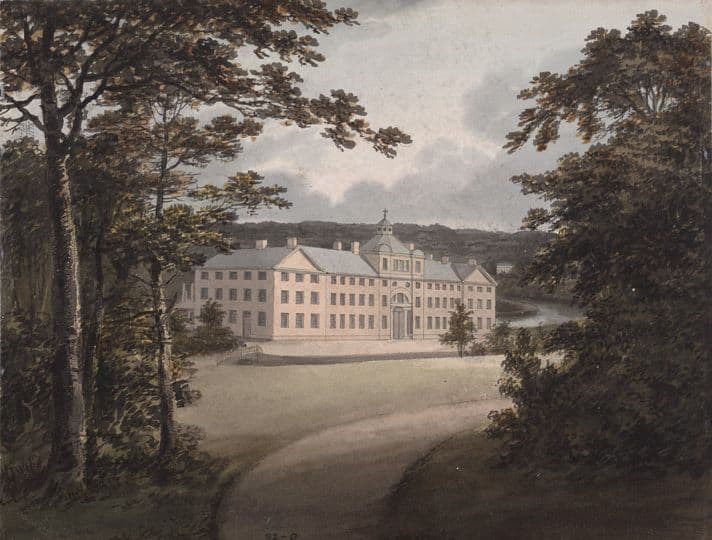
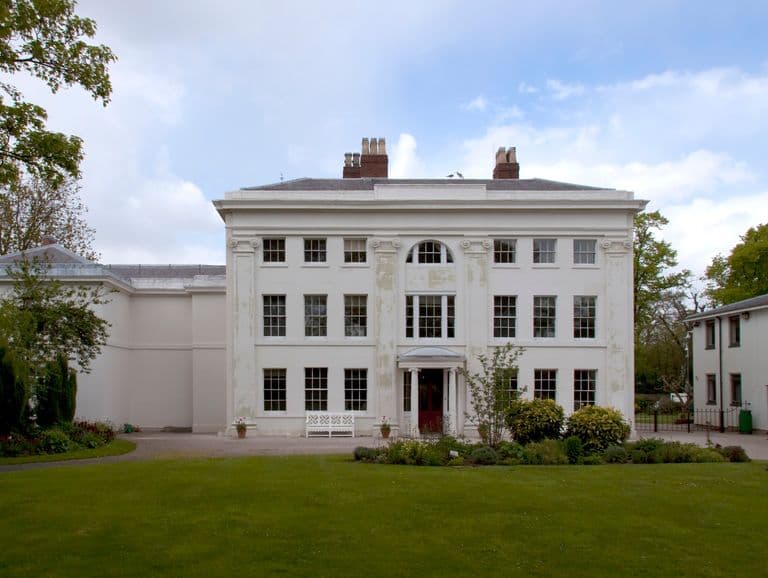
There is nothing to see on the ground. The site lies in the rear gardens of houses on South Road, Handsworth, between the old works and Soho House on the hill above. The best way to meet the Soho Mint today is through its coins, and through the story told at Soho House.
Key dates
- 1788–89 — Soho Mint builtBoulton builds the steam-powered Soho Mint, hidden among his garden buildings between the Manufactory and Soho House.
- 1797 — Cartwheel coinage struck at SohoBoulton wins the government contract, and the Soho Mint strikes the copper “cartwheel” pennies and twopences, marked “SOHO” beneath Britannia.
- 29 April 1850 — The Soho Mint’s machinery is auctionedA year after the Soho Mint closes, its equipment is sold. Most goes to Ralph Heaton, whose Birmingham Mint carries on the trade, and to James Watt & Co., who open a new mint at Soho Foundry in 1860.
- c. by 1863 — The Soho Manufactory is goneAfter closing around 1850, Boulton’s Soho Manufactory and the old Soho Mint are demolished in stages. By 1863 nothing is left above ground; the site is later partly dug for sand and built over with housing.
Sources and further reading
The exact position on modern streets is not fixed. Our map point is an inference from Demidowicz’s statement that the Mint lay about 110 m from the Principal Building in the garden area towards Soho House; it should be checked against his figures 7 and 9 before a precise pin is shown, so it is marked as a general area. The Archives of Soho say the Mint worked until ‘the early 1850s’, while Tungate says the business closed in 1849 with the auction in 1850. Do not confuse this Mint with the 1860 James Watt & Co. mint at Soho Foundry, Smethwick, or with Heaton’s Birmingham Mint in Icknield Street.
- Matthew Boulton and the Soho Mint: copper to customer (PhD thesis) — Sue Tungate, University of Birmingham, 2011. pp.37–38 n.145; p.256 n.948
- The Soho Manufactory, Mint and Foundry, West Midlands: Where Boulton, Watt and Murdoch Made History — George Demidowicz, Historic England / Liverpool University Press, 2022
- Penny — Curator’s corner — Royal Mint Museum, Royal Mint Museum
- Coinage — Archives of Soho — Library of Birmingham, Birmingham City Council. Ref. MS 3782/13/36/19; MS 3782/12/108/83; MS 3147/5/707-717
- Matthew Boulton, William Murdock and James Watt: Appraisal for ‘Golden Boys’ Statue — Stephen Mullen, Birmingham Museums Trust, 2021
- Time Team excavations at the Soho manufactory and mint, Birmingham, 1996 — Archaeology Data Service
- Remains of the Boulton and Watt Soho foundry and mint, Birmingham Canal, Smethwick — Scheduled Monument 1021388 — Historic England
- Soho Mint — Wikipedia
Archive references: Library of Birmingham MS 3147/10/74/1 (sale catalogue, 29 April 1850); Library of Birmingham MS 3782/3/210 (1807 Sierra Leone medal)
Comments
Comments will load here.