
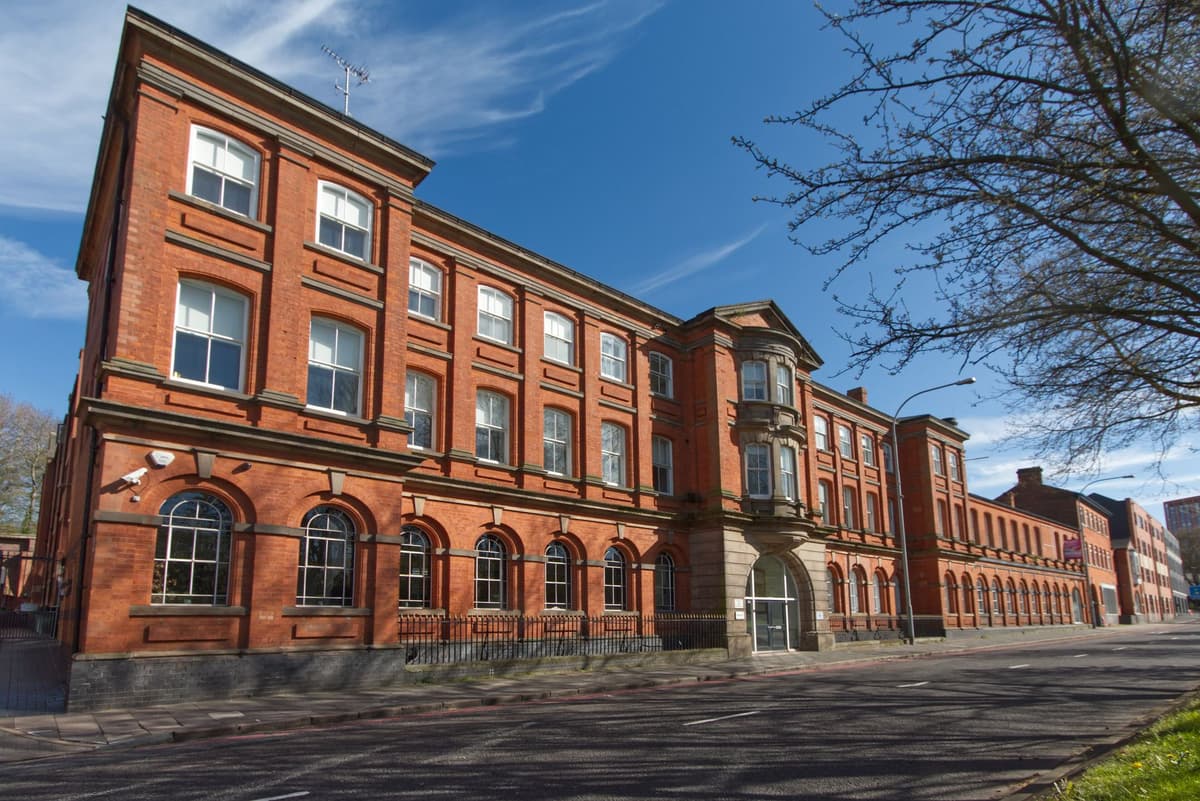
What was here?
A private mint. From 1860 the Heaton family’s coining business, founded with presses bought at the Soho Mint sale of 1850, worked here, striking bronze pennies for Britain and coin for countries from Chile to China. It closed in 2003.
History
From Bath Street to Icknield Street
The Heatons began coining in their Bath Street and Shadwell Street works near St Chad’s, using the screw presses Ralph Heaton II bought when the Soho Mint was auctioned in April 1850. By 1860 the orders from France, Italy, India and Britain had outgrown them. “In the summer of 1860,” Ralph Heaton III wrote in 1866, “we removed and enlarged our Mint.”
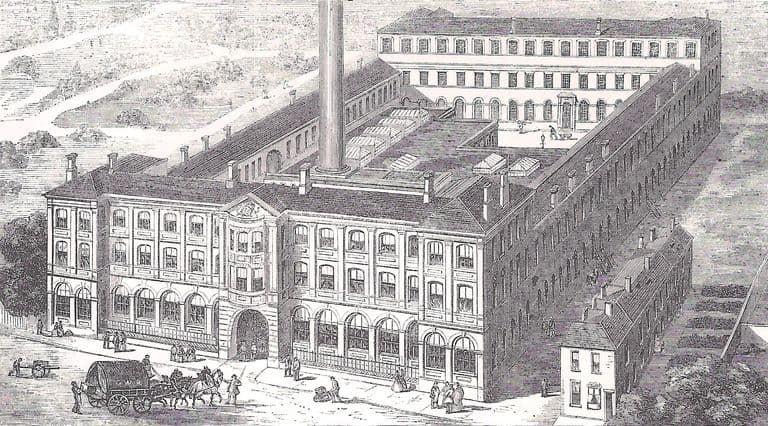
The new works stood on about an acre on Icknield Street, beside the Church of England cemetery at Warstone Lane. The Illustrated Times published an engraving of it in May 1862. In 1866 it held eleven screw and twelve lever coining presses. Boys fed the presses and girls sorted and wrapped the coin. A commissioner for the Children’s Employment Commission in 1863 found it new, light and airy.
A mint for the world
From here came bronze for Britain’s recoinage of 1860–63, coins marked with a small H for Britain and its colonies, and coin for countries across Europe, Asia and South America. The firm also equipped mints abroad, at Mandalay in the 1860s and Canton in 1889. It became The Mint, Birmingham, Limited in 1889.
The end
In 1991 the engineering group IMI bought the business and moved its Witton mint here. The Birmingham Mint went into administration in March 2003 and closed that May. The site was sold for redevelopment in 2010.
What happened here?
Coins were rolled, cut out and struck here for Britain and dozens of other countries from 1860 until 2003.
Why it mattered
It carried Matthew Boulton’s steam-powered coining from Soho into the Victorian age, and for over a century made Birmingham one of the world’s main private sources of coin.
Why it disappeared
Industrial decline · Redevelopment
The business lost ground to the Royal Mint in foreign markets, went into administration and closed in 2003. The buildings were then sold for housing.
The same spot, then and now
1888–1913
Today
Old map: Ordnance Survey six-inch, reproduced with the permission of the National Library of Scotland (CC BY 4.0). Today: © OpenStreetMap contributors.
More pictures
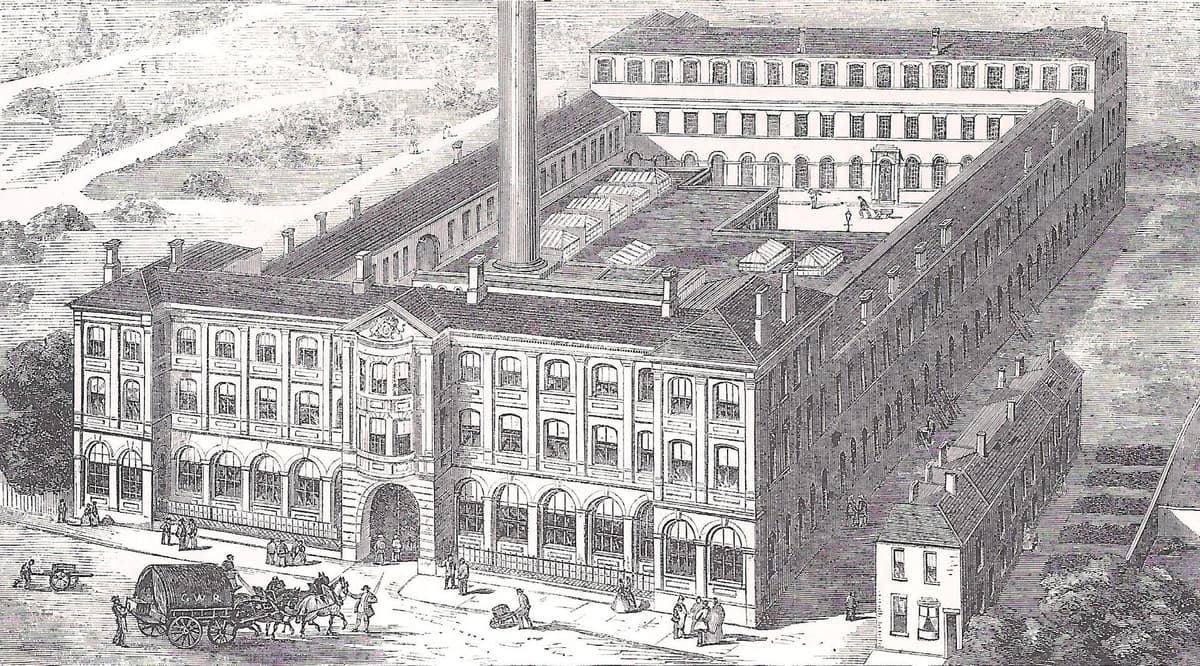
The Birmingham Mint, Icknield Street, 186210 May 1862. Illustrated Times, 10 May 1862, p. 18, via Wikimedia Commons · Public domain 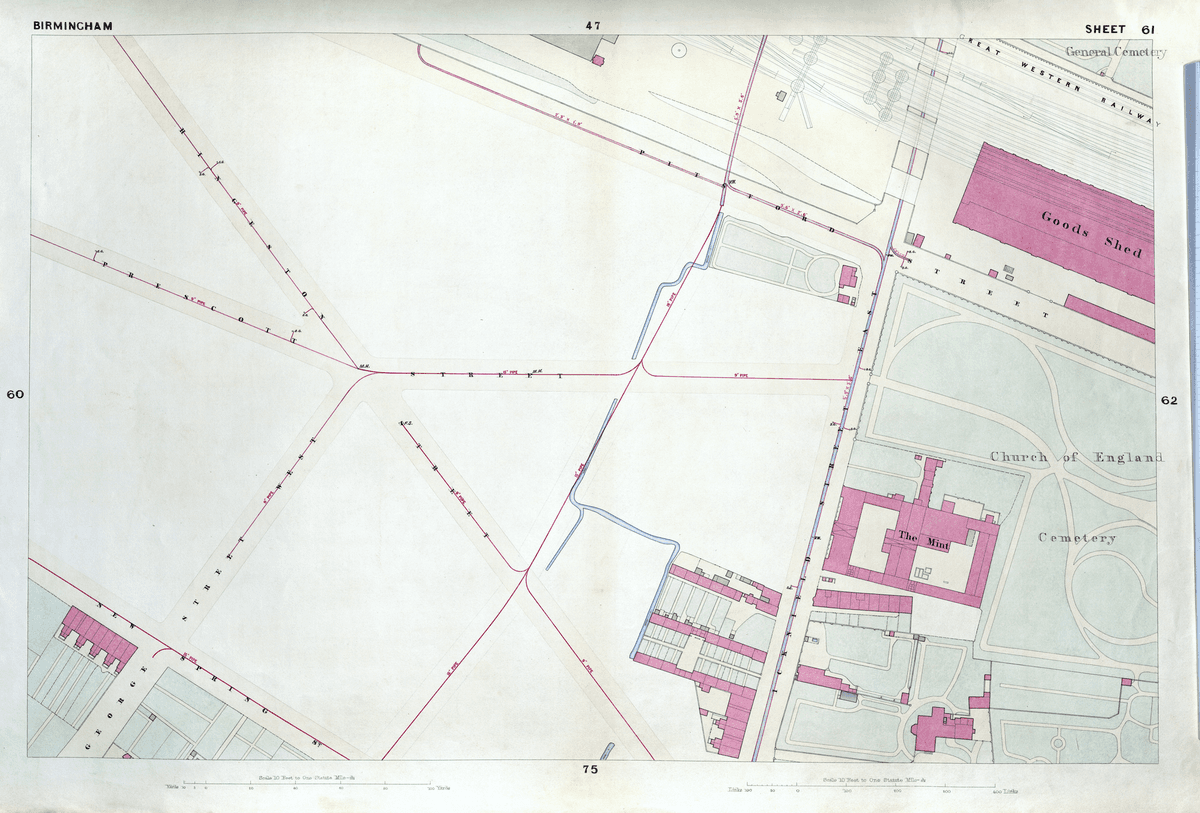
New Survey of the Borough of Birmingham, sheet 61, surveyed from 1851, published 1855, some sheets updated to about 1862Borough Surveyor’s Department (under John Pigott-Smith), surveyed from 1851, published 1855, some sheets updated to about 1862. National Library of Scotland, via Wikimedia Commons · Public domain 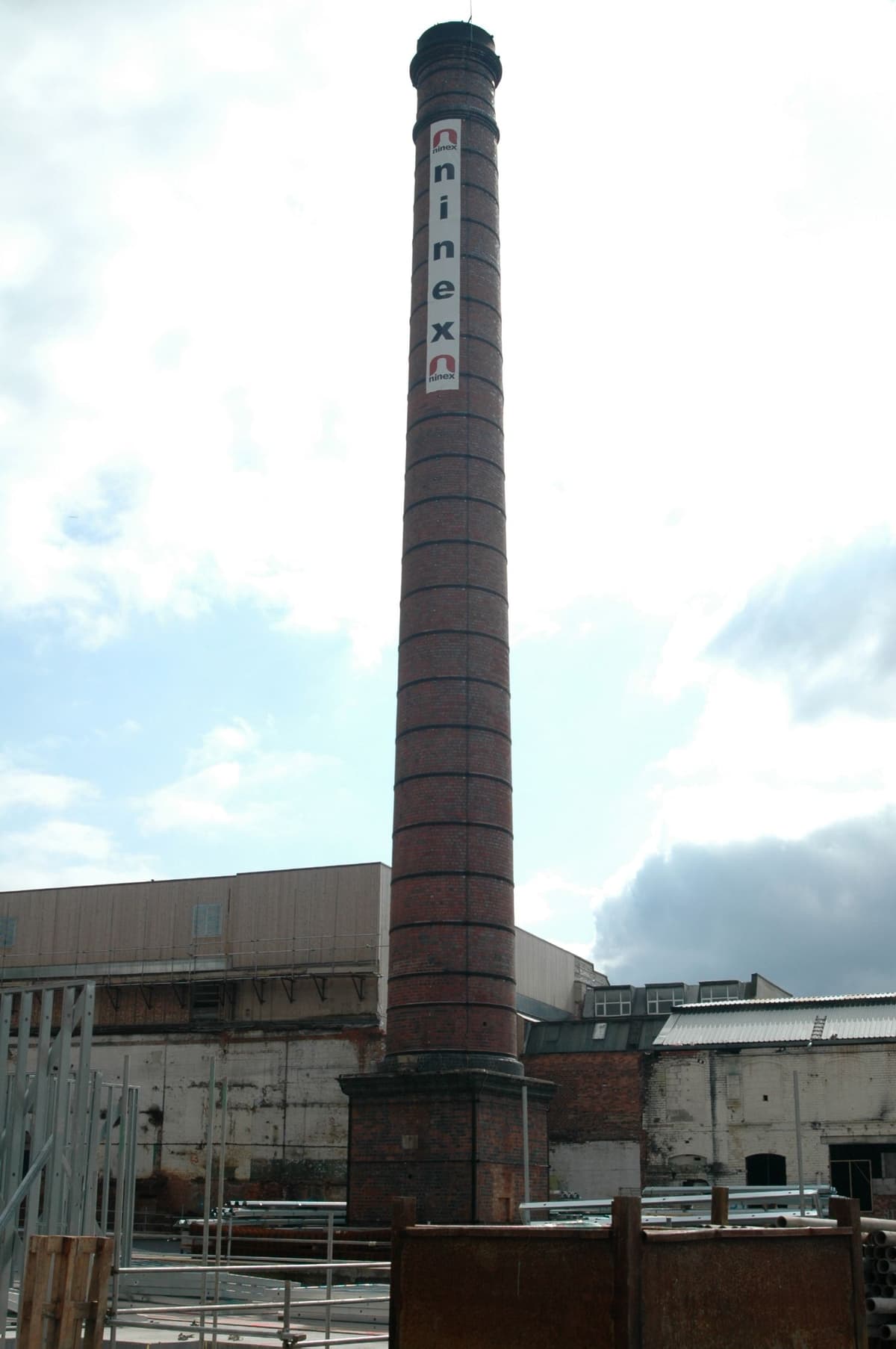
Chimney at the Birmingham Mint, 13 September 2008Erebus555, 13 September 2008. Wikimedia Commons · CC BY-SA 3.0 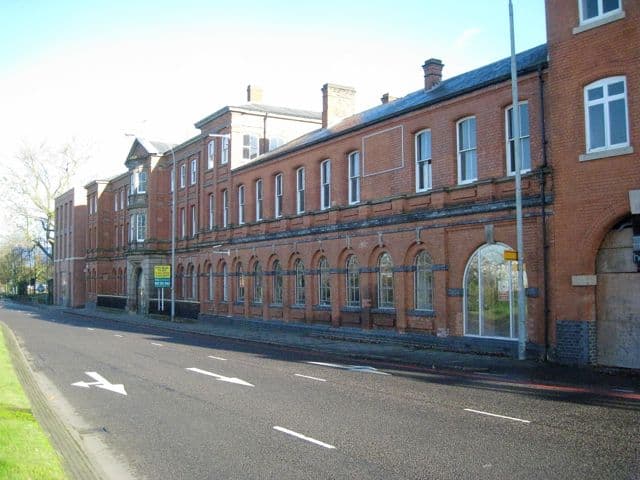
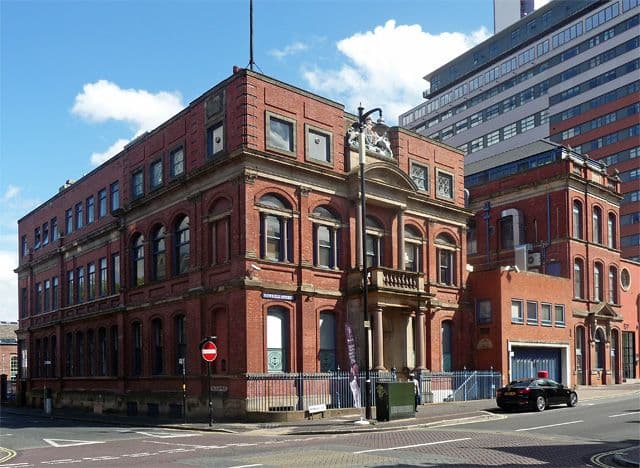
Former Birmingham Mint, Icknield Street, 5 December 2012Robin Stott, 5 December 2012. Geograph Britain and Ireland, via Wikimedia Commons · CC BY-SA 2.0
What’s there now
What replaced it
Apartments, marketed as The Mint, behind the retained front.
What survives
The listed Italianate front range on Icknield Street, in red brick with stone dressings, with its arched centre and stone bow window. Historic England’s listing also covers buildings around the courtyard.
Today
The front range survives in residential use. The building can be seen from Icknield Street.
Then and now
Then · 6 April 2026
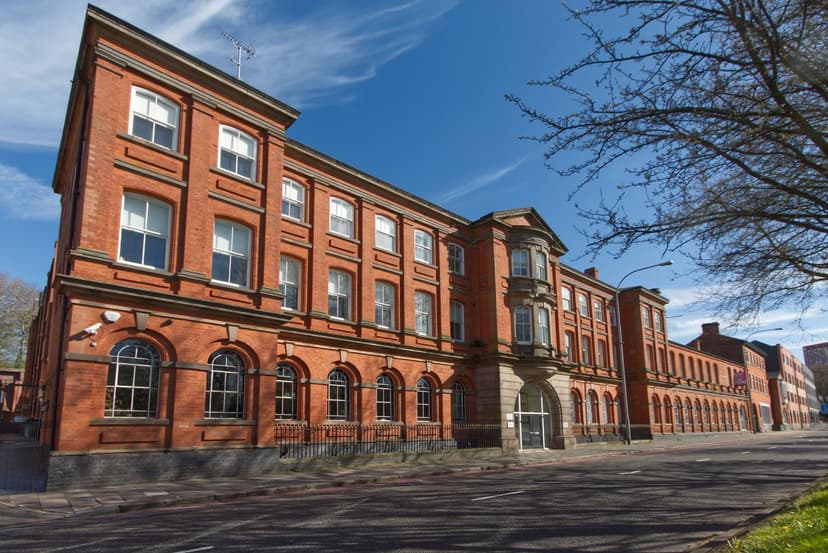
Now · 6 April 2026
Key dates
- 29 April 1850 — The Soho Mint’s machinery is auctionedA year after the Soho Mint closes, its equipment is sold. Most goes to Ralph Heaton, whose Birmingham Mint carries on the trade, and to James Watt & Co., who open a new mint at Soho Foundry in 1860.
- 1851 — Heaton’s mint strikes coins for ChileA year after buying the Soho Mint’s presses, Ralph Heaton & Sons strike copper coins for Chile, reported to be the first to carry the Heaton ‘H’ mint mark. Contracts for Britain, France and Italy follow.
- 1860–63 — Birmingham strikes Britain’s new bronze coinsBritain replaces its heavy copper coins with smaller bronze ones. About 285 million are struck in 1860–63, and the Royal Mint contracts much of the work to two Birmingham-area mints, James Watt & Co. at Soho Foundry and Ralph Heaton & Sons.
- 1860 — The Heatons move their mint to Icknield StreetRalph Heaton & Sons outgrow Bath Street and move to new works on Icknield Street, beside Warstone Lane Cemetery. Its Italianate front, completed by 1862, survives and is listed Grade II.
- 2003 — The Birmingham Mint closesAfter more than 150 years of coining, the Birmingham Mint goes into administration in March 2003 and closes in May. Its listed Icknield Street front is later converted to housing.
Sources and further reading
The move is dated 1860 by the firm and by Historic England; some accounts say the building opened in 1862. How much of the original fabric behind the street front survives has not been checked on site.
- Front Range of the Birmingham Mint facing Icknield Street, and buildings around the courtyard — National Heritage List for England entry 1076314 — Historic England, 1982
- The Resources, Products, and Industrial History of Birmingham and the Midland Hardware District — Samuel Timmins (ed.), Robert Hardwicke, London, 1866. Ralph Heaton, ‘Birmingham Coinage’
- Jewellery Quarter Conservation Area Character Appraisal and Management Plan — Birmingham City Council (Donald Insall Associates), 2002
- The Birmingham Mint and Metalworks, Icknield Street, Birmingham: Historic Buildings Report (Report 136/2000) — English Heritage, English Heritage, 2000
- Economic and Social History: Industry and Trade, 1500–1880, in A History of the County of Warwick, vol. 7, pp. 81–139 — W. B. Stephens (ed.), Victoria County History, 1964
- The Birmingham Mint (engraving and article) — Illustrated Times, 1862. Ref. 10 May 1862, p. 18
- The rise and fall of a private mint: the Birmingham Mint — MünzenWoche / CoinsWeekly, 2017
- Birmingham Mint site bought out of administration — TheBusinessDesk.com, 2010
Comments
Comments will load here.