
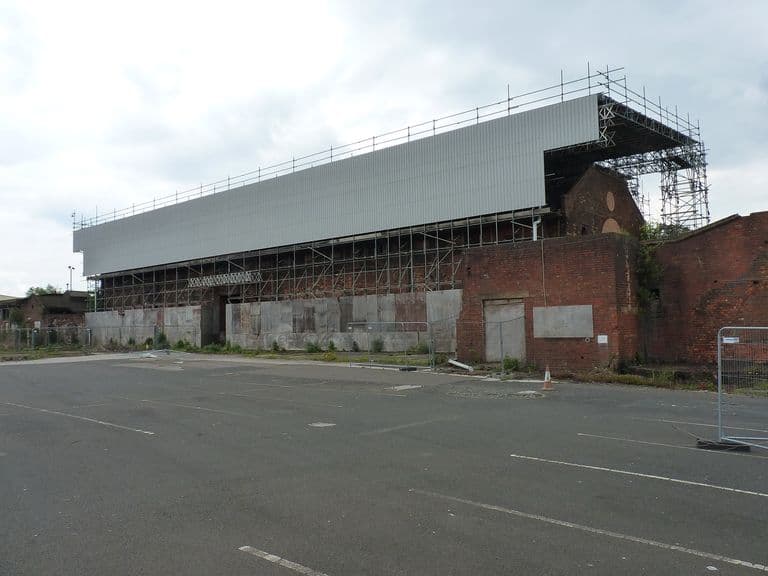
In 1895 a Birmingham scale-maker bought one of the most famous engine works in Britain. Soho Foundry at Smethwick had built steam engines for a century, first for Boulton & Watt and then for James Watt & Co. Now its old partners were elderly, its business was failing, and the buyer was W & T Avery, makers of weighing machines. The furnaces and lathes that had made engines for mines, mills and Brunel’s Great Eastern were turned over to making scales and weighbridges.
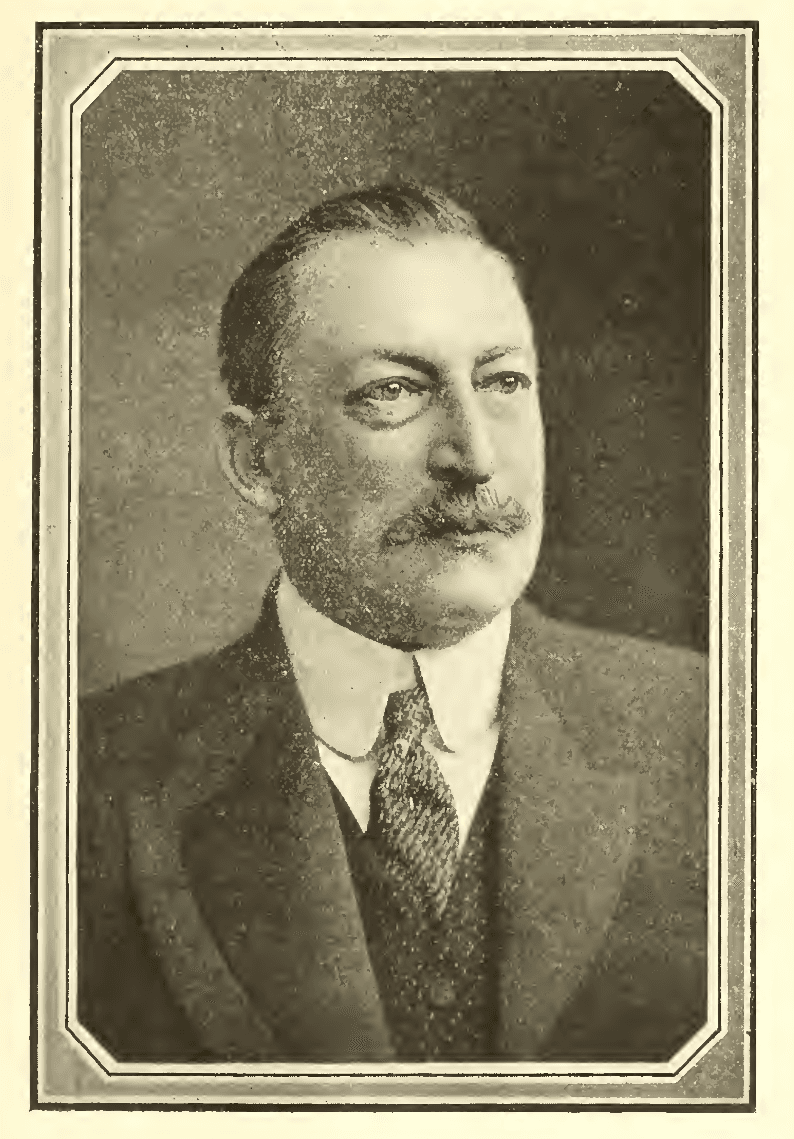
The man who had led the firm to that point was William Beilby Avery.
An old Birmingham trade
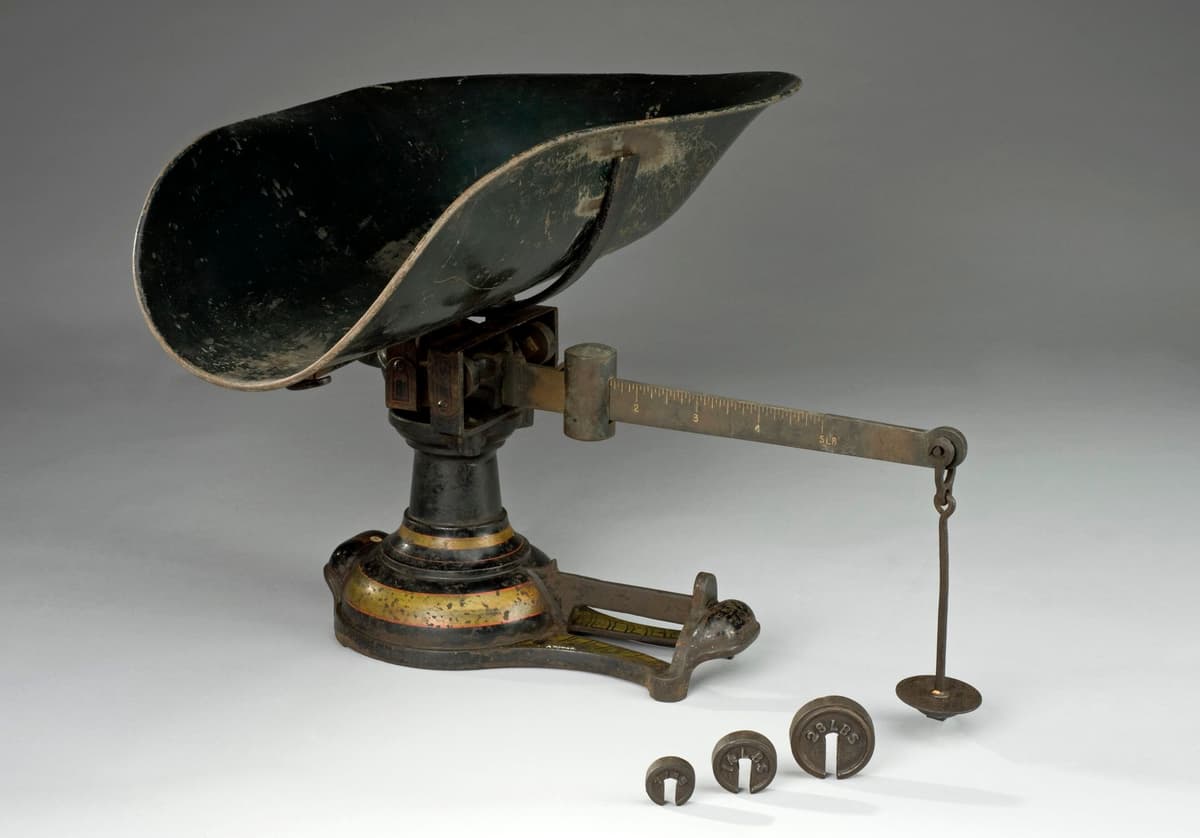
The Averys did not found the business. Its roots went back to about 1730, when James Ford was making steelyards and beam scales by hand in a small Birmingham workshop. It passed to William Barton, then to Thomas Beach and Joseph Balden. In 1813 or 1814 Balden’s cousin, William Avery, a mercer and draper, inherited it and took his brother Thomas into partnership. They traded as W & T Avery, scale-beam makers, in Digbeth.
The next generation were William’s sons, William Henry Avery (1812–1874) and Thomas Avery (1813–1894). They opened the Atlas Works at West Bromwich in 1854 and spread the work over several factories, making platform scales and sack scales at Mill Lane and finer brass and agate beam scales at Moat Lane. The census shows the growth. In 1851 William Henry Avery and his partner employed 154 men and boys; in 1871 he employed 233 men and 71 boys and women. In the 1860s Thomas withdrew from the firm and became a leading figure in Birmingham’s local government, while William Henry carried on alone.
The heir
William Beilby Avery was born in Edgbaston on 26 April 1854, the son of William Henry Avery and his Scottish wife, Maria Richmond Beilby. His father died in 1874, when William was 20, and for seven years the firm was run by executors. In 1881 William and his younger brother, Henry J. Avery, took control. The firm then employed between 600 and 700 people.
He was an inventive manager. His obituaries credit him with many improvements to weighing machines, and with being mainly responsible for the Weights and Measures Act of 1889, which set national standards for the machines used in trade and how they were inspected. That was good law, and good for a firm that made the most reliable machines. When later rules required every trade scale to be stamped, Avery opened branches in about 100 British towns to sell and service them.
The range kept widening. At the Royal Agricultural Society’s show in Birmingham in 1876 the firm showed a large collection of weighing machines. By 1900 it was building a 110-ton weighbridge for a marine engineering firm in the north of England and a machine for weighing red-hot iron plates at the Dowlais ironworks in South Wales, and it made automatic machines that filled and weighed packets. Testing machines, which measured how much strain metal could take, became a second speciality.
In 1891 the business became a private company, and in 1894 a public one. Soon afterwards Avery stepped back from day-to-day work, though he stayed on the board.
Into Watt’s works
The move to Soho was carried through by the new managing director, William Edward Hipkins. The son of a Birmingham steel-toy maker, he had run his father’s business and then the wire-rope makers J. & E. Wright, and wrote a book on wire ropes in 1896. In 1895 he became manager of Soho Foundry for James Watt & Co. as well as managing director of Avery, and his obituaries credit him with reorganising the whole business and moving it from West Bromwich to Soho. Under him the firm closed its other factories and moved everything to Smethwick except an office in Digbeth. It kept repairing some of the old Watt engines for decades. In 1927 it opened an Avery Historical Museum at the Foundry, and in 1936 it deposited 98 portfolios of old Boulton & Watt engine drawings with Birmingham’s library, where they joined the main Boulton & Watt Collection.
The firm went on growing after him. In 1913 it bought two rivals, Henry Pooley & Son and Parnall & Sons of Bristol.
Hipkins’s story ended in the North Atlantic. Travelling to America, he was lost when the Titanic sank on 15 April 1912.
Stamps and business
Avery’s other passion was stamps. He built one of the finest collections of his day, and in 1893 he acquired unused copies of Mauritius’s ‘Post Office’ one penny and twopence, among the rarest stamps in the world.
Away from scales, he sat on the boards of the Darracq motor company, a Rhodesian goldfield company and an Australian oil corporation. He was made a baronet in 1905. He died at his home in London on 28 October 1908, aged 54.
Why it mattered
William Beilby Avery took a family trade that had begun with steelyards in a Birmingham workshop and gave it the size and structure to go worldwide. Under him the firm became a company and a household name. After the move to Soho it more than doubled its works by 1914. By the late 1960s W & T Avery was the largest maker of weighing, counting and testing machines in the world.
The move to Soho Foundry also tied scale-making to one of the most important sites of the steam age. Avery’s firm, in its later forms, has occupied the Foundry ever since. Because the scale makers stayed, some of Boulton & Watt’s buildings and buried remains survived to be rediscovered in the 1990s.
On the map
One place connected with William Beilby Avery. Tap a number for directions — some sites are private homes or gardens, so each place’s page says what you can see from the street.

- Soho Foundry — Partly surviving, At risk · Directions to Soho Foundry (opens Google Maps)
Key dates
- 1895 — Avery buys Soho FoundryW & T Avery, the weighing-machine makers, buy Soho Foundry from the failing James Watt & Co. and move all their manufacturing there. George Tangye takes custody of the Boulton & Watt papers.
Sources and further reading
The year his grandfather inherited the business is given as 1813 or 1814 (Grace’s Guide gives both). The founder Thomas Avery’s death is given as 1823 (Grace’s Guide) or 1824 (Wikipedia, citing the Oxford DNB). How far William Beilby Avery personally decided on the purchase of Soho Foundry is not clear: his obituaries say the Foundry was acquired as the old works became too small, but also that he retired soon after the 1894 flotation, and Hipkins’s obituaries credit Hipkins with the move. Hipkins’s start at Avery is given as 1895 or 1896. The stamp details rest on the Blue Mauritius research companion and philatelic obituaries, not checked in the original journals. His burial place has not been found.
- William Beilby Avery — Grace's Guide. IMechE obituary 1908; The Engineer 1908
- W. and T. Avery — Grace's Guide
- William Avery — Grace's Guide
- William Henry Avery — Grace's Guide
- William Edward Hipkins — Grace's Guide. IMechE and Iron and Steel Institute obituaries, 1912
- Smethwick: Economic history, in A History of the County of Stafford, vol. 17, pp. 107–118 — M. W. Greenslade (ed.), Victoria County History, 1976
- Avery, Sir William Beilby (1854–1908) — Blue Mauritius Research Companion — Helen Morgan
- Titanic find at Avery Historical Museum — Weighing Review, 2014
Comments
Comments will load here.