In the mid-1960s, by the city council’s reckoning, more than 250,000 people in Birmingham worked in manufacturing. In 1971 factories still provided 47 per cent of all the city’s jobs and over half of men’s. By 2006, the council found, there were fewer than 56,000 manufacturing jobs left: a fall of four-fifths.
That collapse did not happen in one go. It came firm by firm, often in a single announcement on a Friday afternoon.
BSA
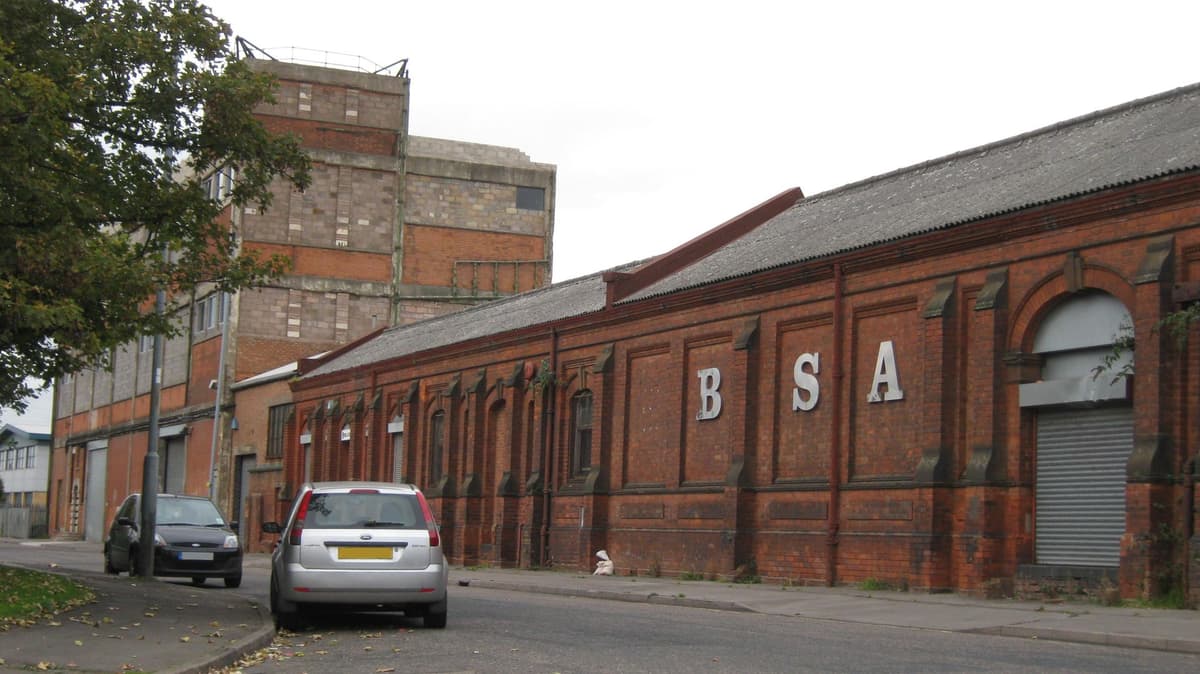
The first great name to go was the Birmingham Small Arms Company. It had armed Britain in two world wars from its works in Armoury Road, Small Heath, and by 1970 motorcycles brought in about 70 per cent of its profits. Then the losses came. Grace’s Guide records frantic attempts at rescue in 1971. In July 1973, Solihull Archives notes, BSA was absorbed into Norton Villiers Triumph in a rescue backed by the government.
The plan was to concentrate motorcycle making at Small Heath. It did not work. In the Commons in August 1975 the MP Les Huckfield said that 3,000 workers had already been sacked there. The archive catalogue records that the last motorcycle was made at Small Heath on Christmas Eve 1975. The main works were demolished over the following years; dates between 1977 and the early 1980s are given. The concrete-framed extension of 1915–16 survives.
The motor industry
The car industry was the city’s other giant. When British Leyland ran out of money, the government asked Sir Don Ryder to report. On 24 April 1975 Harold Wilson told the Commons that the government accepted the Ryder report, at a cost of about £1,500 million over seven years, and said the choice was whether “to endanger a million jobs”. British Leyland passed into state control.
Then came the recession of 1979–82. The council’s later analysis says UK manufacturing output and jobs fell by 20 per cent, and for much of the 1980s Birmingham’s unemployment rate was over 20 per cent. In the Commons on 30 March 1981 the Ladywood MP John Sever read out a list: 3,000 jobs to go at Cadbury in Bournville over four years, 1,000 redundancies at Dunlop in Erdington, 450 at GKN, 600 at Ansells brewery. Two years later the Coventry MP Geoffrey Robinson said West Midlands unemployment had risen from 111,000 in 1979 to 367,000 at the end of 1982.
Names that went
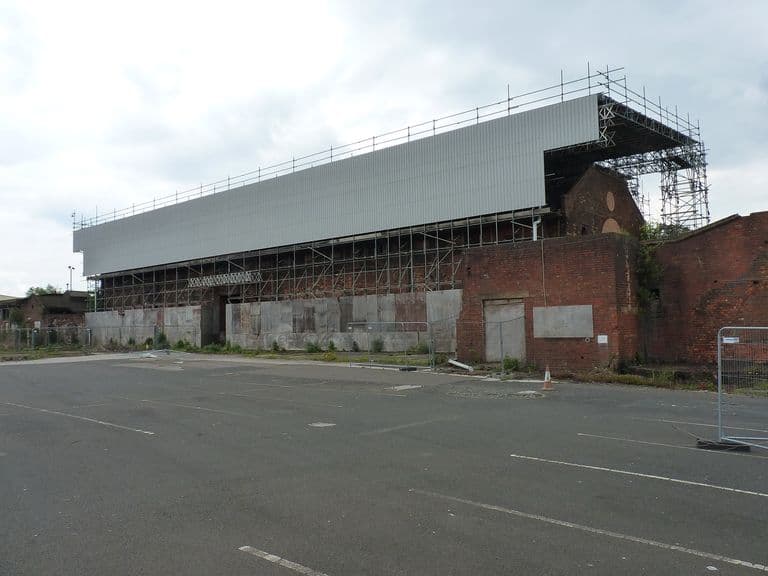
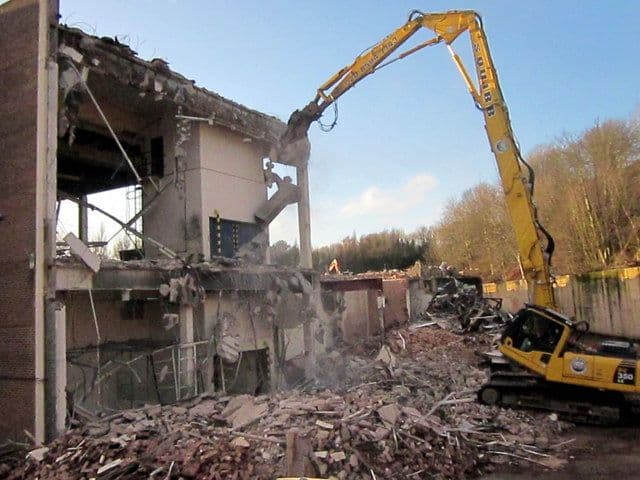
Ansells closed its Aston brewery in 1981 and moved brewing to Burton. That same year the original Fort Dunlop building in Erdington, opened in 1916 as part of one of the world’s largest factories, closed. By 1988 the Lucas works in Great King Street, where Joseph Lucas had started making lamps, had nearly a million square feet standing empty, and it was later demolished. Kynoch’s old works at Witton was half turned into an industrial estate from 1983. At Washwood Heath, Metro-Cammell built its last trains, the Pendolinos for the West Coast Main Line, and closed in 2005.
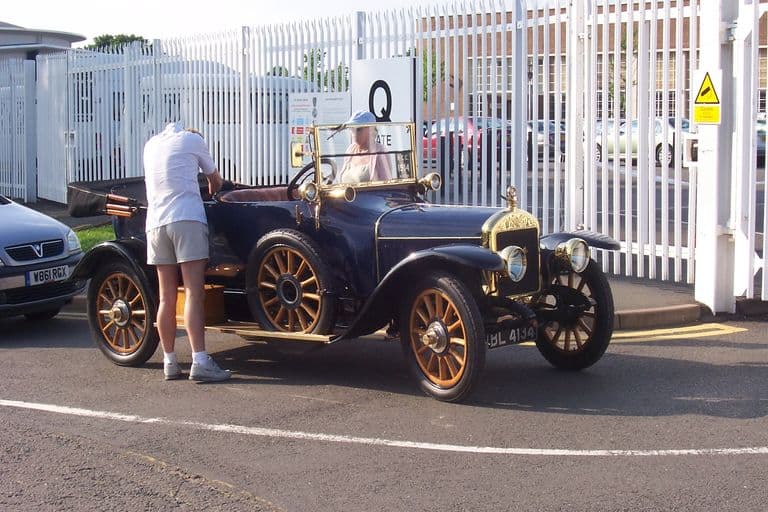
Longbridge, the greatest of them, held on longest. BMW sold Rover to the Phoenix consortium for a nominal £10 in 2000. On 8 April 2005 MG Rover called in administrators and about 6,000 people lost their jobs. The Chinese firm Nanjing Automobile bought the remains that July. In September 2016 its successor, MG, announced the end of car assembly at Longbridge, ending, as the BBC put it, more than a century of car building on the site.
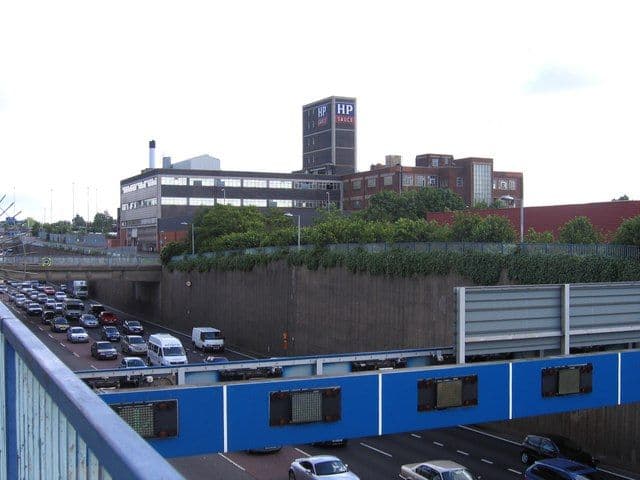
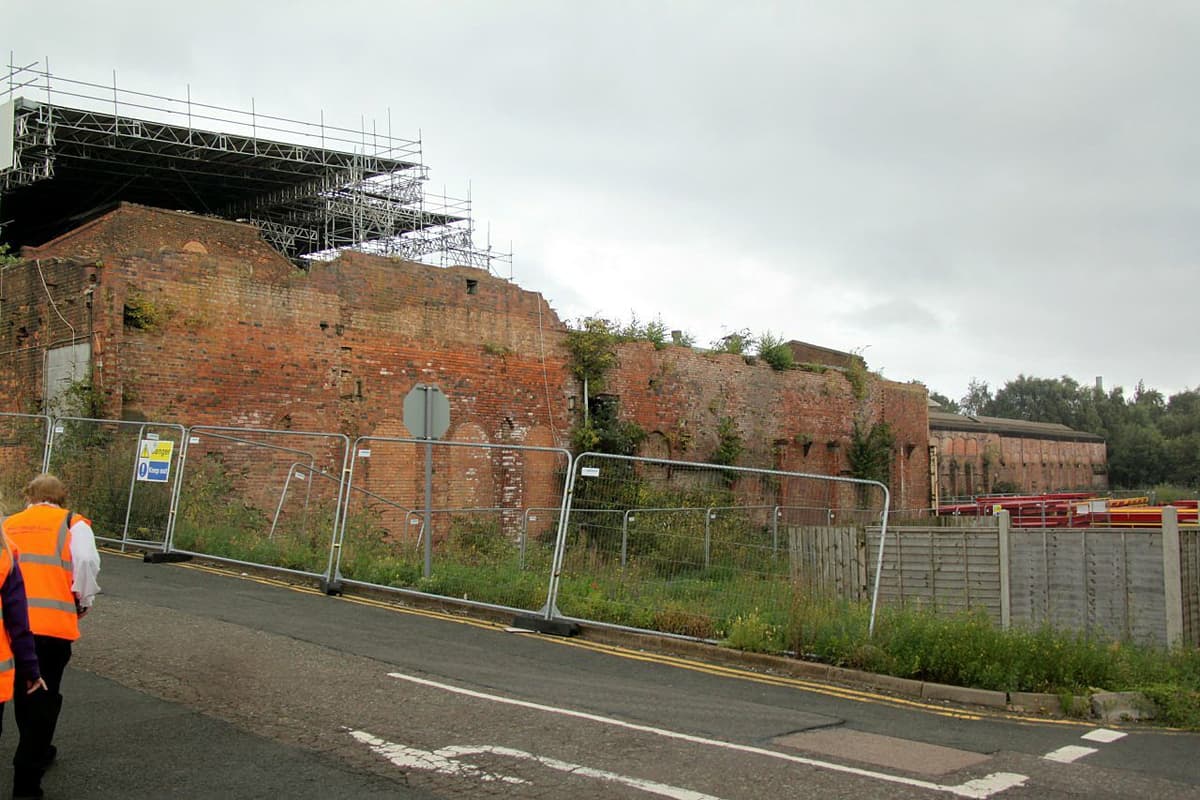
The HP Sauce factory at Aston Cross traced its roots to 1875. In May 2006 its owner, Heinz, announced that production would move to the Netherlands. Councillor Ken Hardeman called it “a tragedy”. The last shift ended on 16 March 2007, and demolition started that July.
What came back
Not everything closed. Cadbury still makes chocolate at Bournville, where Dairy Milk has been produced since 1905. At Smethwick, the Soho Foundry, where Boulton and Watt’s sons built steam engines from 1796, still stands inside the works of the weighing-machine makers W & T Avery, who bought it in 1895. Its oldest buildings are now empty and on Historic England’s Heritage at Risk Register.
Some buildings found new lives. Urban Splash reopened Fort Dunlop in 2006 after a £35 million conversion. At Longbridge, a new town centre opened in 2013 on the old car works. And in the Jewellery Quarter, where a redevelopment plan had threatened the small workshops, the council created a conservation area in January 1980. When the owners of the Smith & Pepper jewellery works retired in 1981, they simply locked the door. Their workshop, left as it was, is now the Museum of the Jewellery Quarter.
A different city
By 2006, services provided 85 per cent of Birmingham’s jobs, the council found, and manufacturing just 11. The great manufacturing city had become something else. But a walk past Bournville, Smethwick or the Jewellery Quarter shows that the workshop never entirely closed.
On the map
3 places connected with Industrial decline since the 1970s. Tap a number for directions — some sites are private homes or gardens, so each place’s page says what you can see from the street.

- Austin works, Longbridge — Site redeveloped, Partly surviving · Directions to Austin works, Longbridge (opens Google Maps)
- BSA works, Armoury Road, Small Heath — Lost, Site redeveloped
- Soho Foundry — Partly surviving, At risk · Directions to Soho Foundry (opens Google Maps)
Key dates
- 24 December 1975 — Last motorcycle made at Small HeathAfter BSA’s absorption into Norton Villiers Triumph, a plan to concentrate production at Small Heath fails. Solihull Archives records that the last motorcycle was made there on Christmas Eve 1975.
- January 1980 — Jewellery Quarter becomes a conservation areaThe council abandons the Jewellery Quarter’s status as a redevelopment area and designates it a conservation area. Its report records that the public meeting “ended in spontaneous applause”. The area was enlarged in 1996 and 2000.
- 1981 — Chance’s Spon Lane glassworks closesFlat-glass production at Smethwick, ended in 1976, is followed by the closure of the whole works after more than 150 years. Eight listed buildings and buried furnaces survive.
- 1981 — Ansells’ Aston brewery closesAfter a series of strikes, Ansells closes its brewery at Aston Cross and moves production to Burton upon Trent. An MP told the Commons in March 1981 of 600 redundancies.
- 1991 — The International Convention Centre opensThe ICC opens on Broad Street as a flagship for a new service economy; a new pedestrian route is run from it across the lowered ring road into the city centre.
- 2003 — The Birmingham Mint closesAfter more than 150 years of coining, the Birmingham Mint goes into administration in March 2003 and closes in May. Its listed Icknield Street front is later converted to housing.
- 16 March 2007 — HP Sauce leaves AstonThe last shift ends at the HP Sauce factory at Aston Cross after Heinz moves production to the Netherlands. Demolition begins in July.
- 23 September 2016 — MG ends car assembly at LongbridgeMG announces that vehicle assembly at Longbridge will stop and production move to China, ending, the BBC said, more than a century of car building on the site.
Sources and further reading
- Birmingham’s Transformation & Future Prospects — Birmingham City Council, 2008
- BSA — Grace’s Guide to British Industrial History
- Birmingham Small Arms Co. Ltd (BSA), records — catalogue and administrative history — Solihull Heritage & Local Studies Service. Ref. GB 0437 BSA
- Motor Cycle Industry, HC Deb 7 August 1975 — Hansard, 1975
- British Leyland Motor Corporation Limited, HC Deb 24 April 1975 — Hansard, 1975
- Unemployment (Midlands), HC Deb 30 March 1981 — Hansard, 1981
- West Midlands (Unemployment), HC Deb 7 February 1983 — Hansard, 1983
- Ansells Brewery Ltd — Brewery History Society
- Remoulding the fort — Tracy Edwards, Building, 2007
- History of Kynoch, part 2 — Staffordshire Home Guard website
- Metropolitan-Cammell Ltd. — Science Museum Group
- Rover’s revenge — BBC News, 2000
- Rover goes into administration — Mark Tran, The Guardian, 2005
- Rover sold to Nanjing Automobile — BBC News, 2005
- MG to end UK car production at Longbridge with switch to China — BBC News, 2016
- ‘Great British’ sauce heads abroad — Douglas Marshall, BBC News, 2006
- Demolition of HP factory begins — BBC News, 2007
- Production at Cadbury’s historic Birmingham factory to increase by a third — James Devonshire, The Manufacturer, 2021
- Made in Smethwick — DigVentures / Chance Heritage Trust
- Jewellery Quarter Conservation Area Designation Report — Birmingham City Council, 1980–2000
- Museum of the Jewellery Quarter — Birmingham Museums Trust
- Green light for second phase of Longbridge — Aaron Morby, Construction Enquirer, 2014