
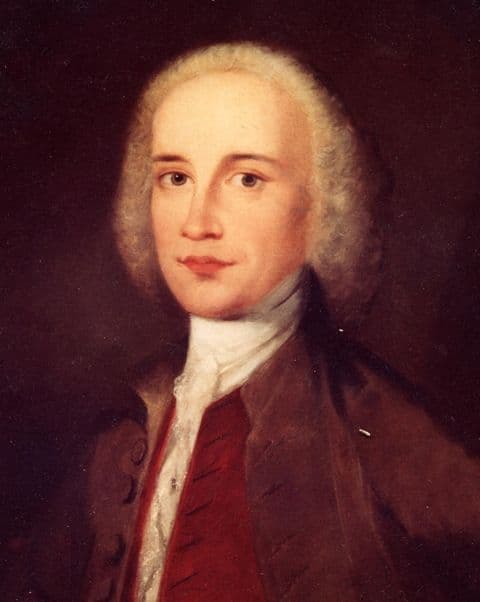
In May 1766 Lord Shelburne, one of the rising politicians of the day, brought his young wife to Birmingham to see how the town made its money. Their guide was the manufacturer Samuel Garbett. On the second day the party called at the works of a Mr Taylor, and Lady Shelburne watched something close to magic.
“He made and ennamel’d a landscape on the top of a box before us,” she wrote in her diary, “which he afterwards gave me as a curiosity from my having seen it done.” She noted the method. A stamping instrument, “managed only by one woman”, printed the picture onto paper. The paper was laid on white enamel and rubbed until the picture transferred. Metallic colour was brushed on as a powder, and a few minutes in an oven fixed it. A painted box, made in front of her eyes, in less time than it took to drink a dish of tea.
Her husband was more interested in the money. Fifty years earlier, he wrote, Birmingham’s hardware men had been worth three or four hundred pounds apiece. Some were now worth three or four hundred thousand, “particularly a Mr. Taylor, the most established manufacturer and trader”.
“He made and ennamel’d a landscape on the top of a box before us,” she wrote in her diary, “which he afterwards gave me as a curiosity from my having seen it done.”
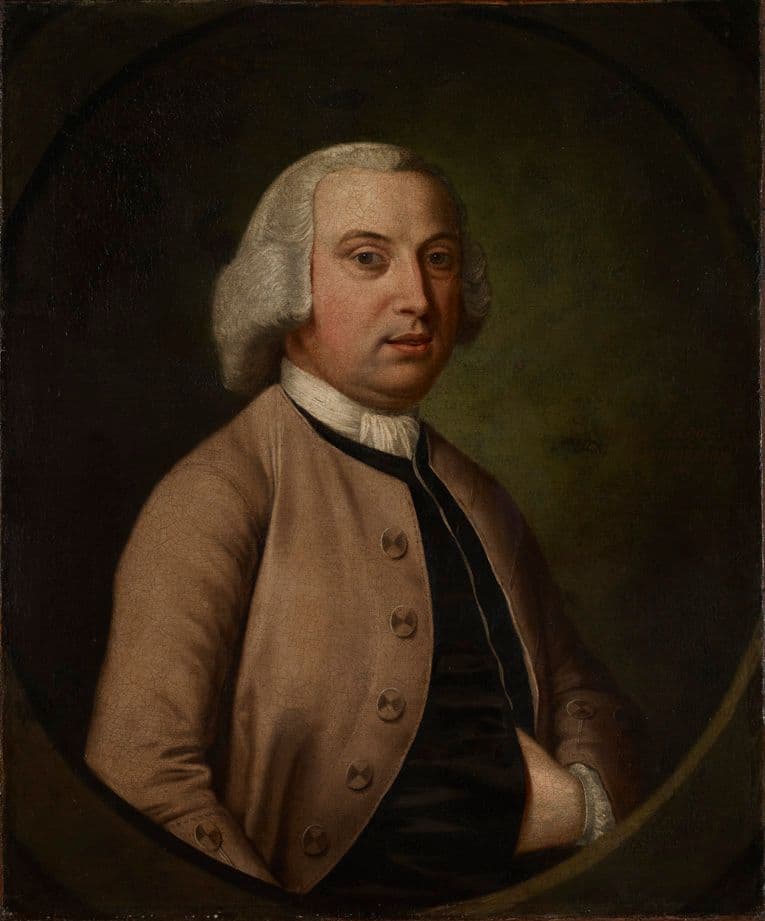
That was John Taylor: button maker, japanner, enameller, landowner and, from 1765, banker. Today he is far less famous than Boulton. In his own time, the Victoria County History says, only Soho was bigger.
From small beginnings
Taylor was born in about 1711. Much about his early life is unclear. A Willenhall physician, Richard Wilkes, noted in his diary for 1737 that the art of japanning had been “brought almost to perfection” in Birmingham “by one Taylor who was a Sadler by Trade”. John P. Turner, writing the history of the button trade in 1866, called him “originally a cabinet-maker”. Either way, William Hutton, the town’s first historian, was clear that he “rose from minute beginnings”.
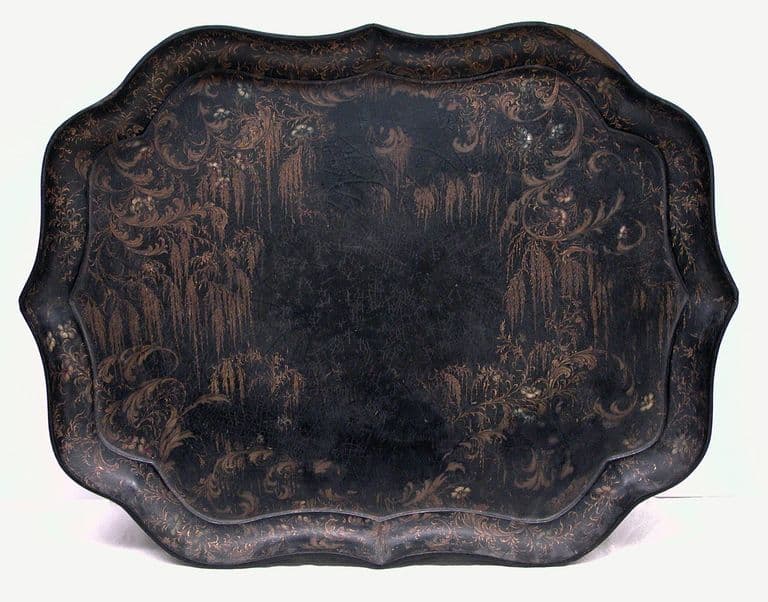
Japanning was the art of coating metal or papier mâché with layers of hard, glossy varnish, imitating Asian lacquer. Taylor applied it to snuff boxes and other “toys”: the small, fashionable metal goods that were Birmingham’s speciality. In the eighteenth century a toy was not a plaything. It was a button, a buckle, a box, a trinket.
The gilt button
Hutton, writing in 1783, gave Taylor the credit for a whole family of products. “To this uncommon genius we owe the gilt-button, the japanned and gilt snuff-boxes, with the numerous race of enamels.” From the same works, Hutton said, came the painted paper snuff box, and one of Taylor’s painters earned three pounds ten shillings a week decorating them at a farthing each. That meant 3,360 boxes a week from one pair of hands.
The numbers were staggering for the time. According to Hutton, Taylor’s works turned out buttons worth £800 every week, before anything else was counted. The Victoria County History records that he was said to employ 500 people in 1755, though it is not known whether they all worked under his roof or were outworkers in their own homes. When Lady Shelburne visited she noticed how many of the workers were women.
Hutton told a story about a nobleman who toured the works, bought a toy worth eighty guineas, and remarked as he paid that “he plainly saw he could not reside in Birmingham for less than two hundred pounds a day.”
Fifty pairs of hands
What made it possible was not one invention but a system. Lord Shelburne, writing up the visit for his wife, put his finger on it. Birmingham men had found mixed metals soft enough to be shaped by stamping machines. And instead of one worker finishing a button, they split the job “into as many different hands as possible”.
“Thus a button passes through fifty hands,” Shelburne wrote, “and each hand perhaps passes a thousand in a day.” The work became so simple that children of six or eight could do it, for between ten pence and eight shillings a week. This is the division of labour, described ten years before Adam Smith made it famous in The Wealth of Nations.
Taylor was also among the first to make silver-plated goods on a large scale in Birmingham, alongside Boulton & Fothergill, according to the Victoria County History. It adds that he was said to have made £1,000 from recovering precious metal from jewellers’ floor sweepings.
The bank
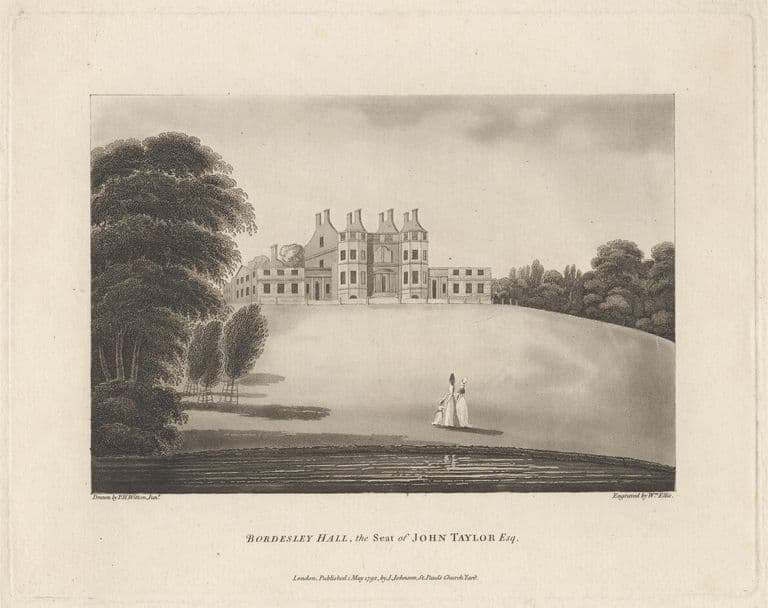
By the 1760s Taylor was rich, and he was a public figure. He was High Sheriff of Warwickshire in 1756. Hutton records that he bought Sheldon Hall in 1751, and that he held land at Bordesley and Moseley. Lady Shelburne drank tea at “Mr. Taylor’s villa”, “a very handsome house with a dairy and garden about it”, where his daughter, a girl of about fourteen, played the harpsichord and sang.
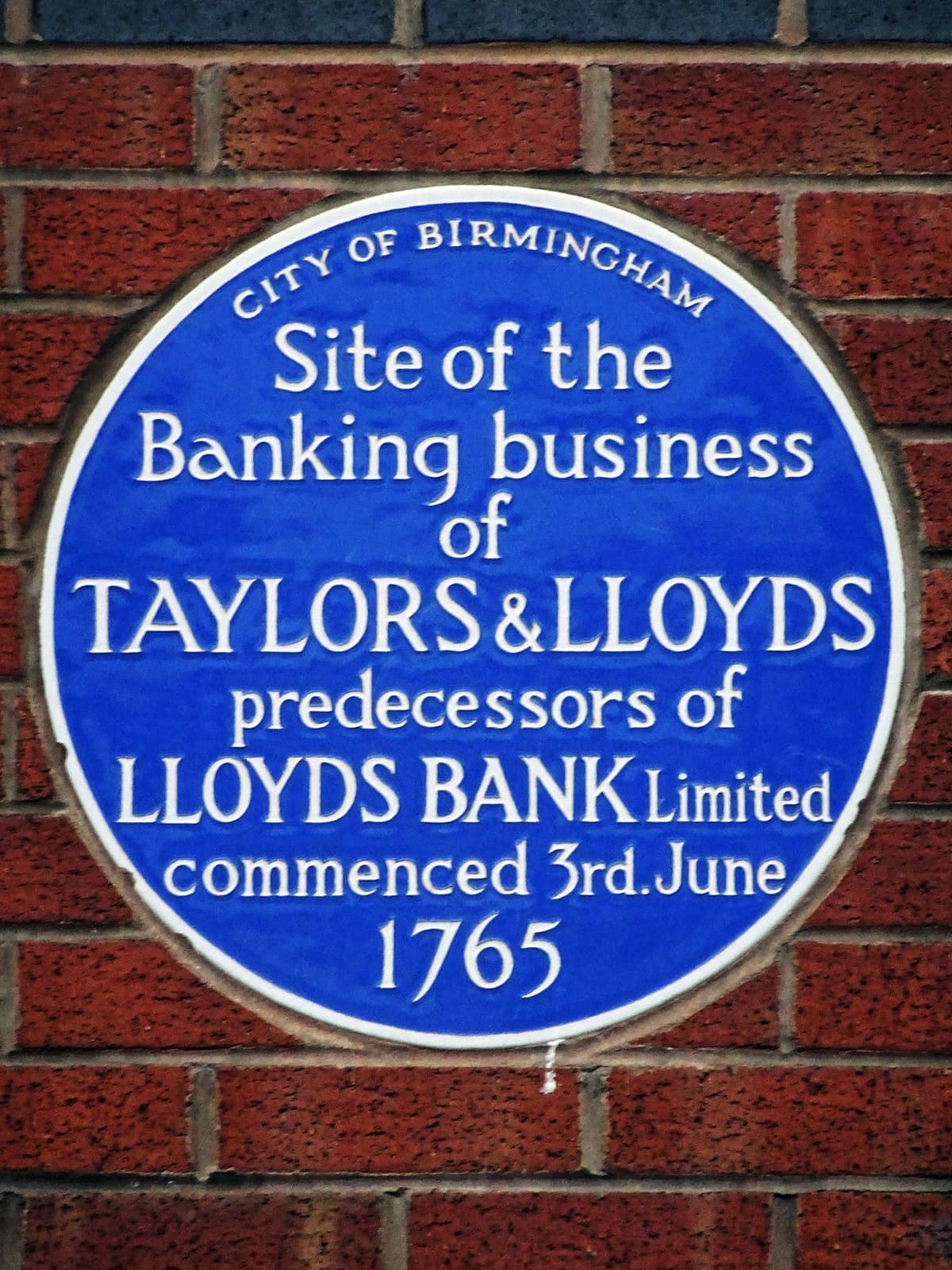
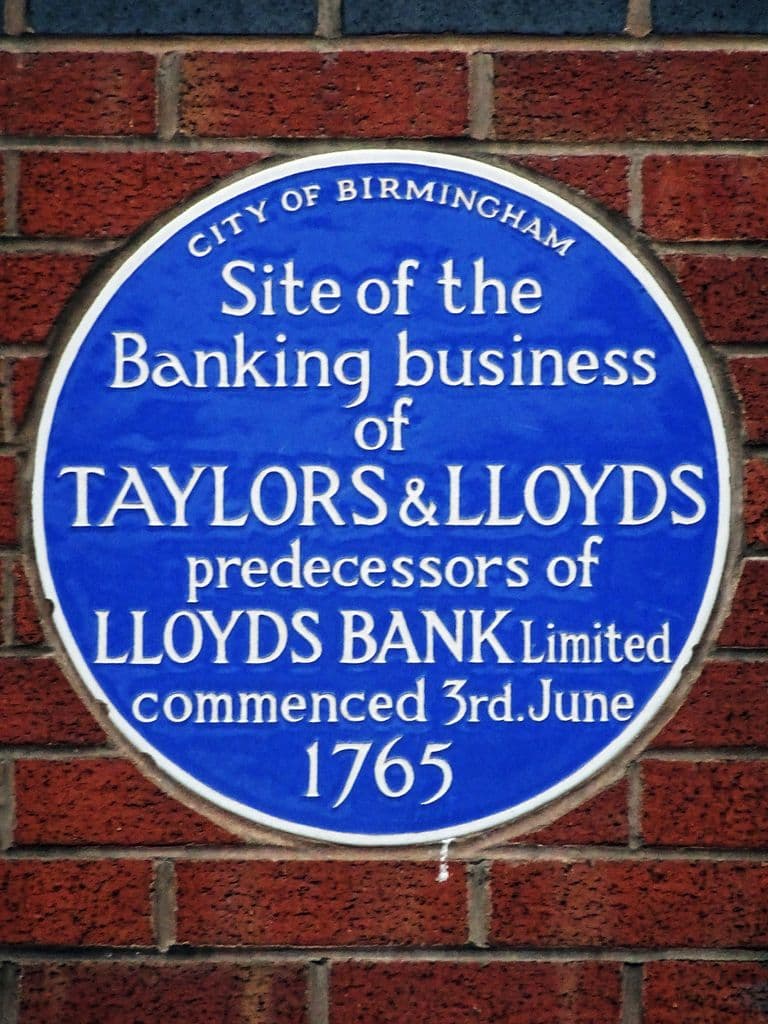
What Birmingham lacked was a proper bank. Hutton explained the problem: in a town famous for trade, “about every tenth trader was a banker, or, a retailer of cash”, mostly drapers and grocers. That changed in 1765. On 3 June the iron merchant Sampson Lloyd, his son Sampson, John Taylor and Taylor’s son John opened Taylors & Lloyds in Dale End. Hutton wrote that their credit was “equal to that of the bank of England”.
The Lloyds were Quakers with a strong name for honest dealing. Taylor brought his fortune and his standing. The Library of Birmingham’s archivists record that within ten years the bank had 277 customers, and that its handwritten notes were accepted across the town.
Death
Taylor died in 1775. The Victoria County History puts his property at £200,000. His son John carried on both the business and the bank. Taylor & Perry of Newhall Street, the successors to the button works, still kept a London outlet in the next century.
The factory has gone, and no picture of it is known. Even its address is uncertain. But the bank he helped to found is still trading under the Lloyd name.
Why it mattered
John Taylor showed Birmingham what scale could do before Matthew Boulton built Soho. When the Victoria County History explains how new Soho was, it measures it against “even the largest aggregation of semi-skilled workers like Taylor’s button factory”. Taylor was the yardstick Boulton set out to beat. Taylor’s works proved that small, cheap, pretty things, made by many hands each doing one task, could make a man as rich as a lord.
His bigger legacy was money itself. In 1765 he and Sampson Lloyd gave Birmingham’s makers somewhere safe to keep their cash and borrow against it. The Victoria County History notes that after 1765, anyone short of capital could borrow “at Taylor and Lloyds’ Bank”. Hutton, who knew him, compared him with Shakespeare and Newton. That was too much. But every Lloyds branch in the country goes back to a counter in Dale End, and to a button maker who knew the value of a farthing.
On the map
3 places connected with John Taylor. Tap a number for directions — some sites are private homes or gardens, so each place’s page says what you can see from the street.

- Bordesley Hall — Lost
- Taylors & Lloyds bank, Dale End (site) — Lost, Site redeveloped · Directions to Taylors & Lloyds bank, Dale End (site) (opens Google Maps)
- The Jewellery Quarter — Surviving, Surviving but altered
Key dates
- 3 June 1765 — Taylors & Lloyds bank opens in Dale EndJohn Taylor, Sampson Lloyd and their sons open Birmingham’s first proper bank in Dale End. It later became Lloyds Bank. A blue plaque marks the site.
- May 1766 — Lady Shelburne watches John Taylor enamel a boxLord and Lady Shelburne tour Birmingham’s works. Taylor enamels a landscape on a box in front of them. Shelburne notes that a button passes through fifty hands, and that half the guns sent to Africa will burst.
- 1775 — Death of John TaylorJohn Taylor, Birmingham’s great button and japanned-ware maker and co-founder of Taylors & Lloyds, dies leaving property worth about £200,000.
Sources and further reading
Birth year: about 1711 is the usual date (Wikipedia, Mapping Birmingham); one secondary summary gives 1704. No birth record has been checked. Trade: Richard Wilkes (1737, as quoted by Mapping Birmingham) calls him a saddler; J. P. Turner (1866) and Wikipedia call him a cabinet-maker. The Wilkes diary has not been seen directly. The works: secondary sources place his factory first in Crooked Lane off Dale End and later in Union Street; none of these has been checked against a directory or map, so no place record has been made. Burial at St Philip’s comes from Wikipedia only. The 500 workers of 1755 may have included outworkers (VCH). The Library of Birmingham dates the end of the Taylor family’s part in the bank to the death of the last Taylor partner in 1853; Lloyds Banking Group sources say 1852. Lady Shelburne does not name the ‘villa’ she visited.
- An History of Birmingham (2nd edition) — William Hutton, Pearson and Rollason, Birmingham (Project Gutenberg text), 1783. ‘Manufactures’ and ‘Bank’
- Life of William, Earl of Shelburne, vol. 1 — Lord Edmond Fitzmaurice, Macmillan, London, 1875. vol. 1, pp. 399–405: Lady Shelburne’s diary, May 1766, and Lord Shelburne’s notes
- Economic and Social History: Industry and Trade, 1500–1880, in A History of the County of Warwick, vol. 7, pp. 81–139 — W. B. Stephens (ed.), Victoria County History, 1964. 1640–1760 and 1760–1840 sections
- The Resources, Products, and Industrial History of Birmingham and the Midland Hardware District — Samuel Timmins (ed.), Robert Hardwicke, London, 1866. J. P. Turner, ‘The Birmingham Button Trade’
- From local beginnings… — Library of Birmingham, Archives & Collections (The Iron Room blog), 2015
- The history of Lloyds Bank — Lloyds Banking Group
- Taylors & Lloyds blue plaque, Dale End — Open Plaques
- Lost Trades No. 11: John Taylor (c. 1711 to 1775) & Birmingham’s First Factory (probably) — Mapping Birmingham (blog), 2019. Wilkes diary quotation
- John Taylor (manufacturer) — Wikipedia
Comments
Comments will load here.