
On a Monday morning in July 1755 two visitors from London went to see a mill on the River Rea, just below the old street of Digbeth. One of them wrote it all down in a letter.
“They take a large Iron Bar,” he wrote, “and with a huge Pair of Shears, work’d by a Water-wheel, cut it into lengths of about a Foot each.” The pieces went into a furnace until they were red hot, then between steel rollers that stretched them to about four feet long. Then they passed through a second pair of rollers, with sharp edges fitting together like scissors, which sliced each bar into about eight square rods. Cooled and tied in bundles, the rods went off to the nailers.
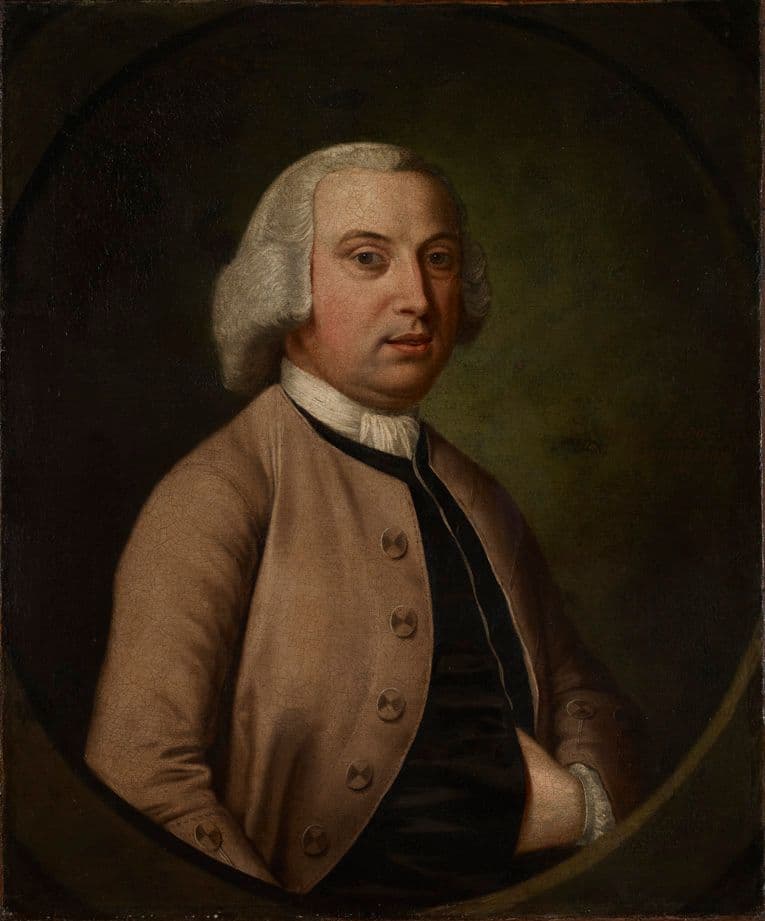
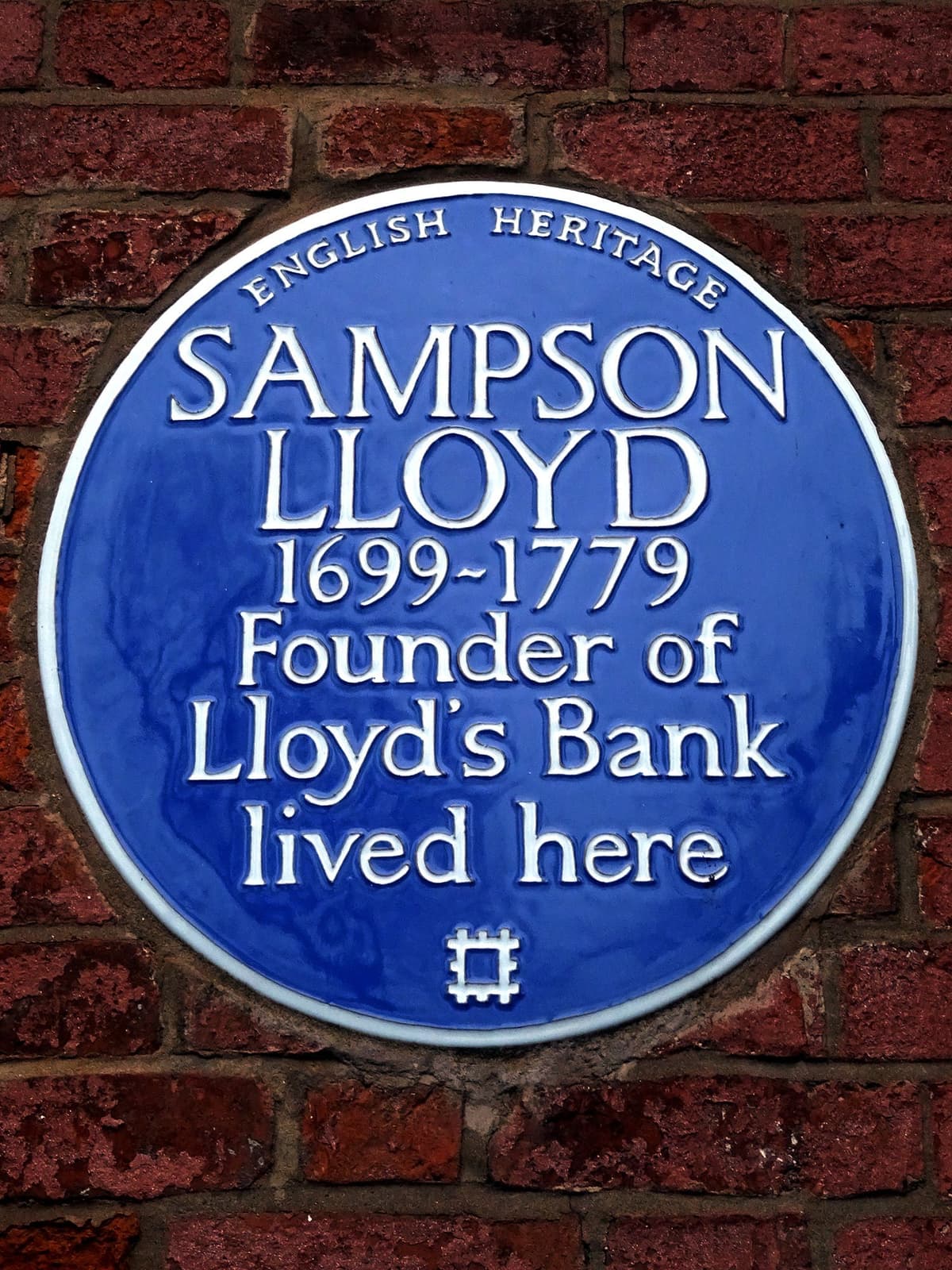
The visitors called it “Mr. Lloyd’s Slitting Mill”. That evening they dined at Mr Lloyd’s, then walked out two miles into the country to see his new house. The man they visited was Sampson Lloyd, Quaker, ironmaster and, ten years later, a founder of the bank that still carries his name.
The Lloyds of Dolobran
The Lloyds were Welsh Quakers, from Dolobran in Montgomeryshire. They had suffered for their faith: Sampson’s father, also called Sampson, was born in 1664 while his own father was in prison for being a Quaker. In 1698 or 1699 that first Sampson Lloyd moved to Birmingham. Birmingham was not a chartered borough, so the laws that kept Dissenting ministers out of corporate towns did not apply there, and his brother-in-law John Pemberton already lived in the town. He set up as an iron merchant in Edgbaston Street.
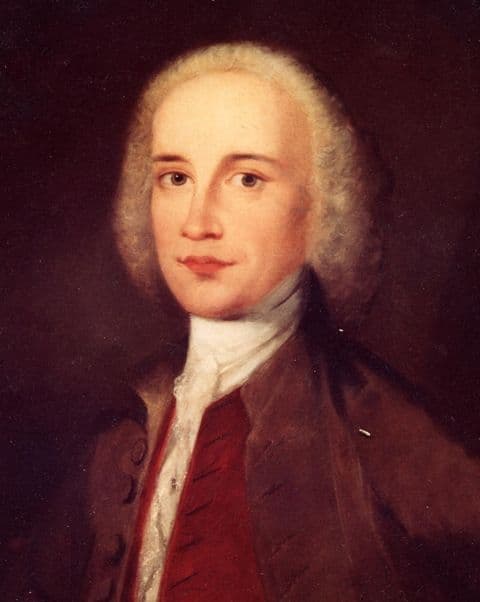
Sampson Lloyd II was born on 15 May 1699, the third son of that marriage. His mother, Mary, was a sister of the ironmaster Ambrose Crowley. There were three Sampsons in a row, and they are easy to confuse. This is the middle one. His son, Sampson Lloyd III (1728–1807), would be his partner in the bank.
Iron for the nailers
Early Georgian Birmingham ran on iron. Thousands of nailers worked at small hearths in their own homes, around Birmingham and across the Black Country, cutting, heading and pointing nails one at a time. They needed iron rod of the right thickness. Making it was, as the Victoria County History puts it, “technically the most complex operation” in the trade, and it needed water power and heavy machinery.
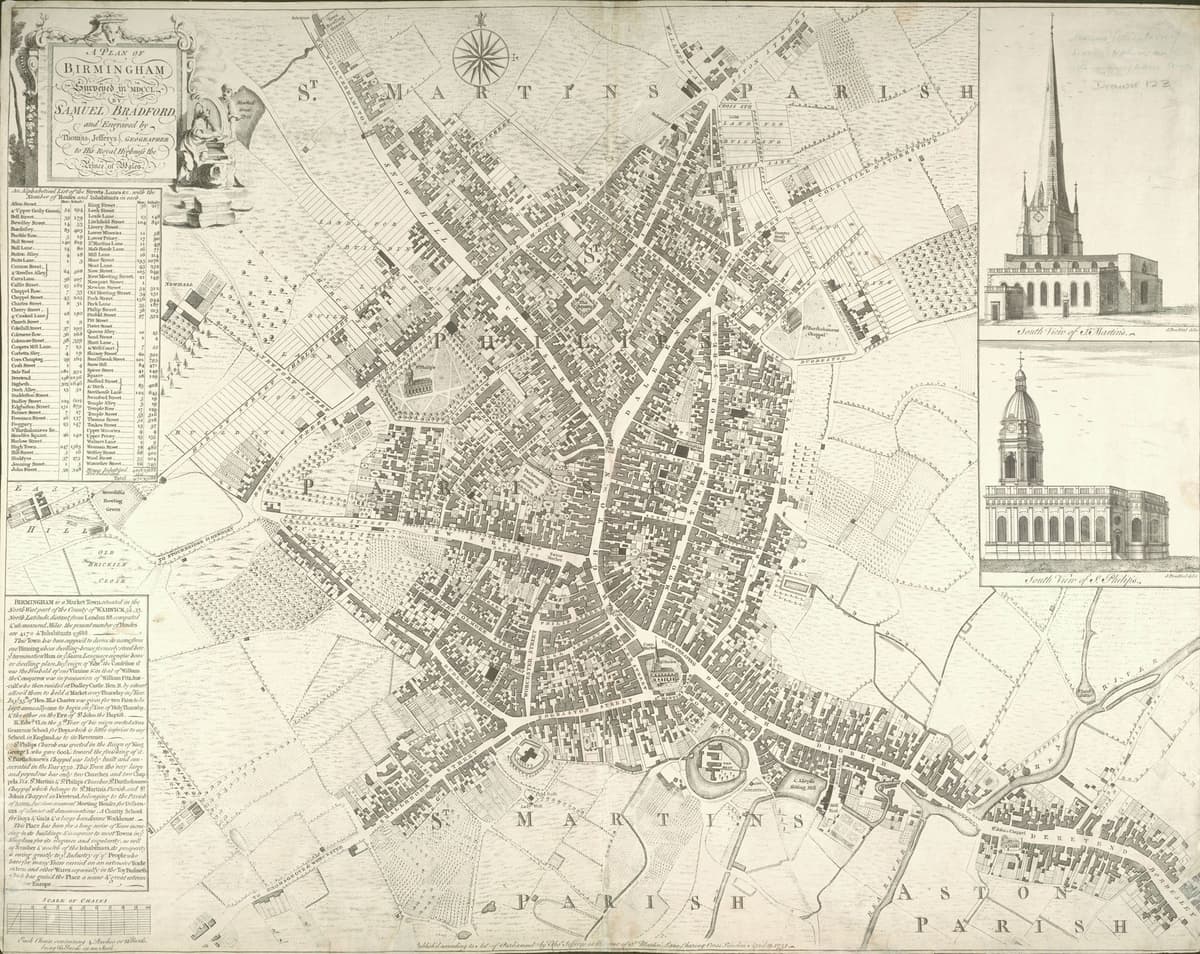
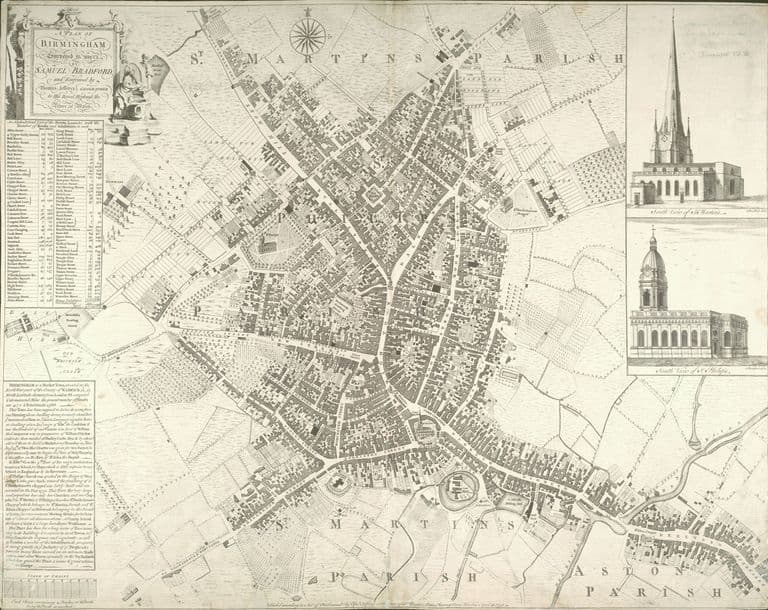
That was what a slitting mill did. The Lloyds’ mill was the old Town Mill below Digbeth, a corn mill first built around 1549. In the seventeenth century it had become a blade mill, and royalist soldiers under Prince Rupert wrecked it in 1643, allegedly because it made swords for Parliament. Another Quaker family, the Farmers, ironmongers and, it seems, gunmakers, then turned it into a slitting mill. By 1731 the Lloyds had it, as “Lloyd’s Slitting and Corn Mills”, held in the name of Sampson’s brother Charles. Samuel Bradford’s map of Birmingham in 1751 shows a big mill pool between the moat of the old manor house and Mill Lane, labelled “C. Lloyd’s Slitting Mill”.
The family firm also ran charcoal forges at Burton upon Trent and Powick, near Worcester. The forges turned pig iron into bar iron; the mill rolled and slit it for sale. The Victoria County History calls Sampson II a “banker and merchant rather than ironmonger”: his skill was trade and credit more than the forge.
Family and Friends
That credit rested on family. In 1727 Sampson married Sarah Parkes, whose father owned mines at Wednesbury. She died within a few years, leaving a son, Sampson, born in 1728. In 1731 he married Rachel Champion, from a Bristol Quaker family. They had a large family, including Charles, later a banker, and Rachel, who married David Barclay, linking the Lloyds to the Barclays.
The Quakers were a small, close network. They married each other, apprenticed their sons to each other and lent to each other. The Victoria County History notes that Sampson Lloyd “was able to draw on his numerous Quaker relations”. That trust was a kind of capital.
The Farm
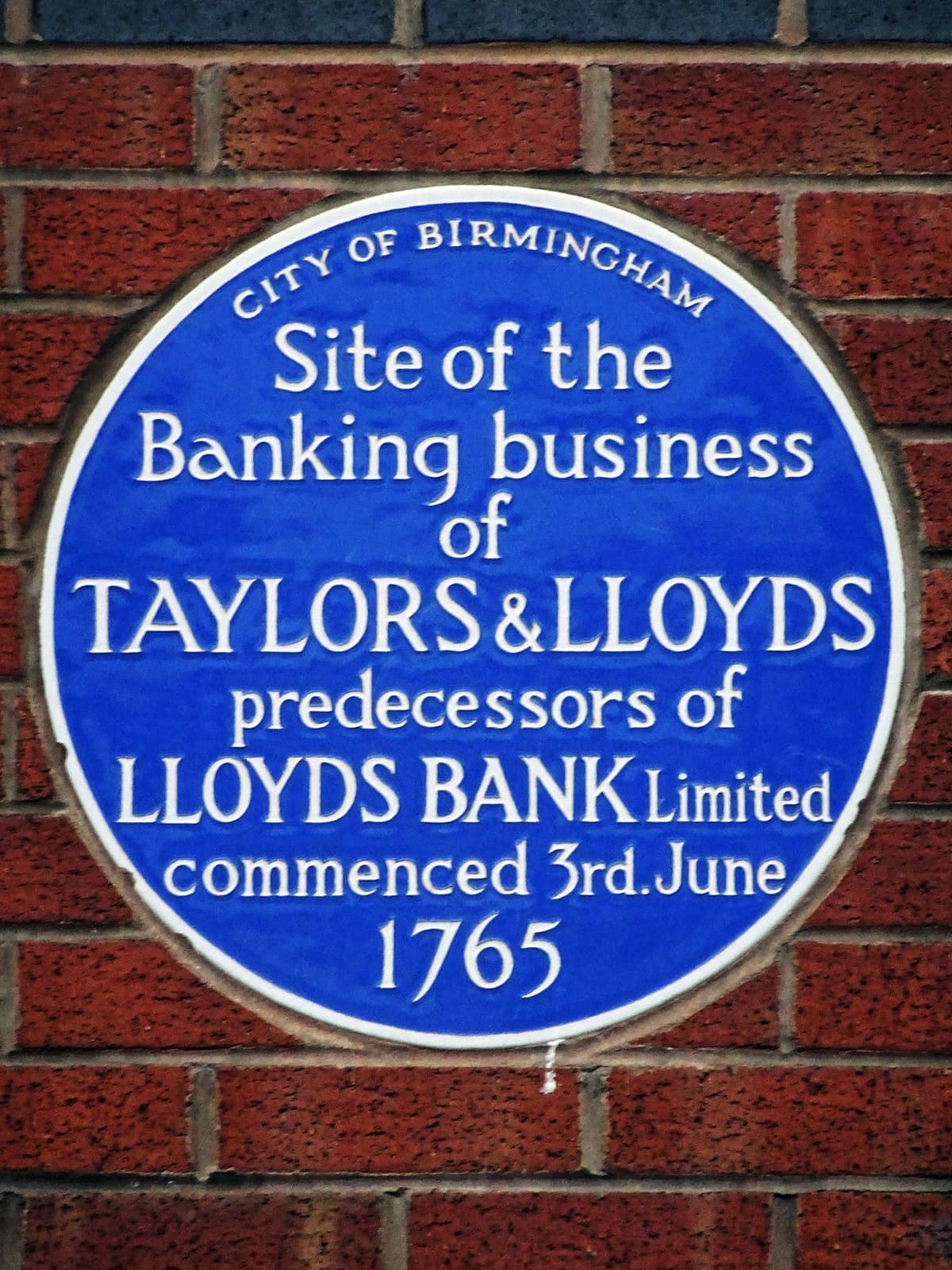
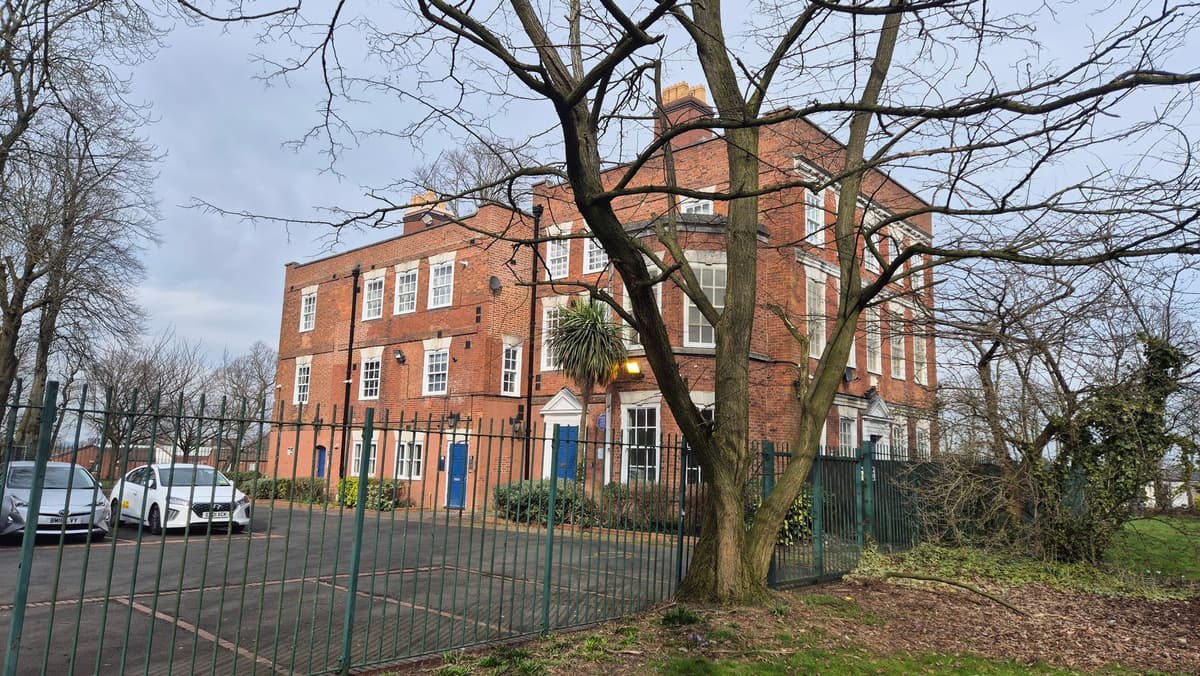
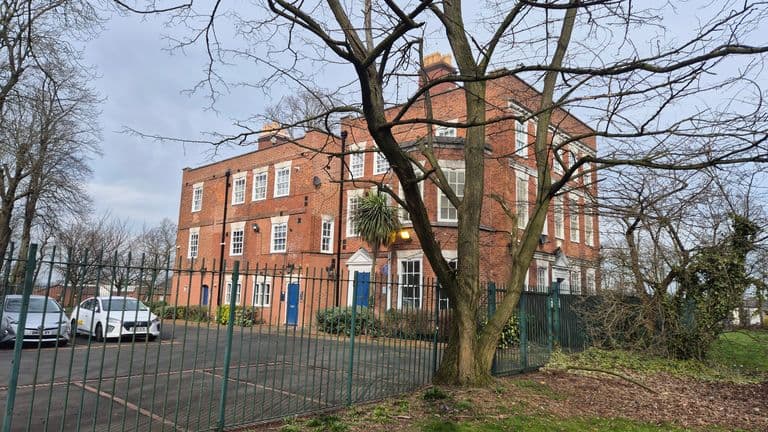
In 1732 the family moved to 18 Park Street, near St Martin’s. Ten years later, on 28 April 1742, Sampson bought a 56-acre estate at Bordesley, about two miles out of town, with an old farmhouse called Owen’s Farm. In 1745 he planted an avenue of elms, and beyond it he built a square, three-storey house of red brick, finished by about 1750. It had a fluted Doric doorway and a fine carved staircase. He called it simply “Farm”.
The London visitors of 1755 admired it: “a large genteel House and Gardens, Stables and Out-houses, which are mostly new Buildings, very neat and convenient; before the Front of the House is a long spacious Lawn, planted on each Side with Rows of Elms”. It stayed the Lloyds’ home until 1912.
The bank
By the 1760s Birmingham badly needed a bank. Manufacturers had to buy metal, pay wages every week and then wait for customers to pay. William Hutton, the town’s first historian, remembered that before 1765 “about every tenth trader was a banker, or, a retailer of cash”, mostly drapers and grocers.
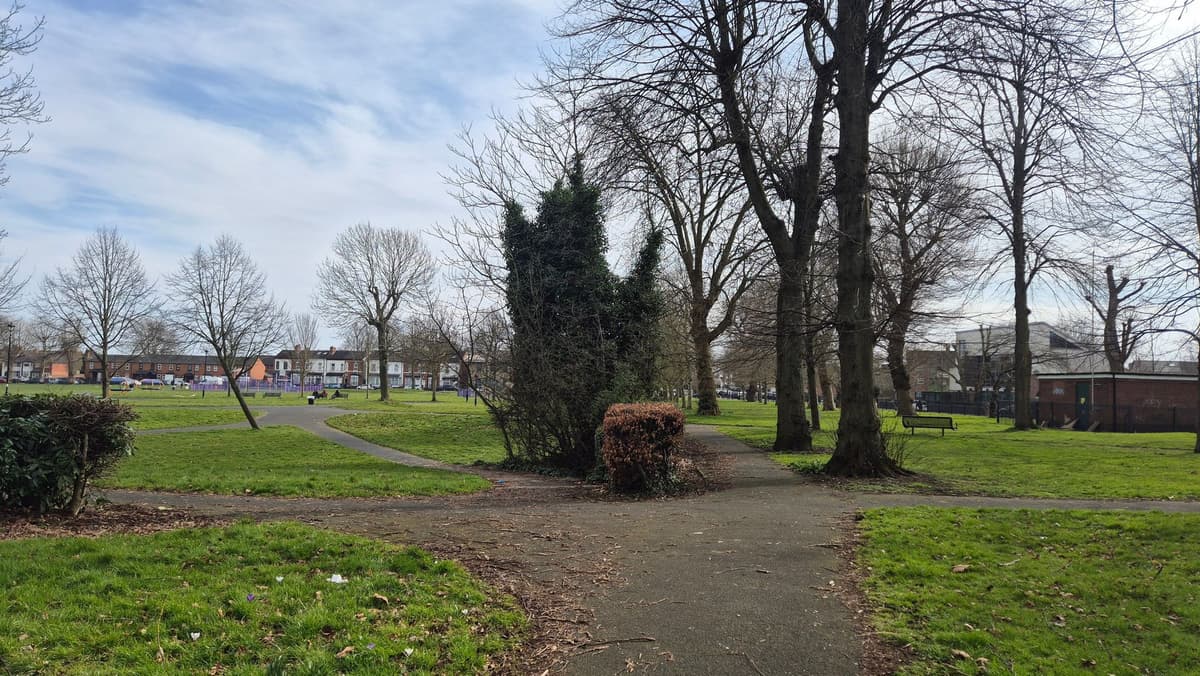
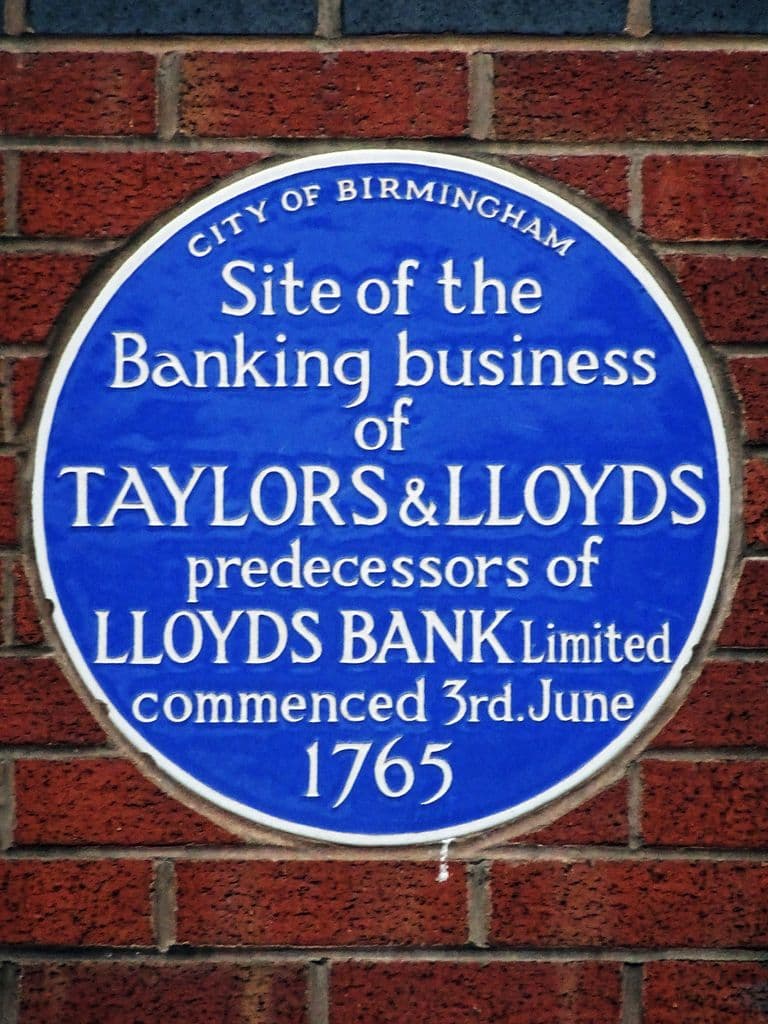
Sampson Lloyd and John Taylor, the richest button maker in town, had already been lending money and handling payments. In 1765 they made it a business. On 3 June the bank of Taylor and Lloyd opened in Dale End, with four partners: the two fathers and their sons. Each put in a quarter of the £6,000 capital. According to the family history no partnership deed was ever drawn up; the partners simply signed a private ledger each year. Sampson III, then 37, did most of the work.
People trusted it at once. Its customers included iron founders, button makers, buckle makers and gun makers. Within ten years it had 277 customers, and its handwritten notes passed from hand to hand across the town. When the partners first divided their profits, in 1771, the six years’ trading had earned more than £10,000.
Iron and guns
The Lloyds’ iron went into many Birmingham products, including guns. The historian Priya Satia notes that the Lloyds had long supplied iron to the Galtons, Birmingham’s biggest gunmakers, whose firm sold guns into the African slave trade. The bank also counted gunmakers among its customers. There is no evidence that Sampson Lloyd II traded in enslaved people himself. In the next generation his sons Sampson and Charles were among the first in Birmingham to campaign against the slave trade, in 1787.
Death
Sampson Lloyd II died on 30 November 1779 and was buried in the Friends’ burial ground in Birmingham. His son Sampson III almost doubled the size of Farm in the late 1770s and helped found a London bank in Lombard Street. The bank in Dale End grew into Lloyds & Co. and, in 1865, the Lloyds Banking Company.
Why it mattered
Sampson Lloyd’s two great businesses look very different, a mill and a bank. They did the same job. The slitting mill took bar iron that nailers could not use and turned it into rod they could. The bank took money that sat in strongboxes and turned it into credit that makers could borrow. Both helped Birmingham’s thousands of small masters to work.
Historians often tell the Industrial Revolution as a story of machines. Lloyd’s life is a reminder that it ran on trust and capital too. Boulton’s Soho, Watt’s engines and the town’s button, gun and toy makers all needed someone to lend to them, and the Quaker iron merchant from Edgbaston Street was one of the first to do it properly.
His mill pool has long been built over. But his house still stands in Sparkbrook, Grade II* listed and one of the rarest Georgian houses in the city, beside streets called Sampson Road and Dolobran Road. And the bank he helped open in Dale End in 1765 still trades under his family’s name.
On the map
4 places connected with Sampson Lloyd. Tap a number for directions — some sites are private homes or gardens, so each place’s page says what you can see from the street.

- General Hospital, Summer Lane (site) — Lost, Site redeveloped · Directions to General Hospital, Summer Lane (site) (opens Google Maps)
- Taylors & Lloyds bank, Dale End (site) — Lost, Site redeveloped · Directions to Taylors & Lloyds bank, Dale End (site) (opens Google Maps)
- Lloyd’s slitting mill (the Town Mill), Digbeth — Lost · Directions to Lloyd’s slitting mill (the Town Mill), Digbeth (opens Google Maps)
- Farm (Lloyd’s Farmhouse), Sparkbrook — Surviving, Surviving but altered · Directions to Farm (Lloyd’s Farmhouse), Sparkbrook (opens Google Maps)
Key dates
- c. by 1731 — The Lloyds’ slitting mill at work on the ReaThe Quaker Lloyd family hold the old Town Mill below Digbeth as ‘Lloyd’s Slitting and Corn Mills’, slitting bar iron into rods for Birmingham’s nailers. Iron profits later helped found Taylors & Lloyds bank.
Sources and further reading
There were three Sampson Lloyds: Sampson I (1664–1724/5), who came to Birmingham; Sampson II (1699–1779), this record; and his son Sampson III (1728–1807), the bank’s chief working partner and the ‘Samson Lloyd’ sent by the Quakers to visit the Galtons in 1795. The first Sampson’s arrival is dated 1698 by Samuel Lloyd’s family history (1907) and 1699 by the Victoria County History. The VCH warns that Samuel Lloyd’s book is ‘of doubtful accuracy’; it is used here mainly for the 1755 letters it prints, the purchase of Farm and the bank’s early accounts. It says the slitting mill was ‘erected’ by the Lloyds at the bottom of Bradford Street; the VCH, followed here, shows it was the old Town Mill, converted earlier by the Farmers. The 1731 and 1751 records name Charles Lloyd, Sampson’s elder brother, as occupier; how the brothers shared the business is not clear. Samuel Lloyd gives the price of Farm as £850, from the conveyance; other accounts say £1,290. The story that the elm avenue was planted in the year of the 1745 rising is family memory. The link to Galton guns comes from Priya Satia’s Empire of Guns, used here at second hand.
- The Lloyds of Birmingham, with some account of the founding of Lloyds Bank — Samuel Lloyd, Cornish Brothers, Birmingham, 1907. chs. 3–6 (1755 letters pp. 25–26, 42–43; Farm pp. 32–36; bank pp. 53–56)
- Economic and Social History: Industry and Trade, 1500–1880, in A History of the County of Warwick, vol. 7, pp. 81–139 — W. B. Stephens (ed.), Victoria County History, 1964. ‘1640–1760’; ‘Entrepreneurs and Capital’
- Economic and Social History: Mills, in A History of the County of Warwick, vol. 7, pp. 253–269 — W. B. Stephens (ed.), Victoria County History, 1964. Town Mill
- A Plan of Birmingham surveyed in 1750 by Samuel Bradford, engraved by Thomas Jefferys — Samuel Bradford, Thomas Jefferys, London, 1751
- Lloyd’s Farmhouse, Farm Park — National Heritage List for England entry 1076180 — Historic England, 1976
- An History of Birmingham (2nd edition) — William Hutton, Pearson and Rollason, Birmingham (Project Gutenberg text), 1783. ‘Bank’
- From local beginnings… — Library of Birmingham, Archives & Collections (The Iron Room blog), 2015
- The history of Lloyds Bank — Lloyds Banking Group
- Empire of Guns: The Violent Making of the Industrial Revolution — Priya Satia, Penguin, 2018
- Blue Plaque: Sampson Lloyd — Birmingham Civic Society
- Sampson Lloyd — Wikipedia
Comments
Comments will load here.