
What was here?
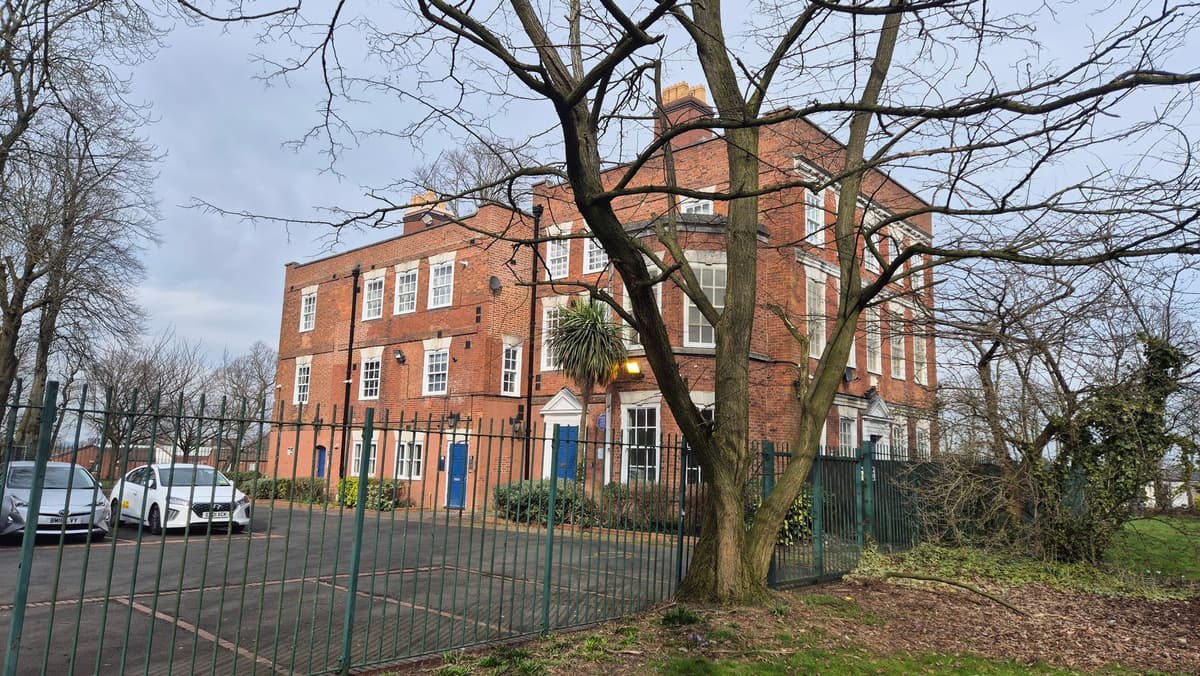
In 1742 Sampson Lloyd bought a 56-acre estate called Owen’s Farm, about two miles from Birmingham, and built a square brick house there by about 1750. He called it Farm. It was the family home of the Lloyds, founders of Lloyds Bank, until 1912. The house survives on Sampson Road, with part of its grounds now a public park.
History
A country seat for a Quaker merchant
On 28 April 1742 Sampson Lloyd, iron merchant of Birmingham, bought an estate of 56 acres in the manor of Bordesley with an old farmhouse called Owen’s Farm. An avenue of elms was planted in 1745, and the new house was built facing it. Historic England dates the house to the mid-eighteenth century and says the work seems to have been finished by 1750.
It was a square house of red brick, three storeys high and five windows wide, with a moulded cornice, a parapet and a fluted Doric doorway with a pediment. Inside, a narrow hall ran between a dining room and a parlour, with the kitchen and a fine carved staircase at the back.
Visitors from London
In July 1755 two London visitors, friends of the Pemberton family, dined with Lloyd in town and walked out to see it. One wrote of “a large genteel House and Gardens, Stables and Out-houses, which are mostly new Buildings, very neat and convenient; before the Front of the House is a long spacious Lawn, planted on each Side with Rows of Elms”. The dairy and farm buildings stood at a distance, which made the house, he thought, cleaner and more agreeable.
Enlarged by the banker
In the late 1770s Sampson Lloyd III, the working partner in the family bank, almost doubled the house. New service quarters changed the plan: the old front door was blocked, the back kitchen became the entrance hall and a big window was added on the west front. Much of the interior was redecorated in a Georgian style in the late nineteenth century.
Town reaches the Farm
As Birmingham grew, the estate was built over, and by 1907 only about ten acres were left. New streets took family names, among them Sampson Road and Dolobran Road, after the Lloyds’ Welsh home. The Lloyds lived at Farm until 1912. Part of the grounds is now Farm Park, a public park beside the house.
What happened here?
Sampson Lloyd built the house in the 1740s and it was the home of the Birmingham Lloyds, the banking family, for 170 years. The family history of 1907 says the pleasure garden was laid out by Mrs Knowles, the Quaker friend of Dr Johnson.
Why it mattered
Farm is a rare survival: a Georgian merchant’s country house that still stands inside the city. It ties one of Britain’s biggest banks to a real place in Sparkbrook.
The same spot, then and now
1888–1913
Today
Old map: Ordnance Survey six-inch, reproduced with the permission of the National Library of Scotland (CC BY 4.0). Today: © OpenStreetMap contributors.
What’s there now
What survives
The house itself, listed Grade II*, with later service wings. Nearby farm buildings are separately listed Grade II: a farm cottage, a stable and coach-house block and a cart shed. Part of the grounds survives as Farm Park.
Today
Lloyd House, 139 Sampson Road, is private residential flats; it was sold at auction in September 2025. The outside can be seen from Farm Park and Sampson Road. A blue plaque reads: “Sampson Lloyd, 1699–1779, founder of Lloyd’s Bank, lived here”.
Today
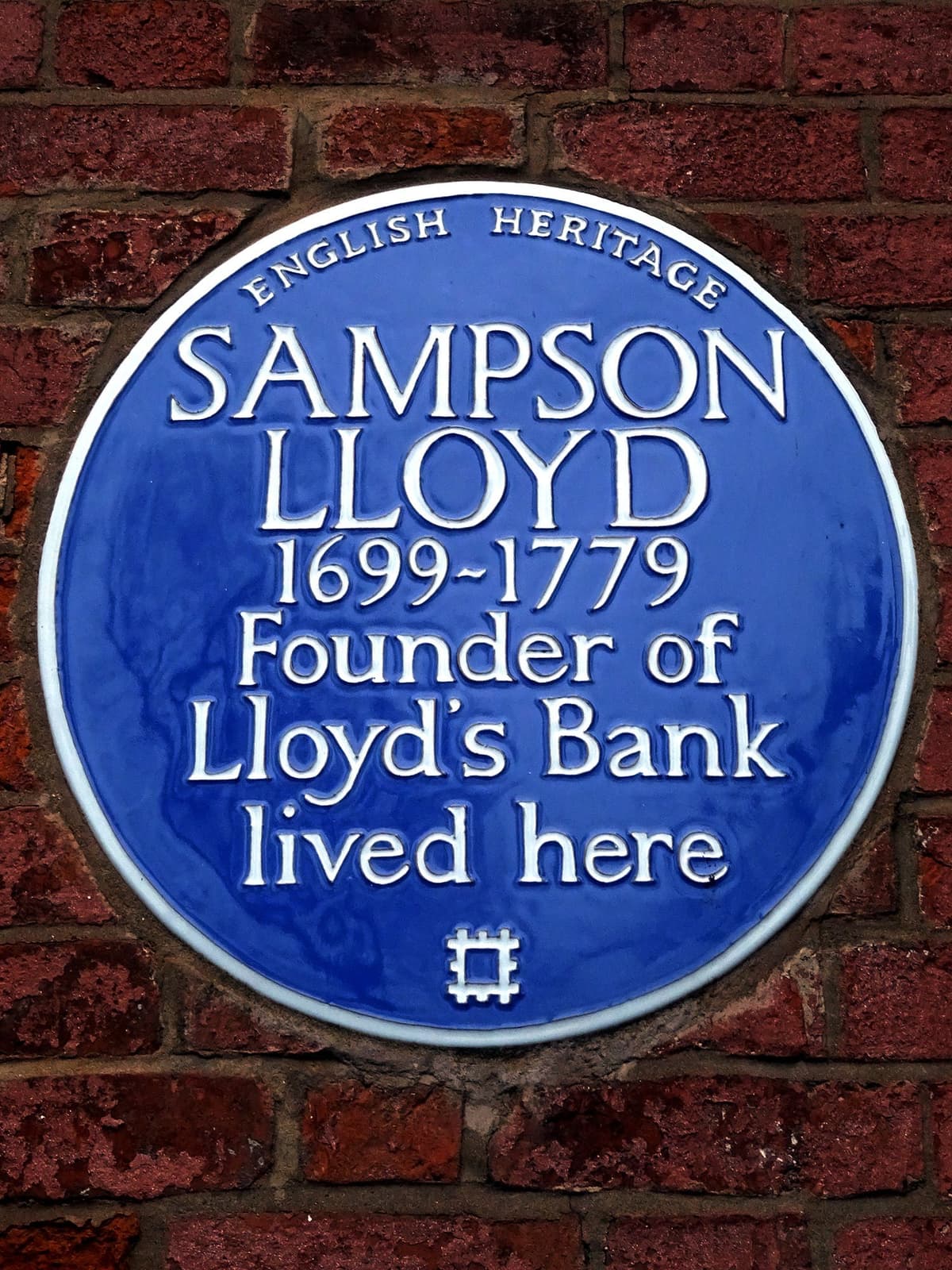
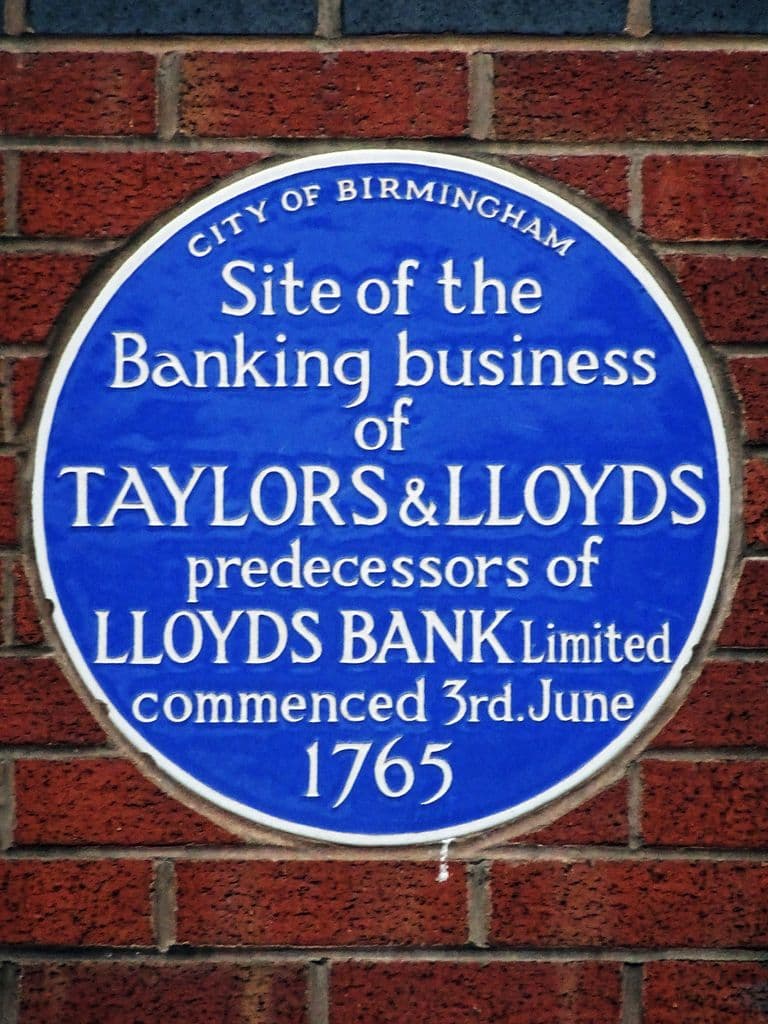
Sampson Lloyd blue plaque, Lloyd’s Farmhouse, 20 March 2016Spudgun67, 20 March 2016. Wikimedia Commons (own work) · CC BY-SA 4.0 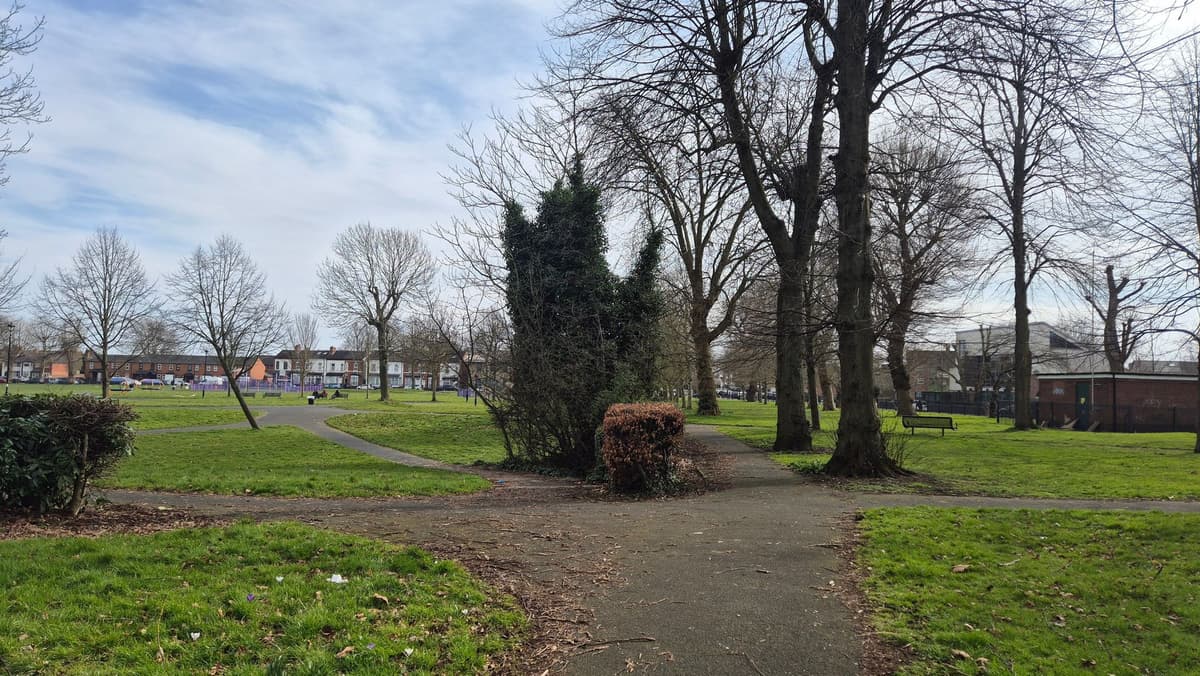
Farm Park, Sparkbrook, 6 March 2025Paul Collins, 6 March 2025. Geograph via Wikimedia Commons · CC BY-SA 2.0
Sources and further reading
The price is given as £850 in the family history (from the conveyance) and as £1,290 elsewhere. The 1745 date for the avenue is family memory. The family history (1907) says the old Tudor farmhouse, Owen’s Farm, still stood in the grounds in 1906; whether it survives has not been checked. The 2005 date of the English Heritage plaque comes from a photographer’s description on Wikimedia Commons; the Civic Society gives the date as unknown. How and when the grounds became a public park has not been confirmed from an official source.
- Lloyd’s Farmhouse, Farm Park — National Heritage List for England entry 1076180 — Historic England, 1976
- The Lloyds of Birmingham, with some account of the founding of Lloyds Bank — Samuel Lloyd, Cornish Brothers, Birmingham, 1907. pp. 33–36, 43
- Lloyd House, 139 Sampson Road, Sparkbrook (auction lot) — Bond Wolfe, 2025
- Blue Plaque: Sampson Lloyd — Birmingham Civic Society
- National Heritage List for England — listed building points (open data) — Historic England
Comments
Comments will load here.