
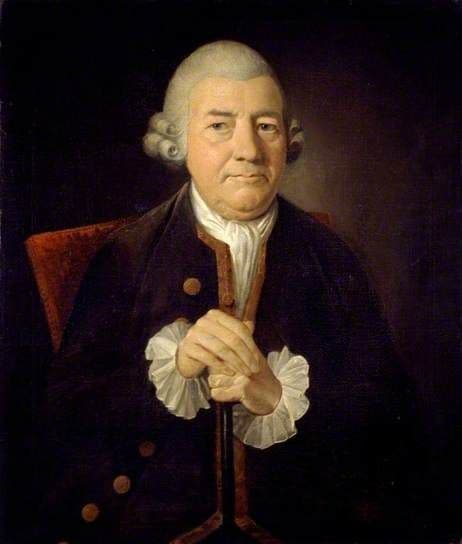
Every time you choose Baskerville from the font menu on a computer, you are using letters designed in eighteenth-century Birmingham by a man who taught handwriting, carved gravestones, got rich on shiny tea trays and then spent a fortune trying to print the most beautiful books in the world.
And that is before we get to what happened to his body.
Writing master
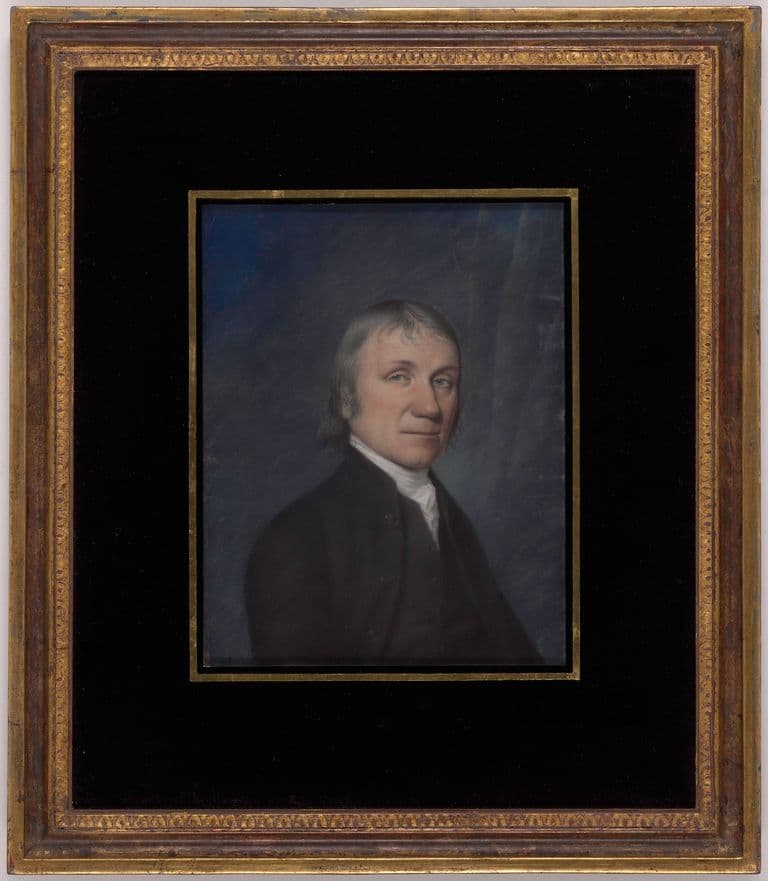
John Baskerville was born at Wolverley in Worcestershire in January 1707 and came to Birmingham as a young man, around 1726. He earned his living as a writing master, teaching handwriting and book-keeping, and as a cutter of gravestones. A slate slab survives advertising “Grave Stones Cut in any of the Hands by John Baskervill Writing Master”.
It was the perfect training for a typefounder. He spent his days thinking about the shapes of letters.
The japanning fortune
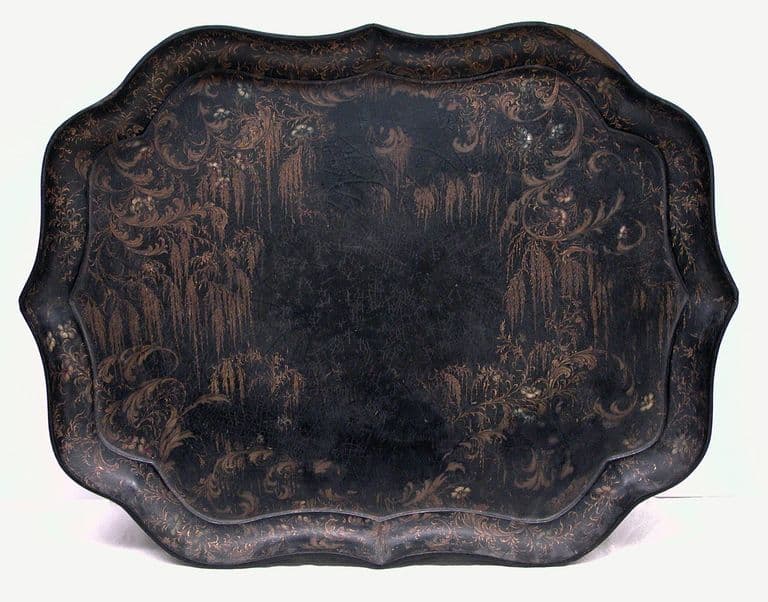
In the late 1730s and 1740s Baskerville moved into one of Birmingham’s smartest metal trades: japanning. This was lacquered and painted metalware, such as trays, candlesticks and waiters, glossy enough to imitate costly Asian lacquer.
In 1742 he patented a way of rolling and grinding thin metal plates and finishing them to look like mahogany or tortoiseshell. The money rolled in, and he kept the business going for the rest of his life. Oddly, not one authentic piece of Baskerville japanned ware is known to survive.
A little Eden at Easy Hill
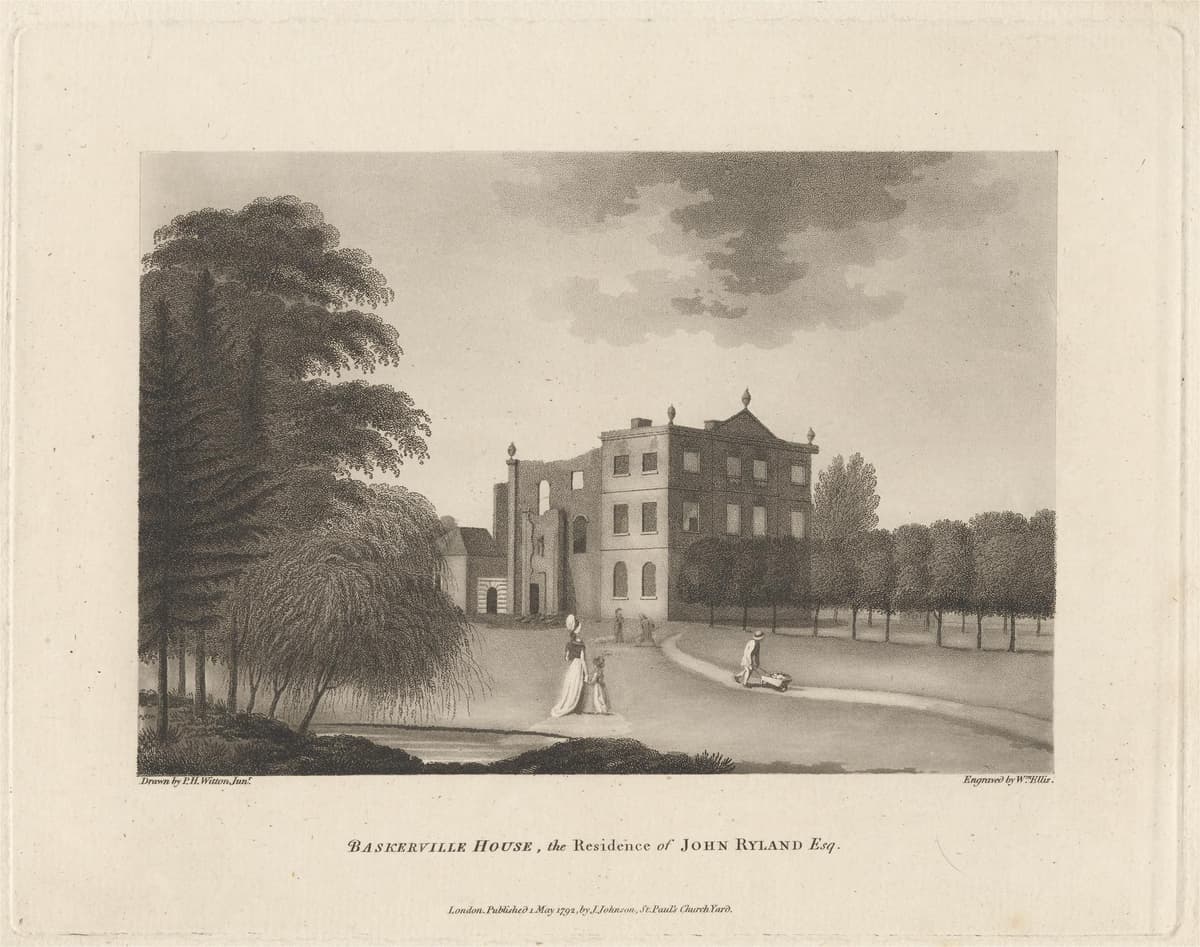
In 1745 he took a building lease of about eight acres just north-west of the town and named it Easy Hill. He built a fine house in the middle of it, with workshops, walks and gardens. The town’s historian William Hutton wrote that Baskerville “converted it into a little Eden … but the town, as if conscious of his merit, followed his retreat, and surrounded it with buildings”.
The town did indeed swallow it. Easy Hill lay on what is now Centenary Square, roughly where the Library of Birmingham and Baskerville House stand today. In 1761 Baskerville served as High Bailiff of Birmingham.
The perfect book
From around 1750, now wealthy and in middle age, Baskerville turned to printing. He was not content to buy type and run a press. He wanted to control everything.
He explained why in the preface to his Milton: “Having been an early admirer of the beauty of Letters, I became insensibly desirous of contributing to the perfection of them. I formed to myself Ideas of greater accuracy than had yet appeared, and have endeavoured to produce a Set of Types according to what I conceived to be their true proportion.”
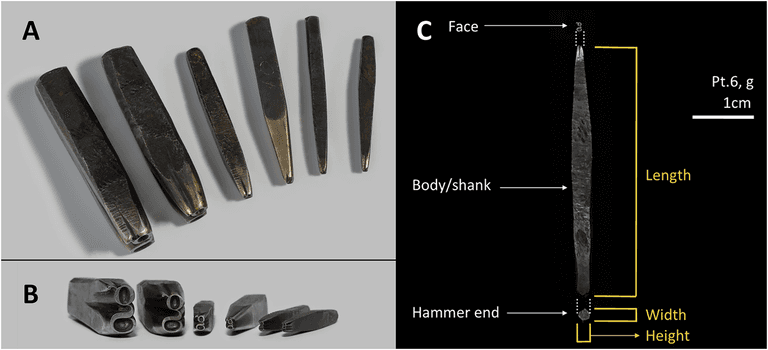
He had punches cut and type cast to his own designs. He worked on the steel punches himself, but not alone. A 2026 scientific study of the surviving punches shows they were made in his workshop with the help of John Handy, an engraver and punch-cutter, his foreman William Martin and the printer Myles Swinney.
He experimented with ink, with smoother paper and with the construction of the presses themselves. Here the tea trays came back in. His ink was blacker and glossier than any other printer’s, and researchers on the Baskerville Punches project say analysis shows it used the same pigments as his japanning paints. He pressed his paper to make it smooth and shiny, much like his lacquered metalware. On the page he left more space between the lines, wider margins and almost no decoration, so his books looked clean, airy and easy to read.
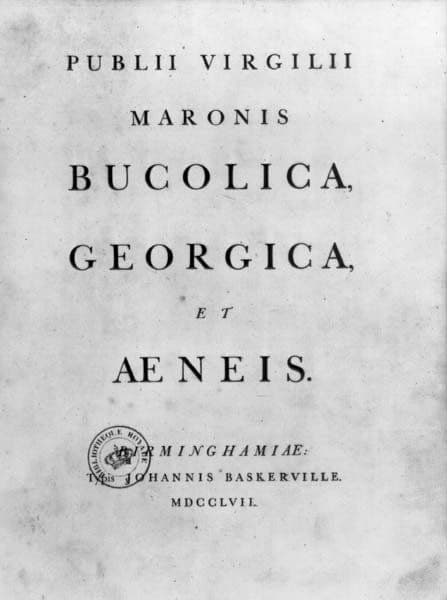
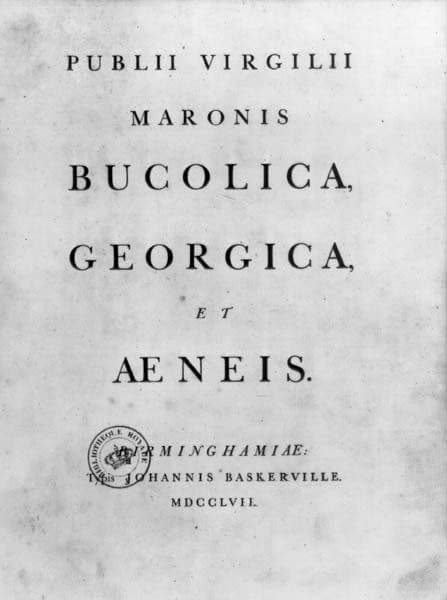
His first book, a Virgil, appeared in 1757. Milton followed in 1758. What he wanted most was to print the Bible. Only licensed printers could do that, to keep errors out of scripture, so he needed Cambridge. The governing body of the University Press voted to make him one of its printers for ten years. Even then he would not start until enough subscribers had signed up to guarantee the income. Their names were printed in the book: booksellers taking several copies, Cambridge people and Birmingham friends, among them Matthew Boulton. The great folio Bible of 1763 is generally reckoned his masterpiece.
He printed the Book of Common Prayer in the 1760s too. It was a striking commission for a man who, as we shall see, wanted nothing to do with priests.
Abroad, his books were admired. Benjamin Franklin was among his correspondents. At home, his rivals sneered. Time was on his side.
Mrs Eaves
Around 1750 Sarah Eaves came to Easy Hill as housekeeper. Her husband, Richard Eaves, had fled the country. She and Baskerville lived as man and wife for years and married in June 1764, after Richard Eaves died.
When Baskerville died, Sarah carried on the business and sold his type. His punches eventually went to France, bought by the playwright Beaumarchais to print an edition of Voltaire. In 1953 they were presented to the University of Cambridge, and Cambridge University Library now looks after them, 3,240 items in all. Recently the Baskerville Punches project, with Birmingham City University, has scanned and 3D-modelled them, from 60-point letters down to 14-point, and brought some back to the Birmingham Assay Office to analyse the steel. It was the first time any of them had been in Birmingham for about 250 years.
“Beneath this Cone”
Baskerville had no time for organised religion. The Library of Birmingham calls him a religious sceptic. He would not lie in consecrated ground. When he died at Easy Hill in January 1775, he was buried, as he had directed, in a vault beneath a conical building in his own grounds, with an epitaph he wrote himself:
“Stranger — Beneath this Cone in unconsecrated ground / A friend to the liberties of mankind directed his body to be inhum’d. / May the example contribute to emancipate thy mind / From the idle fears of superstition / And the wicked arts of Priesthood.”
He was not allowed to rest.
The wanderings of John Baskerville
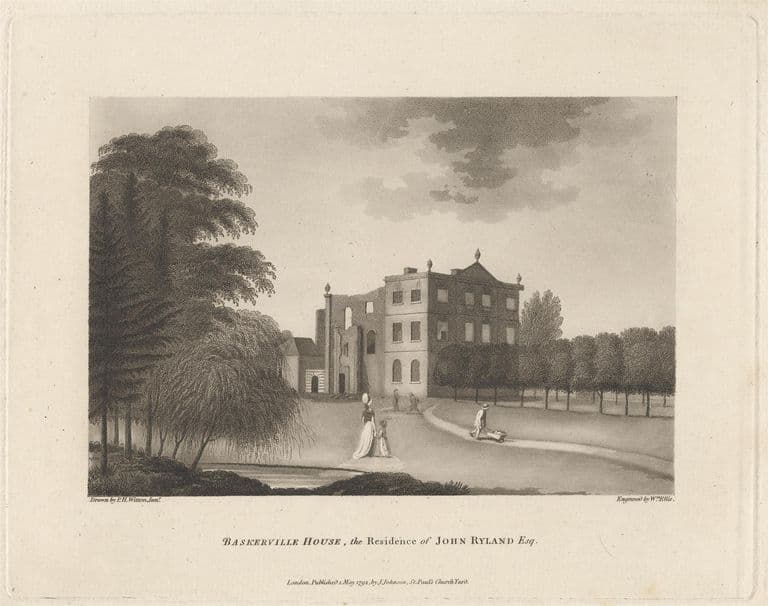
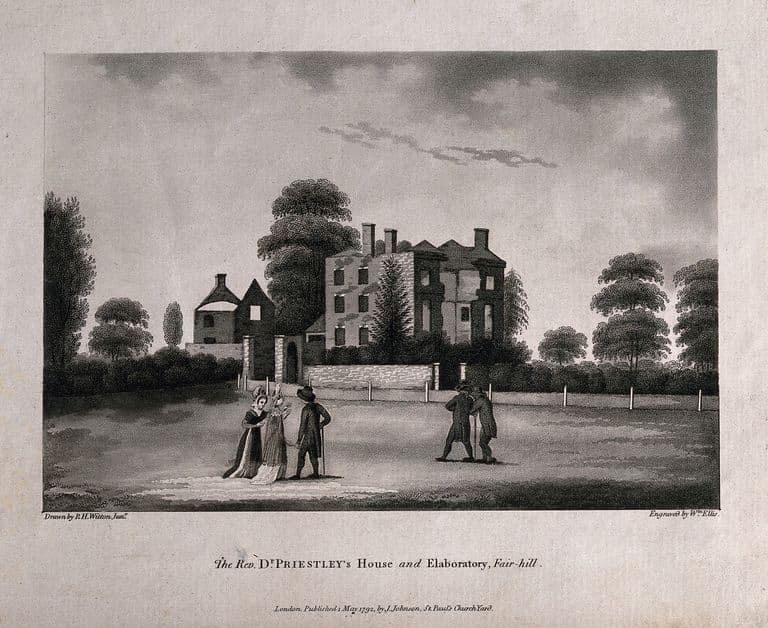
Sarah died in 1788 and Easy Hill was sold to John Ryland, who called it Baskerville House. On 15 July 1791, in the second day of the Priestley Riots, the mob sacked and burned it. The vault was left alone.
Then came the canals. In the 1820s the grounds were dug up for canal wharves, and the workmen uncovered a lead coffin. Inside was Baskerville.
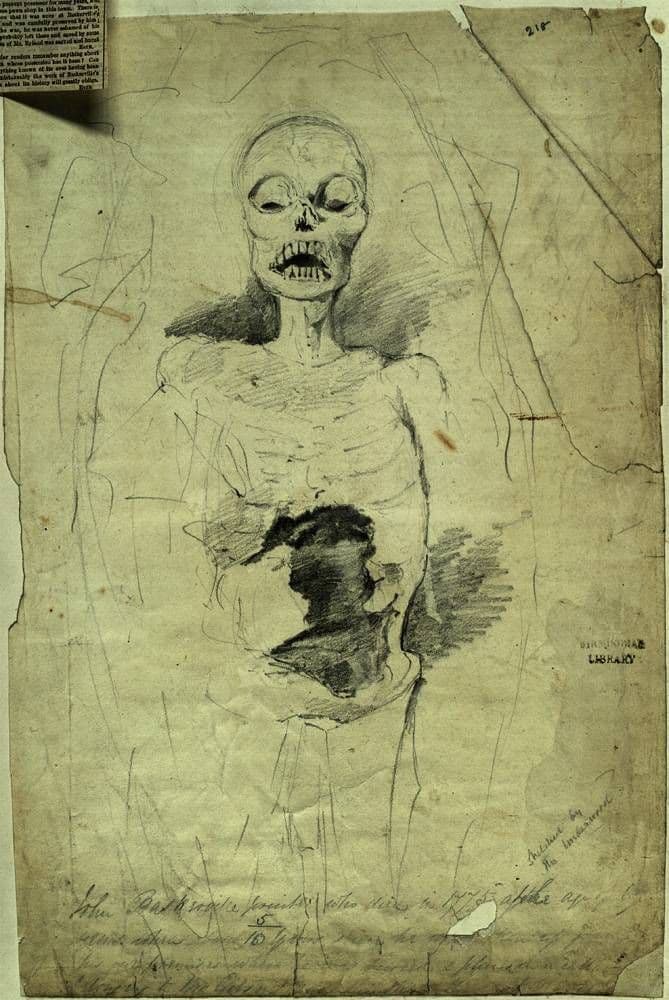
The coffin was kept by Mr Gibson, who owned the land, and later in Mr Marston’s warehouse in Monmouth Street, and it was opened for curious visitors. In August 1829 one of them, Thomas Underwood, sketched the body and recorded its “singular state of preservation”.
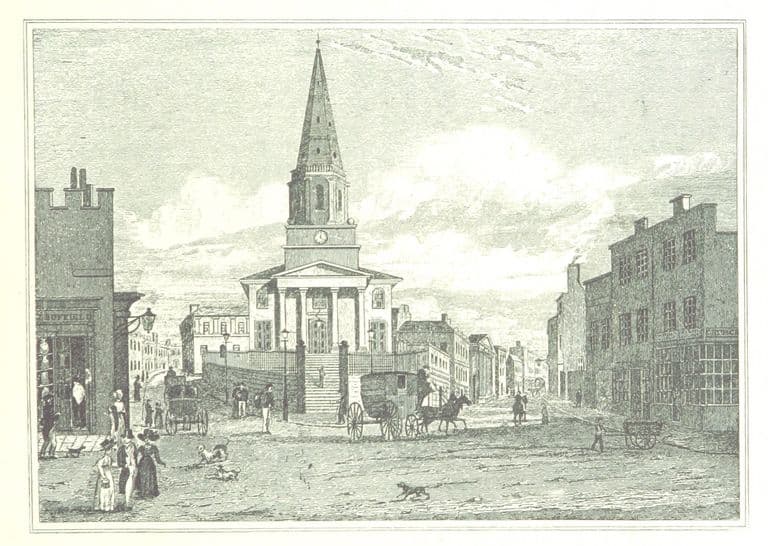
This was becoming an embarrassment. The rector of St Philip’s refused to bury him. So a bookseller, Mr Knott, offered his own family vault under Christ Church on New Street, and the coffin was slipped in quietly. Nobody wrote it in the burial register.
Baskerville vanished for more than sixty years. On 12 April 1893 an unregistered vault, catacomb number 521, was opened at Christ Church. Inside was a coffin. It was Baskerville.
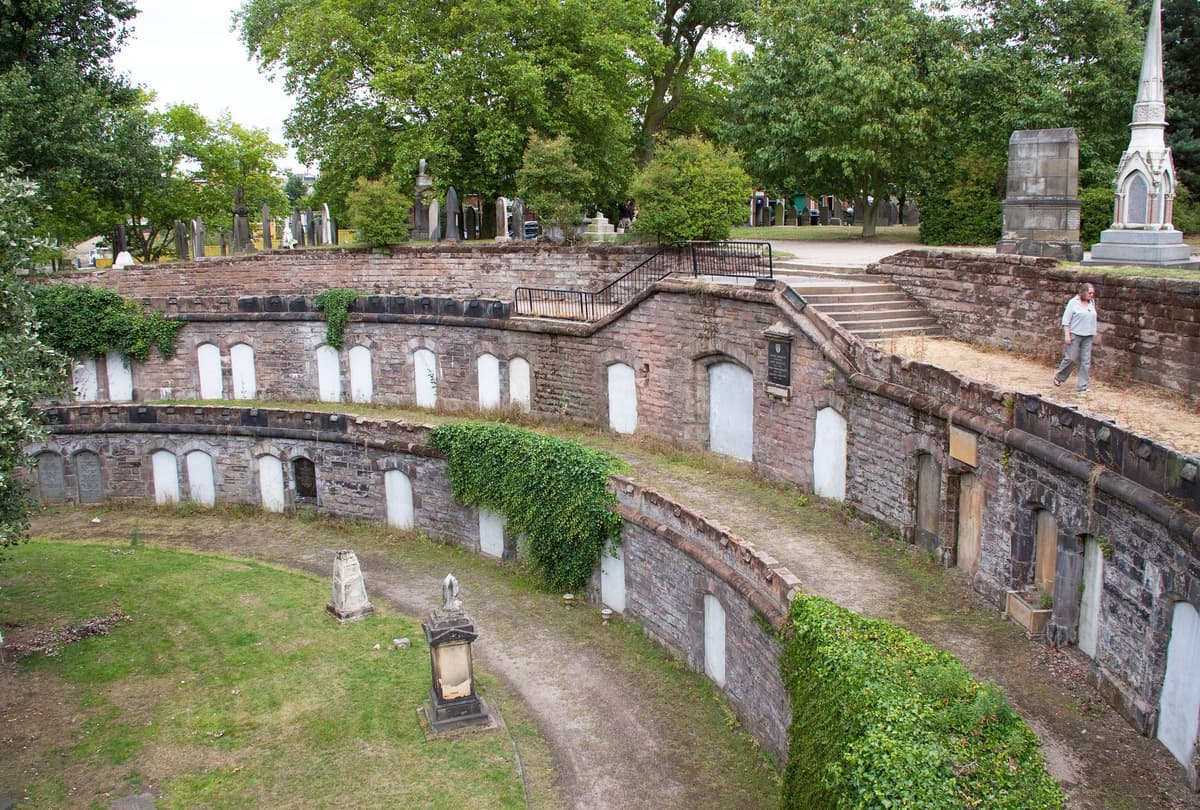
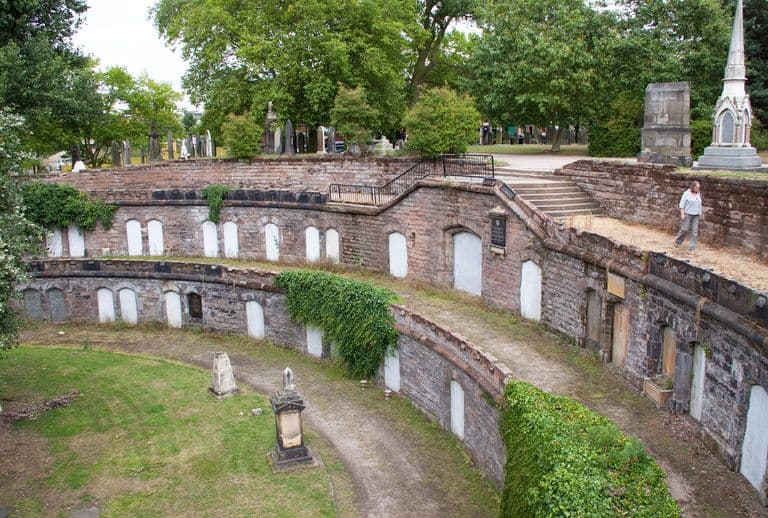
When Christ Church was demolished a few years later, its dead had to be moved. In February 1898 Baskerville was laid in the catacombs of the Church of England cemetery at Warstone Lane, in the Jewellery Quarter. In 1963 a city councillor, John Silk, asked for him to be moved to unconsecrated ground, as he had wished. The request was refused. He is there still.
Why it mattered
Baskerville never belonged to the Lunar Society. He died in January 1775, before its regular meetings began. But he was the same kind of Birmingham person: a self-made maker who would not leave anything alone until it was better.
He made his money in the town’s metal trades and spent it on an obsession with letters, and the obsession won. His typeface outlived its critics, and it is on screens and pages around the world today.
There is a fine irony in his last address. The man who wrote his own epitaph against priests lies in an Anglican catacomb, among strangers. But Birmingham found a better memorial for him. In Centenary Square, on the ground where his little Eden stood, David Patten’s sculpture Industry and Genius spells out VIRGIL in reversed bronze letters, like type waiting to be inked, in honour of the first book he printed.
On the map
4 places connected with John Baskerville. Tap a number for directions — some sites are private homes or gardens, so each place’s page says what you can see from the street.

- Christ Church, New Street — Lost, Site redeveloped · Directions to Christ Church, New Street (opens Google Maps)
- General Hospital, Summer Lane (site) — Lost, Site redeveloped · Directions to General Hospital, Summer Lane (site) (opens Google Maps)
- Warstone Lane Cemetery — Surviving, Surviving but altered · Directions to Warstone Lane Cemetery (opens Google Maps)
- Easy Hill — Lost, Site redeveloped · Directions to Easy Hill (opens Google Maps)
Key dates
- 1742 — Baskerville patents a japanning processJohn Baskerville patents a way of rolling and grinding thin metal plates and finishing them to look like mahogany or tortoiseshell. Japanned metalware makes his fortune.
- 1745 — Baskerville takes the lease of Easy HillBaskerville takes a building lease of about eight acres just north-west of the town, names it Easy Hill and builds a house and works there. The site is now Centenary Square.
- October 1752 — Baskerville’s workshop finishes its first punchesAt Easy Hill, John Baskerville tells the publisher Robert Dodsley that fourteen punches for his large titling letters have been “begun and finished in nine days only”. His punch-cutter John Handy did much of the cutting; the type was used for the Virgil of 1757.
- 1757 — Baskerville prints his VirgilBaskerville’s first book, a quarto Virgil, appears from his press at Easy Hill, using type, ink and paper he developed himself.
- 1763 — Baskerville’s Cambridge BibleAs printer to the University of Cambridge, Baskerville produces his folio Bible, generally reckoned his masterpiece.
- 29 November 1766 — Death of John WyattJohn Wyatt, co-inventor of roller spinning, dies and is buried at St Philip’s, Birmingham. Matthew Boulton and John Baskerville follow his coffin.
- May 1766 — Lady Shelburne watches John Taylor enamel a boxLord and Lady Shelburne tour Birmingham’s works. Taylor enamels a landscape on a box in front of them. Shelburne notes that a button passes through fifty hands, and that half the guns sent to Africa will burst.
- January 1775 — Baskerville dies and is buried at Easy HillJohn Baskerville dies at Easy Hill. A religious sceptic, he is buried in unconsecrated ground in his own grounds, under a cone, with an epitaph he wrote himself.
- 15 July 1791 — Easy Hill (Baskerville House) is burnedRioters sack and burn Baskerville House at Easy Hill, by now the home of John Ryland. Baskerville’s vault in the grounds is not disturbed.
- 12 April 1893 — Baskerville’s lost coffin is found at Christ ChurchAn unregistered vault, catacomb no. 521, is opened at Christ Church, New Street. Inside is Baskerville’s coffin, hidden there quietly around 1829 after decades of wandering.
- February 1898 — Baskerville is reburied at Warstone LaneWith Christ Church due for demolition, Baskerville is moved to the catacombs of Warstone Lane Cemetery in the Jewellery Quarter, where he still lies.
Sources and further reading
Birth year: under the old calendar the year began on 25 March, so January 1707 was then written 1706. The Oxford DNB heads its entry 1706–1775; the Jewellery Quarter Research Trust says 1707; the Library of Birmingham says 1706/7. Wikipedia (lead only) gives baptism on 28 January.
Date of death: Wikipedia (lead only) gives 8 January 1775; the Library of Birmingham confirms 1775. We say January 1775.
Discovery of the coffin: 1820 (Jewellery Quarter Research Trust), 1821 (Burials & Beyond) or about 1828 (Library of Birmingham). We say “in the 1820s”.
Final burial at Warstone Lane: 24 February 1898 per the Library of Birmingham (from the register); the tablet reads 26 February 1898 per the Baskerville Punches project. Catacomb no. 521 refers to the Christ Church vault; his position at Warstone Lane has not been confirmed.
Religion: sources call him an atheist (JQRT), a deist (Baskerville Punches) or a religious sceptic (Library of Birmingham). We use the last.
The “buried upright” story: there is no evidence for it. It may come from his reported quip that he could be buried sitting, standing or lying, but not flying. Underwood’s 1829 account describes a body lying in a coffin.
Easy Hill lease: 1745, per the 1885 DNB and the Victoria County History.
Not used for lack of evidence: the year of Sarah Baskerville’s death is given as 1788 by one source only; a claim that visitors paid sixpence to see the body; a son said to have died in infancy (Benton only); a friendship with Matthew Boulton (not confirmed in the sources checked); the present home of the punches (reportedly Cambridge University Library). No link to the slave trade or abolition was found.
- John Baskerville, Type-founder and Printer, 1706–1775 — Josiah H. Benton, Boston, 1914. writing master; japanning; Easy Hill; Hutton quotation; Sarah Eaves; burials
- Baskerville, John (1706–1775), printer and typefounder — James Mosley, Oxford Dictionary of National Biography, 2004. printing; Virgil, Milton, Bible
- WL 53343 – John Baskerville — Jewellery Quarter Research Trust (material from Dr Caroline Archer). arrival c.1726; punches
- The Burials of John Baskerville — Rachel Clare (Library of Birmingham, The Iron Room blog), Library of Birmingham Archives & Collections, 2016. Ref. EP 26/2/4/1. epitaph; Easy Hill site; 1893 rediscovery; 1898
- Baskerville’s final resting place? — Baskerville Punches project, 2025. tablet; 1963 petition
- Warstone Lane: Birmingham’s hidden catacombs — Burials & Beyond, 2018. Underwood, 1829
- Baskerville, John — H. R. Tedder (Dictionary of National Biography), Smith, Elder & Co., 1885. Easy Hill lease, 1745; 1791 riot
- Economic and Social History: Industry and Trade, 1500–1880, in A History of the County of Warwick, vol. 7, pp. 81–139 — W. B. Stephens (ed.), Victoria County History, 1964. Easy Hill from 1745; japanning
- Iconic sculpture returned to Centenary Square — Acivico
- Baskerville House — National Heritage List for England entry 1271414 — Historic England
- Warstone Lane Cemetery — Register of Parks and Gardens entry 1001545 — Historic England
- Plaque 1541: John Baskerville, Baskerville House — Open Plaques
- John Baskerville — Wikipedia contributors, Wikipedia. death date (lead only)
- The Baskerville Punches (film) — Baskerville Punches project (Cambridge University Library and Birmingham City University). John Handy; ink pigments and shiny paper; spacing and margins; Cambridge vote, ten-year term and subscribers; punches scanned and analysed at the Assay Office
- Preface to Paradise Lost — John Baskerville, Birmingham: John Baskerville, 1758. “an early admirer of the beauty of Letters”
- The manufacture of the Baskerville typographic punches: the versatile chaîne opératoire of an 18th-century printing workshop — Julia Montes-Landa, Mark Box, Caroline Archer-Parré, Ann-Marie Carey, Maciej Pawlikowski and Marcos Martinón-Torres, npj Heritage Science 14, 246, 2026
Comments
Comments will load here.