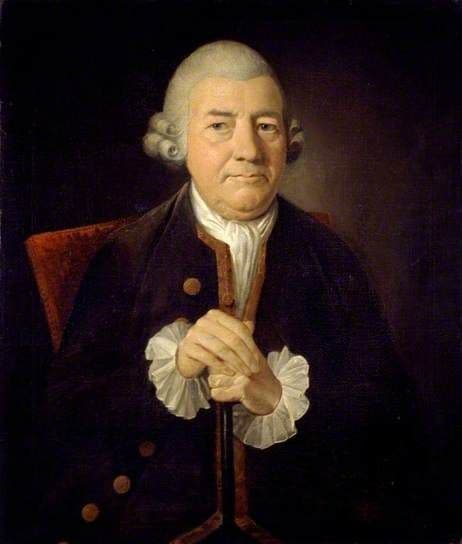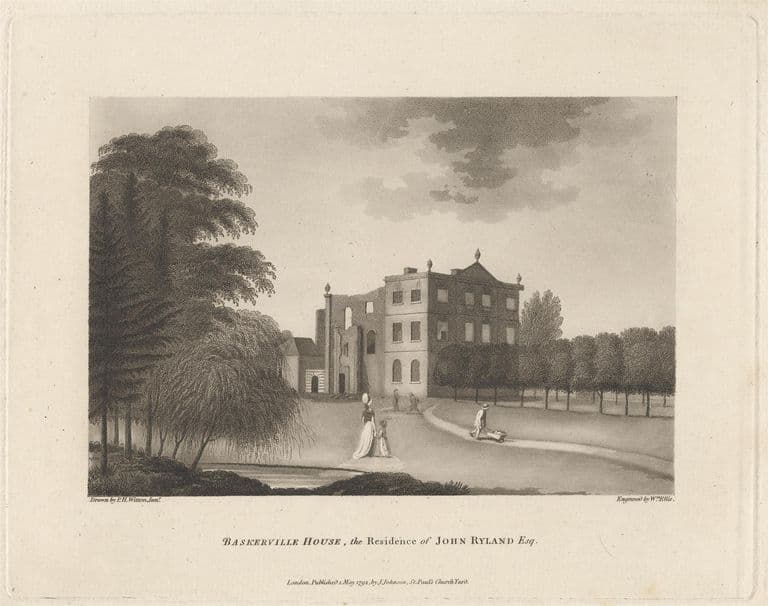
John Baskerville came to Birmingham as a young man — 1726, according to the Jewellery Quarter Research Trust — and earned his living teaching handwriting and cutting gravestones. Then he made money in japanning, and spent it on books.
The complete printer
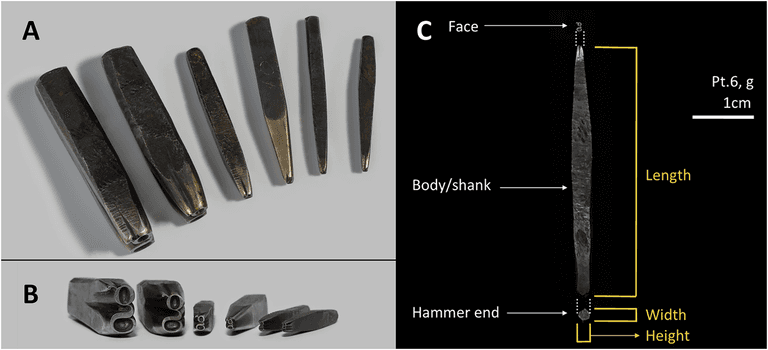
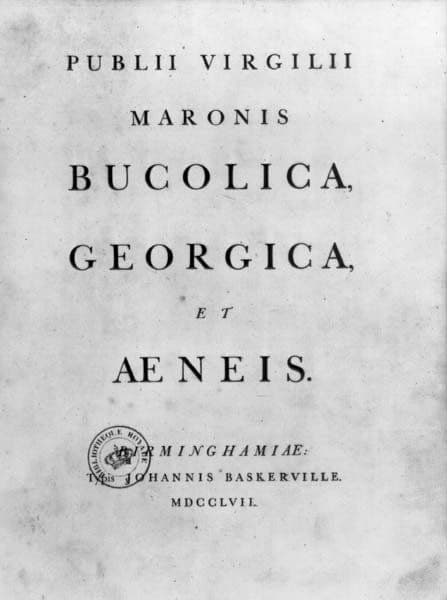
From about 1750, at his Easy Hill estate on what is now Centenary Square, Baskerville set out to improve every part of printing. He cut punches and cast type. He mixed blacker ink, made smoother paper and improved the press. His first book, a quarto Virgil, came out in 1757. Milton followed in 1758. He became printer to Cambridge University and in 1763 printed a folio Bible, usually counted his masterpiece.
Readers abroad admired his books, and Benjamin Franklin corresponded with him. At home his rivals sneered.
After Baskerville
Baskerville died in 1775. His widow, Sarah, kept the business going for a while and then sold the type. His punches were bought by the French playwright Beaumarchais for an edition of Voltaire, and in 1953 they passed to Cambridge University Press. The typeface that carries his name is still used on pages and screens all over the world.
Copying letters at Soho
Soho added its own printing invention. In July 1778 James Watt told Joseph Black he had “lately discovered a method of copying [letters] instantaneously”. He took Boulton and James Keir into partnership, and James Watt & Co. began selling copying presses in 1780 and went on doing so until 1840.
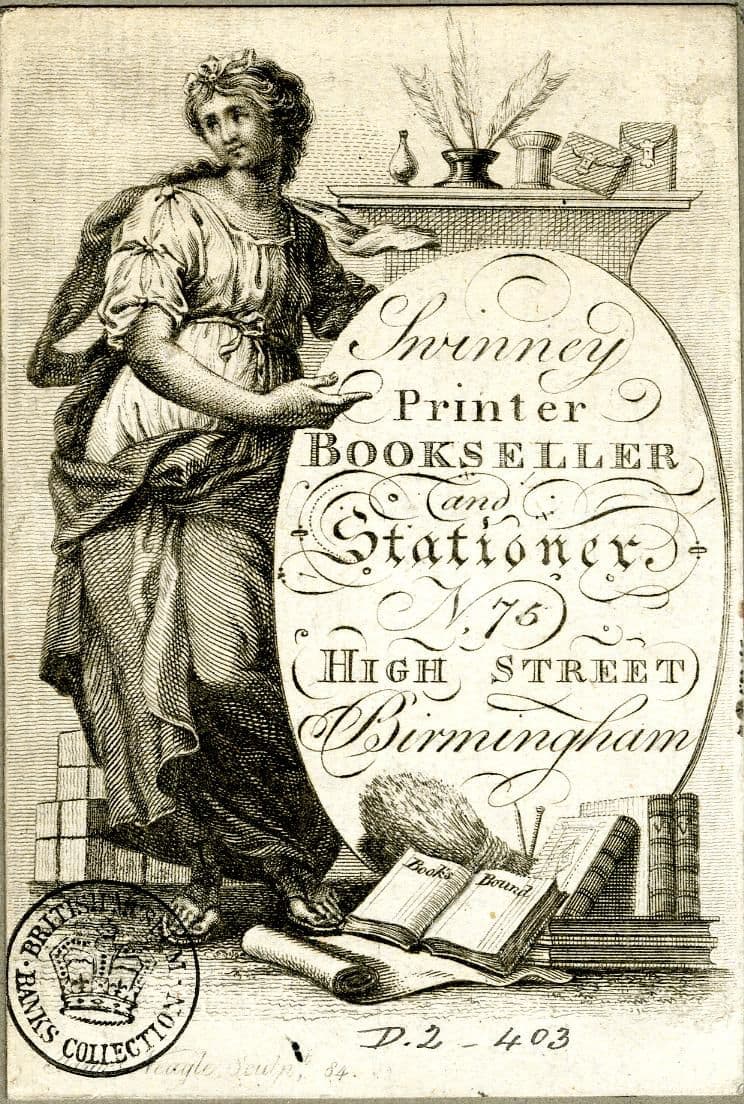
Birmingham printers served the town’s causes too. In 1788 Pearson and Rollason printed Joseph Priestley’s *Sermon on the Subject of the Slave Trade*.
In Centenary Square, outside Baskerville House, David Patten’s sculpture *Industry and Genius* (1990) spells VIRGIL in reversed bronze letters, like type waiting to be inked.
On the map
2 places connected with Printing and type. Tap a number for directions — some sites are private homes or gardens, so each place’s page says what you can see from the street.

Key dates
- 1745 — Baskerville takes the lease of Easy HillBaskerville takes a building lease of about eight acres just north-west of the town, names it Easy Hill and builds a house and works there. The site is now Centenary Square.
- October 1752 — Baskerville’s workshop finishes its first punchesAt Easy Hill, John Baskerville tells the publisher Robert Dodsley that fourteen punches for his large titling letters have been “begun and finished in nine days only”. His punch-cutter John Handy did much of the cutting; the type was used for the Virgil of 1757.
- 1757 — Baskerville prints his VirgilBaskerville’s first book, a quarto Virgil, appears from his press at Easy Hill, using type, ink and paper he developed himself.
- 1763 — Baskerville’s Cambridge BibleAs printer to the University of Cambridge, Baskerville produces his folio Bible, generally reckoned his masterpiece.
- January 1775 — Baskerville dies and is buried at Easy HillJohn Baskerville dies at Easy Hill. A religious sceptic, he is buried in unconsecrated ground in his own grounds, under a cone, with an epitaph he wrote himself.
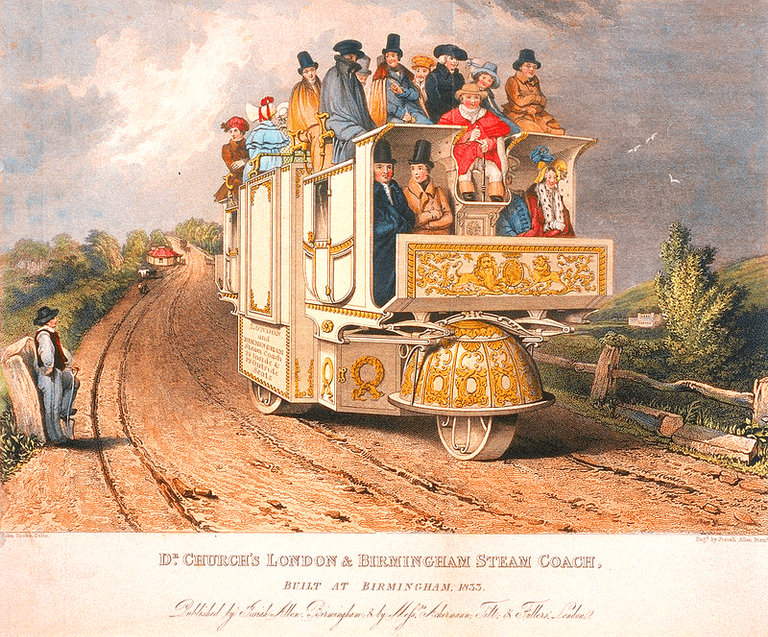
- 21 March 1822 — William Church patents a type-casting and composing systemPatent No. 4664 describes a type-caster, a keyboard composing machine and a press, with used type to be melted and recast rather than sorted by hand. Church moved to Birmingham by 1824. Printing historians later counted it among the earliest composing machines known.
- 12 April 1893 — Baskerville’s lost coffin is found at Christ ChurchAn unregistered vault, catacomb no. 521, is opened at Christ Church, New Street. Inside is Baskerville’s coffin, hidden there quietly around 1829 after decades of wandering.
- February 1898 — Baskerville is reburied at Warstone LaneWith Christ Church due for demolition, Baskerville is moved to the catacombs of Warstone Lane Cemetery in the Jewellery Quarter, where he still lies.
Sources and further reading
- WL 53343 – John Baskerville — Jewellery Quarter Research Trust (material from Dr Caroline Archer)
- John Baskerville, Type-founder and Printer, 1706–1775 — Josiah H. Benton, Boston, 1914
- Baskerville, John (1706–1775), printer and typefounder — James Mosley, Oxford Dictionary of National Biography, 2004. abstract only
- Copying press — Archives of Soho — Library of Birmingham, Birmingham City Council. Ref. MS 3219/4/127/6, /13; MS 3219/4/18/22; MS 3147/18/2
- A Sermon on the Subject of the Slave Trade; delivered to a society of Protestant Dissenters, at the New Meeting, in Birmingham — Joseph Priestley, Pearson and Rollason, Birmingham, 1788
- Iconic sculpture returned to Centenary Square — Acivico