
What was here?
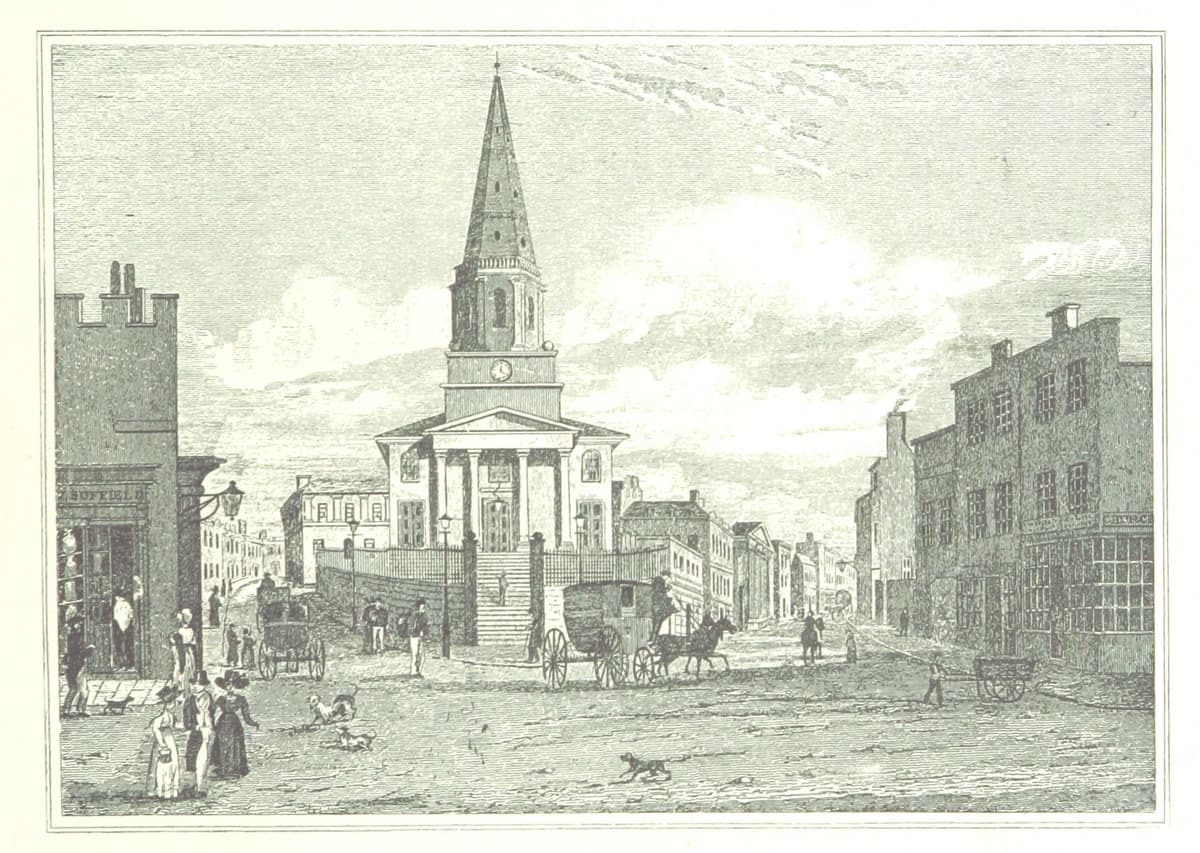
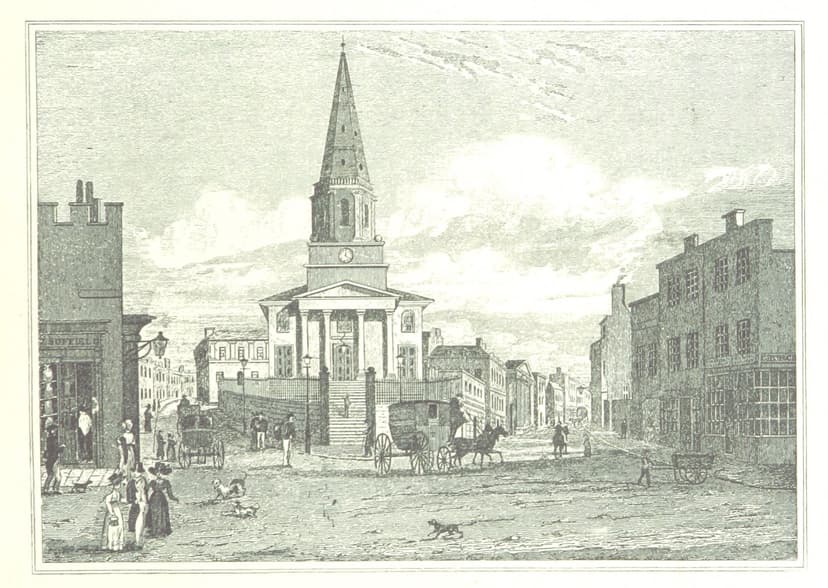
A large stone Classical church, with a four-column Doric portico and a spire, raised on steps where Ann Street (now Colmore Row) met New Street. Its ground floor was free to all. Stone catacombs lay beneath it. It was demolished in 1899 and the site is now the upper part of Victoria Square.
History
A church with free seats
Birmingham was growing fast, and this church was meant for people who could not pay for a seat. In 1802–03 the executors of Isaac Hawkins offered £500, later £1,000, towards a church where the seats would be free. W. P. Inge gave the site, and an Act of Parliament followed in 1803.
The site was superb. Christ Church stood in the angle where Ann Street (later Colmore Row) met New Street, high above the road and reached by a wide flight of steps. A guide of 1830 called it “an elevated and commanding situation at the junction of six streets”.
Slow building
On 22 July 1805 the Earl of Dartmouth laid the first stone on behalf of George III, who was ill. The King gave £1,000. William Hollins had won the design competition in 1804, but the work was carried out by Charles Norton, a Birmingham builder and surveyor.
Then the money ran out. Work stopped, and a second Act was needed in 1810. Bishop James Cornwallis consecrated the church in July 1813, and the first service was held on Sunday 18 July. The steeple came later. The tower was finished in 1814, and the Handsworth mason John Richardson added the portico and spire in 1815–16, for £1,200 and £1,500. A clock with four dials followed. Dent puts the total cost at about £26,000.
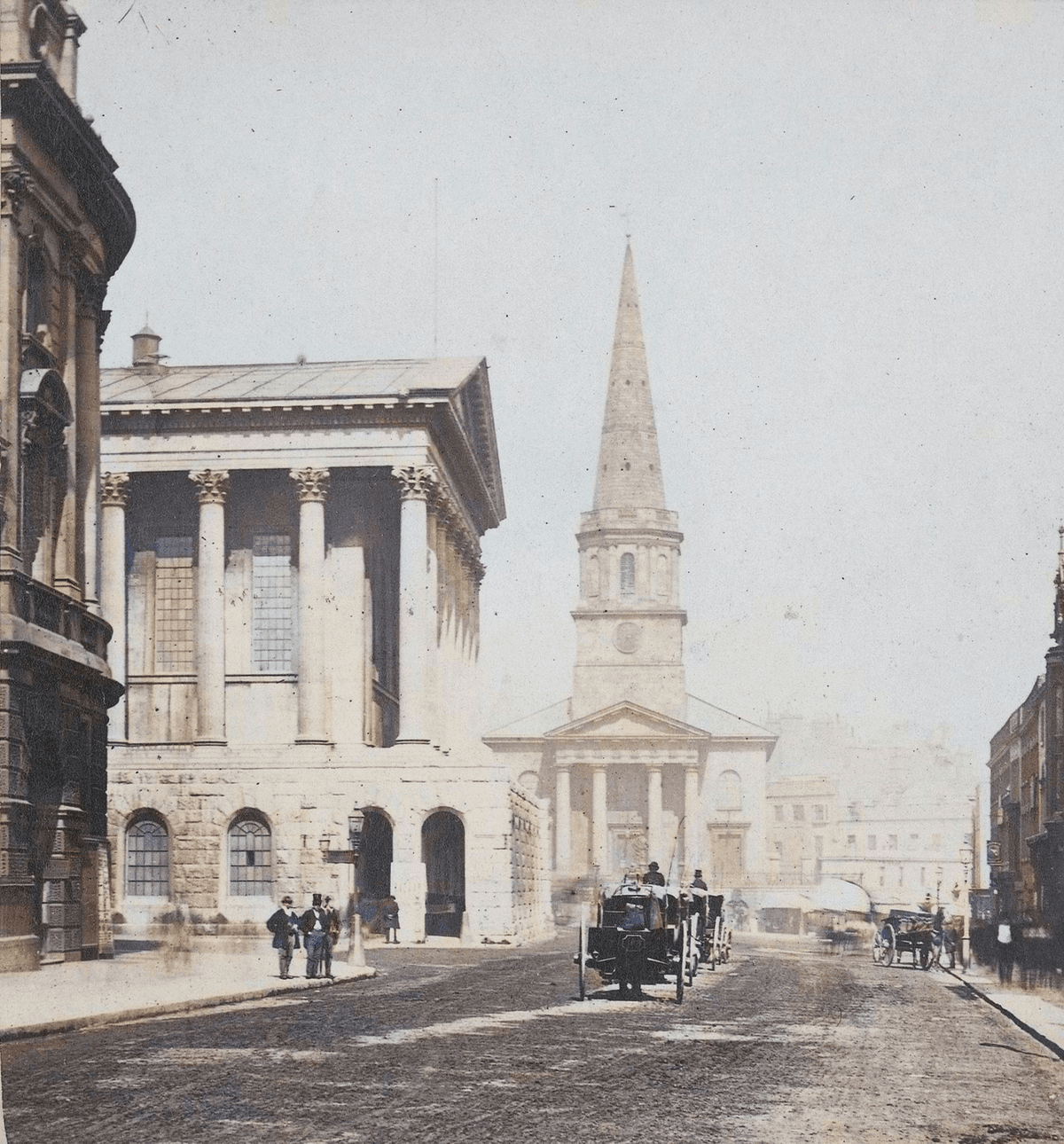
The finished church had a portico of four Doric columns. Above it a square tower carried the clock, then an eight-sided belfry with a balustrade, then a plain eight-sided spire. An early design had a dome and cupola, copying St Philip’s nearby, and that version is shown on a medal struck in 1805. Critics were not kind. Dent called the result “a heavy, plain stone structure” with an “ugly spire”.
The Free Church
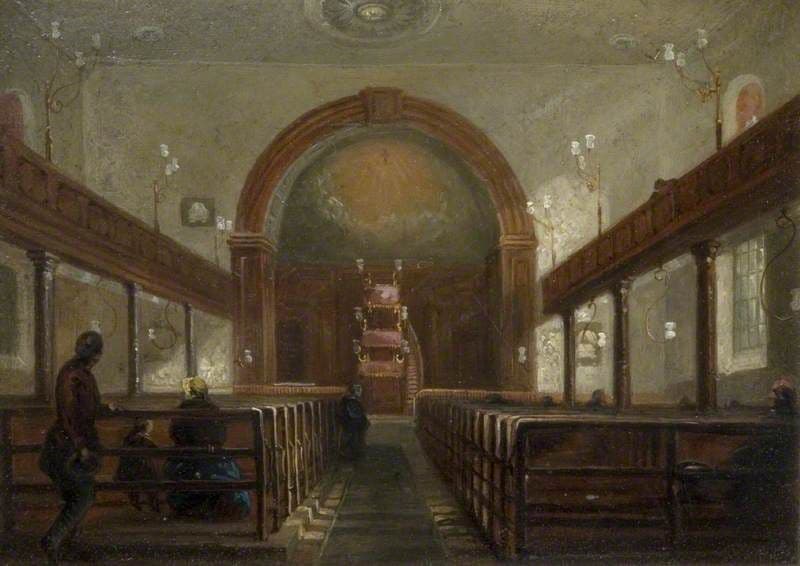
What mattered was inside. “The whole of the ground floor was used for free sittings, only the gallery being reserved, and for many years Christ Church was known as the ‘Free Church’,” says the Victoria County History. It held about 1,500 people. Men and women sat on opposite sides, which gave rise to a well-known local epigram.
The vaults below
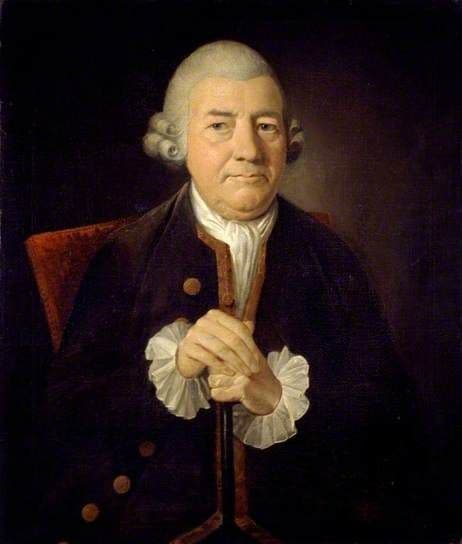
Under the floor were massive stone vaults, divided into tiers of catacombs. One of them held a famous secret. In about 1829 the coffin of the printer John Baskerville, who had died in 1775, was quietly placed in a vault here. Nobody wrote it in the burial register. On 12 April 1893 it was found again in catacomb no. 521.
Following the people
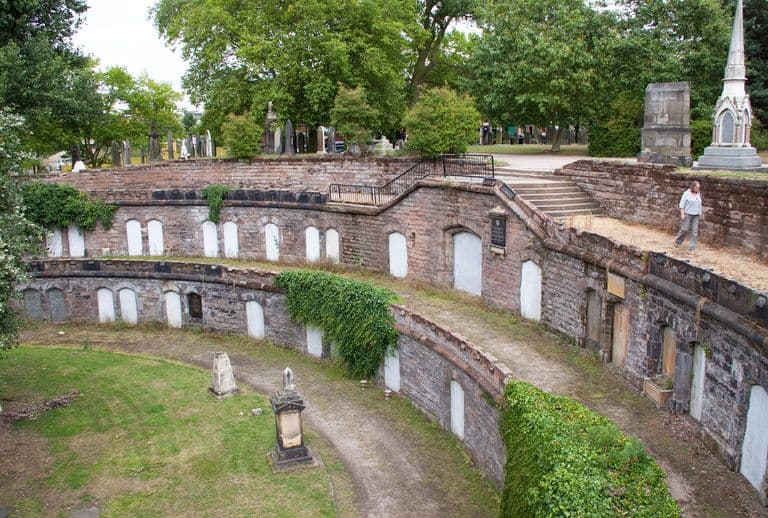
Christ Church was given its own parish in 1865, but people were already moving out of the town centre. Between 1871 and 1896, by one account, the parish population fell from 6,636 to about 2,500. Under the Birmingham Churches Act of 1897 the church and its site were sold. In February 1898 around 600 bodies from the catacombs, Baskerville among them, were moved to the catacombs at Warstone Lane Cemetery. The church was demolished in 1899, and a block of shops and offices, Christ Church Buildings, went up on the site. That was demolished in turn in 1970.
The same spot, then and now
1888–1913
Today
Old map: Ordnance Survey six-inch, reproduced with the permission of the National Library of Scotland (CC BY 4.0). Today: © OpenStreetMap contributors.
The Free Church paid for its own successor. The money from the sale built St Agatha’s in Sparkbrook, out where the people had gone, and Christ Church’s foundation stone, font and bell went with it. They are still there.
Why it mattered
Christ Church offered free seats on its whole ground floor at a time when most church seats were rented, and was known for decades as the Free Church. Its portico and spire closed the view up Paradise Street. Its vaults hid John Baskerville’s coffin for more than sixty years. Its sale in 1897 to build a church in Sparkbrook shows the Church of England following the population out of the town centre.
Why it disappeared
Commercial redevelopment · Redevelopment
As the centre of Birmingham turned into shops and offices, the parish emptied. Under the Birmingham Churches Act of 1897 the building and its valuable site were sold, and the money went to build St Agatha’s, Sparkbrook. The catacombs were cleared in 1898 and the church was demolished in 1899.
More pictures
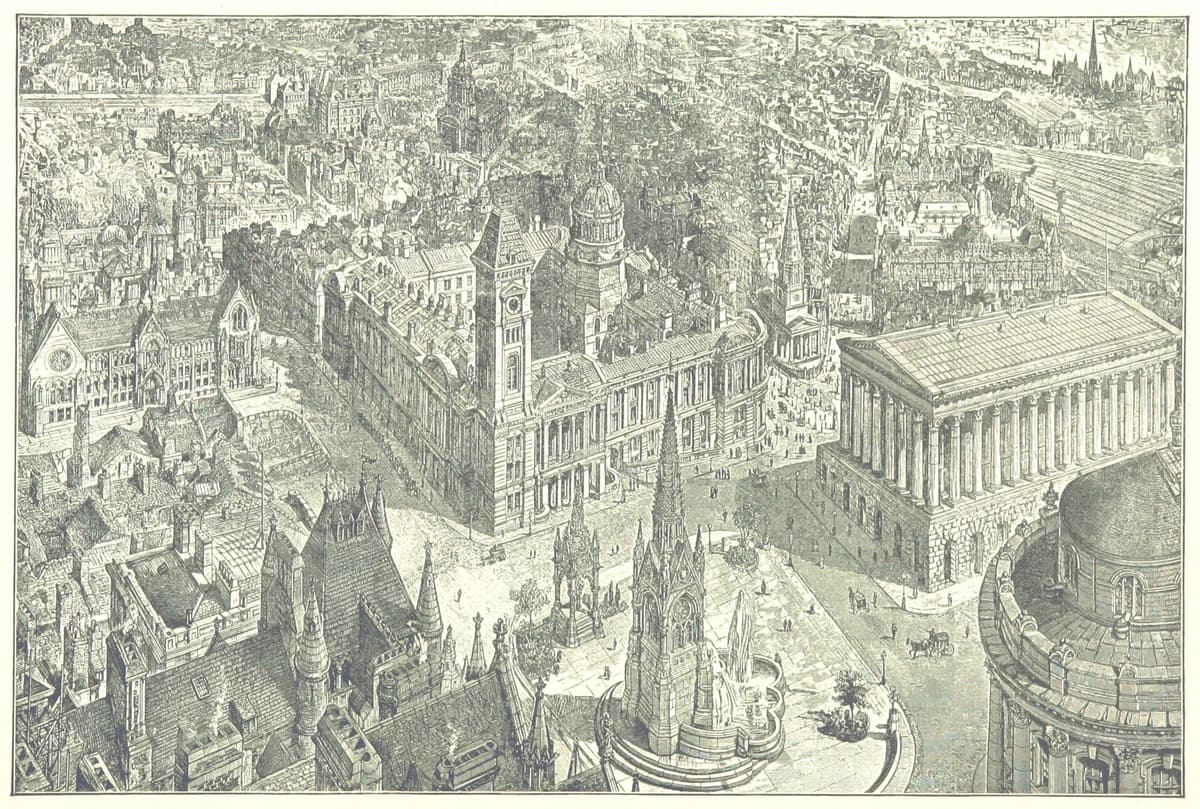
Birmingham from the roof of Mason College, 1886Henry William Brewer, 4 September 1886. The Graphic, via the British Library and Wikimedia Commons · Public domain
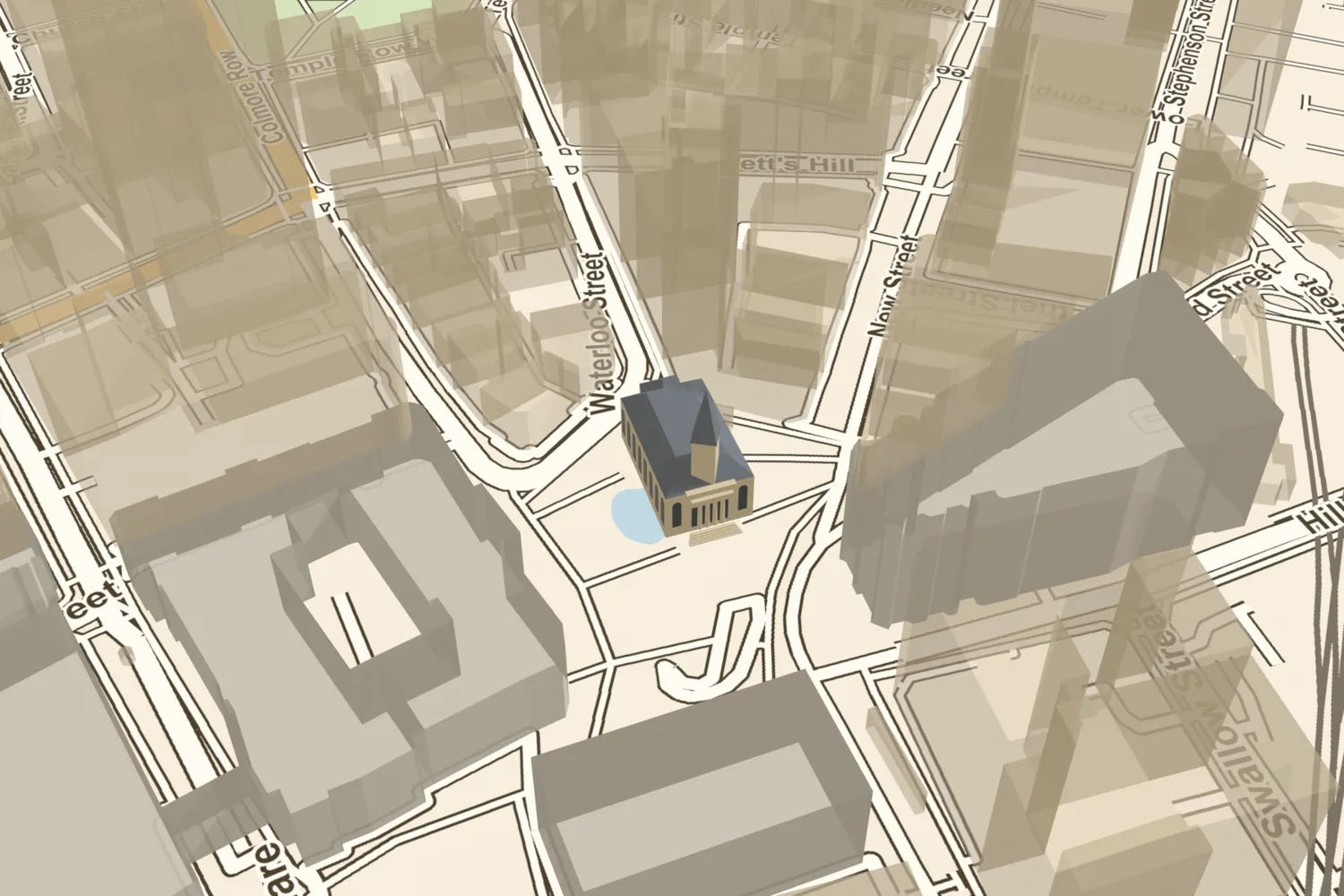
Christ Church, on today’s streets
What’s there now
What replaced it
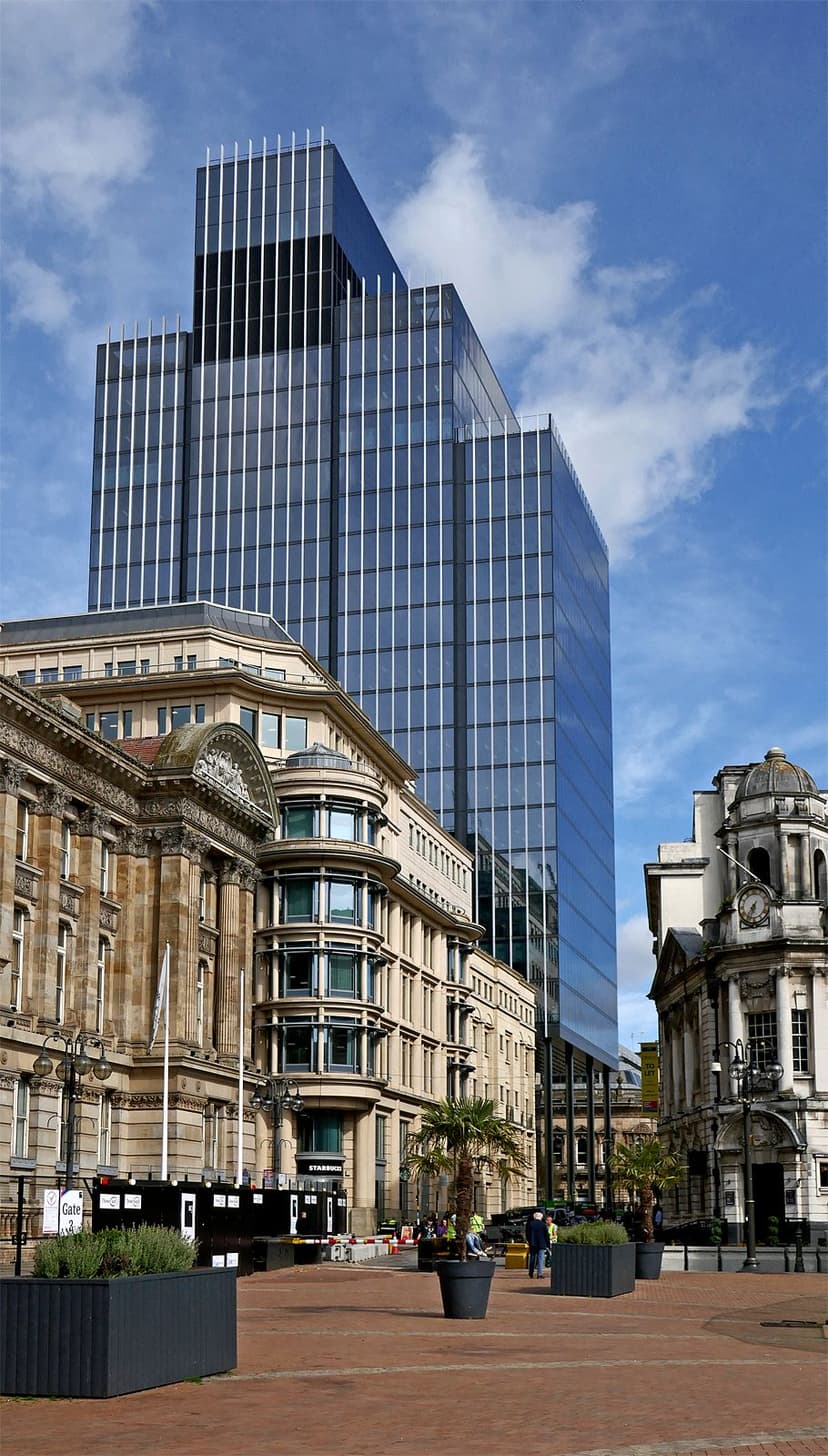
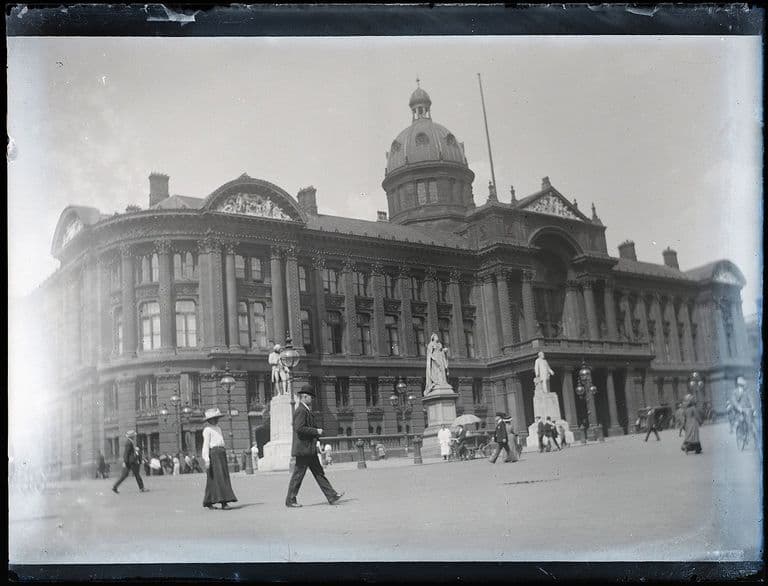
Christ Church Buildings, a block of shops and offices put up in about 1899–1901 and demolished in 1970. The site is now the paved upper part of Victoria Square.
What survives
The foundation stone of 1805, the font and the bell are at St Agatha’s Church, Sparkbrook. The Angel Drinking Fountain, which stood outside the church, is now in St Philip’s churchyard, Temple Row (listed Grade II, list entry 1220898). About 600 burials from the catacombs, including John Baskerville, were moved to Warstone Lane Cemetery in 1898. Christchurch Passage, off Colmore Row, keeps the name.
Today
Stand at the top of New Street in Victoria Square, on the paving below Colmore Row and Waterloo Street. The church filled this space, with its portico facing down Paradise Street towards the Town Hall and the Council House to its north-west. Christchurch Passage runs off to the east.
Then and now
Then · Published 1894
Now · 23 September 2021
Today
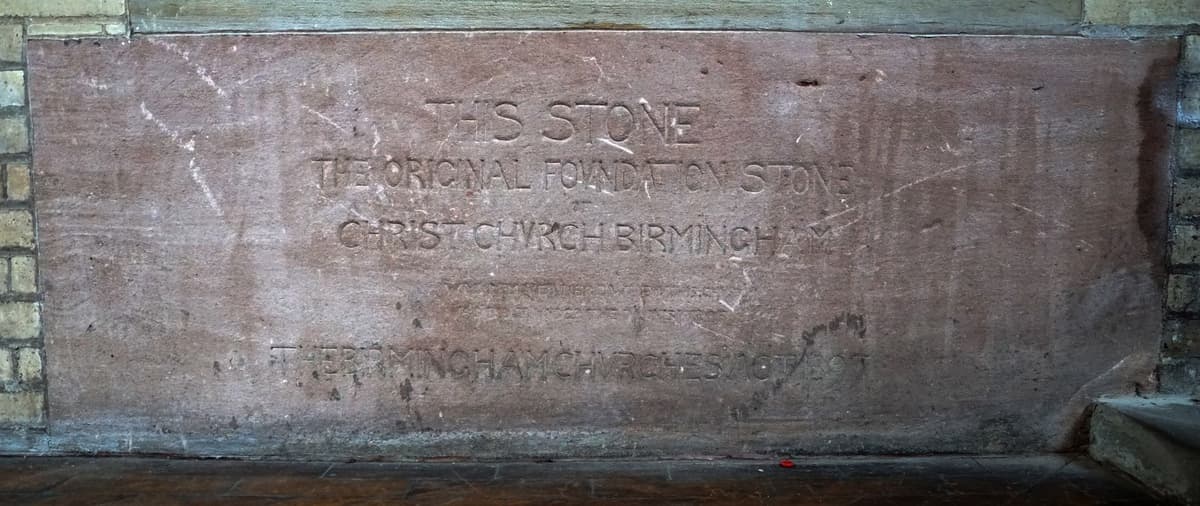
Christ Church foundation stone, St Agatha’s, Sparkbrook, 13 September 2015Oosoom, 13 September 2015. Wikimedia Commons (own work) · CC BY-SA 3.0 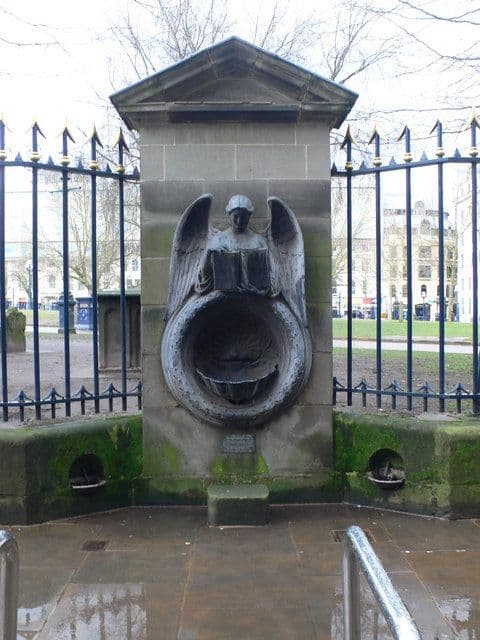
The Angel Drinking Fountain, 12 February 2010Eirian Evans, 12 February 2010. Geograph Britain and Ireland via Wikimedia Commons · CC BY-SA 2.0
Sources and further reading
The consecration is dated 6 July 1813 by the 1830 Sketch, Dent and the contemporary Gazette report, but 13 July by Pye and Showell. The steeple dates vary: tower finished 1814 (VCH, after Colvin), spire and portico 1815 (1830 Sketch), spire completed 1816 (Pye); the clock is dated December 1816 or 1817. Hollins won the 1804 premium but Norton carried out the work (VCH). No source gives the height of the spire. The parish population figures come from a secondary blog. The architect and dates of Christ Church Buildings, and its demolition in 1970, rest on secondary sources. Stairs and pew ends said by the Birmingham Civic Society to be at Blakesley Hall have not been verified.
- A History of the County of Warwick, vol. 7: The City of Birmingham — Religious History: Churches built since 1800, pp. 379–396 — W. B. Stephens (ed.), Victoria County History, 1964. no. 29 Christ Church; no. 41 St Agatha
- An Historical and Descriptive Sketch of Birmingham — Beilby, Knott and Beilby (publishers), 1830. pp. 112–15
- A Description of Modern Birmingham — Charles Pye, 1818–19. Christ Church
- A Century of Birmingham Life — John Alfred Langford, 1870. vol. 2: Aris’s Gazette, 29 July 1805
- Old and New Birmingham: a history of the town and its people — Robert K. Dent, Houghton and Hammond, Birmingham, 1880. pp. 306–7
- Showell’s Dictionary of Birmingham — Thomas T. Harman and Walter Showell, Cornish Brothers, Birmingham, 1885. ‘Christ Church’; ‘Catacombs’
- Fountain approximately 20 metres south-west of St Philip’s Place entrance — National Heritage List for England entry 1220898 — Historic England. the drinking fountain
- Victoria’s Square — Birmingham Civic Society
- Tour of Lost Birmingham No. 1: The Unloved Church — J. Dixon (Mapping Birmingham blog), 2012. parish population 1871–96
- Victoria Square, Birmingham — Wikipedia. lead only
- Ordnance Survey 1:500 town plan of Birmingham, 1887–88, georeferenced — National Library of Scotland, 1888. footprint traced; ‘Seats for 1600’
- Plan of the Borough of Birmingham (Pigott Smith), 1855 — J. Pigott Smith, National Library of Scotland (online), 1855
- John Baskerville, Type-founder and Printer, 1706–1775 — Josiah H. Benton, Boston, 1914. Baskerville’s burial
- The Burials of John Baskerville — Rachel Clare (Library of Birmingham, The Iron Room blog), Library of Birmingham Archives & Collections, 2016. Ref. EP 26/2/4/1. discovery 1893; reburial at Warstone Lane 1898
Comments
Comments will load here.