
What was here?
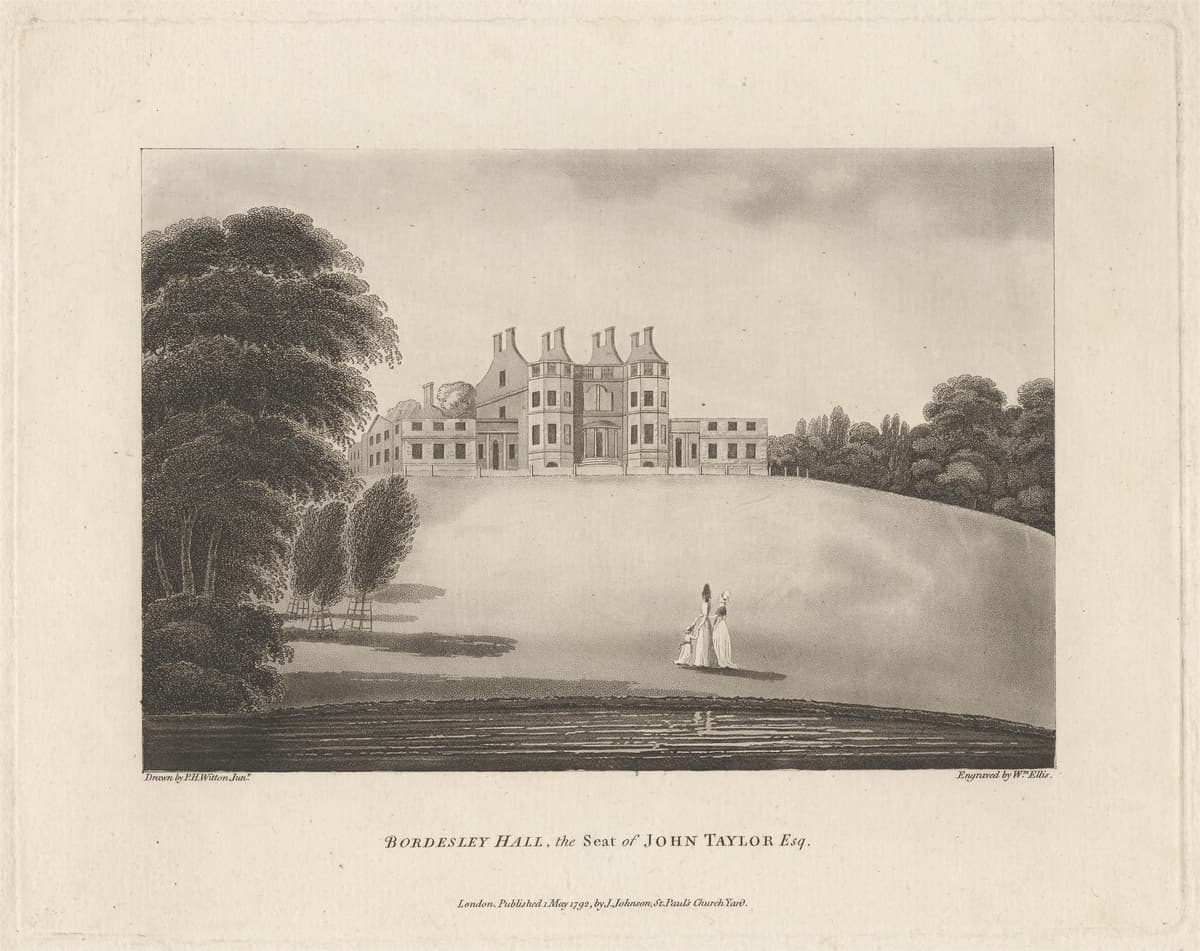
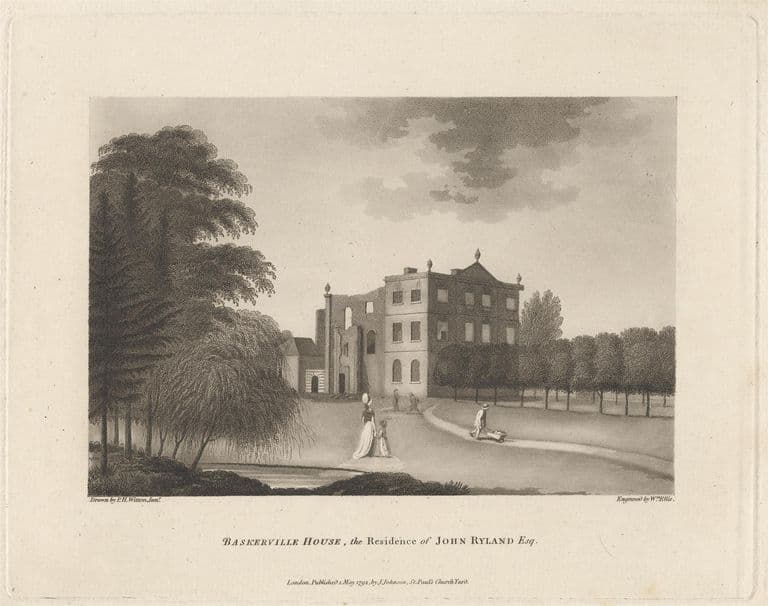
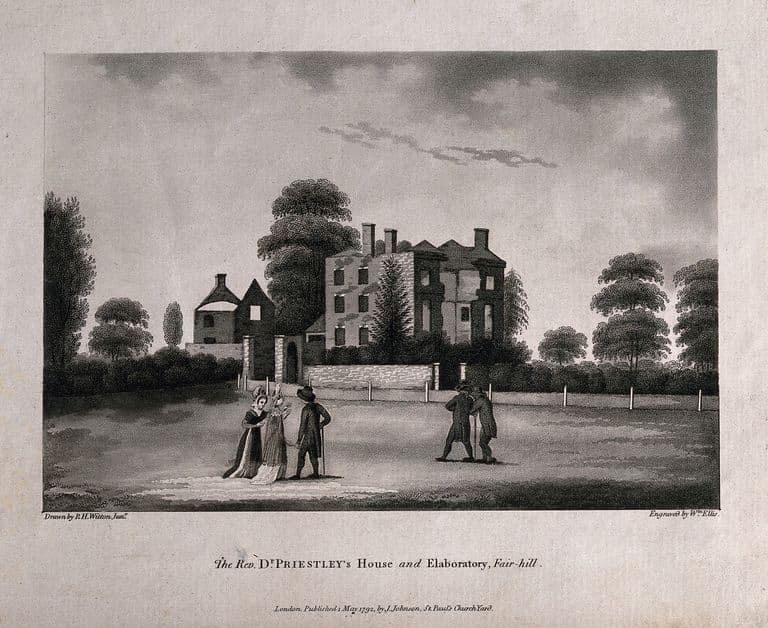
The country house of the Taylors, Birmingham’s great button makers and bankers, in a park south of the Coventry Road near Bordesley High Street. A print of 1792 shows a pale Georgian front with tall bays above a sheet of water, with stables, offices, a greenhouse and a hot-house nearby.
History
The Taylors’ country seat
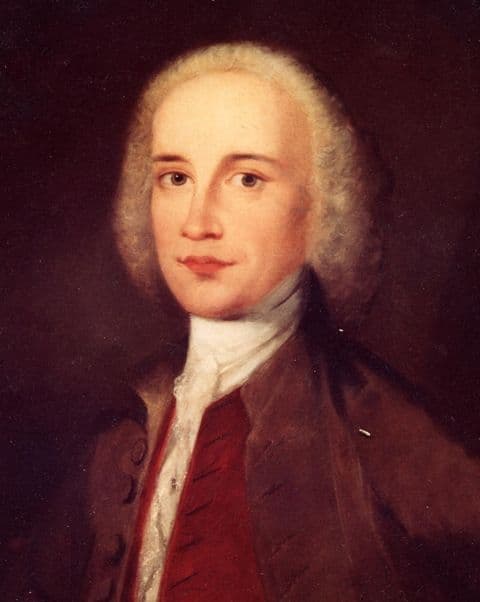
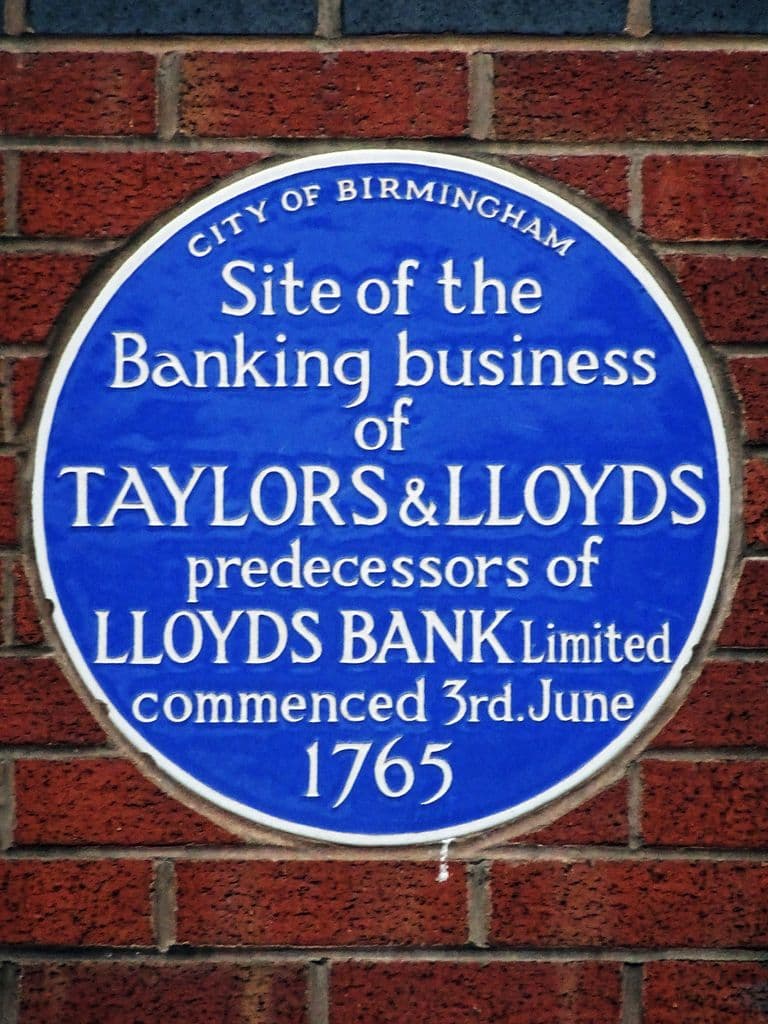
In the middle of the eighteenth century the richest manufacturing family in Birmingham lived a short ride out of town, at Bordesley. John Taylor (c.1711–1775) had made a fortune from buttons and japanned goods. In 1765 he and Sampson Lloyd opened Taylors & Lloyds, the town’s first proper bank.
Their house stood in a park south of the Coventry Road, near its junction with Bordesley High Street, and may have replaced a medieval manor house. One local historian says the elder Taylor rebuilt it in grand style in 1757, for about £10,000, with an ornamental pool. That has not been confirmed.
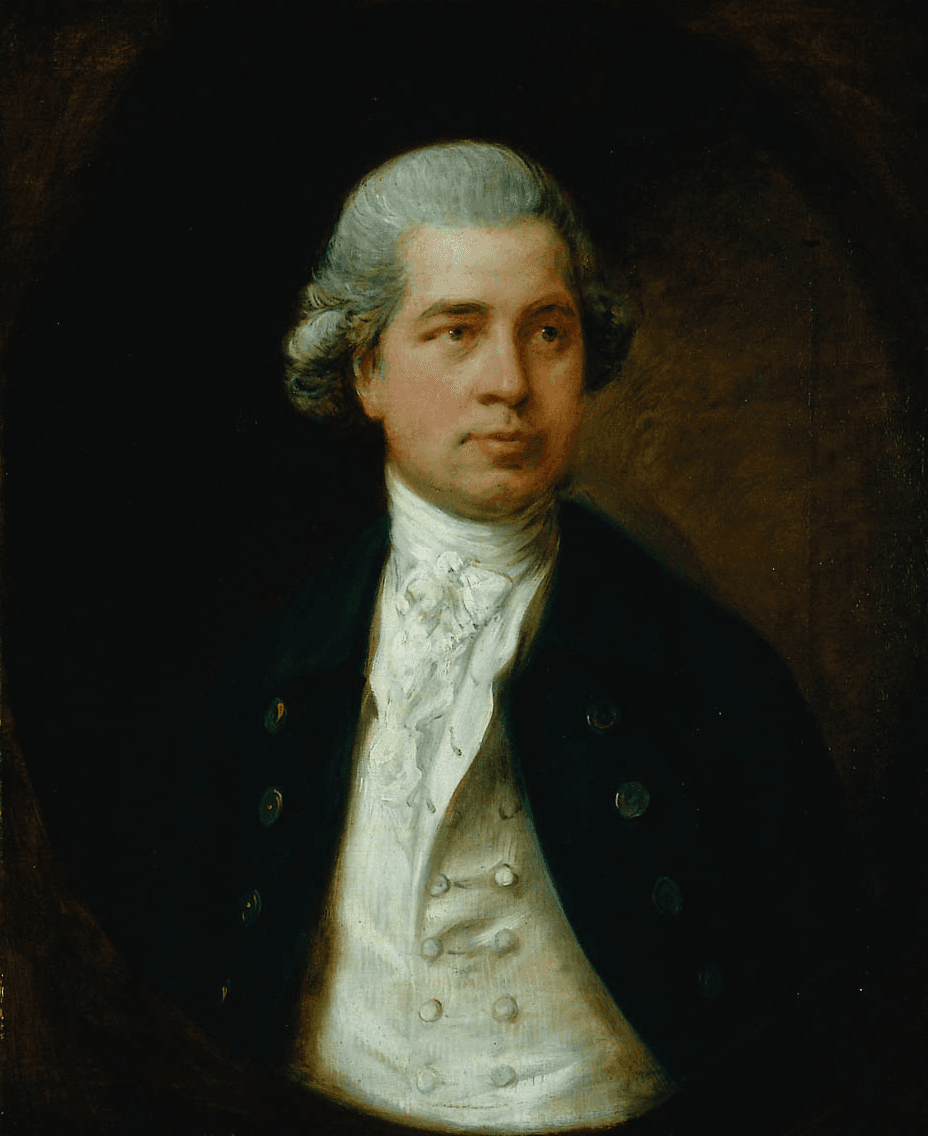
By 1791 the hall belonged to his son, also John Taylor (1738–1814), a partner in the bank. When William Hutton listed the principal houses around the town in 1783, after the elder Taylor’s death, he named “John Taylor, Esq; at Bordesley and at Moseley”.
Friday, 15 July 1791
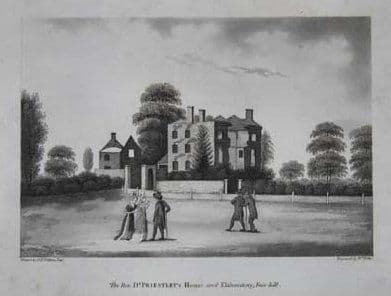
On 14 July 1791 crowds in Birmingham turned on the town’s Dissenters, burning their meeting houses and Joseph Priestley’s home at Fair Hill. The next day, Friday, news came that “another party of rioters had commenced an attack on the house of Mr. John Taylor (Bordesley Hall)”.
A detachment of special constables under a Captain Carver drove the rioters out of the cellar. They held the house long enough for Taylor’s title deeds and papers, and some of the furniture, to be carried away. Catherine Hutton later wrote that her brother Thomas led a party to Bordesley to help, but his men “deserted their leader, and joined the destroyers”.
Towards evening the crowd was reinforced by men who “had just left the ruins of Baskerville House”. Carver offered them one hundred guineas to stop. The answer was “No bribery!” Then, as R. K. Dent told it in 1880, “as the night advanced, the flames appeared through the roof, and this fine mansion was in a short time entirely gutted.” A letter written that same day lists what went with it: “that beautiful mansion, which, together with its superb furniture, stables, offices, greenhouse, hot-house, &c.” were destroyed.
Moseley Hall, Taylor’s other house, was burned in the same riots. On 23 July he advertised for the return of “Books, Writings, Papers” taken from his house.
A picture of a ruin
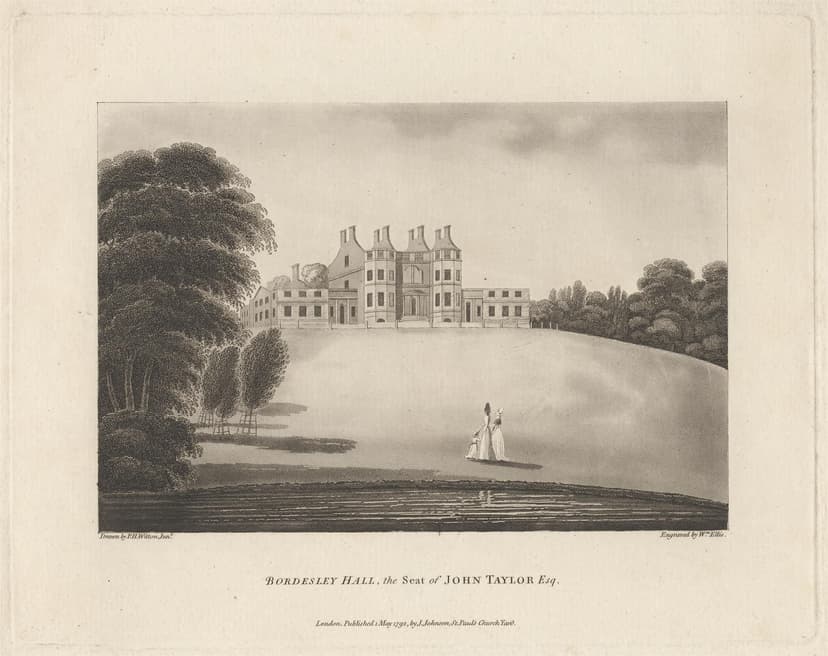
The hall’s best memorial is a print. P. H. Witton junior drew the gutted house and William Ellis engraved it, as one of a set of views of the houses destroyed in the riots. Published on 1 May 1792, it shows a handsome front on rising ground above a pool, roofless, with the sky showing through its windows.
At the compensation trials of 1792 Taylor claimed £12,670 and was allowed £9,902 2s, though those figures may cover Moseley Hall as well.
Streets over the park
What happened next is unclear. Secondary accounts say the house was rebuilt and then pulled down around 1840, when the estate was sold for building. By 1855 Bordesley Park Road had been laid out across the old park, with building plots marked; by 1887 terraced streets covered it. Those streets have gone in their turn.
Bordesley Hall left no ruin and no plaque. What it left is Witton’s view: a rich family’s house, gutted in a single night, drawn so that the town would not forget what the riots had done.
Why it mattered
The burning of Bordesley Hall shows how far the Priestley riots reached. The crowd turned not only on chapels and on Priestley’s circle but on the town’s wealthiest Dissenting family, the Taylors, whose buttons and bank had helped make Birmingham rich. The 1792 print of its ruin is one of the best records of what the riots destroyed.
Why it disappeared
Riot · Fire · Estate sold and built over
Rioters set it on fire on the night of 15 July 1791, the second day of the Priestley riots, and it was gutted. Secondary sources say it was rebuilt and then demolished around 1840 when the estate was sold for building; by 1855 Bordesley Park Road crossed the old park.
What’s there now
What replaced it
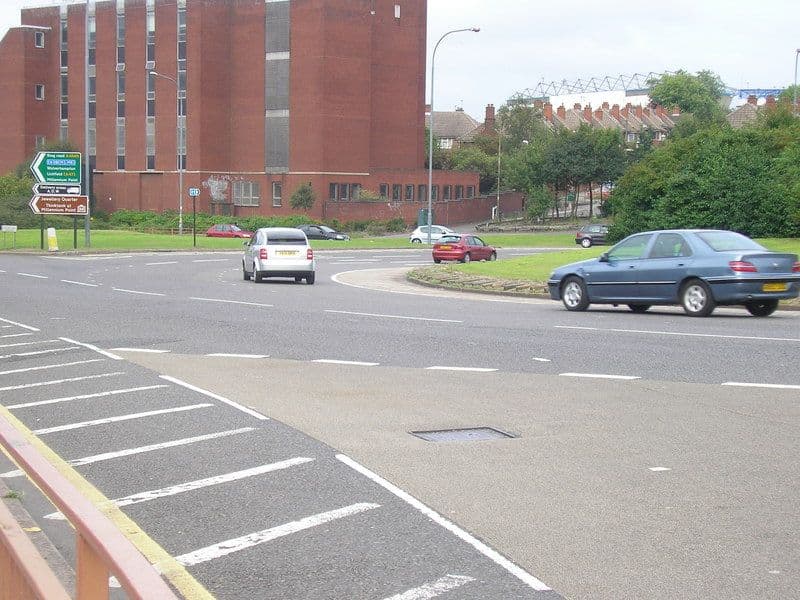
A building estate around Bordesley Park Road (by 1855), then terraced streets (by 1887–88). Today the area holds the Ibis hotel on Bordesley Park Road, housing, retail units and the Small Heath Highway.
What survives
Nothing is known to survive. The name lives on in Bordesley Park Road, and Templefield Street recalls China Temple Field, which Showell said was part of the hall’s grounds.
Today
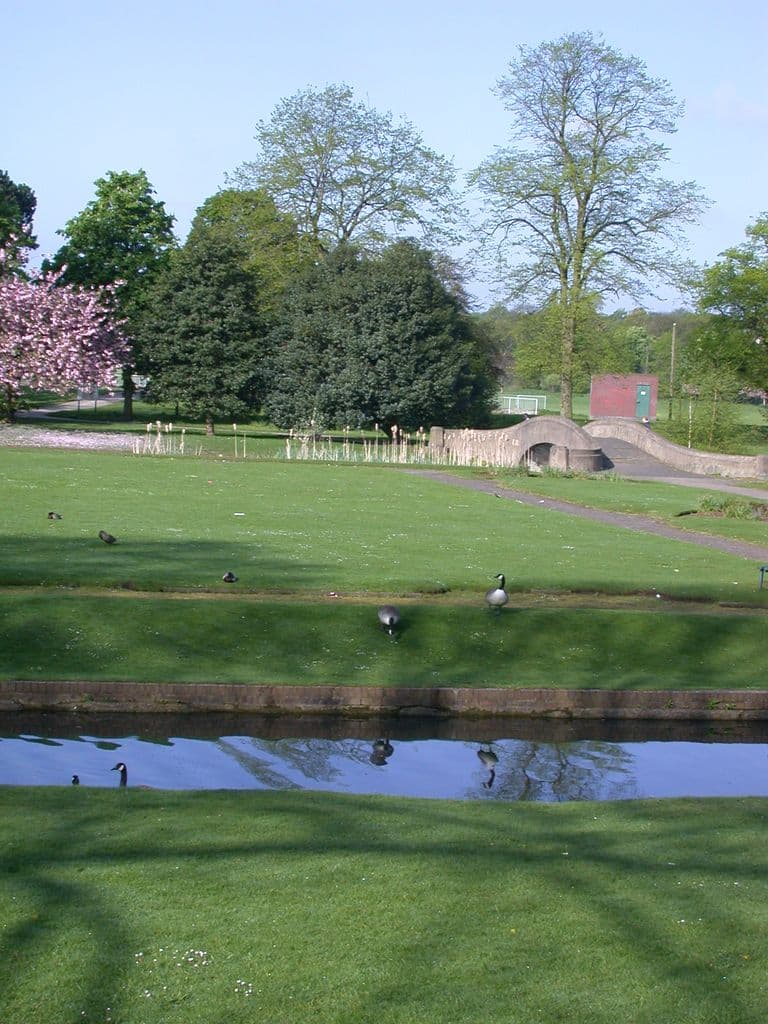
The hall stood somewhere around Bordesley Park Road, off the Coventry Road east of Bordesley Circus, near the Ibis hotel and the Small Heath Highway. Its exact position is not known.
Then and now
Then · 1 May 1792
Now · 31 August 2009
Sources and further reading
The exact site is not known. The point is placed inside a large unnumbered block on Tomlinson’s 1760 map of Bordesley, later crossed by Bordesley Park Road, at general accuracy (about ±150 m). A group of buildings about 200 m to the west on the same map is a credible alternative.
The park is given as 6 acres by the VCH but about 15 hectares by secondary writers; the unnumbered block on the 1760 map is about 8–10 hectares. The rebuilding of 1757 at a cost of about £10,000, and the rebuilding after 1791 with demolition about 1840, rest on secondary sources only.
The owner in 1791 was John Taylor (1738–1814), son of the button maker John Taylor (c.1711–1775), as Dent states. A Commons portrait title calls the father “of Bordesley” and gives his birth year as 1704. The compensation figures come from Dent’s printing of Hutton’s table and may include Moseley Hall. All that is known of the house’s appearance comes from the single print of 1792.
- A History of the County of Warwick, vol. 7: The City of Birmingham — Manors, pp. 58–72 — W. B. Stephens (ed.), Victoria County History, 1964. Bordesley: the hall south of the Coventry Road; fn. 178
- Old and New Birmingham: a history of the town and its people — Robert K. Dent, Houghton and Hammond, Birmingham, 1880. pp. 233–4 and the riot chapters: Carver, the letter of 15 July 1791, Catherine Hutton’s narrative, Taylor’s notice of 23 July, compensation table
- An History of Birmingham (2nd edition) — William Hutton, Pearson and Rollason, Birmingham (Project Gutenberg text), 1783. principal seats near the town
- Showell’s Dictionary of Birmingham — Thomas T. Harman and Walter Showell, Cornish Brothers, Birmingham, 1885. ‘China Temple Field’
- Views of the Ruins of the Principal Houses destroyed during the Riots at Birmingham — P. H. Witton jnr, engraved by William Ellis, Yale Center for British Art (B1977.14.14752a–14758), 1792. Bordesley Hall plate, B1977.14.14758
- Map of the manor of Bordesley, 1760 (georeferenced copy) — J. Tomlinson; Birmingham City Council HLC map service, 1760
- Plan of the Borough of Birmingham (Pigott Smith), 1855 — J. Pigott Smith, National Library of Scotland (online), 1855
- Ordnance Survey 1:500 town plan of Birmingham, 1887–88, georeferenced — National Library of Scotland, 1888
- Bordesley — A History of Birmingham Places & Placenames from A to Y — William Dargue
- Bordesley Hall, Birmingham — Wikipedia contributors, Wikipedia
- Priestley Riots — Wikipedia contributors, Wikipedia
Comments
Comments will load here.