
What was here?
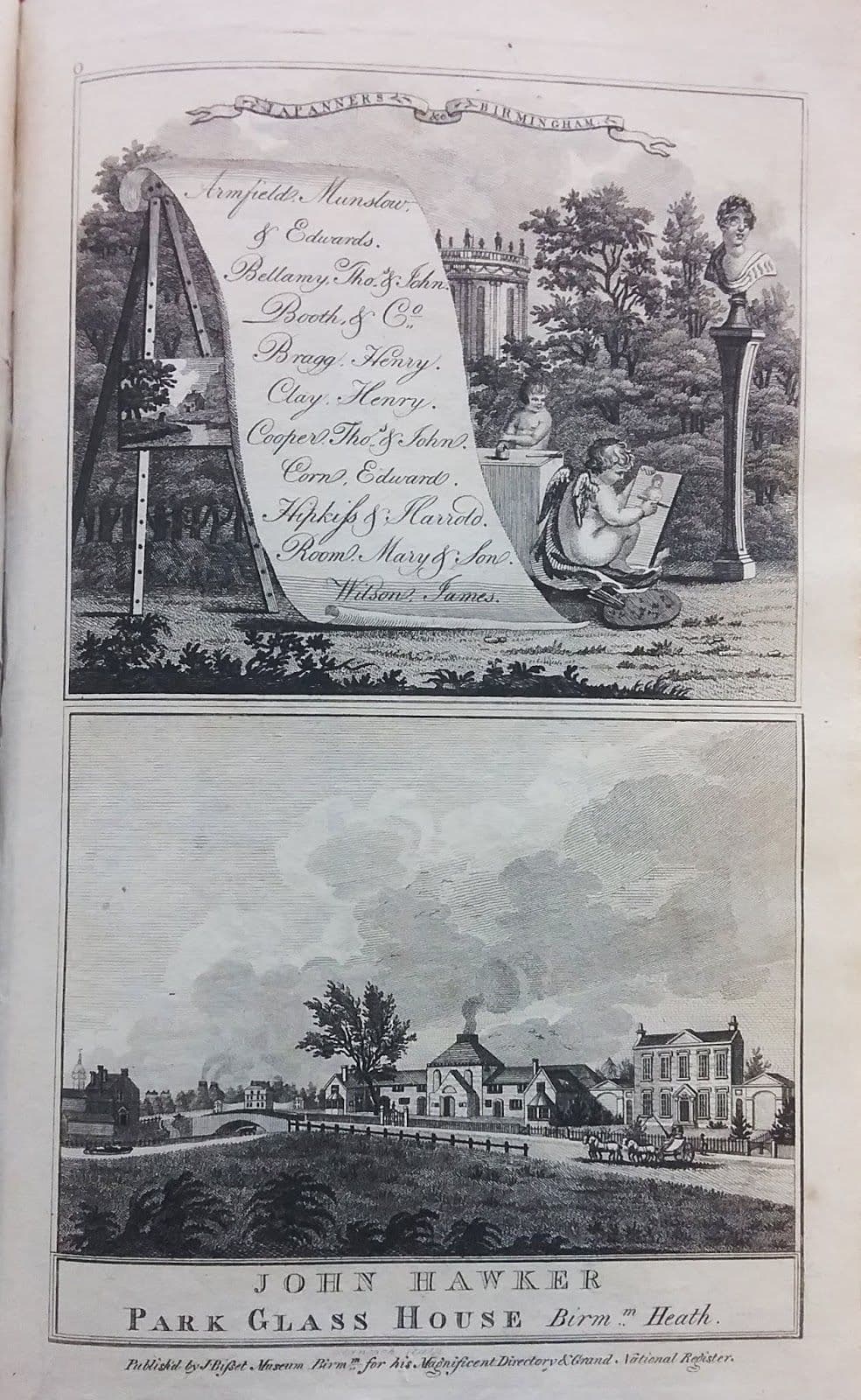
Henry Clay’s japanning and papier-mâché works. Sheets of paper were pasted together over metal moulds, stoved, oiled, planed, varnished, painted and polished into trays, tea caddies, furniture and carriage panels.
History
Paper ware
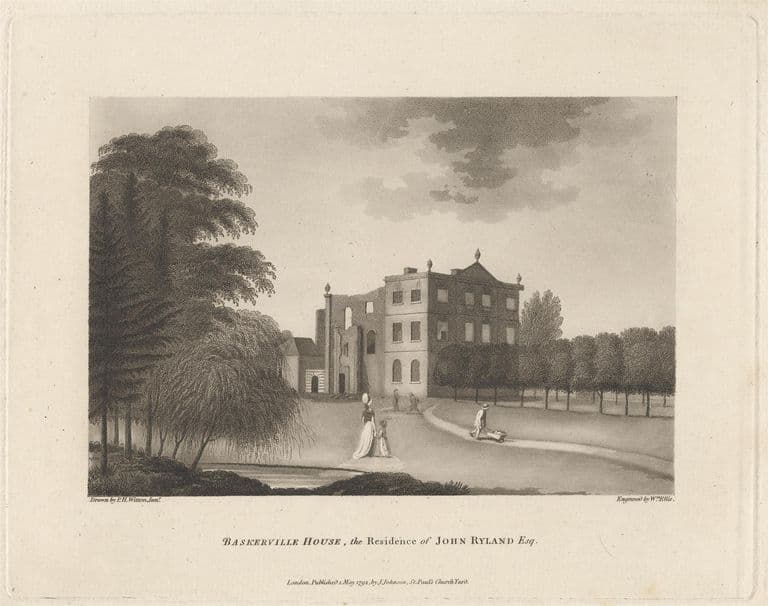
Henry Clay had worked for John Baskerville, the japanner and printer, before setting up for himself. On 20 November 1772 he patented a way of making “high varnished” panels and furniture “in paper”: sheets pasted together over a metal core rather than paper pulp pressed in a mould. W. C. Aitken, who wrote the history of the trade in 1866, gave his address as 19 Newhall Street.
At its height, Aitken says, the works employed 300 people. By 1802 the number had fallen below a hundred. Clay also sold from a house in King Street, Covent Garden, and was High Sheriff of Warwickshire in 1790. He died in 1812.
What happened here?
From the 1770s Henry Clay’s workpeople made japanned papier-mâché trays, waiters, tables, screens, buttons and coach panels here.
Why it mattered
Clay’s laminated papier mâché started an industry that made Birmingham famous for a century, carried on by firms such as Jennens and Bettridge.
Why it disappeared
Redevelopment
Newhall Street has been rebuilt several times since the eighteenth century. When Clay’s works closed is not known.
The same spot, then and now
1888–1913
Today
Old map: Ordnance Survey six-inch, reproduced with the permission of the National Library of Scotland (CC BY 4.0). Today: © OpenStreetMap contributors.
More pictures
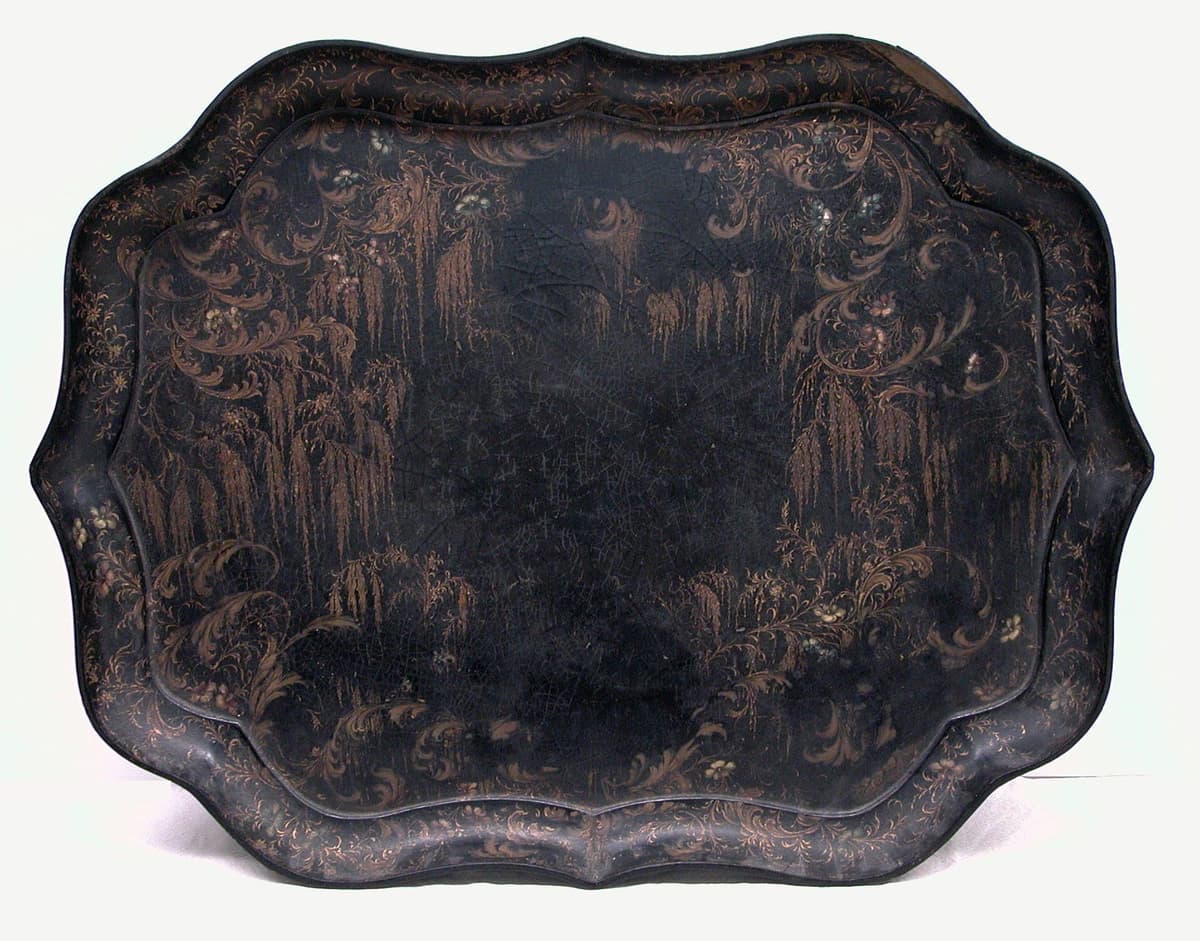
Papier-mâché tray by Clay, first half of the 19th centuryClay, King Street, Covent Garden, first half of the 19th century. Metropolitan Museum of Art via Wikimedia Commons · CC0 1.0
What’s there now
What replaced it
Later Newhall Street buildings, now offices.
What survives
Nothing of the works is known to survive. Clay’s papier-mâché trays are in museum collections, including the Metropolitan Museum of Art, New York.
Today
Newhall Street runs north-west from Colmore Row towards the Jewellery Quarter. Nothing marks Clay’s works.
Key dates
- 20 November 1772 — Henry Clay patents papier-mâché ‘paper ware’Patent No. 1027 gives the Birmingham japanner Henry Clay a monopoly on making japanned panels, coach roofs, furniture and tea trays “in paper”, by pasting sheets together rather than moulding pulp. It founds Birmingham’s papier-mâché industry.
Sources and further reading
The address comes from Aitken (1866) and from directory entries for 1777, 1781 and 1791 quoted by family historians. Eighteenth-century numbers on Newhall Street do not match today’s, so the map point is general, at the older southern end of the street. A summary of the Furniture History Society’s dictionary says Jennens and Bettridge later took over Clay’s works in Barr Street; that address has not been checked.
- The Resources, Products, and Industrial History of Birmingham and the Midland Hardware District — Samuel Timmins (ed.), Robert Hardwicke, London, 1866. W. C. Aitken, ‘Papier Mâché Manufacture’
- Titles of Patents of Invention, Chronologically Arranged (2 vols) — Bennet Woodcroft, Great Seal Patent Office, London, 1854. no. 1027
- Economic and Social History: Industry and Trade, 1500–1880, in A History of the County of Warwick, vol. 7, pp. 81–139 — W. B. Stephens (ed.), Victoria County History, 1964
- Clay of Warwickshire — Clay of England Society. lead only: directory entries
Comments
Comments will load here.