
In May 1766 a young countess arrived in Birmingham to see how the town made its money. Lady Shelburne and her husband, a rising politician, went round the workshops for three days. Their host and guide was not Matthew Boulton but an older, plainer man: Samuel Garbett.
The Victoria County History puts him “among the leading manufacturers of the day”. He made his money in metals and chemicals, put up the money for one of the greatest ironworks in Britain, and then did something almost nobody had done before. He organised the manufacturers of a whole town to speak to Parliament with one voice.
The brassworker
Garbett was born in Birmingham in 1717 into modest circumstances. By most accounts he had little formal schooling. He began as a brass worker and then became an agent for a London merchant, buying Birmingham wares on commission. In August 1735 he married Anne Clay of Aston. By the 1740s he was his own master and a merchant in his own right.
The Victoria County History puts him with the printer John Baskerville among the “self-made heroes” whom visitors to Birmingham came to admire in 1760. He was the kind of man the town was made of: he changed trade, took partners, borrowed and lent, and never did one thing when he could do three.
Acid and gold in Steelhouse Lane
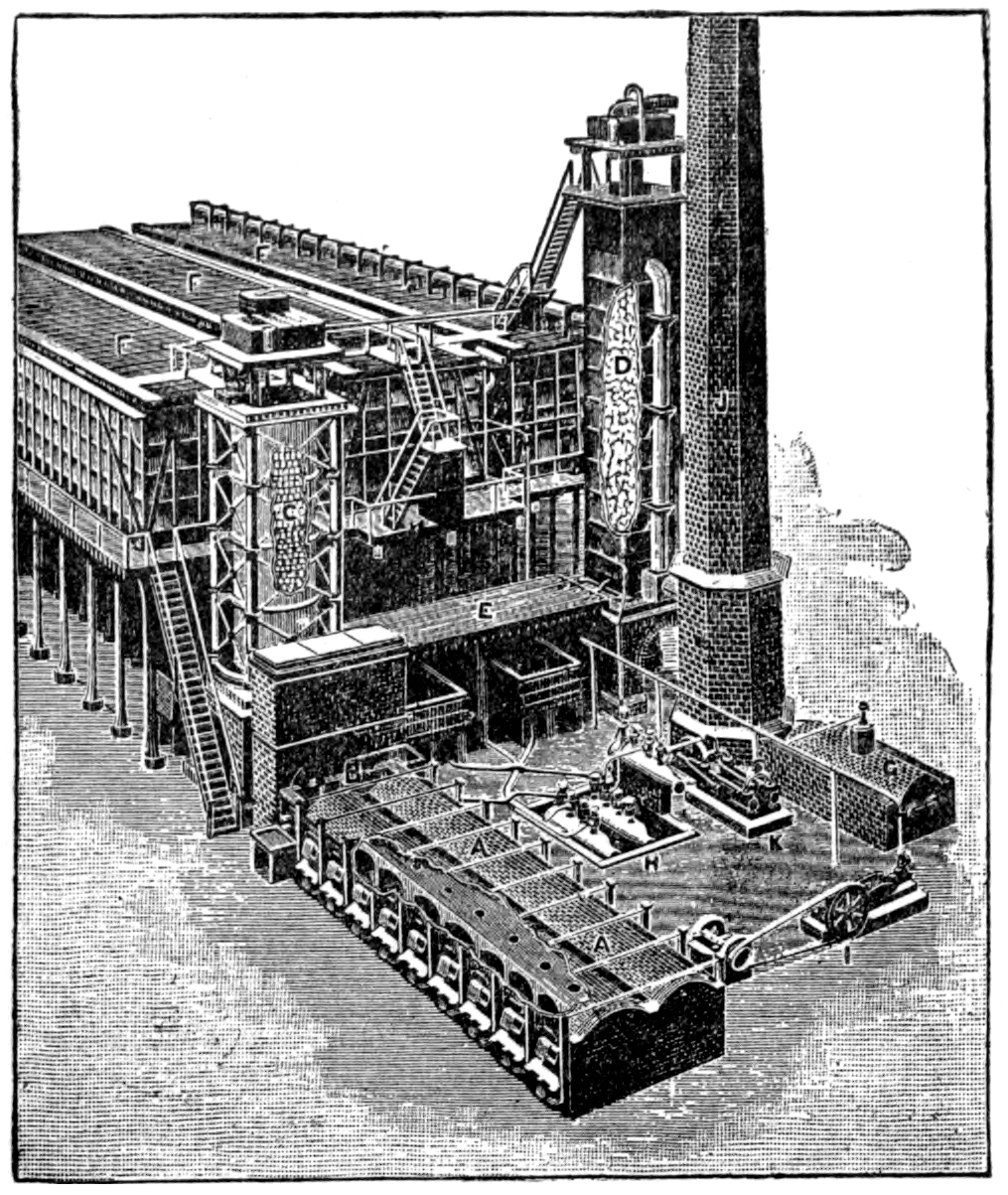
By the 1740s Garbett was refining gold and silver in a workshop in Steelhouse Lane for the town’s jewellers. Refining needs sulphuric acid, and he had to buy it from distant makers. It was expensive and difficult to transport, and it was making his costs too high.
Watt told Wedgwood in 1787 that “Mr. Boulton, Mr. Garbett and I believe all the town of Birmingham are of the same sentiment”.
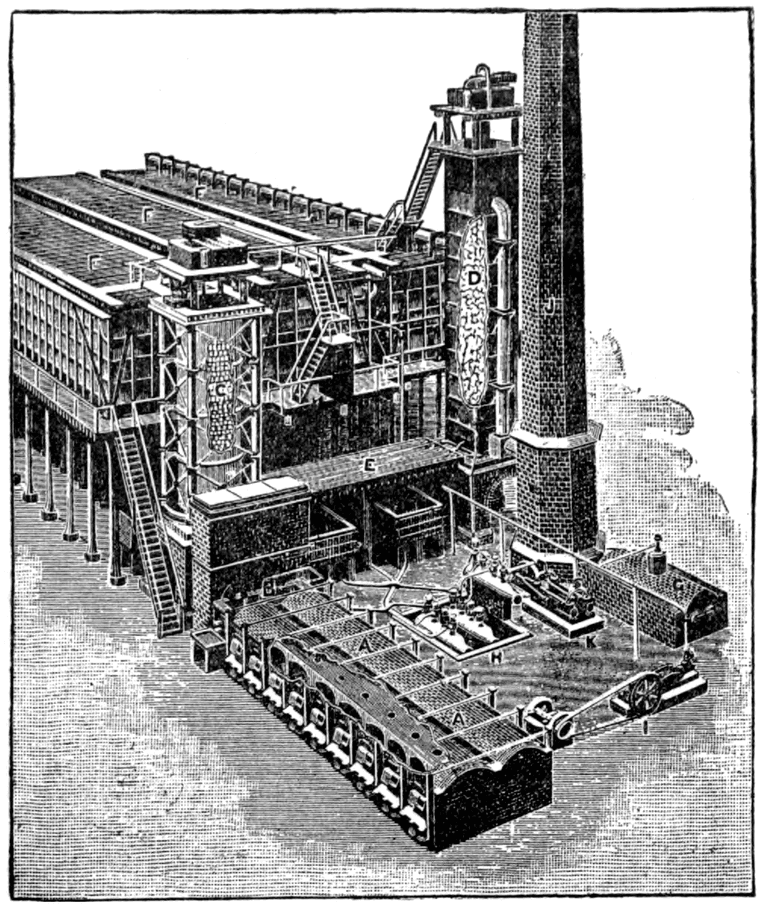
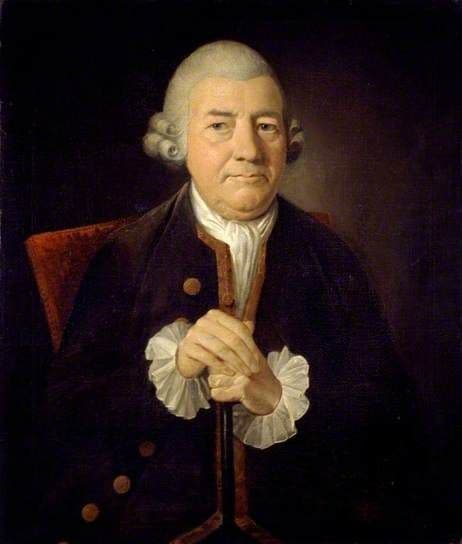
His answer was a partnership with a young physician, Dr John Roebuck, who had trained in chemistry at Edinburgh and Leiden. In 1746 the two men began making sulphuric acid on a large scale in vessels of lead instead of glass. Roebuck had shown that lead resisted the acid as well as glass did. The partnership also became a consultancy, advising Birmingham manufacturers on chemical problems.
They never patented the process. In 1749 they opened a large acid works at Prestonpans near Edinburgh to supply the Scottish linen bleachers, and kept the method secret behind its walls. It leaked anyway.
Carron
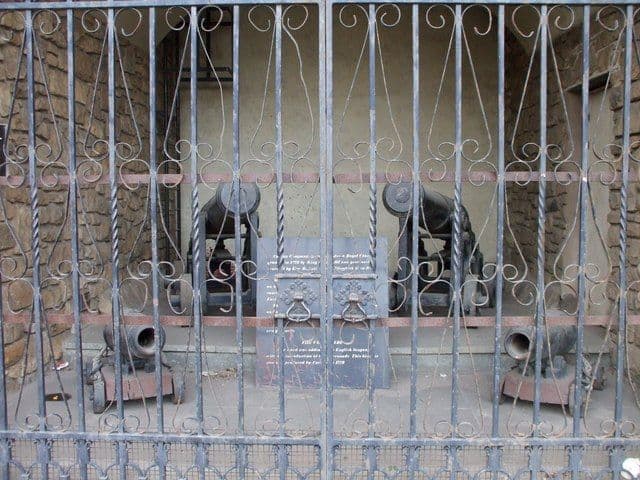
In 1759 Garbett, Roebuck, Roebuck’s brothers and the Cadells of Cockenzie founded the Carron Company to make iron on the River Carron near Falkirk. Garbett and Roebuck each held a quarter of the capital. Its first furnace was blown on 1 January 1760, and Carron became one of the largest ironworks in Britain, famous for cast-iron goods and for naval guns.
Garbett was a big lender behind the scenes. In 1765, by one estimate, he advanced £20,000 for operations at Carron. By 1771 something like £150,000 of capital was tied up in his businesses. By then, says the Victoria County History, the Birmingham acid and refining business was a sideline to his Scottish interests.
Carron also tied him to the Atlantic economy. From 1762 the company made iron pans for boiling sugar cane on West Indian plantations worked by enslaved Africans. Garbett was a partner in a firm supplying goods to the slave economy, as many British manufacturers were.
Quality and hallmarks
Garbett cared about one thing all his life: quality. Birmingham goods had a reputation for being cheap and shoddy, and he thought the reputation cost the town dearly. When the Shelburnes visited in 1766, Lord Shelburne went home calling for a proof master to test Birmingham guns. The Victoria County History thinks he “probably picked up” the idea from his host, “an untiring advocate of quality control”.
In 1773 Garbett backed Matthew Boulton’s campaign for an assay office in Birmingham, so that local silver could be tested and hallmarked at home. He gave evidence to the House of Commons committee as a refiner of gold and silver, pointing to the town’s licensed plate-makers as proof of a real trade. The London goldsmiths fought the bill and lost. The Birmingham Assay Office opened that year, and later records name Garbett as one of its wardens in the 1790s.
A voice for manufacturers
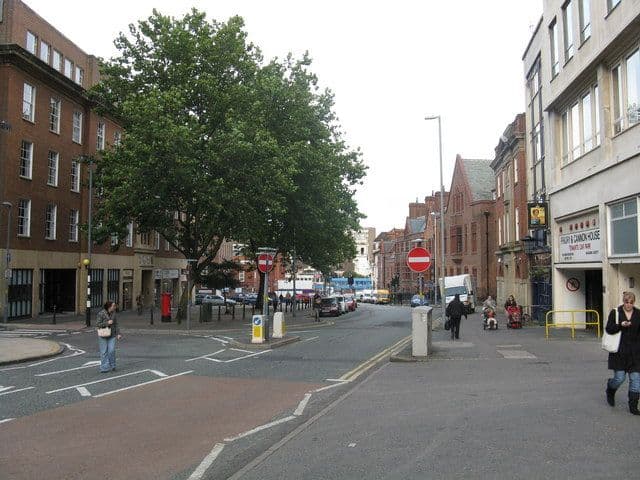
Birmingham had no MP of its own. Garbett worked the system anyway. In 1766 he relied on his “old acquaintance” with the county members to present a town petition, believing the old landed families “look upon themselves as patrons of the trade in the neighbourhood”. He wrote to ministers on the economic questions of the day.
In 1783 he went further. The Birmingham Commercial Committee was founded that year, with merchants and manufacturers together, and Garbett as its first chairman. The brass founders were its backbone, and members included Matthew Boulton, the ironmaster John Wilkinson and the Galtons. It is the ancestor of today’s Birmingham Chamber of Commerce.
Garbett was proud of what he had helped to build. Writing of the manufacturers’ association to Lord Shelburne, by then Lord Lansdowne, in July 1785, he said: “There are three hundred gentlemen who are connected with that association that have more property and more knowledge of the state of general commerce than 300 that might be named in the House of Commons … I rejoice they have met and united and that I have been a material instrument in occasioning it.”
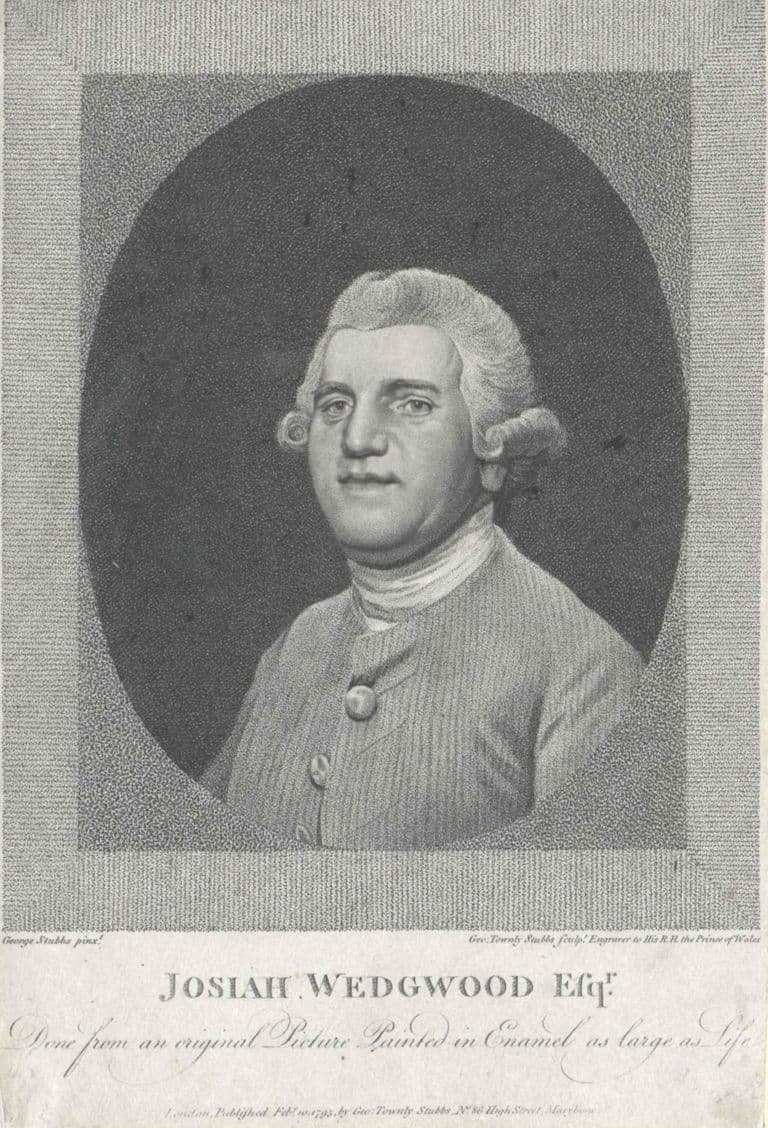
That year the Committee fought Pitt’s proposals to free trade with Ireland, which Birmingham feared would let Irish makers undercut it. Manufacturers from across Britain formed a General Chamber of Manufacturers, with Josiah Wedgwood as its first chairman. The national Chamber soon split over Pitt’s free-trade treaty with France. Birmingham, against much of the country, backed the treaty. Watt told Wedgwood in 1787 that “Mr. Boulton, Mr. Garbett and I believe all the town of Birmingham are of the same sentiment”.
Against the slave trade
On 28 January 1788 a meeting of Birmingham inhabitants decided to petition Parliament against the African slave trade. Samuel Garbett was in the chair. The petition, as quoted by the historian Eric Williams, said that “as inhabitants of a manufacturing town and neighbourhood your petitioners have the commercial interests of this kingdom very deeply at heart; but cannot conceal their detestation of any commerce which always originates in violence, and too often terminates in cruelty”.
It was a striking stand in a town whose guns, brass and hardware helped supply that commerce, and from a man whose Scottish ironworks had been casting sugar pans for the plantations.
The crash
By then Garbett’s own fortune had gone. His son-in-law Charles Gascoigne, who had married his daughter Mary in 1759, became a partner at Carron in 1765. The Victoria County History says Gascoigne was “in the end the cause of his bankruptcy”. In 1782 Garbett was declared bankrupt. His Birmingham refining business passed to Alston and Armitage, and James Alston & Sons were still refining at Steelhouse Lane decades later.
Bankruptcy did not silence him. He was still chairing the Commercial Committee in 1789, when swordmakers accused him of favouring one of their number, Thomas Gill. He died in Birmingham on 5 December 1803, aged about 86.
Why it mattered
Garbett never had Boulton’s glamour or Watt’s genius, and few people in Birmingham know his name. But much of what made the town work passed through his hands.
He helped make sulphuric acid a cheap industrial product. He put up money for Carron, one of the biggest ironworks of the age. He was there when Birmingham won its Assay Office. Above all, he taught Birmingham’s manufacturers to act together. Before 1783 the town’s makers usually came together only for a single petition or campaign. After 1783 there was a standing committee of merchants and manufacturers, chaired by Garbett, which spoke for the whole town on tariffs, treaties and trade. Historians call him one of Britain’s first industrial lobbyists.
His life also shows how tangled that world was. The same man helped run an ironworks casting pans for slave plantations and chaired Birmingham’s first meeting to petition against the slave trade.
When Birmingham’s businesses speak to government today, through the Chamber of Commerce, they are using a voice Samuel Garbett first organised.
On the map
4 places connected with Samuel Garbett. Tap a number for directions — some sites are private homes or gardens, so each place’s page says what you can see from the street.

- General Hospital, Summer Lane (site) — Lost, Site redeveloped · Directions to General Hospital, Summer Lane (site) (opens Google Maps)
- Birmingham Assay Office, Bull Lane (site) — Lost, Site redeveloped
- Birmingham Assay Office, first rooms at the King’s Head, New Street (site) — Lost
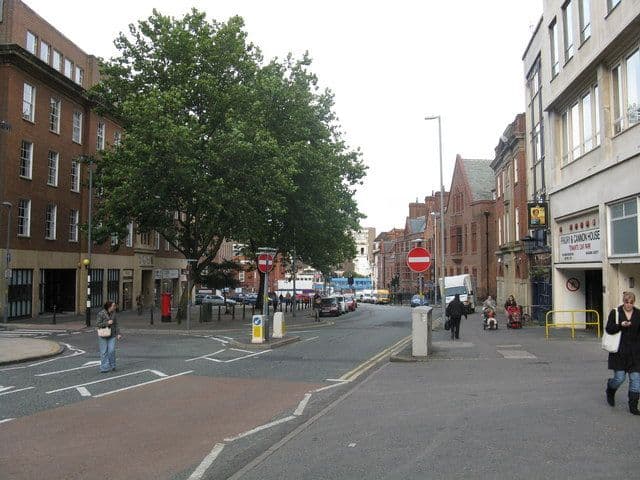
- Roebuck and Garbett’s laboratory and refinery, Steelhouse Lane — Lost, Site redeveloped
Key dates
- 1746 — Roebuck and Garbett make sulphuric acid in lead chambersAt their Steelhouse Lane refinery, John Roebuck and Samuel Garbett begin making sulphuric acid on a large scale in chambers of lead instead of glass globes. The unpatented process cuts the cost of the acid to about a quarter and moves to a bigger works at Prestonpans in 1749.
- 1759 — Carron Company foundedJohn Roebuck, Samuel Garbett and partners found the Carron ironworks near Falkirk, with Birmingham capital. Its first furnace is blown on 1 January 1760.
- 1783 — Birmingham Commercial Committee formedBirmingham’s merchants and manufacturers form a standing committee to lobby Parliament, with Samuel Garbett as first chairman and Boulton among its members. It fights Pitt’s Irish trade proposals in 1785 and is the ancestor of the Birmingham Chamber of Commerce.
Sources and further reading
Bankruptcy date: Grace’s Guide and Wikipedia say 1782; the Victoria County History says 1783 in one place. We use 1782; proceedings may have run into 1783.
Founding of the General Chamber: some summaries say Garbett founded the General Chamber of Manufacturers with Wedgwood. The sources checked show Wedgwood as its first chairman and the Birmingham Committee taking part; Garbett’s exact role in London is not established, so we do not claim he founded it.
Assay Office warden 1796–1800 and chairman of the 1769 street commission: from Grace’s Guide and Wikipedia only. The Victoria County History confirms he was a Street Commissioner. We say “later records name him as one of its wardens” and do not use the street-commission chair.
The 1788 petition: the wording and Garbett’s chairmanship come from Eric Williams, Capitalism and Slavery (1944), p. 158, as quoted in Duncan Frankis’s 2021 thesis; we have not seen the original newspaper report.
Gascoigne: the Victoria County History blames his son-in-law for the bankruptcy without naming him; Gascoigne is the son-in-law named in other sources (marriage to Mary Garbett, 1759; Carron partner from 1765).
Burial: Wikipedia says he was buried at St Philip’s, where he had been churchwarden, and left more than £12,000; not confirmed, so not used.
Birth date: only the year, 1717, is given in the sources checked.
Portrait: no portrait licensed for reuse has been found. A copper halfpenny token with his bust is known but no open-licence image of it was found.
- Economic and Social History: Industry and Trade, 1500–1880, in A History of the County of Warwick, vol. 7, pp. 81–139 — W. B. Stephens (ed.), Victoria County History, 1964. Steelhouse Lane refining; 1746 acid; ‘self-made heroes’; capital 1765 and 1771; son-in-law and bankruptcy; Alston and Armitage; assay evidence; Commercial Committee 1783; Irish trade 1785; quality control
- A History of the County of Warwick, vol. 7: The City of Birmingham — Political History to 1832, pp. 270–297 — W. B. Stephens (ed.), Victoria County History, 1964. Street Commissioner; 1766 petition and county members; 1785 Irish proposals
- Life of William, Earl of Shelburne, vol. 1 — Lord Edmond Fitzmaurice, Macmillan, London, 1875. Shelburne visit, May 1766
- The Eighteenth-Century Birmingham Brass Trade: Origins, Growth, and Politics — Duncan Frankis, PhD thesis, University of Birmingham, 2021. ch. 2: Commercial Committee membership; letters of 22 May 1783 and 26 July 1785; 1788 petition (quoting Williams)
- Capitalism and Slavery — Eric Williams, University of North Carolina Press, Chapel Hill, 1944. p. 158, via Frankis
- Samuel Garbett and the Early Development of Industrial Lobbying in Great Britain — J. M. Norris, Economic History Review, 2nd series, 10:3, pp. 450–460, 1958. cited via Frankis; not consulted directly
- Garbett, Samuel (1717–1803) — Oxford Dictionary of National Biography — R. H. Campbell, Oxford University Press, 2004; rev. 2013. cited via Frankis; not consulted directly
- Samuel Garbett — Grace’s Guide to British Industrial History. birth, marriage, early career, Carron shares, 1782 bankruptcy, death
- Roebuck, John (1718–1794) — Dictionary of National Biography, vol. 49 — Francis Espinasse, Smith, Elder & Co., 1897. partnership; Prestonpans
- The Industrial Revolution in the Eighteenth Century (English translation) — Paul Mantoux, Jonathan Cape, London, 1928. Watt to Wedgwood, 26 February 1787 (Soho MSS); Garbett ‘began life as a brass worker’
- Carron Co. Sugar Pans — the Slavery Connection — Lesley Ramsay, Our Stories Falkirk (Hidden Heritage: Industry and Empire project), 2020. sugar pans from 1762
- Samuel Garbett — Wikipedia. lead only: Gascoigne marriage 1759
Comments
Comments will load here.