
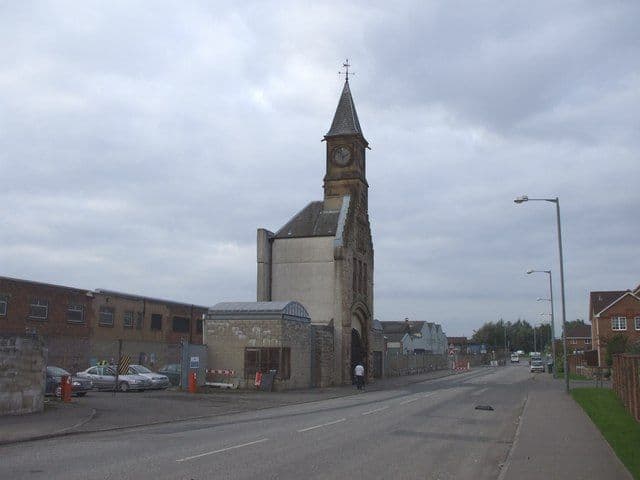
What was here?
One of the largest ironworks in eighteenth-century Britain, founded with Birmingham money and know-how, making cast-iron goods, sugar pans for the plantations and naval guns, including the carronade.
History
Roebuck chose the site for its water power, coal, ironstone and limestone and the Forth for shipping. The first furnace was blown on 1 January 1760. Roebuck patented a pit-coal method of making malleable iron in 1762, and John Smeaton built blowing machinery. From 1762 the works made sugar-boiling pans for West Indian plantations; the carronade was first cast there in 1779. The company traded until 1982.
Why it mattered
It brought large-scale ironmaking to Scotland and tied Birmingham entrepreneurs into Scottish heavy industry.
Why it disappeared
Industrial decline
The company failed in 1982 and the works were cleared.
More pictures
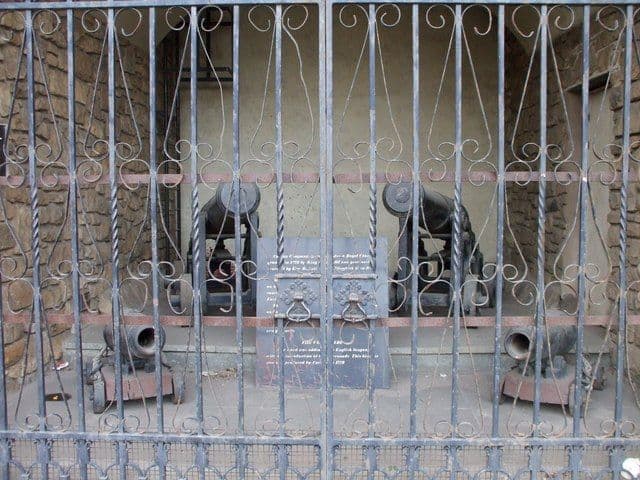
Carronades at the Carron Works clocktower, 25 September 2008John Lord, 25 September 2008. Wikimedia Commons (from Geograph) · CC BY-SA 2.0
What’s there now
What survives
The clocktower entrance, with a display of carronades.
Then and now
Then · 25 September 2008
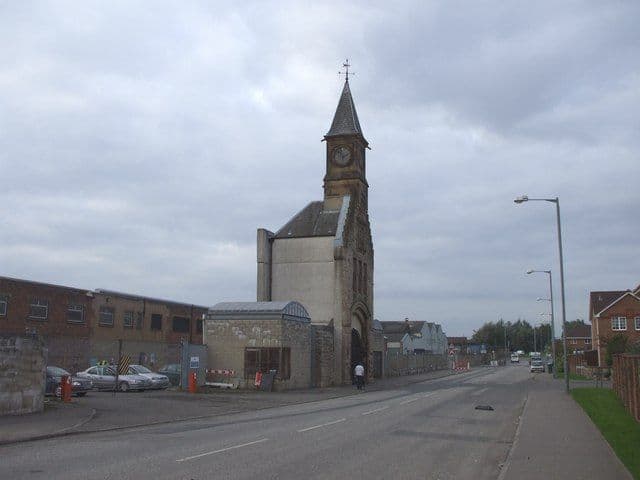
Now · 25 September 2008
Key dates
- 1759 — Carron Company foundedJohn Roebuck, Samuel Garbett and partners found the Carron ironworks near Falkirk, with Birmingham capital. Its first furnace is blown on 1 January 1760.
Sources and further reading
- Roebuck, John (1718–1794) — Dictionary of National Biography, vol. 49 — Francis Espinasse, Smith, Elder & Co., 1897
- Carron Co. Sugar Pans — the Slavery Connection — Lesley Ramsay, Our Stories Falkirk (Hidden Heritage: Industry and Empire project), 2020
- Samuel Garbett — Grace’s Guide to British Industrial History
Comments
Comments will load here.