
What was here?
The King’s Head, an inn in New Street, where the newly created Birmingham Assay Office tested and hallmarked silver for its first nine years, from 1773 to 1782.
History
Silver needs a mark
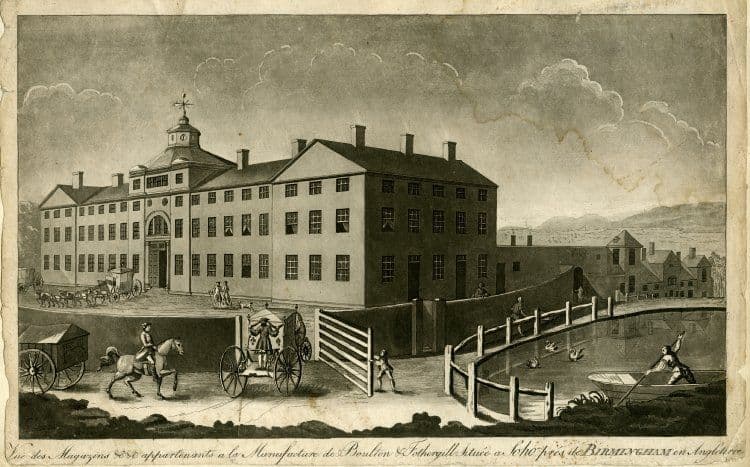
By the 1760s Matthew Boulton was making fine silver at Soho, but there was a catch. English silver had to be assayed, tested for purity, and hallmarked before it could be sold, and Birmingham had no assay office. Every piece had to be sent away to another town’s assay office and back, with all the cost and delay that went with it.
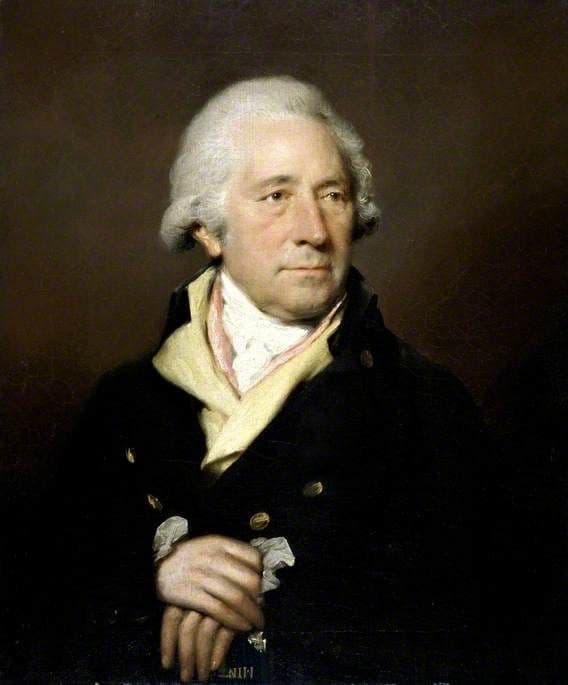
Boulton set out to change the law. In 1773, as Samuel Timmins’s 1866 history of the town’s trades records, a petition went to the House of Commons “from Matthew Boulton, on behalf of himself and the rest of the manufacturers of silver wares in Birmingham”. The refiner Samuel Garbett gave evidence for it. The London goldsmiths fought the bill and lost, and the Act passed that spring.
Three rooms at an inn
The new office did not start in a grand building. On 31 August 1773, the Revolutionary Players project says, it “opened in three modest rooms at the King’s Head Inn, in New Street”. Showell’s Dictionary of 1885 adds that a few hours a week were enough for all the business at first.
Boulton was the first through the door. He was the first of the town’s forty licensed silversmiths to submit his wares, and also, Revolutionary Players notes, the first to have pieces broken up for being below standard. The office treated its founder like anyone else.
Moving on
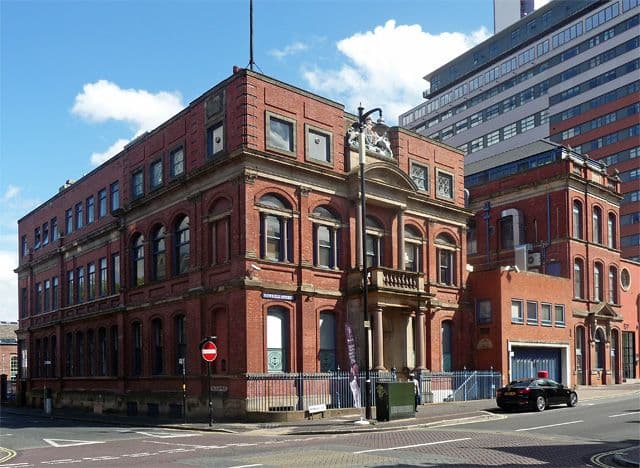
The office stayed at the King’s Head until 1782, when it moved to Bull Lane. Later homes followed in Little Colmore Street, Little Cannon Street and, from 1878, Newhall Street, where it still works. Where exactly the King’s Head stood on New Street is not known.
Boulton’s campaign gave Birmingham its own guarantee of quality, and the town’s silver has carried the Birmingham anchor ever since. It all began in a few hired rooms at an inn.
What happened here?
The Birmingham Assay Office, created by Act of Parliament in 1773 after a campaign led by Matthew Boulton, opened here on 31 August 1773 and assayed and marked silver here until 1782.
Why it mattered
The Assay Office let Birmingham’s silversmiths have their work tested and hallmarked at home, and helped the town compete in silver and later gold. It is still working, now in the Jewellery Quarter.
Why it disappeared
Redevelopment
The Assay Office moved to Bull Lane in 1782. The inn itself has not been identified, and New Street has since been rebuilt several times.
What’s there now
What replaced it
Later New Street buildings.
What survives
Nothing known of the inn. The Assay Office itself survives, in Newhall Street and now in the Jewellery Quarter.
Today
New Street, in the city-centre shopping streets. The inn’s position along it is not known.
Sources and further reading
The site of the King’s Head on New Street has not been found in the directories of 1780, 1788 or 1800 or on any map read, so the pin marks New Street as built up by 1773, not the inn. The ‘three modest rooms’, the opening date and Boulton’s first submission come from Revolutionary Players, which has not been checked against Westwood’s 1936 history of the Assay Office. The anchor mark is well known but its origin is not discussed here.
- The Resources, Products, and Industrial History of Birmingham and the Midland Hardware District — Samuel Timmins (ed.), Robert Hardwicke, London, 1866. A. Ryland, ‘The Birmingham Assay Office’, pp. 502–503
- Hallmarking and the Work of Birmingham Assay Office — Revolutionary Players, History West Midlands
- Matthew Boulton and the Formation of Birmingham Assay Office — Revolutionary Players
- Showell’s Dictionary of Birmingham — Thomas T. Harman and Walter Showell, Cornish Brothers, Birmingham, 1885. ‘Assay Office’
- Economic and Social History: Industry and Trade, 1500–1880, in A History of the County of Warwick, vol. 7, pp. 81–139 — W. B. Stephens (ed.), Victoria County History, 1964. Garbett’s evidence
- Birmingham Assay Office — Wikipedia. lead only
Comments
Comments will load here.