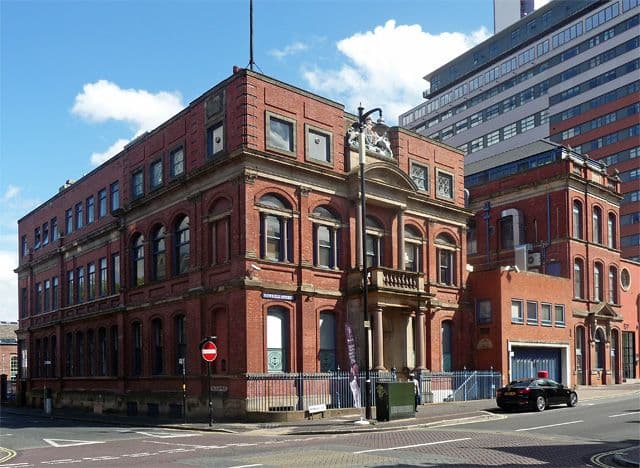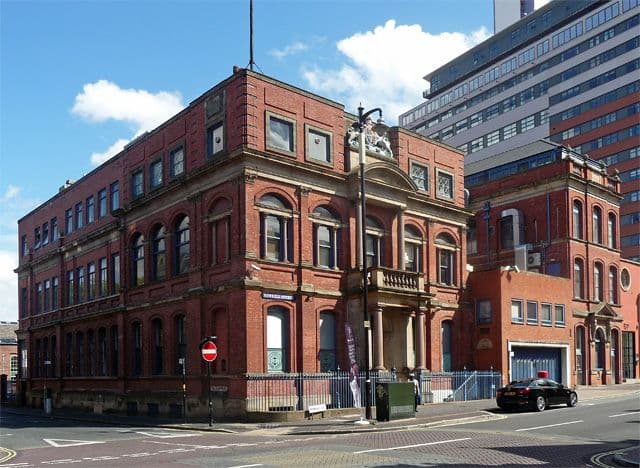
Birmingham’s jewellery trade grew out of its “toy” trade: the small, valuable metal goods, from buckles and buttons to watch chains and trinkets, that made the town famous in the eighteenth century. In 1766 Lady Shelburne went shopping in Birmingham and bought “watch chains and trinkets at an amazing cheap price”.
The Assay Office
Silver and gold had to be tested and hallmarked before they could be sold. Until 1773 Birmingham makers had to send their goods more than seventy miles to Chester, or to London. Matthew Boulton led the campaign for an office of the town’s own. Petitions went to Parliament in February 1773, and the Act was passed in May. Birmingham’s mark has been an anchor ever since. In 1824 the office was allowed to assay gold as well as silver.
Many hands, one quarter
The trade was split among hundreds of small masters, each doing one part of the work for the others: stamping, piercing, setting, polishing, engraving. Birmingham City Council’s appraisal says this “interdependence” was “the chief factor in the localisation of the jewellery trade”. The makers clustered round St Paul’s Square and then spread over the hill beyond Warstone Lane, into what became the Jewellery Quarter.
Between 1841 and 1871 the number of men over twenty working as goldsmiths, silversmiths and jewellers in Birmingham rose from about 1,200 to about 3,400, and more women were employed too. The gold rushes of the 1850s and of the Klondike in the 1890s brought booms. From the late 1890s to the First World War the Quarter was at its peak.
Decline and survival
Expensive jewellery suffered badly in the depression of the 1880s, and again after 1920. After the Second World War many larger firms moved out. But the small craft workshops held on, and so did their buildings. Today the Jewellery Quarter is a conservation area, and jewellers still work there.
On the map
7 places connected with The jewellery trade. Tap a number for directions — some sites are private homes or gardens, so each place’s page says what you can see from the street.

- Birmingham Assay Office, Bull Lane (site) — Lost, Site redeveloped
- Birmingham Assay Office, first rooms at the King’s Head, New Street (site) — Lost
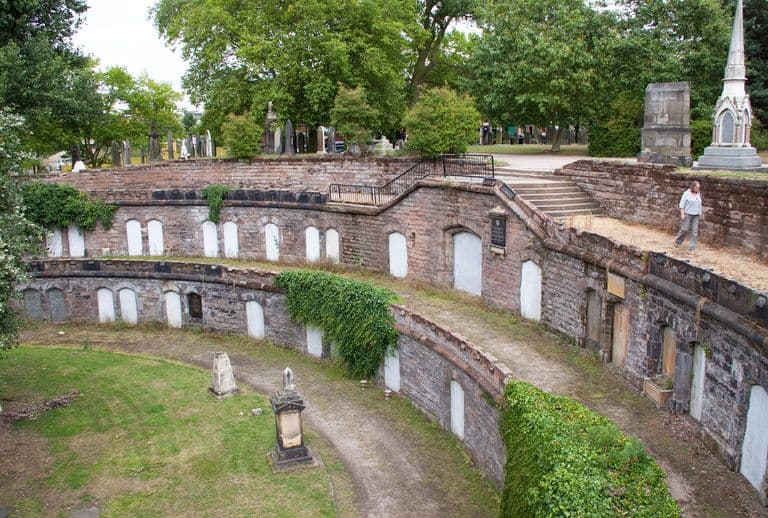
- Warstone Lane Cemetery — Surviving, Surviving but altered · Directions to Warstone Lane Cemetery (opens Google Maps)
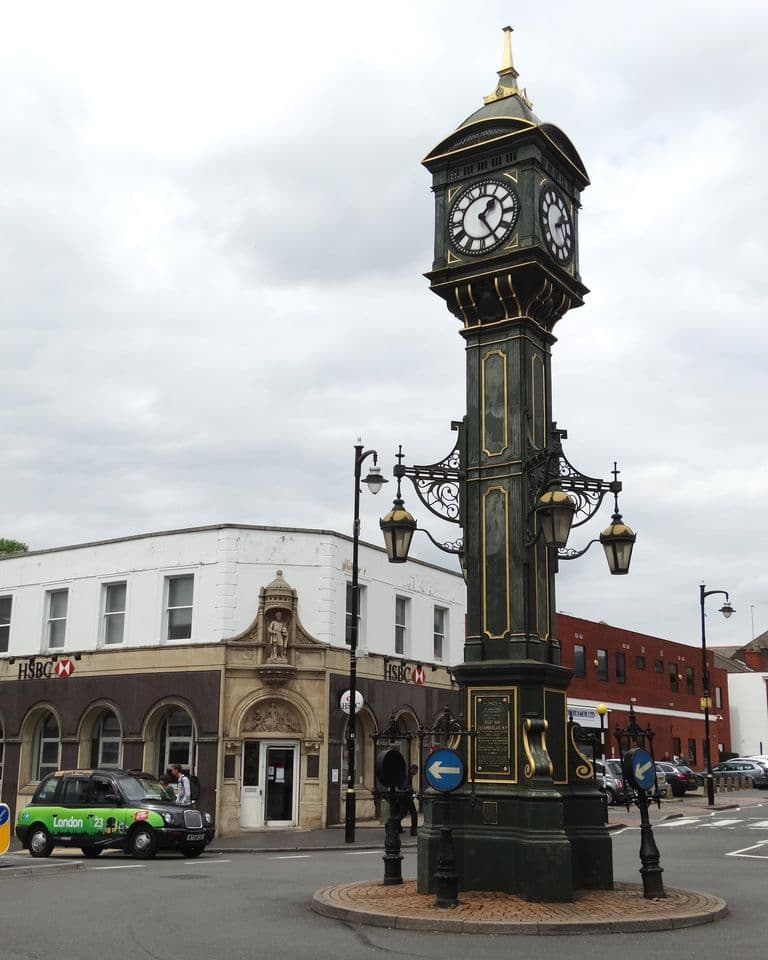
- The Chamberlain Clock — Surviving, Surviving but altered · Directions to The Chamberlain Clock (opens Google Maps)
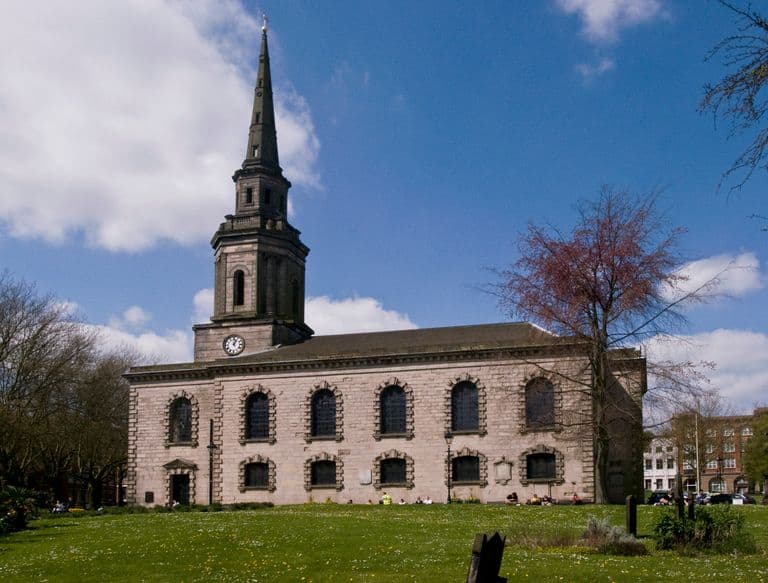
- St Paul’s Church and St Paul’s Square — Surviving, Surviving but altered · Directions to St Paul’s Church and St Paul’s Square (opens Google Maps)
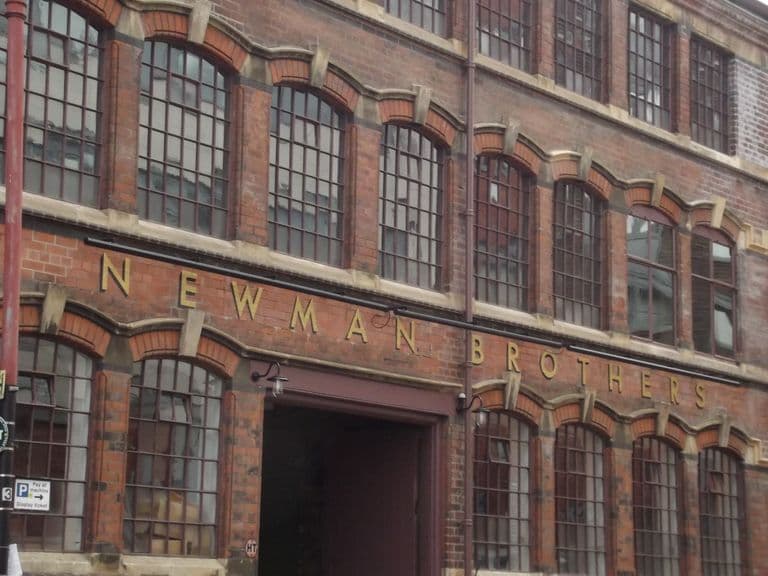
- Newman Brothers Coffin Works — Surviving · Directions to Newman Brothers Coffin Works (opens Google Maps)
- The Jewellery Quarter — Surviving, Surviving but altered
Key dates
- 1777–79 — St Paul’s Church built in the new Colmore squareSt Paul’s is built on land given by Charles Colmore, at the centre of a new square laid out to sell building plots. Within a few years the houses around it have workshops behind them.
- 1878 — The Assay Office moves to Newhall StreetThe Birmingham Assay Office moves from Little Cannon Street to new premises on Newhall Street, in the Jewellery Quarter.
- 1894 — Newman Brothers move to Fleet StreetThe brass founders Newman Brothers move into their new works at 13–15 Fleet Street, where they make coffin furniture for over a century.
- 1903 — The Chamberlain Clock is erectedA cast-iron clock tower is put up at the junction of Warstone Lane, Vyse Street and Frederick Street to mark Joseph Chamberlain’s visit to South Africa.
- 10 January 1980 — The Jewellery Quarter Conservation Area is designatedAfter an English Heritage survey finds the Quarter of international significance, a single enlarged conservation area is designated, taking in St Paul’s Square and Key Hill. The area was extended in 1996 and 2000.
Sources and further reading
- Jewellery Quarter Conservation Area Character Appraisal and Management Plan — Birmingham City Council (Donald Insall Associates), 2002
- Economic and Social History: Industry and Trade, 1500–1880, in A History of the County of Warwick, vol. 7, pp. 81–139 — W. B. Stephens (ed.), Victoria County History, 1964
- The Resources, Products, and Industrial History of Birmingham and the Midland Hardware District — Samuel Timmins (ed.), Robert Hardwicke, London, 1866. A. Ryland, ‘The Birmingham Assay Office’
- Matthew Boulton and the Formation of Birmingham Assay Office — Revolutionary Players
- Life of William, Earl of Shelburne, vol. 1 — Lord Edmond Fitzmaurice, Macmillan, London, 1875. vol. 1, p. 400