
What was here?
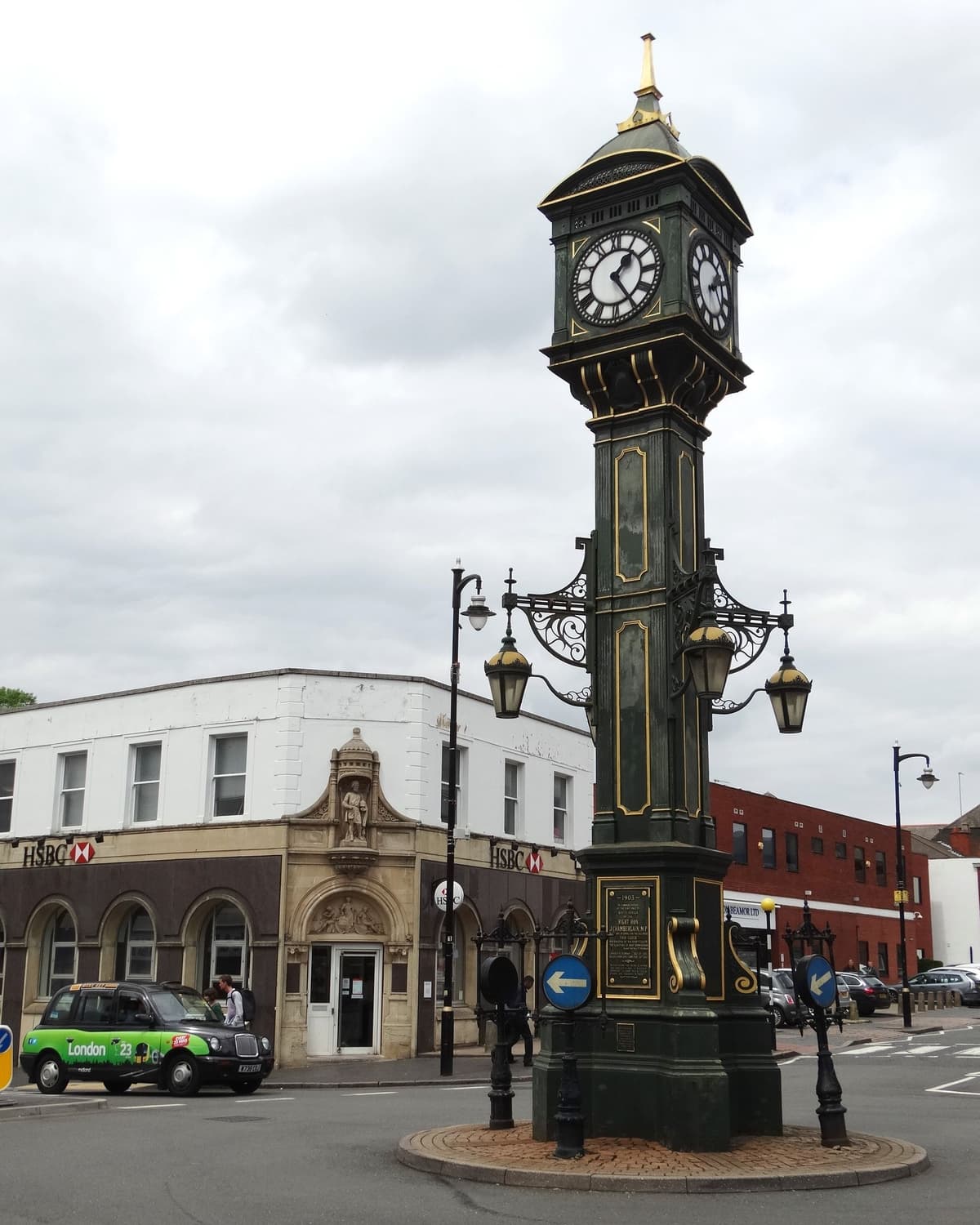
An Edwardian cast-iron clock tower in the middle of the road junction at the centre of the northern Jewellery Quarter, at the height of the Quarter’s prosperity.
History
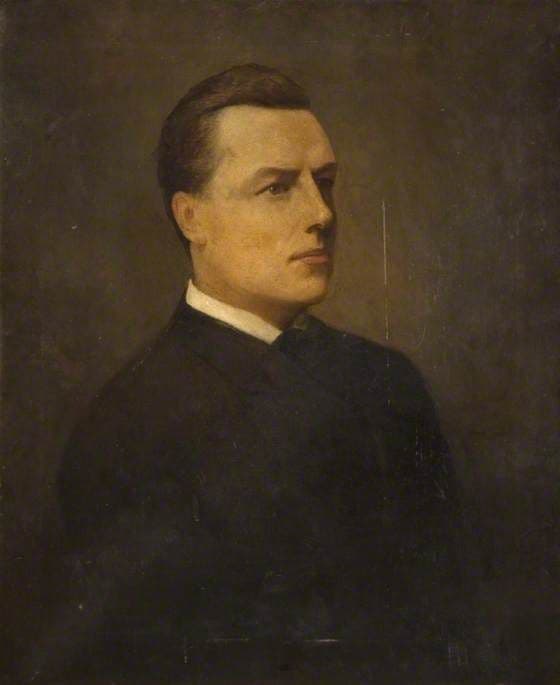
A clock for Joe
In the winter of 1902–03 Joseph Chamberlain, Colonial Secretary and Birmingham’s most powerful politician, toured South Africa after the end of the Boer War. He was away from 26 December 1902 to 25 February 1903, according to Wikipedia’s account. Back home, the Jewellery Quarter marked the trip with a clock. It went up in 1903 in the middle of the junction where Warstone Lane meets Vyse Street and Frederick Street.
It was erected in the Quarter’s best years. Birmingham City Council’s appraisal puts the trade at its peak from the late 1890s to the First World War, and this junction was its crossroads. East of the clock, the south side of Warstone Lane held the Quarter’s earliest shops.
Cast iron
Historic England’s list entry describes it plainly. It is cast iron, on a pedestal base with scrolled corners, with a tall, square, panelled shaft. The clock stage sits on brackets, each face under a curved pediment, and a small cupola caps it.
Chamberlain had his own ties to the Quarter. Wikipedia’s account says he had lived on Frederick Street and had campaigned to abolish the plate duties that weighed on jewellers. It also says the clock was unveiled in January 1904 by his third wife, Mary Endicott.
A landmark
The clock was first wound by hand, later electrified, and fell into disrepair. It was restored in 1989. In August 2020 it was taken away for a full overhaul and put back on 20 March 2021.
Few people now remember the South African tour it was built to celebrate. The council’s appraisal calls the clock simply “a local landmark and a symbol for the Quarter”.
What happened here?
A memorial clock was set up in 1903 at the Quarter’s main crossroads. It has kept time there for over a century, with breaks for repair.
Why it mattered
It marks the Jewellery Quarter at its Edwardian peak, and its link with Joseph Chamberlain, the city’s leading politician.
The same spot, then and now
1888–1913
Today
Old map: Ordnance Survey six-inch, reproduced with the permission of the National Library of Scotland (CC BY 4.0). Today: © OpenStreetMap contributors.
What’s there now
What survives
The 1903 cast-iron clock tower, restored, on its original site.
Today
It still stands in the middle of the junction, opposite the Big Peg and close to Jewellery Quarter railway and tram station.
Key dates
- 1903 — The Chamberlain Clock is erectedA cast-iron clock tower is put up at the junction of Warstone Lane, Vyse Street and Frederick Street to mark Joseph Chamberlain’s visit to South Africa.
Sources and further reading
The tour dates, the January 1904 unveiling by Mary Chamberlain, Chamberlain’s residence in Frederick Street, the plate-duty campaign, the 1989 restoration and the 2020–21 removal and return all come from Wikipedia (citing Jewellery Quarter websites) and have not been checked against primary sources. Who paid for the clock is not recorded in the sources consulted.
- Clock Tower at junction with Frederick Street and Vyse Street (the Chamberlain Clock) — National Heritage List for England entry 1343151 — Historic England
- Jewellery Quarter Conservation Area Character Appraisal and Management Plan — Birmingham City Council (Donald Insall Associates), 2002. section 3.2 and townscape character
- Chamberlain Clock — Wikipedia
Comments
Comments will load here.