
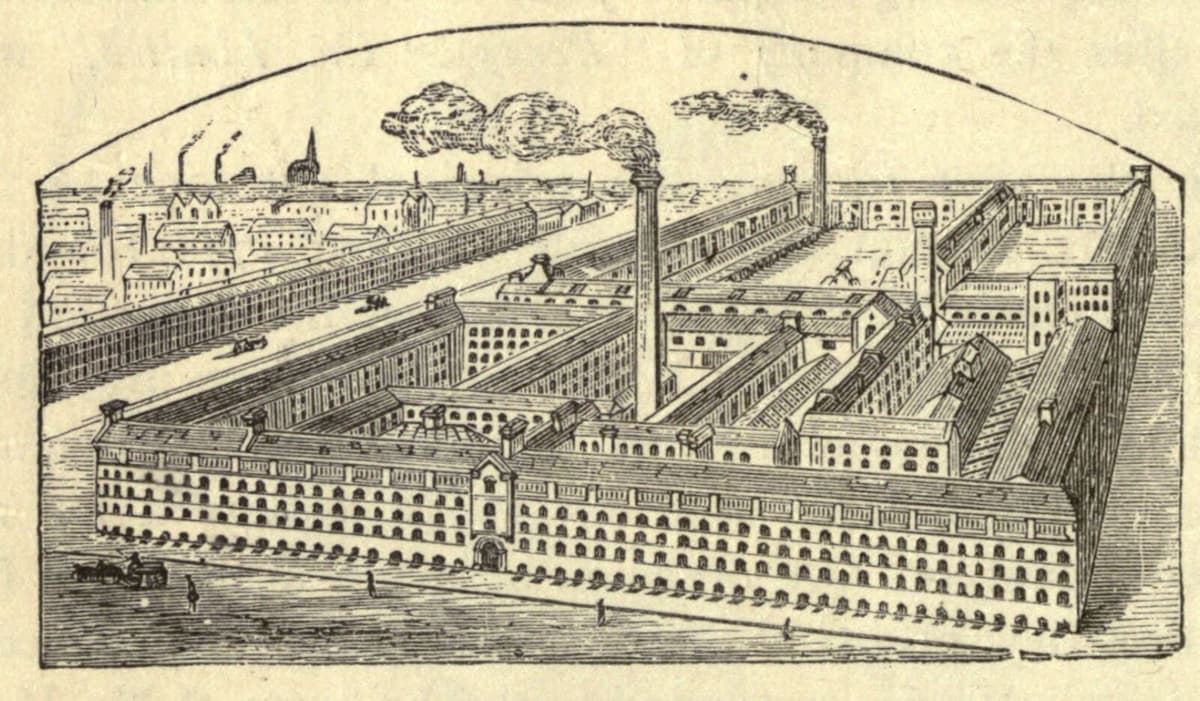
What was here?
On Lancaster Street, north of the old town centre, stood the house and workshops where Josiah Mason started as a split-ring maker in 1822. They grew into the largest pen works in Birmingham.
History
Samuel Harrison founded a split-ring works here in 1778, according to a company history of 1890. He was a friend of Joseph Priestley, and in 1791, with the Church and King rioters on the streets, he saved the place by chalking “Church and King!” on his shutters. In 1822 he took on Josiah Mason as manager, and soon sold him the business. Mason lived in the little house at the front, with the workshops behind and a garden beyond.
Pens for Perry
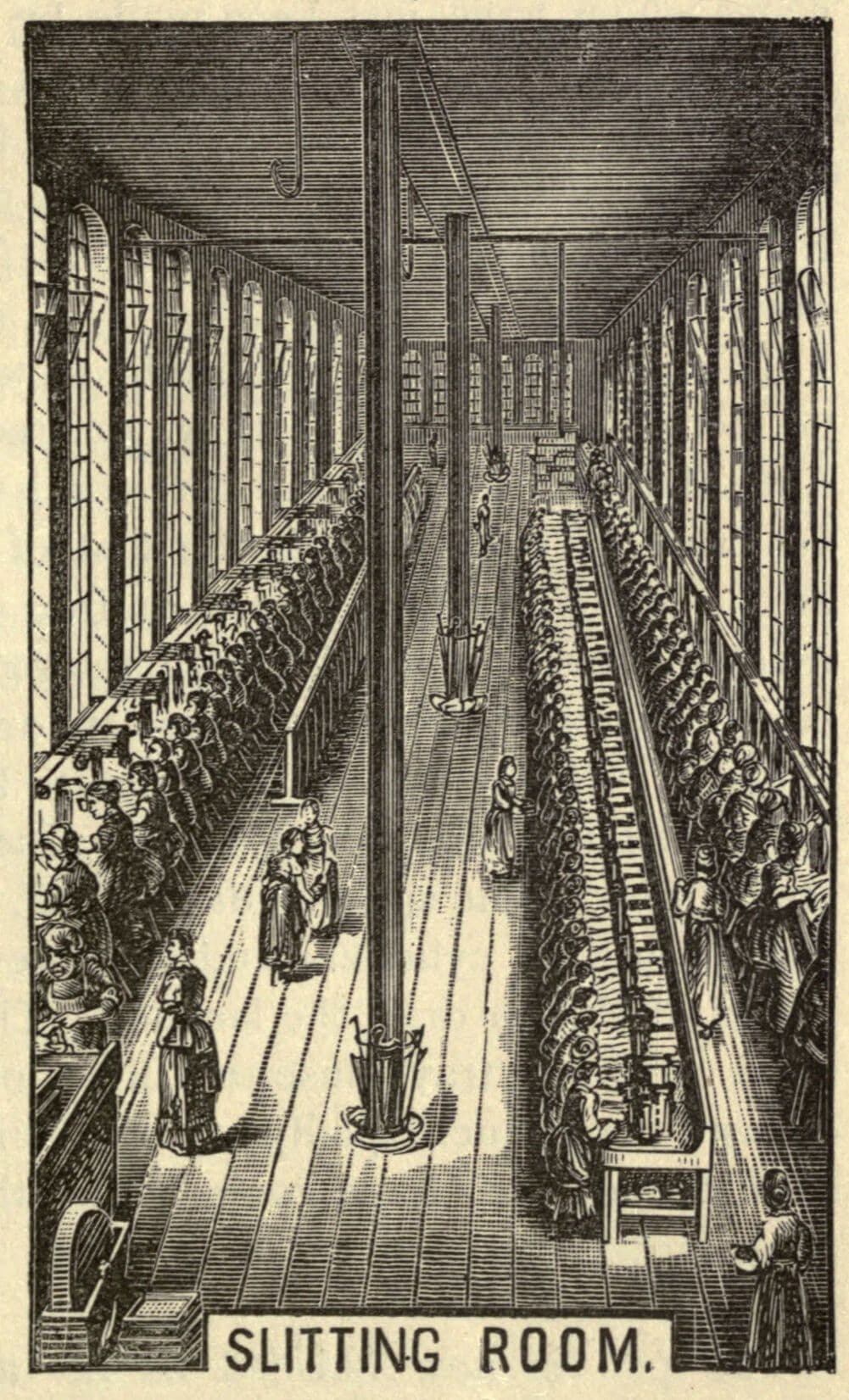
From about 1829 Mason made pens here for James Perry of London, and for decades every “Perryian” pen came out of Lancaster Street. The slitting was done in a locked room. A government inspector in the early 1860s described the factory as standing “in a crowded and poor part of the town”, but praised its ventilation shafts and machine guards. He also found boys of ten working long hours hardening and lacquering pens.
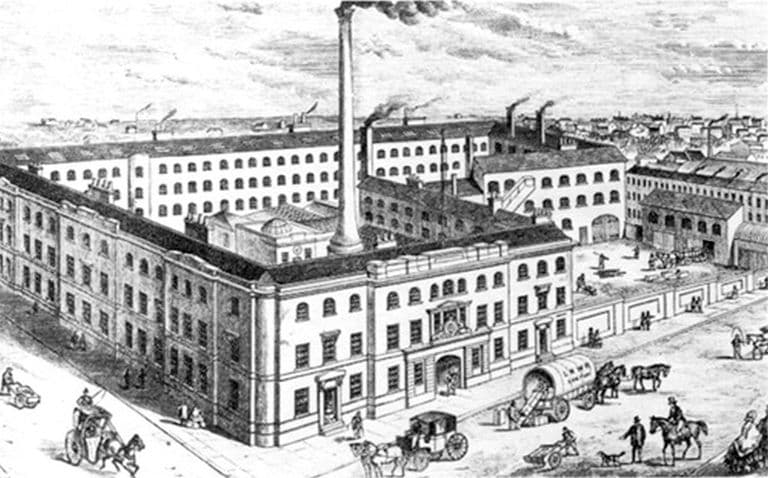
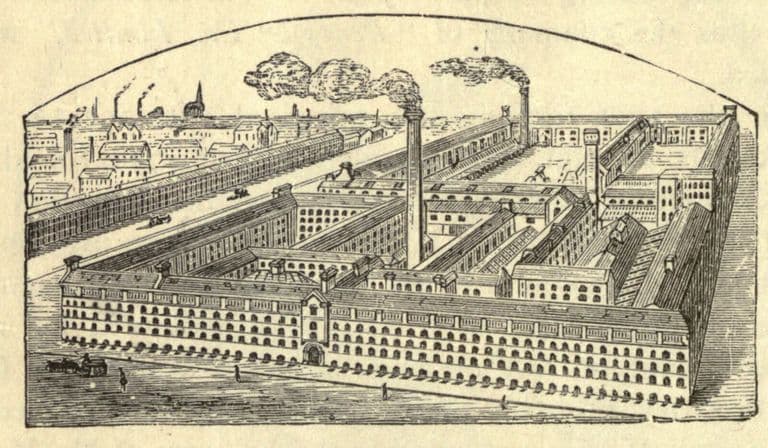
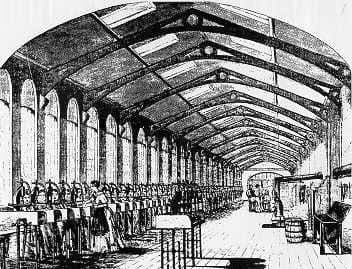
By 1875, when Mason sold it to Perry & Co. Ltd, the works employed close on 1,000 people, four-fifths of them women. In 1890 the company described a works of nearly two acres fronting four streets, with a five-storey block on Lancaster Street, a machine shop underneath, five boilers, 18 pairs of rolls, a slitting room with 90 girls at the presses and a grinding room with more than 160. On the Corporation Street side was a dining room for 600, with a stage for concerts and a library of about 2,000 books lent free to the workers. In one corner of the works, Mason’s biographer noted, Harrison’s split rings were still being made.
Perry & Co. were still here in 1902, by then making cycle chains as well as pens.
Why it mattered
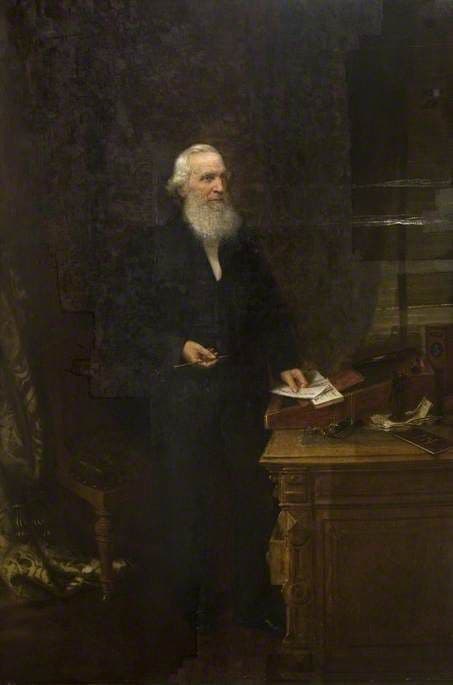
For half a century this was where most of the world’s “Perry” pens were made, and it was the foundation of the fortune that built the Erdington orphanage and Mason College.
Why it disappeared
Redevelopment
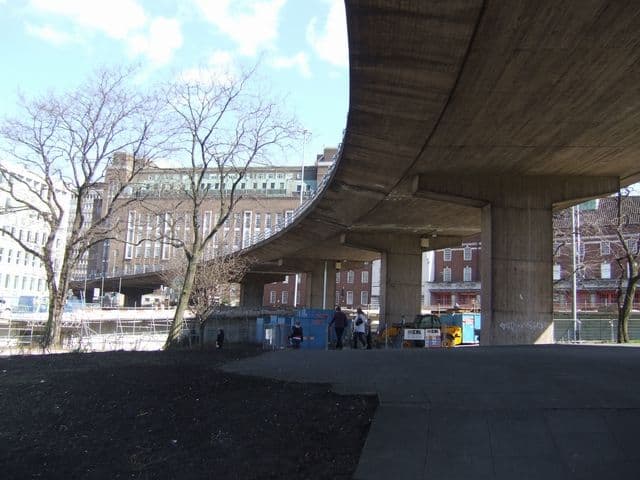
When and why the works closed and was demolished has not been established. The surrounding streets were reshaped in the 1960s and 1970s by the Inner Ring Road at Lancaster Circus.
The same spot, then and now
1888–1913
Today
Old map: Ordnance Survey six-inch, reproduced with the permission of the National Library of Scotland (CC BY 4.0). Today: © OpenStreetMap contributors.
More pictures
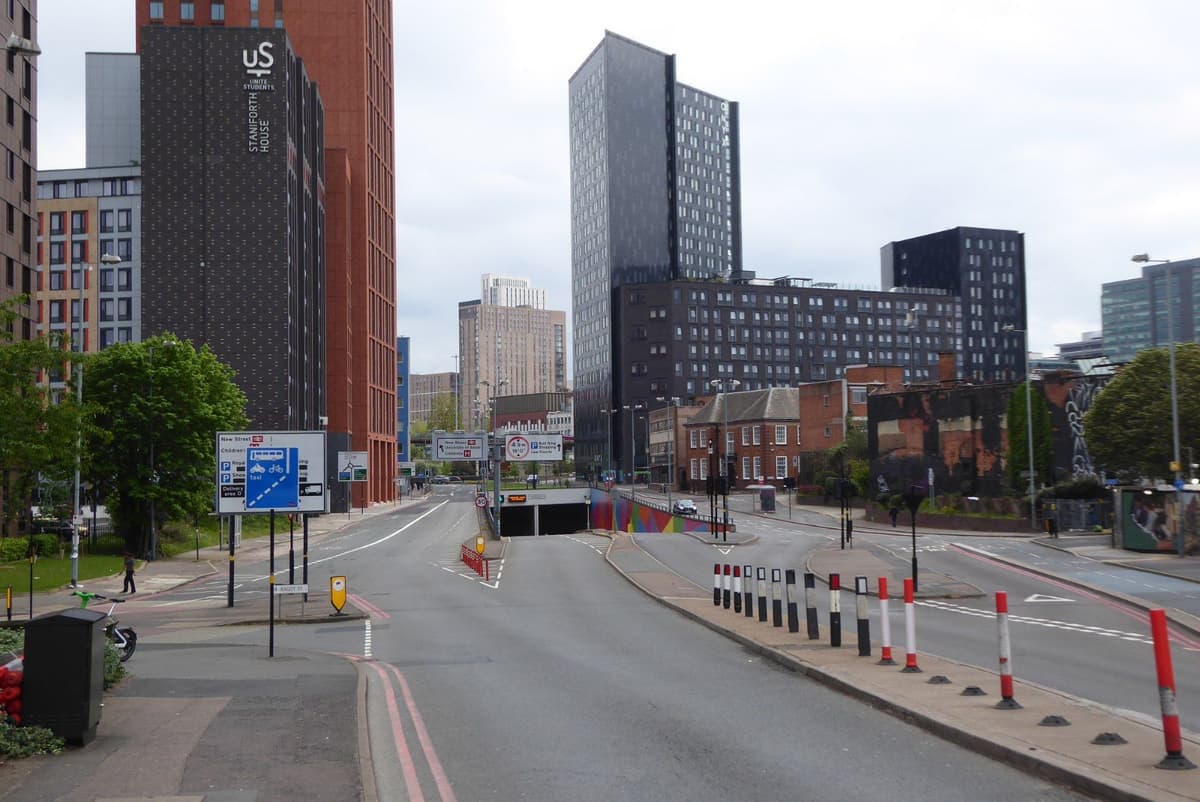
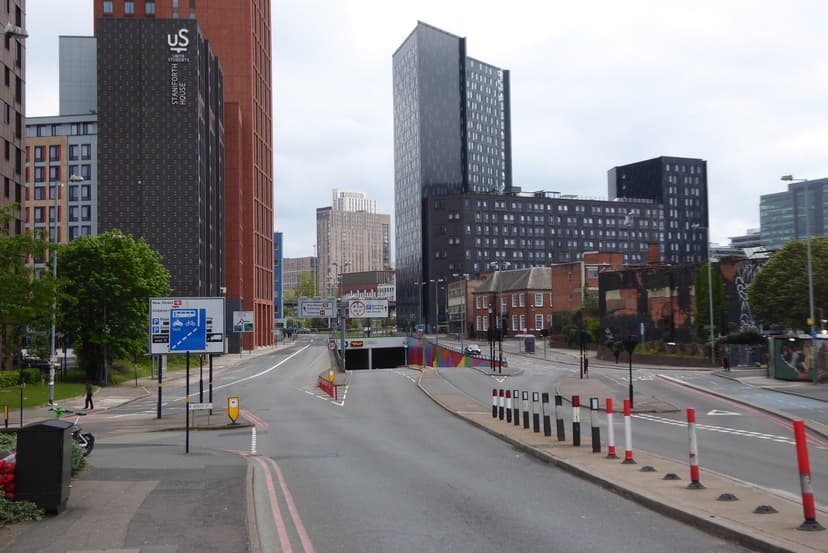
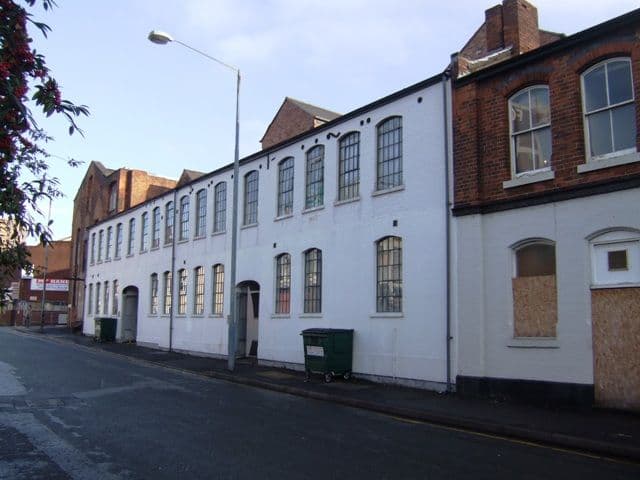
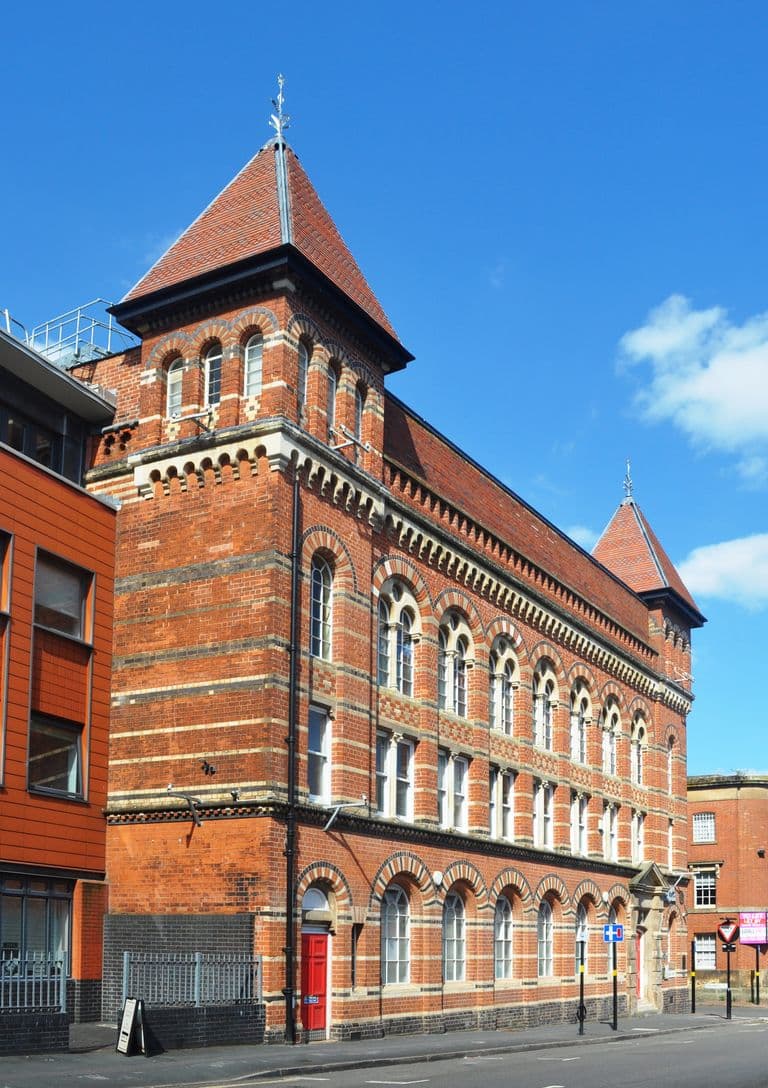
Lancaster Street, Birmingham, 4 May 2026Philip Halling, 4 May 2026. Geograph Britain and Ireland via Wikimedia Commons · CC BY-SA 2.0
What’s there now
What replaced it
Not established.
What survives
Nothing identified.
Today
Lancaster Street runs north from Lancaster Circus towards the Birmingham and Fazeley Canal.
Then and now
Then · 1890
Now · 4 May 2026
Key dates
- 20 November 1830 — Josiah Mason’s first big order of pens leaves for PerryJosiah Mason sent his first lot of 100 gross of steel pens from Lancaster Street to James Perry in London. For decades every pen sold under Perry’s name was made by Mason in Birmingham.
Sources and further reading
The exact site has not been fixed: Mason’s address was 36 Lancaster Street, but Victorian street numbers and the line of Lancaster Street itself changed when Lancaster Circus was built. Bore (1890) says the works fronted four streets, including Lancaster Street and Corporation Street; the other two are not named. No surviving buildings have been identified, and the date of demolition is not known.
- The Story of the Invention of Steel Pens, with a Description of the Manufacturing Process by which they are Produced — Henry Bore, Ivison, Blakeman & Co., New York / Perry & Co., London, 1890. Perry & Co. history
- Josiah Mason: a biography — John Thackray Bunce, Simpkin, Marshall & Co.; Cornish Brothers, Birmingham, 1882. chs. 2–3
- Children’s Employment Commission (1862): Third Report of the Commissioners, evidence of J. E. White on the Birmingham steel pen trade — Children’s Employment Commission, HMSO (command paper), 1864. pp. 87–88
- Perry and Co — Grace’s Guide, Grace’s Guide to British Industrial History
Comments
Comments will load here.