
What was here?
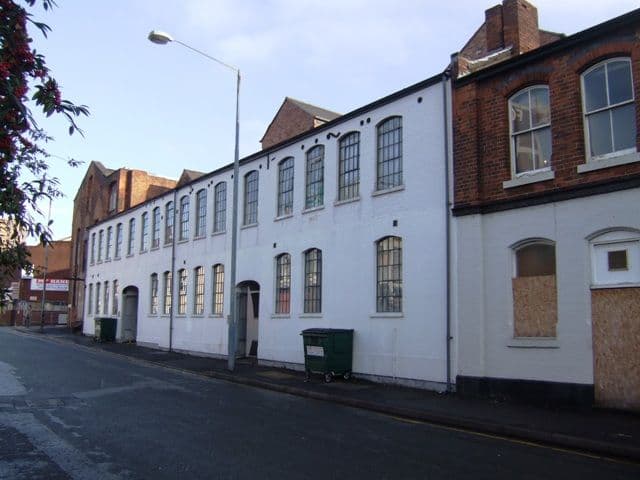
A district of narrow streets around Whittall Street, Weaman Street, Price Street, Loveday Street and Shadwell Street, packed with the homes and workshops of gunmakers and the dozens of specialist trades that served them. It grew from the mid-18th century and was largely swept away by hospital building and the Inner Ring Road.
History
Muskets for the King
Birmingham made guns long before it had a Gun Quarter. In 1692 “The Company of Gunmakers of Birmingham” signed a testimonial to Sir Richard Newdigate, the Warwickshire baronet who had helped them win government orders, and in 1693 the Ordnance Office placed a contract for muskets with Birmingham makers. William Hutton, the town’s first historian, told the legend in 1783: King William complained that he had to buy his guns from Holland, a Warwickshire member said his constituents could do better, and “a person in Digbeth, whose name I forget” made a pattern that pleased the King.
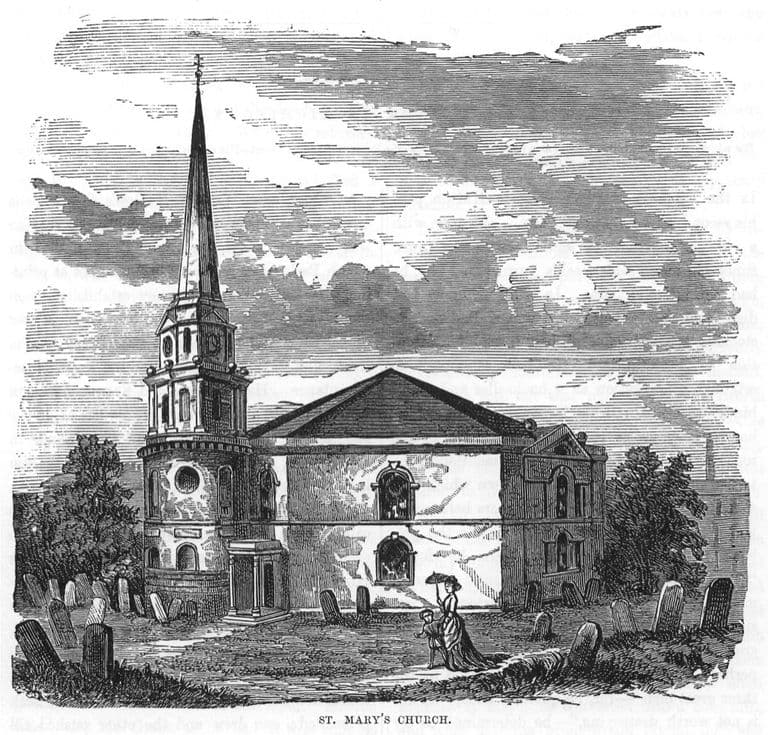
At first the gunmakers worked in Digbeth, in the old lower town. From the middle of the eighteenth century, says Birmingham City Council’s Jewellery Quarter appraisal, they began to gather in the “newly laid out streets east of Snow Hill”, in the district later known as St Mary’s, after the chapel built on Whittall Street in 1774. By 1829 two-thirds of the trade was packed into about twelve streets here.
A trade of many hands
Nobody made a whole gun. A Birmingham “gunmaker” bought barrels, locks, stocks and furniture from specialists, and had them put together by “setters-up”. Barrels were mostly made outside the quarter, in Aston, Deritend, Smethwick and West Bromwich, and locks in the Black Country. By the early 1800s the town directories listed 51 different gun trades.
John Goodman, writing about the trade in 1866, described the streets “in the neighbourhood of St. Mary’s Church, in which district of the town the gun trade has located itself”. Lads ran through them all day: “one with half-a-dozen stocked guns on his shoulder, conveying them from the stocker to the screwer; another with a tray full of locks for the polisher; a third on his way with a few barrels to the Proof-house”. Small masters worked in their houses and built extra workshops, called “shopping”, in the yards behind.
Guns for war, guns for Africa
Wars made the quarter rich. Goodman’s figures show 1,827,889 muskets, rifles, carbines and pistols made in Birmingham for the Board of Ordnance between 1804 and 1817. The Victoria County History says the American Civil War alone provided a market for 750,000 barrels.
There was a darker trade too. Guns went in huge numbers to West Africa, where they were exchanged in the slave trade. In 1766 Lord Shelburne heard that Birmingham sent “above a hundred and fifty thousand” guns a year to the African coast, “some of which are sold for five and sixpence a-piece”, and that above half of them “are sure to burst in the first hand that fires them”. The Quaker firm of Farmer & Galton, on Steelhouse Lane, supplied guns to slave traders. Samuel Galton later built a proof house for general use in Weaman Street. The story is told in Slavery and abolition.
Decline and clearance
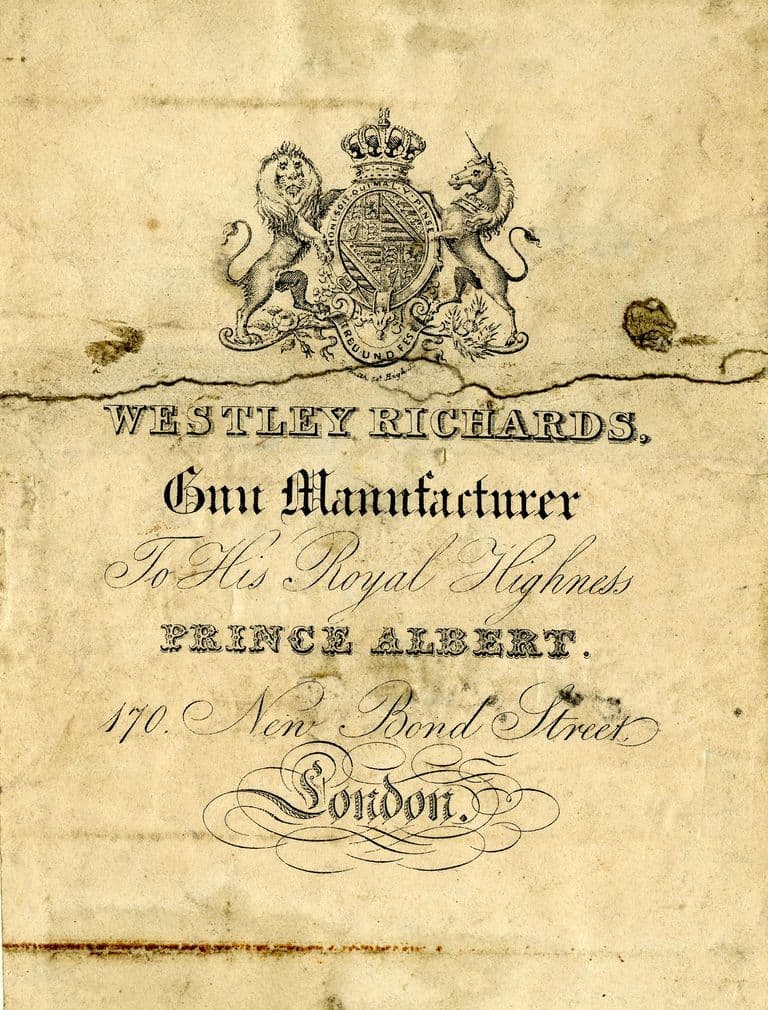
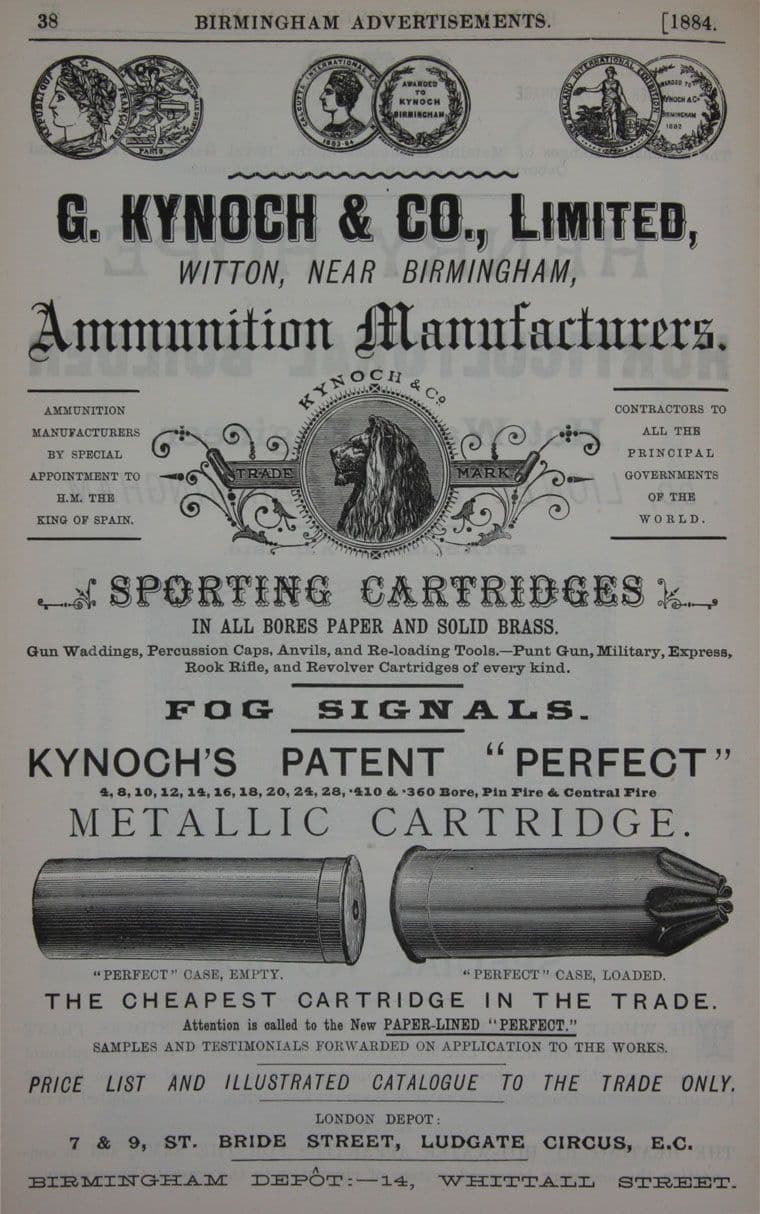
The Crimean War exposed the trade’s weakness. The government opened its own machine-made rifle factory at Enfield, and in 1861 Birmingham gunmakers backed the Birmingham Small Arms factory at Small Heath. The quarter itself began a long decline. Fashionable sporting makers moved out too: Westley Richards went to Bournbrook before 1900, according to the Victoria County History.
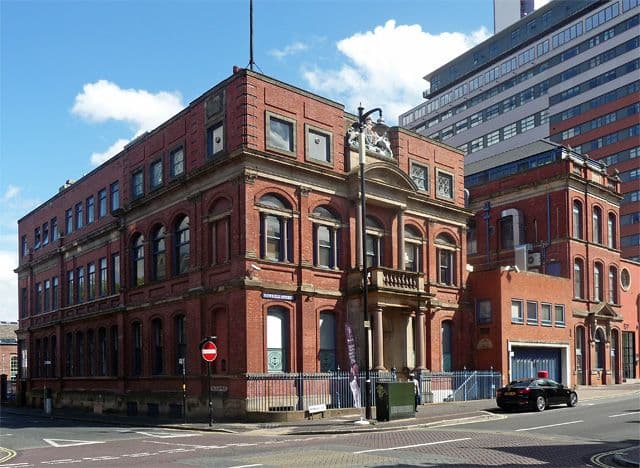
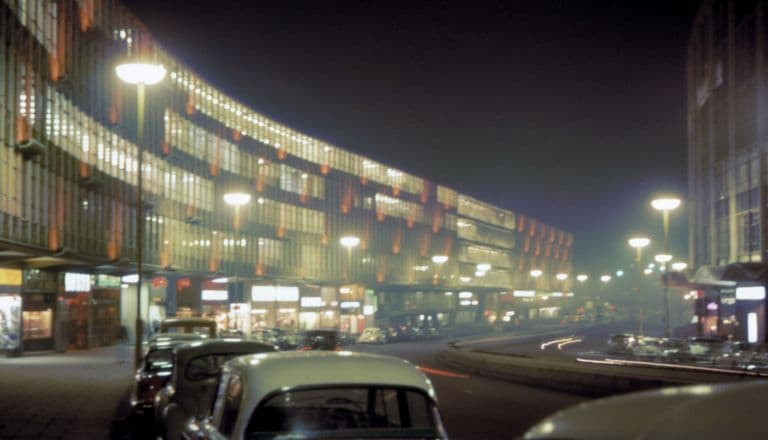
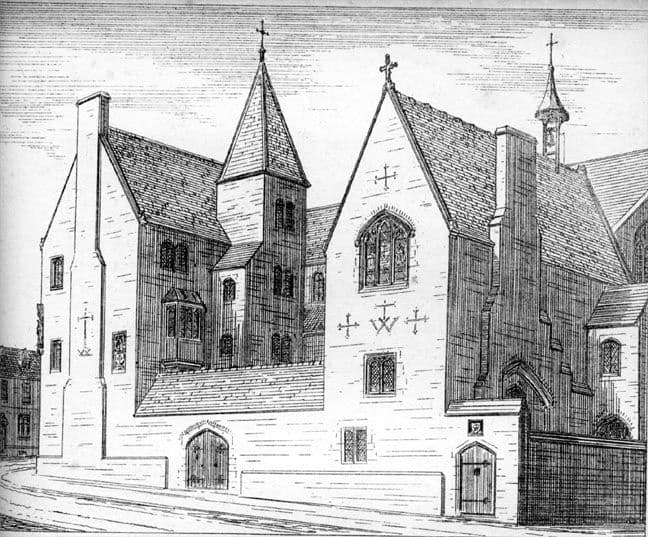
Then came the bulldozers. Corporation Street was cut in the 1870s. The General Hospital, opened in 1897, took more ground, and St Mary’s Chapel was later pulled down. In the 1950s and 1960s the Dental Hospital and the Inner Ring Road demolished much of what was left. The council’s appraisal sums it up: “now only a fragment remains”.
What happened here?
From the mid-18th century gunmakers and their sub-contractors filled the streets around Whittall Street and Steelhouse Lane. By 1829 two-thirds of the town’s gun trade was here. It supplied the British army through the French wars, and guns for the African trade.
Why it mattered
For more than a century this small district helped to make Birmingham one of the world’s great centres of gunmaking. It is also part of Birmingham’s link with the Atlantic slave trade, through the guns sold on the African coast.
Why it disappeared
Industrial decline · Road building · Redevelopment · Slum clearance
The trade declined after government and BSA moved to machine production from the 1850s and 1860s, while foreign competition grew. Street improvements in the 1870s, the General Hospital (opened 1897), the Dental Hospital and the Inner Ring Road of the 1950s and 1960s destroyed most of the old buildings (Birmingham City Council, Jewellery Quarter appraisal, 2002).
What’s there now
What replaced it
The Children’s and General Hospital buildings on Steelhouse Lane, the Dental Hospital, St Chad’s Queensway and the Inner Ring Road, and later offices, works and flats.
What survives
The street names: Whittall Street, Weaman Street, Price Street, Loveday Street, Shadwell Street and St Mary’s Row. A few older buildings, including the Bull in Price Street, which William Dargue describes as 18th-century and as the place where gun workers were once paid, and a late 18th-century terrace at 44A–49 Loveday Street (Grade II). St Chad’s Cathedral, which served the area’s many Catholic workers. The Birmingham and Fazeley Canal still runs along the district’s edge.
Today
Walk north from Steelhouse Lane across St Chad’s Queensway. The surviving part of the quarter lies mainly north of the ring road, around Price Street, Loveday Street and Shadwell Street: a mix of small works, offices and newer buildings, with a handful of older houses and pubs. The Proof House, which tested the quarter’s guns, is about a kilometre to the south-east in Banbury Street, Digbeth.
Today
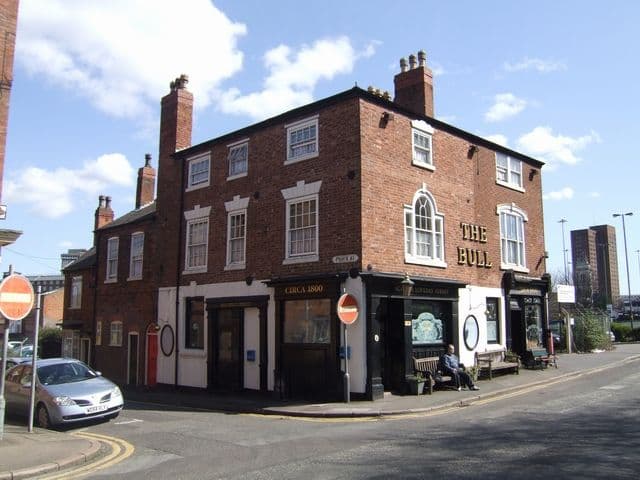
The Bull, Price Street, Gun Quarter, 8 April 2010John M, 8 April 2010. Geograph Britain and Ireland via Wikimedia Commons · CC BY-SA 2.0
Key dates
- May 1766 — Lady Shelburne watches John Taylor enamel a boxLord and Lady Shelburne tour Birmingham’s works. Taylor enamels a landscape on a box in front of them. Shelburne notes that a button passes through fifty hands, and that half the guns sent to Africa will burst.
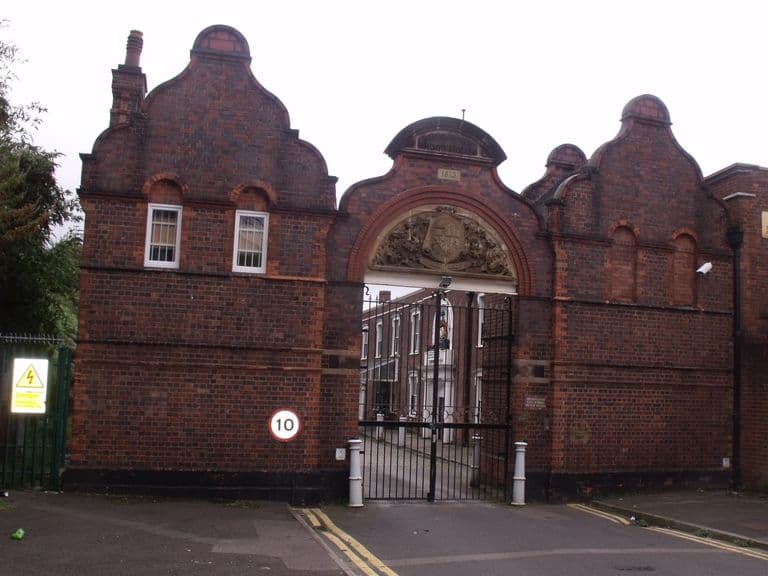
- 1813 — The Birmingham Proof House is establishedAn Act of Parliament, sought and paid for by the gun trade, makes proof of gun barrels compulsory and sets up guardians and a proof master. The Proof House in Banbury Street is built in 1813–14.
- c. 1950s–1960s — The Gun Quarter is cut through by the Inner Ring RoadBuilding the Dental Hospital and the Inner Ring Road demolishes much of the Gun Quarter, leaving, in the council’s words, ‘only a fragment’.
Sources and further reading
The district’s boundary has never been fixed; Wikipedia gives Steelhouse Lane, Shadwell Street and Loveday Street. The ‘twelve streets’ and the 1829 figure come from the 2002 council appraisal; the VCH and William Dargue give the number of gun firms as 455 in 1829. The BSA factory is dated 1861 in the council appraisal; Birmingham’s BSA record and other sources give 1863 for the opening at Small Heath. St Mary’s Chapel, Whittall Street (built 1774), was demolished in the 1920s according to Wikipedia; not checked. Westley Richards moved to Pritchett Street in 2008 (Dargue); not checked. The Bull in Price Street is described by Dargue as 18th-century; it has not been checked against the list.
- Jewellery Quarter Conservation Area Character Appraisal and Management Plan — Birmingham City Council (Donald Insall Associates), 2002. section 5, ‘The Gun Trade in Birmingham’
- Economic and Social History: Industry and Trade, 1500–1880, in A History of the County of Warwick, vol. 7, pp. 81–139 — W. B. Stephens (ed.), Victoria County History, 1964. 1640–1760; ‘Employers’ Organizations and the Proof House’; 1840–1880
- The Resources, Products, and Industrial History of Birmingham and the Midland Hardware District — Samuel Timmins (ed.), Robert Hardwicke, London, 1866. J. D. Goodman, ‘The Birmingham Gun Trade’, pp. 381–431
- An History of Birmingham (2nd edition) — William Hutton, Pearson and Rollason, Birmingham (Project Gutenberg text), 1783. ‘Guns’
- Life of William, Earl of Shelburne, vol. 1 — Lord Edmond Fitzmaurice, Macmillan, London, 1875. vol. 1, p. 404
- A History of Birmingham Places & Placenames: The Gun Quarter — William Dargue
- 44A, 44B and 45–49 Loveday Street — National Heritage List for England entry 1076297 — Historic England
- Gun Quarter — Wikipedia
Comments
Comments will load here.