
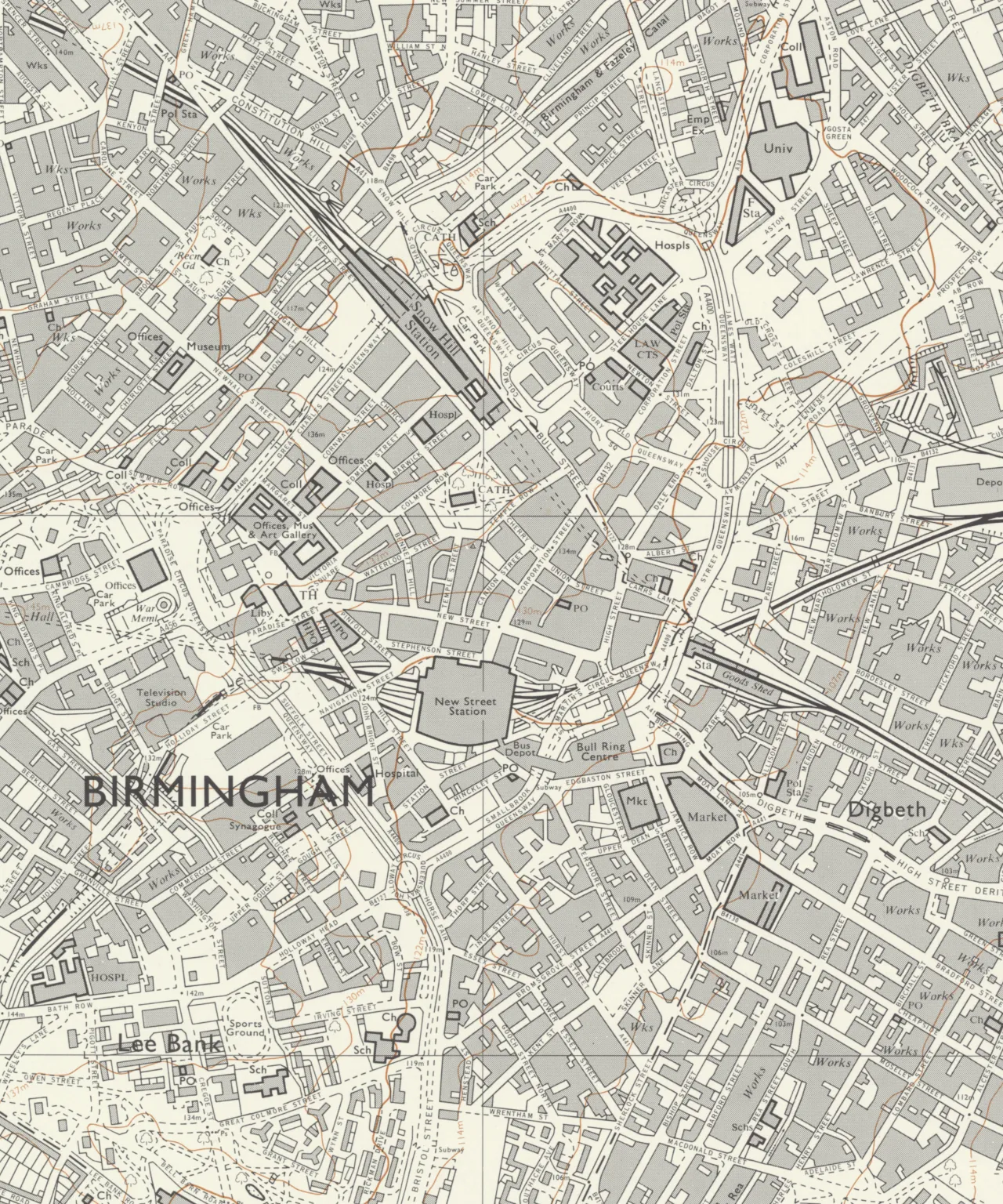
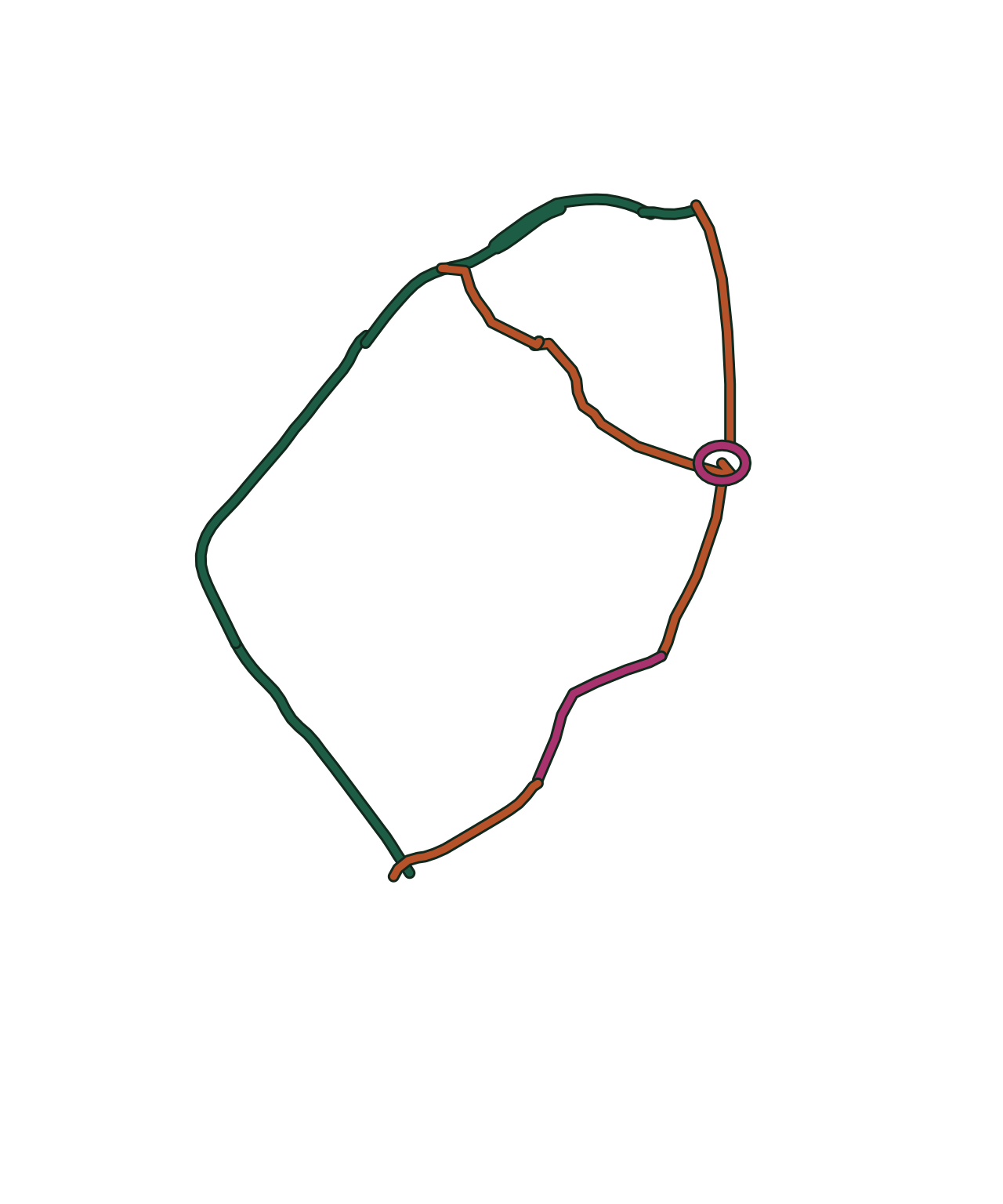
After the Second World War Birmingham rebuilt its centre. The Inner Ring Road, the A4400, looped around the old town, and new shopping and civic schemes went up beside it. Old buildings that stood in the way were cleared.
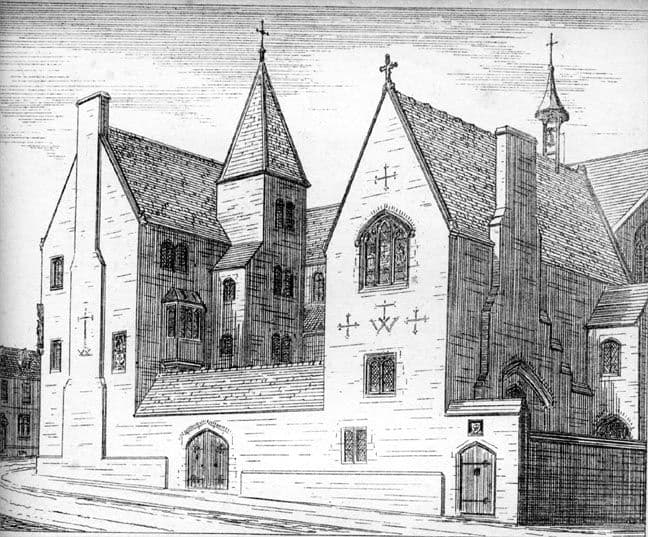
The clearest loss is Bishop’s House on Bath Street, designed by A. W. N. Pugin and built in 1840–41 opposite St Chad’s. Taking Stock records that it was demolished in 1959 “to make way for the City Council’s inner ring road”. St Chad’s Queensway now runs where it stood. Only a chimneypiece and two chairs, now at the V&A, were saved.
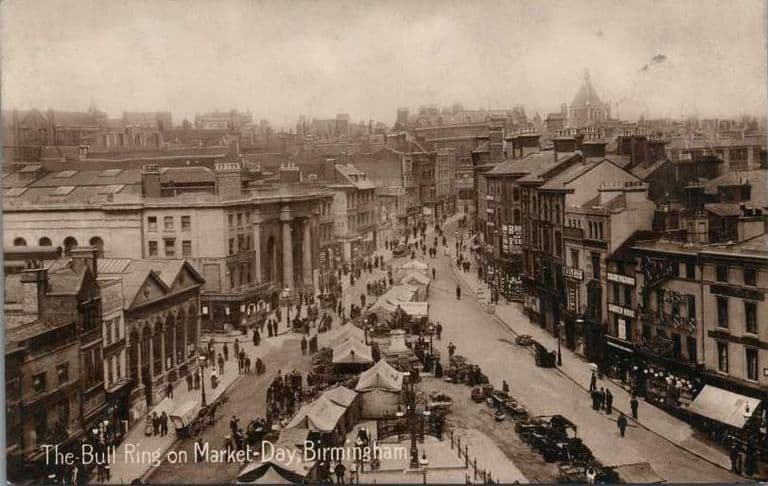
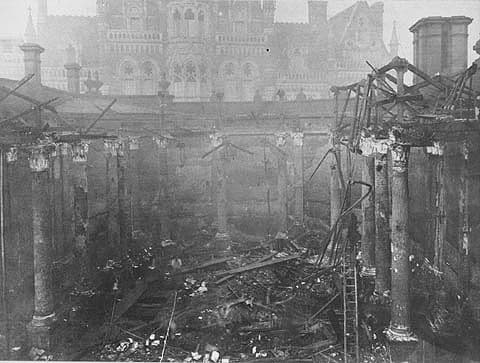
The same rebuilding finished off the Market Hall in the Bull Ring. Bombs had gutted it in 1940, but traders worked inside the shell for twenty years until it was cleared in the early 1960s for the Bull Ring Centre.
The ring road era also produced buildings that were later lost in their turn. John Madin’s Central Library, opened in 1974 as part of the Paradise Circus civic scheme, was refused listing in 2009 and demolished in 2015–16 for the Paradise redevelopment.
Taken together, these places show that Birmingham’s centre has been rebuilt more than once within living memory. Each decision was made in its own time, for reasons its makers believed in. This collection records what was there before.
A long read
Herbert Manzoni: the man who remade Birmingham
Birmingham survived the Blitz, then rebuilt itself on purpose. Compare the city before and after on four lined-up maps, see what the Inner Ring Road took, and judge for yourself.
The places
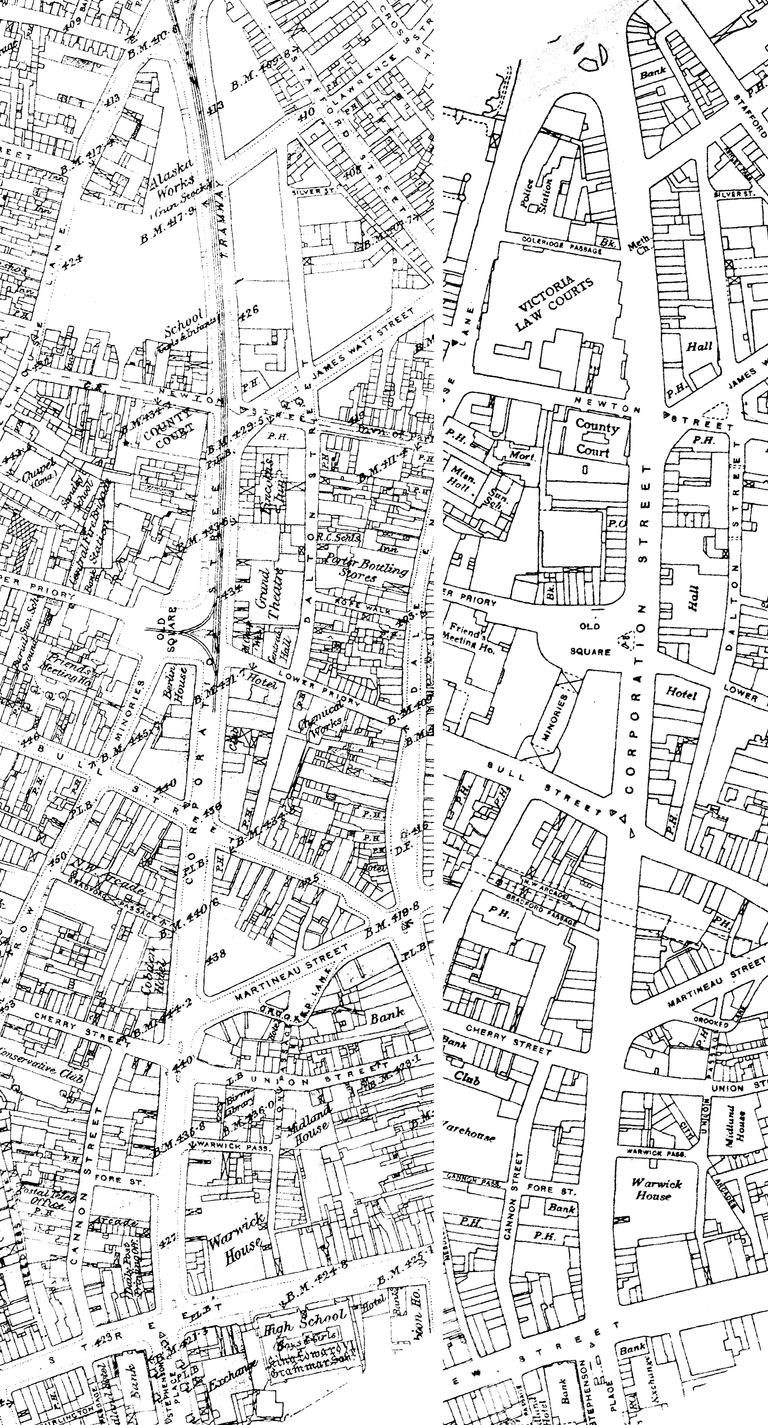 Grand Theatre, Corporation StreetLost, Site redeveloped · 1883–1963A large domed theatre opened in 1883 facing Old Square on Chamberlain’s new Corporation Street. Moss Empires made it a variety house in 1907; it was briefly a cinema, then the Grand Casino ballroom. It closed in 1960 and was demolished in 1963.
 Fish Market, Bell StreetLost, Site redeveloped · 1869–1958Birmingham’s wholesale fish, game and poultry market stood on Bell Street, opposite the Market Hall. It began as a plain open shed in 1869–70, was enlarged in 1884–88 with a refrigerated basement, and was demolished in 1958 for the Bull Ring redevelopment.
 The Victorian Central Library, Ratcliff PlaceLost, Site redeveloped · 1865–1974Birmingham’s first Central Library opened in Ratcliff Place in 1865, burnt in 1879 and was rebuilt by Martin and Chamberlain in 1882. It served for ninety years, until Madin’s new library opened over the Paradise Circus ring road. It was demolished in October 1974.
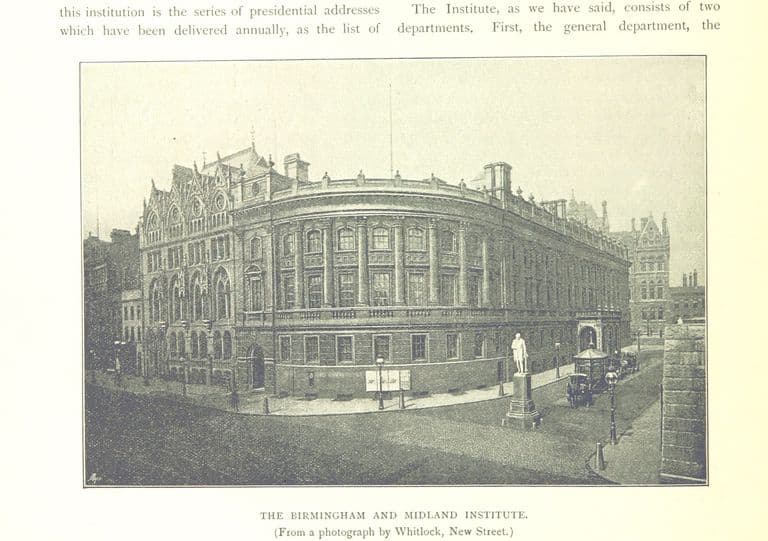 Birmingham and Midland Institute, Paradise StreetLost, Site redeveloped · 1858–c. 1965The Birmingham and Midland Institute’s Renaissance building by E. M. Barry stood beside the Town Hall from 1858. It was compulsorily purchased in 1965 and demolished so that Paradise Street could be widened for traffic re-routed by the ring-road works.
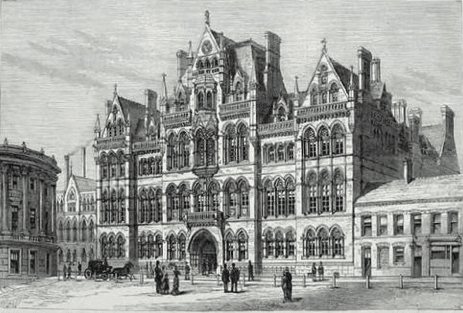 Mason Science College, Edmund StreetLost, Site redeveloped · 1880–1964Josiah Mason’s Gothic science college on Edmund Street, opened in 1880, was the seed of the University of Birmingham. It was demolished in 1964 to clear the site for the new Central Library, built over the Paradise Circus section of the Inner Ring Road.
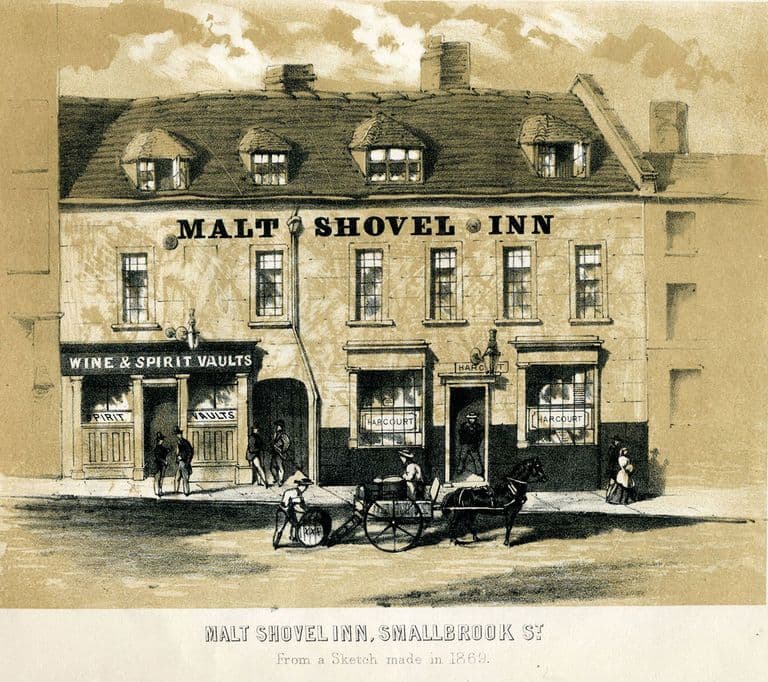 Smallbrook StreetLost, Site redeveloped · c. 1707–1957An old street running south-west from the Bull Ring, named after the Smallbrook family. From 1957 its buildings were cleared for Smallbrook Ringway, the very first stretch of the Inner Ring Road, opened in 1960.
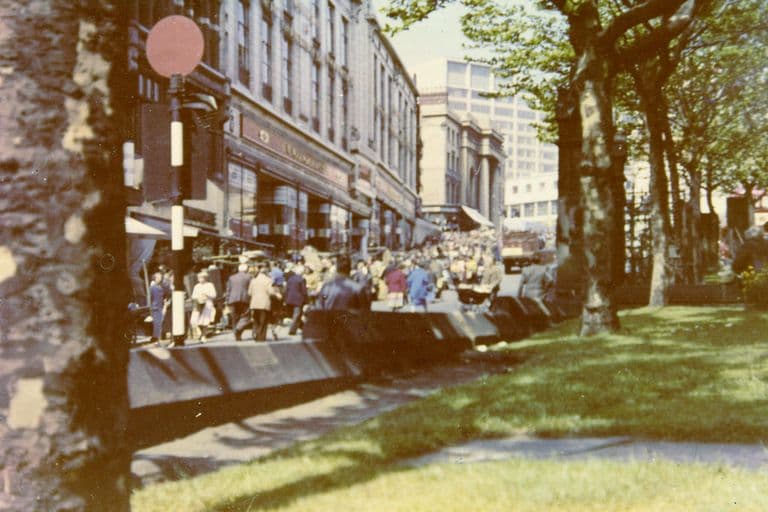 The old Bull Ring and Spiceal StreetLost, Site redeveloped · c. 1166–c. 1961For eight centuries Birmingham traded on the open slope below St Martin’s. Between 1959 and 1964 the old market place, its streets and its Market Hall were swept away, and the Inner Ring Road and the Bull Ring Centre were built across them.
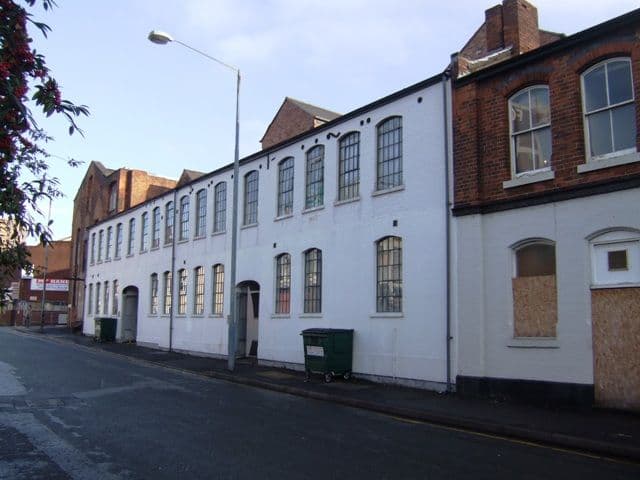 The Gun QuarterPartly surviving, Site redeveloped · c. 1750–c. 1965The streets north of Steelhouse Lane where, by 1829, two-thirds of Birmingham’s gun trade worked in small houses and backyard workshops. It armed Britain’s soldiers and supplied the African trade. Most of it was cleared in the 1950s and 1960s.
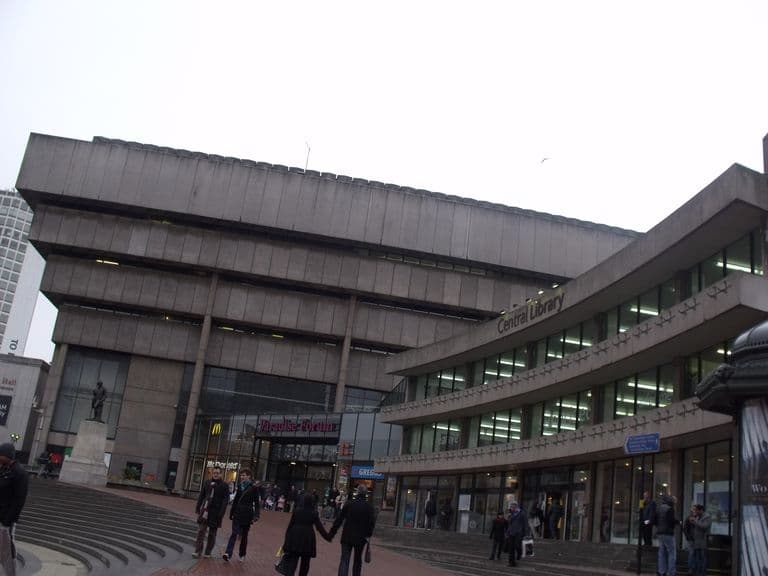 Birmingham Central Library (John Madin)Lost, Site redeveloped · 1974–c. 2016John Madin’s concrete Central Library, an inverted ziggurat opened in 1974, was called Europe’s largest civic library by English Heritage. Ministers twice refused to list it. It closed in 2013 and was demolished in 2015–16 for the Paradise scheme.
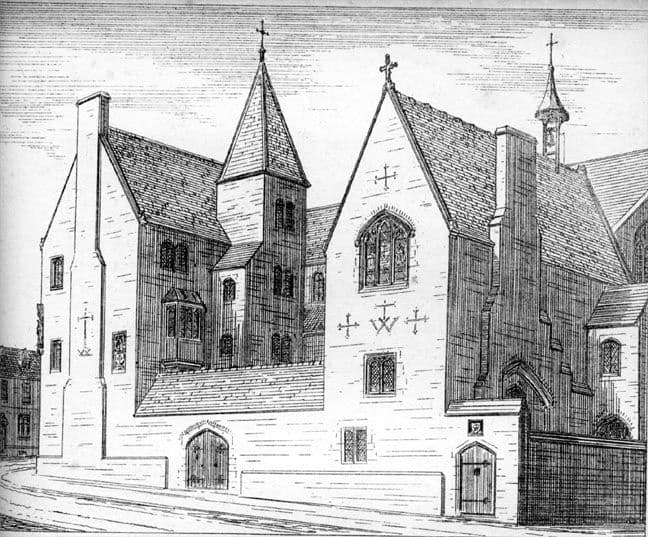 Bishop’s House, Bath StreetLost · 1840–c. 1959A. W. N. Pugin’s Gothic house for the Catholic bishop, built in 1840–41 on Bath Street opposite St Chad’s. It was demolished around 1959 for the Inner Ring Road. A carved chimneypiece and two chairs survive at the V&A.
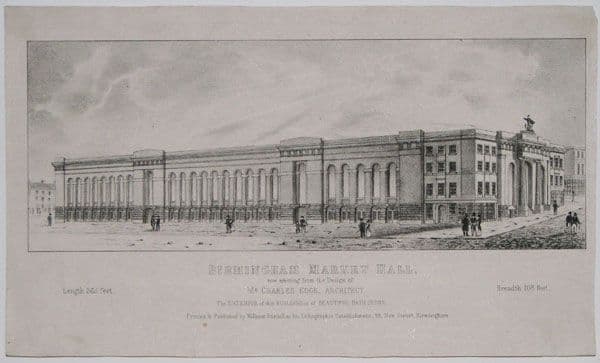 Birmingham Market HallLost, Site redeveloped · 1835–1940Charles Edge’s great covered market opened beside the Bull Ring in 1835. Bombing reduced it to a shell in 1940, yet traders carried on inside the walls until the ruin was cleared in the early 1960s for the Bull Ring Centre.