
What was here?
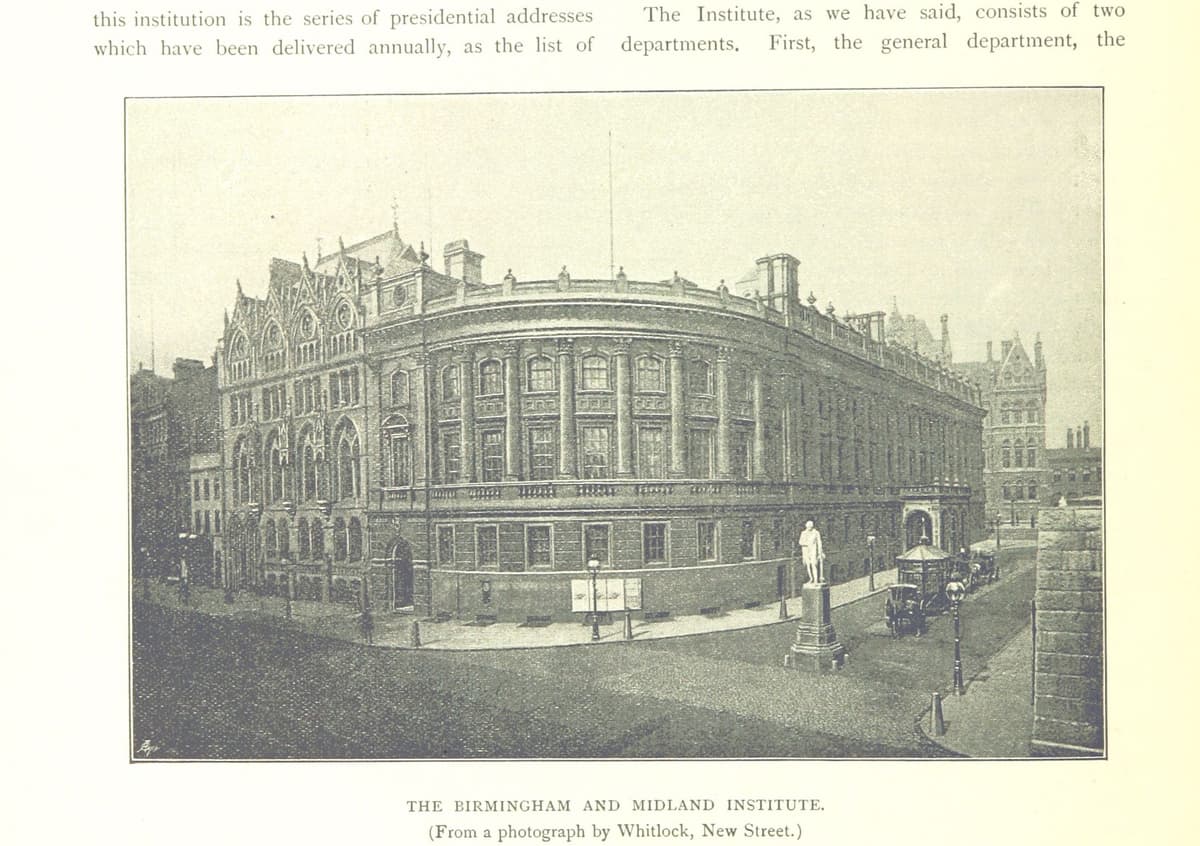
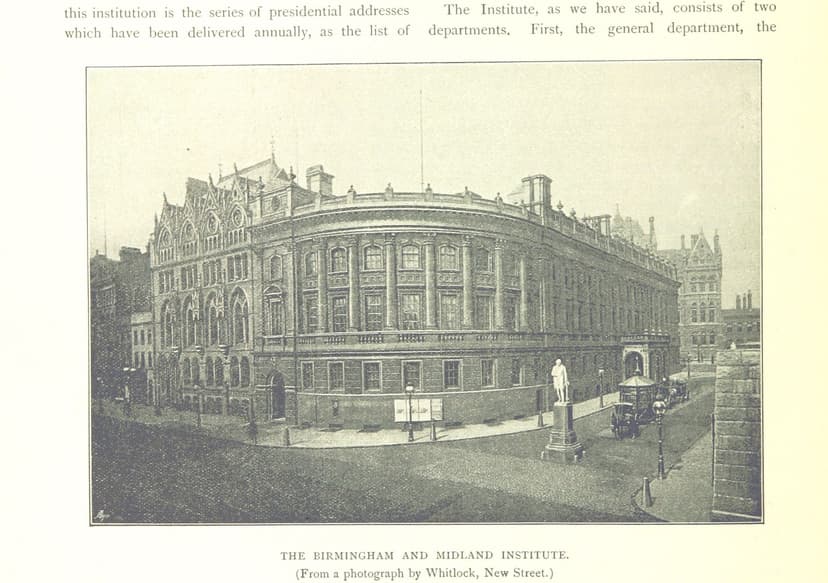
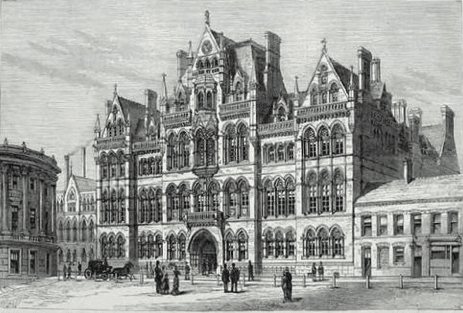
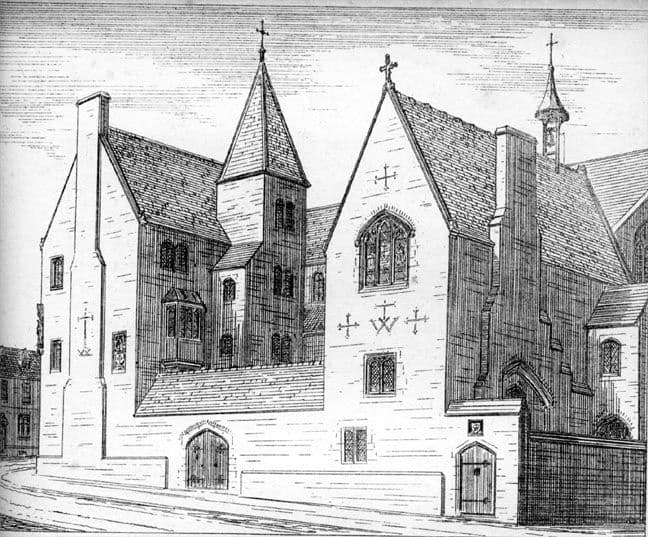
Beside the Town Hall, at the curved corner of Paradise Street and Ratcliff Place, stood the Birmingham and Midland Institute: a three-storey Renaissance building with a Corinthian order and a rounded angle, joined by J. H. Chamberlain’s Gothic extension along Paradise Street.
History
The Birmingham and Midland Institute was founded in 1854 under an Act of Parliament “for the dissemination of education to all classes of people”, as the Institute itself puts it. It needed a home worthy of the idea.
Barry’s building
The commission went to a London architect, E. M. Barry, son of the designer of the Houses of Parliament. The Victoria County History describes the result: a “restrained Renaissance style”, “a Corinthian order to the upper stories and a rounded angle at the junction of Ratcliffe Place and Paradise Street”. It opened in 1858. The Central Lending Library next door was given a matching front ten years later.
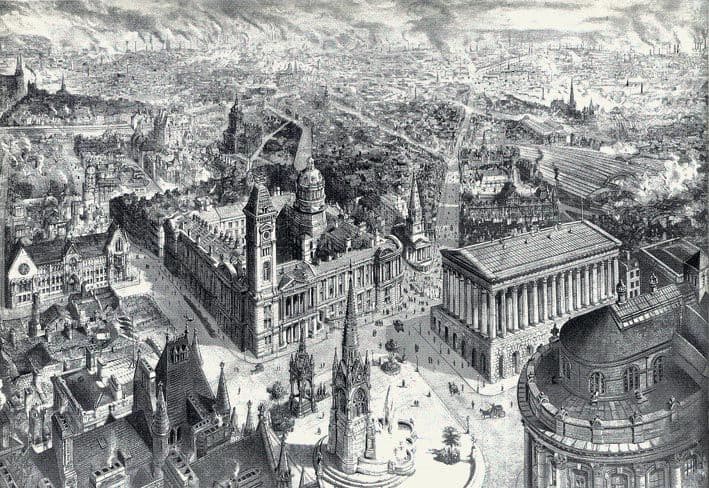
In 1881 J. H. Chamberlain added a wing along Paradise Street. The VCH calls it “of exuberantly Gothic design”. A photograph published in 1894 shows the two side by side: Barry’s calm curved front, with a statue in Ratcliff Place before it, and Chamberlain’s gables rising behind.
For more than a century this was one of Birmingham’s great places of learning. Lectures, classes and scientific societies met here. In 1886 the Birmingham School of Music was formed within the Institute.
Scheduled for demolition
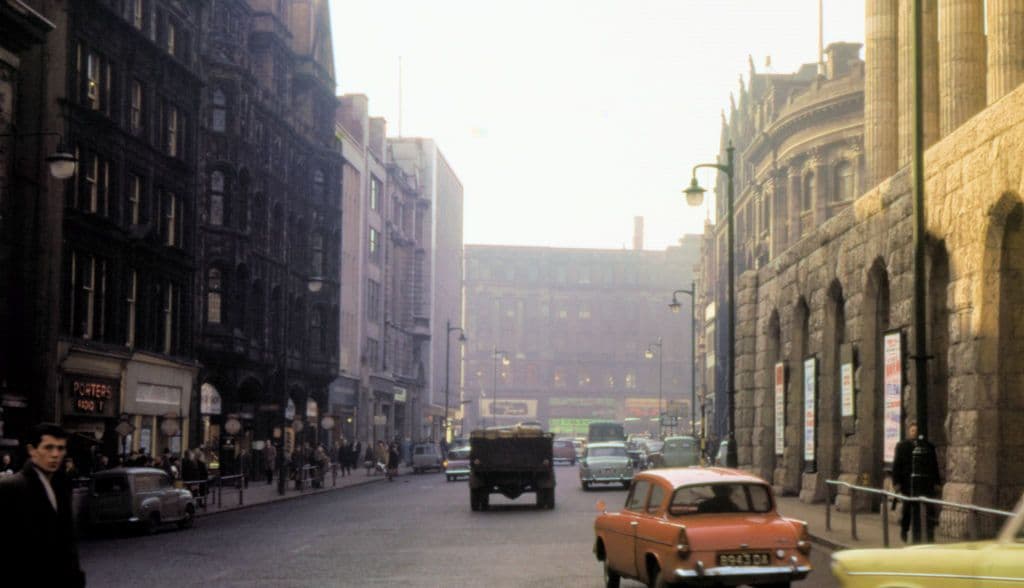
Then the roads came. The Institute records that its Paradise Street premises were compulsorily purchased in 1965, and that it moved to Margaret Street in 1966. The Victorian Society’s West Midlands group, founded in 1967 partly in response to losses like this, recorded that “by 1966, the Birmingham & Midland Institute, on Ratcliff Place & Paradise Street, was scheduled for demolition in order to widen Paradise Street for rerouted traffic”.
The same spot, then and now
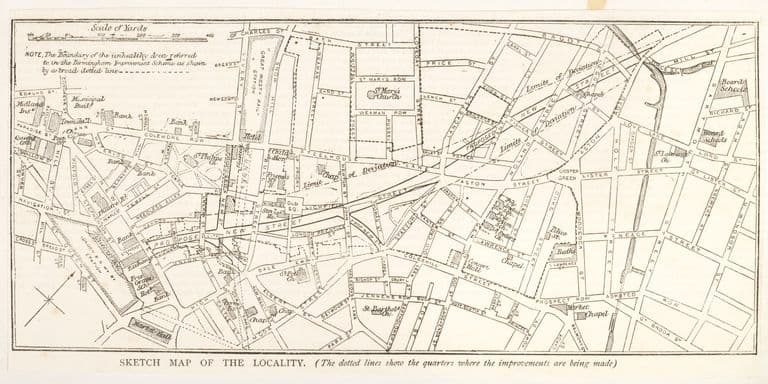
1888–1913
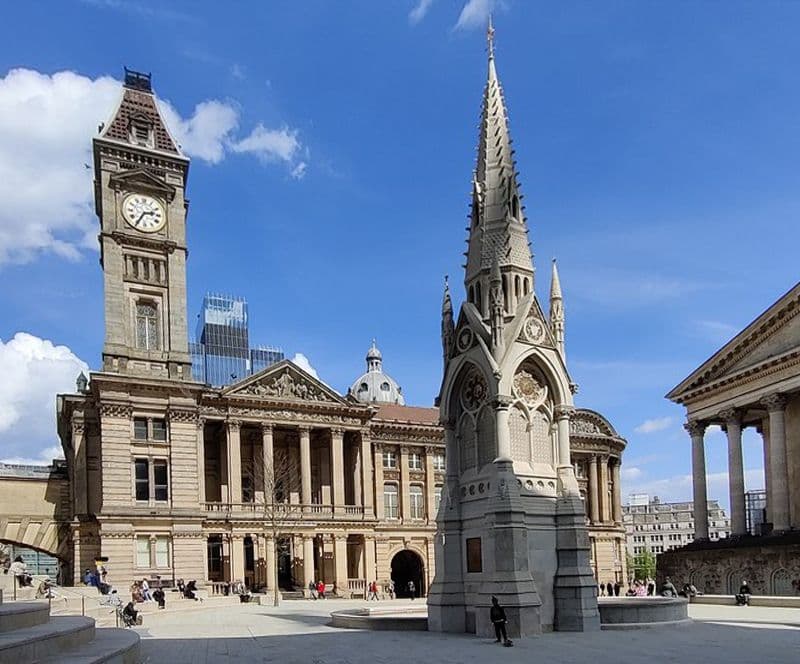
Today
Old map: Ordnance Survey six-inch, reproduced with the permission of the National Library of Scotland (CC BY 4.0). Today: © OpenStreetMap contributors.
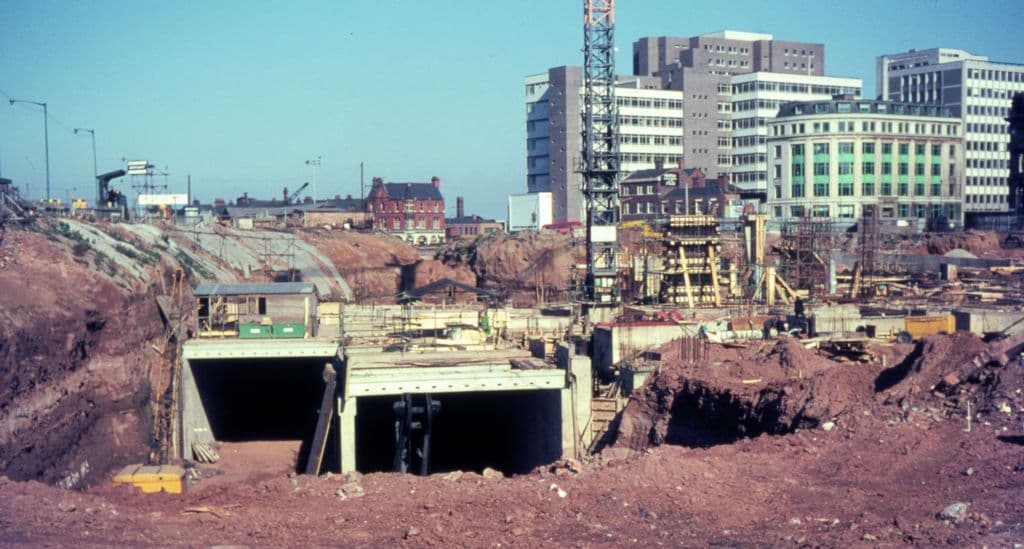
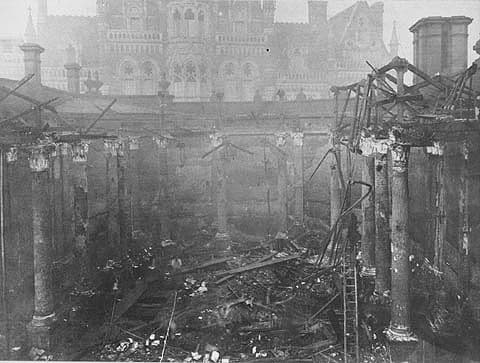
That traffic was being moved by the Inner Ring Road works at Paradise Circus. In 1969 John Ball photographed the partly built Queensway tunnel from the junction of Paradise Street and Easy Row, a few yards from the Institute’s site. That same year he photographed a fragment of a Gothic building being demolished, with the dome of the Hall of Memory behind; he thought it might be part of the Institute, but could not be sure.
A move, not an ending
The building went; the Institute did not. It has been at 9 Margaret Street since 1966, sharing its home with the Birmingham Library. Barry’s curved corner, though, disappeared from the townscape it had helped to define.
What happened here?
Then E. M. Barry’s Institute building (opened 1858) with J. H. Chamberlain’s Gothic addition (1881), on the corner of Paradise Street and Ratcliff Place next to the Town Hall.
What happened Compulsorily purchased in 1965; the Institute moved out in 1966; the building was demolished in the later 1960s.
Why Birmingham Corporation needed the land to widen Paradise Street for traffic re-routed by the Inner Ring Road works at Paradise Circus (Victorian Society).
What replaced it A widened Paradise Street and the new road layout around Paradise Circus.
Now The Paradise development and the rebuilt approaches to Chamberlain Square, beside the Town Hall.
Why it mattered
The Midland Institute embodied the Victorian belief that a manufacturing town should educate all its people. Its building, by one of the leading architects of the day, formed the civic group around the Town Hall with the library and Mason College. All three were gone within a decade, and the Institute’s was taken for road space alone.
Why it disappeared
Road building · Redevelopment
Compulsory purchase by Birmingham Corporation in 1965 (BMI) so that Paradise Street could be widened “for rerouted traffic” (Victorian Society West Midlands group), as the Paradise Circus section of the Inner Ring Road was built.
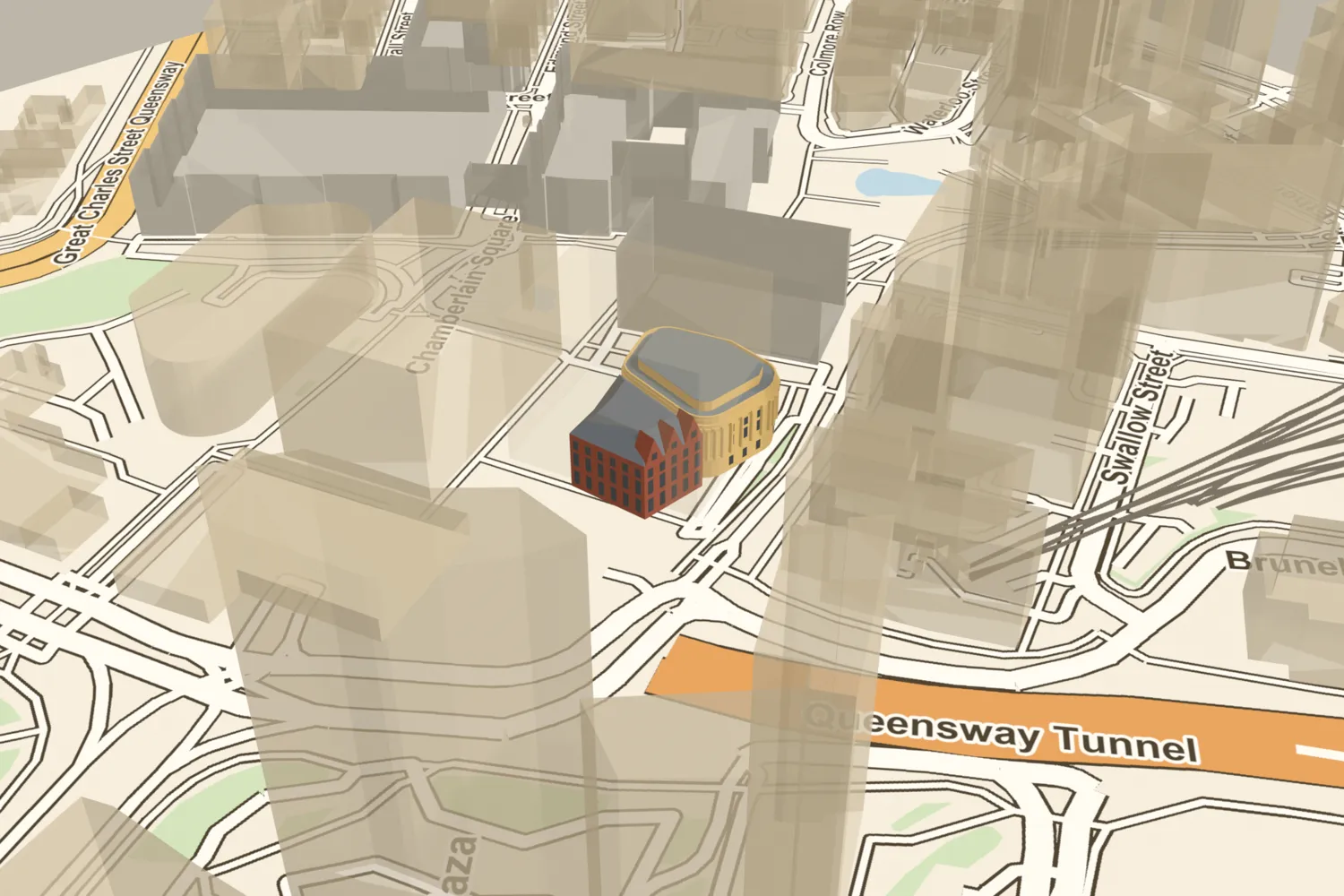
The Birmingham and Midland Institute, on today’s streets
What’s there now
What replaced it
A widened Paradise Street and the remodelled road system around Paradise Circus; later the Paradise Circus civic buildings and, since 2015, the Paradise development.
What survives
The Institute itself survives at 9 Margaret Street. Nothing of the Paradise Street building is known to survive on site.
Today
The corner beside the Town Hall now lies within the Paradise development, between the Town Hall and the rebuilt Chamberlain Square.
Then and now
Then · 1894
Now · 2 May 2021
Key dates
- 1858 — The Midland Institute opens in Paradise StreetE. M. Barry’s building for the Birmingham and Midland Institute opens at the corner of Paradise Street and Ratcliff Place, beside the Town Hall.
- 1965 — Midland Institute compulsorily purchasedThe Birmingham and Midland Institute’s Paradise Street building is compulsorily purchased so that Paradise Street can be widened for re-routed traffic. The Institute moves to Margaret Street in 1966.
Sources and further reading
Demolition date: the Institute gives compulsory purchase in 1965 and its move in 1966; the Victorian Society says it was “scheduled for demolition” by 1966; Wikipedia says demolished 1965. John Ball’s 1969 photograph may show part of it still being demolished, but he marked the identification as uncertain. The text says “demolished in the later 1960s”.
Classification: the Victorian Society gives the reason as widening Paradise Street for re-routed traffic. The link to the Inner Ring Road rests on the timing and the place, beside the Paradise Circus works; no source read names the ring road in the same sentence. The record is classed as ring-road with that caveat.
The foundation stone is often said to have been laid by Prince Albert in 1855; that rests on Wikipedia and is not used in the text.
The Victorian Society page calls the architect “E.H. Barry”; the VCH gives E. M. Barry, which is followed here.
- About us — Birmingham and Midland Institute — Birmingham and Midland Institute, Birmingham and Midland Institute
- Founding of the West Midlands Group in 1967 — The Victorian Society, The Victorian Society
- A History of the County of Warwick, vol. 7: The City of Birmingham — Secular Architecture, pp. 43–57 — W. B. Stephens (ed.), Victoria County History, 1964. pp. 43–57
- Photographs by John Ball (Birmingham, 1959–1969) — John Ball, Wikimedia Commons (from jlb2011.co.uk)
Comments
Comments will load here.