
What was here?
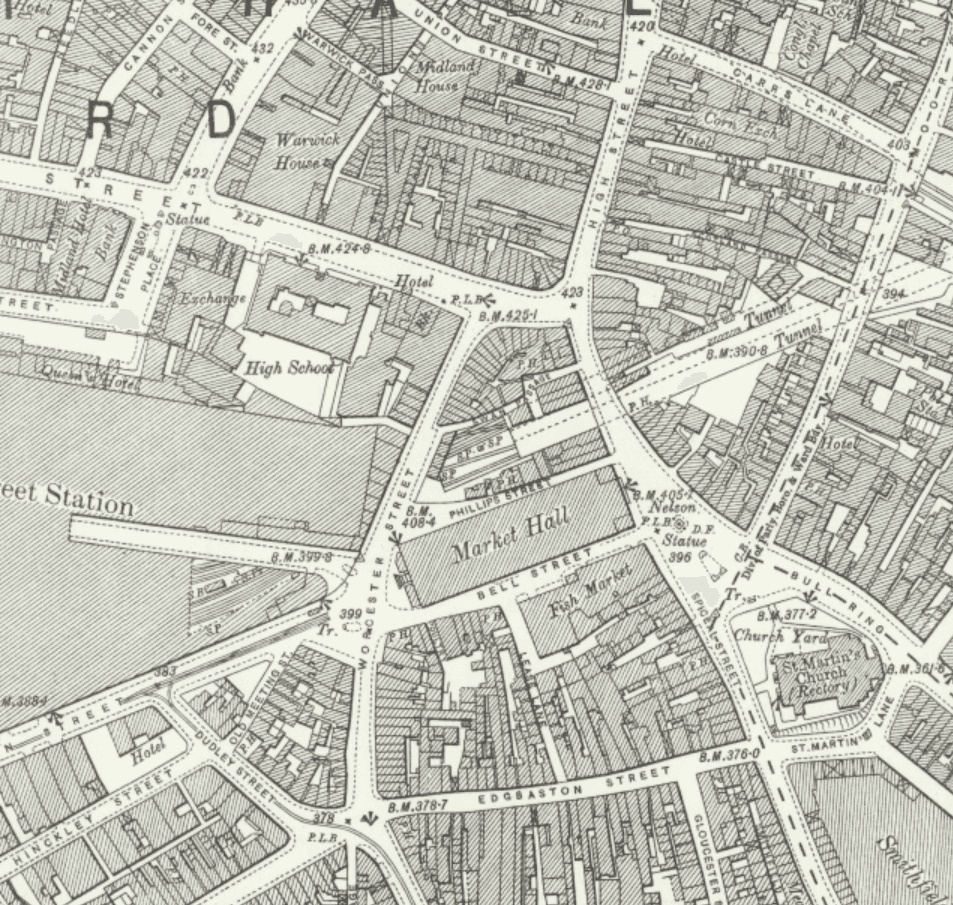
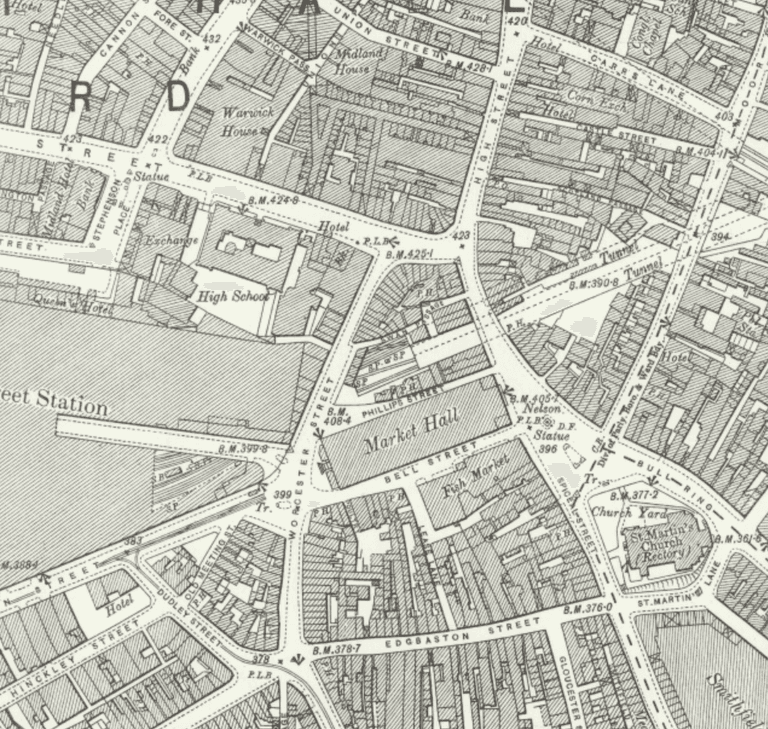
The Corporation’s wholesale market for fish, game and poultry, filling the block between Bell Street, Lease Lane and Spiceal Street at the top of the Bull Ring, across Bell Street from the Market Hall. It had a frontage of 240 feet to Bell Street, a short arcaded front to Spiceal Street and, from 1886, a cold store in its basement.
History
Out of the street and into a shed
Fish had long been sold in the open at Dale End. In April 1851 the fishmongers moved into the Market Hall. Within twenty years the wholesale trade needed more room. The Victoria County History says a wholesale fish market was opened at the corner of Bell Street in 1869, and on 14 July 1870 Alderman Phillips laid the first stone of a new fish market hall there.
It was not much to look at. Showell’s Dictionary of 1885 called it “a rather plain-looking erection, of the open-shed style of architecture”. It covered just 715 square yards.
Fish by the trainload
The fish came by rail, mainly from the east coast. Showell put the daily supply at between 50 and 200 tons, and on one June day in 1879 Grimsby alone sent 238 tons. The dealers were not happy with their shed. In February 1878 their association proposed building a Fishmongers’ Hall of their own, though it never came to anything.
The Council answered by buying land in Bell Street, Lease Lane and Spiceal Street, in 1878 and 1882, for £25,070. A new market went up at the Lease Lane end, over a sub-basement. On 6 October 1885 it was formally opened as a daily wholesale market for fish, game and poultry.
While the extension was being dug, workmen found a passage cut in the sandstone 8 or 9 feet down: 24 feet long, 7 feet high and ending in a circular shaft. What became of it is not recorded.
Cold storage
The Corporation meant to rebuild the old shed too, but in April 1886 the neighbours’ rights of light stopped it. Instead the old market was extended over the shop between them to join the new one. The basement was leased to the Linde British Refrigeration Company as a cold store, and a well and a chimney stack were built. On 3 July 1888 the whole Bell Street market was made wholesale only. The retail fishmongers kept their stalls in the Market Hall across the street.
The same spot, then and now
1888–1913
Today
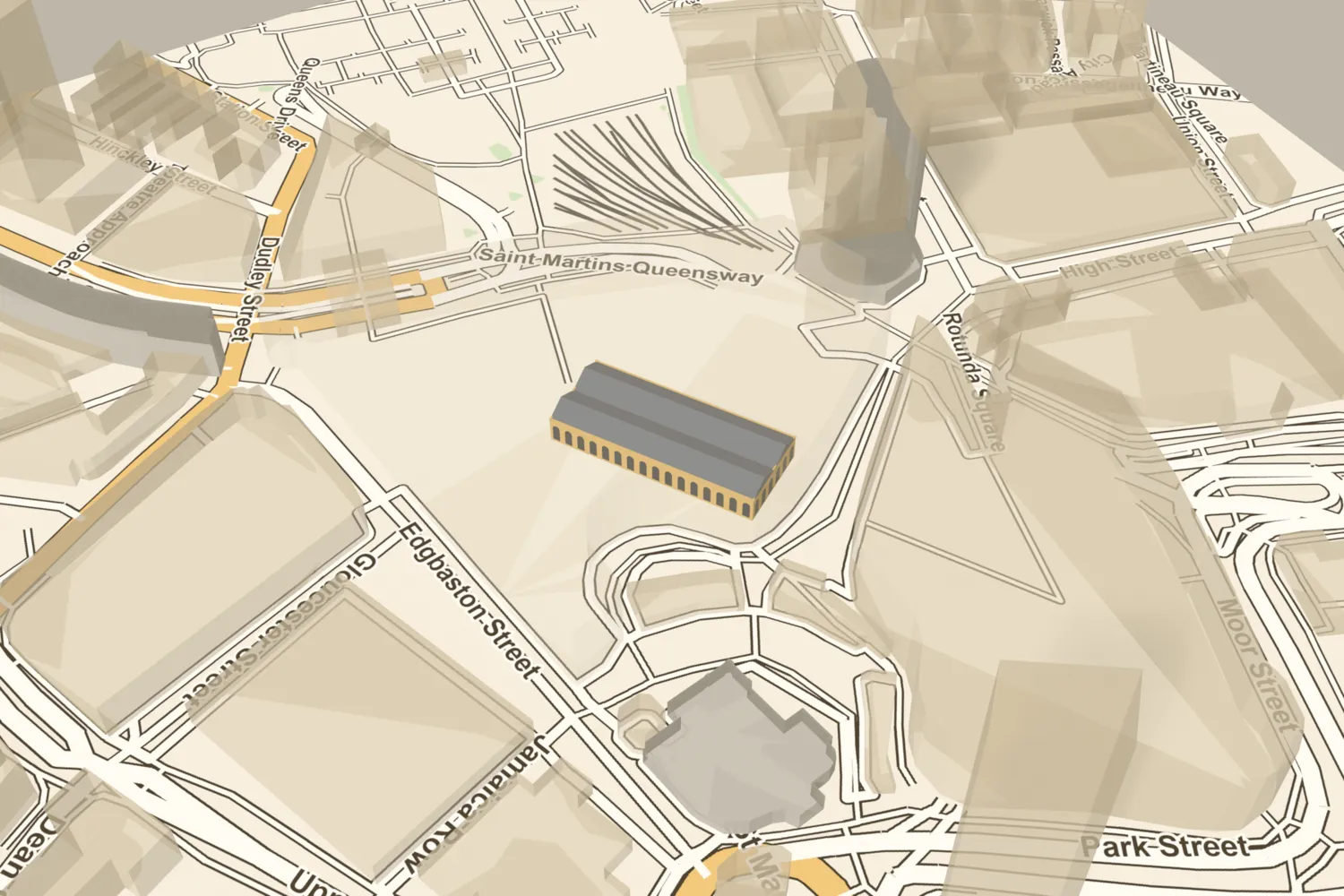
Old map: Ordnance Survey six-inch, reproduced with the permission of the National Library of Scotland (CC BY 4.0). Today: © OpenStreetMap contributors.
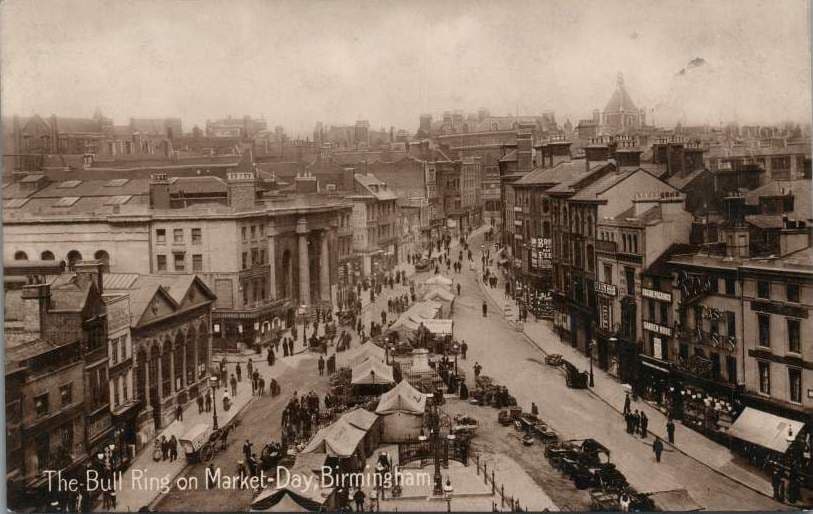
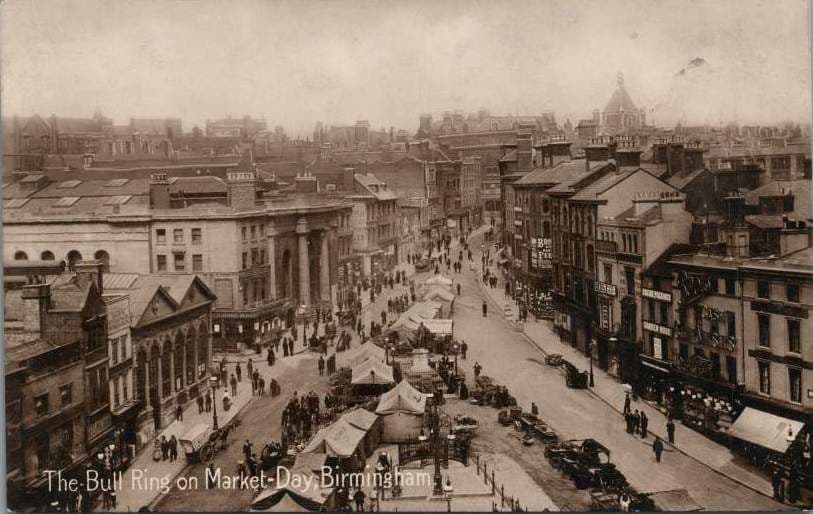
By then the Corporation had spent more than £44,000. A 715-square-yard shed had become a market of about 1,600 square yards with refrigeration below. Its historian, C. A. Vince, saw in such spending Birmingham’s growing importance “as a centre for the distribution of food-supplies over a large district”. A postcard of the 1910s shows the market’s gabled front at the top of the Bull Ring, with Nelson’s statue and the Market Hall behind.
First to go
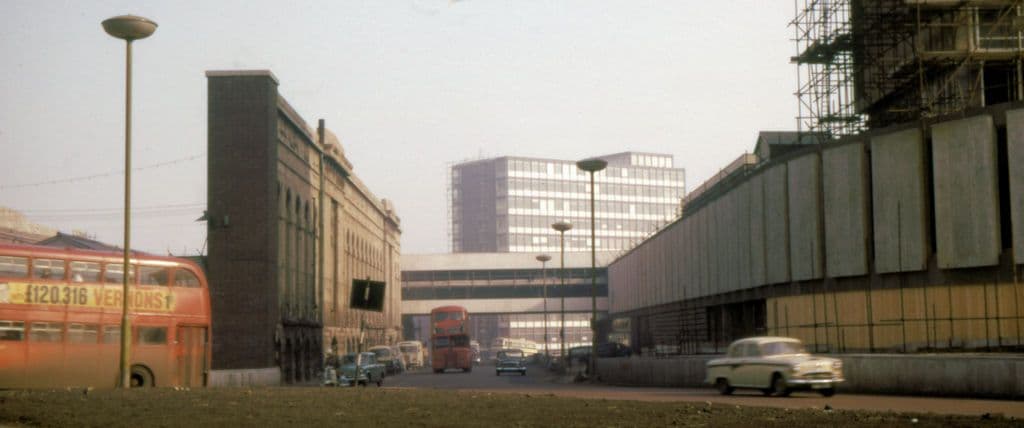
The fish market was among the first buildings to fall when the Bull Ring was rebuilt. It was demolished in 1958, at the start of the clearance for the Inner Ring Road and the Bull Ring Centre, and Bell Street became the westerly carriageway of the new ringway. Losing it was one of the reasons the city built new Wholesale Markets on Smithfield, where new fish, meat and poultry markets opened in 1974.
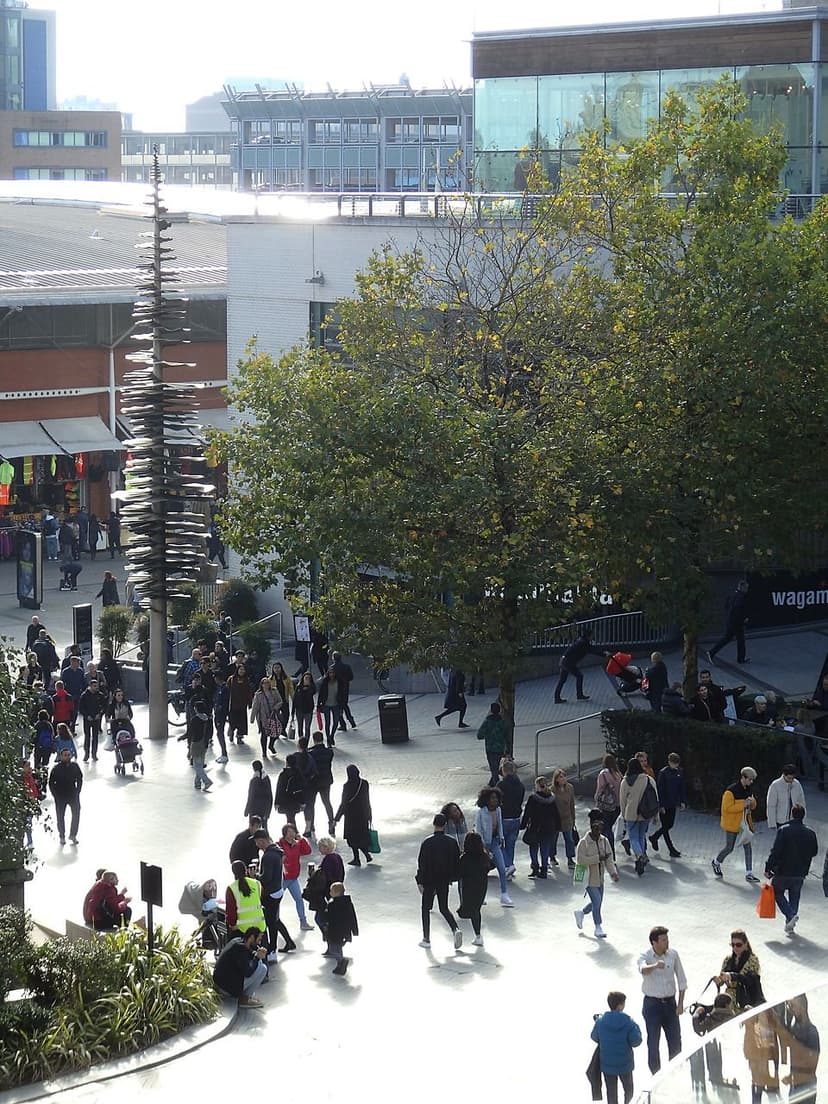
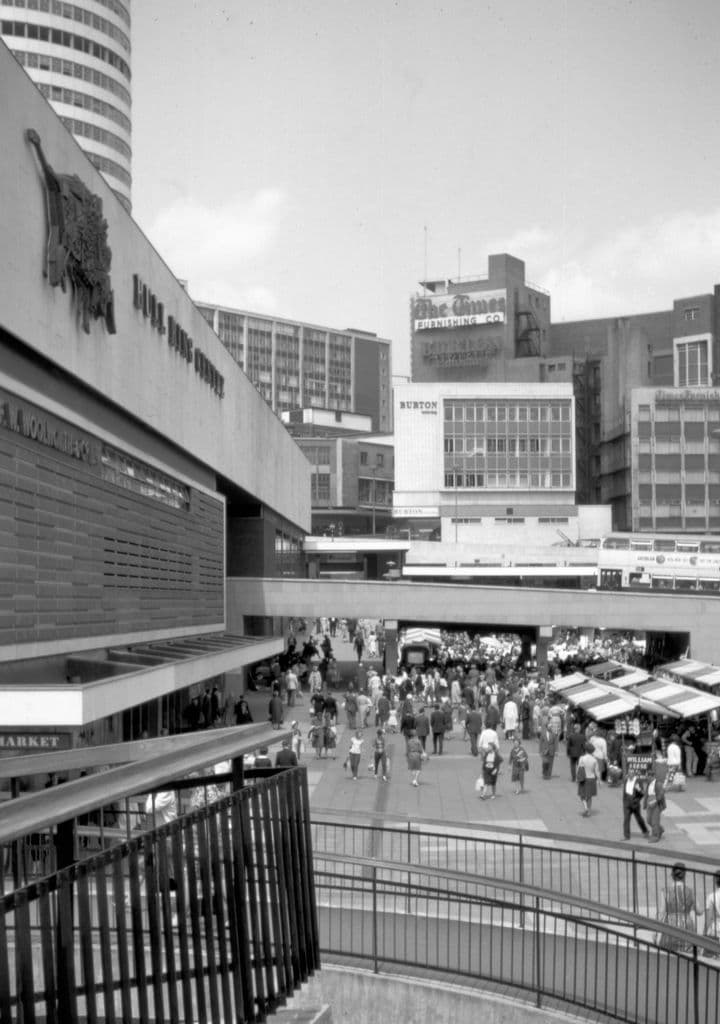
The Bull Ring Centre itself came down in 2000. The site now lies inside the Bullring shopping centre, by Rotunda Square and the top of Spiceal Street. Where Grimsby’s catch was once sold by the ton, shoppers now cross the square.
Why it mattered
For almost ninety years it was the town’s wholesale fish, game and poultry market, fed by trainloads from the east coast. Its growth from a 715-square-yard shed into a refrigerated market costing more than £44,000 shows the Corporation investing in Birmingham as a food-distribution centre for a wide district. Its loss in 1958 helped push the city to build the Wholesale Markets on Smithfield.
Why it disappeared
Road building · Redevelopment
It stood in the way of the Inner Ring Road and the new Bull Ring Centre, and was demolished in 1958, at the start of the clearance. Its trade later moved to the new Wholesale Markets on Smithfield, where fish, meat and poultry markets opened in 1974.
The Fish Market, on today’s streets
What’s there now
What replaced it
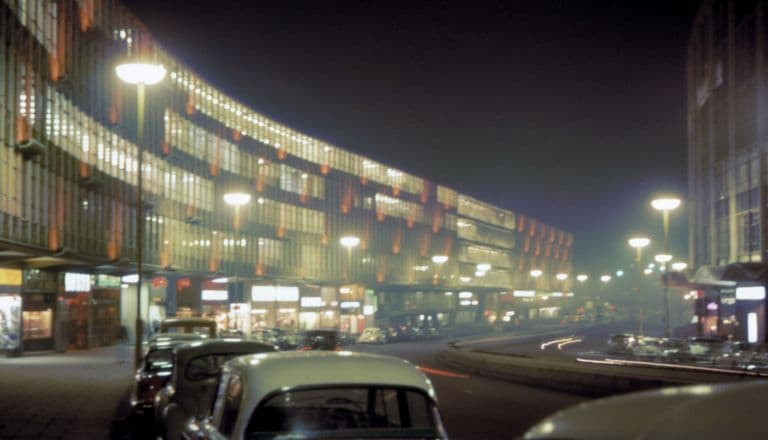
The Inner Ring Road and the Bull Ring Centre (built 1961–64, demolished 2000), then the Bullring shopping centre (2003).
What survives
Nothing. Bell Street and Lease Lane have gone. Spiceal Street survives in name as a pedestrian street in the Bullring, roughly on its old line.
Today
Stand in Rotunda Square at the top of Spiceal Street. The fish market’s block lies under the north-west part of the Bullring building here. The Market Hall stood across Bell Street to the north.
Then and now
Then · 1910s
Now · 20 October 2018
Sources and further reading
The opening is given as 1869 by the Victoria County History (citing Bunce, not seen) and Birmingham City Council, while Dent and Showell say the first stone of the market hall was laid on 14 July 1870. The VCH’s “extended in 1883” is probably the date the extension was approved; Vince gives the formal opening of the new market as 6 October 1885 and the joining of old and new as July 1888. The demolition year of 1958 comes from the City Council and secondary sources; a photograph of 1963 shows only that it had gone. No architect is recorded for any phase. Wikipedia’s statement that the market stood on the site of the Nelson Hotel is doubtful: the 1887–88 plan shows the Lord Nelson north of Bell Street.
- A History of the County of Warwick, vol. 7: The City of Birmingham — Economic and Social History: Markets and Fairs, pp. 251–252 — W. B. Stephens (ed.), Victoria County History, 1964. opened 1869, extended 1883
- History of the Corporation of Birmingham, vol. III (1885–1899) — C. A. Vince, Corporation of Birmingham, 1902. ch. VI: land 1878–82, appropriation 6 October 1885, Linde lease, wholesale only 3 July 1888, total cost
- Old and New Birmingham: a history of the town and its people — Robert K. Dent, Houghton and Hammond, Birmingham, 1880. first stone 14 July 1870
- Showell’s Dictionary of Birmingham — Thomas T. Harman and Walter Showell, Cornish Brothers, Birmingham, 1885. ‘Fish Market’, ‘Public Buildings’, ‘Flogging’ (the 1885 passage)
- Markets: Wholesale Markets History — Birmingham City Council, 2007. opened 1869, demolished 1958
- History — Birmingham Wholesale Market
- The Markets of Birmingham — Library of Birmingham (The Iron Room blog), 2016. 1912 photograph, WK/B11/520
- Bull Ring, Birmingham — Wikipedia
- Ordnance Survey 1:500 town plan of Birmingham, 1887–88, georeferenced — National Library of Scotland, 1888. footprint traced
- Plan of the Borough of Birmingham (Pigott Smith), 1855 — J. Pigott Smith, National Library of Scotland (online), 1855
- Ordnance Survey 25-inch map, Warwickshire (Birmingham sheet), georeferenced — National Library of Scotland
- OpenStreetMap data (Overpass and Nominatim), central Birmingham — OpenStreetMap contributors, 2026
Archive references: Library of Birmingham WK/B11/520
Comments
Comments will load here.