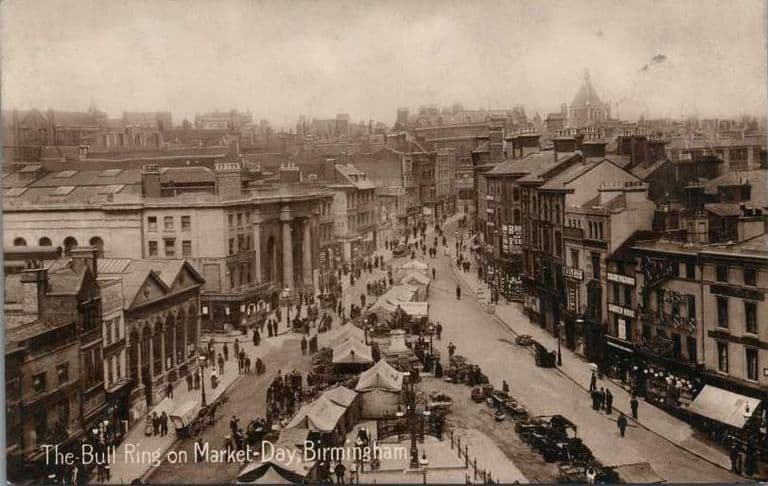
Probably in 1166, Peter, lord of Birmingham, received a royal grant of a market to be held every Thursday at his castle. Everything else in Birmingham has moved, been renamed or been knocked down. The market is still there, on the slope below St Martin’s Church, more than 850 years later.
The old market place
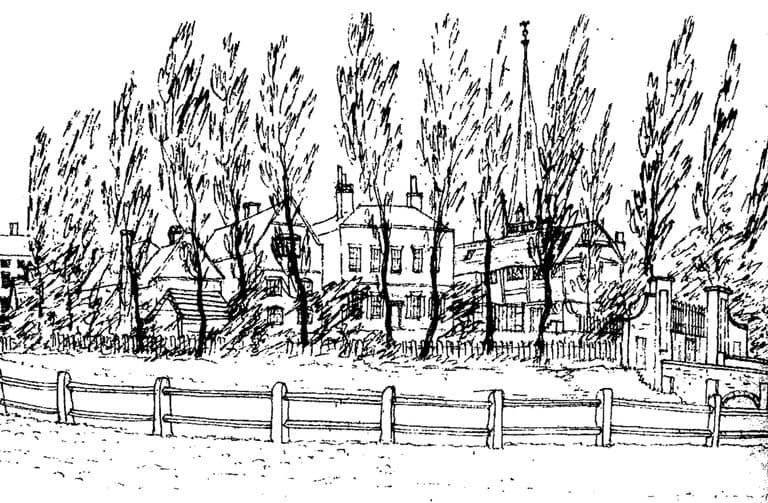
William Westley’s map of 1731 shows the corn market in the Bull Ring, the shambles above it and the beast market in the High Street. The name probably comes from bull-baiting. In 1817 the Street Commissioners opened Smithfield market on the moat of the old manor house. In 1809 the town put up its first public statue in the Bull Ring: Richard Westmacott’s bronze of Lord Nelson, now listed Grade II*.
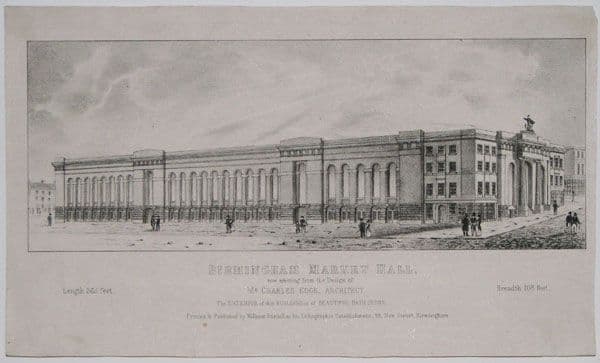
Then came the grand building. Charles Edge’s Market Hall opened in 1835, with massive Doric columns at its entrances and room for some 600 stalls. A wholesale fish market followed in Bell Street in 1869.
The shell
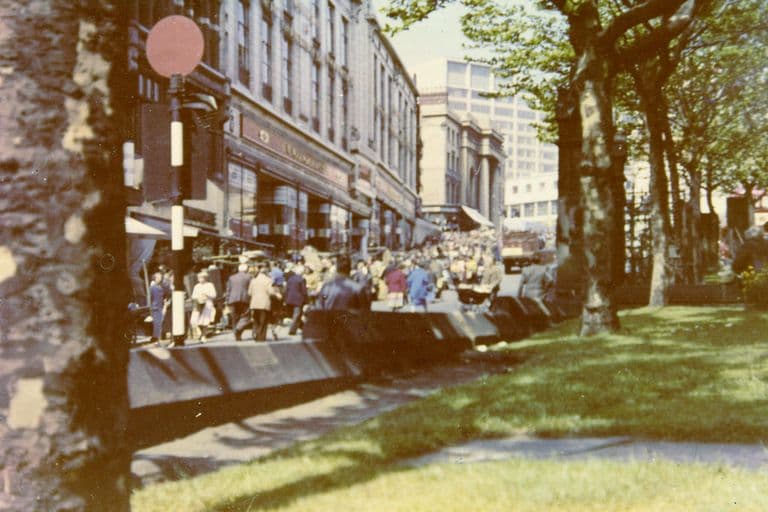
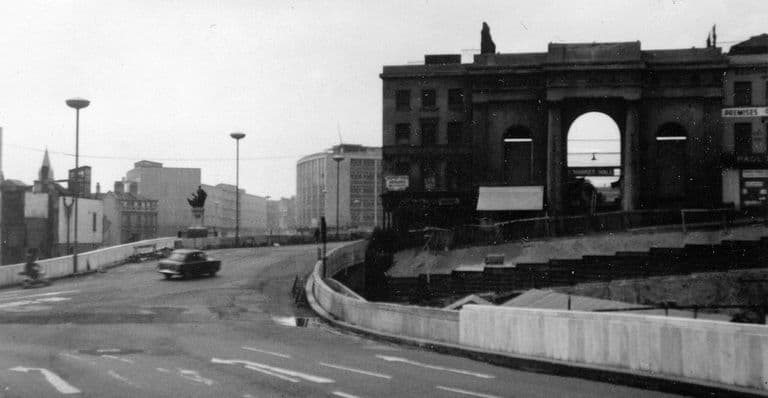
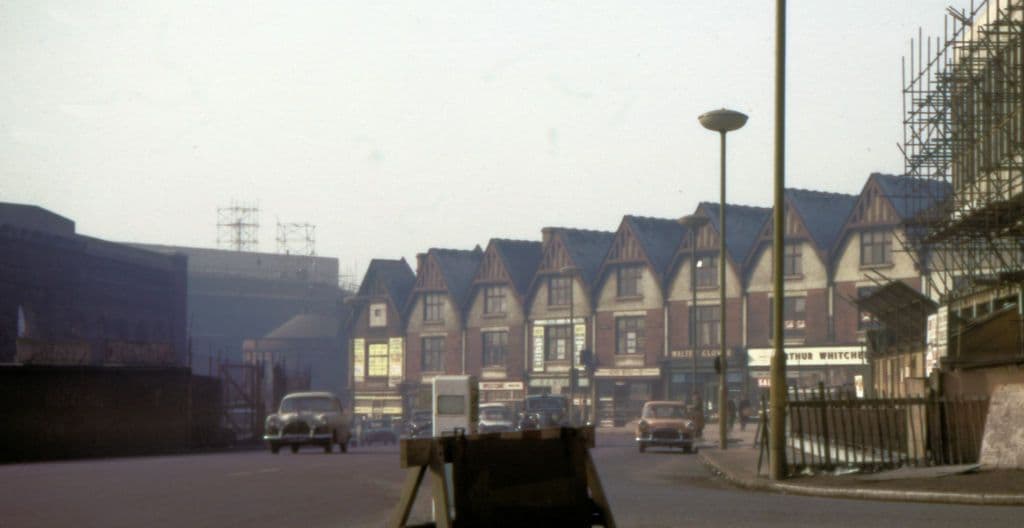
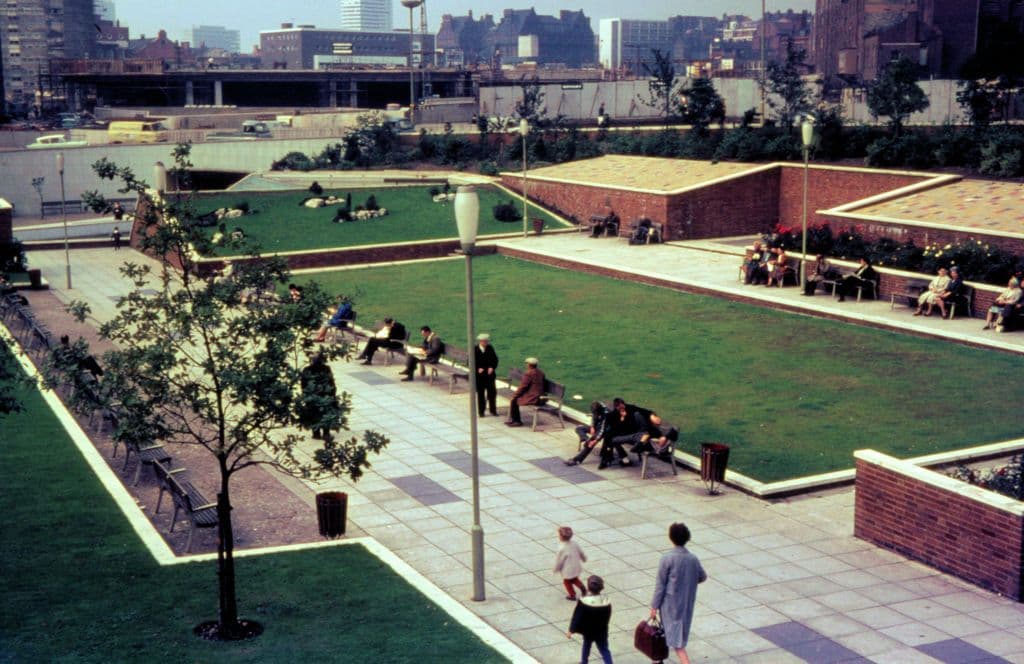
On the night of 25–26 August 1940 incendiaries gutted the Market Hall. The traders put up covered stalls inside the walls and carried on. The council’s own 1995 history says that as late as 1956 there were plans to give it a new roof. Instead, the decision was taken to route the Inner Ring Road round it and demolish it as well. A Laing photograph of 1962 shows the walls still standing beside the building site; one of John Ball’s slides of 1963 shows what was left of them. They had gone by the mid-1960s, and the patch of grass that replaced them was named Manzoni Gardens, after the City Engineer.
The 1964 centre
William “Kirby” Laing wrote in the firm’s magazine in July 1964: “It is undoubtedly the world’s most advanced shopping centre and I think it is going to change the shopping habits of the whole Midlands.”
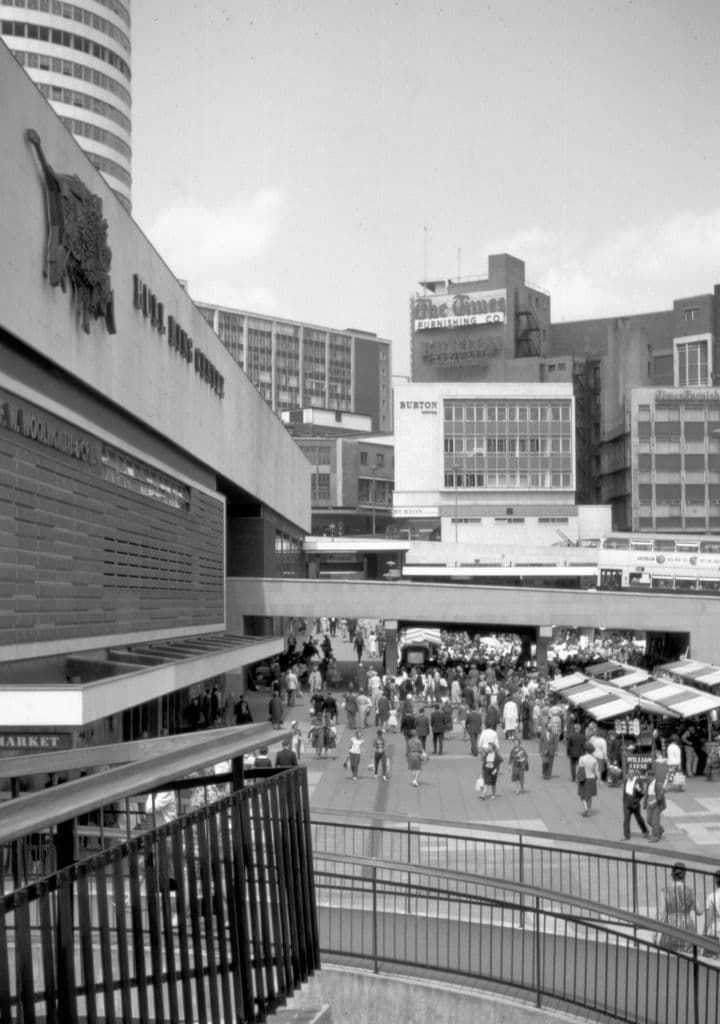
The new Bull Ring was built by John Laing, using designs by the architect James A. Roberts, in less than three years. It was opened on 29 May 1964 by the Duke of Edinburgh in front of large crowds. Historic England calls it “the first indoor city-centre shopping centre in the UK” and, at the time, “one of the largest enclosed shopping centres outside America”.
It was meant to dazzle. There were 140 shop units, market stalls, cafés, a ballroom and a hairdresser. Air conditioning was said to give “an atmosphere of late spring all year round”, music played, and a blue and gold macaw called Polly, lent by Dudley Zoo, lived in the centre. William “Kirby” Laing wrote in the firm’s magazine in July 1964: “It is undoubtedly the world’s most advanced shopping centre and I think it is going to change the shopping habits of the whole Midlands.”
Next to it rose Roberts’s Rotunda, a 24-storey round office tower begun in 1960 and finished in 1964–65.
Falling out of love
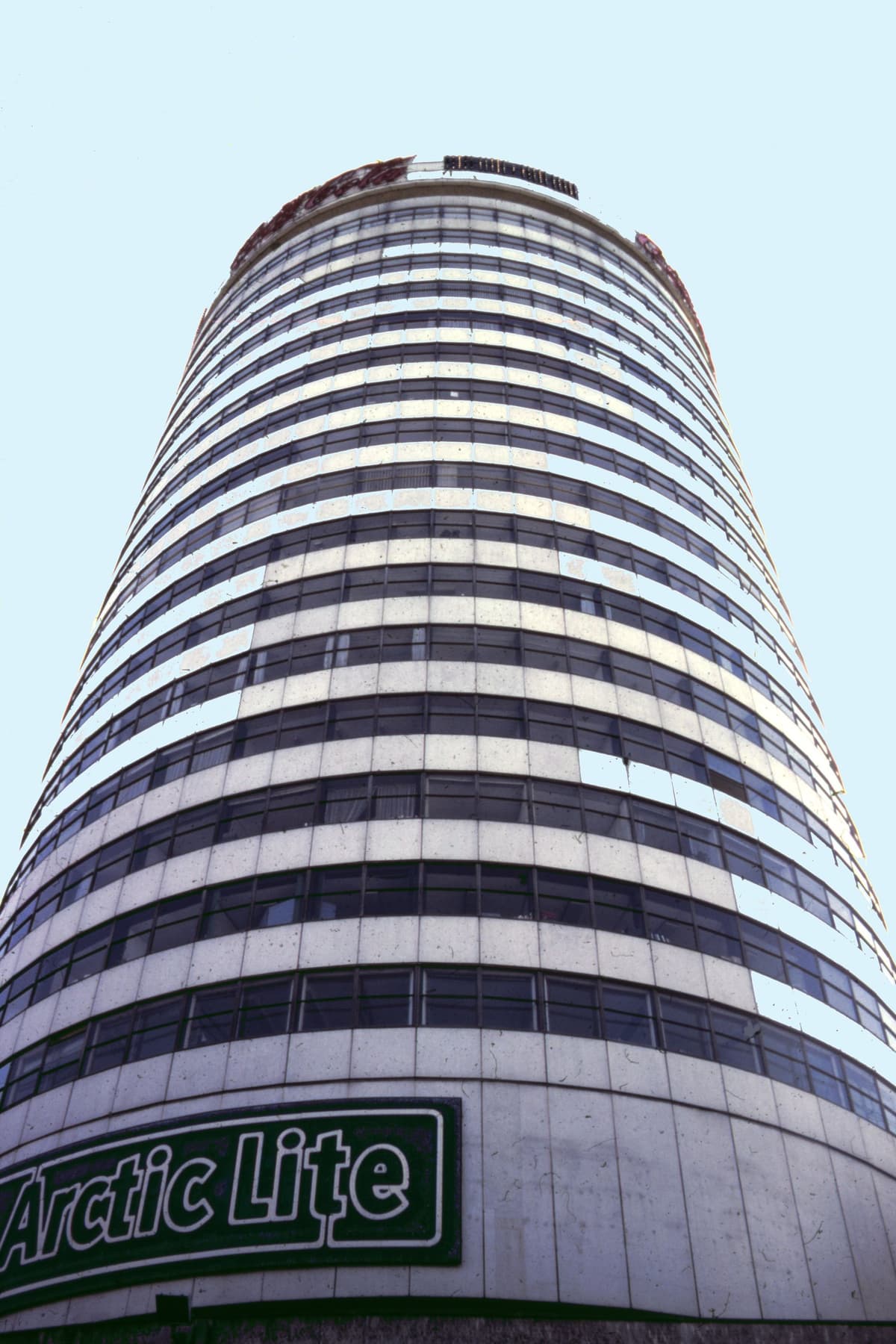
It did not last. The centre sat inside the ring road, reached through subways and ramps, and its grey concrete aged badly. Historic England notes that by the 1980s “many people started to dislike the grey Brutalist design”. The planning historians Peter Larkham and David Adams say it was “professionally and publicly derided from the mid-1980s”. Plans to replace it came and went for a decade.
One part was saved. On 9 August 2000 the Rotunda was listed Grade II, as “a prominent landmark on a hilltop site”. It was converted into flats in 2005–08.
The 2003 Bullring
The developers who finally did it were the Birmingham Alliance, formed in 1999 by Hammerson, Land Securities and Henderson Global Investors. Demolition of the 1964 centre, 65,000 tonnes of concrete, began on 20 June 2000 and was complete by March 2001. Archaeologists working on the site found evidence of the medieval town underneath.
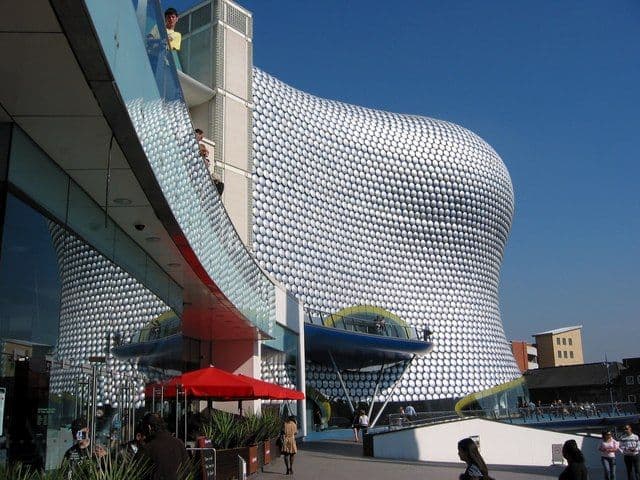
The new Bullring, designed mainly by Benoy, opened on 4 September 2003. St Martin’s Church, the Rotunda and Moor Street station were cleaned and restored around it, and Nelson was set back close to his old site. The cost is usually given as about £500 million, though reports vary. Even the name was argued over; the compromise made the shopping centre “Bullring” and the place “Bull Ring”.
The building everyone noticed was Selfridges, by Future Systems (Jan Kaplický and Amanda Levete), clad in 15,000 aluminium discs on a deep blue skin. The architectural writer Wilson Yau, for the Twentieth Century Society, judged it “a memorable building that looks certain to outlast the timid and mundane shopping centre around it”.
Still a market
The markets moved to Edgbaston Street, next to St Martin’s. They are about to move again: in October 2025 Hammerson won consent to replace the Indoor Market with housing, with traders due to go to a new market in the Smithfield development.
So the Bull Ring has been cleared and rebuilt three times in two centuries, each time by people sure they were building for good. Through all of it, somebody has been selling fish and vegetables at the bottom of the hill.
A long read
Herbert Manzoni: the man who remade Birmingham
Birmingham survived the Blitz, then rebuilt itself on purpose. Compare the city before and after on four lined-up maps, see what the Inner Ring Road took, and judge for yourself.
On the map
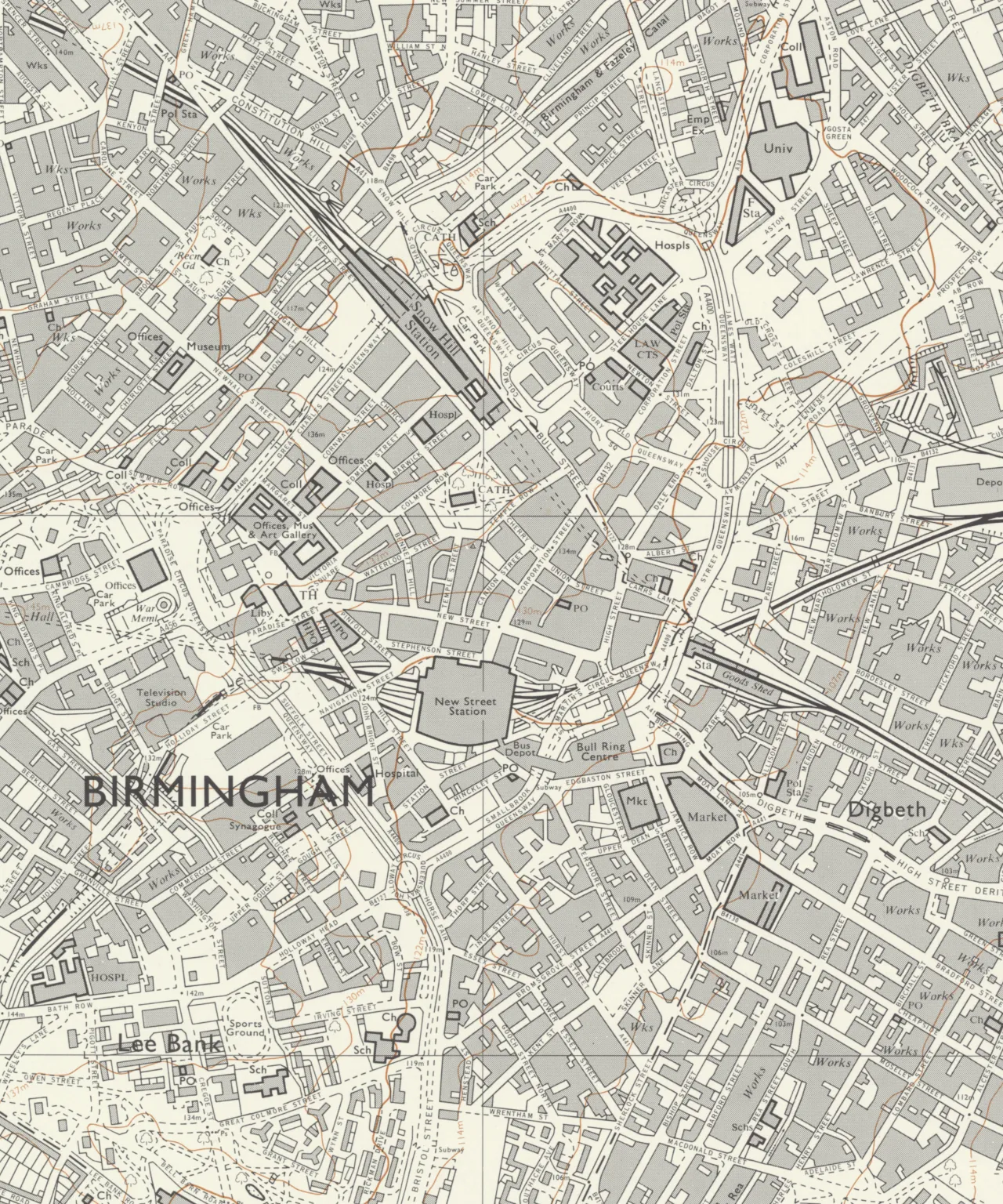
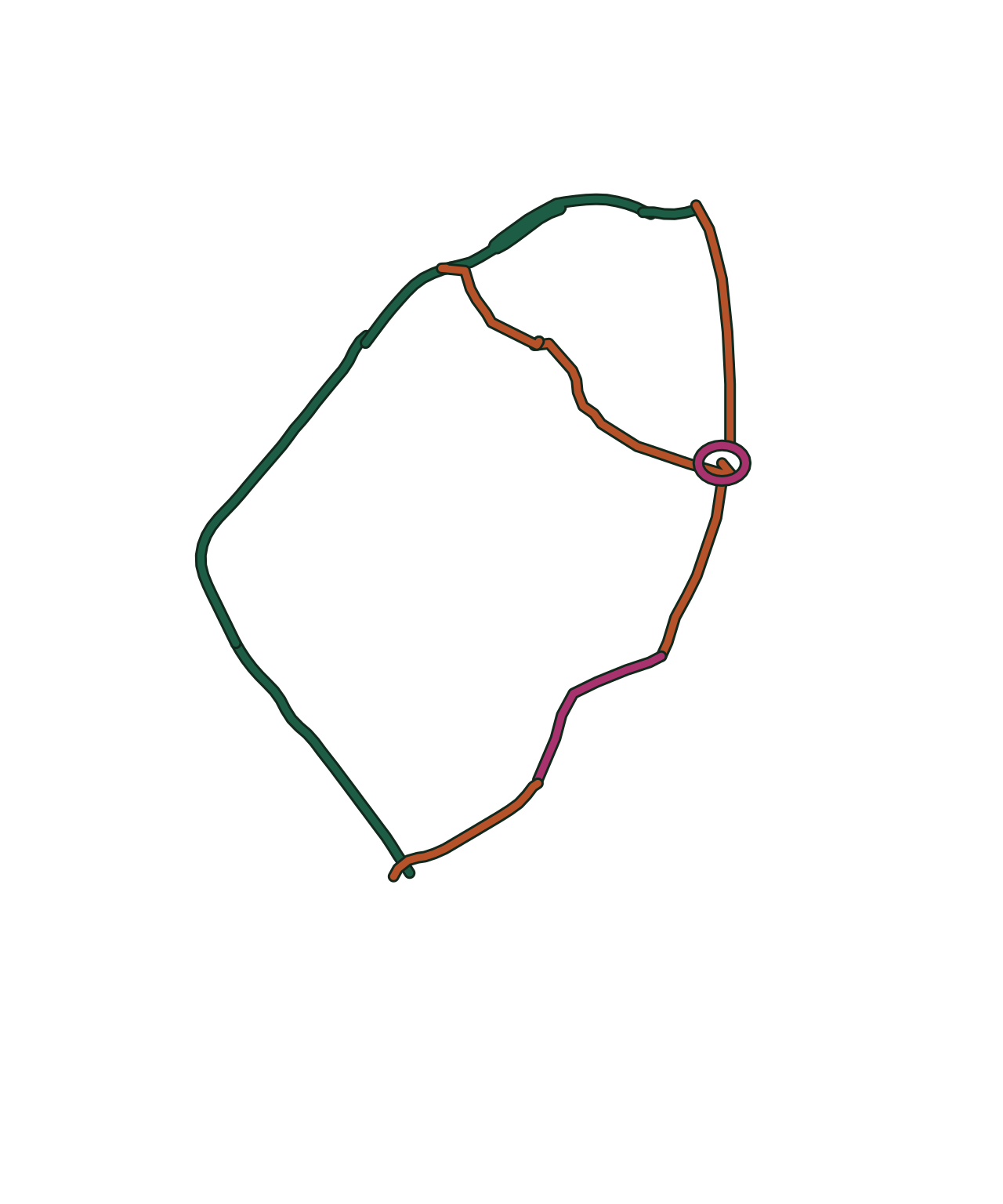
5 places connected with The Bull Ring: three rebuildings. Tap a number for directions — some sites are private homes or gardens, so each place’s page says what you can see from the street.

- Fish Market, Bell Street — Lost, Site redeveloped · Directions to Fish Market, Bell Street (opens Google Maps)
- Birmingham Manor House and Moat — Lost, Site redeveloped · Directions to Birmingham Manor House and Moat (opens Google Maps)
- The old Bull Ring and Spiceal Street — Lost, Site redeveloped · Directions to The old Bull Ring and Spiceal Street (opens Google Maps)
- St Martin’s Circus — Lost, Site redeveloped · Directions to St Martin’s Circus (opens Google Maps)
- Birmingham Market Hall — Lost, Site redeveloped · Directions to Birmingham Market Hall (opens Google Maps)
Key dates
- January 1959 — Public Works Committee agrees to demolish the Market HallA Public Works Committee conference on the Bull Ring agrees to demolish the bombed Market Hall, opening the way for the ring road and the Bull Ring Centre.
- May 1961 — The ringway splits Spiceal StreetJohn Ball’s photographs show the new Inner Ringway running between Spiceal Street and the Market Hall, with Phillips Street widened into one of its carriageways.
- 29 May 1964 — Bull Ring Centre opensThe Duke of Edinburgh opens the Bull Ring Centre, built by Laing in under three years. Historic England calls it the first indoor city-centre shopping centre in the UK.
- 25–27 March 1988 — The Highbury InitiativeA symposium on the future of the city centre recommends that “the concrete collar of the Inner Ring Road be broken”. The council begins lowering and removing the road.
- 20 June 2000 — Demolition of the Bull Ring Centre beginsDemolition of the 1964 Bull Ring Centre, 65,000 tonnes of concrete, begins. It is finished by March 2001.
- 4 September 2003 — The new Bullring opensThe Birmingham Alliance’s Bullring opens on the site of the 1964 centre, with Future Systems’ Selfridges store clad in 15,000 aluminium discs.
Sources and further reading
- A History of the County of Warwick, vol. 7: The City of Birmingham — Economic and Social History: Markets and Fairs, pp. 251–252 — W. B. Stephens (ed.), Victoria County History, 1964
- A History of the County of Warwick, vol. 7: The City of Birmingham — Secular Architecture, pp. 43–57 — W. B. Stephens (ed.), Victoria County History, 1964
- The Bull Ring — History of Birmingham Places & Placenames A to Y — Bill Dargue
- Monument to Lord Nelson, Bull Ring — National Heritage List for England entry 1343362 — Historic England
- Architecture and Austerity: Birmingham 1940–1950 — Sheila McGregor, Chris Upton and Nicola Coxon, Birmingham City Council Department of Planning and Architecture, 1995
- The Rise of the Shopping Centre: 5 Shopping Centres Built by John Laing — Historic England
- The Un-necessary Monument? The Origins, Impact and Potential Conservation of Birmingham Central Library — Peter J. Larkham and David Adams, Transactions of the Ancient Monuments Society 60, 2016
- The Rotunda, including the shops in the podium below the tower — National Heritage List for England entry 1381413 — Historic England
- New look for much maligned centre — icBirmingham, Trinity Mirror Midlands, 2003
- First preview of new Bull Ring — BBC News, 2002
- Bullring, Birmingham: buildings that elevated cities — Noella Pio Kivlehan, RICS Modus, 2022
- 100 Buildings: 2003 Selfridges, Birmingham — Wilson Yau, Twentieth Century Society
- Green light for Hammerson’s Bullring market demolition — CITA News, 2025