
What was here?
A big theatre on the east side of Corporation Street, facing Old Square, with a front 120 feet wide and 52 feet high to the cornice. A dome on top carried a 15-foot group of Aurora in a chariot drawn by prancing horses. It had 2,200 seats on four levels, and held more than 3,000 people by some counts.
History
A theatre for the new street
In the early 1880s Corporation Street was Birmingham’s newest address, the boulevard Joseph Chamberlain’s Improvement Scheme had driven through the slums. One of the first big public buildings on it was a theatre. The Grand opened on Wednesday 14 November 1883 under the patronage of Chamberlain himself, who sent his apologies. Its owner, Andrew Melville, opened with Ici on parle français, Good as Gold and At the Seaside.
The architect was W. H. Ward of Birmingham, and the builders were Bradney & Co. Showell put the cost at about £30,000 and thought it “must rank as one of the handsomest edifices in the town”. Its front was 120 feet wide and 52 feet high to the cornice, “capped with a dome, supporting a winged figure of Aurora, which, drawn in a car by prancing horses, is 15ft. high”.
Safe, and very large
The Era’s reporter was struck by its safety and its size. A fireproof division separated stage from auditorium, and there were wide fireproof staircases and hoses throughout, all supervised by Mr Tozer of the Birmingham Fire Brigade. “No theatre in the kingdom has a larger pit than this,” the paper declared. The Victoria County History calls the Grand the largest theatre in Birmingham, holding over 3,000 people and specialising in melodrama and light opera. Other accounts give 2,200 seats on four levels, with eight boxes, perhaps because they leave out standing room.
Variety, films and dancing
In 1907 Moss Empires bought the Grand. They spent £20,000 reconstructing the interior and adding new exits to Dalton Street, and reopened it on 9 December 1907 as the Grand Theatre of Varieties, their variety house in the city centre. Vesta Tilley played her farewell Birmingham week there in December 1919.
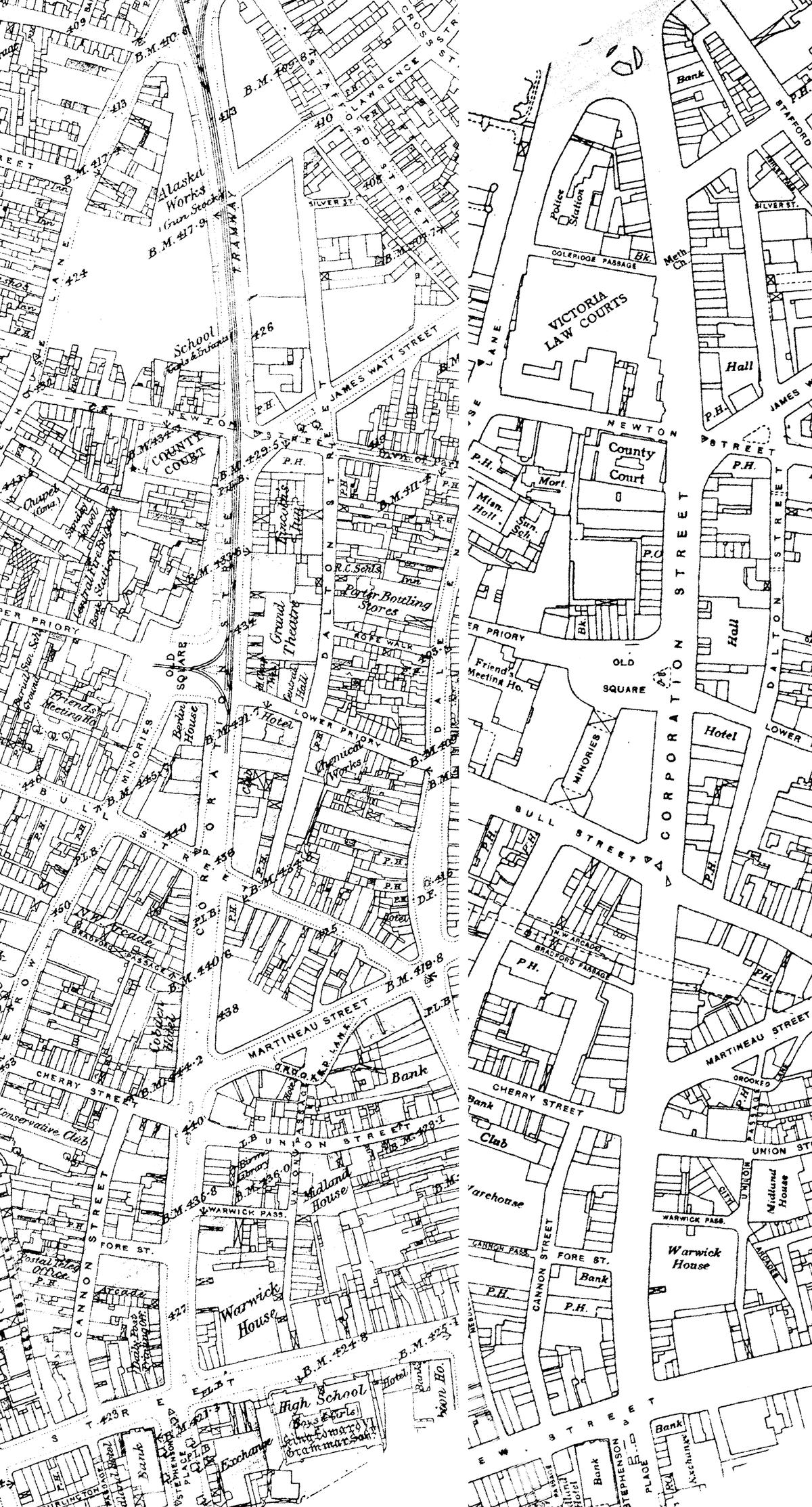
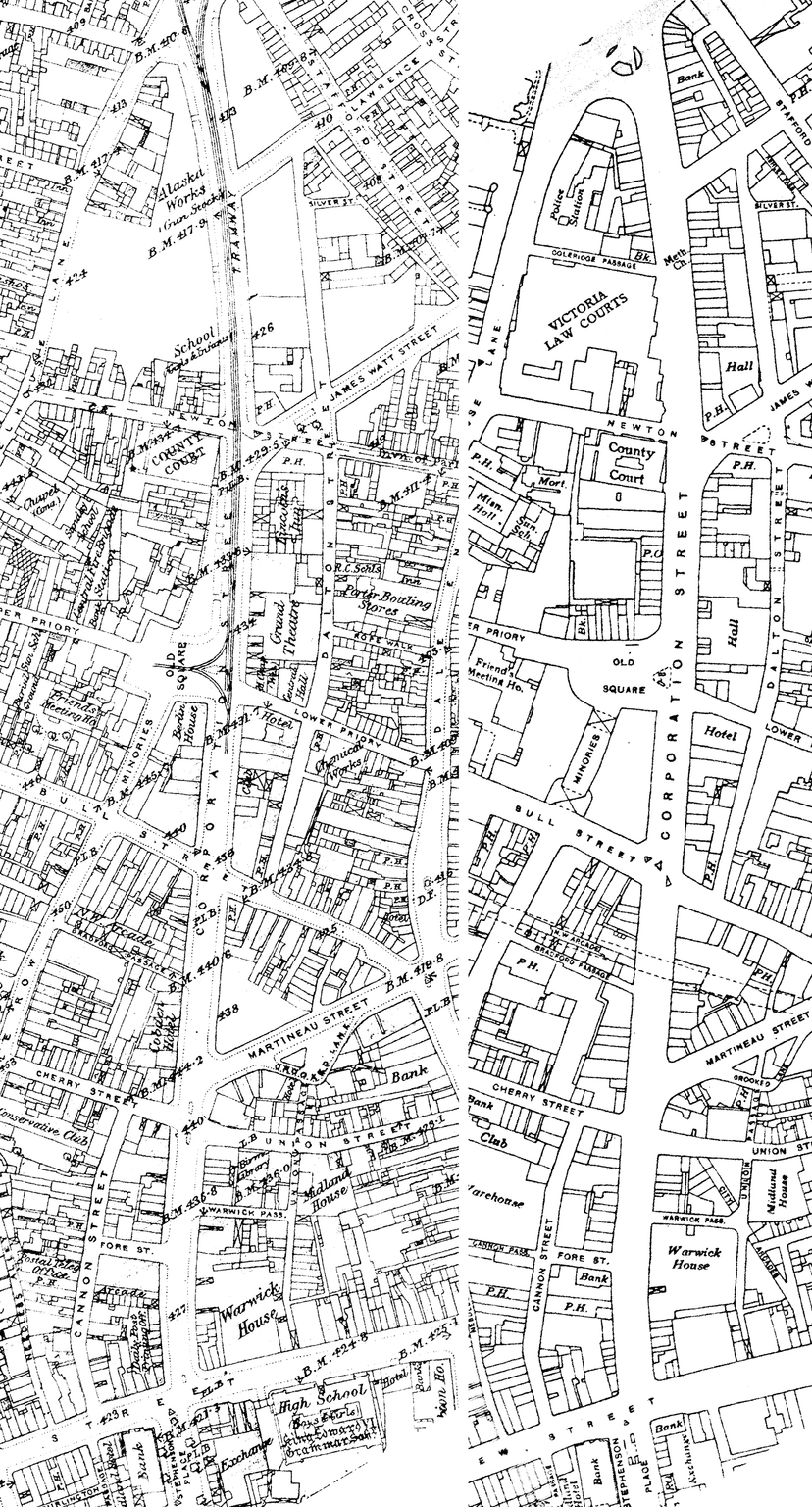
The same spot, then and now
1888–1913
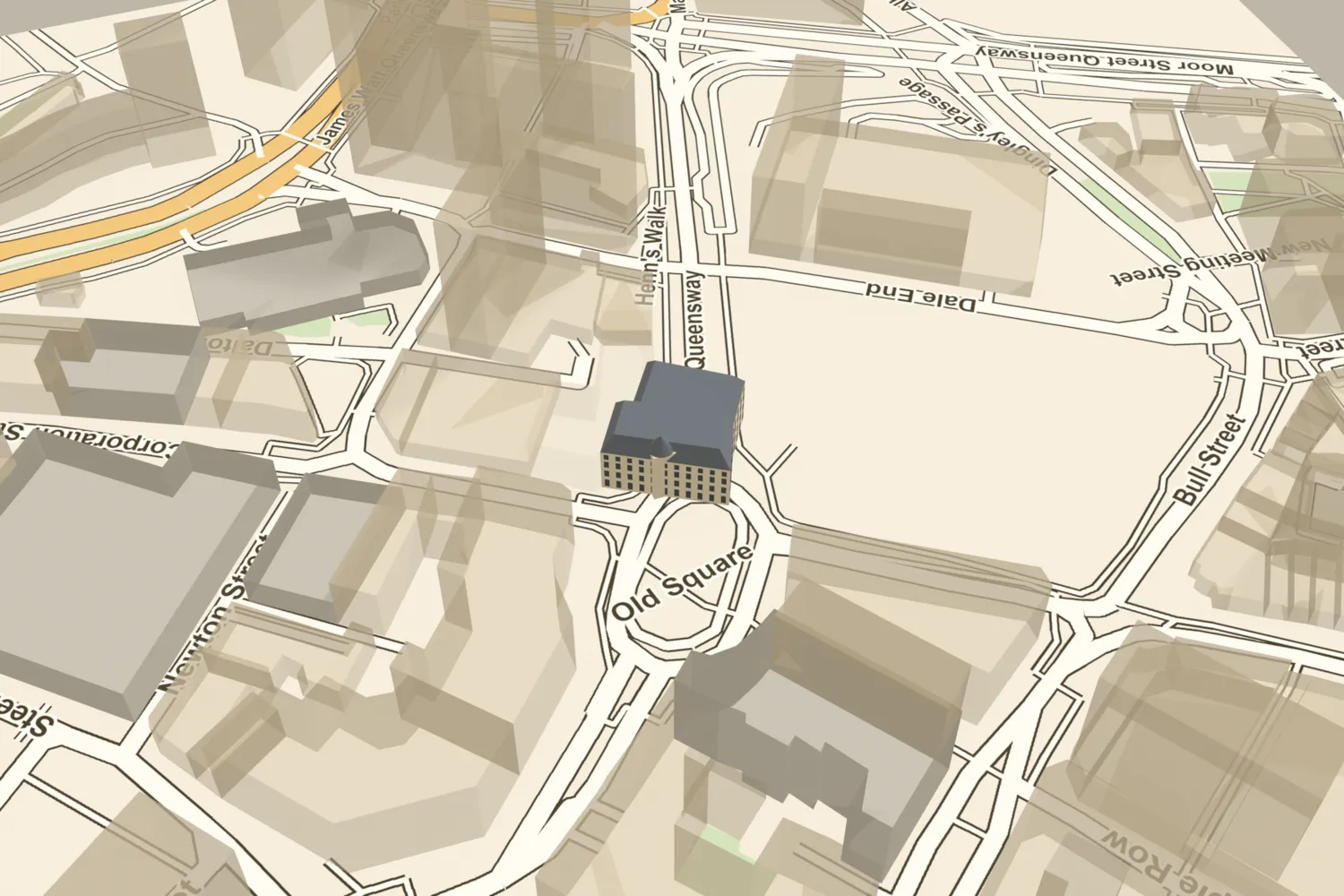
Today
Old map: Ordnance Survey six-inch, reproduced with the permission of the National Library of Scotland (CC BY 4.0). Today: © OpenStreetMap contributors.
Then came the talkies. On 1 September 1930 the Grand reopened as a cinema with All Quiet on the Western Front, but it closed on 13 May 1933. After several dark years, Mecca Dancing reopened it as the Grand Casino ballroom. In the 1940s and 1950s it was a well-known dance hall, with lunchtime and tea dances and visiting bands, and in 1945 it held a thanksgiving service for victory.
Under the Queensway
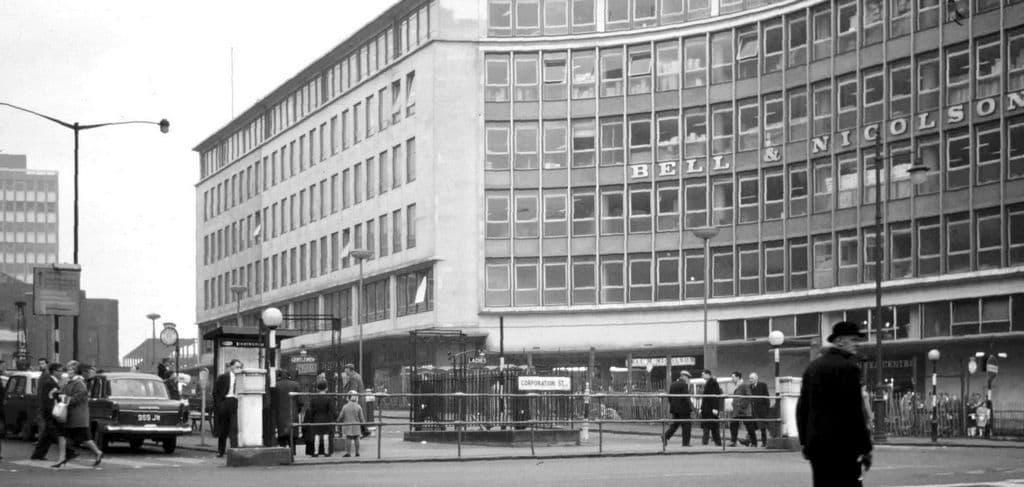
The Grand Casino closed on 31 December 1960, and the building was demolished in 1963, as the Inner Ring Road was being built past Old Square. Its site now lies under the Priory Queensway carriageway and the pavements on the east side of Old Square, with the corner of Maple House on its northern edge.
Nothing of Ward’s dome or his Aurora survives. Buses now run where, The Era once claimed, Birmingham had the largest pit of any theatre in the kingdom.
Why it mattered
The Grand was one of the first great public buildings on Chamberlain’s Corporation Street, opened under his patronage, and in the Victoria County History’s words the largest theatre in Birmingham. Its later lives as Moss Empires’ variety theatre, a talkie cinema and the Grand Casino ballroom follow the city’s changing tastes in entertainment over eighty years.
Why it disappeared
Road building · Commercial redevelopment
Its life as a theatre and cinema ended in 1933, and the Grand Casino ballroom closed on 31 December 1960. The building was demolished in 1963, and its site went under the Priory Queensway section of the Inner Ring Road.
The Grand Theatre, on today’s streets
What’s there now
What replaced it
The Priory Queensway section of the Inner Ring Road, which runs past Old Square, and the edge of Maple House, a later office and shop block on Corporation Street.
What survives
Nothing. The King’s Hall next door, opened in 1907 as a variety hall, has gone too.
Today
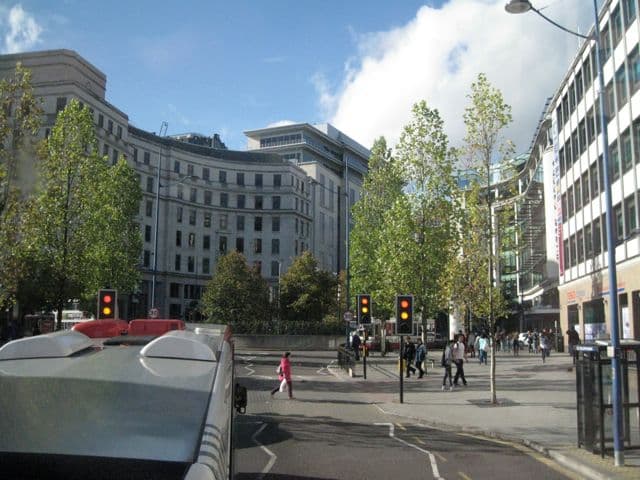
Stand on the east side of Old Square, at the bottom of Corporation Street. The Grand’s front faced the square here; its site is now the Priory Queensway carriageway and pavements, with the corner of Maple House to the north. Kenneth Budd’s mural in Old Square is just to the west.
Then and now
Then · 1890 and 1937
Now · 6 October 2010
Sources and further reading
Capacity is 2,200 seats in Arthur Lloyd and Cinema Treasures but “over 3,000” in Showell and the Victoria County History; the difference may be standing room. Archiseek illustrates a design by William Wykes “never constructed as designed”, while The Era and Cinema Treasures name W. H. Ward; this has not been resolved. Frank Matcham’s part in the 1907 reconstruction rests on Cinema Treasures alone. The VCH says the Grand closed in 1933; the year the Grand Casino opened is not recorded. The Era of 1883 puts the gallery entrance on James Watt Street, while the Ordnance Survey plan and the 1907 account put the back of the theatre on Dalton Street. That it was demolished for the ring road is inferred from a forum account and the line of the road. No open-licence image of the theatre itself has been found.
- Showell’s Dictionary of Birmingham — Thomas T. Harman and Walter Showell, Cornish Brothers, Birmingham, 1885. ‘Theatres’: opening, cost, front, dome and Aurora, capacity
- A History of the County of Warwick, vol. 7: The City of Birmingham — Social History since 1815, pp. 223–245 — W. B. Stephens (ed.), Victoria County History, 1964. largest theatre; over 3,000; music hall 1907; closed 1933
- Opening of the Grand Theatre, Birmingham (The Era, 17 November 1883) — The Era, 1883
- The Grand Theatre, Corporation Street, Birmingham — arthurlloyd.co.uk
- Grand Theatre, Birmingham — Ken Roe (Cinema Treasures)
- 1883 – Grand Theatre, Corporation Street, Birmingham — Paul Clerkin (Archiseek), 2010
- Grand Casino dance hall, Corporation Street (forum thread) — Birmingham History Forum, 2015–25
- Ordnance Survey 1:500 town plan of Birmingham, 1887–88, georeferenced — National Library of Scotland, 1888. footprint traced
- Ordnance Survey 25-inch map, Warwickshire (Birmingham sheet), georeferenced — National Library of Scotland
- OpenStreetMap data (Overpass and Nominatim), central Birmingham — OpenStreetMap contributors, 2026
Comments
Comments will load here.