
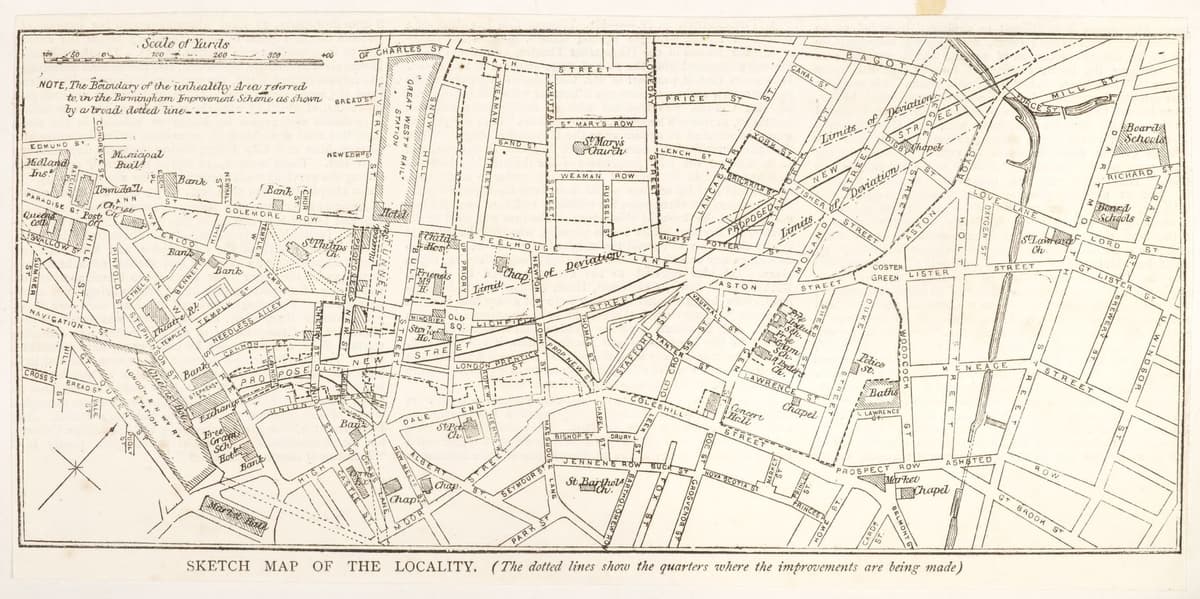
What was here?
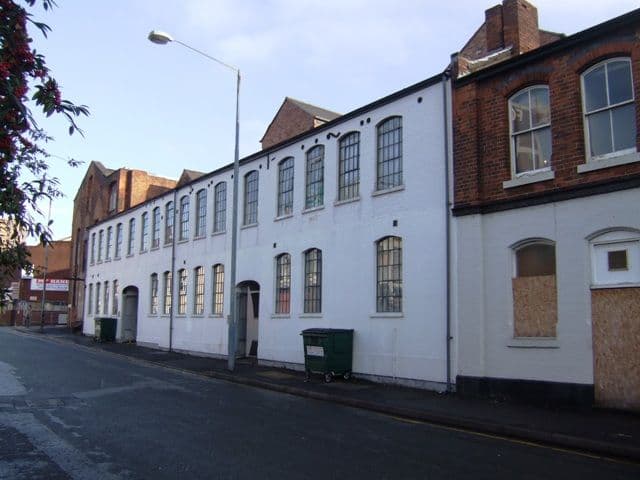
A district of courts, workshops and crowded old streets north-east of New Street, including the Gullet and the Georgian houses of Old Square, cleared from 1878 for a broad new street.
History
Sagacious audacity
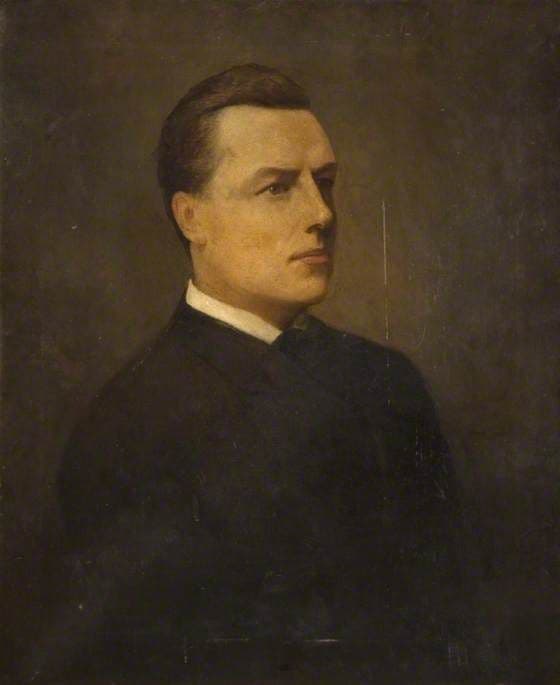
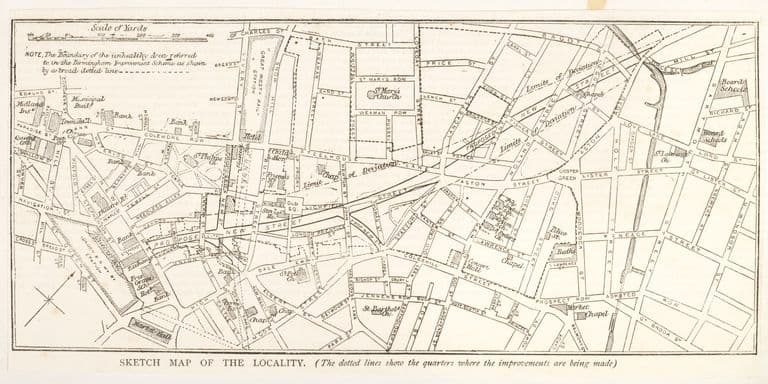
In 1875 Parliament passed the Artisans’ Dwellings Act, letting councils buy and clear districts where the houses were unfit to live in. Take-up was slow; the historian Chris Upton counts only 32 schemes completed nationally by the First World War. Birmingham, under Joseph Chamberlain, seized it. His Improvement Scheme of 1875–76 took in 93 acres of St Mary’s and Market Hall wards, which the Victoria County History calls “the worst district in the town”. Evidence before the inquiry linked its damp, crowded courts with smallpox, fever and bronchitis; the death rate there was double that of Edgbaston.
The boulevard
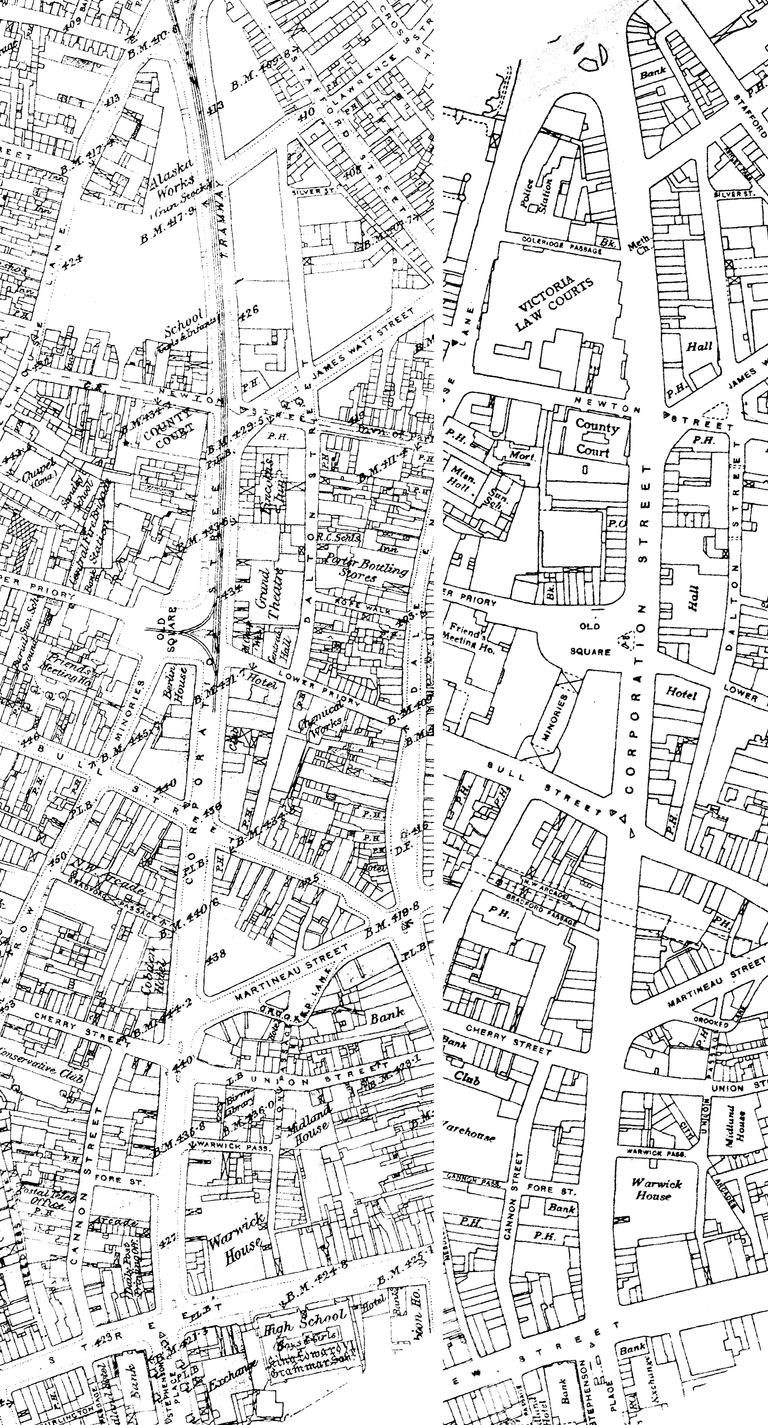
Through the middle went a new street. Chamberlain wanted a Parisian boulevard running up from New Street station. The first lease on the new street was signed in January 1878, and demolition began that August. Streets with names like the Gullet, the Minories and Oxygen Street went, and so did cherry orchards, bowling greens and the grand, decaying houses of Old Square.
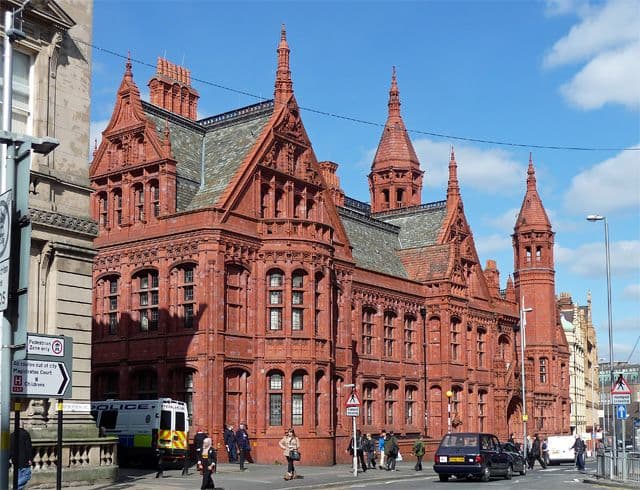
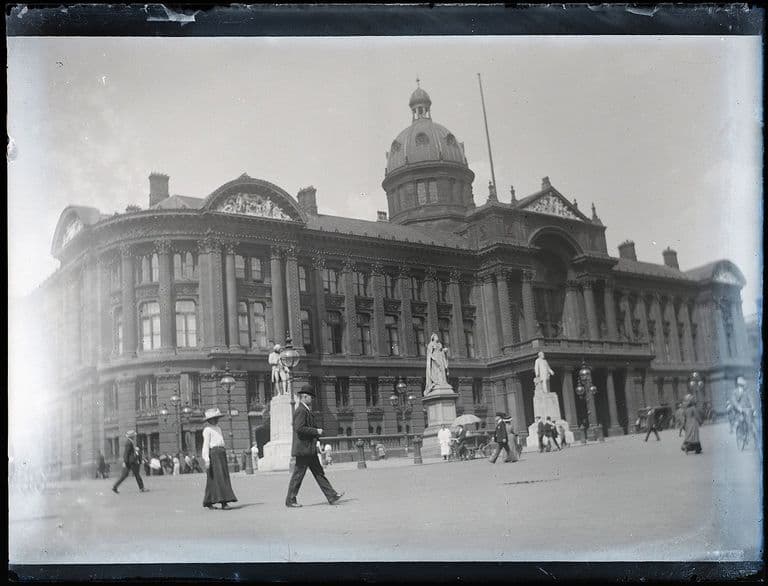
The slump of the early 1880s stopped the shops and offices halfway. The lower end filled with public buildings instead: the County Court, the Methodist Central Hall, and above all the Victoria Law Courts, red brick and terracotta, designed by Aston Webb and Ingress Bell and built in 1887–91. It is listed Grade I.
Who paid
The people who lived there paid most. The historian Chris Upton estimates that about 3,500 were displaced, with nowhere provided for them to go. In 1884 Alderman Cook admitted: “When it was accepted no one dreamed that we were going to destroy 855 dwellings without putting any artisans’ houses in their place.” Only in 1889 did the corporation build cottages in Lawrence Street and Ryder Street, at rents most of the old residents could not afford. Upton’s verdict: “Chamberlain had in truth engineered a commercial quarter under the umbrella of a housing act.”
Today
In 1884 Alderman Cook admitted: “When it was accepted no one dreamed that we were going to destroy 855 dwellings without putting any artisans’ houses in their place.”
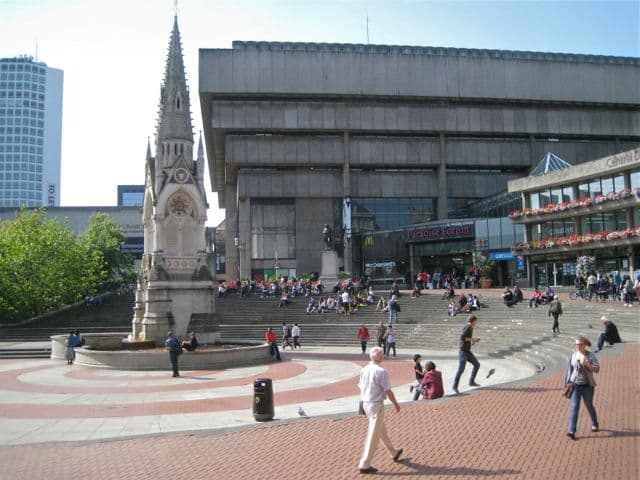
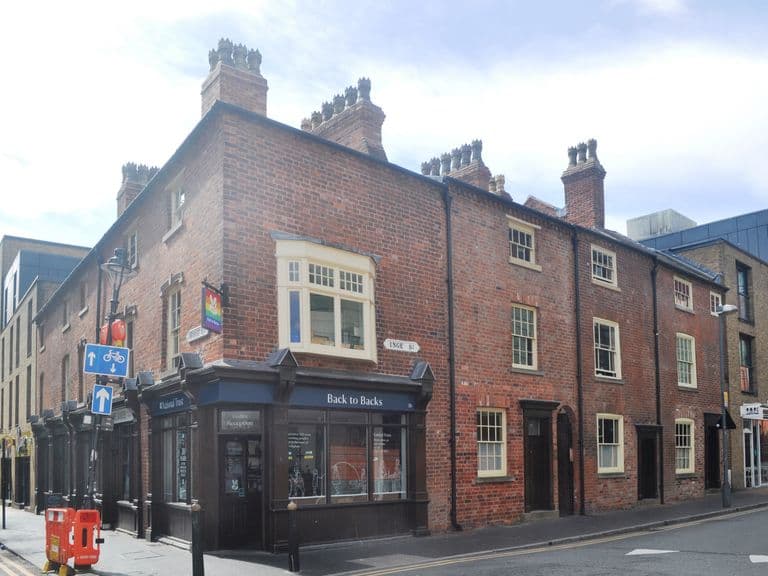
The street was pushed further north in the early 1900s and much rebuilt in the 20th century. Since 2012 its lower end has been closed to buses, and the Metro trams now run along it. Walk up it from New Street to the Law Courts and you are walking the line Chamberlain drew across the old town, with all its gains and all its costs.
What happened here?
The central slums were bought and cleared under the Birmingham Improvement Scheme, and a new commercial street laid out from 1878, lined with shops, offices and, at its lower end, the law courts.
Why it mattered
It was the most ambitious use in England of the 1875 Artisans’ Dwellings Act, and it set the pattern for a century of Birmingham redevelopment: bold planning, real health gains, and heavy costs for the poorest residents.
What’s there now
What survives
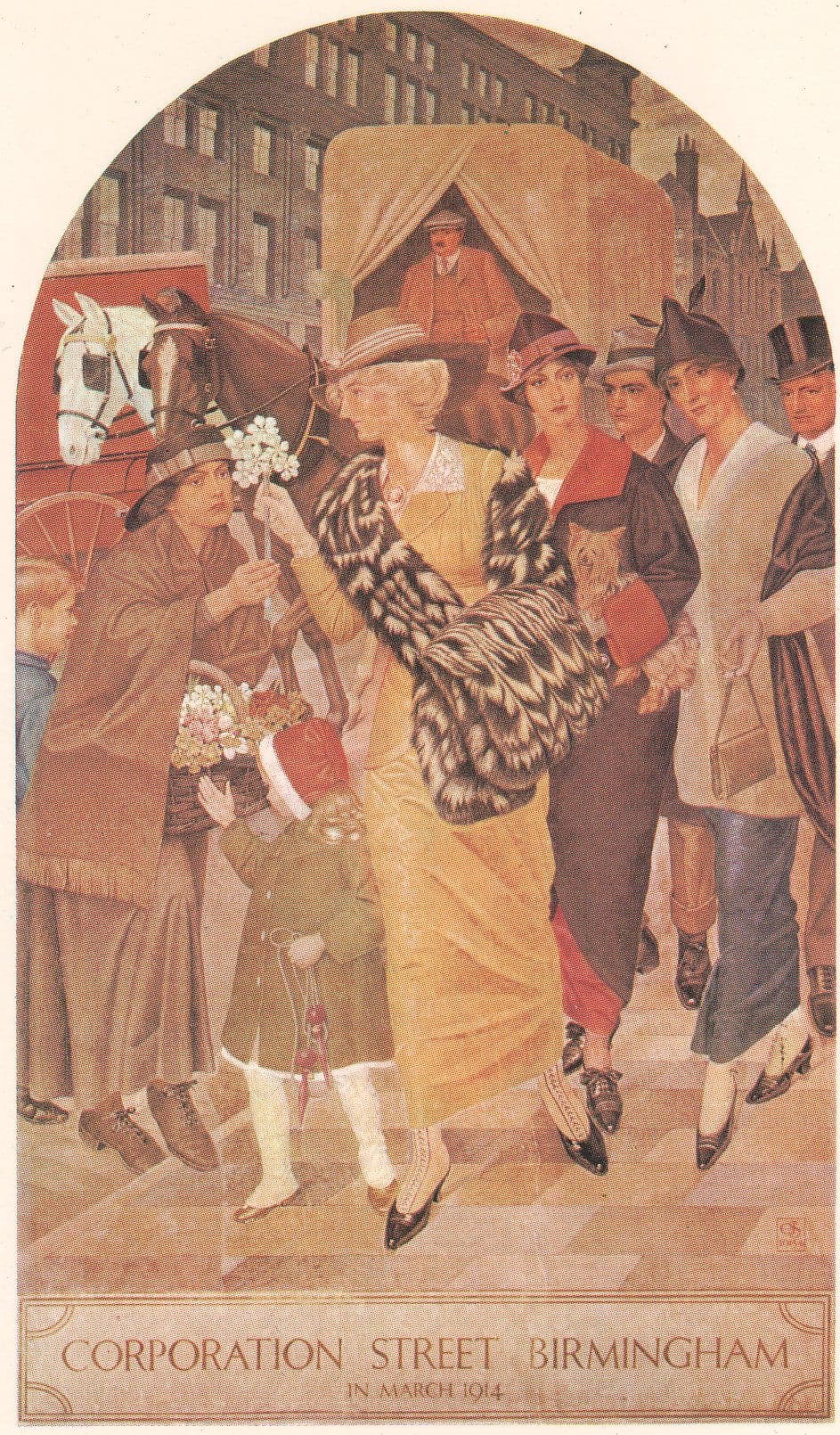
The line and width of the 1870s street; Victorian buildings including the Victoria Law Courts (1887–91), the County Court and the Methodist Central Hall at the northern end; Joseph Southall’s fresco of the street in 1914 in the Museum and Art Gallery.
Today
A shopping street from New Street to Bull Street, with the West Midlands Metro running along its southern part, and the law courts and Central Hall further north.
Then and now
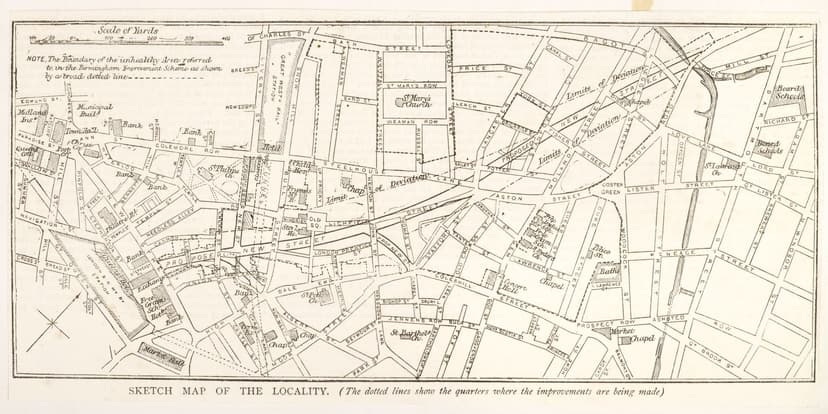
Then · c. 1876
Now · 20 March 2012
Key dates
- Autumn 1933 — J. B. Priestley visits BirminghamOn his first visit, the writer J. B. Priestley finds the approach “a dirty muddle”, admires Colmore Row’s “metropolitan air” and rides a tram through “a parade of mean dinginess”. His account appears in English Journey (1934).
Sources and further reading
The 3,500 displaced is Upton’s “rough estimate”. The first lease (January 1878) and demolition from August 1878 come from Wikipedia. Wikipedia gives the street’s length as 710 metres, though the street mapped today runs further north.
The point on the map is a general one, at the Bull Street junction near the middle of the Victorian street.
- A History of the County of Warwick, vol. 7: The City of Birmingham — Local Government and Public Services, pp. 318–353 — W. B. Stephens (ed.), Victoria County History, 1964. public health: the Improvement Scheme
- Slum Clearance and the Building of Corporation Street — Chris Upton, History West Midlands
- Corporation Street, Birmingham — Wikipedia
- Victoria Law Courts, Corporation Street — National Heritage List for England entry 1075605 — Historic England
Comments
Comments will load here.