
In December 1902 a Birmingham lamp maker on a Mediterranean tour refused the wine in Naples. Joseph Lucas had given up drink as a young man, and he was not going to start again now. He drank the water instead. Typhoid was rife in the city. He caught it, and on 27 December he died.
It was a strange end for a man who had spent his life selling light. He had started with a basket of paraffin and ended as chairman of a company with a five-storey factory in Hockley. The business he left behind would put electric lights, dynamos and starter motors into millions of British cars.
A boy from Carver Street
Joseph Lucas was born on 12 April 1834 in Carver Street, Hockley, the eldest son of Benjamin Lucas, a plater, and his wife Catharine. The Moseley Society’s short life of the family says he had no formal schooling. What he learned, he learned at the Sunday school George Dawson ran at the Graham Street chapel, and he later credited Dawson with everything that followed.
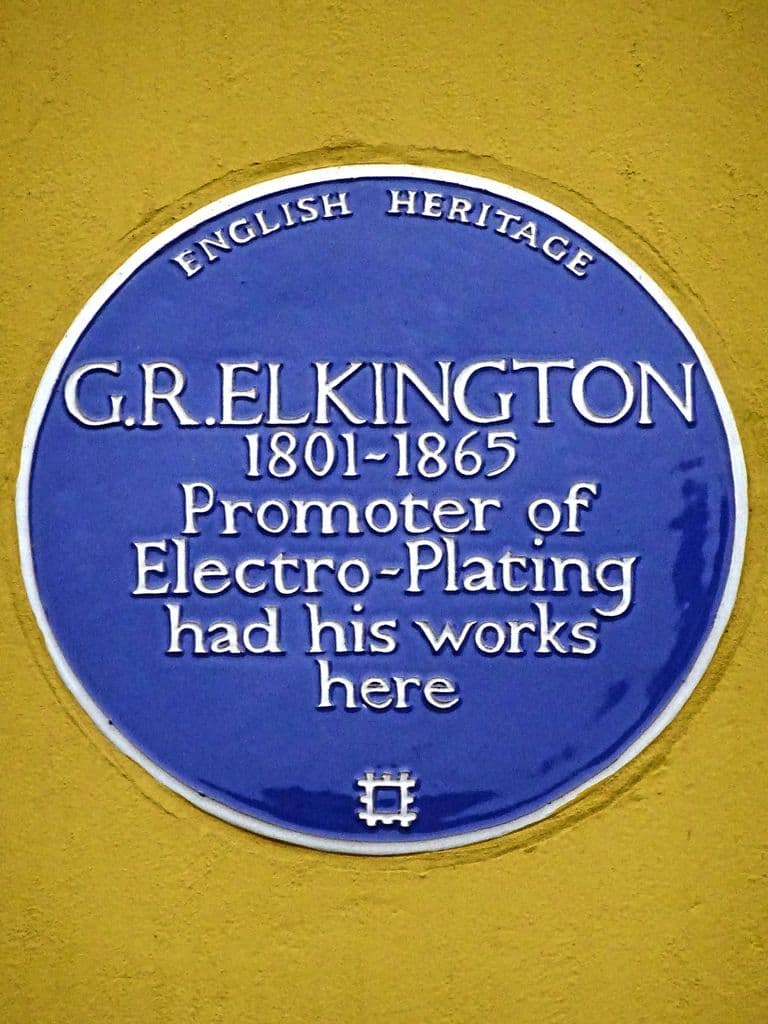
At about thirteen he was apprenticed to H. & G. R. Elkington, the Birmingham silversmiths who were turning electroplating into a world industry. He served seven years and came out a journeyman electro-plater. On 20 July 1854 he married Emily Stephens. They had six children over the next eleven years, and the eldest, Harry, would become his partner for life.
Paraffin from a basket
The early years were hard. According to the Moseley Society, a shortage of work drove Joseph and Emily to drink heavily, until he decided it would get him nowhere. He gave it up for good. It turned him into a lifelong champion of temperance.
In 1860 he went into business on his own account, with almost nothing. He sold paraffin from door to door from a basket carriage, then buckets, shovels and other hollow-ware. By 1869 White’s directory listed him as a dealer in lamps and oils, and he had moved to 209 Great King Street, Hockley. The house had a workshop, and from about 1870 the family were making domestic tinware there.
Tom Bowling and the King of the Road
In 1872 Harry, aged seventeen, joined his father. Within a few years they had set up the Tom Bowling Lamp Works in Little King Street, a few streets from home. The name came from their first real success: the Tom Bowling ship’s lamp, made for the fishing industry. They chose to specialise in lamps that burned the new paraffin and petroleum oils, which were cheap and in huge demand.
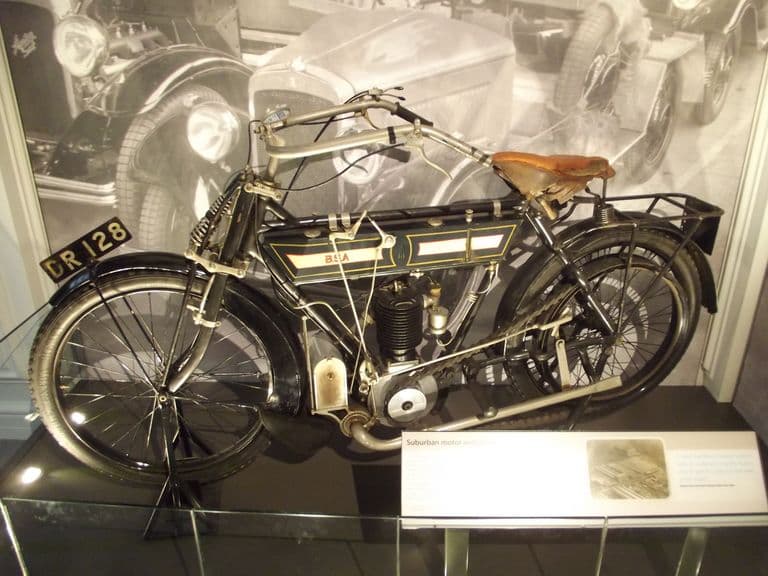
Then came the bicycle. In the late 1870s cyclists were being required to carry a lamp after dark, and the Lucases saw their chance. Their first cycle lamp was called the “King of the Road”. Joseph patented his lamp in 1880, and in 1881 the first consignment went to the United States. The name stuck to everything the firm made for decades.
In 1882 Harry became a full partner, and the business became Joseph Lucas & Son. Success brought trouble. The new firm ran short of cash and had to fight off rivals copying its patented designs. In 1885 Emily died, and the same year Joseph married his widowed cousin, Maria Tyzack. In 1895 he patented the “Silver King of the Road”, which stayed the firm’s best-selling line for years.
A factory in Great King Street
By the 1890s the Lucases needed a proper factory. Roger Bater, an engineering manager in the works’ last years, dated the first two blocks on Great King Street to 1896 and 1898. The family’s old house at the corner of Great King Street and New John Street became the nucleus of the new works.
To pay for growth, Joseph Lucas Ltd was registered as a public company on 12 November 1897, with a nominal capital of £225,000, to take over the business. Joseph was chairman, and he and Harry were joint managing directors. Father and son were, in the Moseley Society’s words, “gluttons for work”. They also encouraged concerts at the works, and the same account counts them among the pioneers of factory welfare.
The company kept moving with the times. Around 1901 it was selling Wells-Lucas engine oil. In 1902 it turned to the new motor trade, offering acetylene lamps for cars, foot pumps for tyres, wrenches and jacks. The step from bicycle lamps to car lamps was a small one. The steps that followed, into batteries, dynamos and magnetos, would make the firm’s fortune, but Joseph did not live to see them.
Temperance and Naples
In his last years Joseph left the running of the business largely to Harry. He gave time and money to good causes, helped found the Temperance Hall in Temple Street, and lectured there against waste, gambling and drink. Maria died in 1900. On 30 July 1901 he married again, to Mary Anne Owen.
The next year the couple set off on a Mediterranean tour that was part holiday, part business. In Naples, true to his principles, Joseph drank water rather than wine. He caught typhoid and died at the Hotel Bristol on 27 December 1902, aged 68. The Moseley Society repeats a story, told with obvious affection, that this enemy of waste came home in a King of the Road packing case. He was buried at St Mary’s Church, Moseley, on 14 January 1903.
Why it mattered
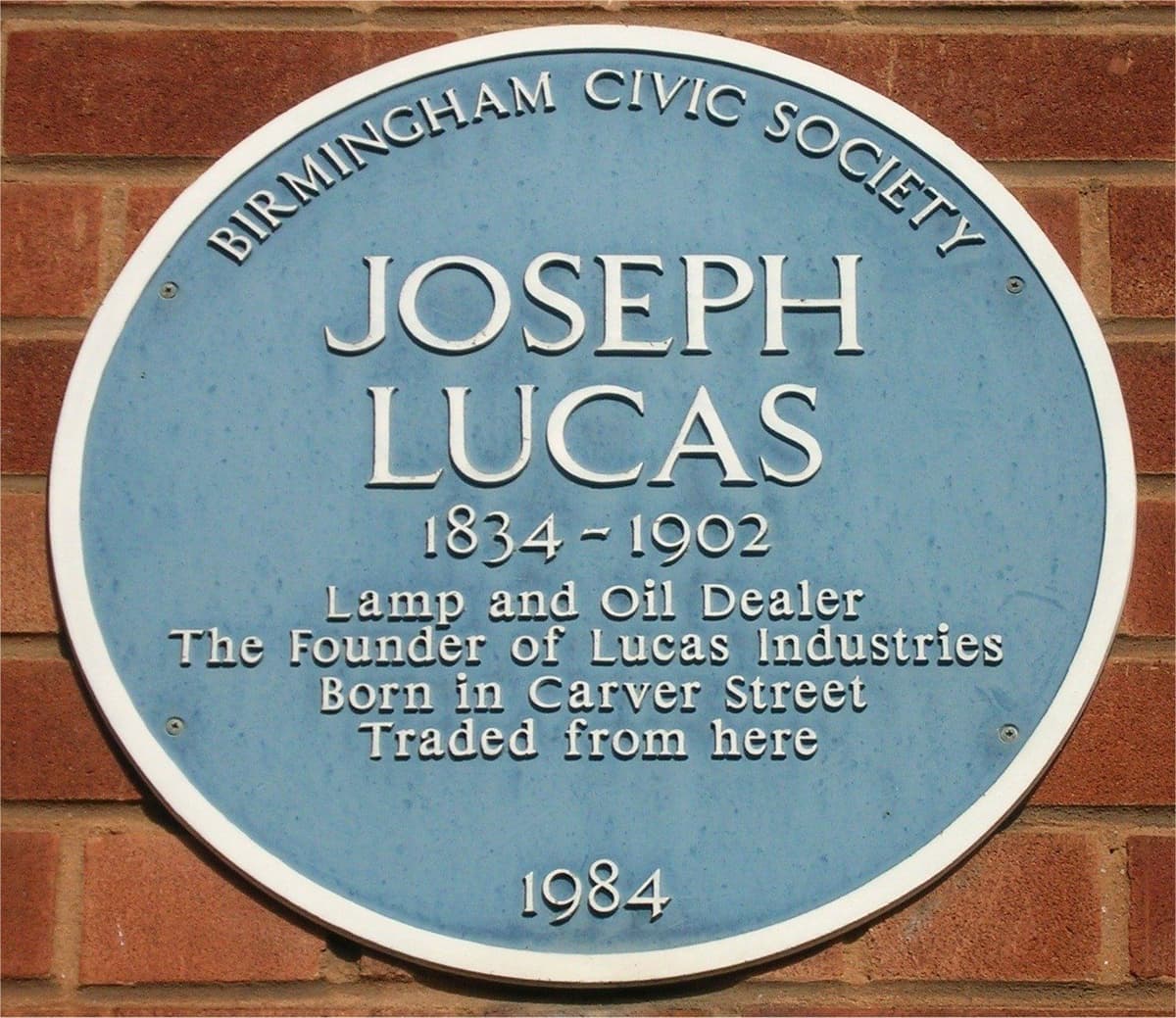
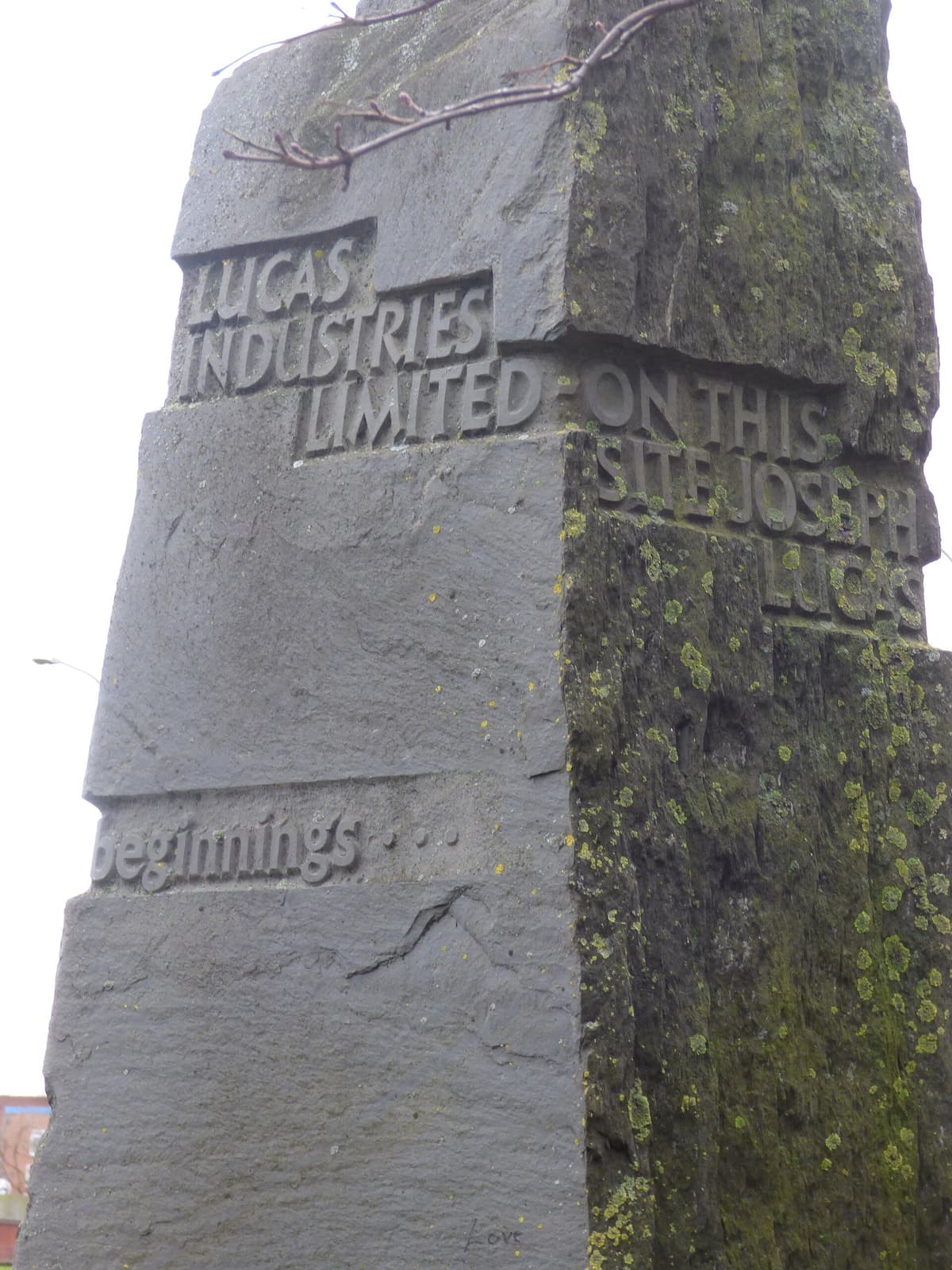
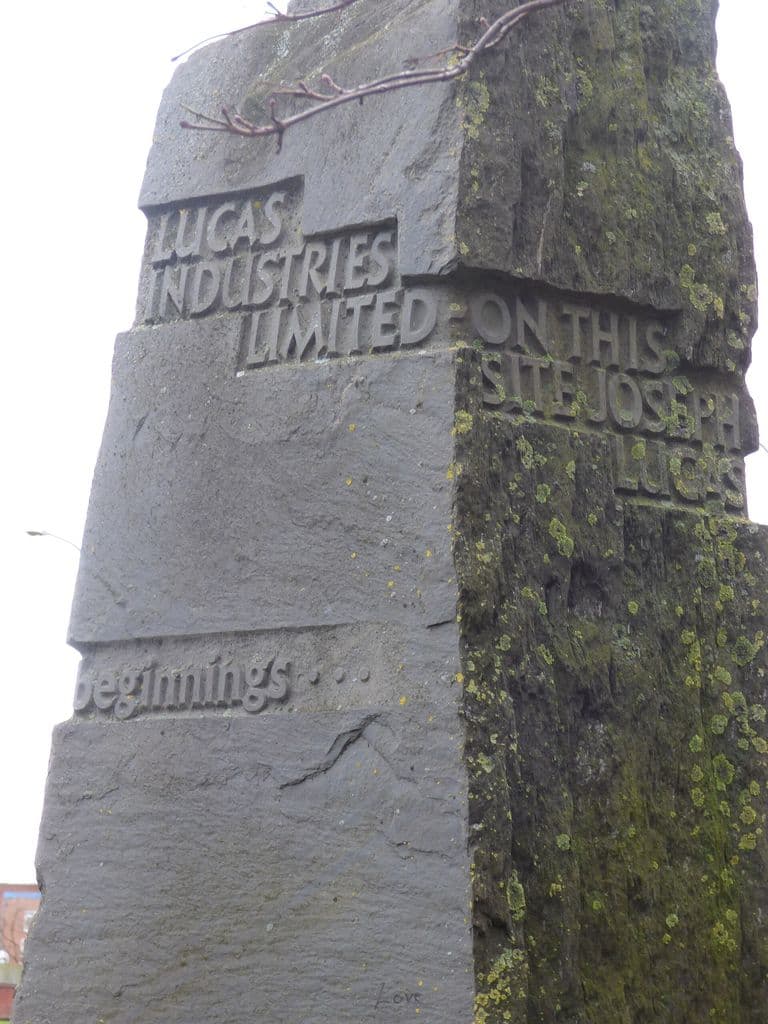
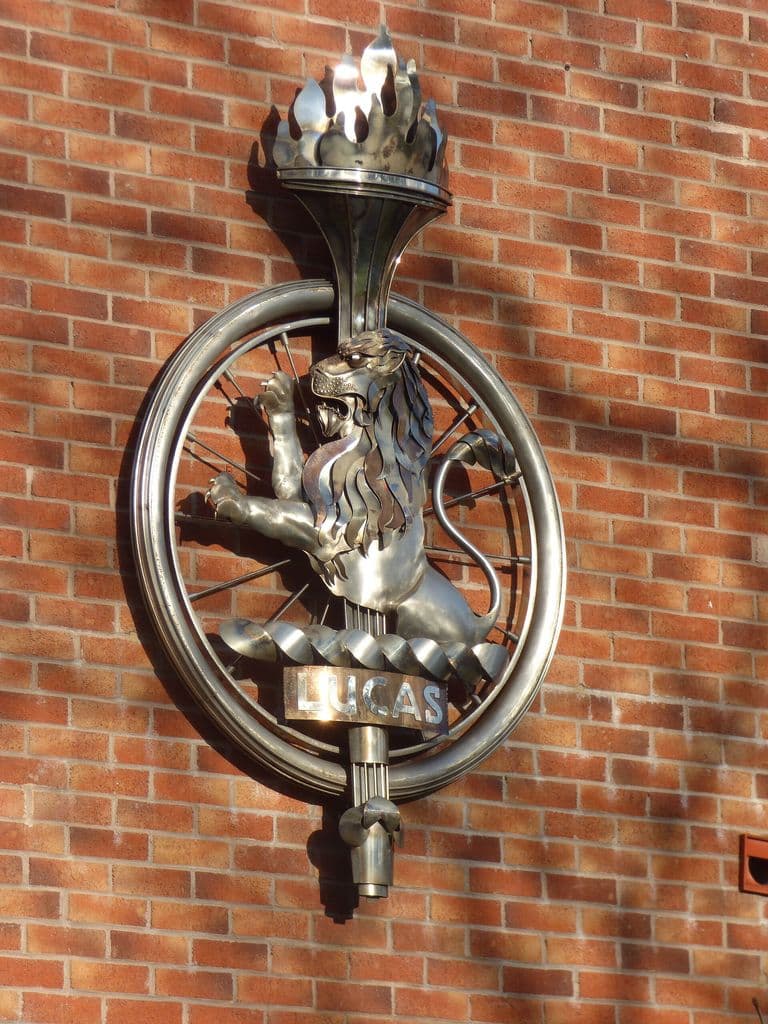
Joseph Lucas never saw a Lucas dynamo or starter motor. But he built the things that made them possible: a family partnership, a brand people trusted, a public company and a factory on Great King Street. In 1914 the firm employed 1,600 people. By the end, according to Roger Bater, the Great King Street works employed up to 7,000 and was the headquarters of Lucas Industries, the giant of British motor electrics. The works have gone, and houses stand where the blocks rose. But a blue plaque put up by the Birmingham Civic Society in 1984 calls him “Lamp and Oil Dealer, The Founder of Lucas Industries”. And beside Lucas Circus a slate slab, laid in 1994, carries the words that sum up his life better than any obituary: “From small beginnings”.
On the map
2 places connected with Joseph Lucas. Tap a number for directions — some sites are private homes or gardens, so each place’s page says what you can see from the street.

- Lucas works, Great King Street, Hockley — Lost, Site redeveloped · Directions to Lucas works, Great King Street, Hockley (opens Google Maps)
- Elkington’s electroplating works, Newhall Street — Partly surviving, Surviving but altered · Directions to Elkington’s electroplating works, Newhall Street (opens Google Maps)
Key dates
- 12 April 1834 — Joseph Lucas born in Carver Street, HockleyJoseph Lucas, founder of the Lucas business, is born in Carver Street, Hockley, the eldest son of Benjamin Lucas, a plater.
- 1860 — Joseph Lucas starts in businessJoseph Lucas begins trading on his own account, selling paraffin, buckets, shovels and other hollow-ware door to door. By 1869 he is listed as a dealer in lamps and oils at 209 Great King Street.
- c. 1872–75 — Tom Bowling Lamp Works, Little King StreetJoseph Lucas and his son Harry set up the Tom Bowling Lamp Works in Little King Street, Hockley, named after their ship’s lamp for the fishing industry. The 1994 monument dates the first workshop to c.1872.
- 1880 — Lucas patents the King of the Road lampJoseph Lucas is granted a patent for his lamp. The “King of the Road” bicycle lamp makes the firm’s name, and its first consignment goes to the United States in 1881.
- 12 November 1897 — Joseph Lucas Ltd registeredJoseph Lucas Ltd is registered as a public company with a nominal capital of £225,000 to take over Joseph Lucas & Son. The money pays for a five-storey factory on Great King Street.
- 27 December 1902 — Joseph Lucas dies in NaplesJoseph Lucas, a lifelong teetotaller who refused wine in Naples, dies of typhoid at the Hotel Bristol. His son Harry becomes chairman of Joseph Lucas Ltd.
Sources and further reading
Apprenticeship: the Oxford DNB (as summarised by Grace’s Guide) names H. & G. R. Elkington; the Moseley Society names “Pilkingtons in Newhall Street”, a building it says later housed the Birmingham Science Museum. That museum occupied the former Elkington works, so the two accounts may describe the same place under different names. The text follows the Oxford DNB.
The first workshop: Grace’s Guide (from the Oxford DNB) has him at 209 Great King Street from 1869 and the Tom Bowling works in Little King Street by about 1875; the 1994 monument says he “established his first workshop” on that site “c.1872”.
The King of the Road: Grace’s Guide dates the first cycle lamp to 1878 in one entry and gives a patent of 1880; the Moseley Society says “about 1880”.
The public company: Grace’s Guide’s company history says Joseph Lucas Ltd was registered on 12 November 1897; its biography of Joseph says 1892, and the Moseley Society says 1898. The text uses the registration date.
Second and third marriages: Grace’s Guide names his second wife Maria Tyzack and dates the third marriage 30 July 1901; the Moseley Society has “Mary Tyzack” and 1902.
The packing case: told by the Moseley Society as something “it was said”; treated as a story, not a fact.
The Oxford DNB article itself was not consulted directly (subscription); its facts are taken from Grace’s Guide’s summary and checked against the Moseley Society account.
- Joseph Lucas (1834–1902) — Grace’s Guide to British Industrial History. chronology from the Oxford DNB
- Lucas, Joseph (1834–1902), lamp manufacturer — Oxford Dictionary of National Biography — Oxford Dictionary of National Biography, Oxford University Press
- Joseph, Harry and Oliver Lucas — Fred Price (Moseley Society, Some Moseley Personalities), Moseley Society
- Joseph Lucas — Grace’s Guide to British Industrial History. 1897 registration; 1902 motor products; 1914 employees
- The Final Years of Lucas Great King Street — Roger Bater, Triple C (reproduced with permission). block dates, workforce
- Monument to Lucas Factory (PMSA record WMbiBIxx238) — Public Monuments and Sculpture Association, National Recording Project. inscription
- Blue plaque: Joseph Lucas 1834–1902 (Birmingham Civic Society, 1984) — Birmingham Civic Society, 1984. inscription
Comments
Comments will load here.