Early motor cars had no electrics worth the name. Lamps burned oil or acetylene, engines were started by hand with a crank, and ignition was a matter of trial and error. Within thirty years all that had changed, and much of the change was made in Birmingham.
From lamps to dynamos
Joseph Lucas & Son had made its name with the “King of the Road” bicycle lamp. In 1902 Joseph Lucas Ltd began selling to motorists: acetylene lamps, foot pumps, jacks and wrenches. A few years later it moved into electrics proper, making car batteries and dynamos. In 1911 it put whole car lighting sets on sale, with the dynamo made in its own works.
The magneto
In 1914 Lucas paid £9,000 for Thomson-Bennett, a magneto maker. Grace’s Guide traces Lucas’s later dominance of motor electrics to this purchase. The same year it won a bulk contract to supply Morris. During the First World War Lucas made electrical equipment for aircraft and military vehicles, and began making starter motors, which had been developed in America.
Dominance
The 1920s made Lucas the leader. In 1919 it set up Lucas Electrical to make electrical accessories. By 1923 more than half its starting and lighting output went to Morris; by 1926 it was selling to Rover, Standard, Triumph and Armstrong Siddeley too, and had bought its two biggest competitors, C. A. Vandervell and Rotax. That year it won the contract to supply all of Austin’s starting, lighting and ignition equipment. Lucas later gave its own reasons for its position: its rivals ran into trouble after the post-war boom, and it bought them when they did. Agreements followed with Smiths in 1930 and Robert Bosch in 1931.
Great King Street
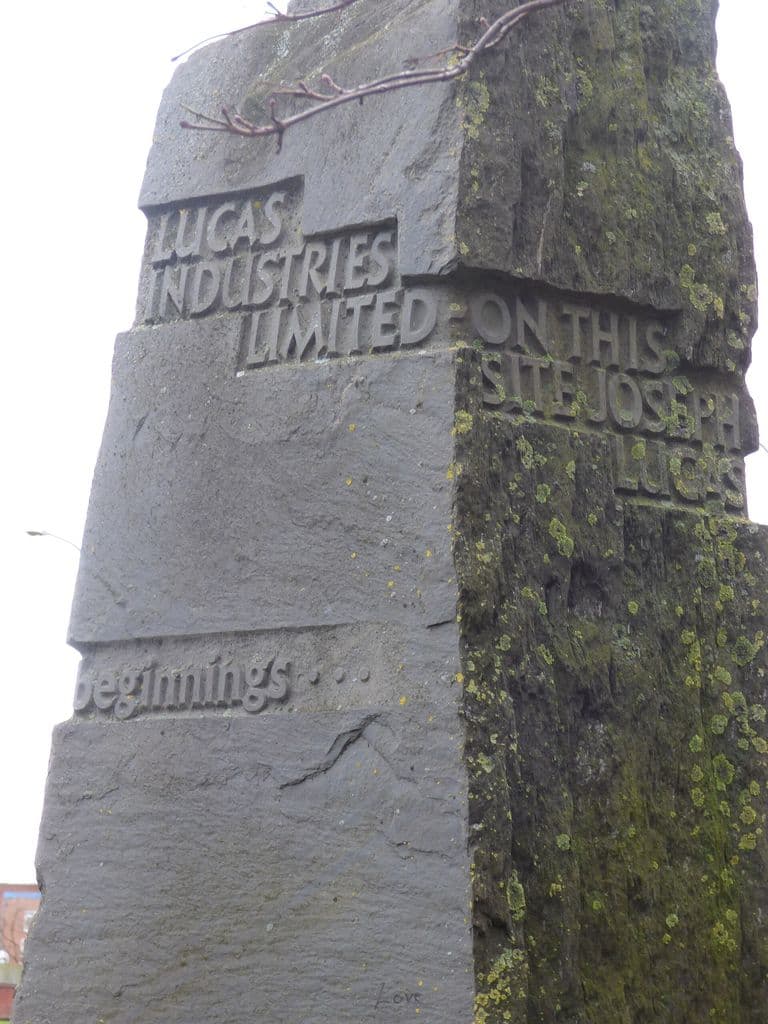
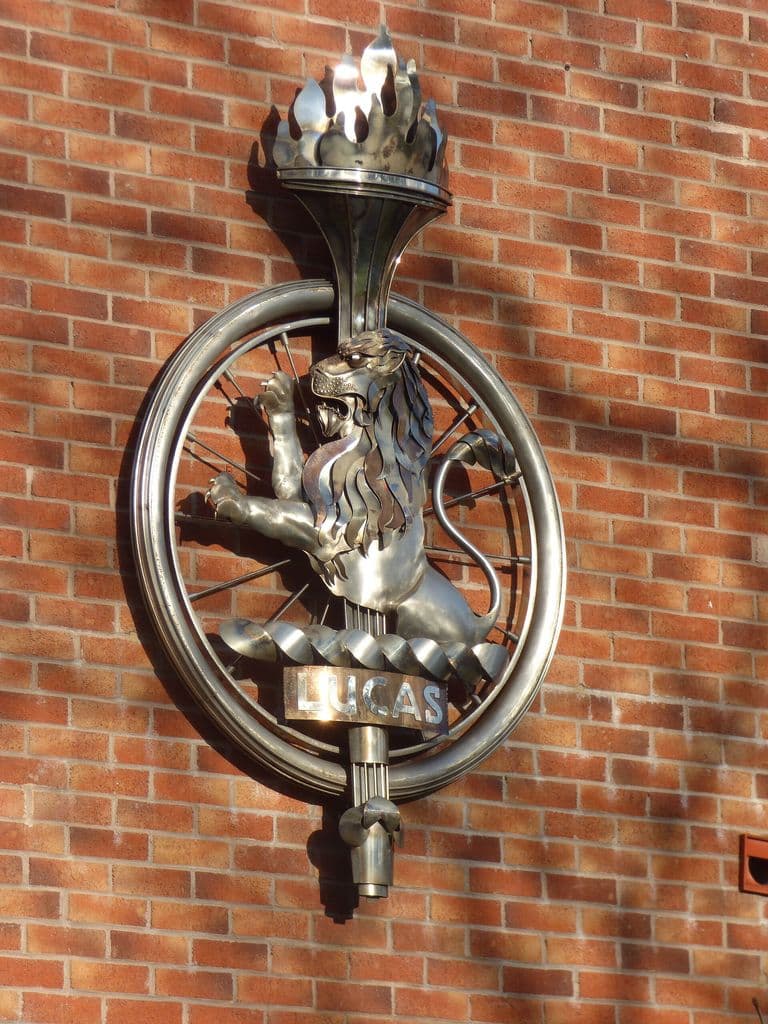
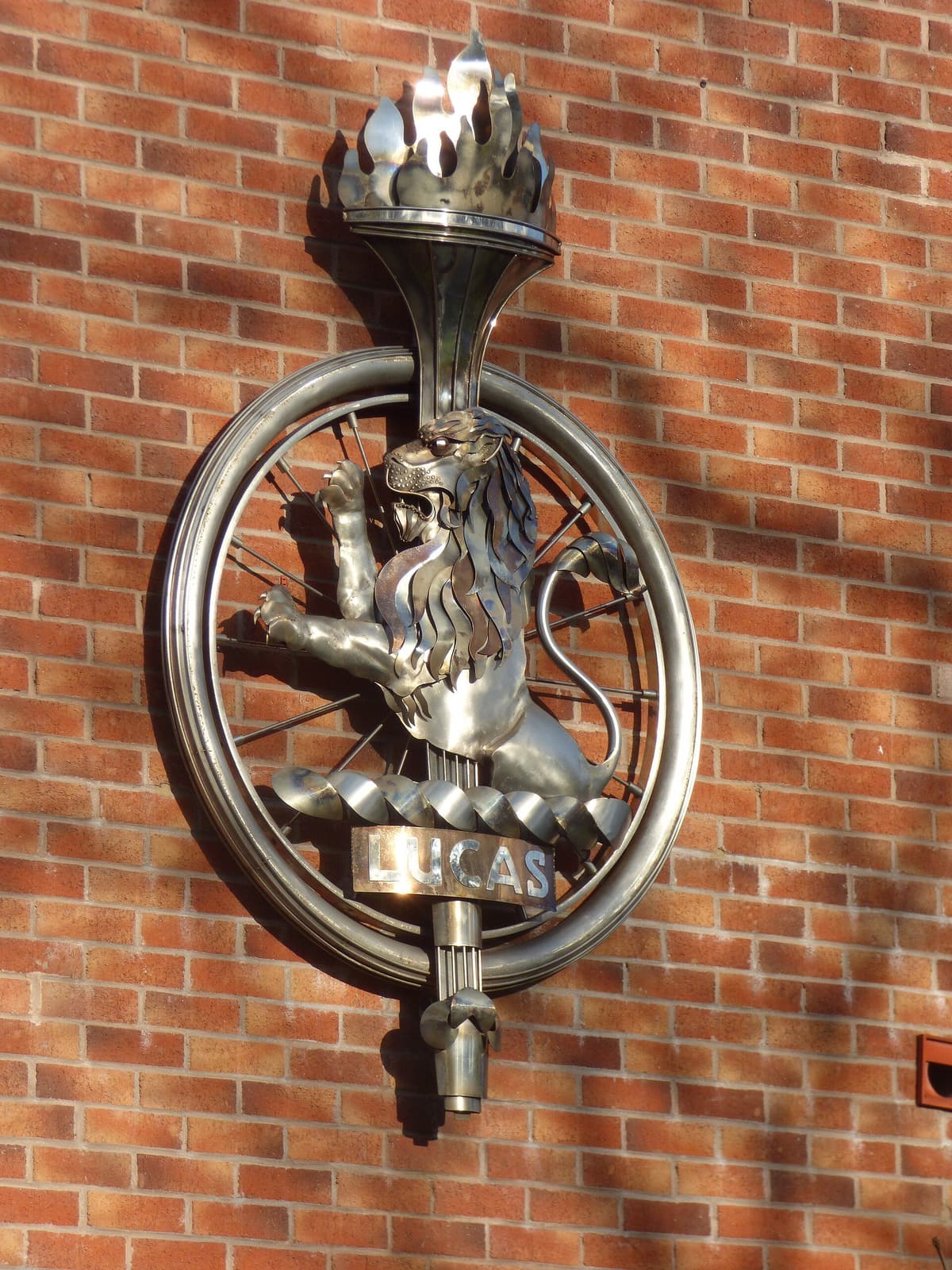
The heart of it all was the multi-storey works on Great King Street, where production spread over as many as seven floors and up to 7,000 people worked. By the end it made ignition distributors, wipers and turned and pressed parts for most of the Lucas motor group. When modern production demanded single-storey factories, the old blocks were emptied, by 1988, and pulled down. A stainless-steel Lucas lion, wheel and flambeau on a house in Wheeler Street remembers what went on there.
On the map
One place connected with Motor electrics. Tap a number for directions — some sites are private homes or gardens, so each place’s page says what you can see from the street.

- Lucas works, Great King Street, Hockley — Lost, Site redeveloped · Directions to Lucas works, Great King Street, Hockley (opens Google Maps)
Key dates
- 1914 — Lucas buys Thomson-Bennett and wins the Morris contractJoseph Lucas Ltd pays £9,000 for the magneto maker Thomson-Bennett, the purchase Grace’s Guide sees as the root of its dominance in motor electrics, and wins a bulk contract to supply Morris.
- 1926 — Lucas wins the Austin contractLucas buys its two largest competitors, C. A. Vandervell and Rotax, and wins the contract for all of Austin’s starting, lighting and ignition equipment for the following year.
- 1951 — The motor trade dominates BirminghamThe census shows 94,400 people in Birmingham working in the motor trade, 15.1 per cent of the working population, and 46,500 in electrical engineering. The Victoria County History says the motor trade now dominates the city’s industry.
- c. by 1988 — Lucas Great King Street emptiedLucas moves ignition work to a new factory and sells or closes the rest. Nearly a million square feet at Great King Street stand empty; the blocks are demolished in the early 1990s.
Sources and further reading
- Joseph Lucas — Grace’s Guide to British Industrial History
- The Final Years of Lucas Great King Street — Roger Bater, Triple C (reproduced with permission)
- Lucas’ Lion, Wheel, and Flambeau emblem – Wheeler Street, Newtown (photograph and caption) — Elliott Brown, via Wikimedia Commons, 2018