
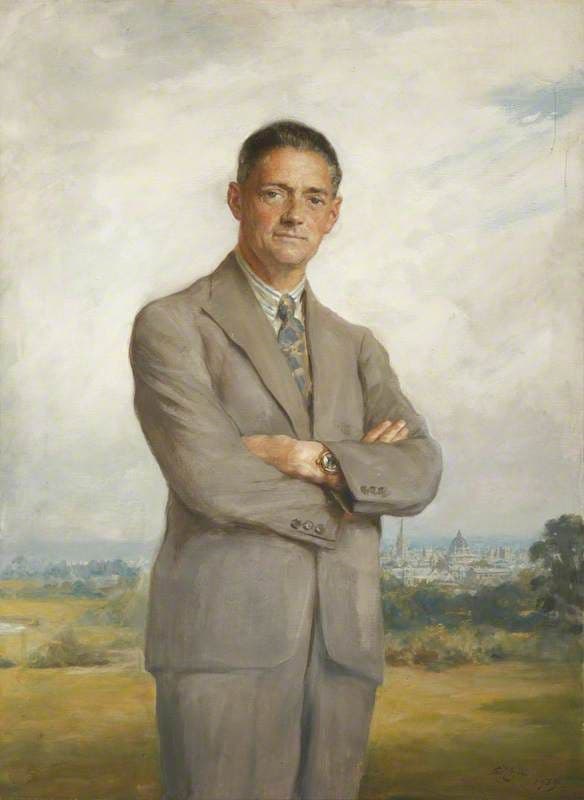
On 17 May 1940 the telephone rang for Lord Nuffield. On the other end was Lord Beaverbrook, the new Minister of Aircraft Production, three days into the job. He wanted to know why not a single Spitfire had come out of the giant new factory at Castle Bromwich. Nuffield had built it. Within days he no longer ran it.
It was an unhappy chapter in the life of Britain’s most famous motor manufacturer. But it is a reminder of how far the empire of William Morris, the Oxford car maker, reached into Birmingham.
The Oxford bicycle man
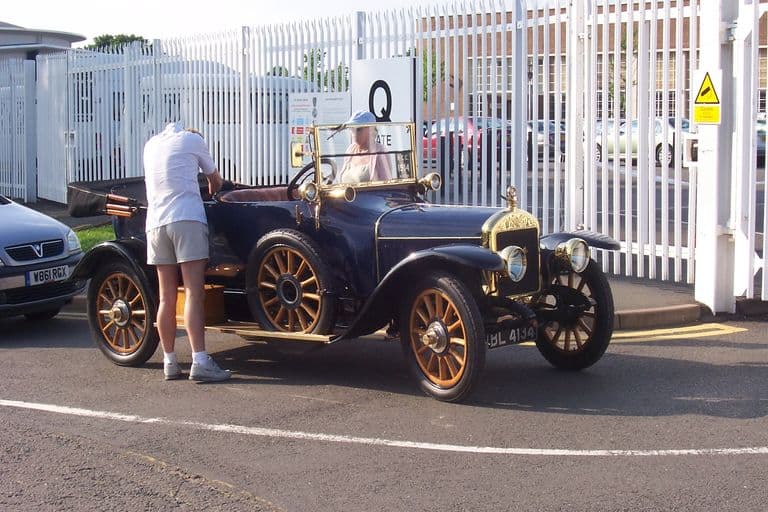
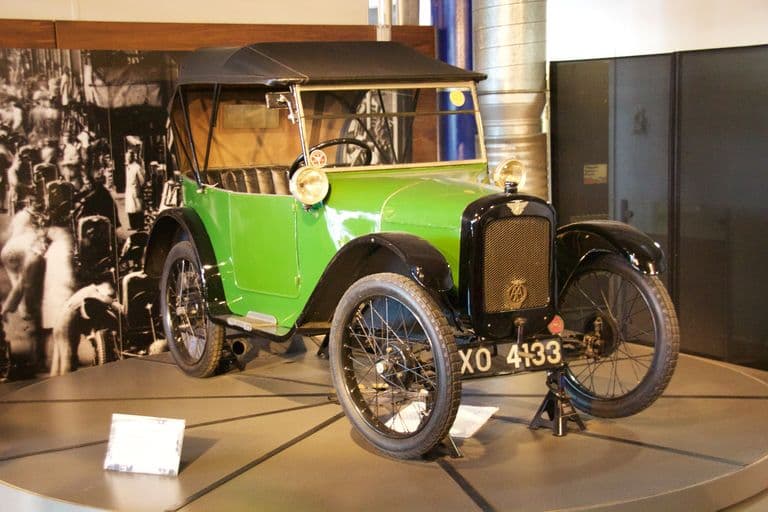
William Richard Morris was born in Worcester on 10 October 1877. He grew up in Oxford, where his father became a farm bailiff, and at sixteen he set up in business repairing bicycles from the family home. He built his own machines from parts bought from the Midlands cycle trade, raced them, and then moved on to motorcycles and cars. In 1912 he designed his first car, the “Bullnose” Morris Oxford, and began making it in a disused school at Cowley.
Morris assembled cars from bought-in parts, and he needed suppliers who could keep up. Many of them were in Birmingham.
Lucas’s best customer
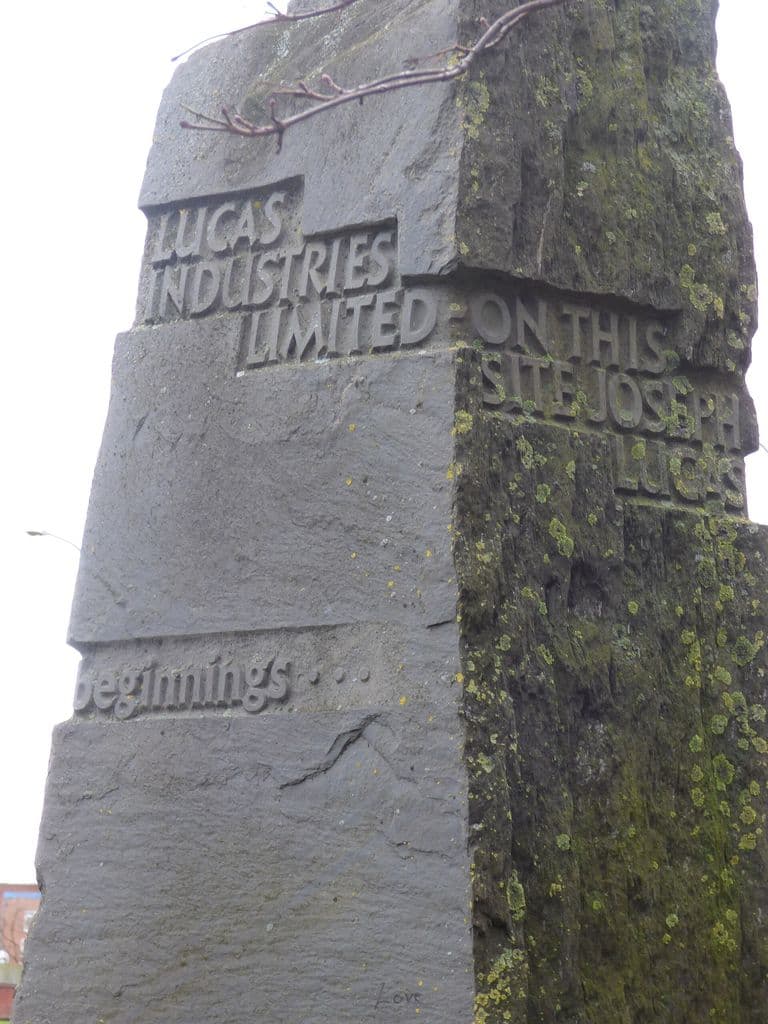
In 1914 Joseph Lucas Ltd won a bulk contract to supply Morris with electrical equipment. Grace’s Guide calls it the start of the company’s “main growth”. After the war Morris cut his prices while others raised theirs, and his sales soared, from 3,000 vehicles a year in 1921 to 55,000 in 1925. By 1923 more than half of Lucas’s output of starting and lighting equipment was going to Morris. The fortunes of the Great King Street works were tied to Cowley. By 1926 Morris’s share of Lucas’s sales had fallen to about a third, but only because Lucas was now selling to Rover, Standard, Triumph and others as well.
Soho and Adderley Park
In 1924 Morris bought the Birmingham firm of E. G. Wrigley & Co, with its plant at Soho, some 200 machines designed for making motor components and about 350 workers. He turned it into a private company, Morris Commercial Cars, to make lorries and vans.
Three years later he bought Wolseley, the company whose car business Herbert Austin had once managed. With it came the Wolseley works at Adderley Park and at Drews Lane, Ward End. Commercial vehicle making was extended to buses and heavy lorries, and in 1930 Morris Commercial moved into the old Wolseley works at Adderley Park. Looking at Buildings notes that the Drews Lane factory took over more and more car assembly in the 1920s, “particularly after Wolseley was taken over by Morris”. The Morris-Commercial name was used until 1956.
Morris was created a baronet in 1929, Baron Nuffield in 1934 and Viscount Nuffield in 1938. By then he was giving away much of his fortune, above all to medicine. His business kept growing. By 1926 Morris was making 1,000 cars a week, and by 1939 a million Morris vehicles had been built. In 1938 the traffic between Oxford and Birmingham ran the other way, when Leonard Lord left Morris and joined the board of Austin at Longbridge, where he later became chairman.
Castle Bromwich
As war approached, the government turned to the motor industry to build aircraft. Nuffield agreed to build and run the largest of the new “shadow” factories, at Castle Bromwich, to make the Supermarine Spitfire. On 15 July 1938 the Secretary of State for Air, Sir Kingsley Wood, flew in to cut the first sod. The factory covered 135 acres and cost more than £3 million.
Nuffield brought motor-industry methods: the newest machine tools, and everything jigged for interchangeable parts. But the Spitfire kept changing as the RAF demanded modifications, and every change meant new tools. The Warwickshire Industrial Archaeology Society’s history says the fault was not entirely Nuffield’s, and that Vickers-Supermarine were “far from guiltless”. Still, by early May 1940 not one Spitfire had been completed.
Beaverbrook made his call on 17 May. In the argument that followed Nuffield offered to step aside, and Beaverbrook accepted. Beaverbrook handed the factory to Vickers to run, and Vickers brought in managers and skilled staff from Supermarine. Ten Spitfires were finished by the end of June. Between 1940 and 1945 Castle Bromwich built almost 12,000. By then Nuffield had other war work. In 1939 he had been made Director General of Maintenance at the Air Ministry, a post he took, at his own request, without salary, and his Nuffield Mechanisations company was making army tanks.
Morris and Austin
After the war the old rivalry between Morris and Austin ended in marriage. In 1948 the two firms agreed to pool resources, and in 1952 the Nuffield Organisation and the Austin Motor Company merged to form the British Motor Corporation, with Nuffield as its first chairman. He retired from the chair six months later but remained honorary president. He died on 22 August 1963.
Why it mattered
Morris belongs to Oxford: Cowley, the Bullnose, Nuffield College. But Birmingham was part of his machine. His orders built up Lucas in Hockley; his purchases kept the Wolseley works at Adderley Park and Ward End busy and created Morris Commercial; and his merger with Austin in 1952 joined Cowley to Longbridge in the British Motor Corporation, the company that built the Mini. Even his failure at Castle Bromwich left Birmingham a factory that, once others took it over, produced more Spitfires than any other. For most of the twentieth century, the British motor industry ran on a road between Oxford and Birmingham, and Morris laid much of it.
On the map
2 places connected with William Morris, Lord Nuffield. Tap a number for directions — some sites are private homes or gardens, so each place’s page says what you can see from the street.

- Austin works, Longbridge — Site redeveloped, Partly surviving · Directions to Austin works, Longbridge (opens Google Maps)
- Lucas works, Great King Street, Hockley — Lost, Site redeveloped · Directions to Lucas works, Great King Street, Hockley (opens Google Maps)
Key dates
- 1914 — Lucas buys Thomson-Bennett and wins the Morris contractJoseph Lucas Ltd pays £9,000 for the magneto maker Thomson-Bennett, the purchase Grace’s Guide sees as the root of its dominance in motor electrics, and wins a bulk contract to supply Morris.
- 1924 — Morris buys Wrigley’s and creates Morris CommercialWilliam Morris buys E. G. Wrigley & Co of Soho, Birmingham, with about 350 workers, and turns it into Morris Commercial Cars. In 1927 he buys Wolseley, with its Adderley Park and Ward End works.
- 17 May 1940 — Nuffield replaced at Castle BromwichWith no Spitfire yet completed at the Castle Bromwich factory Lord Nuffield had built, Lord Beaverbrook accepts his offer to give up control and hands the factory to Vickers.
- February 1952 — Austin and Morris form BMCThe Austin Motor Company merges with the Nuffield Organisation to form the British Motor Corporation, with Lord Nuffield as first chairman.
Sources and further reading
Morris is included because his Birmingham industrial links are documented: Morris Commercial Cars (Soho, 1924; Adderley Park, 1930), the Wolseley works (bought 1927), the Lucas contracts and the Castle Bromwich factory. His life and main works were in Oxford, and this entry concentrates on Birmingham.
The Soho works of E. G. Wrigley: Grace’s Guide says “Soho”, Birmingham; the exact street has not been confirmed from an authoritative source.
Castle Bromwich: the account of the 17 May 1940 telephone call and of Nuffield’s offer to step aside comes from the Warwickshire Industrial Archaeology Society, a secondary source; the figure of nearly 12,000 Spitfires is widely given but was not checked against official records. Nuffield’s 1963 obituary in Grace’s Guide says only that “in 1938 he started an aircraft factory near Birmingham”.
Place of death: not given in the sources seen.
- William Richard Morris — Grace’s Guide to British Industrial History. chronology and 1963 obituaries
- Morris Commercial Cars — Grace’s Guide to British Industrial History
- Joseph Lucas — Grace’s Guide to British Industrial History. 1914 and 1921–25 Morris business
- Wolseley (Birmingham factories) — Looking at Buildings (Pevsner Books Trust)
- The Castle Bromwich Aircraft Factory — Warwickshire Industrial Archaeology Society
- Austin Motor Co — Grace’s Guide to British Industrial History. 1948 agreement; 1952 merger
Comments
Comments will load here.