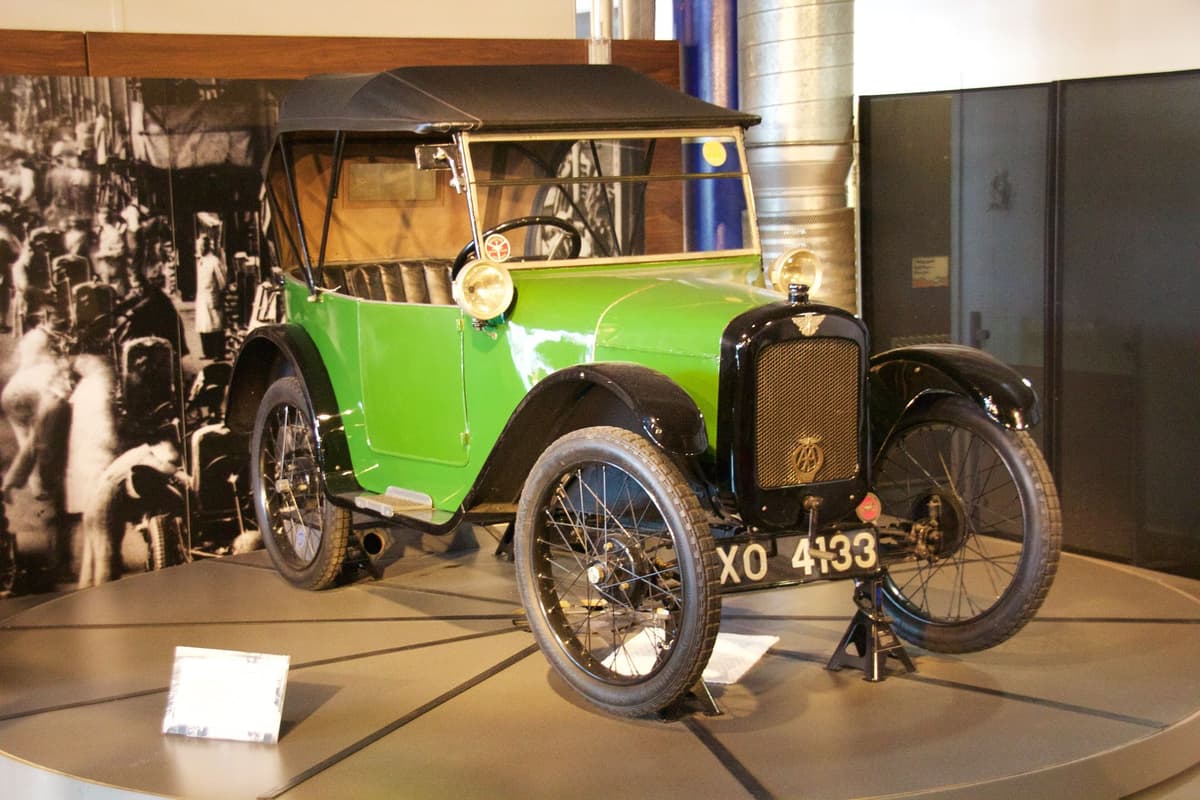
Birmingham has been called England’s Detroit. Looking at Buildings borrows Jonathan Meades’s word for it: “Motown”. Coventry got there first, with Daimler cars and Starley’s cycles and motorcycles. But by the middle of the twentieth century Austin’s Longbridge works was the largest car plant in the country, and Birmingham’s engineering firms supplied parts to car makers across Britain.
Two starts
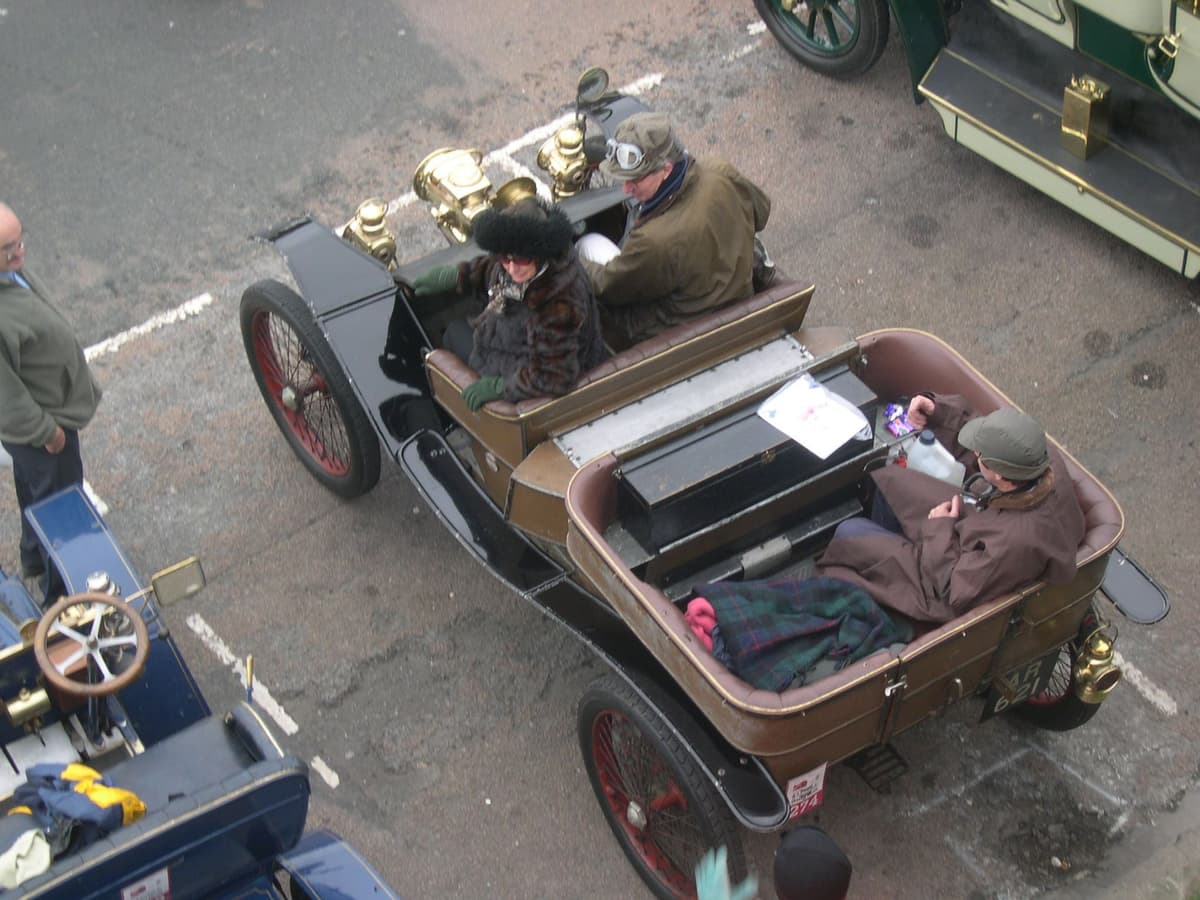
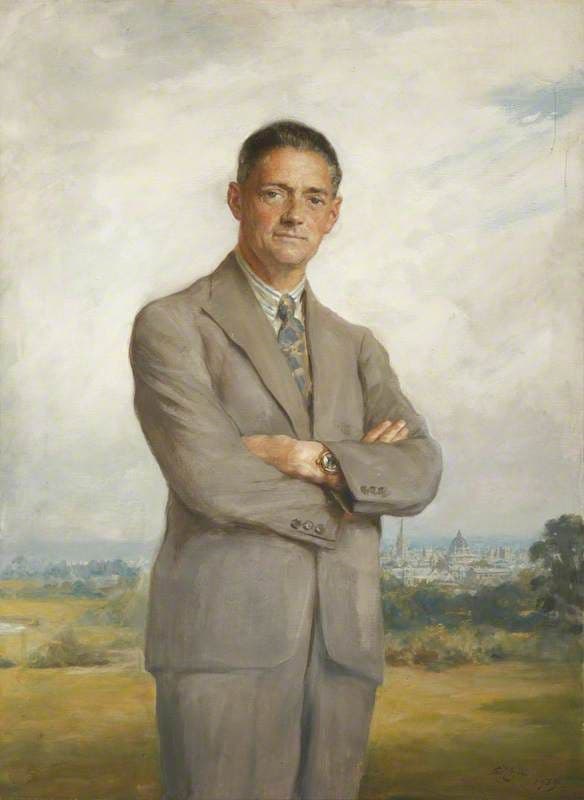
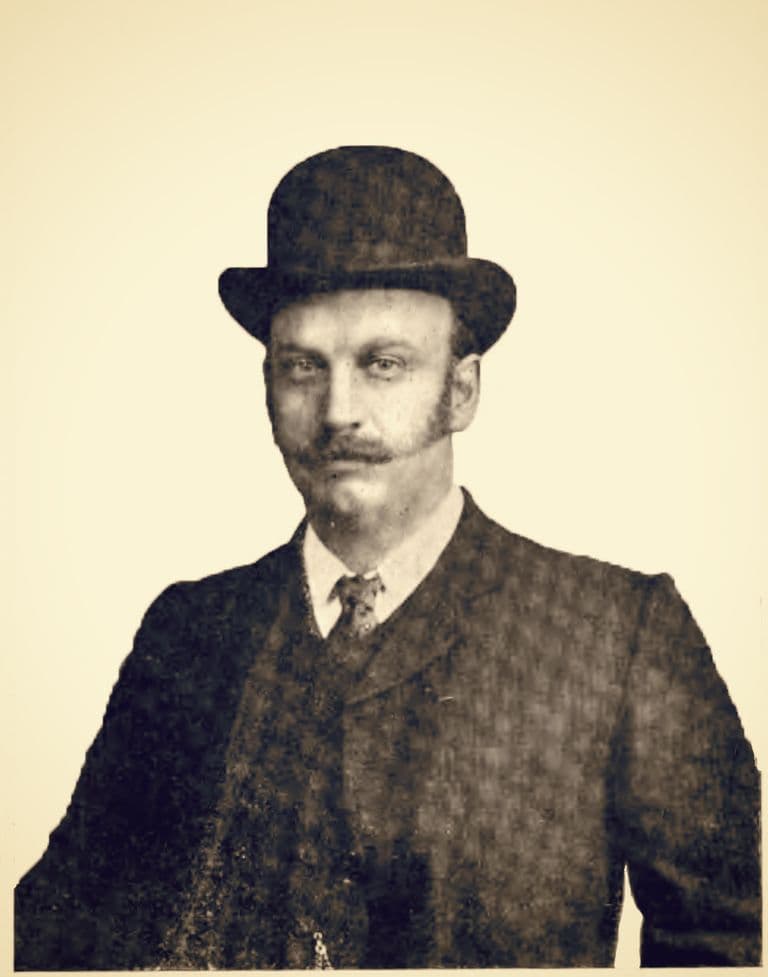
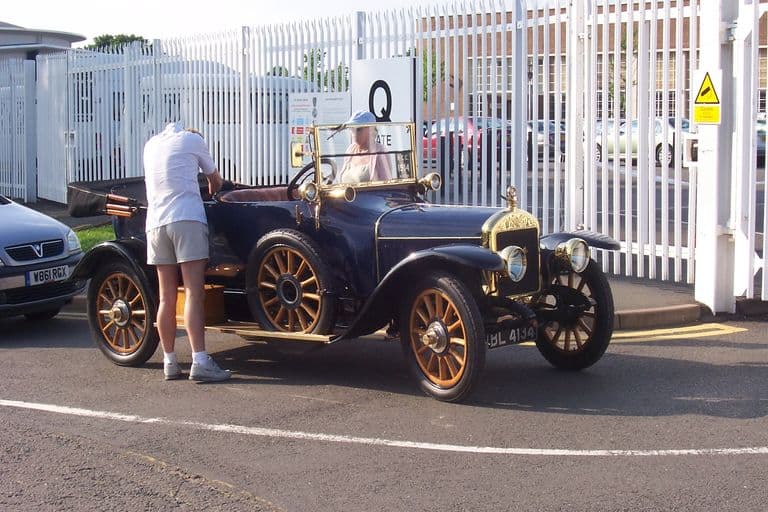
Car making in Birmingham began in 1895–96 with two very different men. Frederick Lanchester, works manager at the Forward Gas Engine Company, designed a car from scratch and took it on its first test drive in February 1896. In 1899 he and his brothers formed the Lanchester Engine Company, and from 1900 they built cars at Armourer Mills in Sparkbrook. Meanwhile Herbert Austin, manager of the Wolseley Sheep Shearing Machine Company in Aston, built a tricar and the Wolseley Autocar No. 1, shown in December 1896. In 1901 Vickers took over Wolseley’s car business, and Austin ran it at Adderley Park.
Longbridge
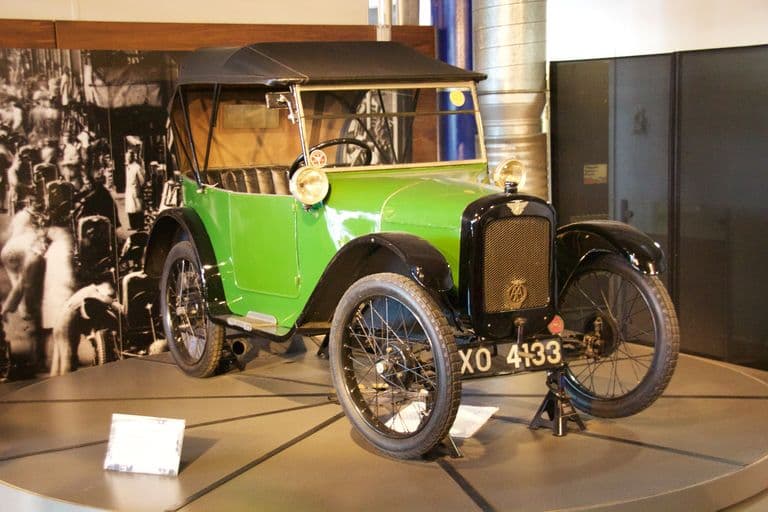
In 1905 Austin left to start on his own. Unlike most early car makers, who used old buildings, he went on to build his own works, on the rural fringe of the city at Longbridge. The First World War turned it into a giant: more than 20,000 workers by 1917. The Austin Seven of 1922 made it famous.
A city of suppliers
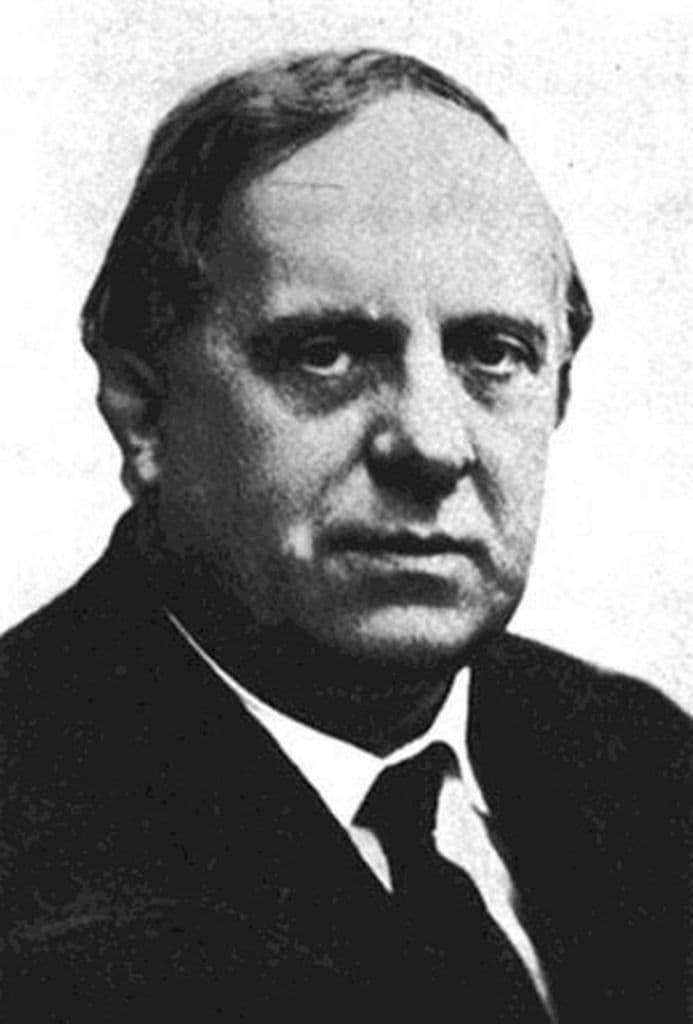
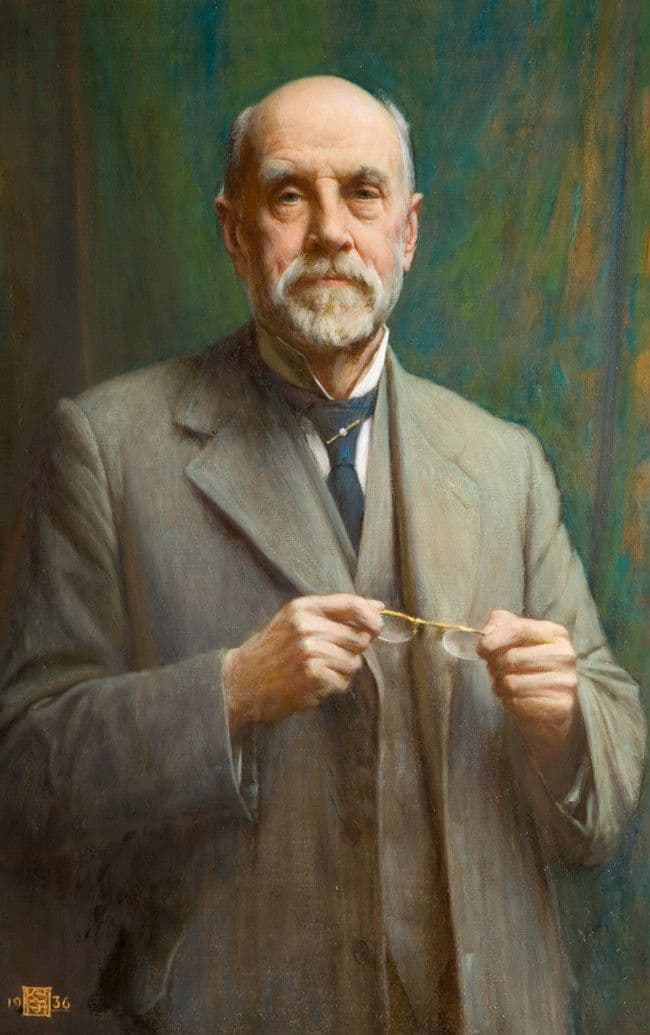
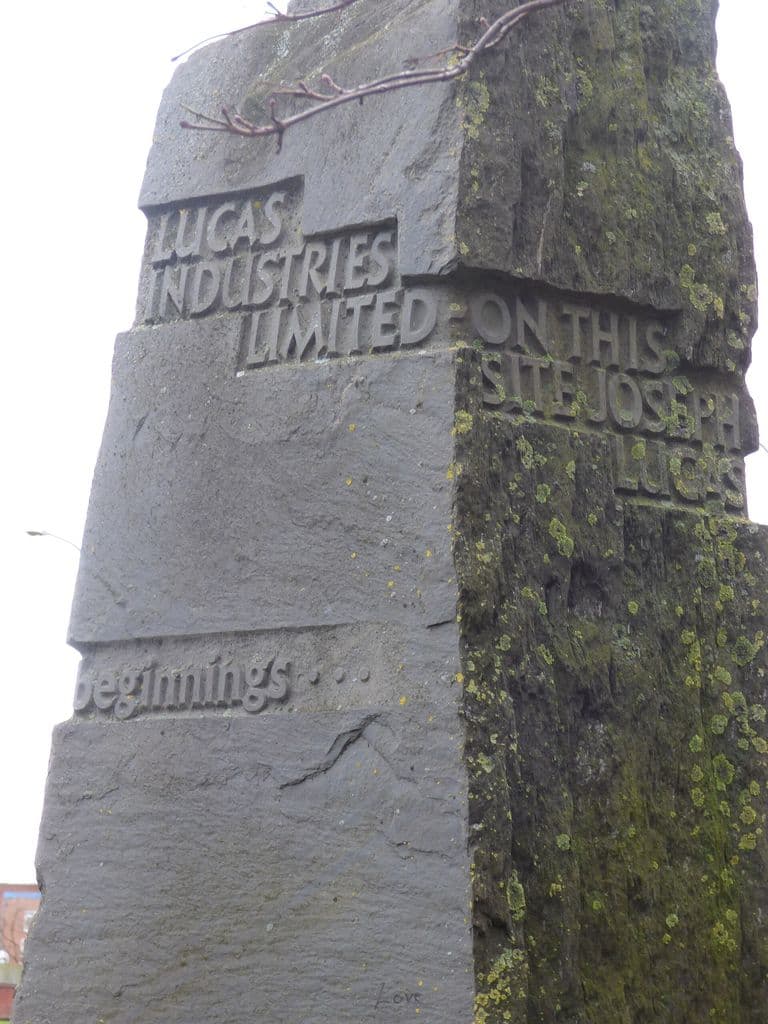
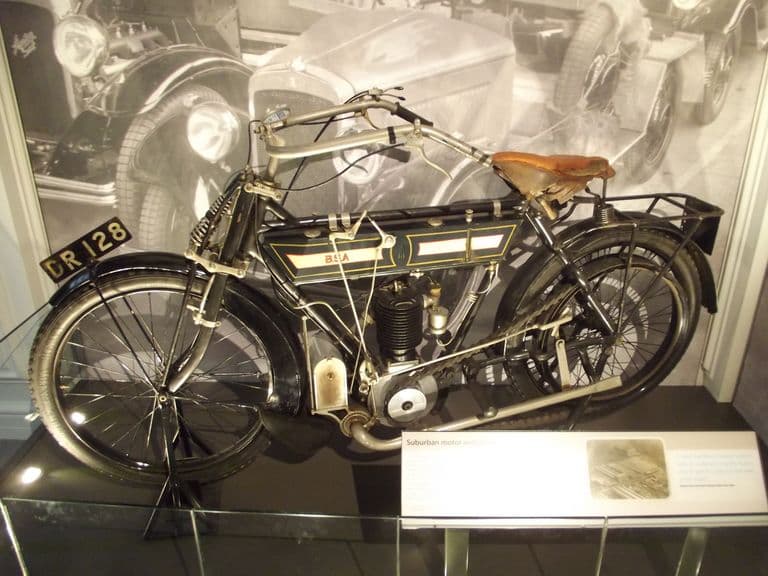
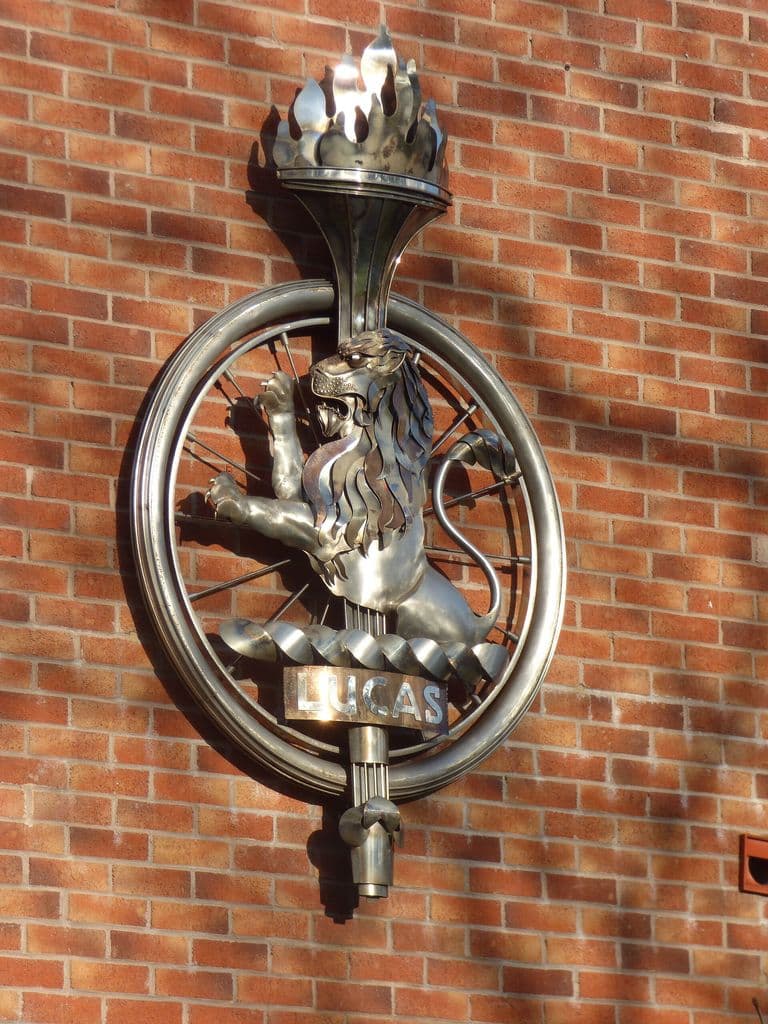
Around the car makers grew the suppliers. Joseph Lucas Ltd in Hockley moved from bicycle lamps to car lamps, then to magnetos, dynamos and starter motors, and by the 1920s supplied the electrics for both Morris and Austin. BSA at Small Heath made motorcycles, owned Daimler from 1910 and took over Lanchester in 1930–31. William Morris of Oxford bought into Birmingham too, creating Morris Commercial Cars at Soho in 1924 and buying Wolseley, with its Adderley Park and Ward End works, in 1927.
Merger and decline
In 1952 Austin and Morris merged as the British Motor Corporation, and Longbridge built the Mini. Then came British Leyland, the strikes of the 1970s, and decades of shrinking. Lucas emptied its Great King Street works in the 1980s, and BSA’s motorcycle business collapsed in 1973. On 8 April 2005 MG Rover went into administration and more than 6,000 workers at Longbridge lost their jobs. The last cars were assembled there in 2016.
The buildings have mostly gone: Longbridge to a new town centre, Great King Street to housing, Small Heath to industrial units. But Lanchester’s works in Sparkbrook still stand, and Austin’s name is on a park and a blue plaque. For a century, Birmingham built Britain’s cars.
On the map
4 places connected with The motor industry. Tap a number for directions — some sites are private homes or gardens, so each place’s page says what you can see from the street.

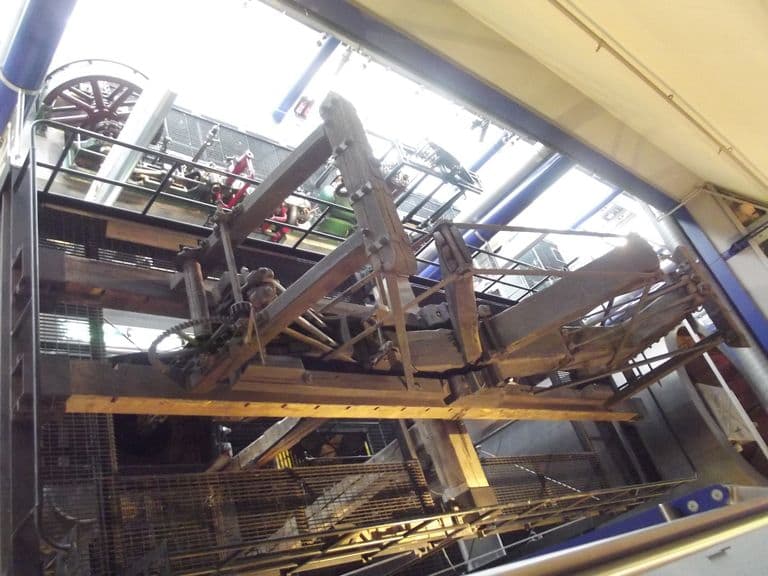
- The Smethwick Engine at Thinktank — Relocated · Directions to The Smethwick Engine at Thinktank (opens Google Maps)
- Austin works, Longbridge — Site redeveloped, Partly surviving · Directions to Austin works, Longbridge (opens Google Maps)
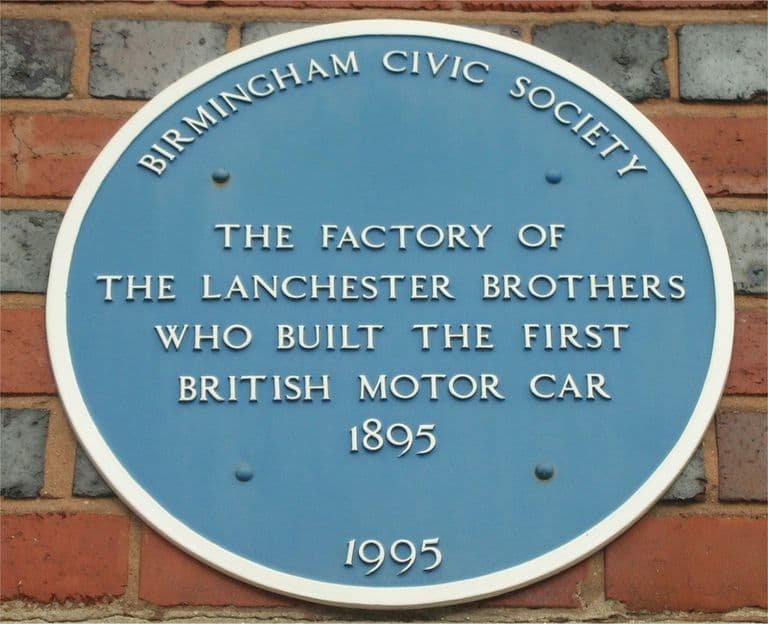
- Lanchester works, Armourer Mills, Montgomery Street, Sparkbrook — Surviving, Surviving but altered · Directions to Lanchester works, Armourer Mills, Montgomery Street, Sparkbrook (opens Google Maps)
- Lucas works, Great King Street, Hockley — Lost, Site redeveloped · Directions to Lucas works, Great King Street, Hockley (opens Google Maps)
Key dates
- 1893 — Herbert Austin comes to Birmingham with WolseleyHerbert Austin returns from Australia with Frederick Wolseley and becomes manager of the Wolseley Sheep Shearing Machine Company’s new factory in Broad Street, Birmingham; it soon moves to Aston.
- December 1896 — Wolseley Autocar No. 1 shownHerbert Austin’s Wolseley Autocar No. 1 is exhibited at the National Cycle Show, following his experimental tricar.
- February 1896 — First Lanchester car on the roadFrederick Lanchester and his brother George take his first car, built in 1895 with a single-cylinder engine and epicyclic gears, on its first test drive. A 1995 Civic Society plaque calls it “the first British motor car”.
- 30 November 1899 — Lanchester Engine Company formedFrederick, Frank and George Lanchester form the Lanchester Engine Company, backed by James and Allan Whitfield. In 1900 it moves to Armourer Mills, Montgomery Street, Sparkbrook.
- March 1904 — Lanchester Engine Company goes into receivershipWith its directors unwilling to provide more capital, the Lanchester Engine Company goes into receivership. It is reconstructed as the Lanchester Motor Company, registered on 21 November 1904.
- 4 November 1905 — Herbert Austin finds LongbridgeHerbert Austin visits the derelict White & Pike works at Longbridge with his wife and his staff of three; within days he agrees terms of £7,500 with its owner. Ownership passes to him on 22 January 1906.
- 1909 — BSA starts making motorcyclesThe Birmingham Small Arms Company begins making motorcycles at Small Heath. A year later it buys the Daimler Motor Company of Coventry.
- 1914–1918 — Longbridge becomes a war factoryAustin’s workforce rises from 2,638 to over 20,000 as North and West Works are built. By 1918 Longbridge has made around eight million shells, 2,000 aeroplanes and 2,500 aero engines.
- 1922 — The Austin Seven launchedThe “Baby Austin” goes on sale at £225, bringing a car within reach of families who had never owned one. Longbridge is making 25,000 a year by 1925.
- 1924 — Morris buys Wrigley’s and creates Morris CommercialWilliam Morris buys E. G. Wrigley & Co of Soho, Birmingham, with about 350 workers, and turns it into Morris Commercial Cars. In 1927 he buys Wolseley, with its Adderley Park and Ward End works.
- c. 1930–31 — BSA takes over LanchesterThe Lanchester Motor Company is bought by BSA, owner of Daimler, and production moves from Armourer Mills, Sparkbrook, to Coventry.
- 17 May 1940 — Nuffield replaced at Castle BromwichWith no Spitfire yet completed at the Castle Bromwich factory Lord Nuffield had built, Lord Beaverbrook accepts his offer to give up control and hands the factory to Vickers.
- 1951 — The motor trade dominates BirminghamThe census shows 94,400 people in Birmingham working in the motor trade, 15.1 per cent of the working population, and 46,500 in electrical engineering. The Victoria County History says the motor trade now dominates the city’s industry.
- February 1952 — Austin and Morris form BMCThe Austin Motor Company merges with the Nuffield Organisation to form the British Motor Corporation, with Lord Nuffield as first chairman.
- 21 November 1956 — A council deputation puts a price on trafficBirmingham’s deputation to the Minister of Transport argues that Lucas’s 300 vehicles average 10 mph across the city, and that faster roads would save the city’s 28,000 goods vehicles about £2 million a year.
- 8 April 2005 — MG Rover goes into administrationThe collapse of MG Rover ends volume car making at Longbridge and costs more than 6,000 jobs. Limited assembly under Chinese ownership ends in 2016.
- April 2026 — Blue plaque to Herbert Austin at LongbridgeThe Birmingham Civic Society unveils a blue plaque to Herbert Austin at South & City College’s Longbridge campus, on the ground of his factory, nominated and funded by the Austin Ex-Apprentices Association.
Sources and further reading
- Motown: Buildings of the Motor Industry — Looking at Buildings (Pevsner Books Trust)
- Motown: The Factories — Looking at Buildings (Pevsner Books Trust)
- Lanchester Engine Co — Grace’s Guide to British Industrial History
- Herbert Austin — Grace’s Guide to British Industrial History
- Austin Motor Co — Grace’s Guide to British Industrial History
- Joseph Lucas — Grace’s Guide to British Industrial History
- Morris Commercial Cars — Grace’s Guide to British Industrial History
- 20 years since collapse of MG Rover — Richard Burden, 2025