The Lanchester Engine Company was formed on 30 November 1899 by Frederick Lanchester and his brothers Frank and George, backed by James and Allan Whitfield and a small group from Rudge-Whitworth. Its assets were twenty British and ten foreign patents, Frederick’s first car of 1895–96, the “Gold Medal” phaeton and another car half built.
Armourer Mills
In 1900 the company moved to Armourer Mills on Montgomery Street, Sparkbrook. Its first production model, a 10-horsepower two-cylinder car, was on the road in August 1901. The cars kept Frederick’s ideas: the engine set between the front seats, epicyclic gears, worm drive to the rear axle and tiller steering. In 1903 twelve were shown at the Stanley show in London, and a Lanchester gained maximum marks in the Glasgow to London non-stop trial.
Collapse and rebirth
The directors would not provide the capital needed to keep up with sales and servicing, and in March 1904 the company went into receivership. It was reconstructed as the Lanchester Motor Company, registered on 21 November 1904. Between 1900 and 1905, Grace’s Guide says, three to four hundred of the early 10- and 12-horsepower cars were made.
The new company built four- and six-cylinder cars, built its own bodies in J. L. Ball’s new block from about 1911, and abandoned tiller steering in 1907. Frederick moved to a part-time consulting role around 1909–10 and left in 1914; his brother George became chief engineer. In the First World War Lanchester built armoured cars on its 38-horsepower chassis for the Royal Naval Air Service, together with shells and aero engines.
The end in Birmingham
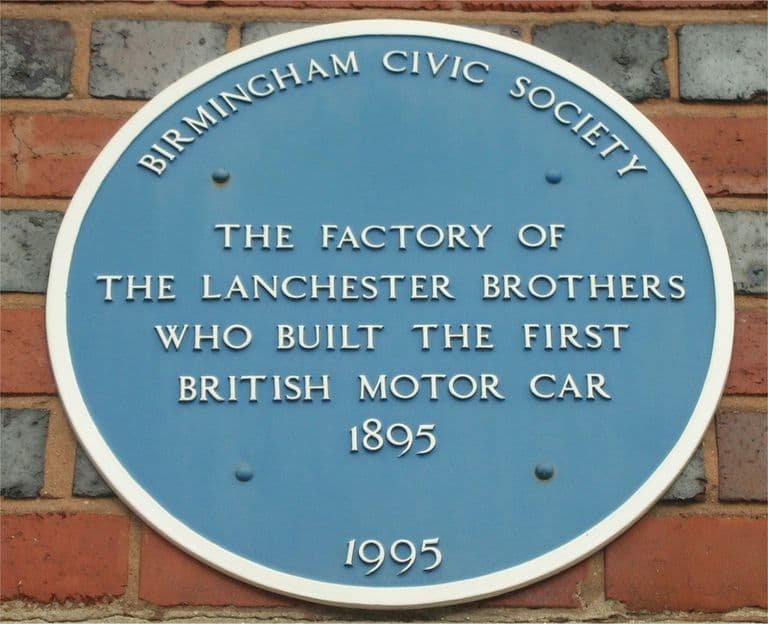
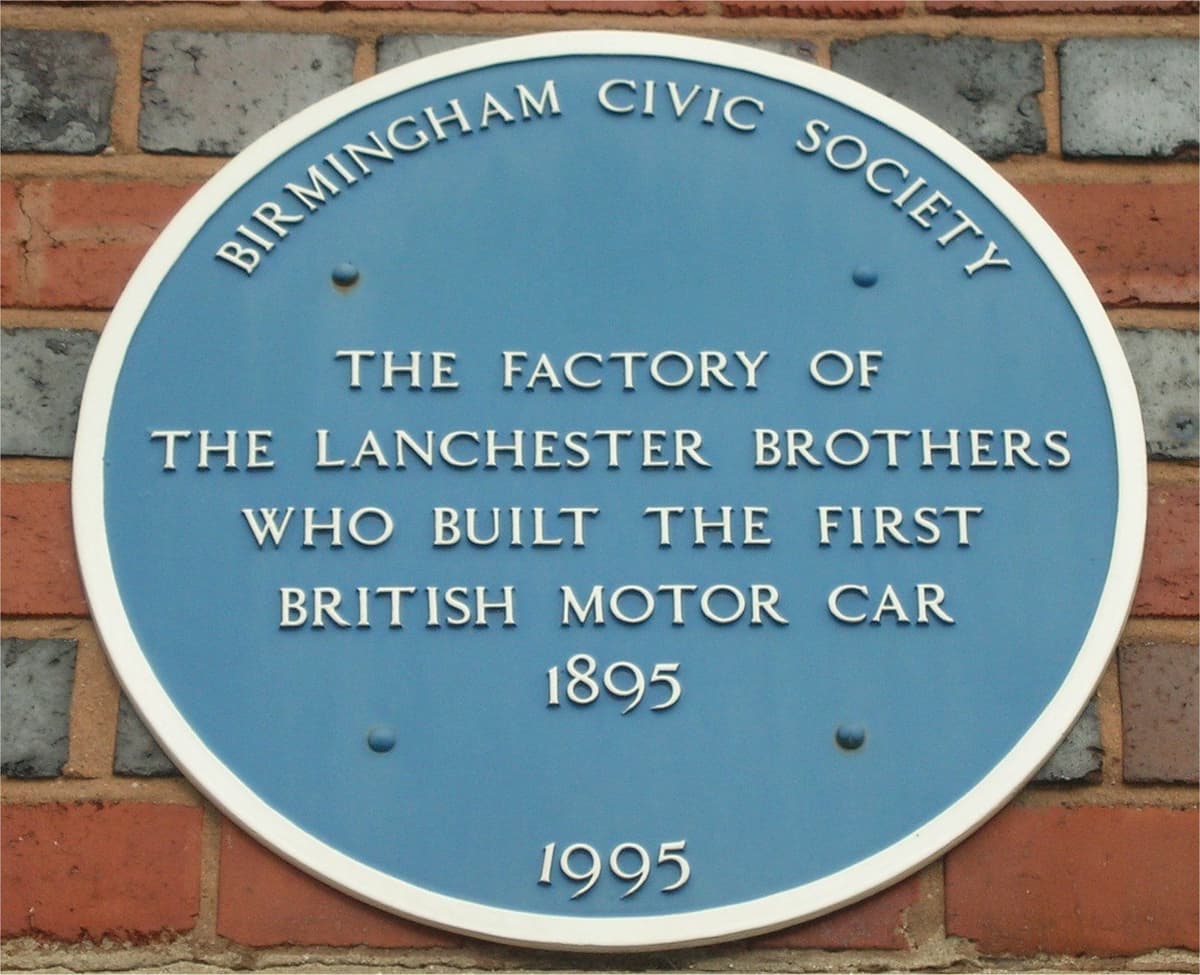
After the war the company made big, expensive cars such as the Forty. The slump of the late 1920s hit the luxury trade, and in 1930–31 the company was bought by BSA, which already owned Daimler. Production moved to Coventry and Lanchesters became versions of Daimlers. The name was phased out in the mid-1950s. The Sparkbrook works survive, locally listed at Grade A and marked by a Birmingham Civic Society blue plaque.
On the map
One place connected with Lanchester Engine Company (Lanchester Motor Company). Tap a number for directions — some sites are private homes or gardens, so each place’s page says what you can see from the street.

Key dates
- February 1896 — First Lanchester car on the roadFrederick Lanchester and his brother George take his first car, built in 1895 with a single-cylinder engine and epicyclic gears, on its first test drive. A 1995 Civic Society plaque calls it “the first British motor car”.
- 30 November 1899 — Lanchester Engine Company formedFrederick, Frank and George Lanchester form the Lanchester Engine Company, backed by James and Allan Whitfield. In 1900 it moves to Armourer Mills, Montgomery Street, Sparkbrook.
- March 1904 — Lanchester Engine Company goes into receivershipWith its directors unwilling to provide more capital, the Lanchester Engine Company goes into receivership. It is reconstructed as the Lanchester Motor Company, registered on 21 November 1904.
- c. 1930–31 — BSA takes over LanchesterThe Lanchester Motor Company is bought by BSA, owner of Daimler, and production moves from Armourer Mills, Sparkbrook, to Coventry.
Sources and further reading
- Lanchester Engine Co — Grace’s Guide to British Industrial History
- Lanchester Motor Co — Grace’s Guide to British Industrial History
- Blue Plaque: Lanchester Brothers Factory — Birmingham Civic Society
- The Lanchester Works — Looking at Buildings (Pevsner Books Trust)