
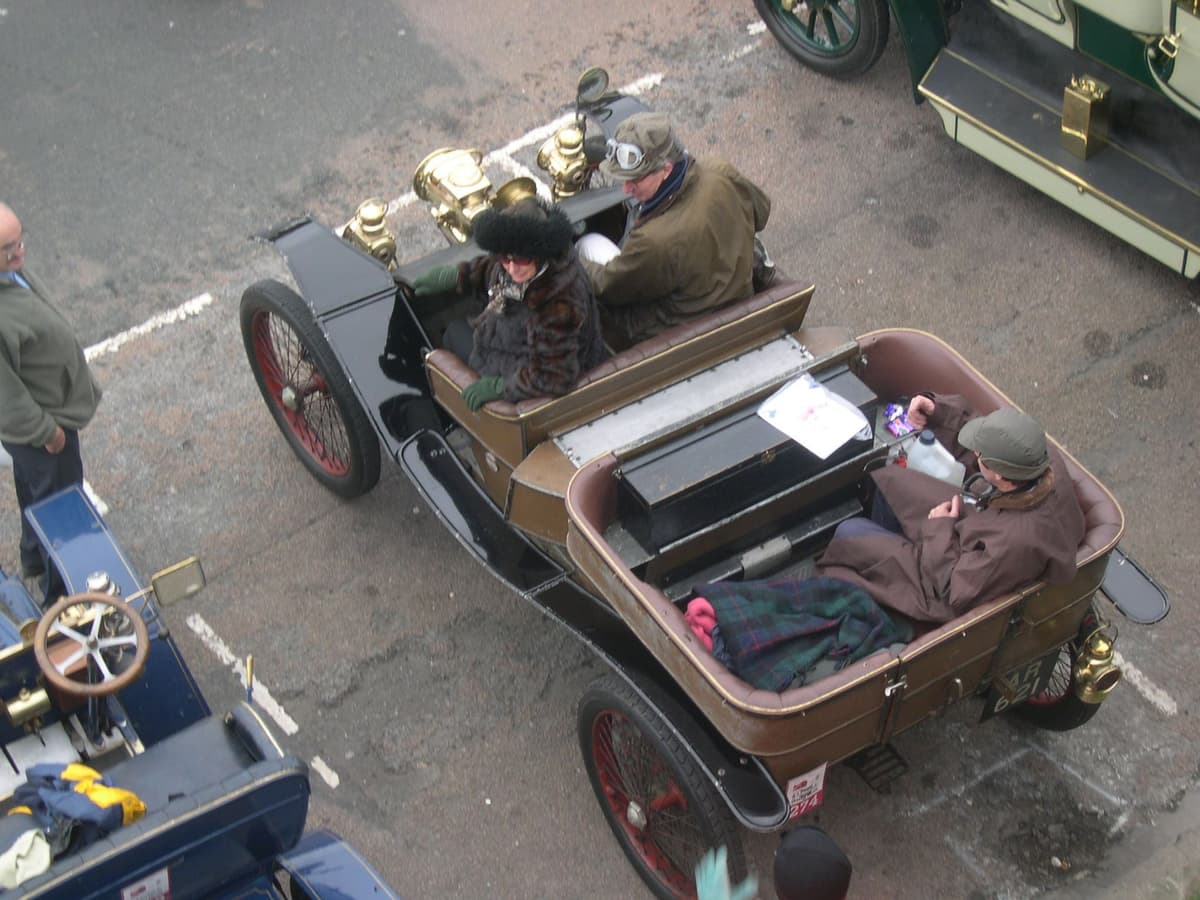
In February 1896 two brothers took a strange machine out on the roads near Birmingham. It had four wire-spoked wheels, a single-cylinder engine, a tiller instead of a steering wheel, and no horse. Frederick Lanchester had designed it from scratch. His brother George went with him on the first test drive.
There were other motor cars by then, most of them German or French, and most of them looked like carriages with an engine bolted on. Lanchester’s did not. He had started from first principles, and he went on doing so for the rest of his life: in cars, in aircraft and in the mathematics of war.
A gas-engine man
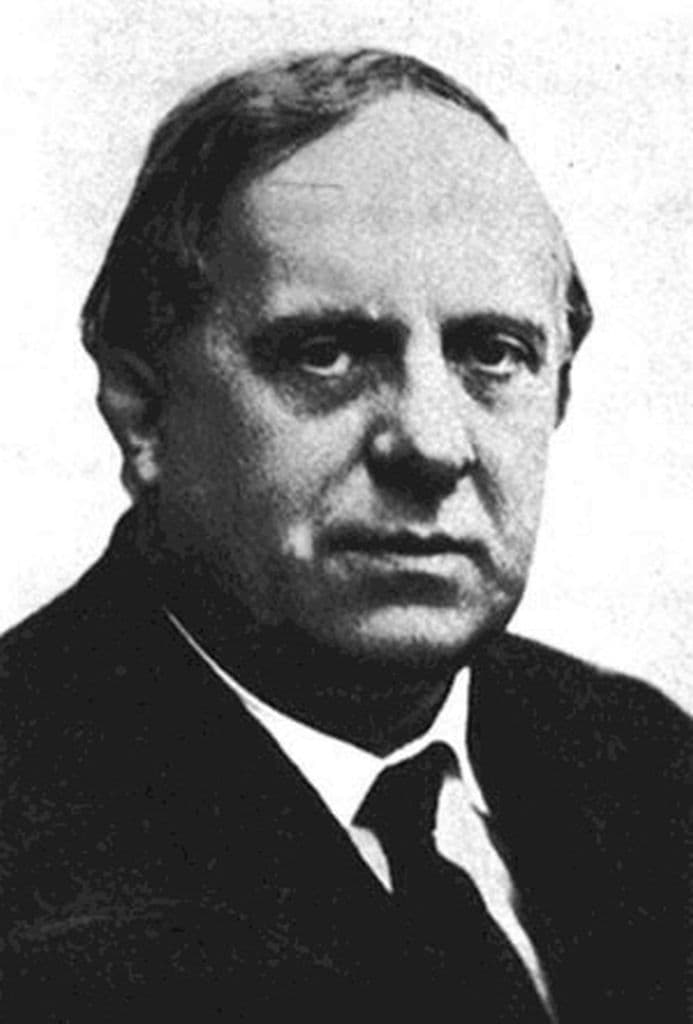
Frederick William Lanchester was born in Lewisham on 23 October 1868, the son of Henry Jones Lanchester, an architect, and Octavia Ward. He grew up in Hove, studied at the Hartley Institution in Southampton, and won a national scholarship to the Normal School of Science in South Kensington.
In 1889, through an uncle, he joined the Forward Gas Engine Company in Birmingham, which then employed about 300 men. He became works manager. His younger brother George started an apprenticeship there the same year. The Forward firm built gas engines, and Lanchester invented a simple self-starting gear for them that was soon at work at W. & T. Avery’s and at the Corporation gas works in Windsor Street. That same year, at the Paris Exhibition, he saw a Benz motor car for the first time.
He left Forward in 1892–93, tried and failed to sell his patents in America, and set up his own workshop. By 1894 he had backers, James and Allan Whitfield, for a company to design and build cars.
The first Lanchester
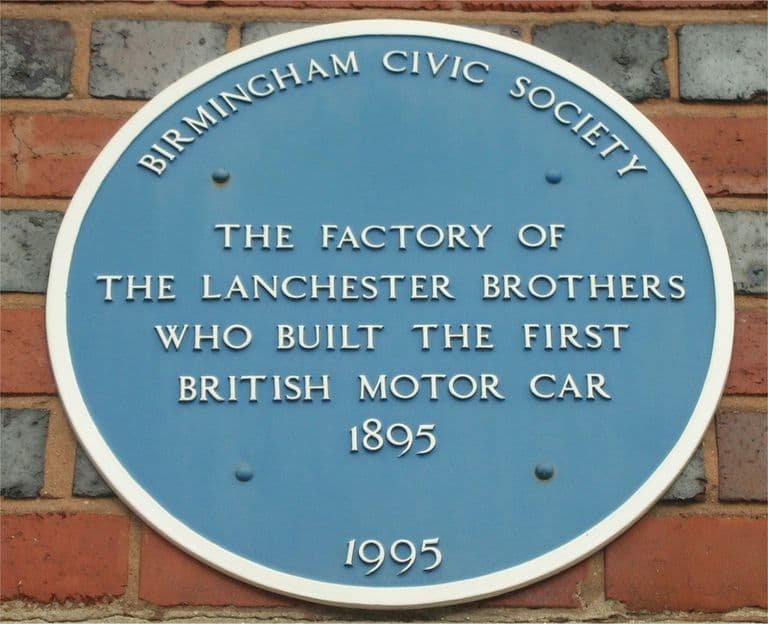
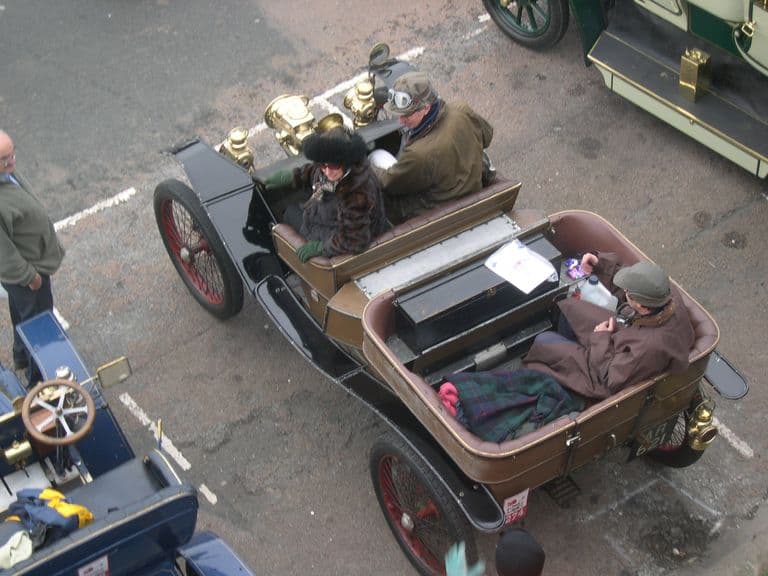
The car was built in 1895, in workshops borrowed from the Forward company. It had a single-cylinder engine of 5 horsepower, epicyclic gears, chain drive, pneumatic tyres and Lanchester’s own wick carburettor. Grace’s Guide notes the claims that it was the first four-wheeled petrol car built entirely in the British Isles. When the Birmingham Civic Society put up its plaque in 1995, it went further: “The factory of the Lanchester brothers who built the first British motor car 1895”.
He rebuilt the engine in 1897 as a two-cylinder, 8-horsepower unit with worm drive, and that year moved to 53 Hagley Road, where he lived for twenty years. In 1898 the brothers bought land and buildings at Ladywood Road and built their second car, the “Gold Medal” phaeton. On its first long run, 68 miles from Edgbaston to Pershore, Evesham and back, it reached 28 miles an hour.
Armourer Mills
On 30 November 1899 Frederick, George and Frank Lanchester formed the Lanchester Engine Company. In 1900 it moved to Armourer Mills on Montgomery Street, Sparkbrook, and in August 1901 the first production model, a 10-horsepower two-cylinder car, was on the road. One early customer was Rudyard Kipling, who took delivery of a 10-horsepower Lanchester in 1902.
The cars were unlike anyone else’s, and that was both their glory and their problem. Lanchester kept inventing. Grace’s Guide credits him with the twin balancing shafts that made his four-cylinder engine run smoothly, and a crankshaft vibration damper for his six. But the directors would not raise the capital that the sales demanded, and in March 1904 the company went into receivership. It was reformed that November as the Lanchester Motor Company.
Frederick drifted away from the firm he had founded. From 1909 he advised Daimler, and around 1909–10 he became only a part-time consultant to Lanchester. In 1914 he cut his links altogether, and George took over as chief engineer.
Flight and war
The car was never his only obsession. Since the early 1890s Lanchester had been thinking about how wings work. In 1897 the Physical Society rejected his paper on the subject. Undeterred, he published his ideas in two volumes, Aerial Flight, in 1907 and 1908. They set out a theory of lift and drag years before most experts accepted it. In 1909 he was invited onto the government’s new Advisory Committee for Aeronautics.
In 1916 he published Aircraft in Warfare. In it he set out equations describing how two forces wear each other down in battle. Under modern conditions, he argued, fighting strength grows with the square of numbers. They are still known as Lanchester’s laws.
Moseley
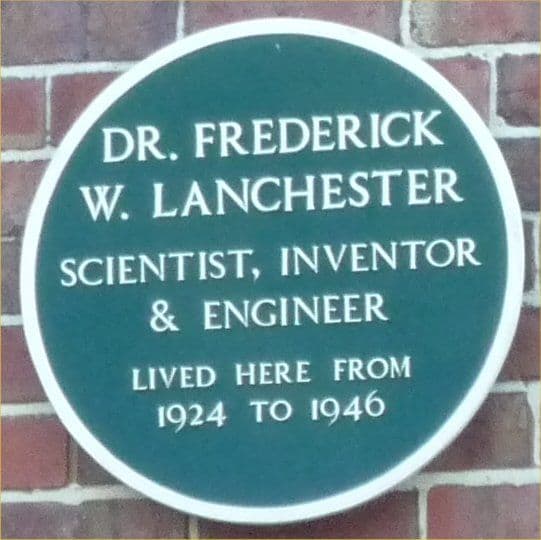
In 1919 he married Dorothea Cooper, a vicar’s daughter; they had no children. From 1924 until his death he lived on Oxford Road, Moseley. Honours came late: Fellowship of the Royal Society, an honorary doctorate from Birmingham University and, in 1945, the James Watt International Medal, the highest award in mechanical engineering. He wrote verse under the name Paul Netherton Herries, and played music. He died on 8 March 1946.
The obituary in the Institution of Mechanical Engineers’ proceedings, written by P. J. Cowan, did not hold back. Lanchester, it said, was “a giant among men”.
Why it mattered
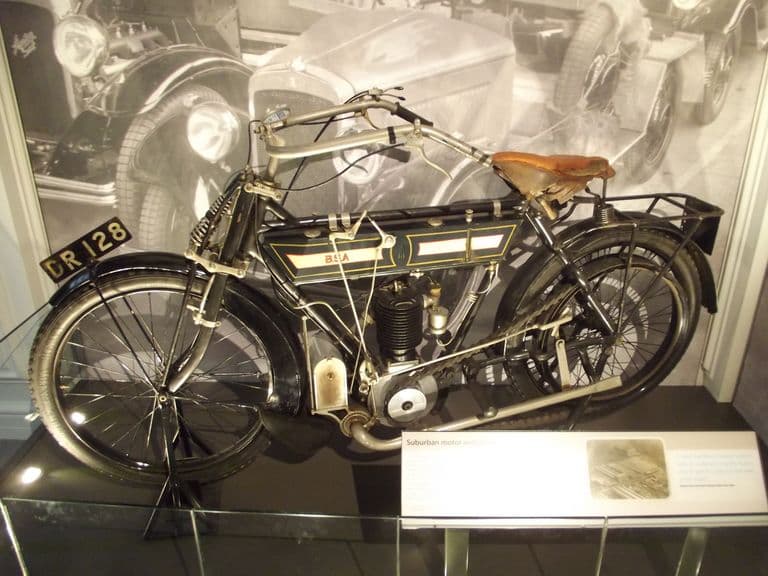
Lanchester’s company was swallowed by BSA in 1930–31, its production moved to Daimler’s works in Coventry, and the name faded from cars in the 1950s. His ideas did not fade. The theory of lift and drag he could not get published in 1897 is the basis of how wings are understood. His equations for battle are still taught as Lanchester’s laws. The balancing shafts and dampers he devised for his engines went on being used long after him. And in Sparkbrook his works still stand, on Birmingham’s local list at its highest grade, with the Civic Society’s blue plaque on the wall. Few people walking down Montgomery Street know that one of the most original engineering minds of his age made cars there. They should.
On the map
One place connected with Frederick Lanchester. Tap a number for directions — some sites are private homes or gardens, so each place’s page says what you can see from the street.

Key dates
- February 1896 — First Lanchester car on the roadFrederick Lanchester and his brother George take his first car, built in 1895 with a single-cylinder engine and epicyclic gears, on its first test drive. A 1995 Civic Society plaque calls it “the first British motor car”.
- 30 November 1899 — Lanchester Engine Company formedFrederick, Frank and George Lanchester form the Lanchester Engine Company, backed by James and Allan Whitfield. In 1900 it moves to Armourer Mills, Montgomery Street, Sparkbrook.
- March 1904 — Lanchester Engine Company goes into receivershipWith its directors unwilling to provide more capital, the Lanchester Engine Company goes into receivership. It is reconstructed as the Lanchester Motor Company, registered on 21 November 1904.
- 8 March 1946 — Frederick Lanchester diesFrederick Lanchester, pioneer of the motor car and of the theory of flight, dies in Moseley, where he had lived since 1924.
Sources and further reading
“First British motor car”: the 1995 plaque makes this claim; Grace’s Guide says only that “there are claims” the 1895 car was the first four-wheeled petrol car built entirely in the British Isles. Other early British cars have rival claims, and Coventry had motor manufacture (Daimler) before Birmingham. The text quotes the plaque and attributes it.
First run: Grace’s Guide dates the first test drive to February 1896, though the car is usually dated 1895.
Leaving the company: Grace’s Guide gives 1909 in its biography and 1910 in its company history for his move to part-time consultant; both agree he severed all links in 1914.
Death place: the green plaque says he lived in Oxford Road from 1924 to 1946; Wikipedia (lead only) names the house as Dyott End and says he died there. The Oxford DNB and Kingsford’s 1960 biography were not consulted.
The Lanchester Engine Co’s workforce at Armourer Mills and the precise buildings it used in 1900–04 are not recorded in the sources seen.
- Frederick William Lanchester — Grace’s Guide to British Industrial History. chronology and 1946 IMechE obituary
- Lanchester Engine Co — Grace’s Guide to British Industrial History
- Lanchester Motor Co — Grace’s Guide to British Industrial History
- Forward Gas Engine Co — Grace’s Guide to British Industrial History
- Blue Plaque: Lanchester Brothers Factory — Birmingham Civic Society
- Green plaque: Dr Frederick W. Lanchester, Oxford Road, Moseley — Plaque (photographed for Wikimedia Commons)
- The Lanchester Works — Looking at Buildings (Pevsner Books Trust)
Comments
Comments will load here.