The Birmingham Small Arms Company was born out of a threat. In the 1850s the government’s new Royal Small Arms Factory at Enfield showed that rifles could be made in quantity by machine. Birmingham’s gun trade, built on skilled hand work in small workshops, risked being left behind. In 1861 a group of the larger Birmingham gunmakers answered by incorporating a limited company to mass-produce guns. Its founders had worked together for some years as an association called the Birmingham Small Arms Trade.
Guns by machine
BSA ordered machine tools from America and Leeds and in 1862 chose a 25-acre site on Golden Hillock Lane in Small Heath, later renamed Armoury Road. The factory opened in 1863. By 1871 it had 771 machines, and from 1874 it made the Martini-Henry rifle for the army. In 1906 it took over the government’s small-arms factory at Sparkbrook.
Bicycles and motorcycles
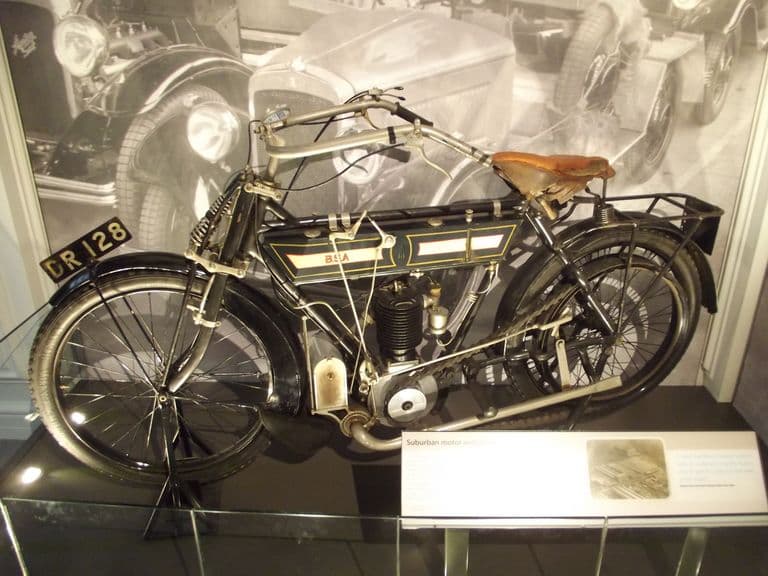
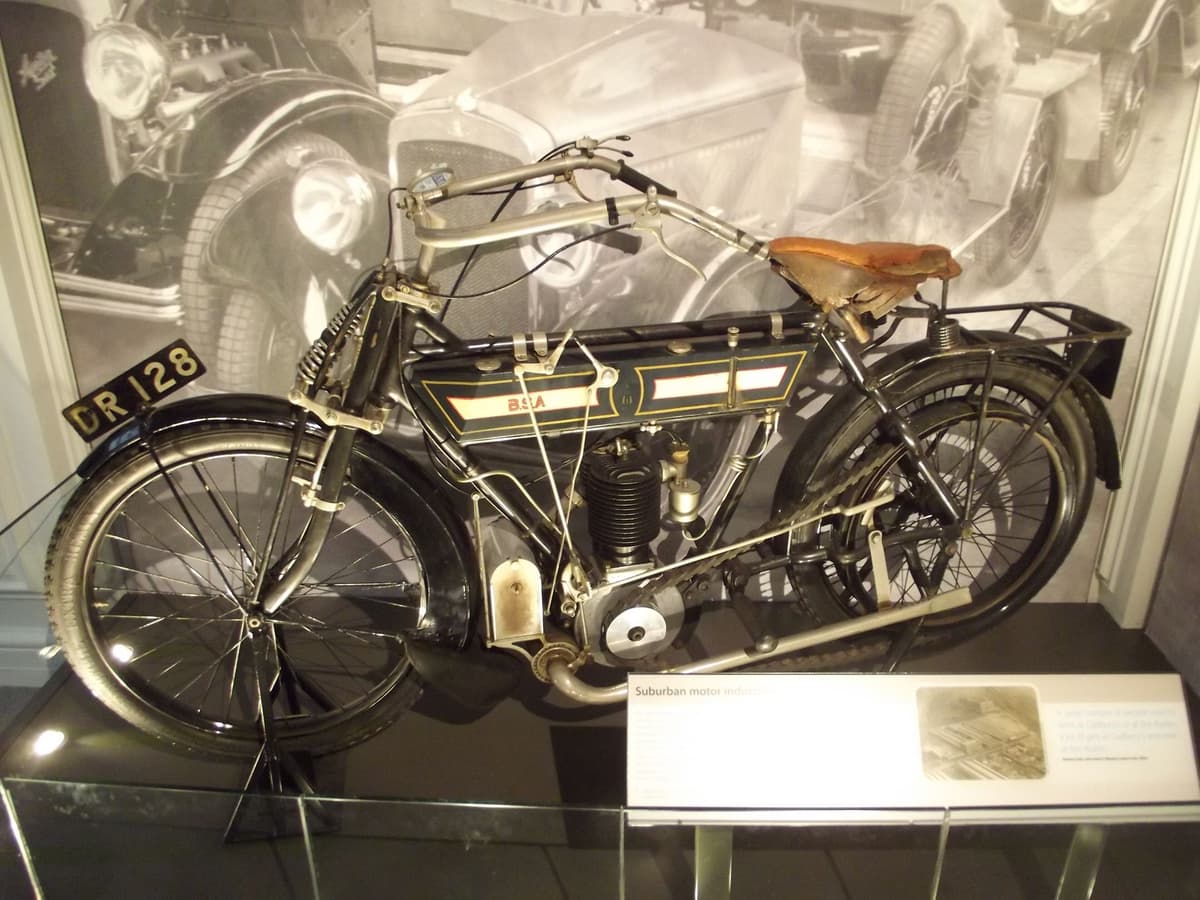
In 1880 BSA agreed to make 210 Otto “dicycles”, an odd two-wheeled machine with the wheels side by side, and the first was delivered that September. Safety bicycles and tricycles followed, though heavy government orders for rifles in 1887 forced a pause. From 1893 BSA made bicycle parts in quantity, recommenced complete cycles in 1908 and began making motorcycles in 1909. They carried the famous crossed-guns emblem.
A group
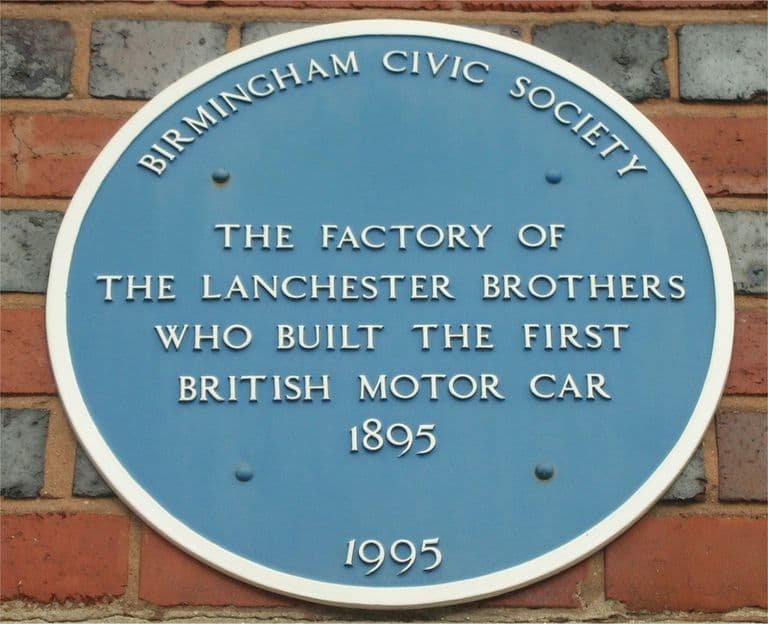
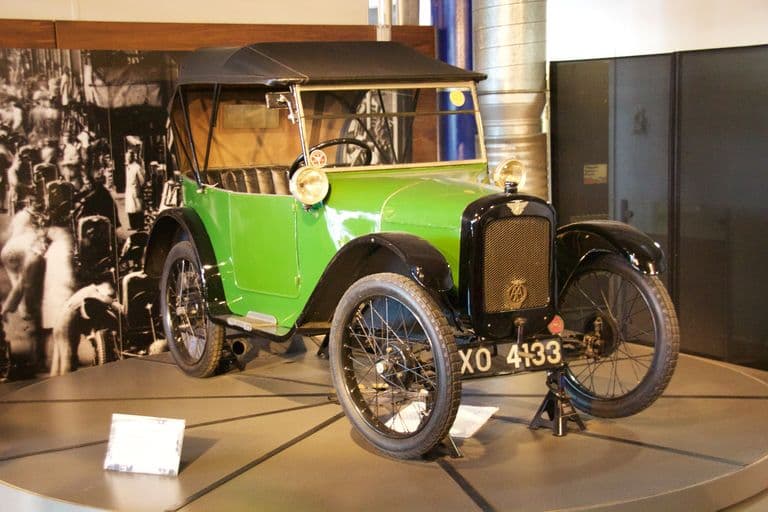
BSA grew into a group. It bought the Daimler Motor Company of Coventry in 1910, made cars of its own, and in 1930–31 took over Lanchester, moving its production from Sparkbrook to Daimler in Coventry. In the First World War BSA made rifles and Lewis guns in vast numbers. On the night of 19 November 1940 bombs fell on the Small Heath works and killed 53 employees.
After the Second World War BSA bought Ariel, New Hudson and Sunbeam, and in 1958 BSA Motor Cycles was the largest maker of motorcycles in the UK. The group sold Daimler to Jaguar in 1960 and its bicycle business to Raleigh in 1957. By 1967 nearly three-quarters of its motorcycles were sold abroad, and the BSA and Triumph sides won Queen’s Awards for Industry. Losses mounted from 1971, and after its shares collapsed in 1973 the motorcycle business passed to Norton-Villiers-Triumph. The Small Heath works were demolished in the 1970s. Armoury Road still carries the name.
On the map
2 places connected with Birmingham Small Arms Company (BSA). Tap a number for directions — some sites are private homes or gardens, so each place’s page says what you can see from the street.

- Lanchester works, Armourer Mills, Montgomery Street, Sparkbrook — Surviving, Surviving but altered · Directions to Lanchester works, Armourer Mills, Montgomery Street, Sparkbrook (opens Google Maps)
- BSA works, Armoury Road, Small Heath — Lost, Site redeveloped
Key dates
- 1861 — BSA incorporatedLarger Birmingham gunmakers incorporate the Birmingham Small Arms Company to mass-produce guns by machine, in answer to the government factory at Enfield. Its Small Heath works open in 1863.
- 2 July 1880 — BSA contracts to make Otto dicyclesBSA agrees to supply 210 Otto “dicycles” at £8 15s each, its first step into cycle making. The first machine is delivered on 20 September 1880.
- 1909 — BSA starts making motorcyclesThe Birmingham Small Arms Company begins making motorcycles at Small Heath. A year later it buys the Daimler Motor Company of Coventry.
- c. 1930–31 — BSA takes over LanchesterThe Lanchester Motor Company is bought by BSA, owner of Daimler, and production moves from Armourer Mills, Sparkbrook, to Coventry.
- 1973 — BSA’s motorcycle business collapsesAfter BSA’s shares collapse, its motorcycle business is sold to Norton-Villiers-Triumph. The Small Heath works are demolished later in the 1970s.
Sources and further reading
- BSA — Grace’s Guide to British Industrial History
- BSA (Birmingham factories) — Looking at Buildings (Pevsner Books Trust)
- Motown: The Factories — Looking at Buildings (Pevsner Books Trust)
- Lanchester Motor Co — Grace’s Guide to British Industrial History
- B.S.A.’s worst day ever: Tuesday 19th November 1940 — BSA Owners’ Club of New Zealand