
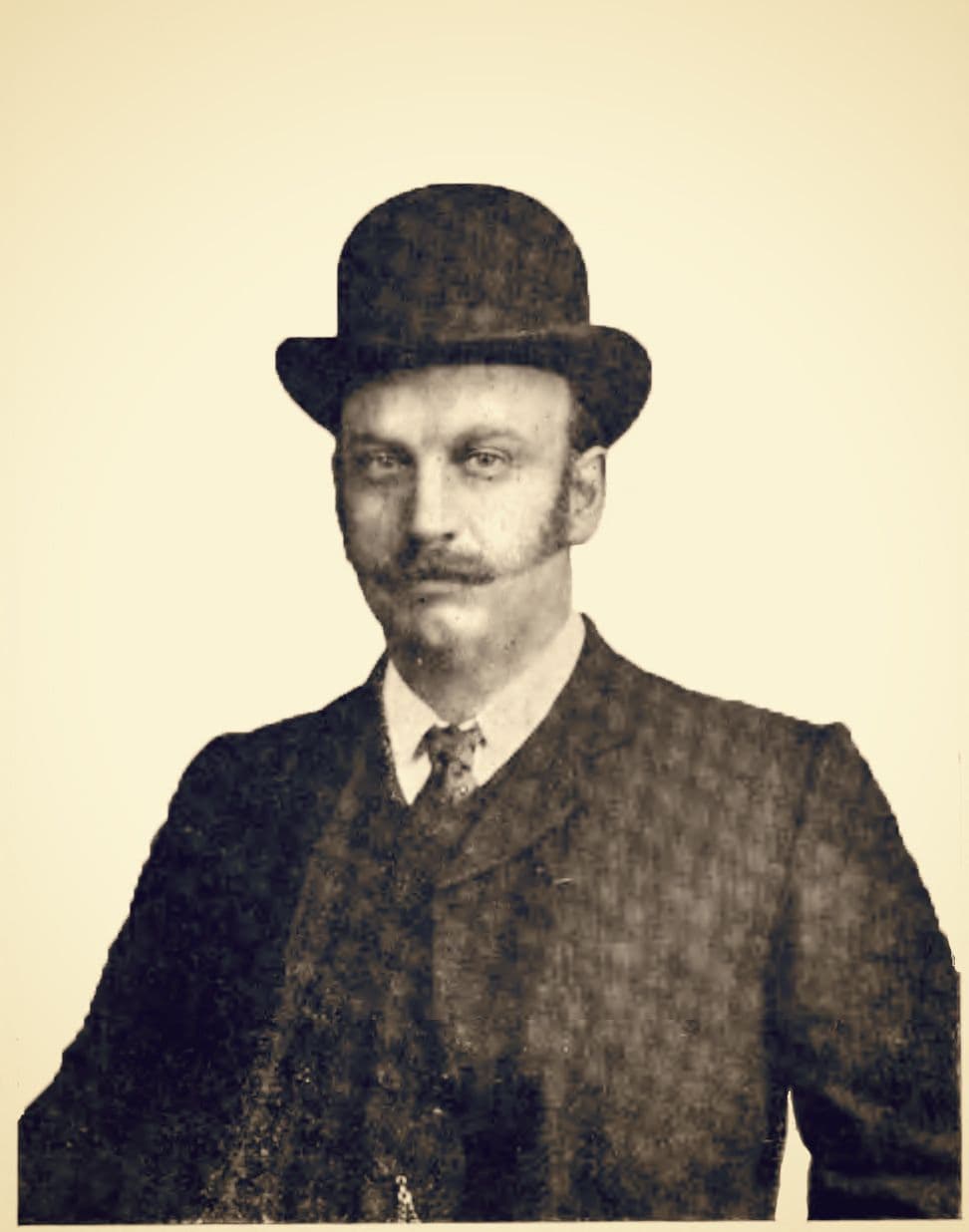
On Saturday 4 November 1905, Herbert Austin went to look at a derelict printing works in the fields south of Birmingham. He took his wife with him, and his entire staff. There were three of them. The works at Longbridge had been empty for years. Austin decided it was exactly what he wanted.
Within twelve years the place employed more than 20,000 people. Within a generation it was the biggest car factory in Britain.
From the farm to Melbourne
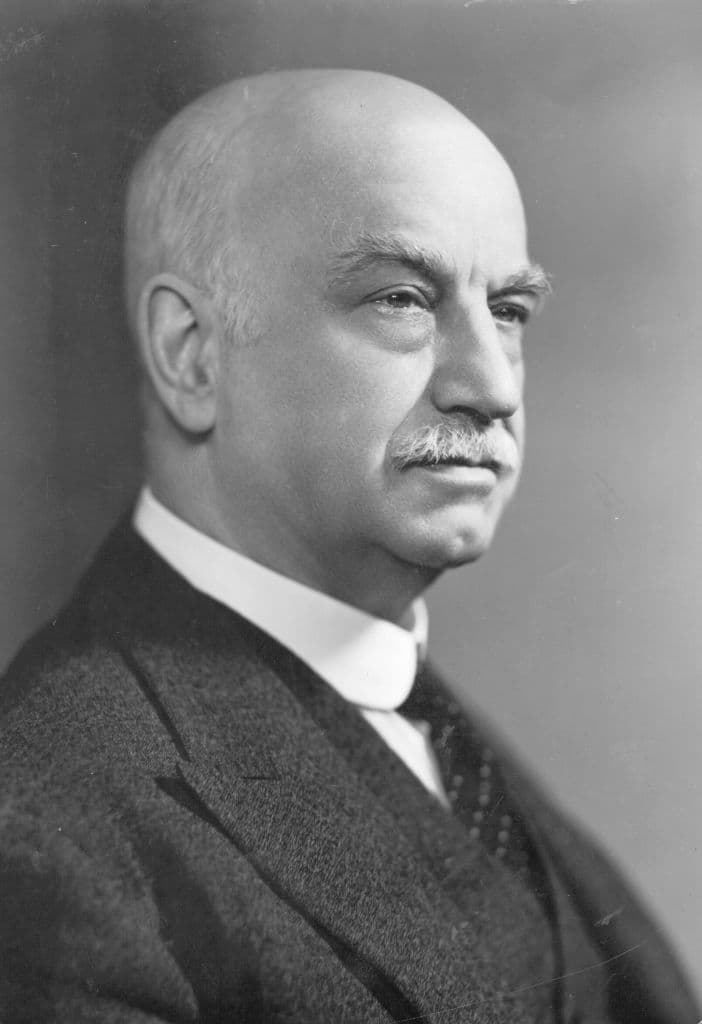
Herbert Austin was born on 8 November 1866 at Grange Farm, Little Missenden, in Buckinghamshire, the son of Giles Stevens Austin, a farmer, and his wife Clara. When he was small the family moved to Wentworth Woodhouse in Yorkshire, where his father became farm bailiff, and he went to Rotherham Grammar School.
In 1884, at seventeen, he sailed for Australia with an uncle who lived in Melbourne. There he learned engineering the practical way, in a series of Melbourne works that made everything from mining machinery to locomotive boilers. In 1887 he married Helen Dron, a Melbourne girl. The same year he went to work on a new sheep-shearing machine for Frederick Wolseley, improved it, and patented his improvements.
Wolseley in Birmingham
In 1893 Wolseley moved his company to England and set up a factory in Broad Street, Birmingham. Austin came with him as manager. The works soon moved to bigger premises in Aston, and in slack seasons, to keep the men busy, they built bicycles.
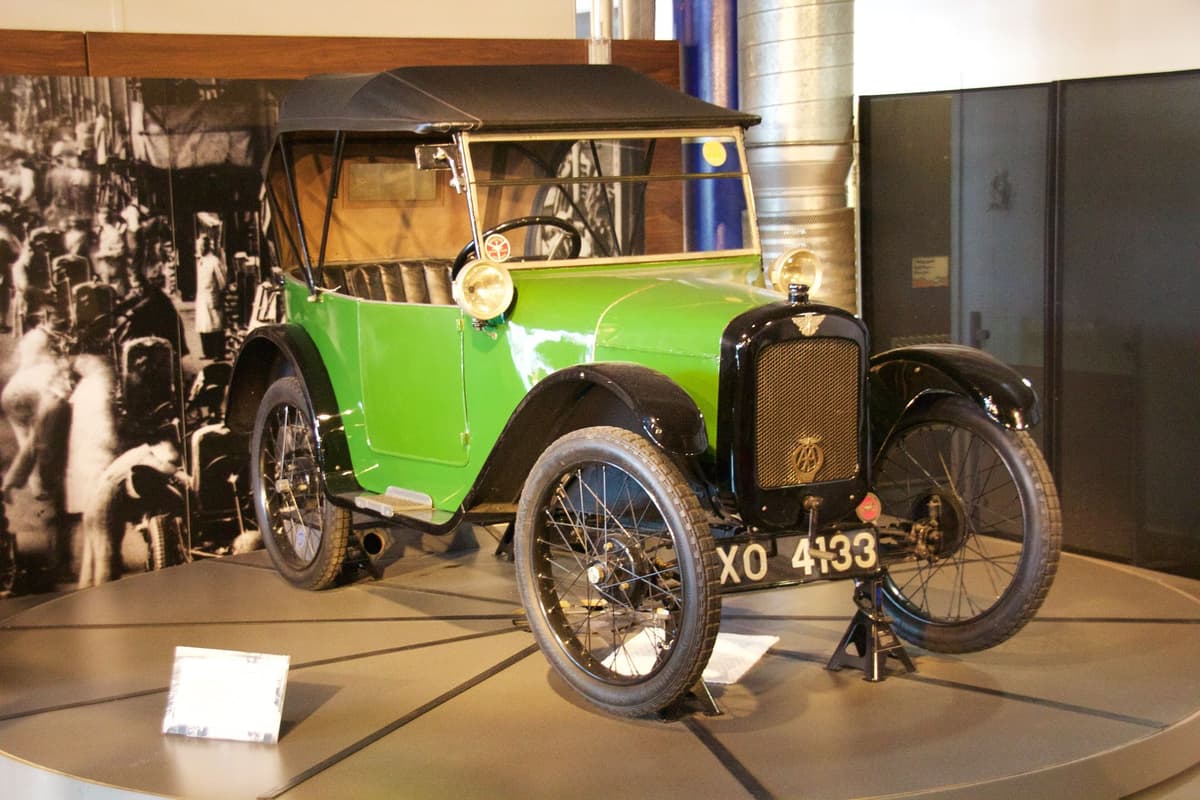
Austin had seen early motor cars in Paris, and he began building his own. A Wolseley tricar led to the Wolseley Autocar No. 1, shown at the National Cycle Show in December 1896. In 1900 his Wolseley voiturette won a first prize in the Thousand Miles Trial. The census of 1901 found him living in Erdington, at St Anne’s, Sutton Road, described as a manager and electrical engineer.
That year the armaments firm Vickers, Sons & Maxim bought the car side of Wolseley and formed the Wolseley Tool and Motor Car Company at Adderley Park. Austin became its manager, on a five-year contract and 5 per cent of the profits. He raced Wolseleys himself, including in the Paris–Madrid race of 1903.
But he and the new owners did not agree. Looking at Buildings puts it simply: Austin was “frustrated by changes in management”. In 1905 he resigned.
Longbridge
He raised capital, took some senior Wolseley men with him, and went looking for a factory. He found it in the derelict White & Pike tin-printing works at Longbridge, on the rural fringe of the city. Grace’s Guide records the purchase in January 1906, with a 2.5-acre site and another 8 acres. Austin was unusual among early car makers: most made do with old buildings, but he went on to build his own works.
The first Austin car appeared in 1906. In its first full year the firm made 120 vehicles and employed 270 people. By 1912 it made 886 cars a year with 1,800 staff.
Then war transformed Longbridge. Between 1914 and 1917 the workforce rose from 2,638 to over 20,000. New North and West Works rose either side of the Bristol Road and the railway. By the Armistice the factory had produced around eight million shells, 2,000 aeroplanes, 2,500 aero engines and 2,000 lorries. Austin was knighted in 1917, and Belgium honoured him for employing 3,000 Belgian refugees. The war also took his only son, Vernon, killed in 1915.
The pace was ferocious. Within months of the outbreak of war Austin had a Russian government order worth £500,000 for armoured cars, workshop vans, tankers, ambulances and lorries, and Grace’s Guide records that it was completed and shipped in three months. Work on the North Works, on the Birmingham side of the railway, began in July 1916; the West Works, across the Bristol Road, followed that December. Not everything ran smoothly. Early in 1918, 10,000 men went on strike for a month over the removal of a worker, Arthur Peacock.
The Baby Austin
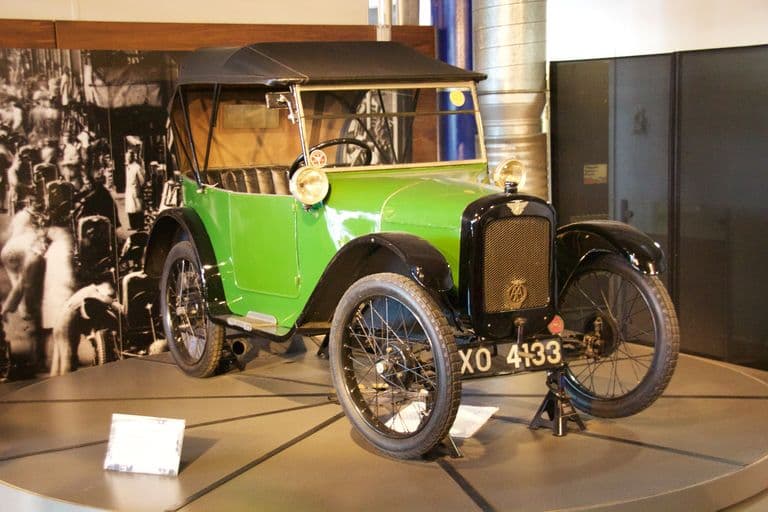
Peace nearly broke him. Austin bet on a single large model, the Twenty, and in April 1921 a receiver was appointed. The company survived, and in 1922 Austin launched the car that made his name: the Austin Seven, the “Baby Austin”. It sold for £225, a price that brought a car within reach of families who had never owned one. By 1925 Longbridge was making 25,000 a year. Grace’s Guide calls Longbridge the largest car factory in the UK, and says the Seven was designed at Austin’s home, Lickey Grange. Twice in the mid-1920s Austin came close to losing his independence: in 1924 there were talks about merging with Morris, and in 1925 General Motors nearly bought the company. Instead Longbridge kept growing. In 1926–27 a new administration block went up on Lickey Road, designed by S. N. Cooke, and by 1936 the works employed 25,000 people.
Austin was also a public man. After the war he was elected Unionist MP for King’s Norton, and sat into the mid-1920s, though he never made a speech in the House. He led the motor trade’s associations and engineering institutions, and was made Baron Austin of Longbridge in 1936. As war loomed again he chaired the Shadow Aero-Engine Committee from 1937 to 1940, using car-industry methods to build aero engines in new shadow factories.
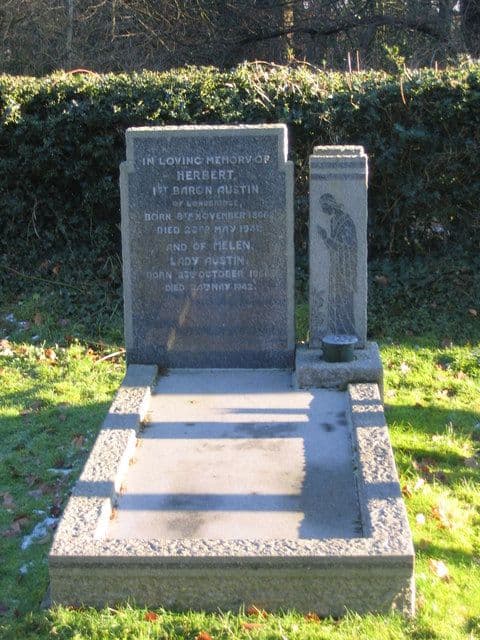
He died at his home, Lickey Grange, near Bromsgrove, on 23 May 1941, of a heart attack and pneumonia. He was buried at Holy Trinity Church, Lickey, a few miles from the works.
Why it mattered
Herbert Austin took a derelict printing works and made it “The Austin”, the factory that defined south Birmingham for a century. At its height it built more than 300,000 cars a year, and in the 1920s his Seven did for British families what the Mini would do in the 1960s. The Mini, too, was built at Longbridge. Austin’s company merged with Morris in 1952, and the long story of British Leyland and Rover ended at Longbridge with the collapse of MG Rover in 2005. Most of the works have gone, replaced by a new town centre, a college and homes. But Austin’s name is on the park, on the dual carriageway and, since April 2026, on a Birmingham Civic Society blue plaque at the college campus on the factory’s ground, put there by the men he and his successors trained as apprentices.
On the map
2 places connected with Herbert Austin. Tap a number for directions — some sites are private homes or gardens, so each place’s page says what you can see from the street.

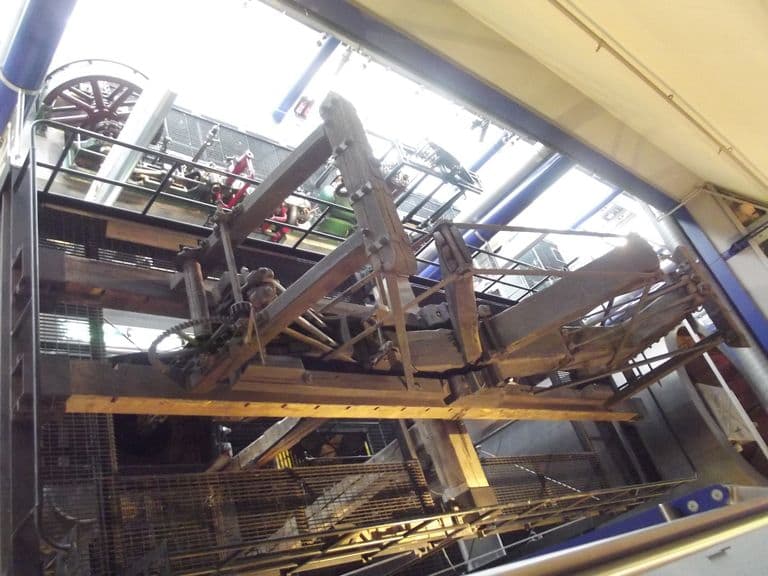
- The Smethwick Engine at Thinktank — Relocated · Directions to The Smethwick Engine at Thinktank (opens Google Maps)
- Austin works, Longbridge — Site redeveloped, Partly surviving · Directions to Austin works, Longbridge (opens Google Maps)
Key dates
- 1893 — Herbert Austin comes to Birmingham with WolseleyHerbert Austin returns from Australia with Frederick Wolseley and becomes manager of the Wolseley Sheep Shearing Machine Company’s new factory in Broad Street, Birmingham; it soon moves to Aston.
- December 1896 — Wolseley Autocar No. 1 shownHerbert Austin’s Wolseley Autocar No. 1 is exhibited at the National Cycle Show, following his experimental tricar.
- 4 November 1905 — Herbert Austin finds LongbridgeHerbert Austin visits the derelict White & Pike works at Longbridge with his wife and his staff of three; within days he agrees terms of £7,500 with its owner. Ownership passes to him on 22 January 1906.
- 1914–1918 — Longbridge becomes a war factoryAustin’s workforce rises from 2,638 to over 20,000 as North and West Works are built. By 1918 Longbridge has made around eight million shells, 2,000 aeroplanes and 2,500 aero engines.
- 1922 — The Austin Seven launchedThe “Baby Austin” goes on sale at £225, bringing a car within reach of families who had never owned one. Longbridge is making 25,000 a year by 1925.
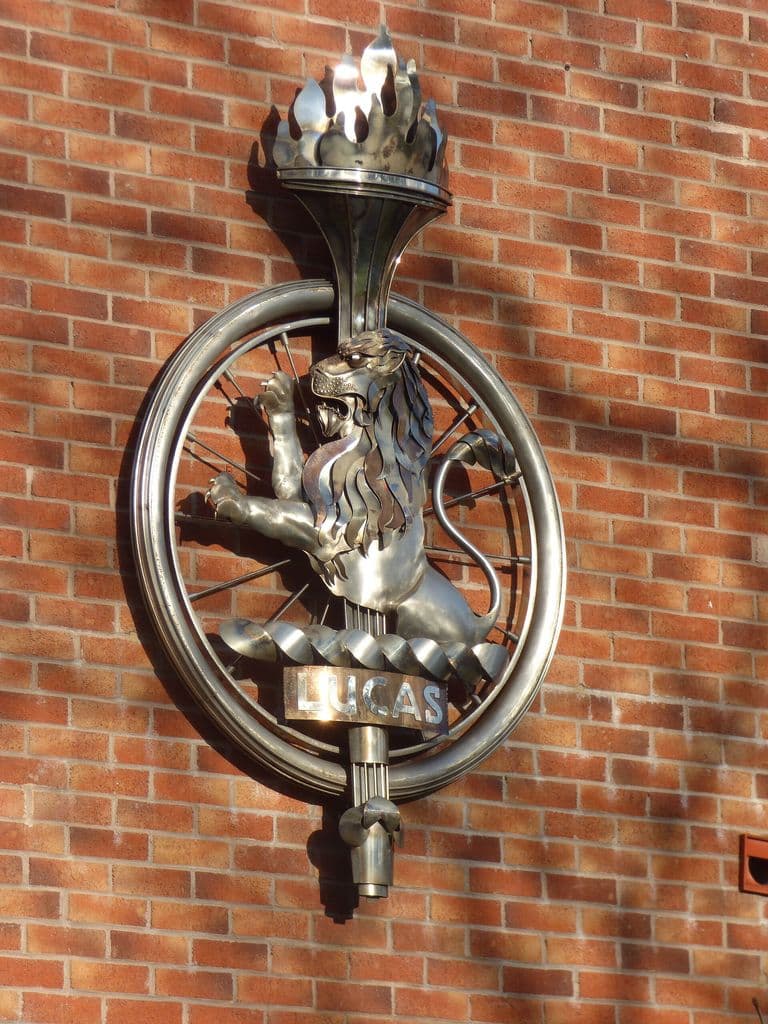
- 1926 — Lucas wins the Austin contractLucas buys its two largest competitors, C. A. Vandervell and Rotax, and wins the contract for all of Austin’s starting, lighting and ignition equipment for the following year.
- 23 May 1941 — Herbert Austin diesLord Austin of Longbridge dies at his home, Lickey Grange, near Bromsgrove.
- April 2026 — Blue plaque to Herbert Austin at LongbridgeThe Birmingham Civic Society unveils a blue plaque to Herbert Austin at South & City College’s Longbridge campus, on the ground of his factory, nominated and funded by the Austin Ex-Apprentices Association.
Sources and further reading
Finding and buying Longbridge: AROnline and Austin Memories say Austin visited the site on 4 November 1905 and opened talks with its owner, the financier E. A. Olivieri, the following Monday; Grace’s Guide dates the purchase to January 1906. The visit story comes from enthusiast histories based on Lambert and Wyatt’s biography (1968), not checked directly.
Receivership: Grace’s Guide dates the receiver’s appointment to April 1921; Looking at Buildings says 1920.
Parliament: his years as MP for King’s Norton are given as 1918–24, 1919–24 and 1919–25 in different obituaries quoted by Grace’s Guide; the text says he sat from the end of the First World War into the mid-1920s.
Australia: obituaries differ on whether he went out in 1882 or 1884, and on the names of the Melbourne firms he worked for. The text uses 1884 and does not name them.
Burial: from a captioned Geograph photograph of the grave at Holy Trinity, Lickey; not checked against a burial register.
The Oxford DNB article (Roy Church) was not consulted directly.
- Herbert Austin — Grace’s Guide to British Industrial History. chronology and 1941–42 obituaries
- Austin Motor Co — Grace’s Guide to British Industrial History
- Longbridge Factory — Austin Memories. the visit of 4 November 1905
- Motown: The Factories — Looking at Buildings (Pevsner Books Trust)
- Austin’s (Birmingham factories) — Looking at Buildings (Pevsner Books Trust)
- Longbridge car factory history: rise and fall of ‘The Austin’ — Keith Adams, AROnline, 2006, revised 2025
- Blue Plaque honours Herbert Austin at Longbridge — Birmingham Civic Society, 2026
Comments
Comments will load here.