
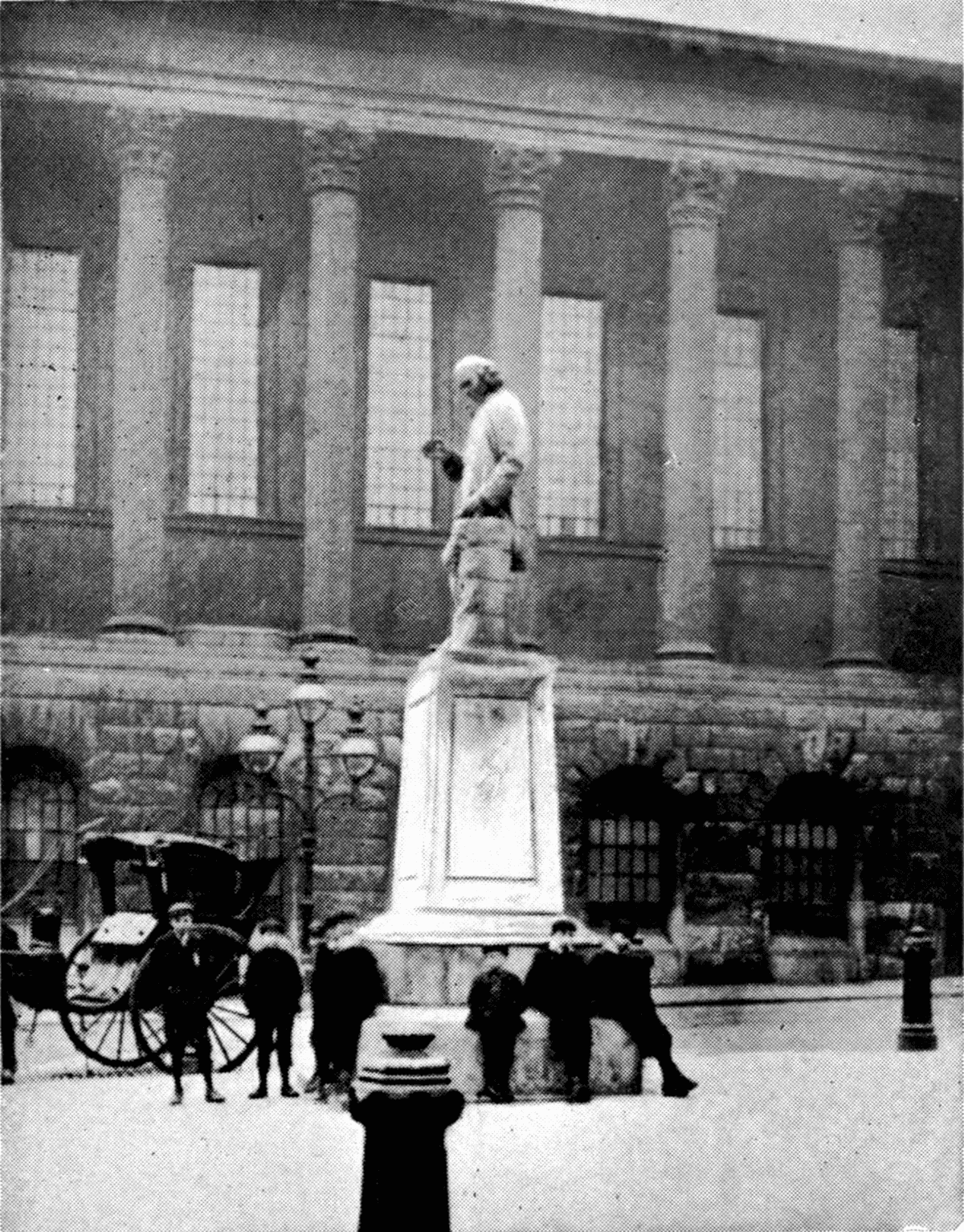
What was here?
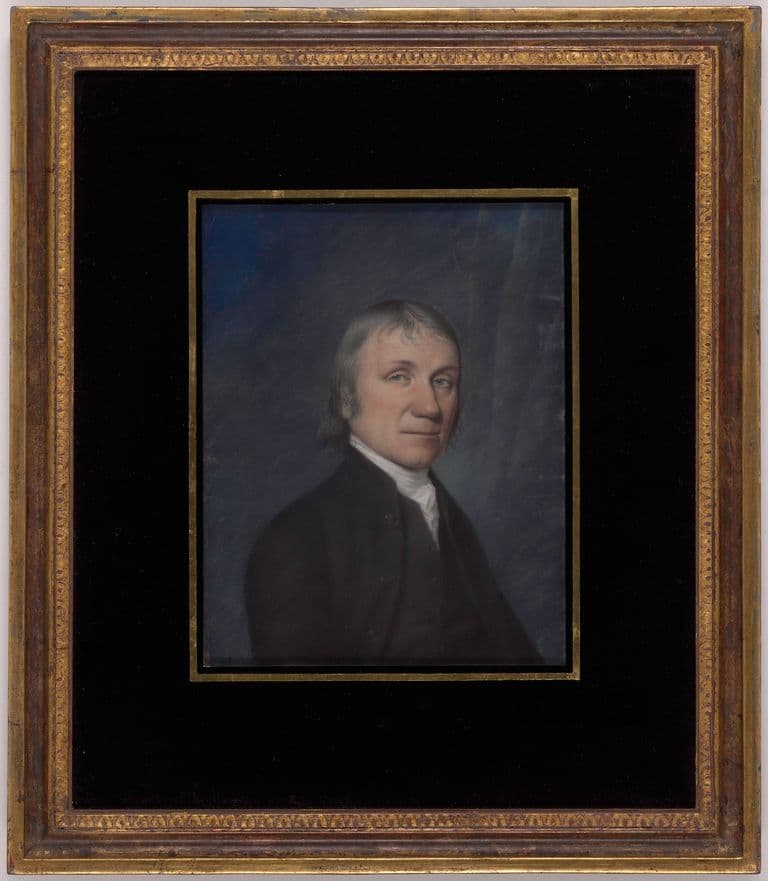
A statue of Joseph Priestley, the Dissenting minister and chemist who lived in Birmingham from 1780 until the riots of 1791, put up in the town’s new civic centre in 1874.
History
A century to the day
On 1 August 1774 Joseph Priestley turned a large burning lens on a sample of red mercury calx and collected the air that came off it. What surprised him, he wrote, was “that a candle burned in this air with a remarkably vigorous flame”. He had made oxygen.
Exactly a hundred years later, on 1 August 1874, Birmingham unveiled his statue. The biologist Thomas Henry Huxley pulled away the cover and presented it to the town on behalf of the subscribers to the Priestley Fund. He was clear about which Priestley they were honouring. Not the Unitarian minister, he told the crowd, but “Priestley, the fearless defender of rational freedom in thought and in action”.
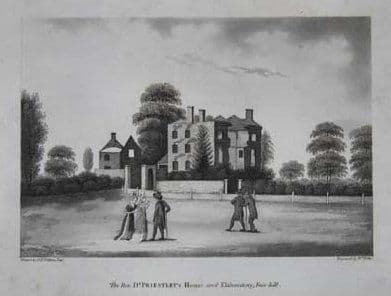
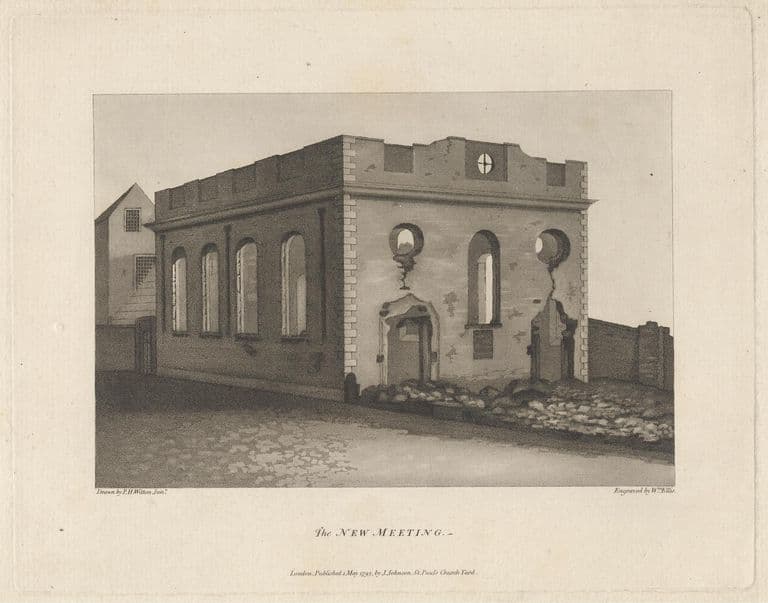
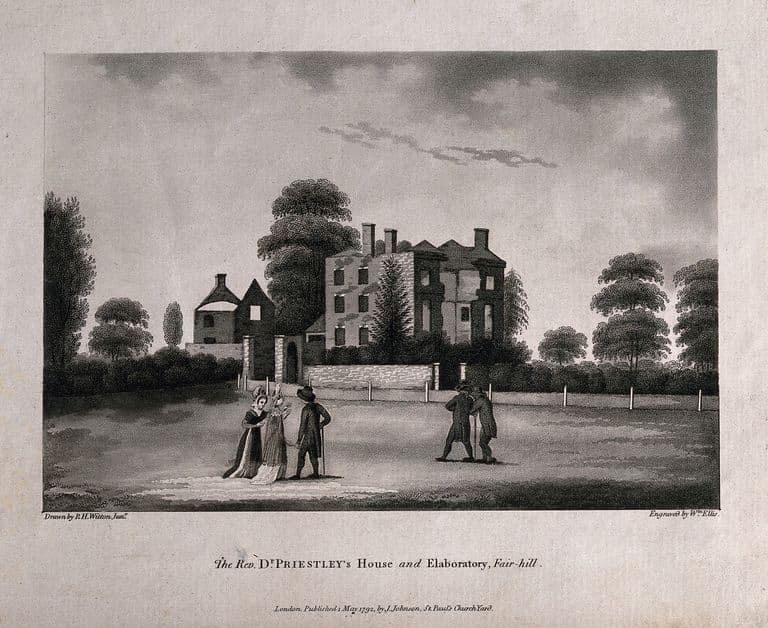
It was a pointed choice of words in Birmingham. Eighty-three years earlier, in the riots of July 1791, a mob had burned Priestley’s chapel and his house at Fair Hill and driven him out of the town for good. He died in Pennsylvania in 1804.
Marble into bronze
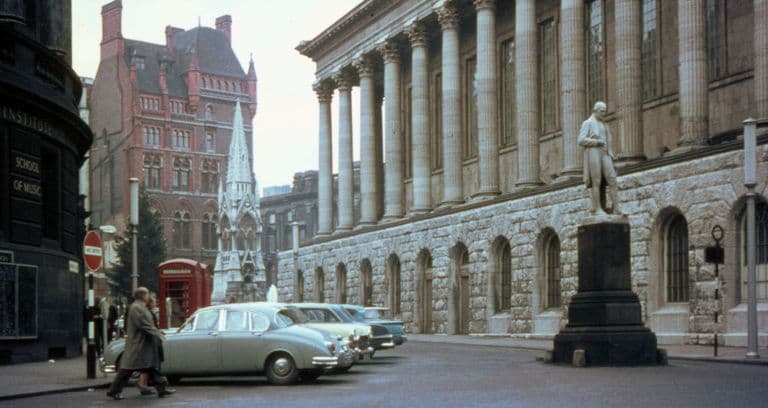
The sculptor was Francis John Williamson of Esher, who signed the base “f.j. williamson sc. | esher 1874”. He carved it in marble. Birmingham’s smoky air was hard on marble, and in 1951 the statue was recast in bronze.
Back from store
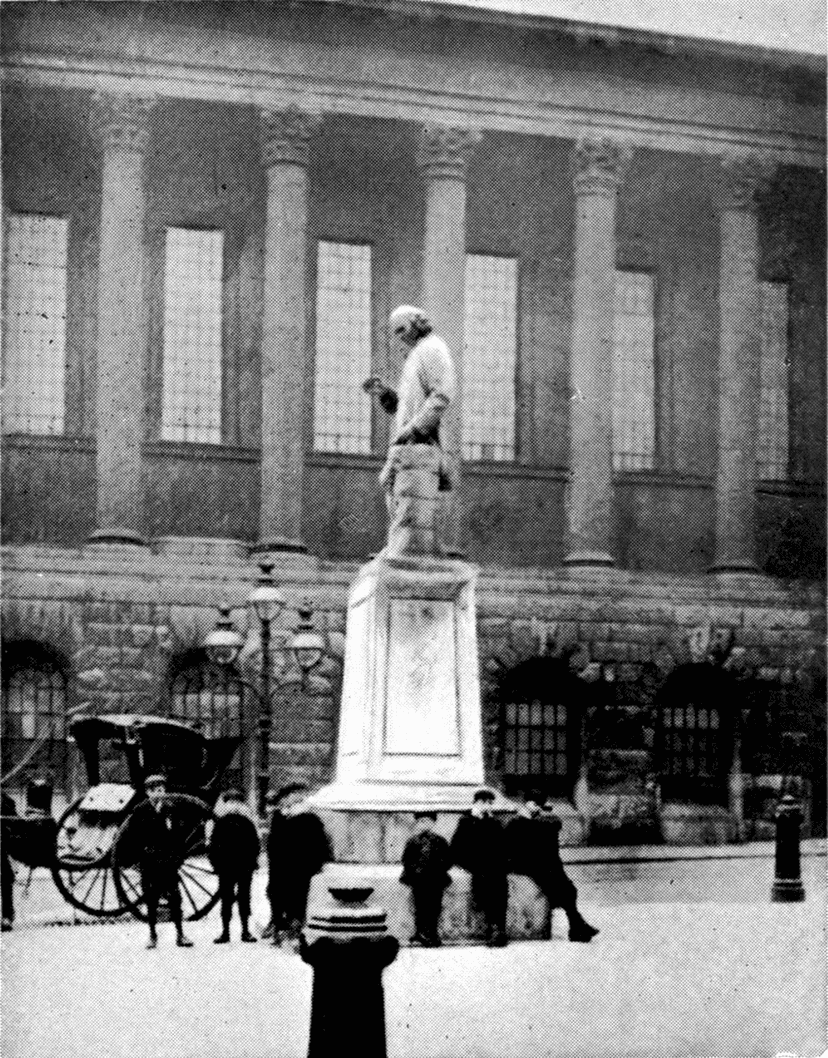
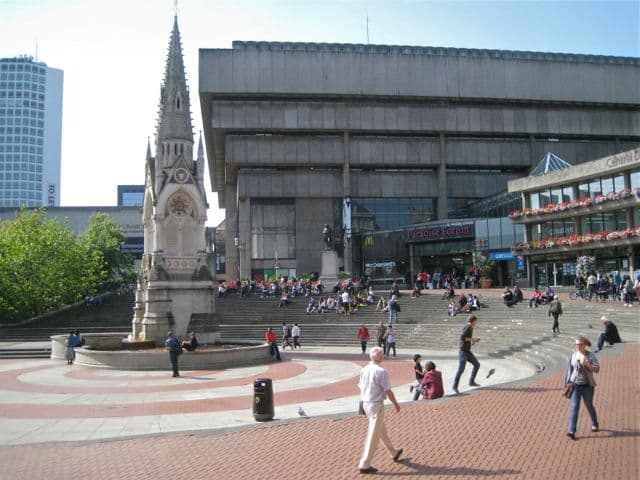
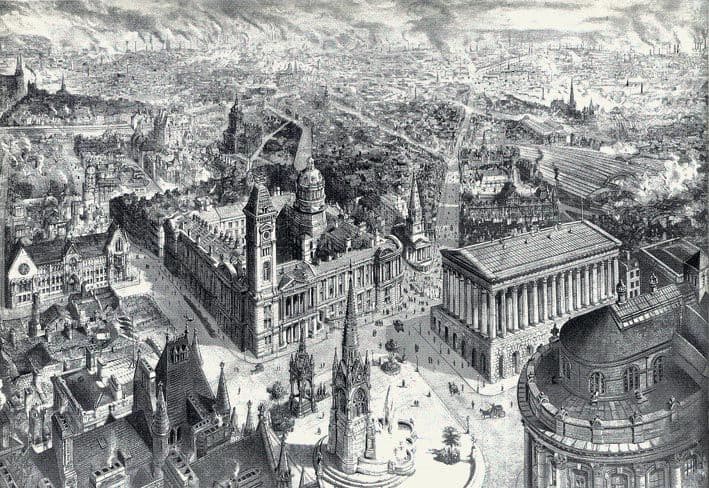
Priestley stood first in what is now Victoria Square, then moved into Chamberlain Square. In 2015–16, as the Paradise redevelopment began, he went into store with Birmingham Museums Trust alongside James Watt. Ian Clark Restoration conserved the bronze.
The same spot, then and now
1888–1913
Today
Old map: Ordnance Survey six-inch, reproduced with the permission of the National Library of Scotland (CC BY 4.0). Today: © OpenStreetMap contributors.
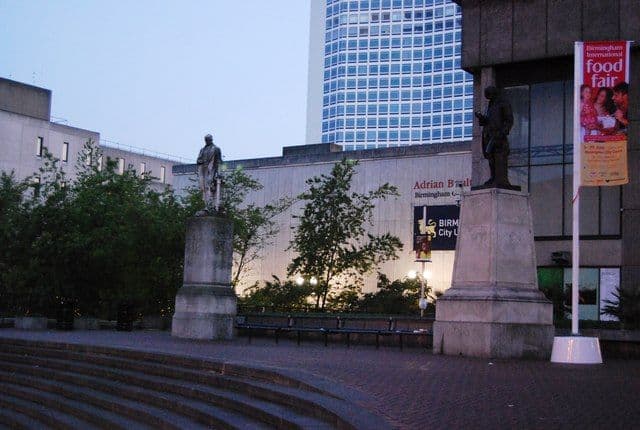
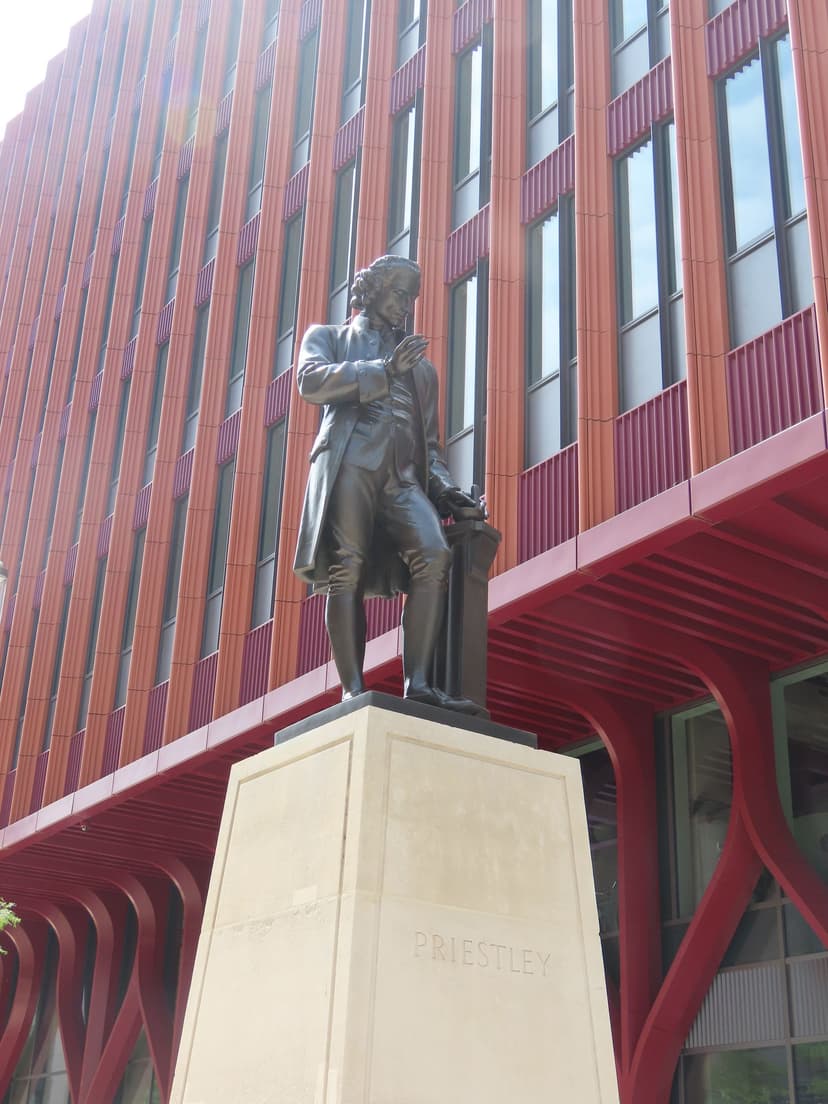
In July 2026 he came back, on a 3-metre plinth at the northern end of Ratcliff Passage, between Three Chamberlain Square and the Town Hall. Watt stands at the other end. Two members of the Lunar Society, the circle of friends who met by the full moon to talk science, face each other again across the heart of the city that once drove one of them out.
What happened here?
A memorial statue to Joseph Priestley was presented to the town in 1874, recast in bronze in 1951, moved to Chamberlain Square, stored during the Paradise redevelopment and reinstated at Ratcliff Passage in July 2026.
Why it mattered
It is the town’s public amends to a man its own rioters had driven out in 1791, and a monument to Birmingham’s part in the chemistry of the Enlightenment.
What’s there now
What survives
Williamson’s design, in the bronze recast of 1951.
Today
It stands at the northern end of Ratcliff Passage, close to Chamberlain Square and the Chamberlain Memorial.
Then and now
Then · Early 20th century
Now · 18 July 2026
Key dates
- 1 August 1874 — Huxley unveils Priestley’s statueA hundred years to the day after Priestley’s experiment that produced oxygen, T. H. Huxley presents F. J. Williamson’s statue of Joseph Priestley to the town of Birmingham.
- July 2026 — Watt and Priestley return to Ratcliff PassageAfter about ten years in store during the Paradise redevelopment, the statues of James Watt and Joseph Priestley are reinstated at either end of Ratcliff Passage, beside the Town Hall.
Sources and further reading
Original site: Wikipedia’s article on Chamberlain Square places the statue first in Victoria Square (then Council House Square); the 2026 press release says the statues were “originally sited near the Victorian Central Library”. The date of the move to Chamberlain Square is given as 1970 in some accounts and “46 years” before storage in the press release.
Removal is dated September 2015 (Wikipedia) or 2016 (Paradise Birmingham). The return is dated by photographs of 18 July 2026 and an OpenStreetMap survey edit of 6 July 2026; the press release followed on 11 August 2026.
The 1951 recasting comes from the van der Krogt database, Wikipedia and Paradise Birmingham; what became of the marble original is not recorded in the sources consulted.
The statue is not on the National Heritage List.
- Joseph Priestley: an address delivered on the occasion of the presentation of a statue of Priestley to the town of Birmingham, on the 1st of August 1874 — Thomas Henry Huxley, 1874. ch. V, ‘Joseph Priestley’
- Birmingham – Joseph Priestley — R. & D. van der Krogt (Hither & Thither)
- Francis John Williamson — Wikipedia
- Chamberlain Square — Wikipedia
- Statues to return to Ratcliff Passage — Paradise Birmingham, Paradise Birmingham, 2026
- Paradise brings back statues of major Birmingham figures — Greater Birmingham Chambers of Commerce, 2026
- List of public art in Birmingham — Wikipedia
- OpenStreetMap nodes 2109265229 (James Watt) and 2109265230 (Joseph Priestley) — OpenStreetMap contributors
Comments
Comments will load here.