
What was here?
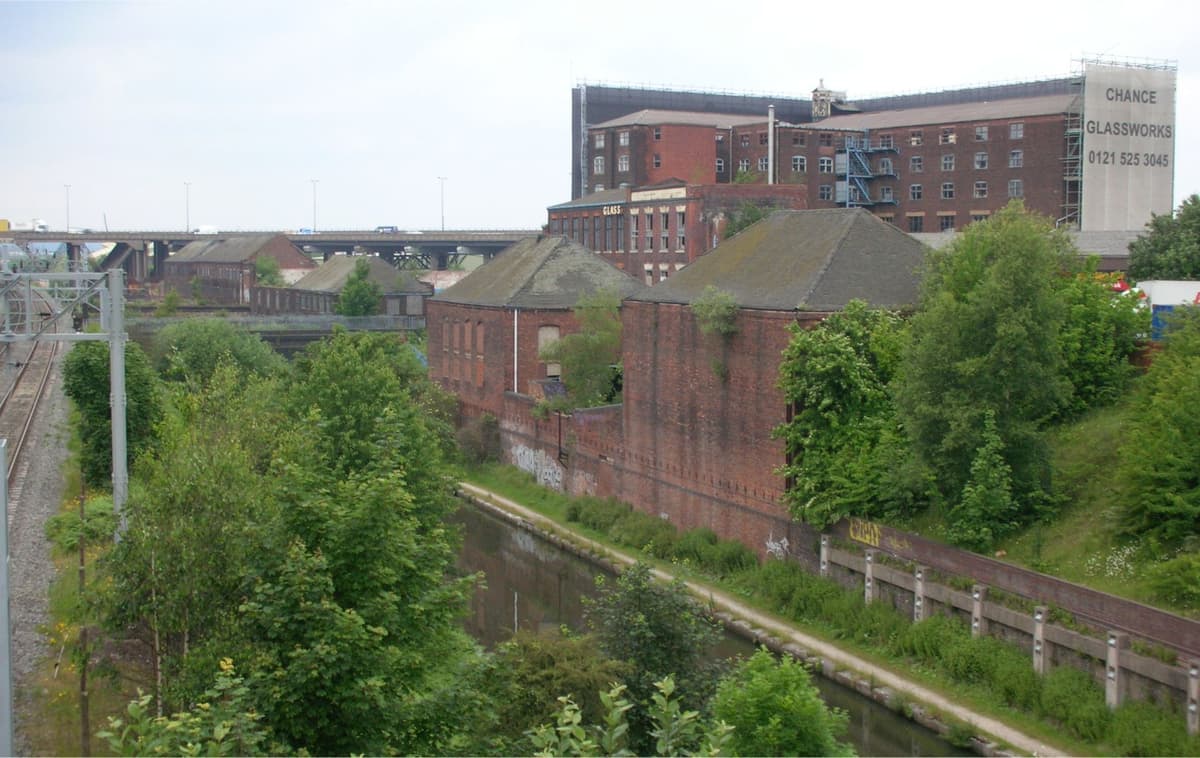
One of the great glassworks of Victorian Britain. Chance Brothers made window glass, patent plate, coloured glass, optical glass and complete lighthouses here, on a site squeezed between two lines of the Birmingham Canal, from 1822 until 1981.
History
Thomas Shutt began building a glassworks on farmland beside the Birmingham Canal, west of Spon Lane, about 1814, and was making crown window glass by about 1815. As the British Crown Glass Company it was sold in 1822 to Robert Lucas Chance, a Birmingham glass merchant. The firm later dated its founding to 1824.
Sheet glass and patent plate
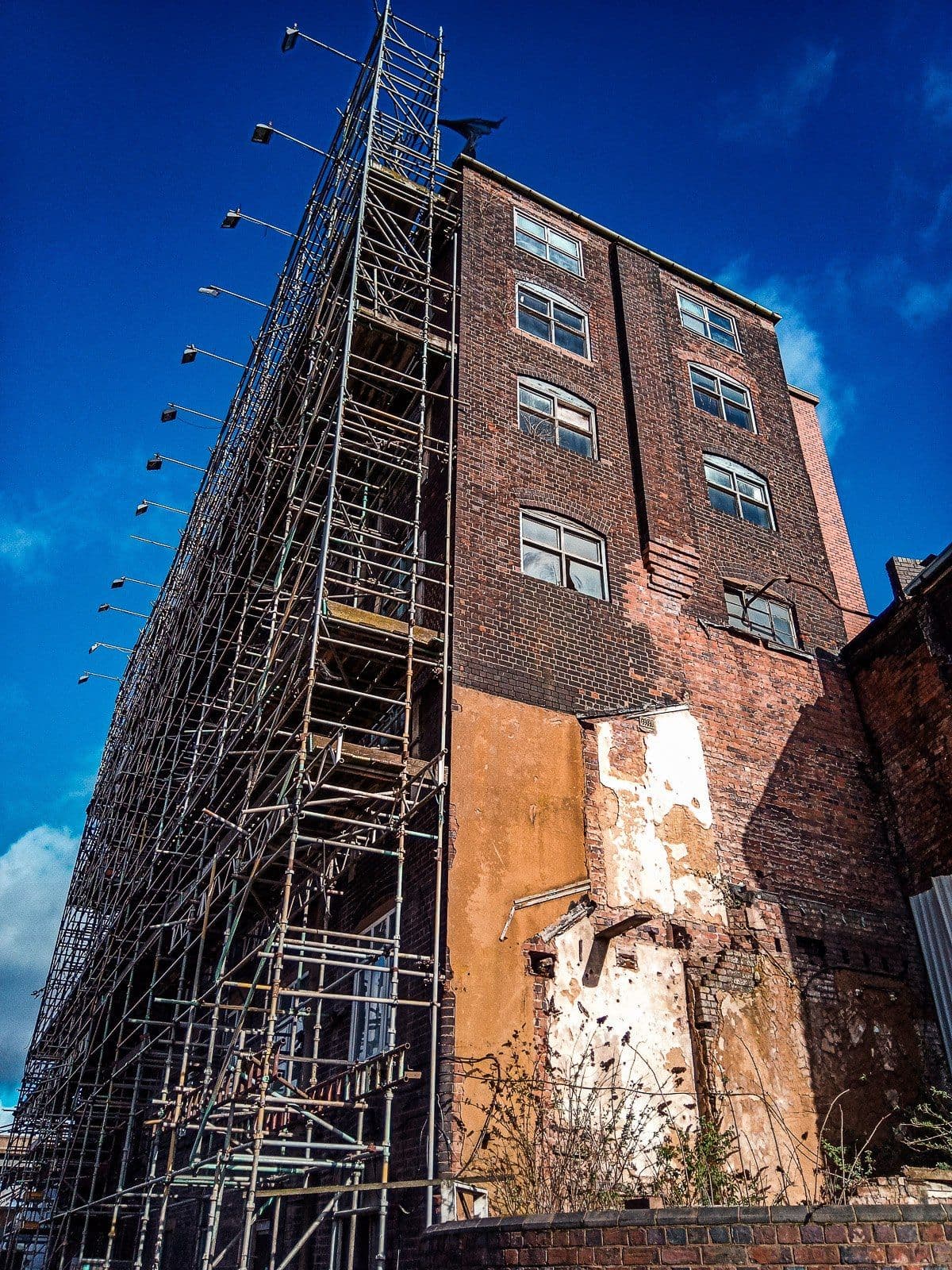
Chance added glasshouses quickly. In August 1832 sheet-glass making began in No. 2 glasshouse, soon known as “the French house” after the French and Belgian blowers who worked there. From 1836 the firm was Chance Brothers & Co. James Timmins Chance’s machines for grinding and polishing sheet glass produced “patent plate”, used in the Houses of Parliament.
By the 1830s the site covered more than 14 acres. Historic England records cottages for workmen, crown and sheet glasshouses, alkali and acid works, a smith’s shop, cutting rooms and pot rooms. An illustration of 1857 shows eight furnace cones. In 1851 about 1,200 people worked here, and it was said to be the largest crown and sheet glassworks in England. Its sheet glass glazed the Crystal Palace.
The lighthouse works
From the 1850s the firm built up a lighthouse works on the south side of the site, with an 80-foot brick tower for testing lights. It made the lenses and much else besides: burners, lanterns, cast-iron towers and the clockwork that turned the lights. The North Works concentrated on flat glass.
Decline
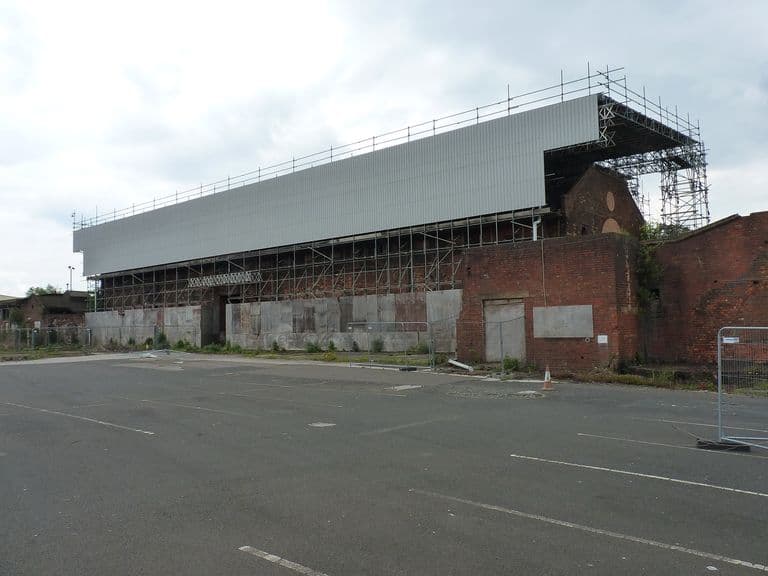
Pilkington Brothers of St Helens bought into Chance Brothers from 1936 and took full control in the 1950s. Flat-glass production ended in 1976 and the works closed in 1981. The site was later levelled to a concrete slab, apart from the listed buildings.
What happened here?
Crown and sheet window glass, patent plate, coloured and optical glass, and lighthouse optics were made here from 1822 to 1981, including the glass for the Crystal Palace.
Why it mattered
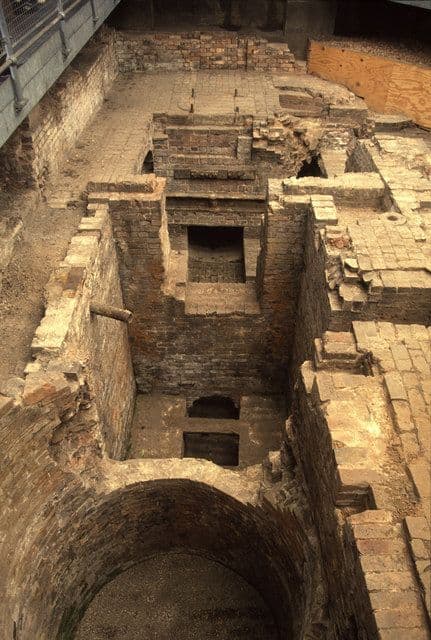
Spon Lane brought the regular manufacture of sheet glass to England and became one of the world’s leading lighthouse makers. Historic England credits it with “considerable technological innovation in several major areas of glass manufacture”. Its buried furnace bases and flues may be the most extensive surviving remains of nineteenth-century glassmaking in the country.
Why it disappeared
Industrial decline
Pilkington took full control of Chance Brothers in the 1950s. Flat glass ended at Smethwick in 1976 and the works closed in 1981. Apart from the listed buildings, the North Works site has been levelled and has stood unused.
The same spot, then and now
1888–1913
Today
Old map: Ordnance Survey six-inch, reproduced with the permission of the National Library of Scotland (CC BY 4.0). Today: © OpenStreetMap contributors.
More pictures
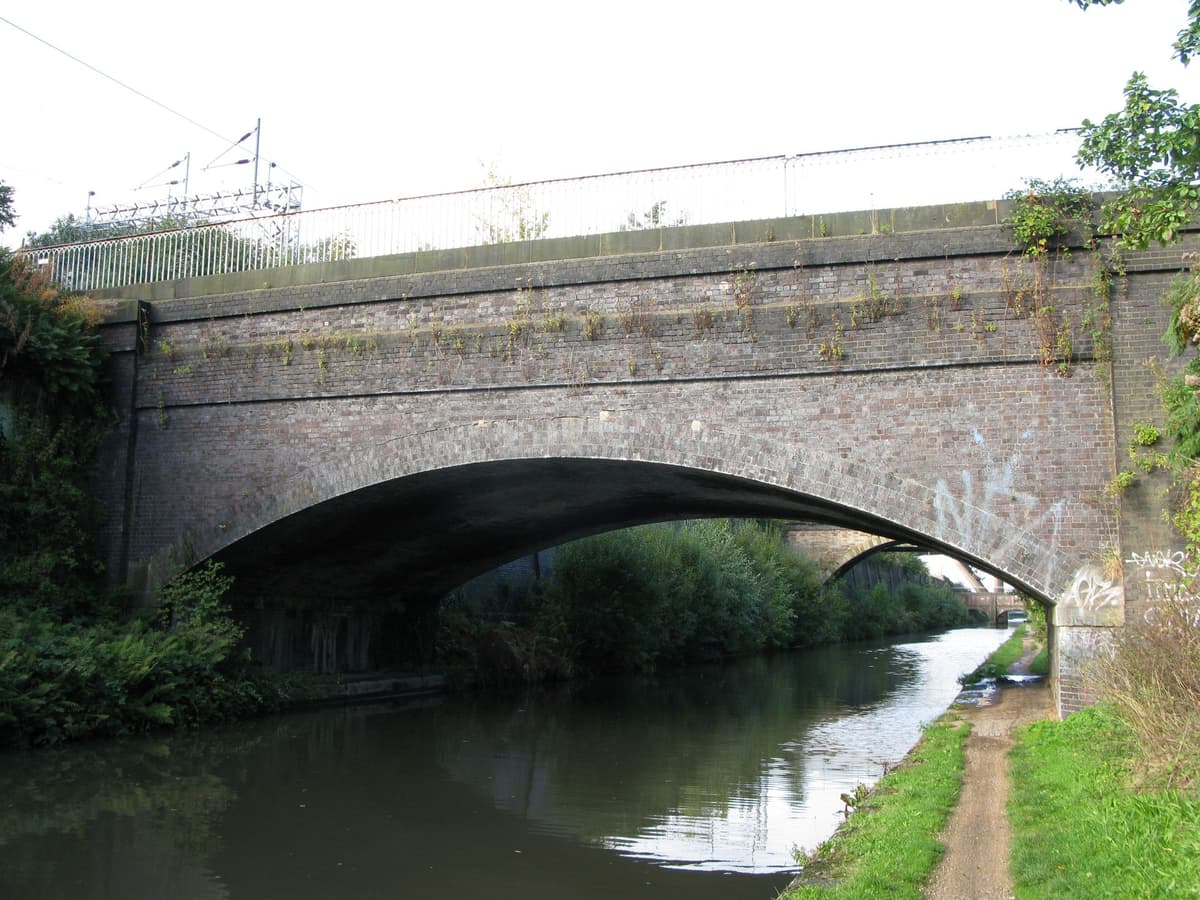
Hartley Bridge, Chance’s Glassworks, 17 October 2013Brianboru100, 17 October 2013. Wikimedia Commons · CC BY-SA 3.0 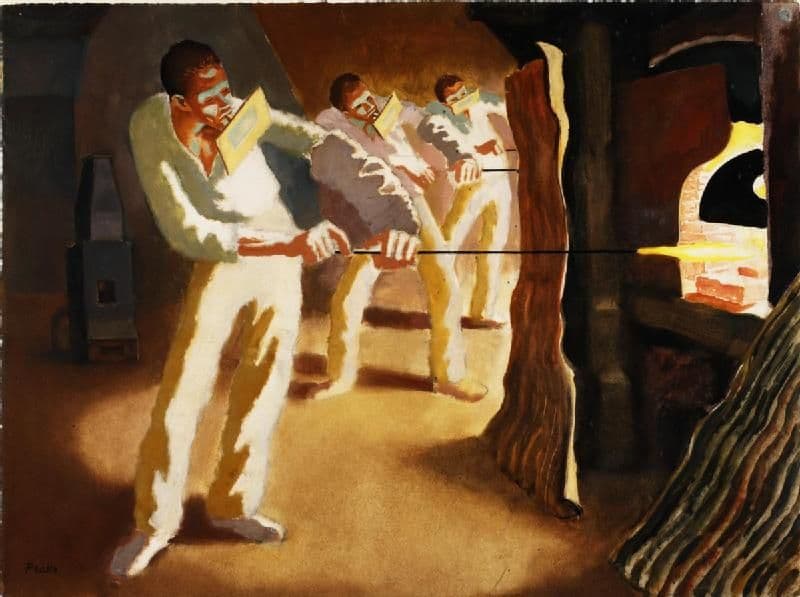
Glass-blowers ‘gathering’ from the furnace, Chance Brothers, 1943Mervyn Peake, 1943. Imperial War Museums, via Wikimedia Commons · Public domain
What’s there now
What replaced it
Nothing yet. The levelled North Works site has been unused since production ended; the M5 Oldbury viaduct runs alongside.
What survives
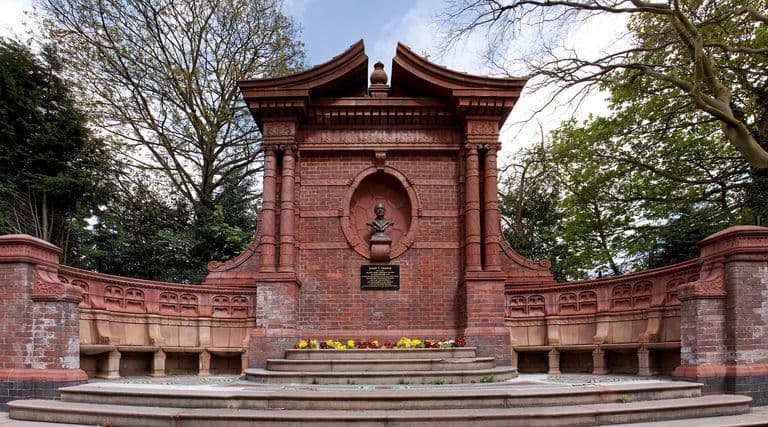
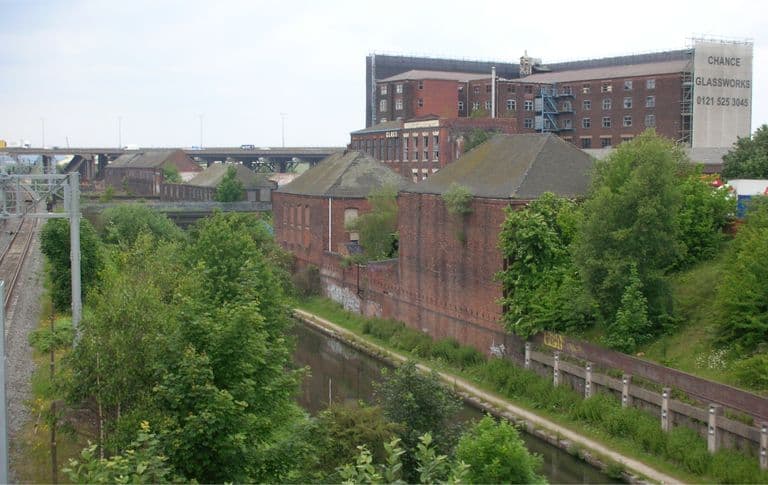
Eight Grade II listed buildings and structures, including the seven-storey warehouse and offices of 1847, warehouse ranges by the canal, Hartley Bridge, Canal Bridge and a railway bridge. Below ground, a scheduled monument protects furnace bases, tunnels and flues.
Today
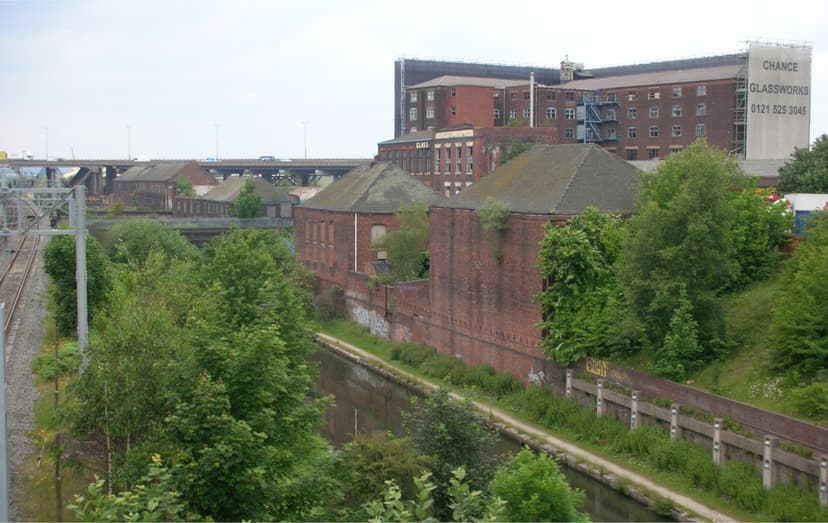
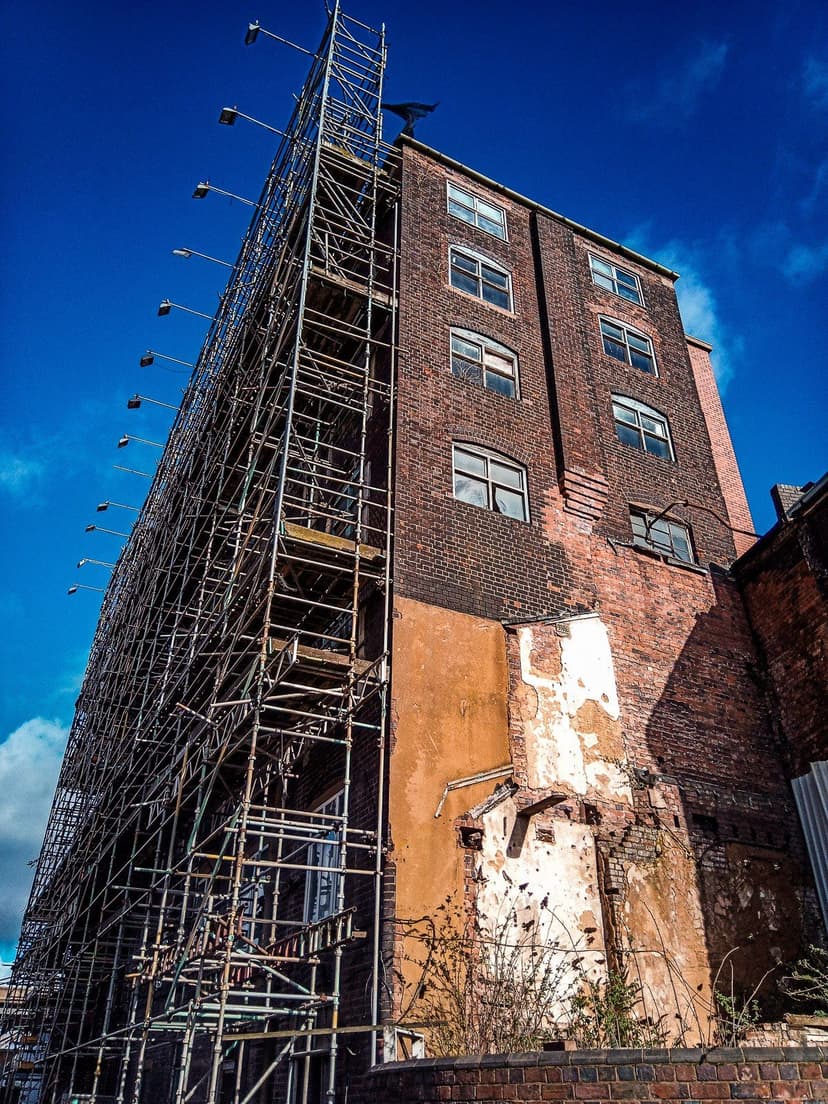
The surviving warehouses stand between the Old and New Main Lines of the Birmingham Canal at Spon Lane, beside the M5, inside the Smethwick Summit/Galton Valley Conservation Area. The site is on Historic England’s Heritage at Risk Register, and the Victorian Society put it on its list of most endangered buildings in 2017.
Then and now
Then · 2007
Now · 22 February 2022
Key dates
- 1822 (traditionally 1824) — Robert Lucas Chance buys the Spon Lane glassworksRobert Lucas Chance buys the British Crown Glass Company’s works beside the Birmingham Canal at Spon Lane, Smethwick. The firm later dates its founding to 1824. It grows into Chance Brothers.
- August 1832 — Sheet glass made at Spon LaneWith French and Belgian blowers, Chance begins making cylinder sheet glass in No. 2 glasshouse, “the French house”: the first regular manufacture of sheet glass in England.
- 1838 — James Timmins Chance patents ‘patent plate’James Timmins Chance patents a process for grinding and polishing sheet glass (no. 7618). ‘Patent plate’ is later used to glaze the Houses of Parliament.
- 1850–51 — Smethwick glass for the Crystal PalaceChance Brothers makes the sheet glass for Paxton’s Crystal Palace, over 956,000 square feet in panes 49 by 10 inches. Most of the ironwork comes from Fox, Henderson & Co., also of Smethwick.
- c. 1855 — Chance lighthouse works under wayAfter a start around 1850, lighthouse-lens making begins in earnest at Spon Lane under James Timmins Chance. Work with Faraday at Whitby in 1860 makes Chance a leading maker of lighthouses worldwide.
- 1981 — Chance’s Spon Lane glassworks closesFlat-glass production at Smethwick, ended in 1976, is followed by the closure of the whole works after more than 150 years. Eight listed buildings and buried furnaces survive.
Sources and further reading
The date of purchase is traditionally 1824; the Victoria County History, from Chance’s account book, gives 1822. Historic England’s description uses both. The pin marks the listed seven-storey warehouse; the works extended east and west along the canals and south over the New Main Line. The current state of restoration plans has not been checked.
- Chances Glassworks, Smethwick — National Heritage List for England entry 1021387 (scheduled monument) — Historic England, 2005
- The seven storey warehouse and offices at Chance’s Glassworks — National Heritage List for England entry 1287117 — Historic England, 1978
- Smethwick: Economic history, in A History of the County of Stafford, vol. 17, pp. 107–118 — M. W. Greenslade (ed.), Victoria County History, 1976
- Chance Brothers and Co — Grace’s Guide to British Industrial History
- The Arrival of Expert Workers — Revolutionary Players
Archive references: Sandwell Community History and Archives Service Chance Brothers Limited, Smethwick (BS6)
Comments
Comments will load here.