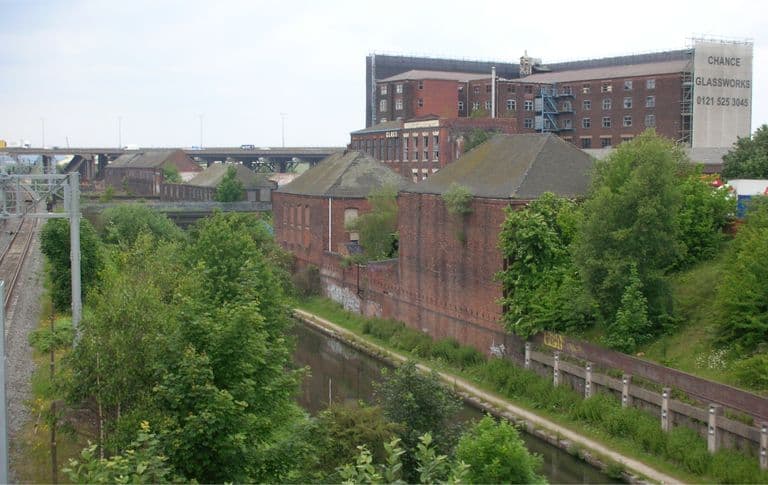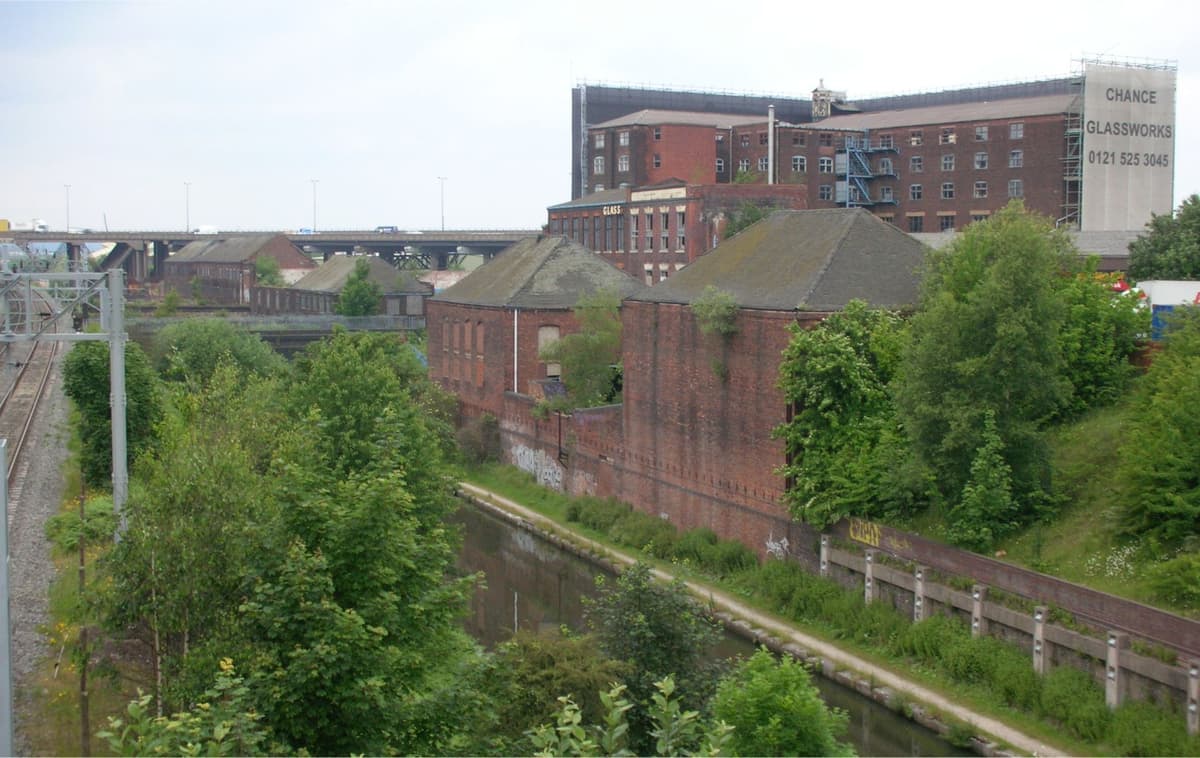
Glass needed big furnaces and plenty of capital, so it was made in large works rather than small Birmingham workshops. The Victoria County History singles out Chance’s works at Spon Lane as “the most striking example”.
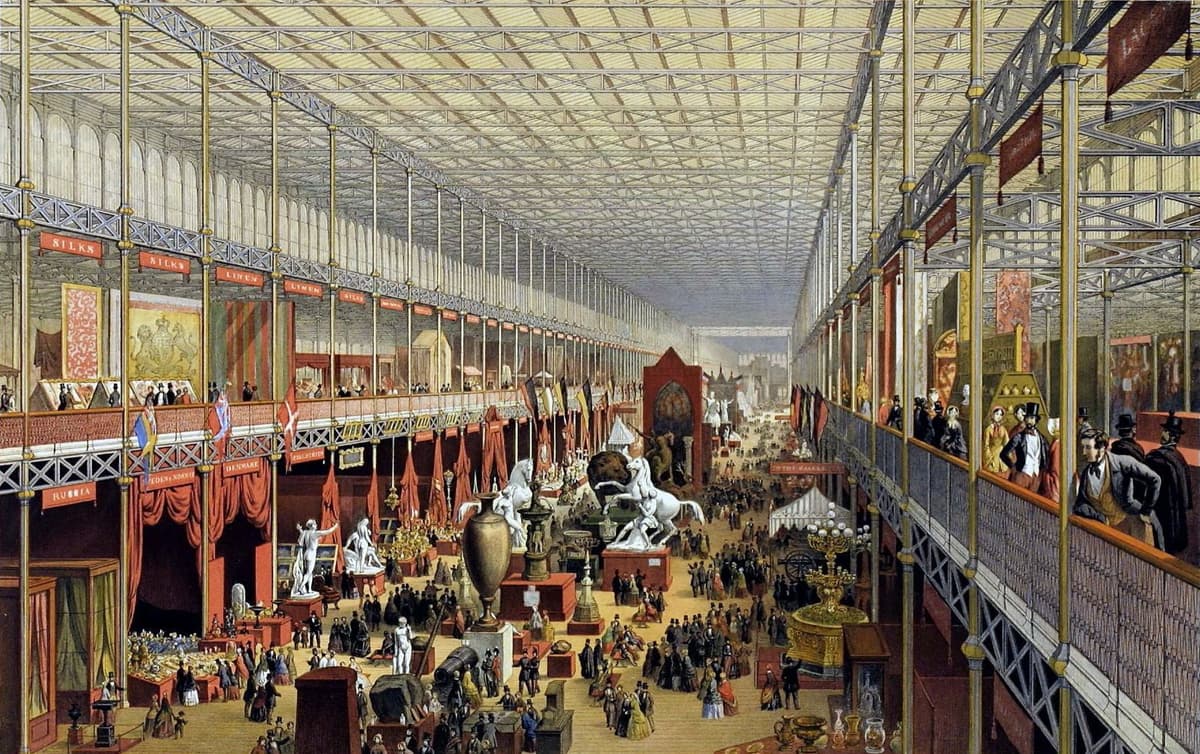
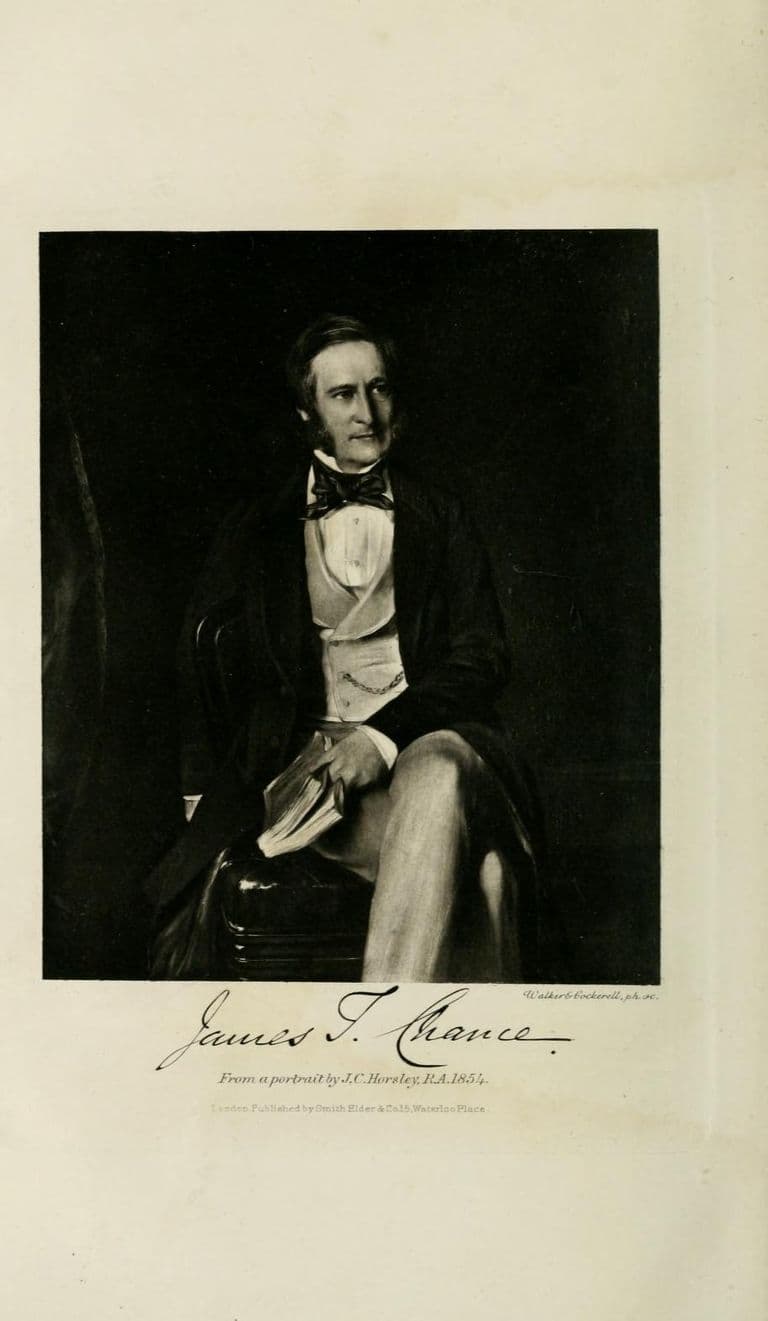
The Birmingham area’s great contribution came in 1832, when Robert Lucas Chance began making sheet glass at Spon Lane with French and Belgian blowers. Sheet glass was blown as a cylinder, split and flattened, and gave bigger panes than the older crown glass. His nephew James Timmins Chance’s polishing machines turned it into “patent plate”. After the glass excise was abolished in 1845 and the window tax in 1851, cheap glass in large panes went into windows across Victorian Britain, and into the roof of the Crystal Palace.
From the 1850s Spon Lane also made lighthouse lenses, optical glass and coloured glass. Its buried furnaces are now a scheduled monument.
Pictures
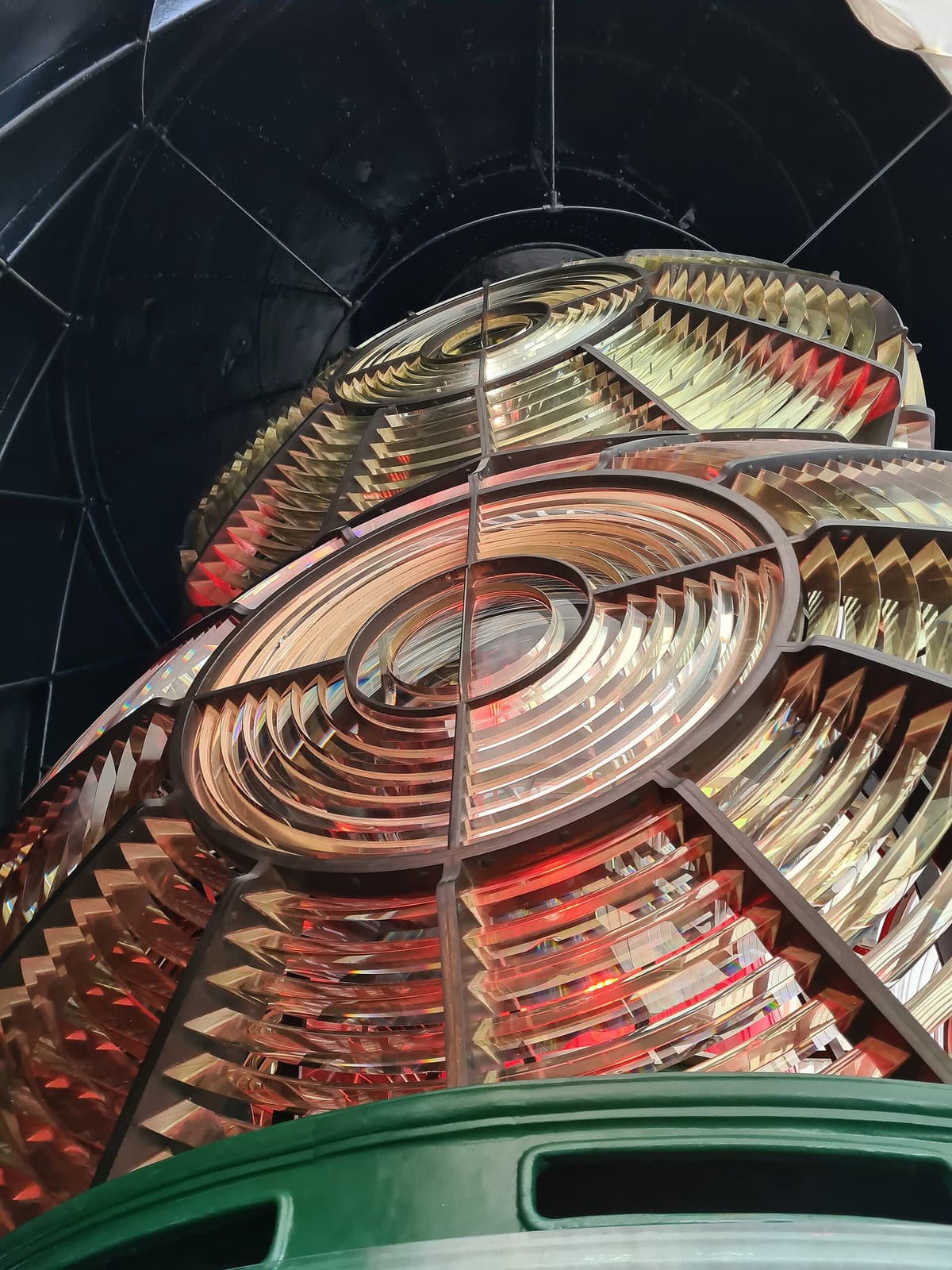
Chance optic at Souter Lighthouse, 25 October 2022Barabbas1312, 25 October 2022. Wikimedia Commons · CC BY-SA 4.0
On the map
2 places connected with Glass. Tap a number for directions — some sites are private homes or gardens, so each place’s page says what you can see from the street.

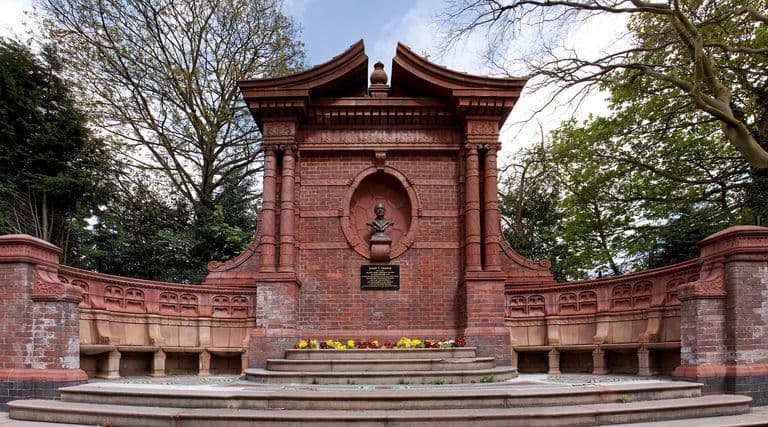
- West Smethwick Park — Surviving · Directions to West Smethwick Park (opens Google Maps)
- Chance’s Glassworks, Spon Lane — Partly surviving, At risk · Directions to Chance’s Glassworks, Spon Lane (opens Google Maps)
Key dates
- 1822 (traditionally 1824) — Robert Lucas Chance buys the Spon Lane glassworksRobert Lucas Chance buys the British Crown Glass Company’s works beside the Birmingham Canal at Spon Lane, Smethwick. The firm later dates its founding to 1824. It grows into Chance Brothers.
- August 1832 — Sheet glass made at Spon LaneWith French and Belgian blowers, Chance begins making cylinder sheet glass in No. 2 glasshouse, “the French house”: the first regular manufacture of sheet glass in England.
- 1838 — James Timmins Chance patents ‘patent plate’James Timmins Chance patents a process for grinding and polishing sheet glass (no. 7618). ‘Patent plate’ is later used to glaze the Houses of Parliament.
- 1850–51 — Smethwick glass for the Crystal PalaceChance Brothers makes the sheet glass for Paxton’s Crystal Palace, over 956,000 square feet in panes 49 by 10 inches. Most of the ironwork comes from Fox, Henderson & Co., also of Smethwick.
- c. 1855 — Chance lighthouse works under wayAfter a start around 1850, lighthouse-lens making begins in earnest at Spon Lane under James Timmins Chance. Work with Faraday at Whitby in 1860 makes Chance a leading maker of lighthouses worldwide.
- 1981 — Chance’s Spon Lane glassworks closesFlat-glass production at Smethwick, ended in 1976, is followed by the closure of the whole works after more than 150 years. Eight listed buildings and buried furnaces survive.
Sources and further reading
- Smethwick: Economic history, in A History of the County of Stafford, vol. 17, pp. 107–118 — M. W. Greenslade (ed.), Victoria County History, 1976
- Economic and Social History: Industry and Trade, 1500–1880, in A History of the County of Warwick, vol. 7, pp. 81–139 — W. B. Stephens (ed.), Victoria County History, 1964
- Chances Glassworks, Smethwick — National Heritage List for England entry 1021387 (scheduled monument) — Historic England, 2005