
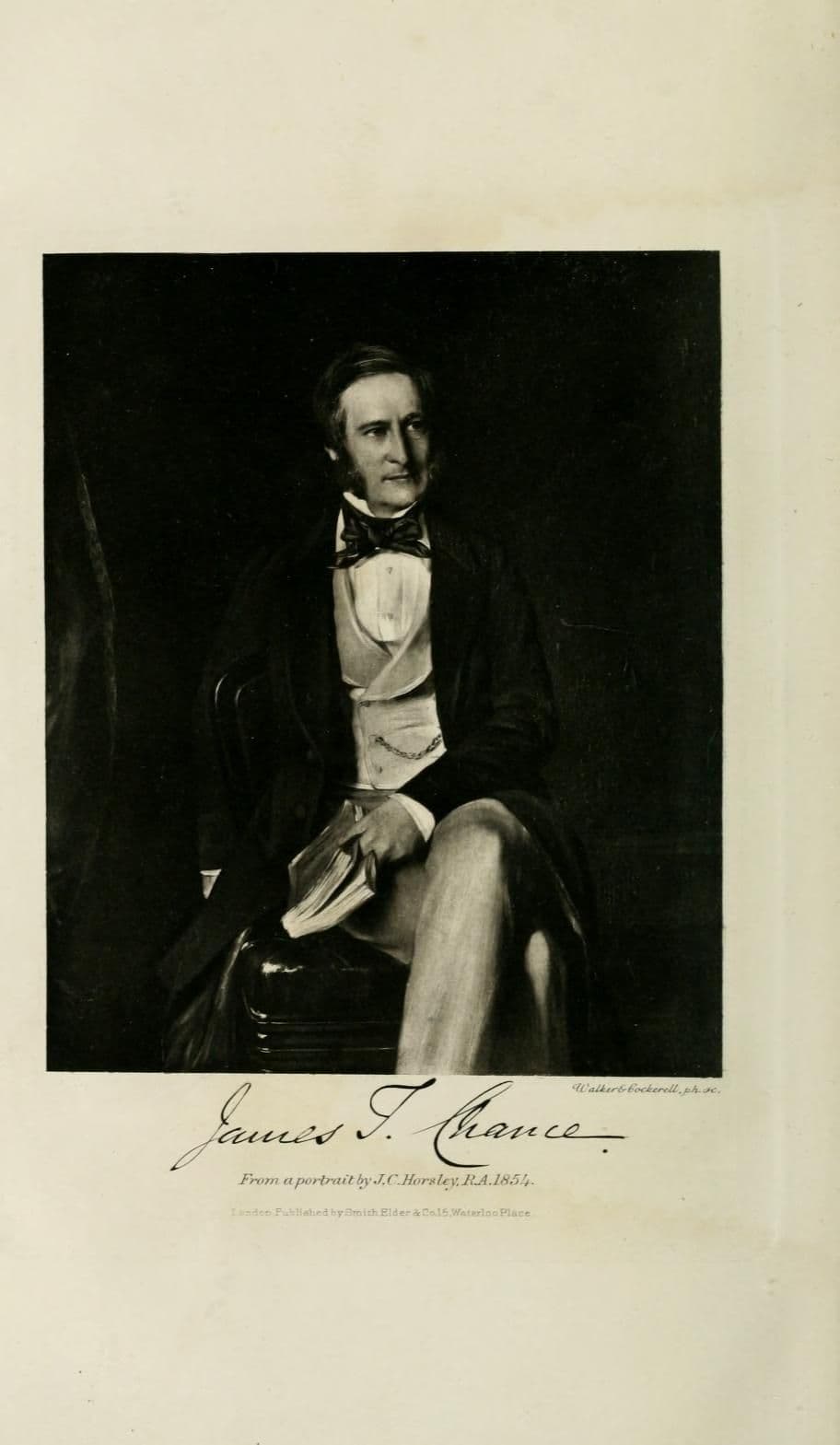
In the autumn of 1860 two men were at work in the southern lighthouse at Whitby. One was Michael Faraday, the most famous scientist in Britain, acting for Trinity House, the body that ran England’s lighthouses. The other was a glassmaker from Smethwick, James Timmins Chance.
The lights round Britain’s coasts had a problem. A royal commission had found serious faults in their lenses, most of them made in France. At Whitby, Chance and Faraday worked through the apparatus piece by piece. Faraday acknowledged his debt to Chance “for the earnest and intelligent manner in which he has wrought with me in the experiments, working and thinking every point out”. From then on, he announced, the maker could be relied on to adjust a light perfectly.
It was a turning point for the lighthouse works at Spon Lane, and the start of its rise to world fame.
The reluctant glassmaker
James Timmins Chance was born in Birmingham on 22 March 1814, the eldest of six sons of William Chance, the merchant who had rescued his brother Lucas’s glassworks at Spon Lane. His mother, Phoebe, was the daughter of James Timmins of Birmingham.
Faraday acknowledged his debt to Chance “for the earnest and intelligent manner in which he has wrought with me in the experiments, working and thinking every point out”.
He was clever, and he did not want the family business. After University College London he went into his father’s merchant house at seventeen, found it distasteful, and began to study for holy orders. In 1833 he went up to Trinity College, Cambridge, to read mathematics. He lost a year to insomnia brought on by overwork, but in 1838 he graduated seventh wrangler, one of the best mathematicians of his year. He then joined Lincoln’s Inn to study law.
In the end he went to Smethwick. He joined his uncle and father at Spon Lane and became a partner in 1839.
Patent plate
He brought an invention with him. Sheet glass, the speciality of Spon Lane, came in big panes, but its surface was uneven and lacked brilliance. Plate glass, cast and then ground flat, was clear but expensive. While still at Cambridge, Chance worked out how to grind and polish sheet glass. He patented the process in 1838, patent no. 7618.
The result was “patent plate”. In Historic England’s words, it brought sheet glass “to a transparency hitherto only seen in plate glass”. In 1840 the firm installed eight polishing machines and twenty smoothing machines, driven by a Boulton & Watt steam engine. Historic England calls it “highly sought-after”. The firm supplied 28,000 square feet of it for the new Houses of Parliament.
Glass for the Crystal Palace
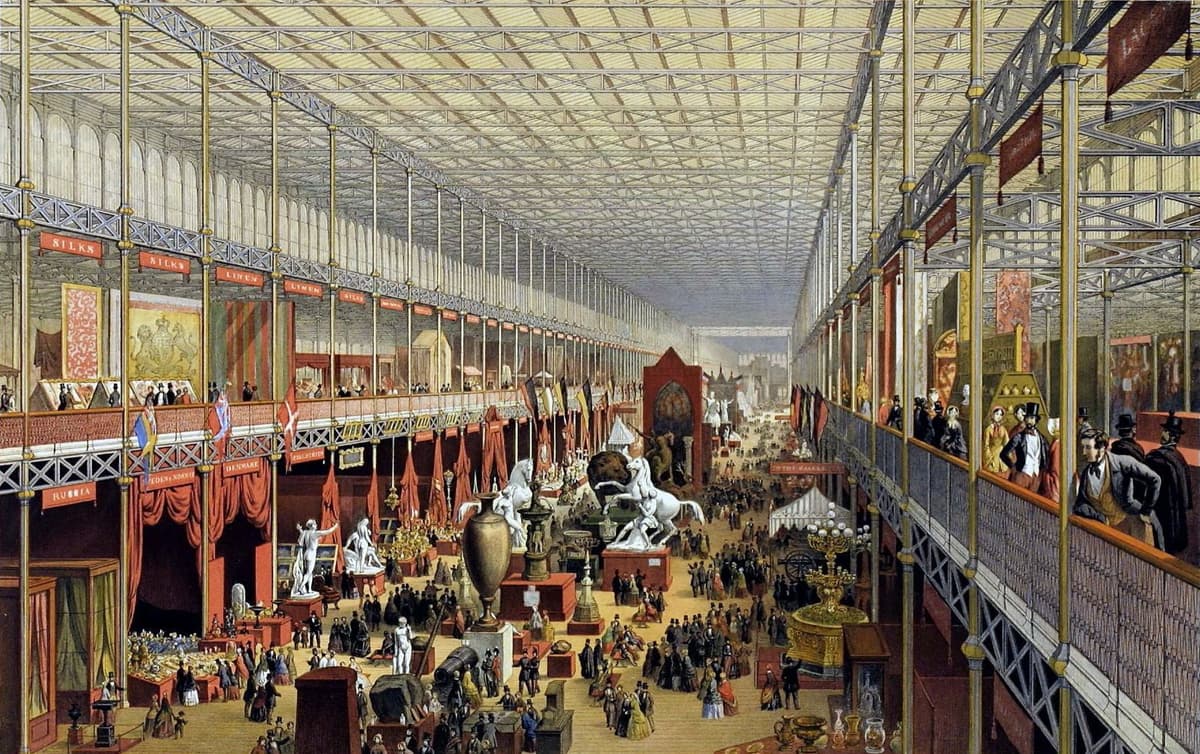
In 1850 Joseph Paxton’s design for the Great Exhibition building was accepted: a vast greenhouse of iron and glass in Hyde Park. Chance Brothers had already supplied the glass for Paxton’s experiments at Chatsworth. Now they won the contract for the Crystal Palace.
The panes were sheet glass, each 49 inches by 10. In the summer of 1850 the firm sent recruiters to France for more blowers, and the first eight arrived at Spon Lane on 8 August. In January 1851 the works turned out 63,000 panes in a single fortnight. Historic England puts the total at over 956,000 square feet of glass, about 300,000 panes by the figure most often quoted. When the building was moved to Sydenham, Chance supplied another 750,000 square feet.
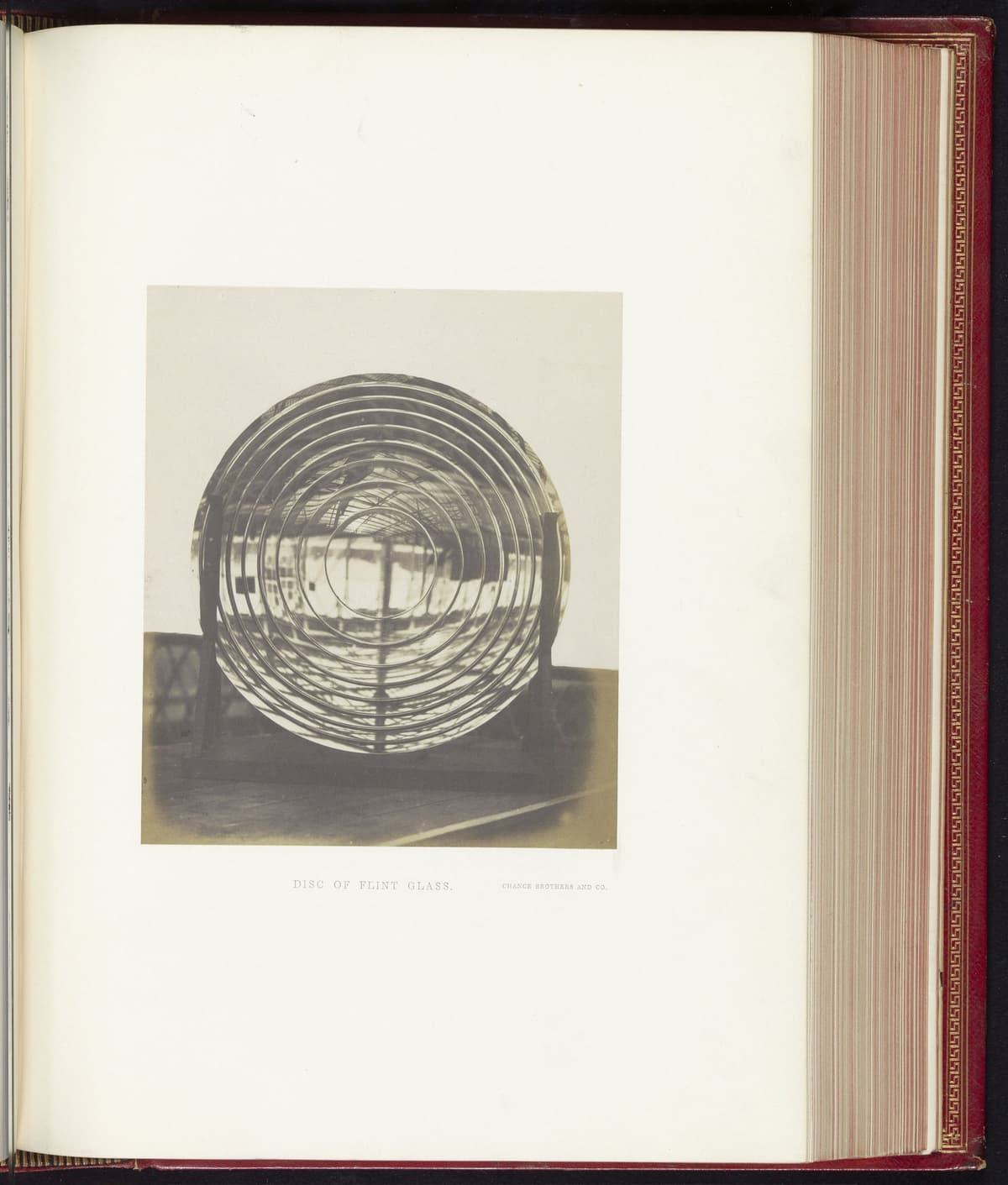
Smethwick did more than glaze it. Most of the ironwork came from Fox, Henderson & Co., whose works was also in Smethwick. Inside the exhibition, Chance Brothers showed off a large disc of flint glass for a telescope, and the firm’s first lighthouse.
Into the lighthouse
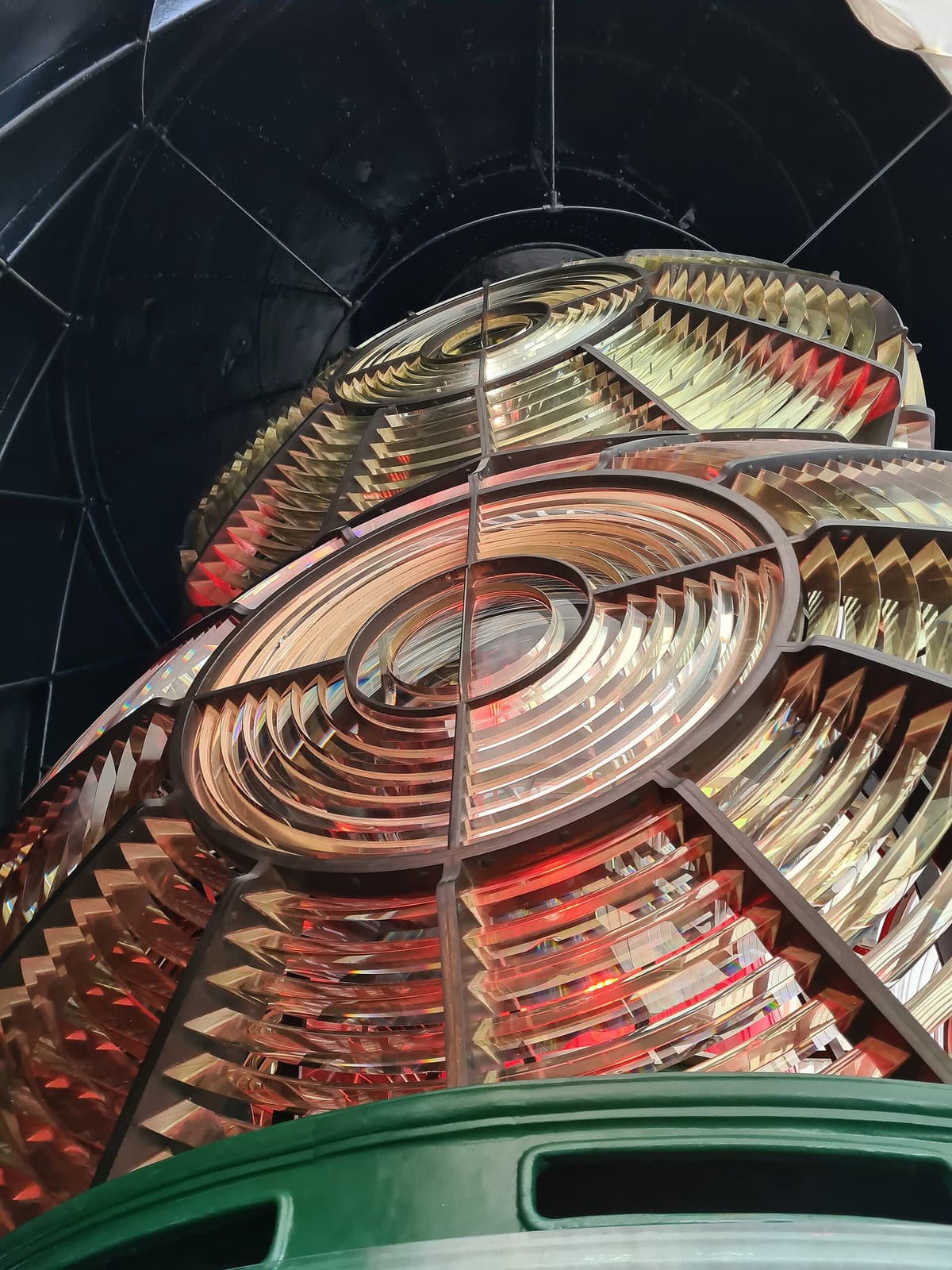
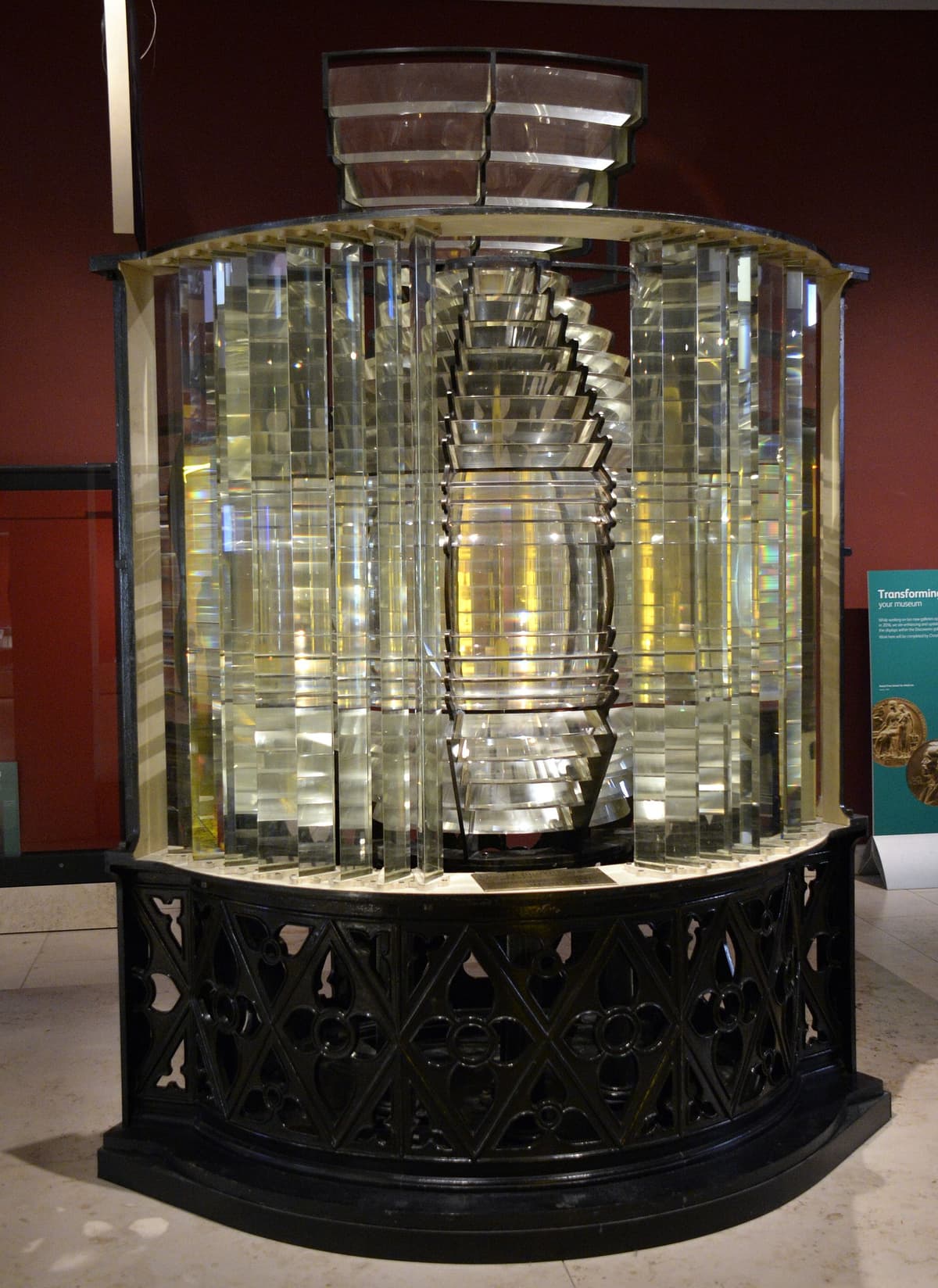
Lighthouse lenses were a French invention. A lamp at the centre was surrounded by rings of glass prisms that gathered its light into a beam. Making them took optical glass of very high quality, ground to exact shapes, and in the 1840s two firms in Paris had the trade almost to themselves.
Chance Brothers took it up around 1850. In 1848, the year of revolution in France, Georges Bontemps, the French glassmaker who had helped the firm recruit its first blowers, came to Spon Lane himself. He stayed until 1854, bringing his knowledge of coloured and optical glass. A French lens expert, M. Tabouret, was engaged too, but left in 1853. From 1855 the work went ahead in earnest under James Chance’s own direction.
Then the state took an interest. In 1858 a royal commission began to inquire into Britain’s lighthouses. On 23 December 1859 the commissioners went over the works at Spon Lane with Chance as their guide. The astronomer royal, Sir George Airy, came in April 1860 to examine a large light being built for the government of Victoria, in Australia. That autumn came Whitby.
Whitby, and after
At Whitby Chance found that the lens did not have to be set by sighting the real horizon. A marked staff a short distance away would do. That meant a light could be adjusted exactly before it left the factory.
In May 1861 Trinity House asked him to examine all the lenses in its lighthouses. Most were French, and in several cases the only cure was to rebuild them. Chance made the final adjustments mostly with his own hands. After that he was usually left to design the lights himself.
He would not patent his improvements. According to the Dictionary of National Biography, he made them public property out of patriotism. In 1867 he read a paper on lighthouse optics to the Institution of Civil Engineers, which won its Telford medal. At the Paris Exhibition that year, tests showed his lenses outperforming the French ones.
Spon Lane changed to match. An 80-foot brick tower was built to test the lights. From 1859 more land was bought for a lighthouse works, which made not only the lenses but the burners, lanterns, cast-iron towers and clockwork that turned them. Grace’s Guide credits him with the optics for lights at South Foreland, Souter Point, Flamborough and Hartland Point, among others.
In 1872 he handed the lighthouse works to the physicist John Hopkinson and began to step back from the firm.
Handsworth and Smethwick
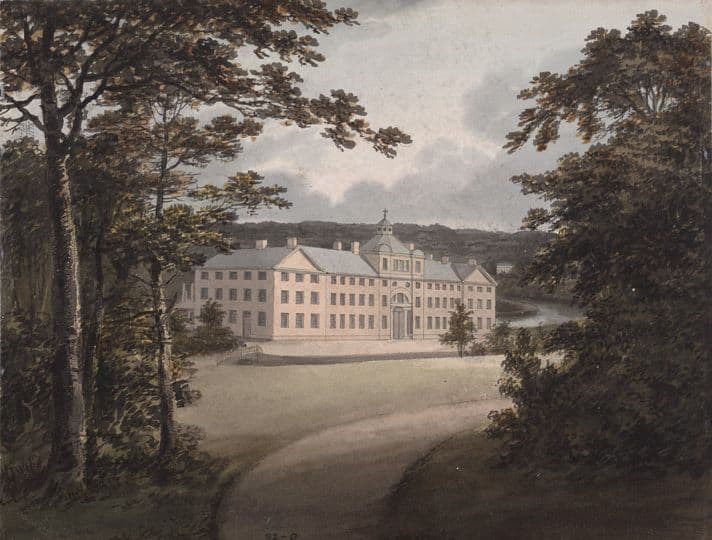
For nearly a quarter of a century, from 1845 to 1869, Chance lived at Brown’s Green in Handsworth. He was mainly responsible for forming the Handsworth Volunteer Rifle Corps, and he was high sheriff of Staffordshire in 1868. He sat on the board of the London and North Western Railway from 1863 to 1874.
He gave generously. In 1895 he gave Smethwick a public park, West Smethwick Park, at a cost of £30,000 with its endowment. In 1900 he gave £50,000 to found the Chance School of Engineering at the new University of Birmingham. That year he was made a baronet.
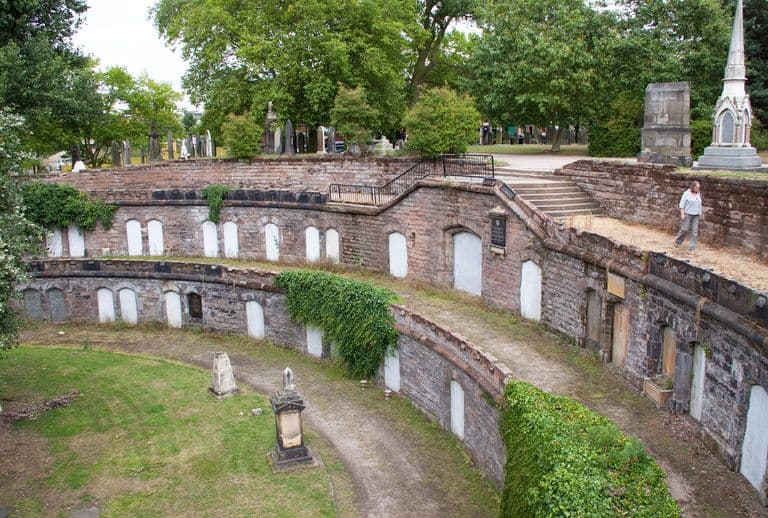
He died at Hove on 6 January 1902, aged 87. He was cremated at Woking and buried in the Church of England cemetery in Warstone Lane, in Birmingham’s Jewellery Quarter.
Why it mattered
James Chance took a family firm that made very good window glass and made it a firm of scientific instruments.
Patent plate came first: ordinary sheet glass, ground and polished until it looked like the expensive kind. It filled the windows of the Houses of Parliament. Then came the lighthouses. In the 1840s Britain relied on Paris for the lenses that guarded its own coasts. After Whitby, Spon Lane could design, build and adjust a complete light, test it in its own tower, and ship it anywhere. Historic England says the Chance lighthouse works became “pre-eminent globally”.
The firm’s scientific skills lasted long after him. In the First World War Chance made the optical glass for gunsights and binoculars that Britain had bought from Germany, and in 1943 it was blowing cathode-ray tubes for radar.
In the lighthouse work he took out no patents. He worked through problems with Airy and Faraday until the answers could be built into the factory’s routine, and then made them public. Fittingly, his largest gift, £50,000 in 1900, founded a school of engineering at the University of Birmingham.
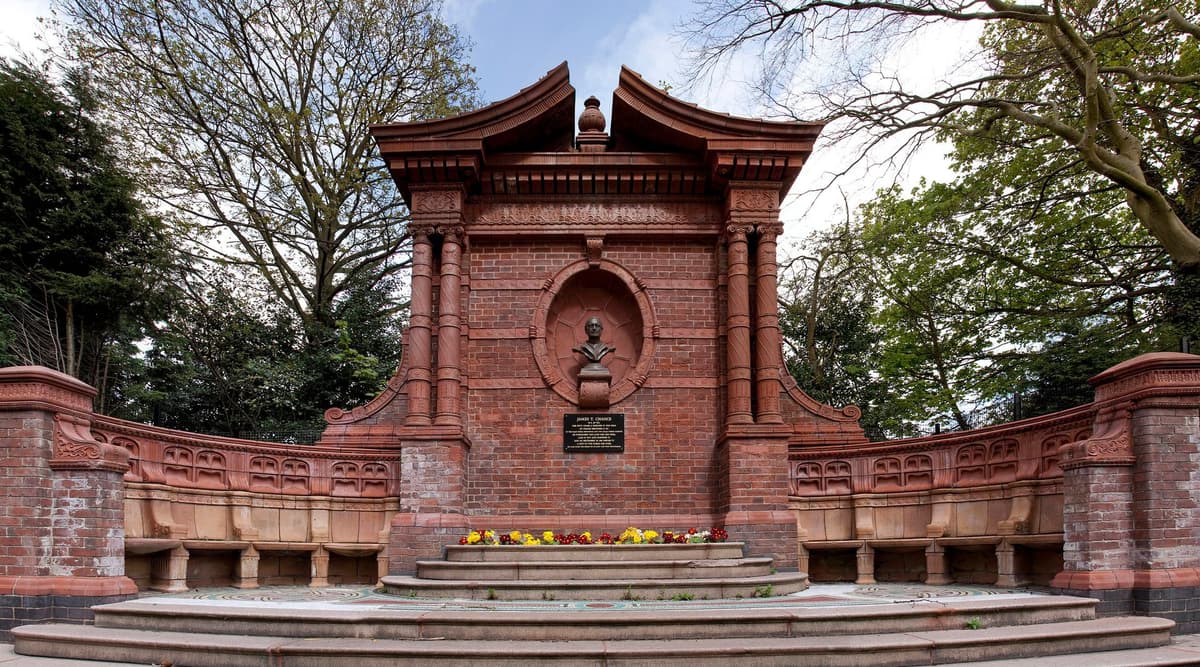
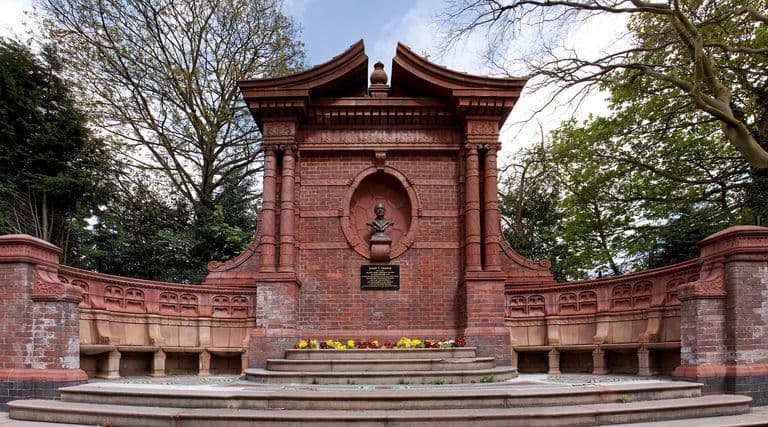
His bust still looks out over West Smethwick Park, and Chance optics survive from Souter Point lighthouse to the National Museum of Scotland.
On the map
3 places connected with Sir James Timmins Chance. Tap a number for directions — some sites are private homes or gardens, so each place’s page says what you can see from the street.

- West Smethwick Park — Surviving · Directions to West Smethwick Park (opens Google Maps)
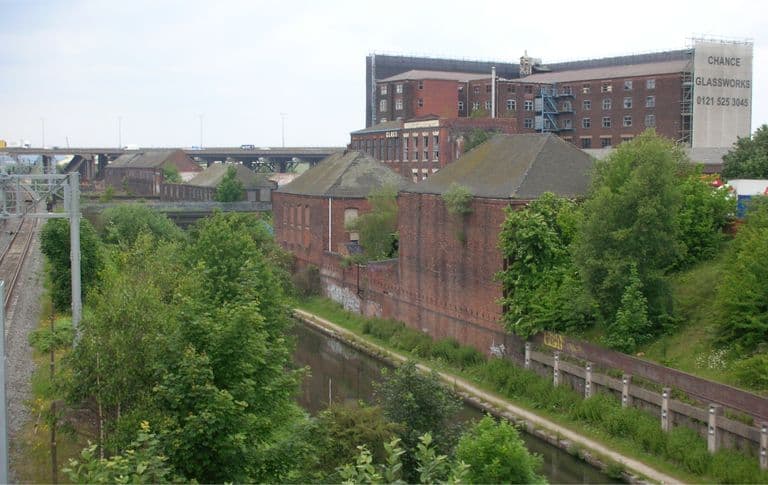
- Chance’s Glassworks, Spon Lane — Partly surviving, At risk · Directions to Chance’s Glassworks, Spon Lane (opens Google Maps)
- Warstone Lane Cemetery — Surviving, Surviving but altered · Directions to Warstone Lane Cemetery (opens Google Maps)
Key dates
- 1838 — James Timmins Chance patents ‘patent plate’James Timmins Chance patents a process for grinding and polishing sheet glass (no. 7618). ‘Patent plate’ is later used to glaze the Houses of Parliament.
- 1850–51 — Smethwick glass for the Crystal PalaceChance Brothers makes the sheet glass for Paxton’s Crystal Palace, over 956,000 square feet in panes 49 by 10 inches. Most of the ironwork comes from Fox, Henderson & Co., also of Smethwick.
- c. 1855 — Chance lighthouse works under wayAfter a start around 1850, lighthouse-lens making begins in earnest at Spon Lane under James Timmins Chance. Work with Faraday at Whitby in 1860 makes Chance a leading maker of lighthouses worldwide.
Sources and further reading
The patent: Grace’s Guide gives patent no. 7618 of 1838 for polishing sheet glass; some accounts date the process to 1839, the year Historic England says he joined the partnership. The DNB says only that he invented it “whilst still at Cambridge”.
When he joined: Grace’s Guide says he joined the works on leaving Cambridge in 1836, which cannot be right as he graduated in 1838. Historic England gives 1839 for his partnership.
Crystal Palace glass: figures vary. Historic England gives “over 956,000 square feet”; Revolutionary Players says “more than a million square feet”; the number of panes is usually quoted as about 293,000–300,000. We use Historic England’s figure and the rounded pane count. Chance Brothers was the glazier as a firm; there is no evidence for James Chance’s personal part in the contract.
Optical glass: Grace’s Guide says the firm began making optical glass in 1838; other accounts link it to Bontemps’ arrival in 1848. We say the firm moved into optical glass around 1850.
Lighthouse dates: Historic England says the first Chance lighthouse was shown at the 1851 exhibition; the DNB says the work began about 1850 and “in earnest” in 1855; Grace’s Guide gives 1859 for the lighthouse works. These are stages of one story.
Date of death: the DNB gives 6 January 1902 at Hove. Grace’s Guide’s “22 March 1902” confuses it with his birthday.
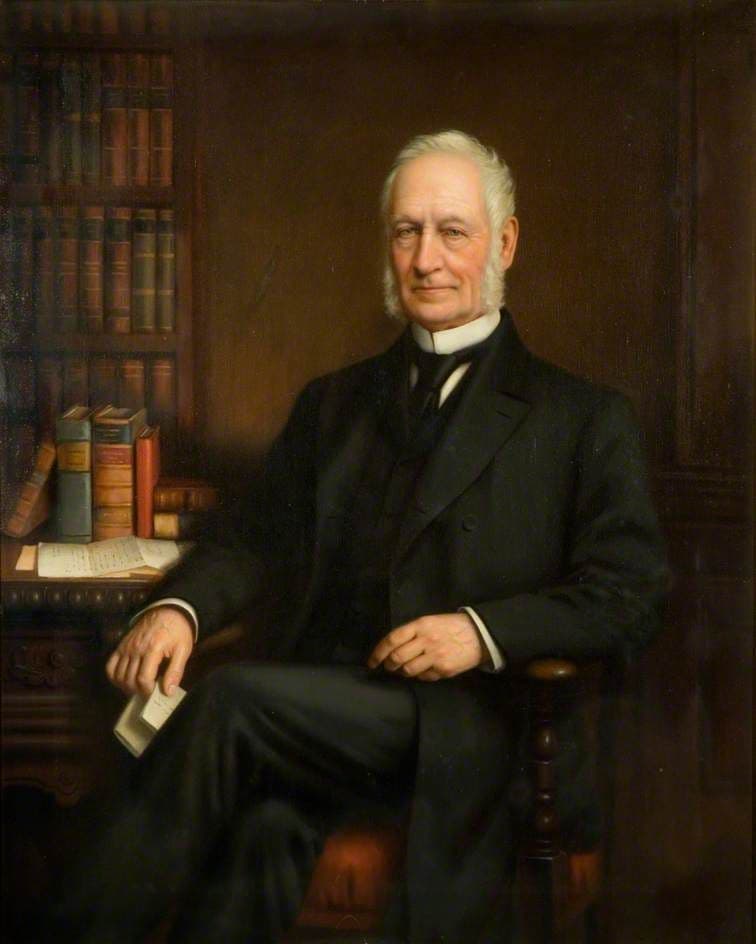
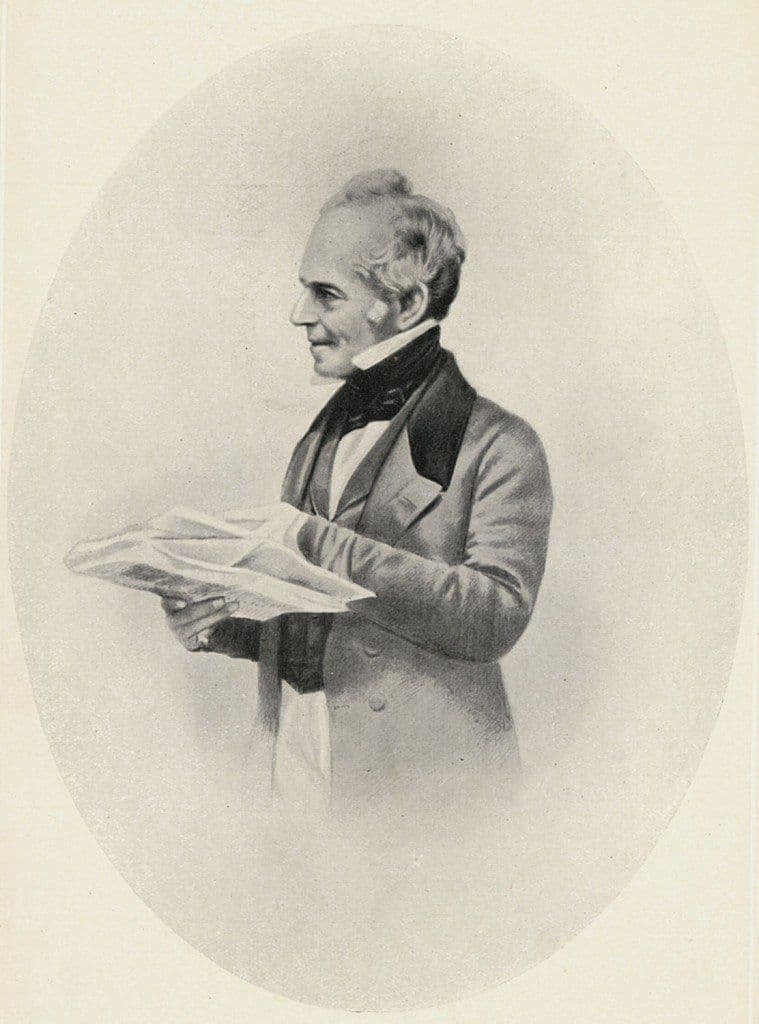
The Horsley portrait is dated 1854 on the 1902 reproduction and in the DNB; Wikimedia Commons labels it 1851.
Not used: the claim that Chance made the glass for some 2,300 lighthouses, which we could not trace to a primary source, and a quotation attributed to Faraday calling Chance “the foremost authority in the land”, which we could not verify.
- Chance, Sir James Timmins, first baronet (1814–1902) — Charles Welch, Dictionary of National Biography, Second Supplement, vol. 1 (Smith, Elder), 1912. life, lighthouse work, Whitby and Faraday quotation, homes, gifts, death
- Chances Glassworks, Smethwick — National Heritage List for England entry 1021387 (scheduled monument) — Historic England, 2005. patent plate; Parliament glass; 1840 machines; Crystal Palace figures; lighthouse works
- Smethwick: Economic history, in A History of the County of Stafford, vol. 17, pp. 107–118 — M. W. Greenslade (ed.), Victoria County History, 1976. Crystal Palace; test tower; lighthouse works; Bontemps 1848
- James Timmins Chance — Grace’s Guide to British Industrial History. patent 7618 of 1838; lights designed
- Chance Brothers and Co — Grace’s Guide to British Industrial History. Chatsworth; Hopkinson
- Glazing the Crystal Palace — Revolutionary Players. pane size; 1850 recruitment; 63,000 panes
- Plate or Sheet Glass — Revolutionary Players. sheet glass faults
- Glass-blowers ‘Gathering’ from the Furnace (Art.IWM ART LD 2851) — Imperial War Museums. Ref. Art.IWM ART LD 2851. cathode-ray tubes, 1943
- Georges Bontemps — Wikipedia. Bontemps 1848–54 (lead only)
Comments
Comments will load here.