
When the Chemical Society published its obituary of Alfred Bird in 1879, it praised a man of wide scientific curiosity. It described his experiments on sound and on the weather, a water barometer he built in 1859, and a set of tuned glass bowls spanning five octaves, which he played himself. It did not mention custard.
By then Bird’s Custard Powder was on sale far beyond Birmingham. The chemist the obituary remembered and the food manufacturer the public knew were the same man, and his story shows how a chemist’s shop in the Bull Ring could start a new kind of Birmingham industry: food made in a factory, to a formula, and sold by advertising.
The chemist’s apprentice
Alfred Bird was baptised at Nympsfield in Gloucestershire on 25 August 1811, the fourth son of John Bird, an astronomer and lecturer, and his wife Mary. He was apprenticed in Birmingham to the druggists Philip Harris & Co., whose shop stood in the Bull Ring. In 1835 he married Elizabeth Lavinia Ragg in Nottingham.
In 1837 he set up on his own in Bell Street, a narrow street beside the markets that now lies under the Bullring shopping centre. He called himself “Alfred Bird, experimental chemist”. A chemist and druggist made up medicines and sold drugs and household chemicals. Bird also experimented, and he went on experimenting all his life.
Elizabeth’s problem
The story told ever since is a love story. Elizabeth Bird could not eat eggs or yeast. Her husband set out to make her food she could digest.
The firm’s own version is that in 1837 Bird made an egg-free custard from cornflour, which thickens hot milk the way egg yolks do, with colouring and flavouring. Usually, the story goes, the Birds served ordinary egg custard to guests. One evening Elizabeth’s custard went out instead, by accident or design. The guests loved it, and Bird saw a market.
How much of this is true? The date 1837 is the one the business used for its own foundation: it is carved, with 1902, on the front of the firm’s later works in Digbeth. The dinner party is family tradition, and no record of it from the time has been found. The careful accounts, following his entry in the Oxford Dictionary of National Biography, put things in a different order. Bird’s first success was “Bird’s Fermenting Powder”, a baking powder, in 1843. It raised dough with gas made by chemicals in the mix instead of live yeast, so Elizabeth could eat bread and cakes. Custard powder came after.
What is not in doubt is the chemistry. Both products replaced an awkward natural ingredient with a shelf-stable powder that anyone could use. That idea would make the family rich.
Worcester Street
Bird’s friends urged him to sell his powders, and the business outgrew Bell Street. By 1849 he was at 15 Worcester Street, near the Bull Ring. In 1851 he employed three men. By 1861 he had two men, two apprentices, a boy and ten girls. By 1844, according to company histories, custard powder was already on sale well beyond Birmingham.
The Crimean War made his baking powder famous. In 1855 it was accepted for baking fresh bread for the British army, and large quantities were shipped east. Bird advertised it that year, and in the newspapers from 1860.
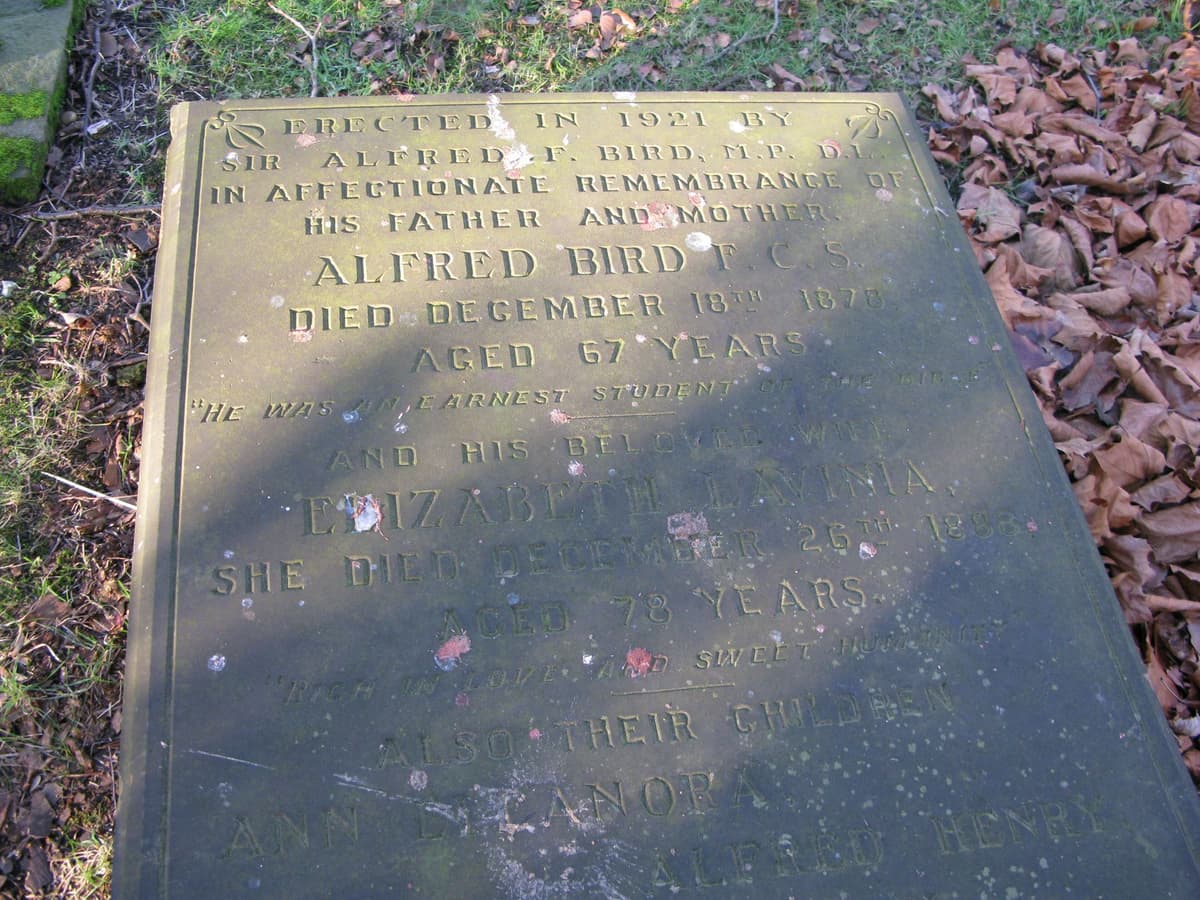
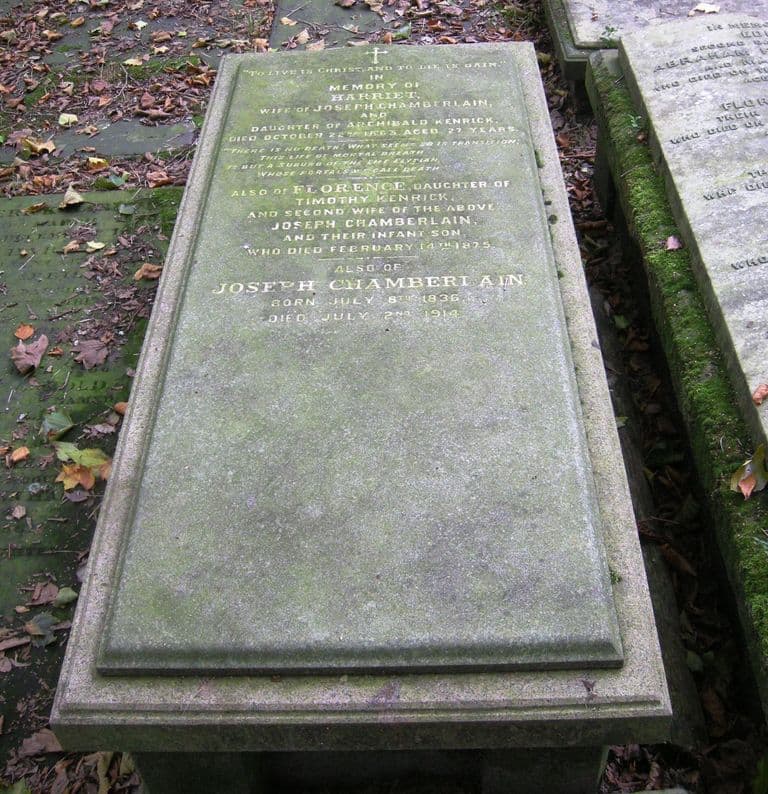
He never stopped experimenting. In 1853 he patented a way for a train’s guard to signal to the driver, and in 1866 an improvement in purifying water. He built a water barometer, said to be more sensitive than a mercury one, devised demonstrations of how the wind blows, and invented a night-light that could be refilled while still burning. He lectured on electricity. In 1870 he was elected a Fellow of the Chemical Society. He died at his home on the Bristol Road in December 1878 and was buried in Key Hill Cemetery, Hockley. In 1921 his son laid a new stone over the grave, calling him “an earnest student”.
Alfred Frederick Bird
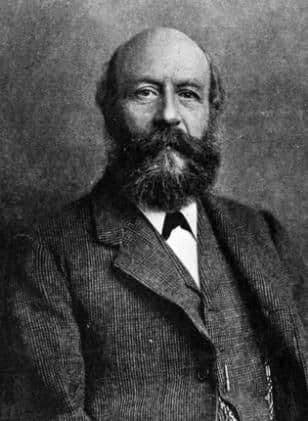
His son Alfred Frederick Bird, born in 1849, turned a chemist’s sideline into a national brand. He joined the business in 1867 and helped launch blancmange powder in fourteen flavours. After his father’s death he ran the firm with his brother Charles until their partnership was dissolved in 1884. By then it had a factory, the Devonshire Works in Moor Street.
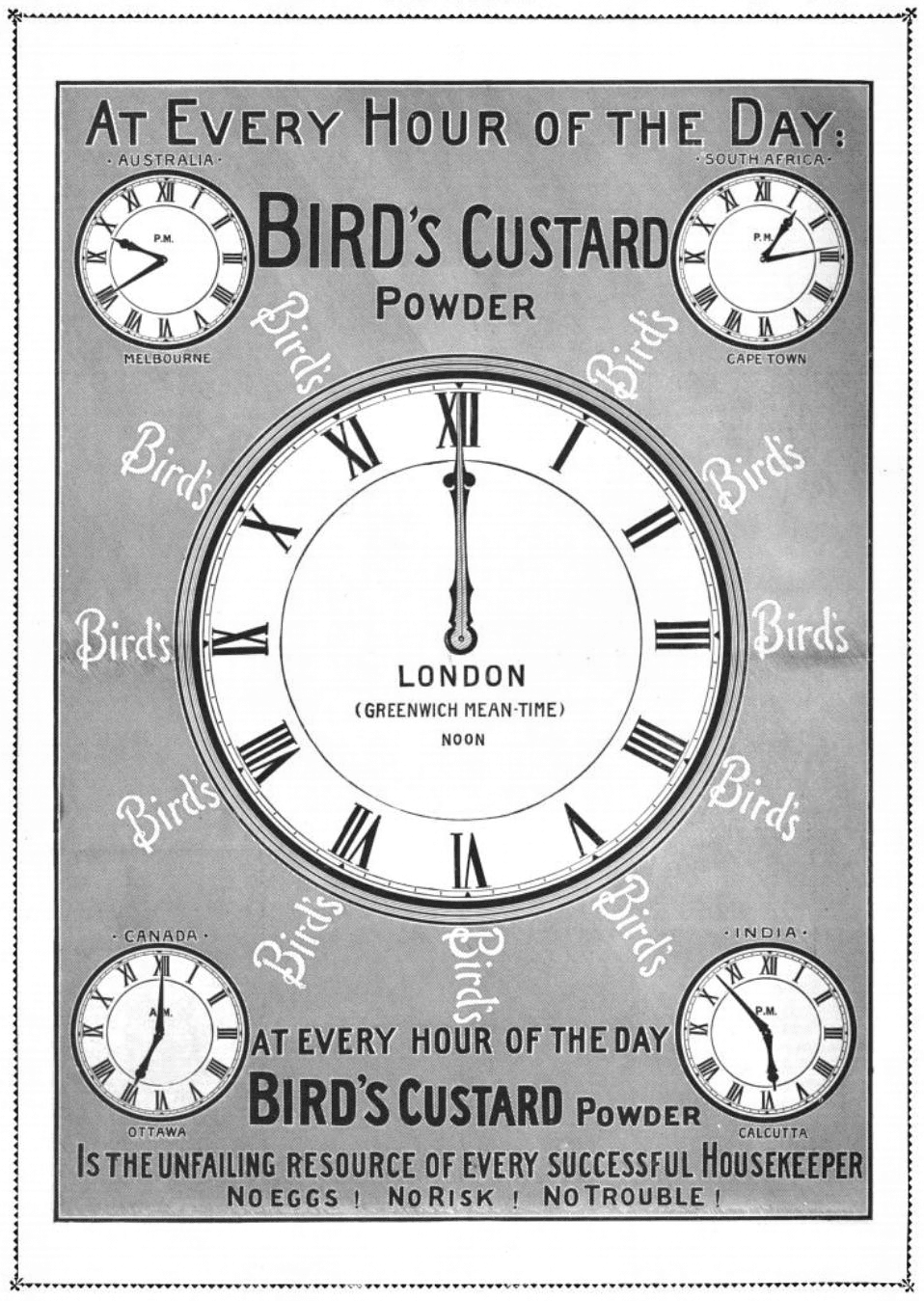
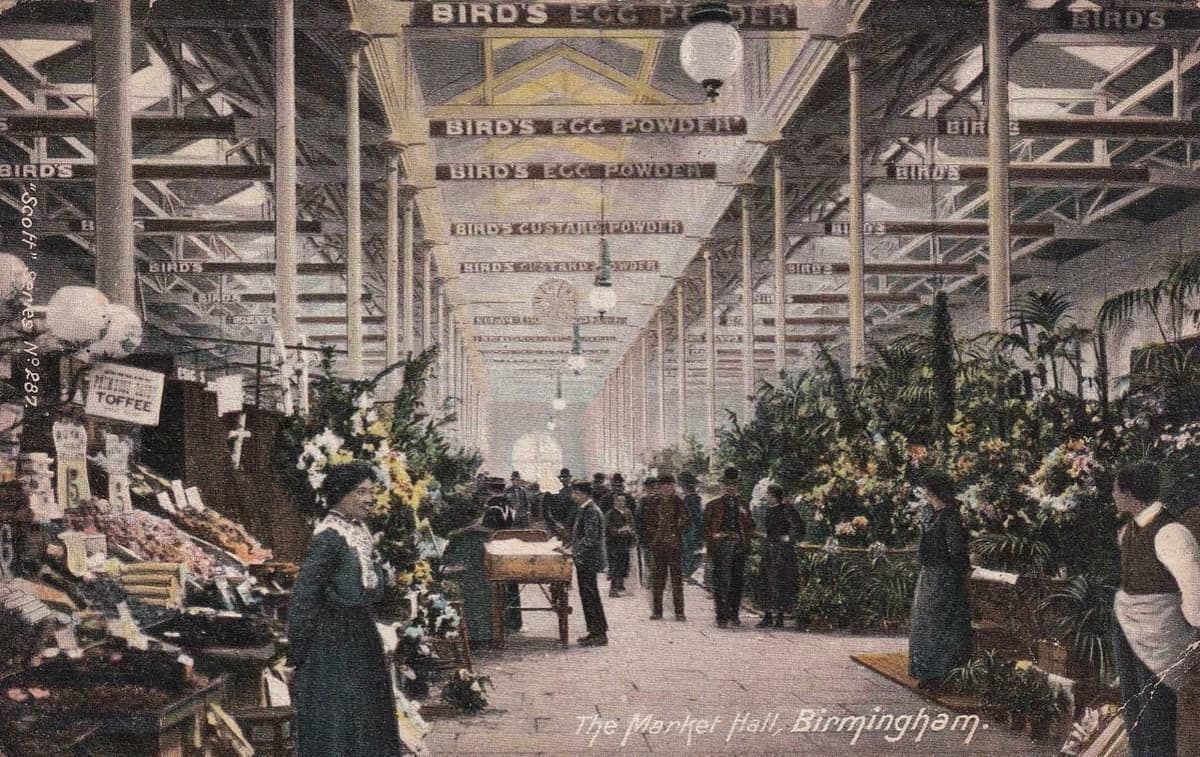
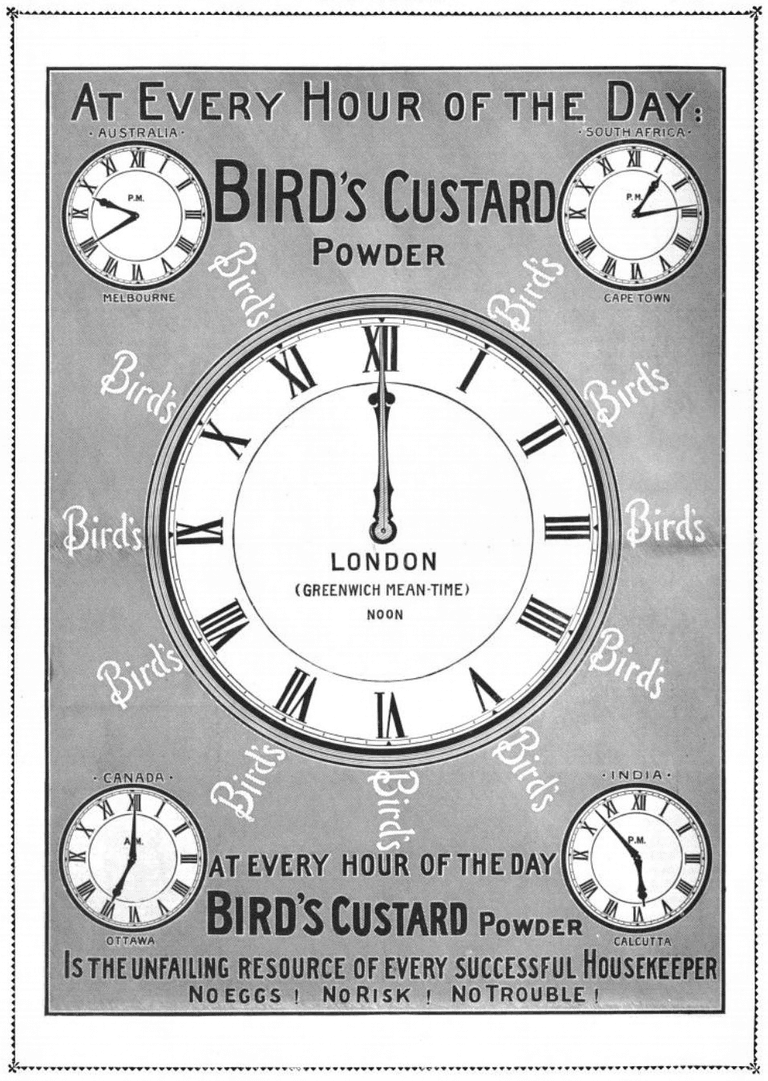
He understood advertising. From about 1880 Bird’s used colourful pictorial adverts through the London agent T. B. Browne, who also worked for Cadbury’s and Pears. Bird’s adverts went up on hoardings across the country, including inside Birmingham’s own Market Hall. A sales force of agents and travellers carried the powders to grocers across the country. Egg substitute followed in 1890 and jelly crystals in 1895. In 1900 the firm became Alfred Bird & Sons Ltd.
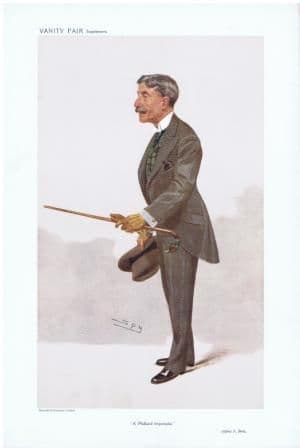
The younger Bird was a racing cyclist, a mountaineer and a founder member of the Automobile Club. He became Conservative MP for Wolverhampton West in 1910 and was knighted in 1920. In February 1922 he was knocked down by a car in London and died.
Digbeth
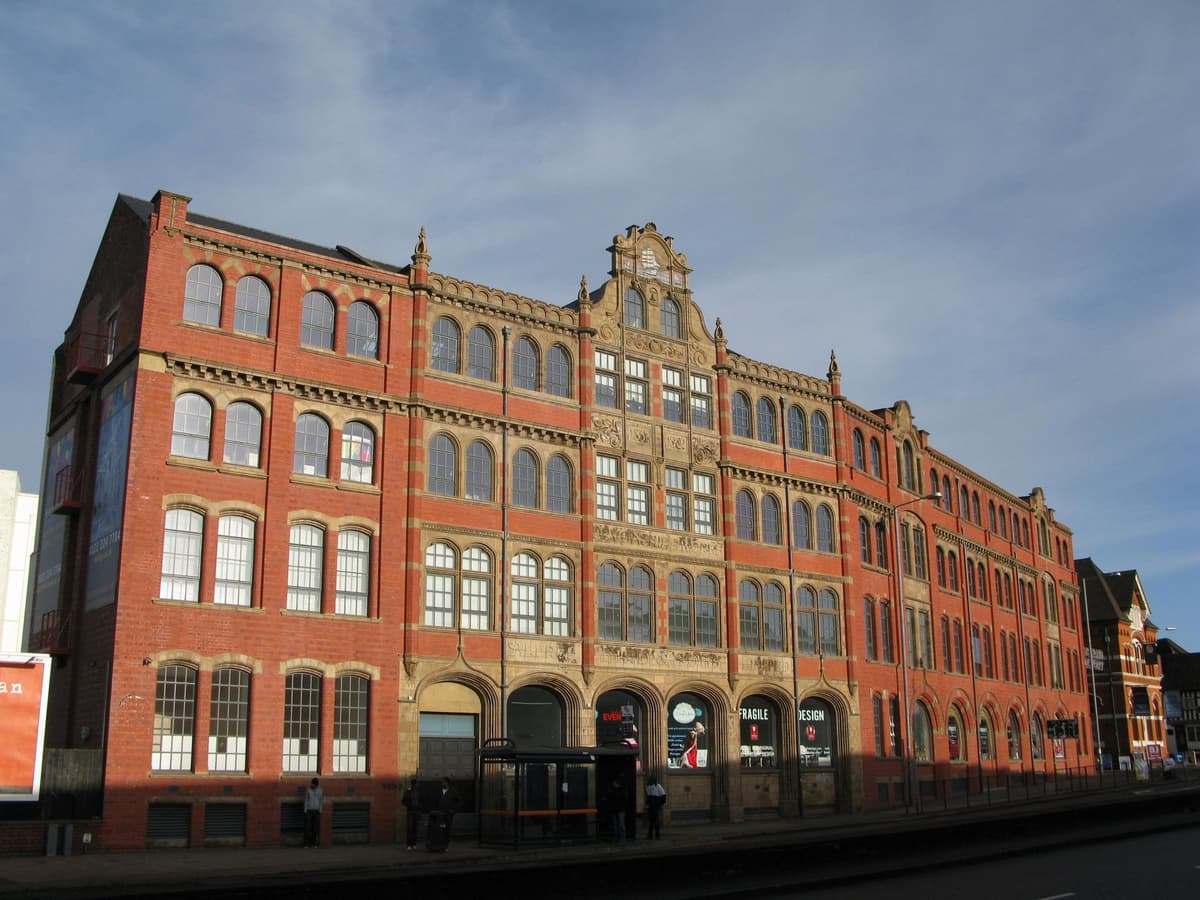
Demand outgrew Moor Street. In 1886–87 the firm moved to a new site between Gibb Street and the River Rea in Deritend, and the old works burned down in 1887. Over the next forty years the Devonshire Works spread along the river. A grand four-storey front of red brick and terracotta went up on High Street Deritend in 1902, with further ranges in 1908 and 1913. Bigger workshops on Gibb Street followed in 1916 and 1930. Across the front, bands of terracotta still read “Alfred Bird and Sons Limited / Devonshire Works / 1837 and 1902”, above a tiled ship in full sail.
Bird’s Custard went to the troops in the First World War. In 1947 the firm became part of the American company General Foods. Having outgrown Birmingham, it began building a new factory at Banbury in 1963, and production left Digbeth in the mid-1960s.
The Custard Factory
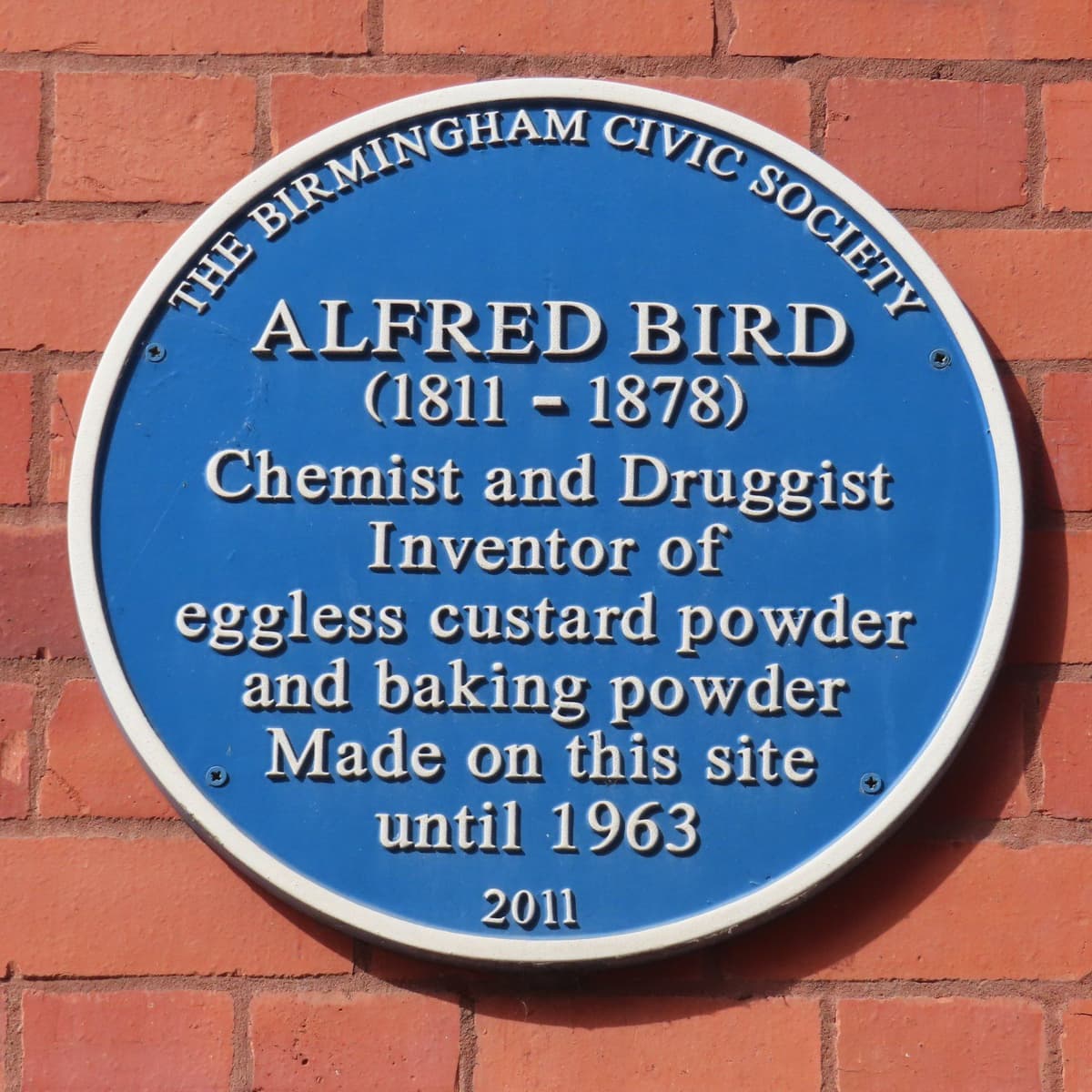
The empty works found a new life. From the early 1990s the developer Bennie Gray turned the buildings into studios, workshops and offices for artists and small creative businesses, around a pool where loading bays had been. The complex took the name everyone already used: the Custard Factory. Devonshire House, the 1902 front, is listed Grade II. In 2011, for the 200th anniversary of Alfred Bird’s birth, the Birmingham Civic Society unveiled a blue plaque to the chemist who started it all.
Why it mattered
Birmingham is remembered for metal: guns, buttons, pens and screws. Alfred Bird shows that the same town of small makers could turn chemistry into food. His powders took something perishable and difficult, eggs and yeast, and replaced it with something cheap, standard and long-lasting, made in a factory and sold in a packet.
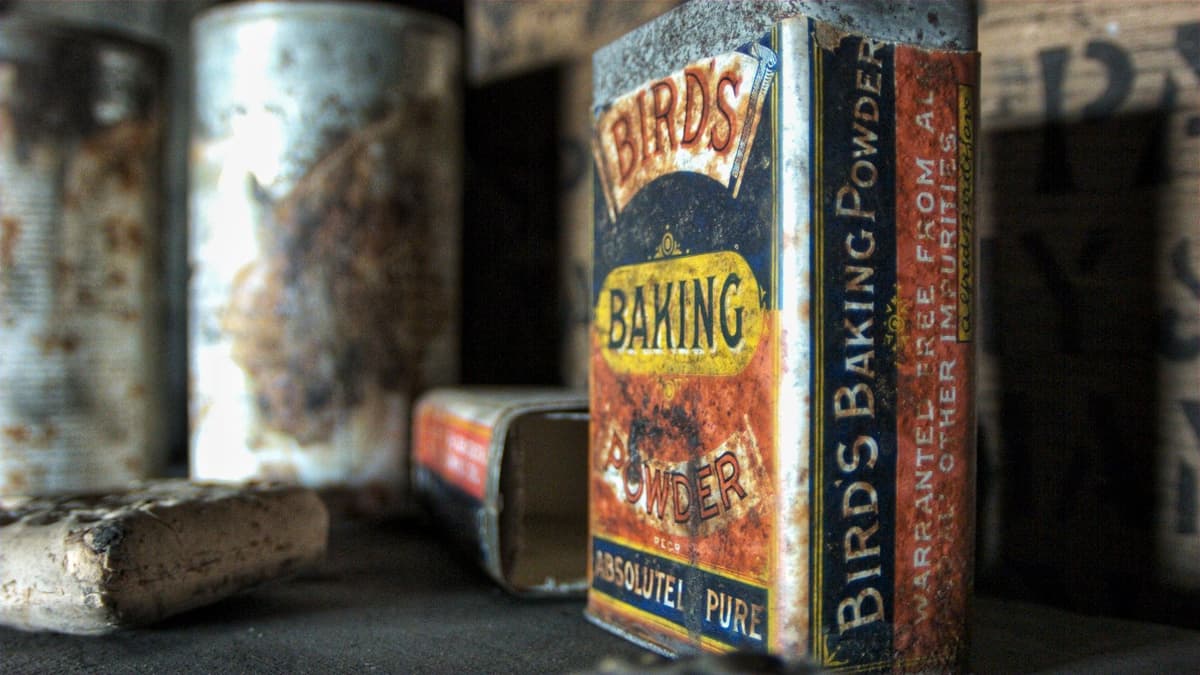
That was a new kind of product, and it needed a new kind of selling. Bird’s became one of the great Victorian advertisers, its name on hoardings across Britain and even, in the form of baking powder, in Captain Scott’s hut in Antarctica. Alongside Cadbury’s cocoa, Typhoo tea and HP Sauce, Bird’s made Birmingham a city of food as well as metal.
Alfred Bird is buried at Key Hill, among the Jewellery Quarter’s makers. His son’s works still stands beside the River Rea, its terracotta front dated “1837 and 1902”. The factory no longer makes custard. It makes something else Birmingham needs: work for people starting out with an idea and a small room to try it in.
On the map
2 places connected with Alfred Bird. Tap a number for directions — some sites are private homes or gardens, so each place’s page says what you can see from the street.

- The Custard Factory (Bird’s Devonshire Works) — Surviving, Surviving but altered · Directions to The Custard Factory (Bird’s Devonshire Works) (opens Google Maps)
- Key Hill Cemetery — Surviving, Surviving but altered · Directions to Key Hill Cemetery (opens Google Maps)
Key dates
- 1837 — Alfred Bird opens his chemist’s shopAlfred Bird sets up as an ‘experimental chemist’ in Bell Street. The firm later counted 1837 as its foundation and the year of egg-free custard, though the custard story is family tradition.
- 1843 — Bird’s Fermenting Powder (baking powder)Alfred Bird produces ‘Bird’s Fermenting Powder’, a baking powder that raises bread without live yeast, first for his wife. In 1855 it was supplied for baking fresh bread for the army in the Crimea.
- c. 1886–87 — Bird’s moves to the Devonshire Works, DeritendAlfred Bird & Sons moves to a new site between Gibb Street and the River Rea. The Devonshire Works grows along the river until the 1930s; its buildings are now the Custard Factory.
Sources and further reading
The famous story that Bird invented custard powder in 1837 for his wife, and that guests were once served it by accident, is family and company tradition. No contemporary record of it has been found. The Oxford DNB account, followed by Grace’s Guide, says Bird’s first product was baking powder (‘Bird’s Fermenting Powder’) in 1843, followed by custard powder; 1837 is the year he opened his own shop, and the firm used it as its foundation date. The ODNB entry was read only in summary. Some sources (Wikipedia, the Civic Society) place the 1837 shop in Bull Street; Grace’s Guide and the Jewellery Quarter Research Trust say Bell Street. The Civic Society gives his birth as 16 July 1811; the ODNB gives his baptism as 25 August 1811. His death is usually dated 15 December 1878, but the gravestone his son put up at Key Hill in 1921 says 18 December. The Chemical Society obituary of 1879 has been seen only as transcribed by Wikipedia, so it is paraphrased here, not quoted. The city council’s conservation area appraisal dates the move to Gibb Street to 1886 in one place and 1887 in another. The Custard Factory’s own website says the factory was built in 1906. Production left Birmingham between 1963 and 1966: the blue plaque says ‘until 1963’, Grace’s Guide says 1966. Claims that Bird’s baking powder was the first of its kind, or that he invented the free advertising calendar, have not been verified and are not used.
- Bird, Alfred (bap. 1811, d. 1878), chemist and food manufacturer — Oxford Dictionary of National Biography, Oxford University Press. summary only
- Alfred Bird (1811–1878) — Grace’s Guide. career, censuses, patents, probate
- Alfred Bird and Sons — Grace’s Guide. firm chronology; London Gazette 1884
- Alfred Frederick Bird — Grace’s Guide
- The Birds without eggs — Nick Thorne (TheGenealogist / Discover Your Ancestors). directories and censuses
- Alfred Bird F.C.S., 1811–1878 (Key Hill Cemetery biography KH 26117) — Cameron Bates, Jewellery Quarter Research Trust
- Obituary notices (Anniversary Meeting, 31 March 1879): Alfred Bird — Chemical Society, Journal of the Chemical Society, Transactions, vol. 35, 1879
- Devonshire House, High Street, Deritend — National Heritage List for England entry 1343073 — Historic England, 1982
- Digbeth, Deritend and Bordesley High Streets Conservation Area Character Appraisal and Management Plan — Birmingham City Council, Birmingham City Council, 2009. pp. 15, 46
- Blue Plaque: Alfred Bird — Birmingham Civic Society
- Alfred Bird blue plaque, Gibb Street — Open Plaques
- Custard Factory — Wikipedia
- Midland Vinegar Co — Grace’s Guide
Comments
Comments will load here.