
What was here?
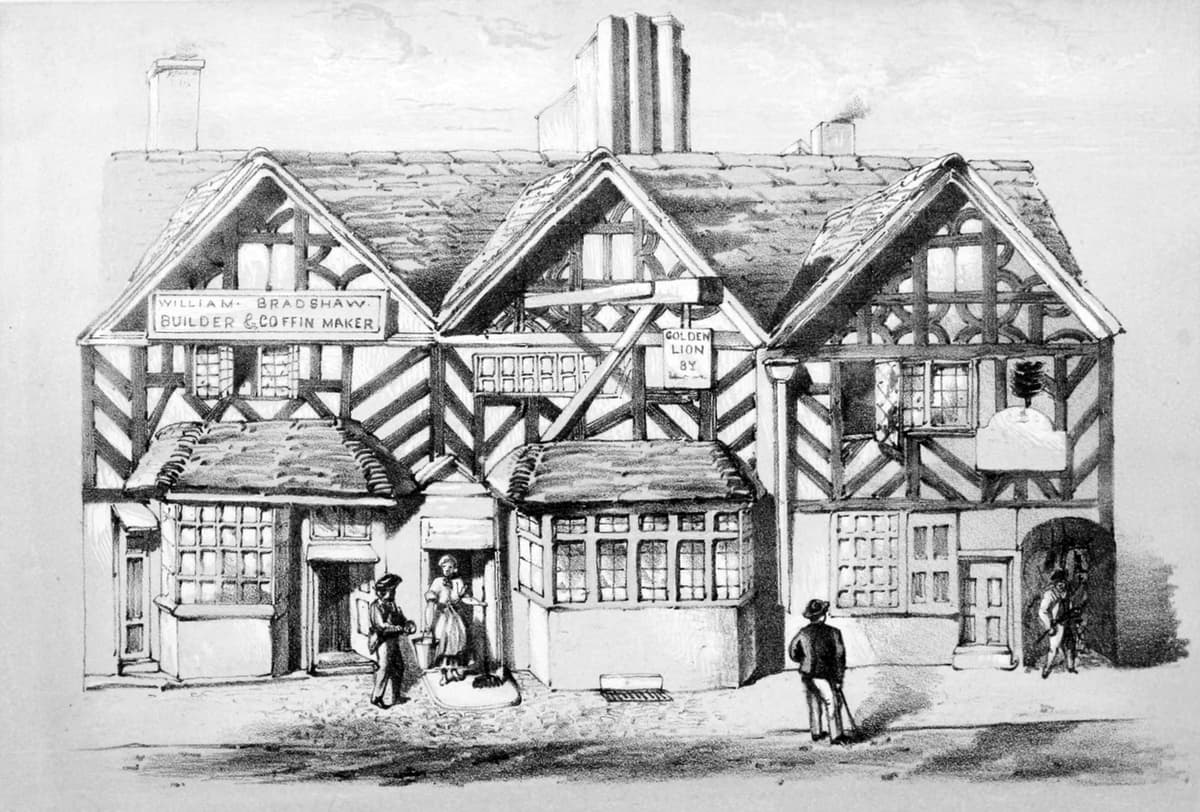
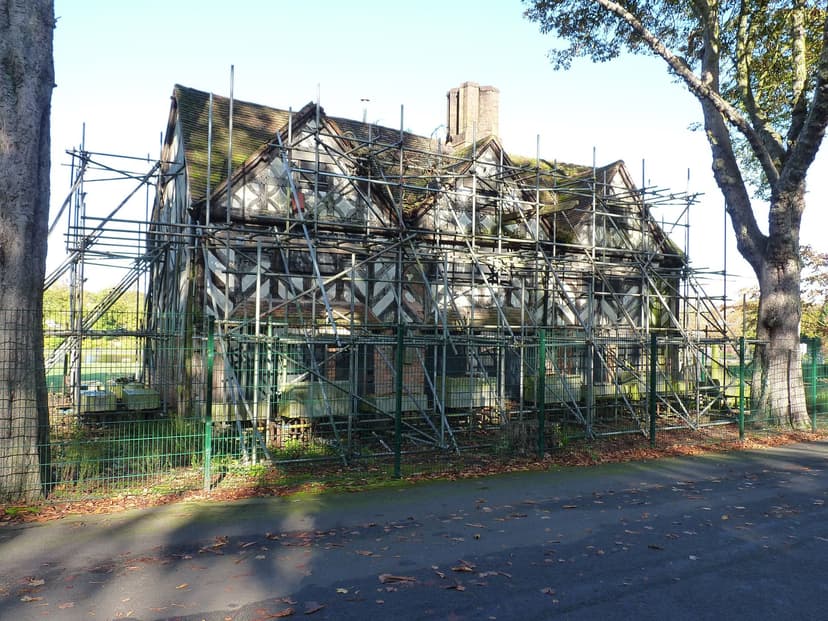
A timber-framed house of three bays, two storeys and attics, with three gables to the street and decorative framing above a ground floor of brick. It stood on the south side of High Street Deritend, about 40 metres east of St John’s Chapel, and was the Golden Lion inn by the 1880s.
History
A black-and-white street
Four hundred years ago the main street of Deritend was probably lined with timber-framed houses. The Victoria County History picks out the Golden Lion as a survivor of them: three bays, two storeys and attics, with timber framing above and brick below. Its decorative panels, with herringbone and quadrant patterns, are “typical of the ‘black-and-white’ houses of the west midlands at this period”.
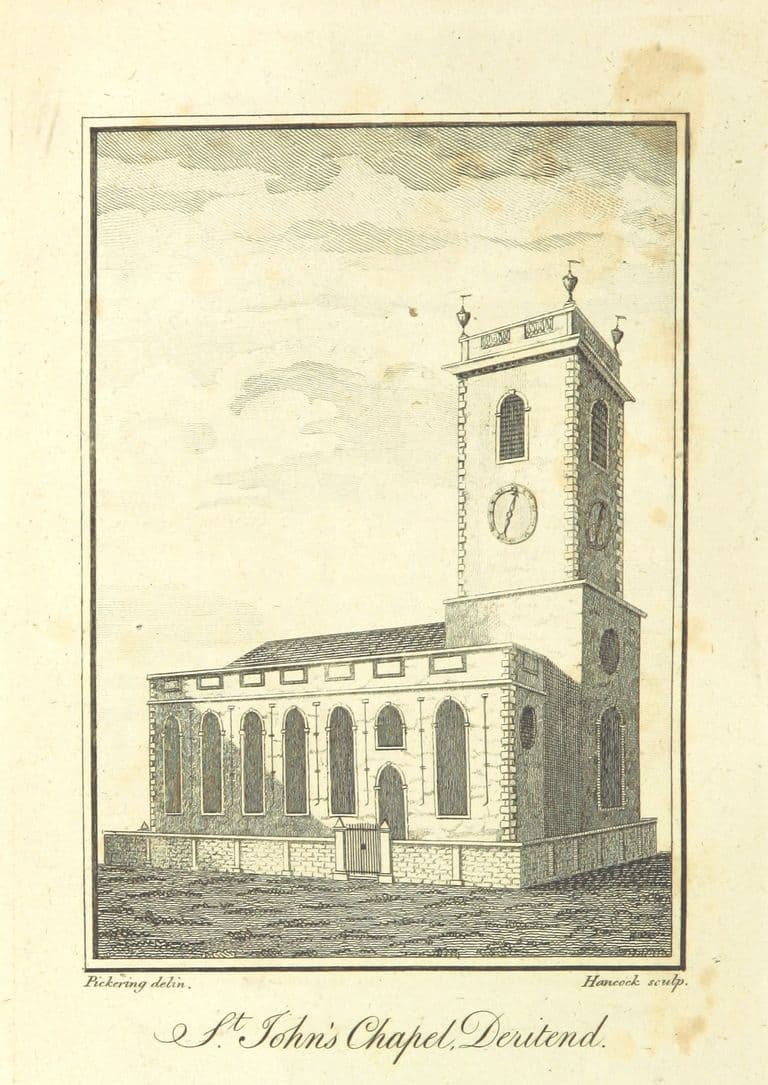
It stood on the south side of the street, a few doors east of St John’s Chapel. Its age is argued over. The VCH says late sixteenth or early seventeenth century. Birmingham Conservation Trust says it was rebuilt between 1616 and 1644, using new timbers alongside much older ones, some dating back to 1411.
Inn, workshops and homes
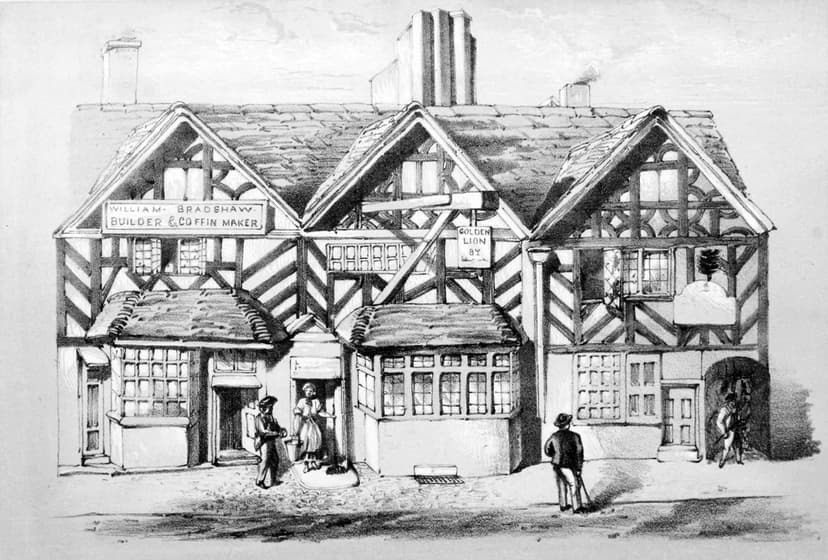
By the 1860s it was not one house but several. An engraving published by J. A. Langford in 1868–70 shows three equal gables, with the “Golden Lion” sign hanging from the middle one and a builder and coffin maker trading from the left-hand bay. The Ordnance Survey’s large town plan of 1887–88 letters the plot “Golden Lion Inn”.
Over its life, the Trust says, it was also a cutler’s house, “six tiny homes or businesses”, a scrap shop and, much later, a rangers’ hut.
Carried across the city
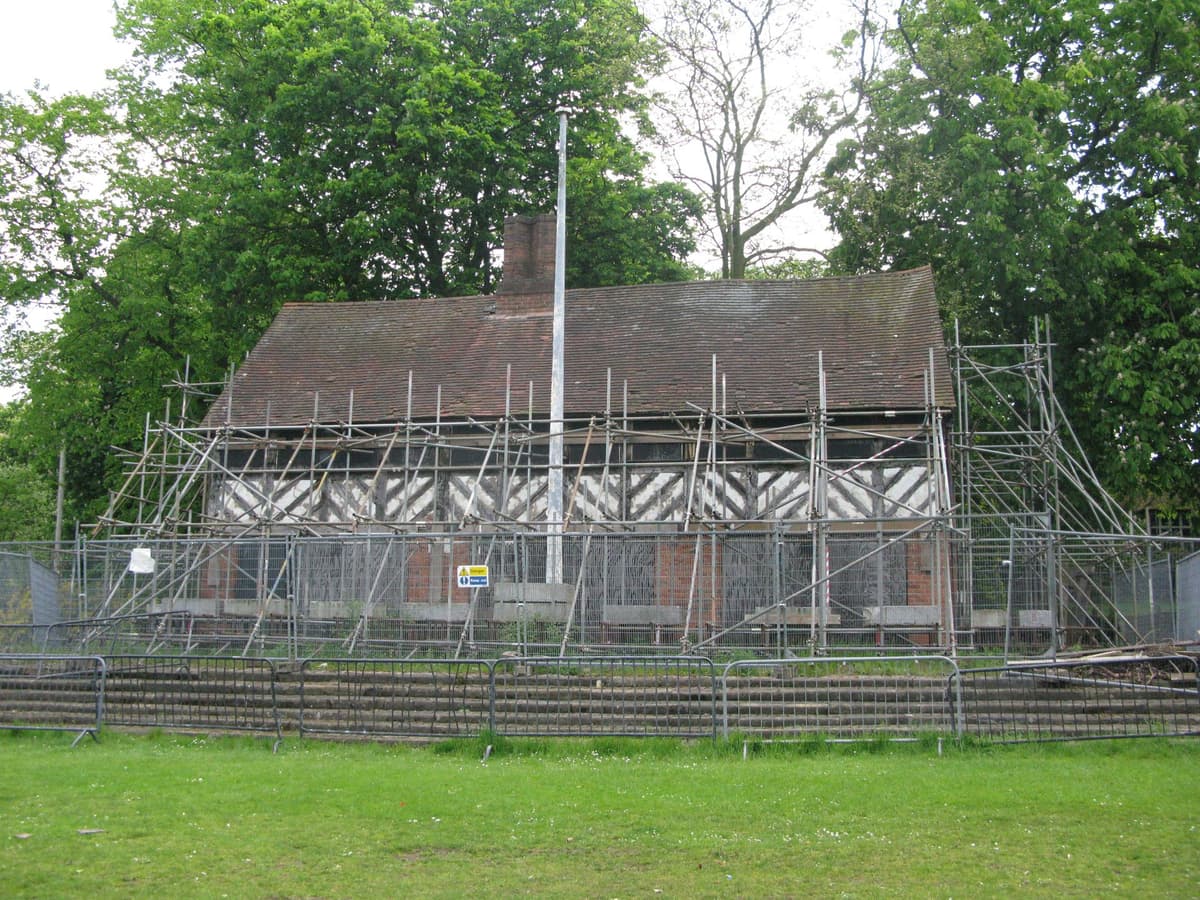
In 1911 the frame was taken down and put up again in Cannon Hill Park, about three kilometres to the south-west. The VCH, citing the tablet on the building, says the corporation did the work. The architects now repairing it say the Birmingham Archaeological Society moved it “to save it from demolition”. Both may be true. The architects call the move an early act of building conservation in the city; it is certainly the reason the house exists today.
The Golden Lion was listed Grade II on 25 April 1952. The list entry describes leaded early-eighteenth-century casements upstairs, two bay windows under little pent roofs, heavy brackets carrying the first floor and an eighteenth-century painted inn sign.
Rescued a second time
The park was not always kind to it. The building stood empty for more than twenty years, much of that time wrapped in scaffolding. In January 2024 Historic England gave Birmingham Conservation Trust £32,008 to plan a rescue, and then £344,265 from its Heritage at Risk Capital Works Fund.
The same spot, then and now
1888–1913
Today
Old map: Ordnance Survey six-inch, reproduced with the permission of the National Library of Scotland (CC BY 4.0). Today: © OpenStreetMap contributors.
Work began on site in 2025. Failing timbers were repaired or spliced with new oak, the roof was re-tiled with traditional tiles, and the carved hearts in the middle gable were re-carved from solid timber. The repair stage was due to finish in summer 2026, when the aim was to start bringing the building back into public use.
Back in Deritend there is nothing to see: the plot is pavement beside the widened High Street. But one house from that black-and-white street still stands, three gables wide, in a park on the other side of the city.
Why it mattered
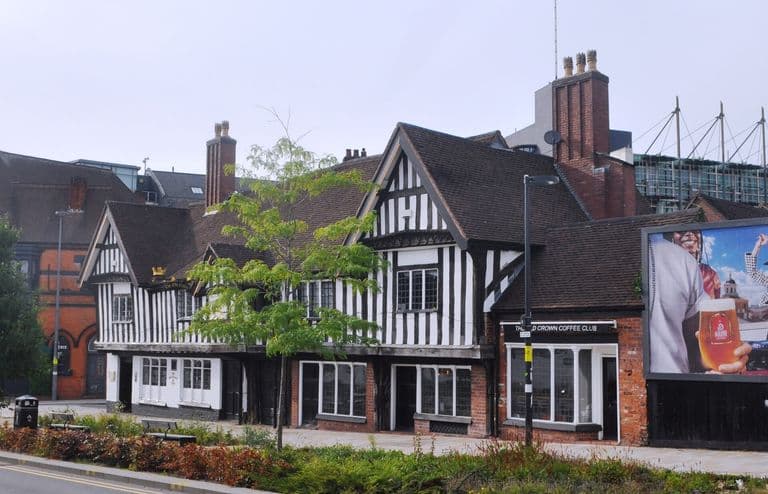
With the Old Crown, the Golden Lion is one of only two timber-framed houses of old Deritend to survive in any form. Its framing, with herringbone and quadrant patterns, is a rare Birmingham example of the black-and-white building of the west Midlands. Its move to Cannon Hill Park in 1911, which its present architects call an early act of building conservation in the city, is the reason it survives.
Why it disappeared
Other or unknown
It was taken down in 1911 and re-erected in Cannon Hill Park, according to its present architects to save it from demolition. The Deritend plot was later rebuilt and then cut back for the road widening reopened in 1953.
The Golden Lion, Deritend, on today’s streets
What’s there now
What replaced it
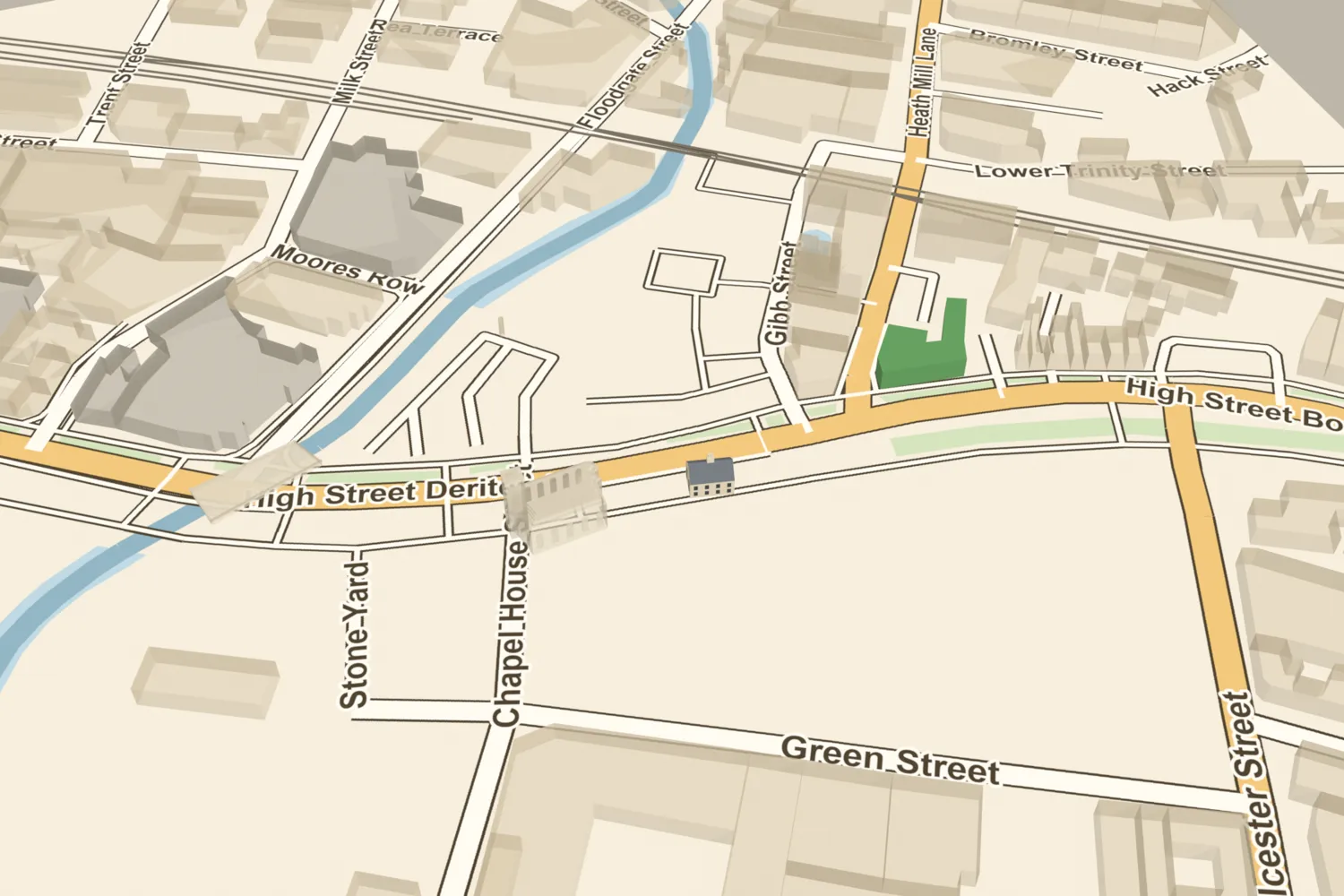
In Deritend, later buildings and then the widened High Street Deritend (reopened 1953); the plot is now pavement and road edge.
What survives
The whole building, re-erected in Cannon Hill Park in 1911 and listed Grade II as the Golden Lion Inn (Memorial), list entry 1075704. It stands at about 52.4508, −1.9033, beside the Sons of Rest building. Nothing survives on the original Deritend site.
Today
The Golden Lion stands in Cannon Hill Park, where Birmingham Conservation Trust began repairs in 2025. Its original site is the south pavement of High Street Deritend, about 40 m east of the St John’s Chapel tablet.
Then and now
Then · 1868–70
Now · 17 October 2019
Today
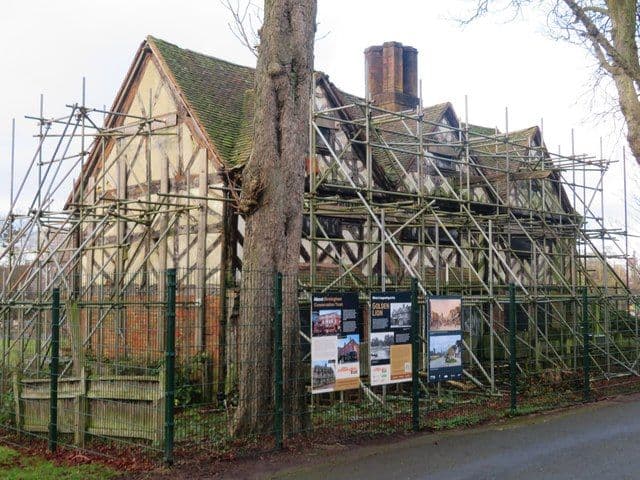
The Golden Lion, Cannon Hill Park, 25 December 2024Chris Allen, 25 December 2024. Geograph Britain and Ireland via Wikimedia Commons · CC BY-SA 2.0
Sources and further reading
Date: late sixteenth or early seventeenth century (VCH); “probably early C16” (list entry of 1952); about 1600 (Birmingham City Council archive catalogue); rebuilt 1616–44 with timbers as old as 1411 (Birmingham Conservation Trust, which cites no tree-ring report).
Who moved it: the corporation (VCH, citing the tablet on the building) or the Birmingham Archaeological Society (Oliver Architecture).
Its extent on the Deritend plot is inferred from the 1887–88 plan as about 12 m of frontage, shorter than the re-erected building (about 15 m); the difference may be an arched passage or changes made in 1911.
Grant figures and the start date of the 2025 works differ slightly between the Trust and the architects. Whether the repair stage finished in summer 2026 as planned has not been confirmed. Claims that it was an inn from the 1730s, and later a cricket pavilion, come from unverified websites.
- A History of the County of Warwick, vol. 7: The City of Birmingham — Secular Architecture, pp. 43–57 — W. B. Stephens (ed.), Victoria County History, 1964. timber-framed houses of Deritend; re-erected 1911 by the corporation (tablet)
- Golden Lion Inn (Memorial), Cannon Hill Park — National Heritage List for England entry 1075704 — Historic England. list description
- The Golden Lion (project page and news) — Birmingham Conservation Trust, 2024–2025
- The Golden Lion, Cannon Hill Park — Oliver Architecture, 2025
- The Old Golden Lion (Library archive collections directory, WK-D1-4) — Birmingham City Council. Ref. WK-D1-4
- A Century of Birmingham Life — John Alfred Langford, 1870. vol. 2, plate at p. 24, ‘The Golden Lion, Deritend’
- Ordnance Survey 1:500 town plan of Birmingham, 1887–88, georeferenced — National Library of Scotland, 1888. ‘Golden Lion Inn’
- Plan of the Borough of Birmingham (Pigott Smith), 1855 — J. Pigott Smith, National Library of Scotland (online), 1855
- OpenStreetMap data (Overpass and Nominatim), central Birmingham — OpenStreetMap contributors, 2026
Archive references: Library of Birmingham WK-D1-4
Comments
Comments will load here.