

On 10 February 1866 Cyrus Field, the American behind the attempt to lay a telegraph cable across the Atlantic, wrote to a wire-drawer in Birmingham. He thanked James Horsfall for investing £5,000 in the Atlantic Telegraph Company and asked him to make it £10,000.
Field had reason to keep Horsfall close. The year before, his cable had snapped in mid-ocean and sunk two miles down. The wire that wrapped and protected it had come from Horsfall’s works at Hay Mills, and so would the wire for the next attempt.
A rival to the Websters
James Horsfall was born in 1813 and started as a wire-drawer in Digbeth, in the old heart of Birmingham. Wire was an old Birmingham trade, and the greatest name in it was Webster. Since the early eighteenth century the Webster family had drawn wire at Penns Mill, near Sutton Coldfield. They were the first British makers to draw wire from crucible steel, and their piano wire was famous.
Horsfall found a way to beat them. Drawing wire through a die makes it hard but brittle, and the usual answer was to soften it by annealing. Horsfall worked out a heat treatment that left the wire both tough and much stronger, and he patented it in 1853. The company later claimed his wire had twice the tensile strength of anything before it, and the process became known as ‘patenting’.
Webster & Horsfall
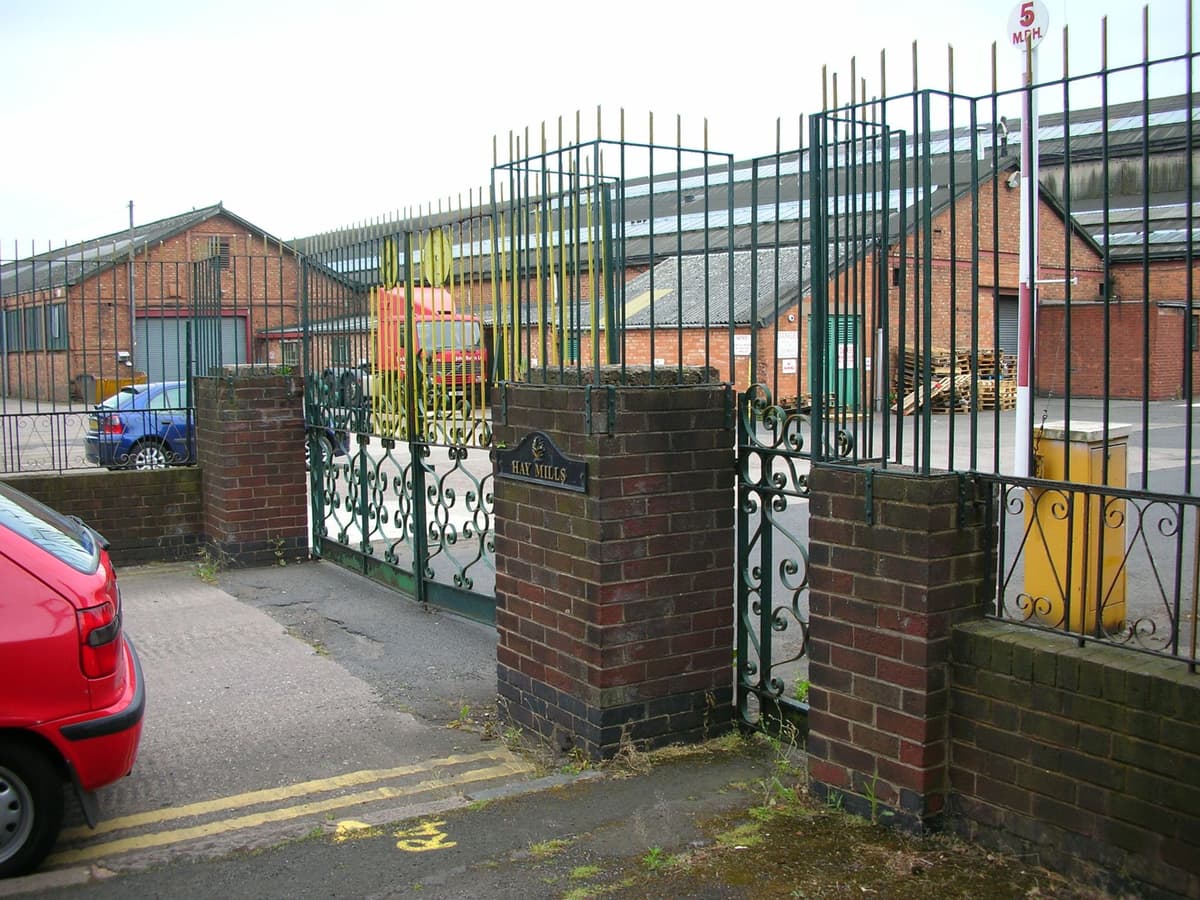
The Websters had stayed ahead before. In the 1820s Joseph Webster III had made a tougher manganese steel wire that kept German rivals out of the London market for twenty years. Now they chose to join their new rival rather than fight him. In 1855 Joseph Webster arranged a partnership between Horsfall and his son, Baron Dickinson Webster. In 1859 production moved from Penns to Hay Mills, on the River Cole at the eastern edge of Birmingham, where a water mill had once ground blades and swords. When Baron Webster died in 1860, the whole business passed to James Horsfall.
The Atlantic cable
The first Atlantic cable, laid in 1858, worked for only a few weeks. According to the company’s own history, its iron armour could not bear the cable’s weight in deep water, and the two contractors had even laid up their halves in opposite directions. Both had bought wire from the Websters. Knowing this, Horsfall refused to quote for the next attempt unless he had the whole order, made to his own specification. The next attempt needed a stronger cable, and a great deal of wire. Webster & Horsfall had already made the armouring wire for a cable between Algiers and Toulon. On 9 May 1864 Horsfall signed the contract for the Atlantic: 1,600 tons of wire at £45 a ton, £40 in cash and the rest in shares. Until then the firm’s steelworks at Killamarsh in Derbyshire had made about 400 tons of steel a year.
Hay Mills enlarged its works and about 250 workers drew roughly 30,000 miles of wire. The Illustrated London News described the process in 1866. Rods arrived from the firm’s own works and were pulled through a series of dies, each pass making the wire finer and adding, on average, 95 yards to its length. Every finished length was loaded to 1,000 pounds and had to stretch half an inch in 50, then spring back. The engineer Charles Bright later called Webster & Horsfall, “the famous pianoforte wire makers”, the originators of this kind of iron wire (Submarine Telegraphs, 1898). In the cable, ten armouring wires were wound spirally round a core of copper and gutta-percha. In 1865 the Great Eastern, Brunel’s giant ship, began paying out the cable from Ireland. Broken flakes of the armouring wire pierced the insulation, and far out in the Atlantic the cable parted and was lost. John Horsfall, the family’s historian, later admitted that the wire had not been right for the job.
The firm got the repeat order anyway, with a softer, galvanised iron wire for the 1866 cable. That summer the Great Eastern laid it successfully, then grappled for the 1865 cable, raised it from the sea bed and completed it. Two cables now joined Britain and America. On Christmas Eve 1866, Horsfall’s workers at Hay Mills and Killamarsh presented him with a case of cable samples from 1858, 1865 and 1866, “in commemoration of the successful completion of the Atlantic Cables of 1865 & 1866 and as a pledge of their constant gratitude and respect”.
The church by the mill
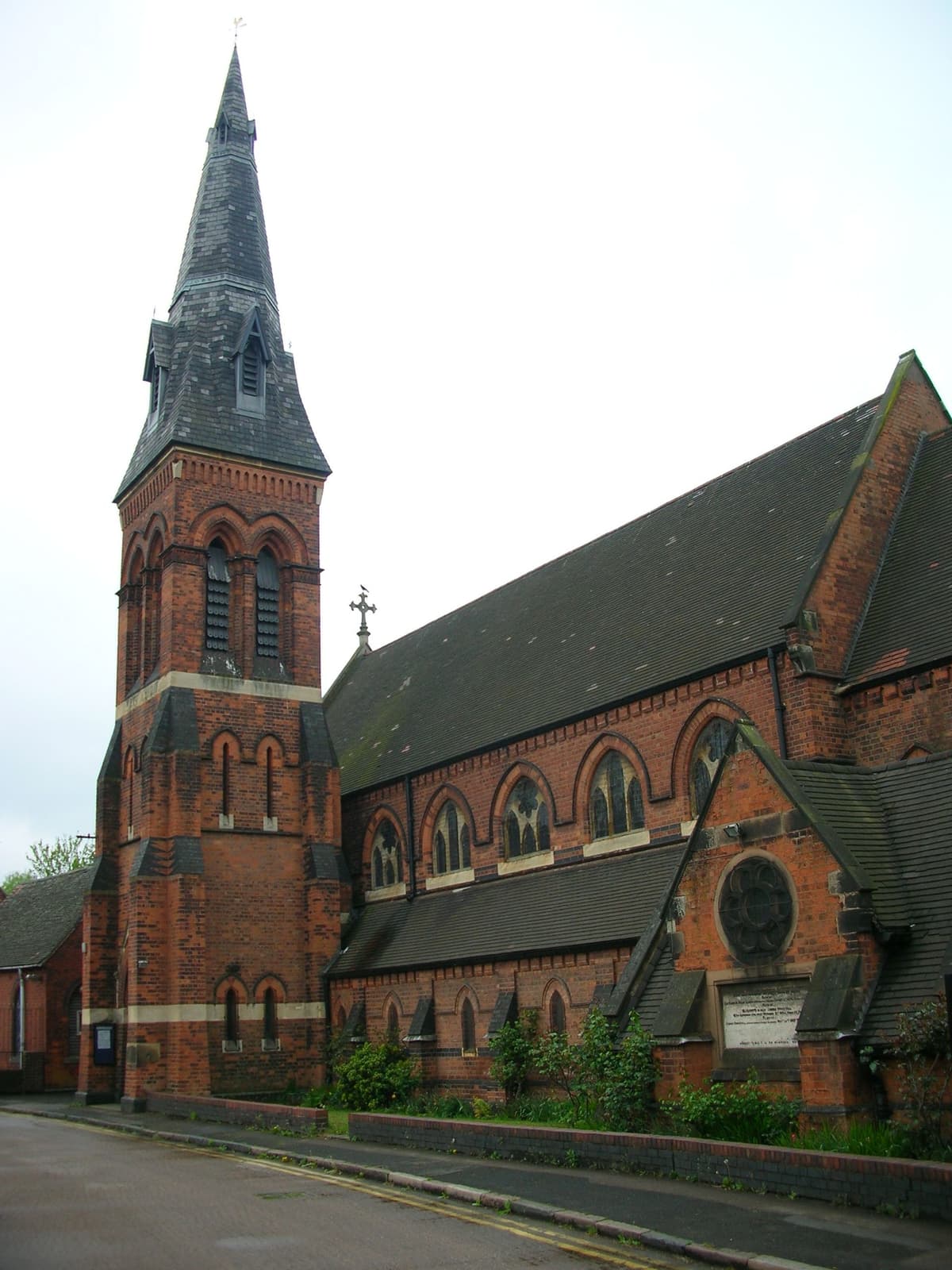
Horsfall built a community round the works. In 1860 he provided a schoolroom for his workers’ children by the River Cole and a row of cottages on the Fordrough. The schoolroom became a chapel in 1863, and a new school was built beside it. In 1873–74 he paid for a proper church, St Cyprian’s, designed by Frank Barlow Osborn and built partly over the mill race, with the old chapel as its chancel. A parish was made for it in 1878.
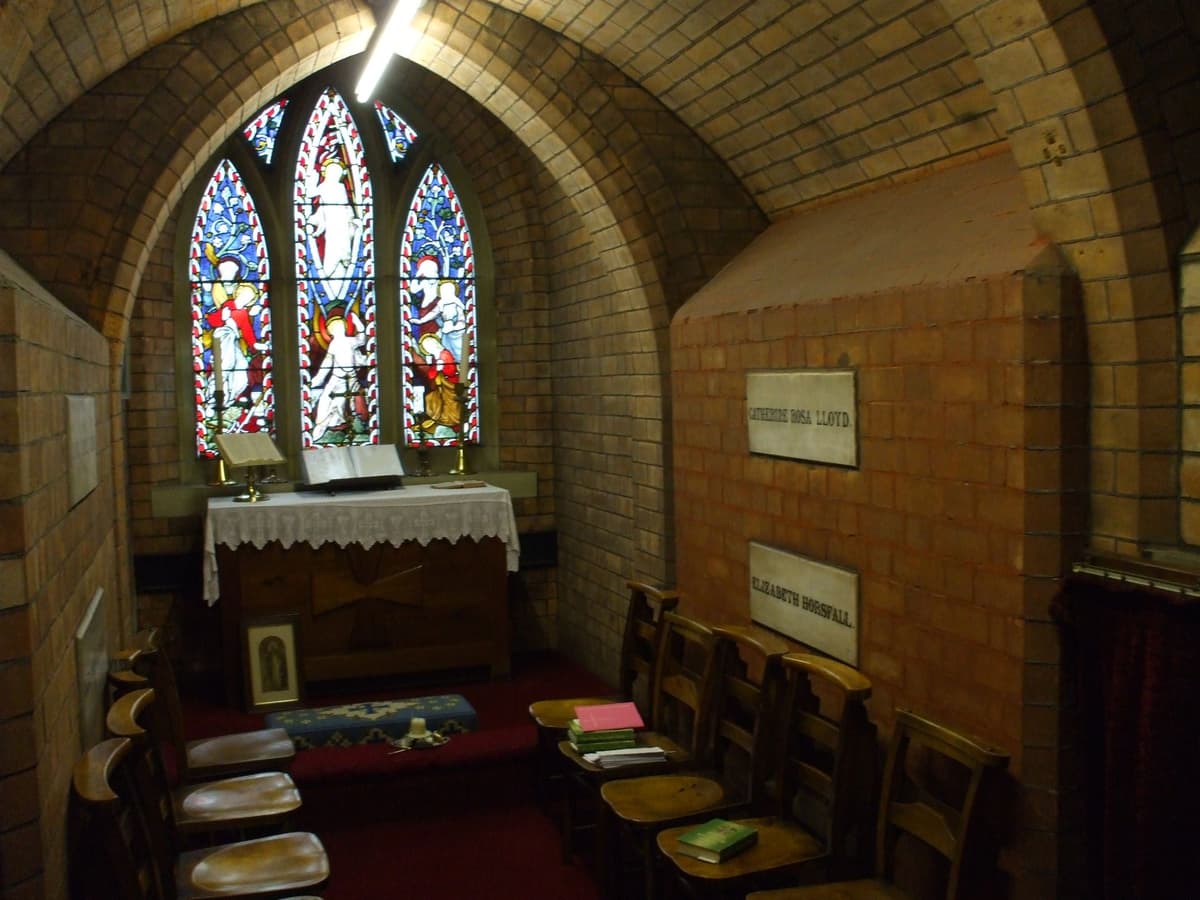
James Horsfall died in 1877, the year his family added a mortuary chapel to the church in memory of his daughter, Mary Elizabeth Simms. His son, Henry Horsfall, carried the business on.
Why it mattered
James Horsfall turned an ancient Birmingham craft into a high-technology industry. His treatment for steel wire gave the world a word, ‘patenting’, and a material strong enough for piano strings, wire ropes and, in time, springs for engines and aircraft.
The Atlantic cable put Hay Mills, a small works on the edge of Birmingham, into one of the great engineering stories of the age. Webster & Horsfall still draws wire on the same site, one of the oldest firms in the city, and the Library of Birmingham holds a rare chart of the cable-laying from its records. Beside the works stands St Cyprian’s Church, the church he built for his workers, still Grade II listed. Few Victorian manufacturers left both a firm and a church still in use beside it.
On the map
One place connected with James Horsfall. Tap a number for directions — some sites are private homes or gardens, so each place’s page says what you can see from the street.

Key dates
- 1859 — Webster and Horsfall move to Hay MillsFour years after James Horsfall’s partnership with Baron Dickinson Webster, wire production moves from the Websters’ Penns Mill near Sutton Coldfield to Horsfall’s works at Hay Mills.
- 9 May 1864 — Hay Mills wins the Atlantic cable wire contractJames Horsfall signs a contract to supply 1,600 tons of armouring wire for the Atlantic telegraph cable, the biggest order in Webster & Horsfall’s history. About 250 workers at Hay Mills draw some 30,000 miles of wire.
- 1866 — The Atlantic cables are completedThe Great Eastern lays a new Atlantic telegraph cable armoured with wire from Hay Mills, then recovers and completes the cable lost in 1865. On Christmas Eve, Horsfall’s workers present him with a case of cable samples.
- 1873–74 — St Cyprian’s Church built at Hay MillsJames Horsfall pays for St Cyprian’s Church beside his wire works, designed by Frank Barlow Osborn and built partly over the old mill race, with his workers’ chapel of 1863 as its chancel.
Sources and further reading
His birth and death years (1813–1877) come from the Historic England list entry for St Cyprian’s Church; exact dates and places have not been found. When Horsfall first used the Hay Mill site is disputed: about 1830 (Historic England), the early 1840s (VCH Warwickshire, which records ‘Smith and Horsfall and James Horsfall, musical-wire maker’ as tenants soon after 1840), 1856 (BBC, Grace’s Guide) or 1859 for the move of all production (Historical Manuscripts Commission). The partnership with the Websters is dated 1855 by the HMC report and the company, and 1853 by Historic England. Atlantic-cable.com describes the 1865 wire both as drawn from Bessemer steel made at Killamarsh and as crucible cast steel. The company’s claim that only its wire could recover the 1865 cable is its own and has not been independently checked. Historic England says the firm made wire for the ‘first’ Atlantic cable; it was in fact for the cables of 1865 and 1866.
- Church of St Cyprian and St Chad, Hay Mills — National Heritage List for England entry 1343408 — Historic England
- Summary report on the records of Webster & Horsfall Ltd, spring steel wire manufacturers, Birmingham (GB-800819-Webster) — Historical Manuscripts Commission (N. James), Historical Manuscripts Commission, 1991
- 1865 & 1866 Atlantic Cables — Bill Burns (ed.)
- Webster and Horsfall History — atlantic-cable.com (from company material)
- Economic and Social History: Mills, in A History of the County of Warwick, vol. 7, pp. 253–269 — W. B. Stephens (ed.), Victoria County History, 1964. Hay Mill
- Webster and Horsfall — Grace's Guide
- The Atlantic Telegraph Cable story: the Birmingham factory that made history — BBC Birmingham, BBC, 2003
- Messages from the Ocean Floor — Paul Taylor, Library of Birmingham, The Iron Room, 2018
Comments
Comments will load here.