To draw wire you pull a rod of metal through a hole in a hard die, then through a smaller one, and a smaller one again. Each pass makes the wire thinner, longer and harder. Birmingham had wire-drawers by the seventeenth century, and by 1871 there were 2,630 wire-drawers and workers in the town, compared with 380 in 1841.
Websters and Horsfall
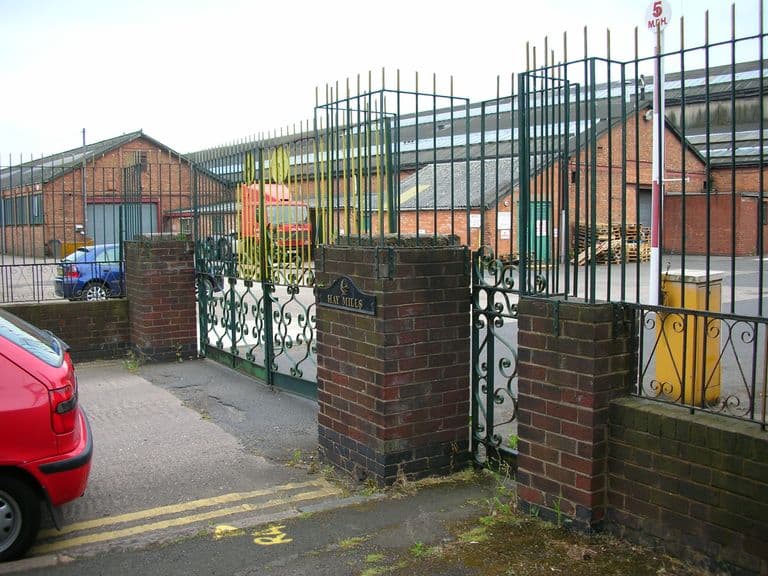
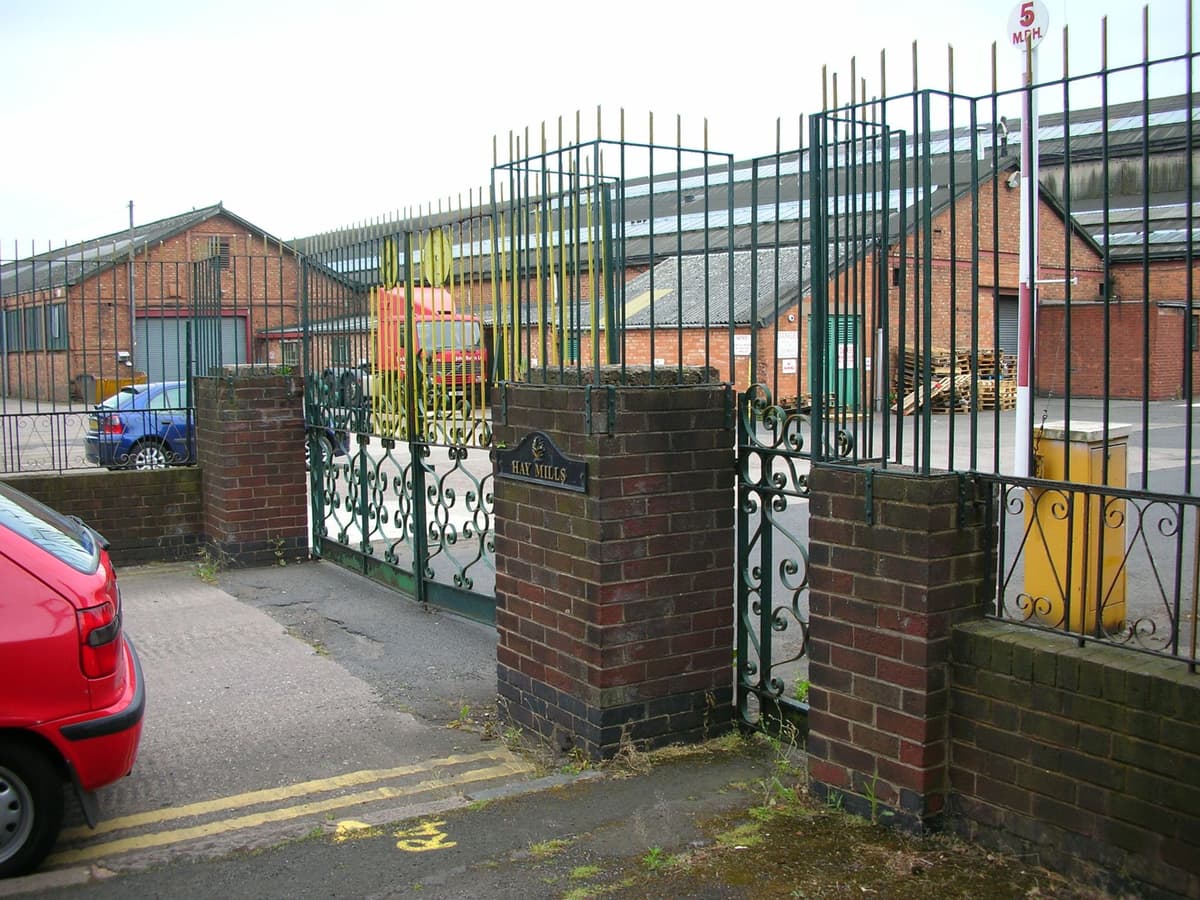
The great name was Webster. From about 1720 the family drew wire, first near Perry Barr and then at Penns Mill near Sutton Coldfield, and they were the first in Britain to use crucible steel for it. Their piano wire was famous. In 1853 James Horsfall, a Digbeth wire-drawer, patented a heat treatment that made steel wire far stronger. The process became known worldwide as ‘patenting’. In 1855 the Websters took Horsfall into partnership, and in 1859 the business moved to Hay Mills.
Wire under the sea
Undersea telegraph cables needed armour: wires wound round the core to give it strength and protection. In 1864 Webster & Horsfall won the order for the Atlantic cable, and about 250 workers at Hay Mills drew some 30,000 miles of wire. Another Birmingham firm, J. & E. Wright, held the patent for wrapping each armouring wire in tarred hemp.
Ropes and springs
Strong wire made strong rope for mines, cranes and aerial ropeways, and later springs for engines, instruments and aircraft. Webster & Horsfall still draws wire at Hay Mills, one of the oldest firms in Birmingham.
On the map
One place connected with Wire-drawing. Tap a number for directions — some sites are private homes or gardens, so each place’s page says what you can see from the street.

Key dates
- 1859 — Webster and Horsfall move to Hay MillsFour years after James Horsfall’s partnership with Baron Dickinson Webster, wire production moves from the Websters’ Penns Mill near Sutton Coldfield to Horsfall’s works at Hay Mills.
- 9 May 1864 — Hay Mills wins the Atlantic cable wire contractJames Horsfall signs a contract to supply 1,600 tons of armouring wire for the Atlantic telegraph cable, the biggest order in Webster & Horsfall’s history. About 250 workers at Hay Mills draw some 30,000 miles of wire.
- 1866 — The Atlantic cables are completedThe Great Eastern lays a new Atlantic telegraph cable armoured with wire from Hay Mills, then recovers and completes the cable lost in 1865. On Christmas Eve, Horsfall’s workers present him with a case of cable samples.
- 1873–74 — St Cyprian’s Church built at Hay MillsJames Horsfall pays for St Cyprian’s Church beside his wire works, designed by Frank Barlow Osborn and built partly over the old mill race, with his workers’ chapel of 1863 as its chancel.
Sources and further reading
- Summary report on the records of Webster & Horsfall Ltd, spring steel wire manufacturers, Birmingham (GB-800819-Webster) — Historical Manuscripts Commission (N. James), Historical Manuscripts Commission, 1991
- 1865 & 1866 Atlantic Cables — Bill Burns (ed.)
- Economic and Social History: Industry and Trade, 1500–1880, in A History of the County of Warwick, vol. 7, pp. 81–139 — W. B. Stephens (ed.), Victoria County History, 1964
- Church of St Cyprian and St Chad, Hay Mills — National Heritage List for England entry 1343408 — Historic England
- Webster and Horsfall — Grace's Guide