
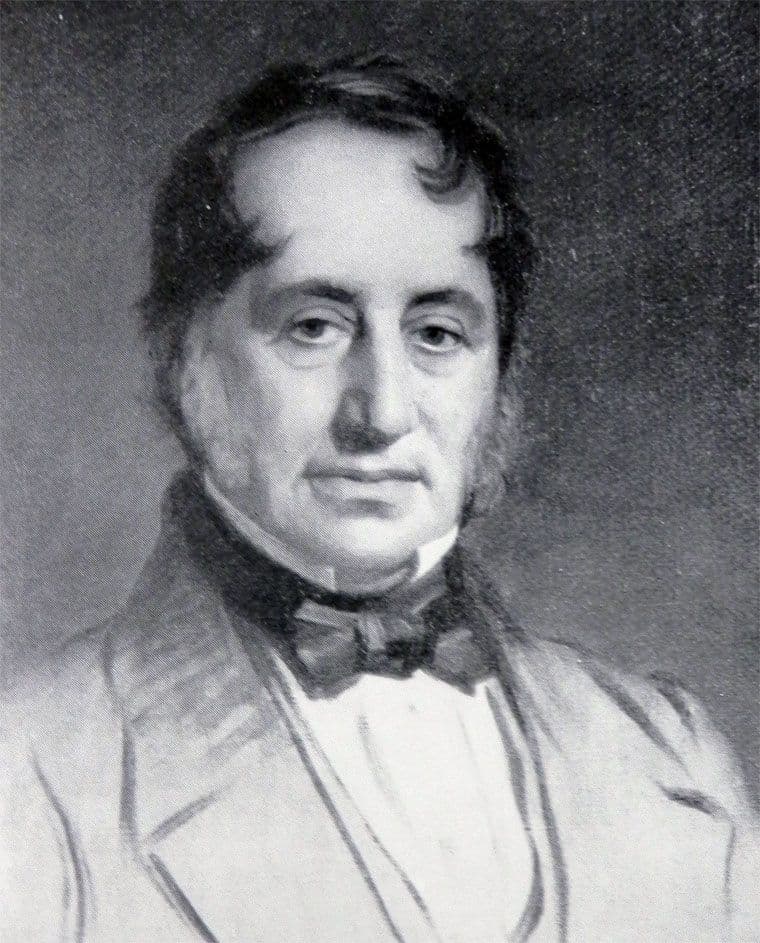
Every great Birmingham firm starts somewhere small. GKN, one of the biggest engineering companies Britain ever produced, started behind the counter of a London ironmonger’s shop.
John Sutton Nettlefold was born in London on 23 September 1792. In 1819 he married Martha Chamberlain. Both came from Unitarian families, and the marriage tied the Nettlefolds to the Chamberlains in business for half a century. Her brother Joseph was a London shoe manufacturer. His son, also Joseph, would become the most famous Birmingham man of his age.
From Holborn to Broad Street
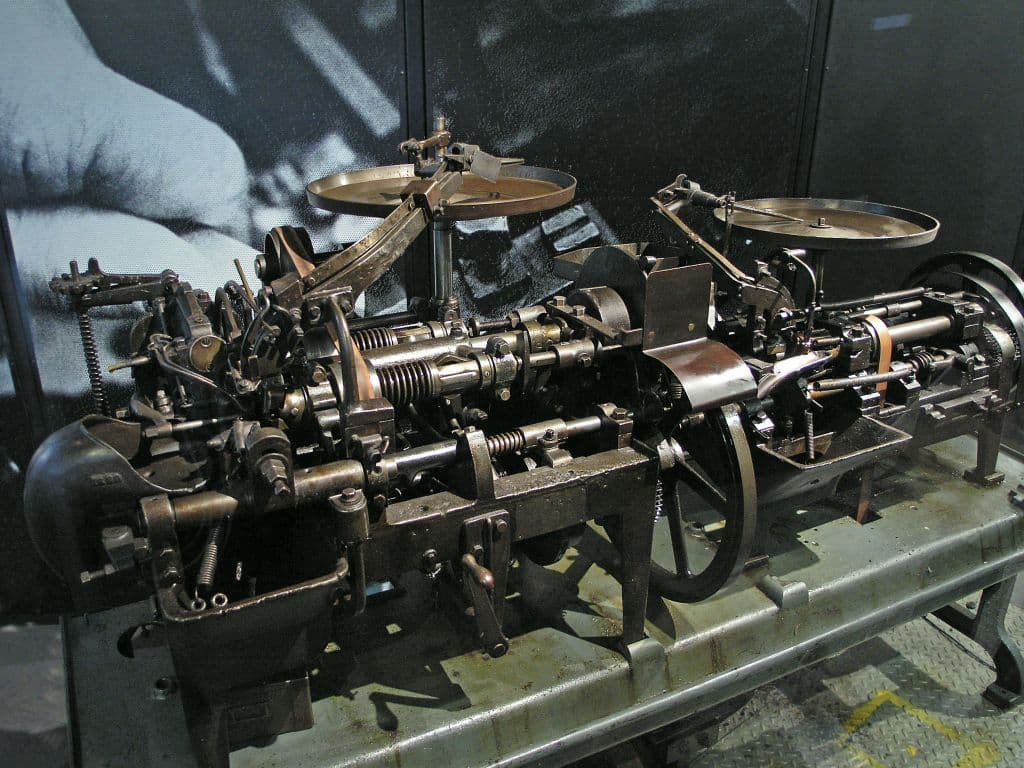
In 1823 Nettlefold opened a hardware shop at 54 High Holborn. According to Grace’s Guide he bought, from a St Marylebone watchmaker called John Gilbert, a patent for improvements in making wood screws, and by 1826 he was making them in a water-powered workshop at Sunbury-on-Thames.
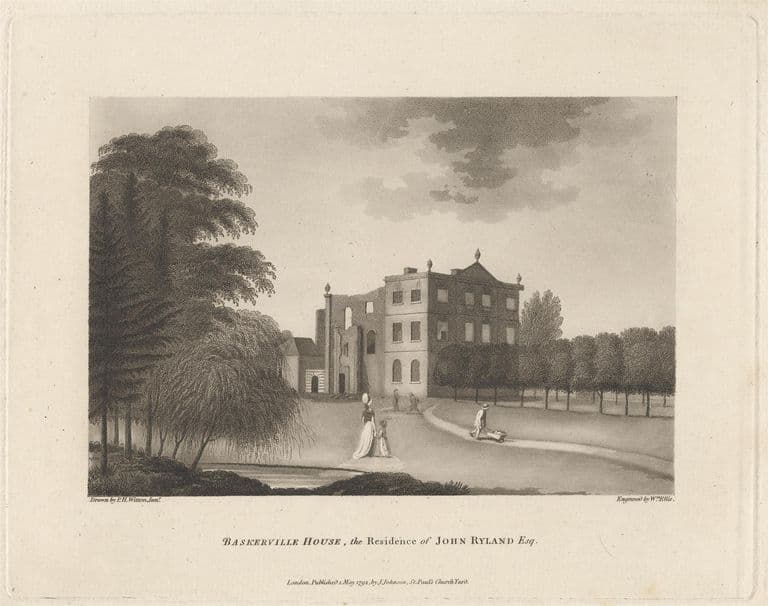
Water power was a dead end. Birmingham had coal, iron, wire, skilled hands and steam. Grace’s Guide says that in 1834 Nettlefold set up a steam-powered screw works in Baskerville Place, off Broad Street, a street named after the printer John Baskerville, whose Easy Hill estate had stood nearby. Chamberlain’s biographer J. L. Garvin, writing in 1932, puts the move to Birmingham later, around 1842. Either way, by the 1850s the Nettlefold screw business was rooted in Birmingham, while the family itself lived in north London.
Blunt ends
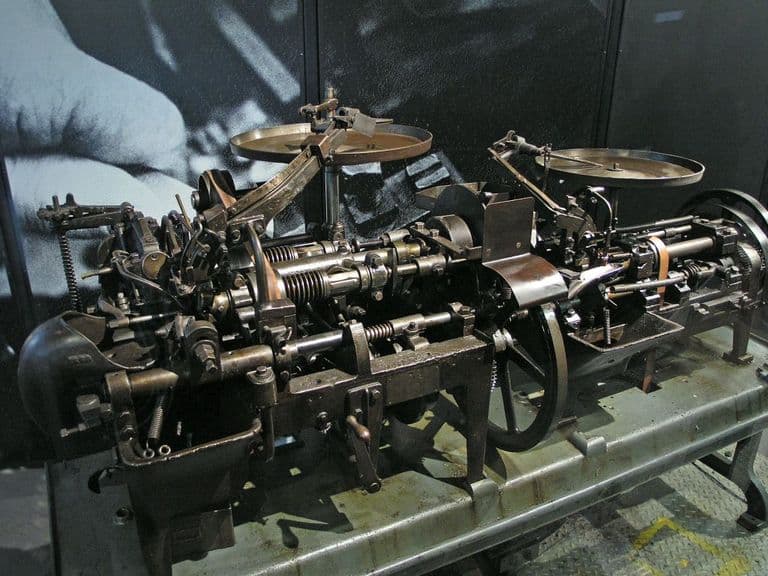
The trouble was the product. Screws were still made largely by hand, and they had blunt ends. A carpenter had to bore a hole with a gimlet before driving one in. Then came news of an American invention: a self-acting machine that took in wire and turned out finished screws with sharp points, each one its own gimlet.
Garvin tells it as a drama. Nettlefold could see that the machine might make his fortune, or ruin him if a rival bought it first. Negotiations dragged on for more than two years. In 1854 he took the plunge and bought the British rights. The patent belonged to an American, Sloane; the official GKN history, as summarised by Grace’s Guide, dates the purchase to 1854.
The family bet
The venture needed about £30,000, far more than Nettlefold could find. He turned to his brother-in-law. Joseph Chamberlain senior visited Birmingham, looked hard at the scheme and put in £10,000 as an equal partner. The two men built a new factory at Heath Street, Smethwick, beside the canal and the railway on the edge of Birmingham, and filled it with the American machines.
Neither founder moved north to run it. They sent their sons. Nettlefold’s son Edward, his son Joseph Henry and the eighteen-year-old Joseph Chamberlain took charge in 1854. Joseph Henry Nettlefold ran the works; young Chamberlain ran the office in Broad Street and the selling. The firm traded as Nettlefold & Chamberlain.
Grace’s Guide describes the new factory as two single-storey sheds covering 20,000 square feet. It was an act of faith. Garvin, who talked to the family, says the machines were “complicated, costly to buy, expensive to operate”, but that one worker could tend several at once.
A monopoly in the making
The bet paid off. By 1864, Grace’s Guide records, the Heath Street works had 600 employees. The Victoria County History says the firm dominated the British market by the mid-1860s. Small makers of the old blunt screws could not compete with machines. Garvin, writing from the family’s side, says they “went down right and left”, many of them ending up as overseers or foremen in the new factories. Nettlefold organised the buying-up of rivals and of the iron and wire suppliers that fed the works, which needed yet more capital.
John Sutton Nettlefold did not live to see the firm at its height. He died on 12 April 1866, the same year as his wife Martha, and was buried at Highgate Cemetery in London.
What came next
After 1874, when the Chamberlains left, the business continued under the Nettlefold brothers. In 1880 it became a limited company, Nettlefolds Ltd, with Joseph Henry Nettlefold as managing director, and swallowed its neighbour across the canal, the Birmingham Screw Company. In 1902 it merged with Guest, Keen & Co. to form Guest, Keen & Nettlefolds. By the outbreak of the First World War the new company made over half the screws in Britain.
Why it mattered
Nettlefold was not a showman and left little trace of his own voice. But he made the decision on which everything else rested. He brought screw-making to Birmingham, and in 1854 he risked his capital, and his relations’ capital, on a machine nobody in Britain had proved. That bet created Nettlefold & Chamberlain, made Joseph Chamberlain rich enough to give his life to politics, and grew into GKN, for a century and more one of the great names of British engineering. The pointed wood screw that every builder now takes for granted came into British workshops through his works at Smethwick. His sons and nephew stayed to run it, and the family name was on factory gates in Smethwick for well over a century. A shopkeeper from Holborn had, without quite meaning to, helped to make modern Birmingham.
On the map
2 places connected with John Sutton Nettlefold. Tap a number for directions — some sites are private homes or gardens, so each place’s page says what you can see from the street.

- Heath Street Works (Nettlefold & Chamberlain), Smethwick — Site redeveloped · Directions to Heath Street Works (Nettlefold & Chamberlain), Smethwick (opens Google Maps)
- Easy Hill — Lost, Site redeveloped · Directions to Easy Hill (opens Google Maps)
Key dates
- 1834 — Nettlefold sets up a steam-powered screw works off Broad StreetAccording to Grace’s Guide, the London ironmonger John Sutton Nettlefold opens a steam-powered wood-screw works in Baskerville Place, off Broad Street, Birmingham. Garvin dates the move to Birmingham to about 1842.
- 1854 — Nettlefold & Chamberlain founded at Heath Street, SmethwickJohn Sutton Nettlefold buys the British rights to an American pointed-screw machine. With £10,000 from his brother-in-law Joseph Chamberlain, he builds the Heath Street Works in Smethwick, run by their sons.
- 12 April 1866 — John Sutton Nettlefold diesThe founder of the Nettlefold screw business dies in London and is buried at Highgate Cemetery.
Sources and further reading
Move to Birmingham: Grace’s Guide (citing the ODNB life of Joseph Henry Nettlefold) gives 1834, at Baskerville Place off Broad Street. Garvin (1932) says the business moved to Birmingham “somewhere about 1842”, and places the earlier works “about 1835” in a Thames-side water-mill; Grace’s gives Sunbury-on-Thames from 1826. The text gives both dates.
The 1851 story: Garvin says the family saw the American machine at the Great Exhibition. Grace’s Guide reports that the official GKN history (Jones, 1987) found no screw machinery on the American stands in 1851 and suggests a later contact with Sloane or someone who knew him.
The Easy Hill link (Baskerville Place took its name from John Baskerville’s estate) is inferred from the street name and the location; the exact footprint of the Nettlefold works within the old estate has not been mapped.
No portrait of Nettlefold with a verified open licence has been found.
The portrait shown is identified as him only by Grace’s Guide, which does not give its source; the identification is unconfirmed.
- John Sutton Nettlefold — Grace’s Guide, Grace’s Guide to British Industrial History
- Nettlefold and Sons — Grace’s Guide, Grace’s Guide to British Industrial History
- Nettlefold and Chamberlain — Grace’s Guide, Grace’s Guide to British Industrial History
- Joseph Henry Nettlefold — Grace’s Guide, Grace’s Guide to British Industrial History
- Nettlefolds — Grace’s Guide, Grace’s Guide to British Industrial History
- The Life of Joseph Chamberlain, vol. 1: 1836–1885 — J. L. Garvin, Macmillan, 1932. vol. 1, pp. 51–53
- Smethwick: Economic history, in A History of the County of Stafford, vol. 17, pp. 107–118 — M. W. Greenslade (ed.), Victoria County History, 1976
- John Sutton Nettlefold — Wikipedia, Wikipedia
Comments
Comments will load here.