
What was here?
On Cranford Street and Heath Street, by the Birmingham Canal on the Smethwick edge of Birmingham, stood the screw works of Nettlefold & Chamberlain, later Nettlefolds and then Guest, Keen & Nettlefolds. By the 1960s it covered about 50 acres and employed some 4,500 people.
History
Stand on Cranford Street today, with the bulk of the Midland Metropolitan University Hospital rising to the south, and it takes an effort of imagination to see the place as it was. For well over a century this was the screw capital of Britain.
A machine from America
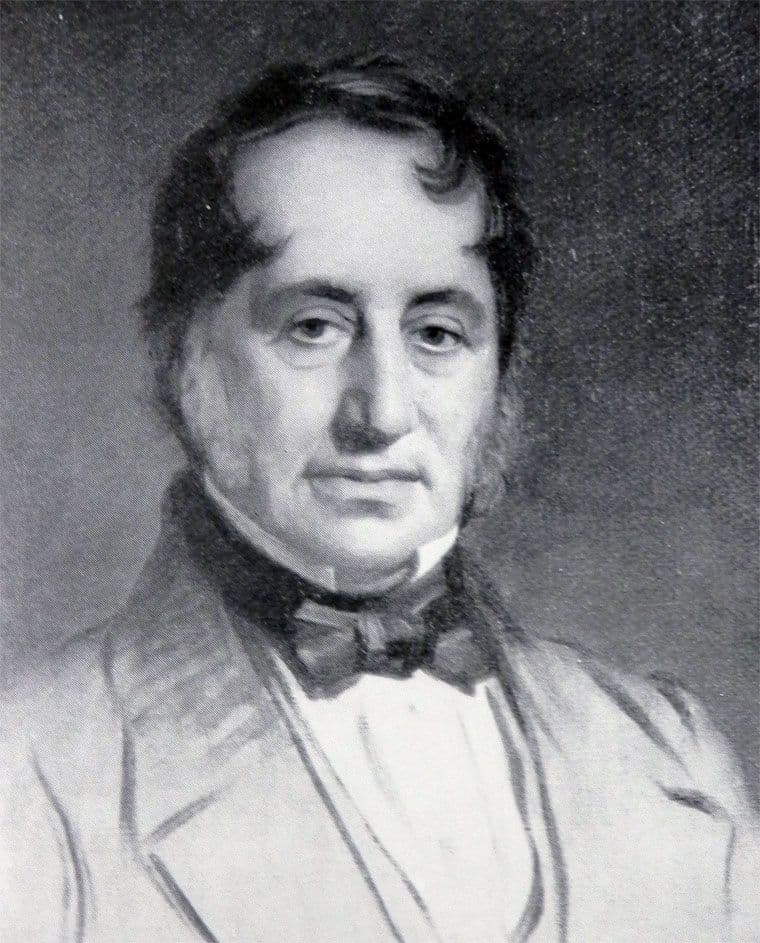
In 1854 the London ironmonger John Sutton Nettlefold, who already made wood screws in Birmingham, bought the British rights to an American invention: a self-acting machine that turned wire into finished screws with sharp, gimlet points. He needed room to house the machines and money to buy them. His brother-in-law Joseph Chamberlain, a London shoe manufacturer, put in £10,000, and together they built a new works at Heath Street, Smethwick.
The site made sense. It lay beside the Birmingham Canal and the railway, on the outskirts of Birmingham, in what was then Staffordshire. Grace’s Guide describes the first factory as two single-storey sheds covering 20,000 square feet. The firm’s offices stayed in Broad Street, Birmingham.
Two cousins
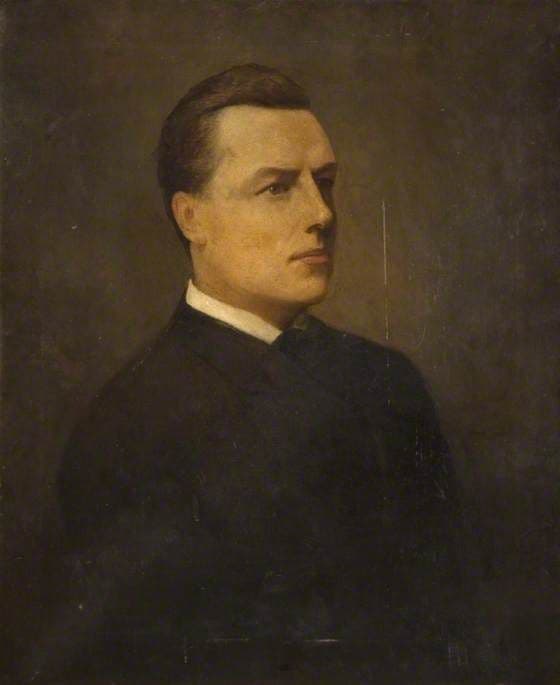
The founders sent their sons to run it. Joseph Henry Nettlefold, an able engineer, managed the works. His cousin, the eighteen-year-old Joseph Chamberlain, ran the selling. Chamberlain’s biographer J. L. Garvin wrote that he was as familiar at Smethwick as in Broad Street, and credited him with a Working Men’s Institute and a benefit club for the workers.
The same spot, then and now
1888–1913
Today
Old map: Ordnance Survey six-inch, reproduced with the permission of the National Library of Scotland (CC BY 4.0). Today: © OpenStreetMap contributors.
By 1864, Grace’s Guide records, the works had 600 employees. An extension of 1863 is credited to the London architect Thomas Chatfeild-Clarke, who had married into the Nettlefold family. The Victoria County History says the firm dominated the British market by the mid-1860s.
Swallowing the neighbours
In 1869 the firm bought the Imperial Mills on the north side of Cranford Street, opposite the Heath Street Works, and converted them to make nuts and bolts, with a new wire mill, bar shop and nail shop. Chamberlain left the business in 1874 for politics. In 1880 the firm became Nettlefolds Ltd and took over its biggest local rival, the Birmingham Screw Company, whose St George’s Works in Grove Lane faced Heath Street from the far bank of the canal and was almost as large.
In 1902 Nettlefolds merged with Guest, Keen & Co. to form Guest, Keen & Nettlefolds. By the outbreak of the First World War the company made over half the screws and about a quarter of the nuts and bolts in Britain, and it was the largest employer in Smethwick.
The long decline
In the late 1960s, the Victoria County History says, the GKN headquarters adjoined the Heath Street Works, now a 50-acre complex run by GKN Screws and Fasteners Ltd and employing some 4,500 people. Other GKN companies were scattered through the surrounding streets.
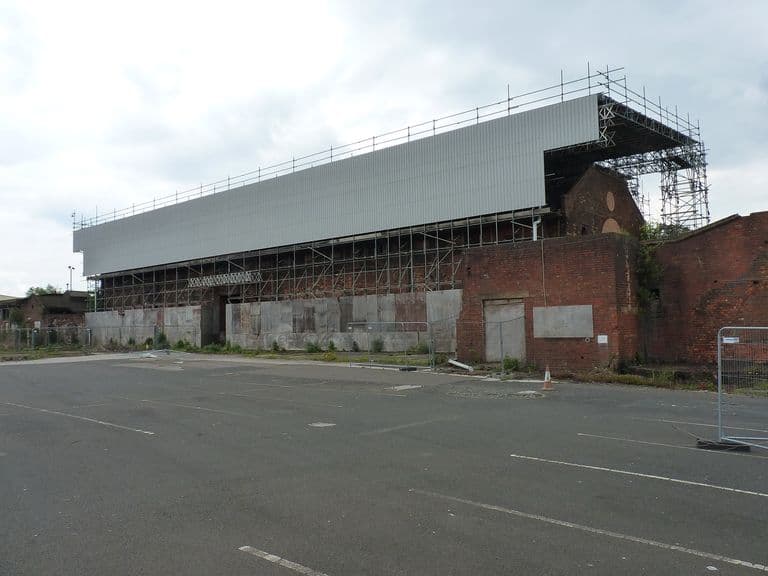
Then the industry that had built Smethwick contracted. The works shrank and was cleared piece by piece. The Midland Metropolitan University Hospital was built on former GKN land at Grove Lane and opened on 6 October 2024. Sandwell Council’s Grove Lane Masterplan, approved in 2022, plans new homes on the old industrial land around it, including a site of former GKN factory land on the south side of Cranford Street, bounded by the Cape Arm of the canal.
Why it matters
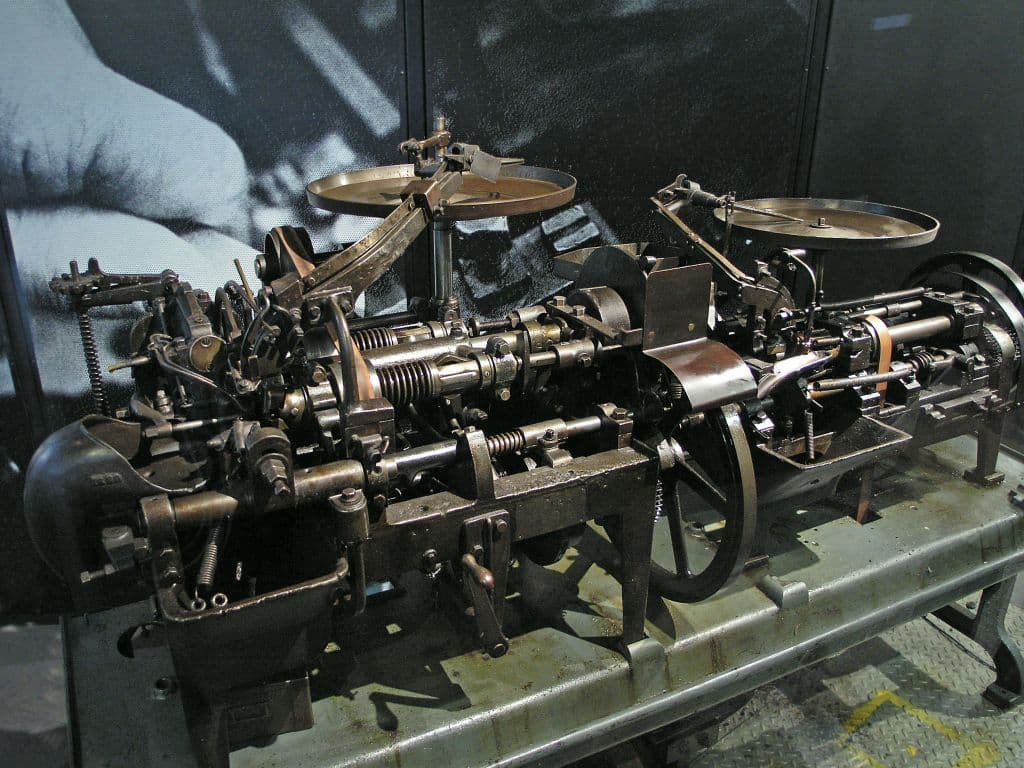
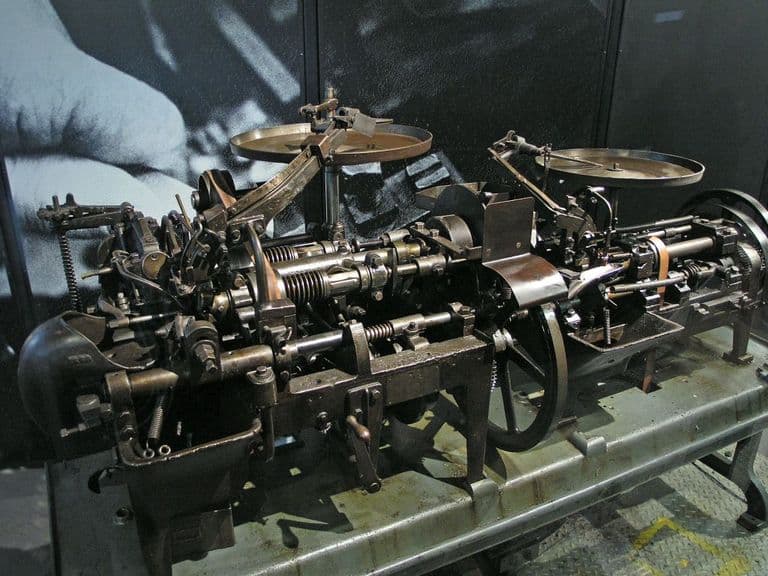
Few places in the Birmingham area did more to make a single everyday object universal. The pointed, machine-made wood screw came into British workshops through this works. The fortune it made let Joseph Chamberlain give his life to public service, and the company it grew into, GKN, became one of the giants of British engineering. A screw-making machine built by Nettlefold & Chamberlain survives in the collection of Birmingham Museums.
What happened here?
From 1854 Nettlefold & Chamberlain made pointed wood screws here on American-designed automatic machines. The works later added nuts, bolts, wire and nails, and from 1902 was the heart of GKN’s screw business, with about 4,500 workers in the late 1960s.
Why it mattered
It made the modern, pointed wood screw cheap and universal in Britain, gave the firm a near-monopoly of the trade, and paid for Joseph Chamberlain’s political career. It was the seed of GKN, one of Britain’s largest engineering groups.
Why it disappeared
Industrial decline · Redevelopment
The British fastener industry contracted in the late 20th century and the GKN works was run down and cleared in stages. The Midland Metropolitan University Hospital was built on former GKN land at Grove Lane, and the surrounding industrial land is being redeveloped for housing under Sandwell Council’s Grove Lane Masterplan.
What’s there now
What replaced it
The Midland Metropolitan University Hospital (opened 6 October 2024) on former GKN land at Grove Lane, and housing schemes under Sandwell Council’s Grove Lane Masterplan, including the former GKN factory land on the south side of Cranford Street.
What survives
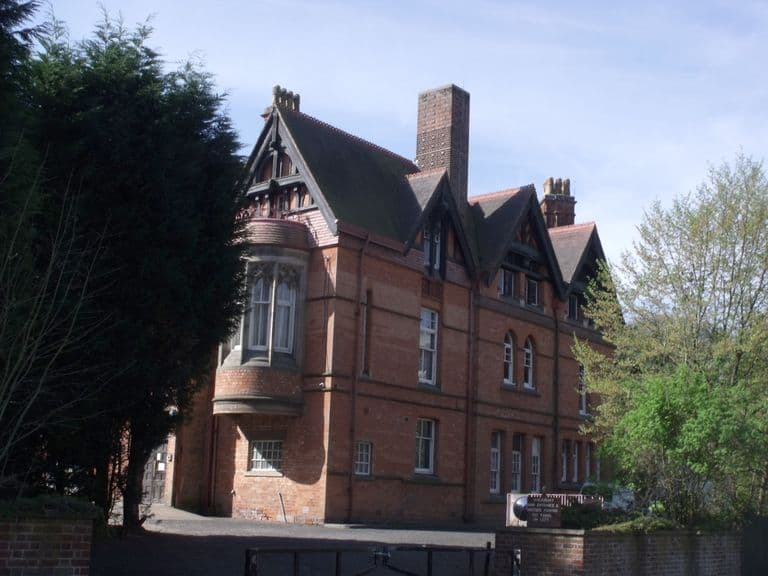
No building of the 1854 works has been confirmed as surviving. The street pattern of Cranford Street, Heath Street and the canal remains. A Nettlefold & Chamberlain machine for turning and slotting wood screws is in the Birmingham Museums collection.
Today
The area around Cranford Street, Heath Street and Grove Lane is in the middle of large-scale change: the hospital is open, new homes are being built, and remaining industrial land is earmarked for housing. There is no plaque or marker to the screw works.
Key dates
- Autumn 1854 — Joseph Chamberlain arrives in BirminghamAged eighteen, Joseph Chamberlain comes from London to look after his father’s investment in the screw business. He takes charge of the firm’s commercial side from its Broad Street office.
- 1854 — Nettlefold & Chamberlain founded at Heath Street, SmethwickJohn Sutton Nettlefold buys the British rights to an American pointed-screw machine. With £10,000 from his brother-in-law Joseph Chamberlain, he builds the Heath Street Works in Smethwick, run by their sons.
- 1869 — Chamberlain becomes a partner; the firm buys Imperial MillsJoseph Chamberlain is made a partner in Nettlefold & Chamberlain, and the firm buys the Imperial Mills opposite the Heath Street Works for nuts, bolts, wire and nails.
- 1874 — Chamberlain retires from the screw tradeMayor of Birmingham since 1873, Joseph Chamberlain sells out of Nettlefold & Chamberlain to devote himself to politics. Garvin says the decision was taken in the spring; Grace’s Guide dates his departure to June.
- 1880 — Nettlefolds Ltd incorporatedThe screw business becomes Nettlefolds Ltd and takes over the Birmingham Screw Company’s St George’s Works across the canal from Heath Street.
- 1902 — Guest, Keen & Nettlefolds formedNettlefolds merges with Guest, Keen & Co. By 1914 the new company makes over half Britain’s screws and about a quarter of its nuts and bolts.
- 6 October 2024 — Midland Metropolitan University Hospital opens on former GKN landThe new hospital at Grove Lane, Smethwick, built on former GKN land near the old Heath Street screw works, opens to patients.
Sources and further reading
Location: the Victoria County History places the Heath Street Works “in Cranford Street, Smethwick”, with the Imperial Mills opposite on the north side and the Birmingham Screw Co.’s works across the canal in Grove Lane. The exact outline of the 1854 sheds has not yet been plotted from historic Ordnance Survey maps.
What survives: no building of the 1854 works has been identified in the sources used. Urban-exploration reports (not used as sources) describe GKN buildings and wartime tunnels still standing on parts of the site in the 2010s and early 2020s. The status “redeveloped” reflects the hospital and the housing schemes; the present state of every part of the former works has not been checked on the ground.
The extent to which the hospital stands on the Heath Street Works itself, rather than on other GKN land at Grove Lane, is not clear from the sources.
The 1863 extension by Thomas Chatfeild-Clarke comes from Wikipedia, citing Jones’s History of GKN (1987); it has not been checked against that book.
Garvin’s figure of 2,000 machines and Grace’s Guide’s 1876 figures are not used, as the sources give garbled or inconsistent numbers.
- Smethwick: Economic history, in A History of the County of Stafford, vol. 17, pp. 107–118 — M. W. Greenslade (ed.), Victoria County History, 1976
- John Sutton Nettlefold — Grace’s Guide, Grace’s Guide to British Industrial History
- Nettlefold and Chamberlain — Grace’s Guide, Grace’s Guide to British Industrial History
- Nettlefolds — Grace’s Guide, Grace’s Guide to British Industrial History
- The Life of Joseph Chamberlain, vol. 1: 1836–1885 — J. L. Garvin, Macmillan, 1932. vol. 1, pp. 51–66
- Thomas Chatfeild-Clarke — Wikipedia, Wikipedia
- The Borough Council of Sandwell (Cranford Street, Smethwick) Compulsory Purchase Order 2025 — Sandwell Council, Sandwell Council, 2025
- Grove Lane Masterplan SPD — Sandwell Council, Sandwell Council
- Bournville again: can a new Birmingham hospital recreate the Cadbury effect? — Clare Goff, The Guardian, 2017
- Patients transferred as super hospital opens doors — BBC News, BBC, 2024
- Machine for turning and slotting wood screws, made by Nettlefold and Chamberlain (Birmingham Museums object 1954S00329) — Birmingham Museums Trust, Birmingham Museums Trust via Wikimedia Commons
Archive references: Cadbury Research Library, University of Birmingham JC (Joseph Chamberlain papers, including material on Nettlefold and Chamberlain)
Comments
Comments will load here.