
In a photograph from the early 1920s, George Judd stands in the farmyard at Kettlehouse Farm with his daughters Gertrude and Elsie and his cousin Harry. In the background is the waterworks pumping station. Within a few years the yard would be gone, and the farm’s name would belong to a council estate.
Kettle House stood just west of the old road now called Kingstanding Road, a little south of where the Circle is today. It is the reason Kettlehouse Road is called Kettlehouse Road.
A name in the deeds
The farm is older than its photographs by more than a century. In 1814 Francis Beynon Hacket mortgaged a long list of lands in Oscott, including “enclosures from the common of Perry Barr”, and among them is “Kettle House”. Whether that was already a farmhouse or still just a name on a field, the catalogue doesn’t say. A copy of the 1814 enclosure award recording Hacket’s allotments was made in 1843, and his title deeds went back to 1780.
A later photograph caption says the farm was built on “Sutton Common” at some date after 1794. The deeds tell a different story: they put Kettle House in Oscott, in the township of Perry Barr, on land that came out of Perry Barr Common.
Colley, the Turners and the Calthorpes
In December 1842 the farm was put up for auction. The advertisement offered “The Farm House and Outbuildings, with five pieces of Arable Land, called the Kettle House Farm, also occupied by Mr. Colley and Messrs. Turner, fronting the roads leading from Birmingham and Perry”. Four years later Hacket sold the “Farm in Oscott called the Kettle House” to Lord Calthorpe and his fellow trustees, and it became part of the Perry Hall estate.
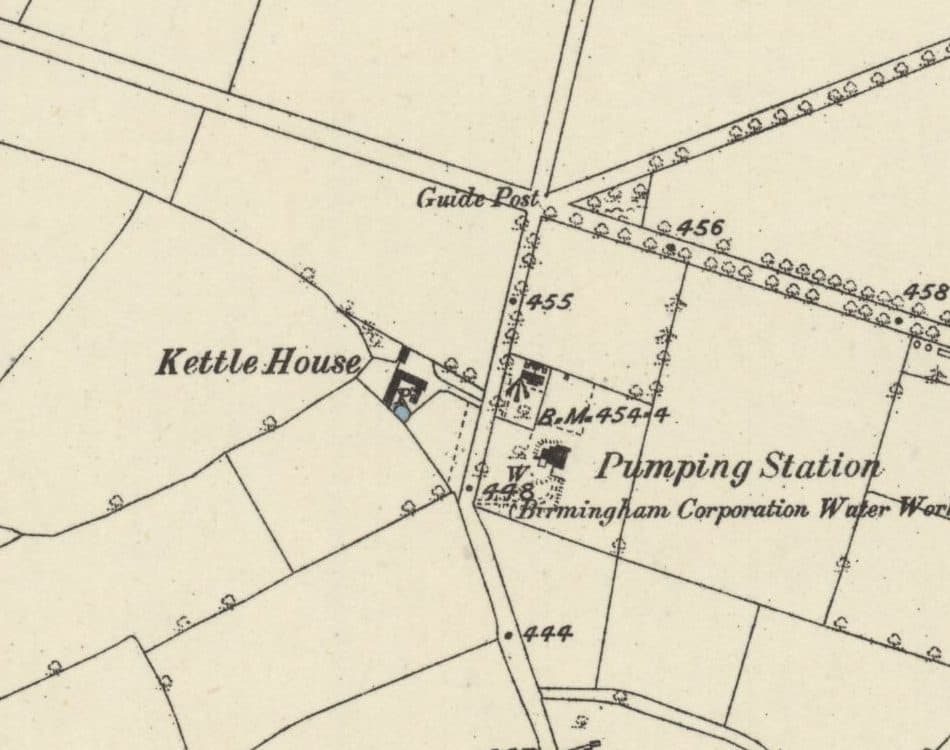
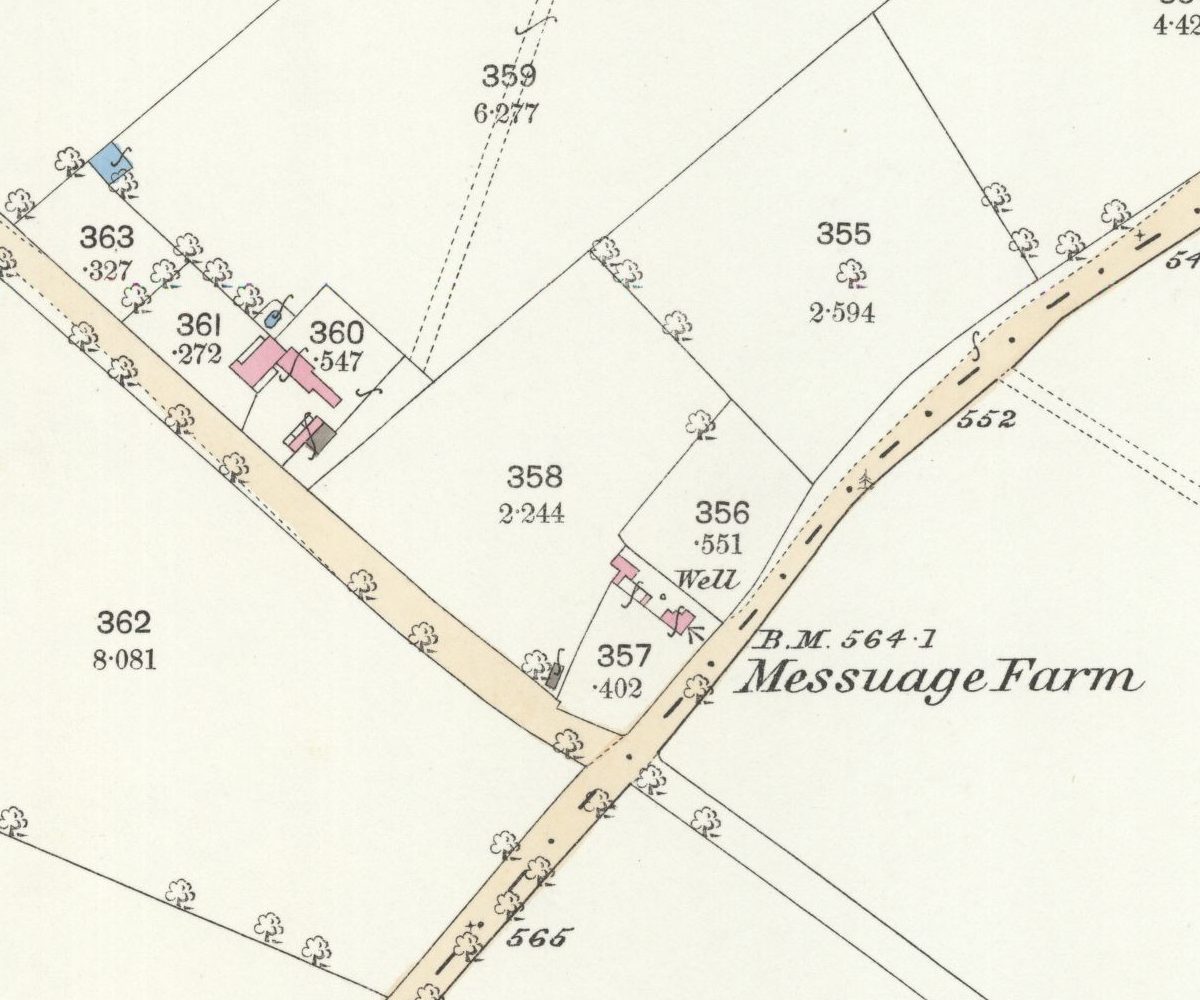
Richard Colley was still farming at Kettle House in 1850. By 1875 the farmer was Charles Foden. When the Ordnance Survey came in 1882–83 it marked “Kettle House” with a pond beside it; by 1901 it was “Kettle House Farm”. The Victoria County History noted in 1908 that Icknield Street, the Roman road, “does not exist as a modern road to the south of Kettle House”.
Sold for houses
In September 1921 Lord Calthorpe tried to sell. Kettle House Farm, 127 acres and let for just under £300 a year, was passed over at £15,700. Nine years later, in March 1930, Birmingham City Council approved the purchase of “Kettlehouse Farm, Perry Barr”, 162 acres.
The City Engineer drew up a layout for 1,980 houses on the “Kettlehouse Farm and Messuage Farm estates”, the land between Kingstanding Road, Kings Road, Queslett Road and Kingstanding Wood. In 1931 a newspaper described the area “now being developed” as 206 acres, with room for 1,980 houses. The estate went up in stages: plans for about 906 houses on one part in 1934, and 770 more in 1936.
George Judd farmed on while the new streets came closer. A photograph from the 1930s shows him in the snow, with his dog Mick doing one of his tricks. In February 1936 the auctioneers advertised a farm sale at “Kettlehouse Farm, Kingstanding”, for “Mr. George Judd (who is leaving, the property having been sold)”.
What the name still carries
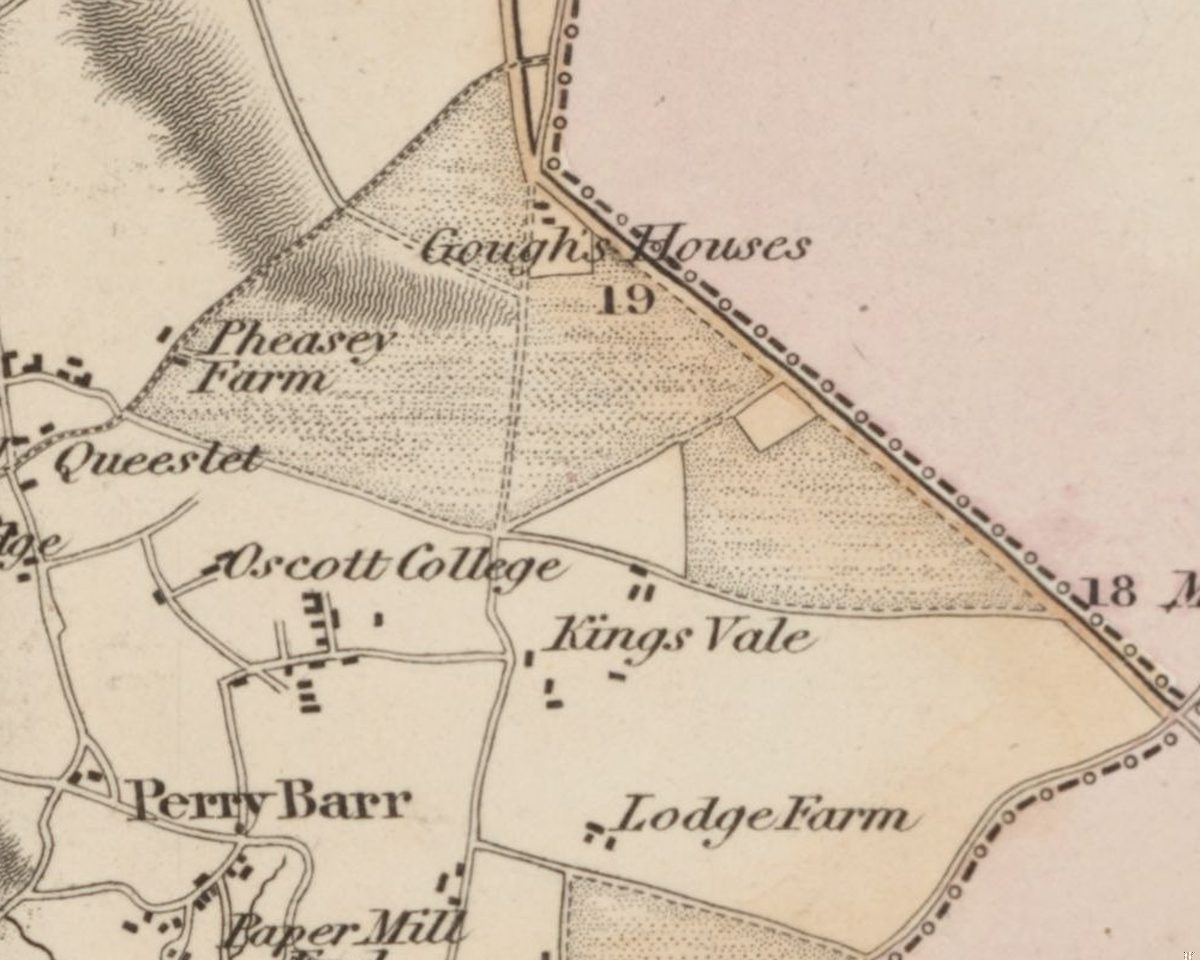
The farmhouse has gone. On the old maps it lies under the southern part of the former Kingstanding Precinct site, on the west side of Kingstanding Road just south of the Circle, though no remains are known.
For a few years in the 1930s, though, Kettlehouse Farm was not a farm at all but a neighbourhood. The local community association’s journal was called “Community News. A journal of events on the estates of Perry Common, Kingstanding and Kettlehouse Farm.” The farm had become a place where thousands of people lived, and its name still runs down Kettlehouse Road.
Pictures
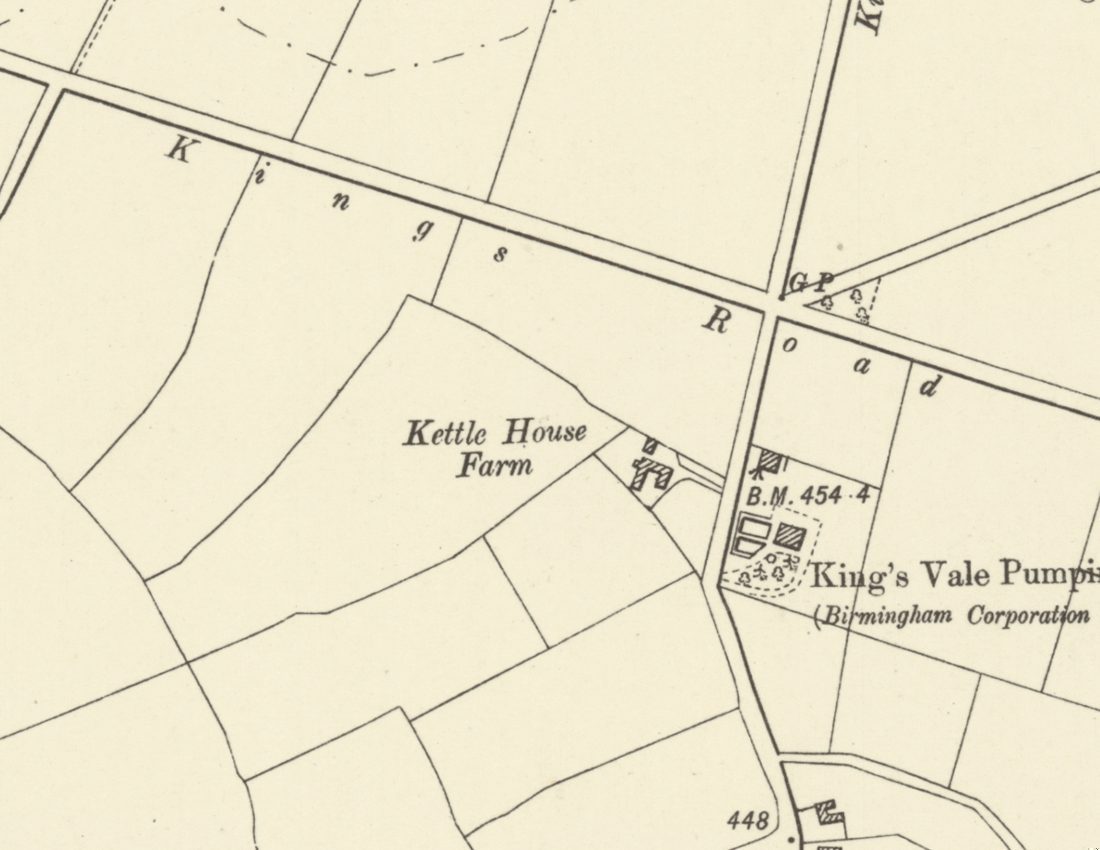
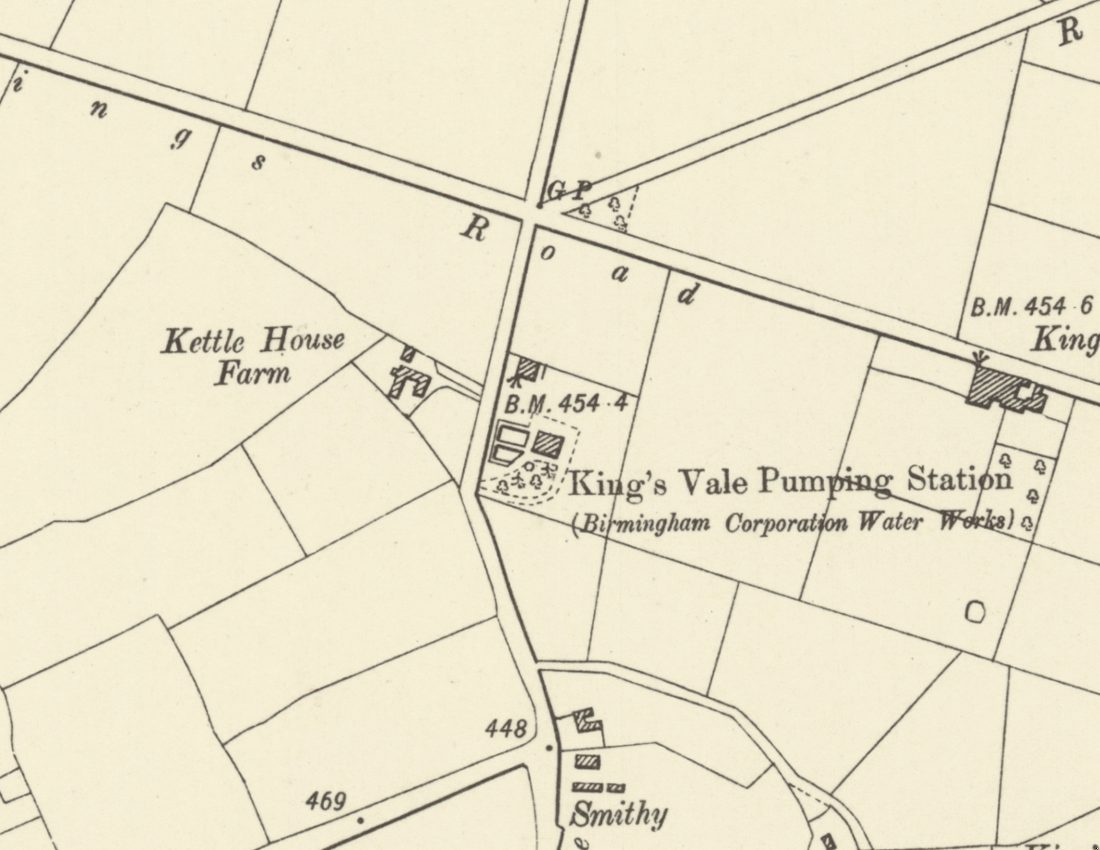
By 1901 it is “Kettle House Farm”, just south-west of the crossroads where the Circle is now, with the King’s Vale pumping station across the road.Ordnance Survey six-inch map, revised 1901, published 1904 · Out of copyright
From the Heritage Archive
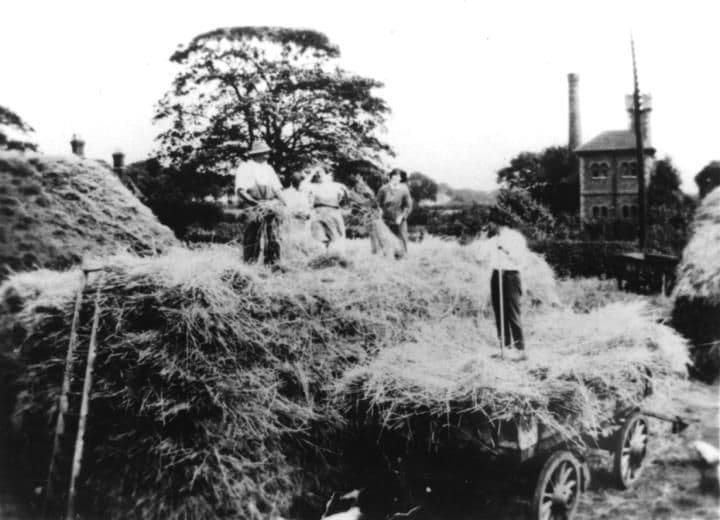 Kettlehouse Farmc. 1920–1925
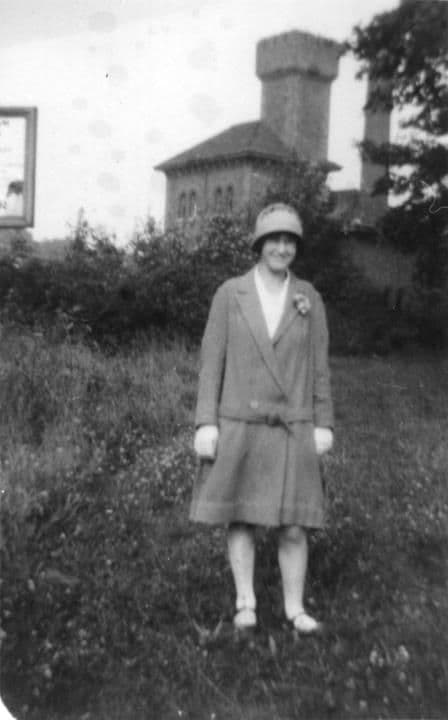 Kettlehouse Farmc. 1920–1929
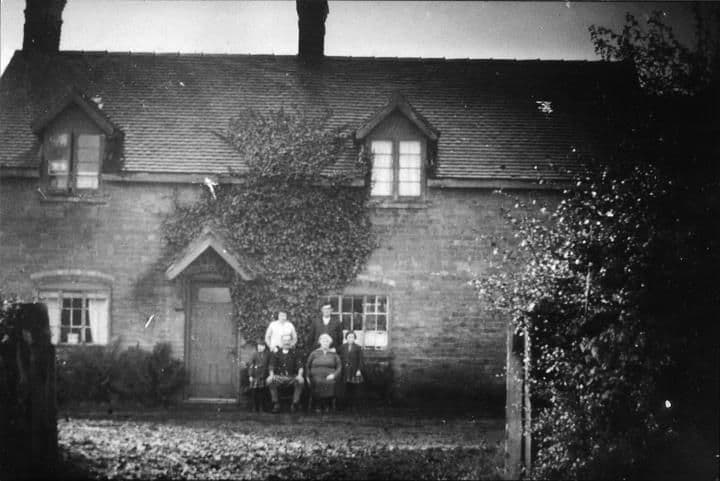 Kettlehouse FarmDate not recorded
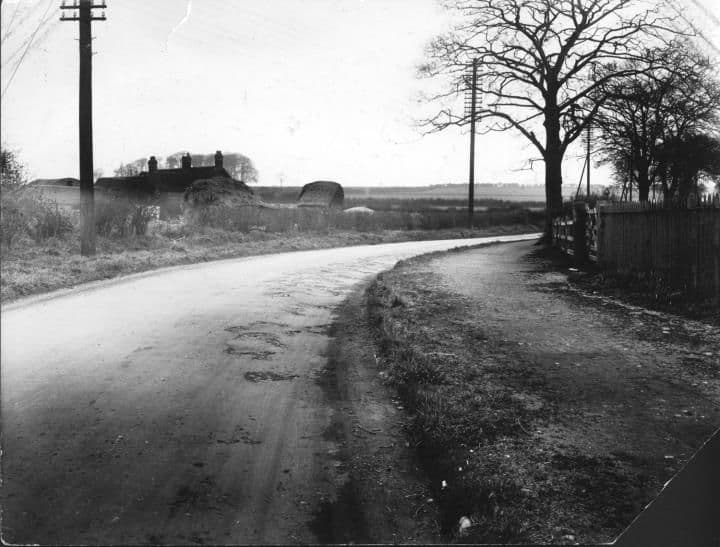 Kingstanding RoadApril 1928
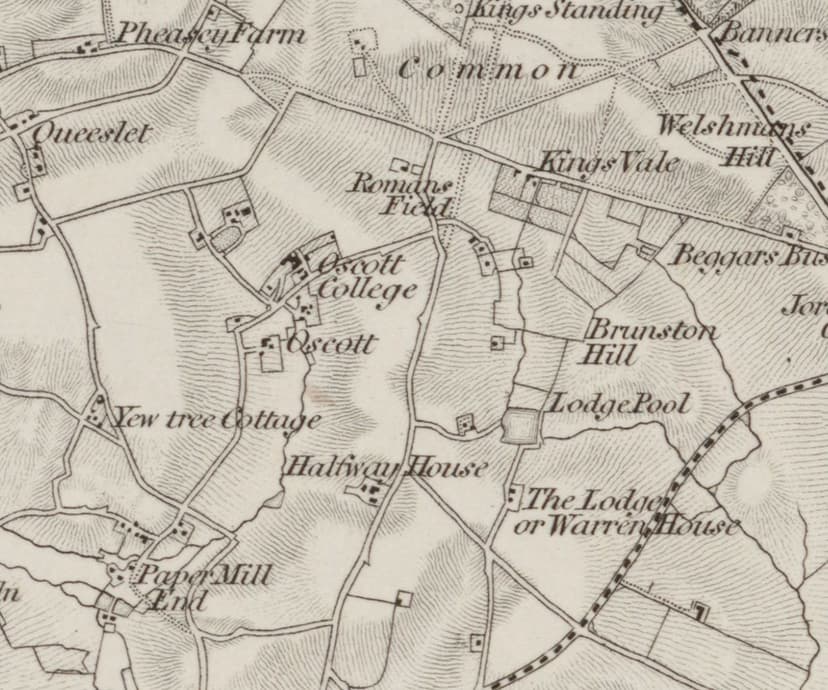
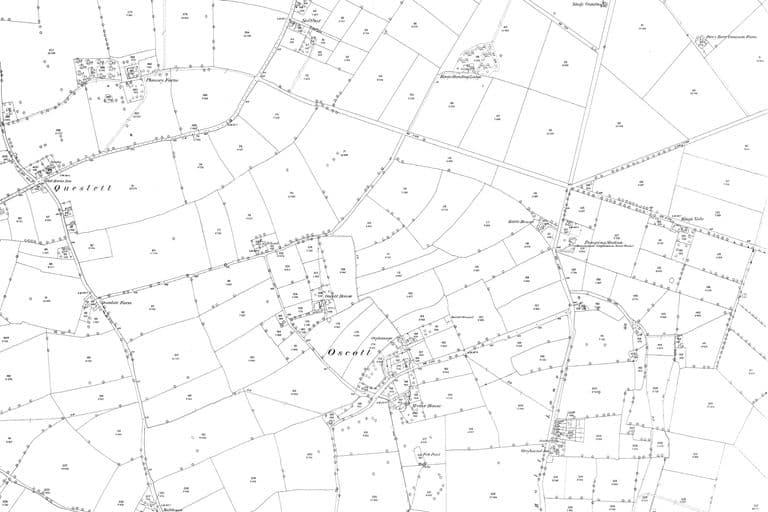 The fields of Kingstanding: OS 25-inch map, 1880sSurveyed 1882–83; published 1884–1891 (first edition)
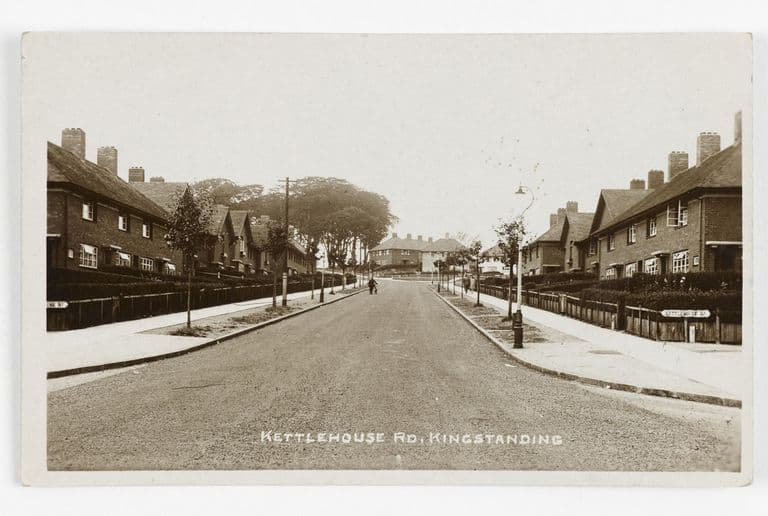 Kettlehouse Road, Kingstanding (postcard)c. 1930s
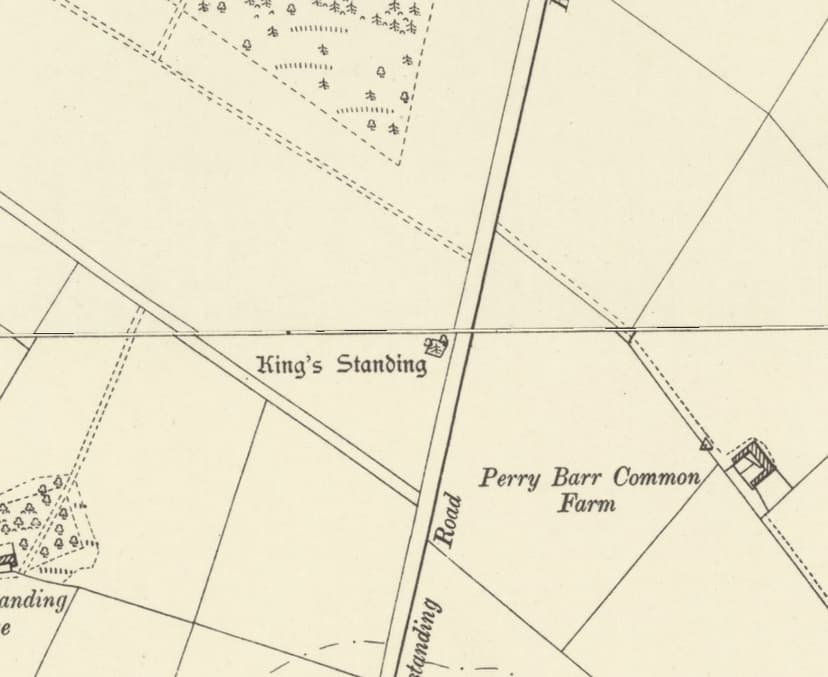
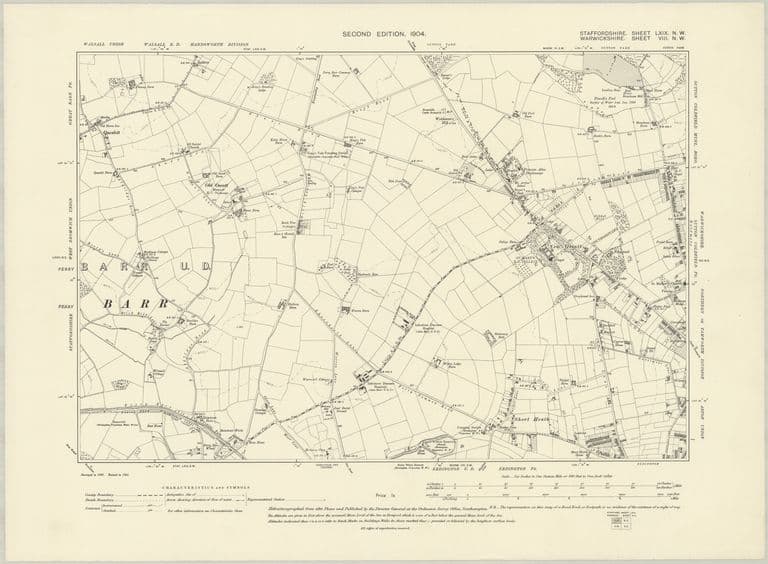 Farms and lanes: OS six-inch map, 1904Revised 1901, published 1904
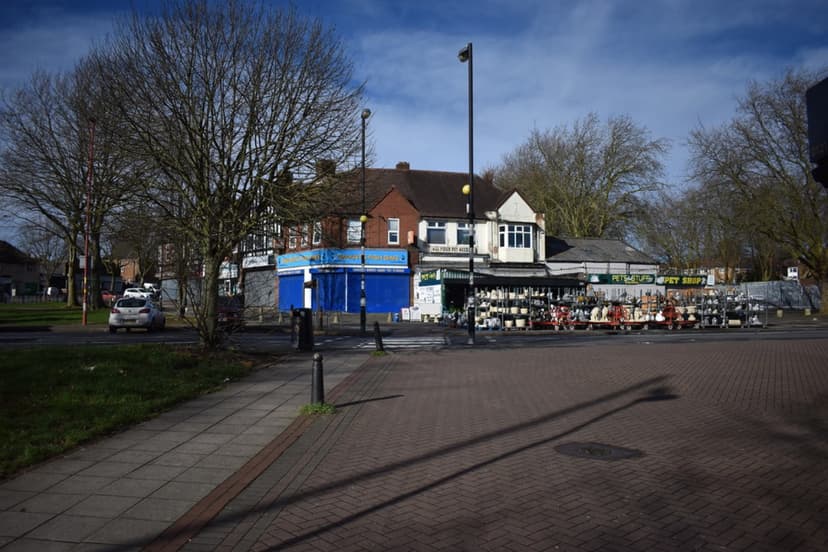
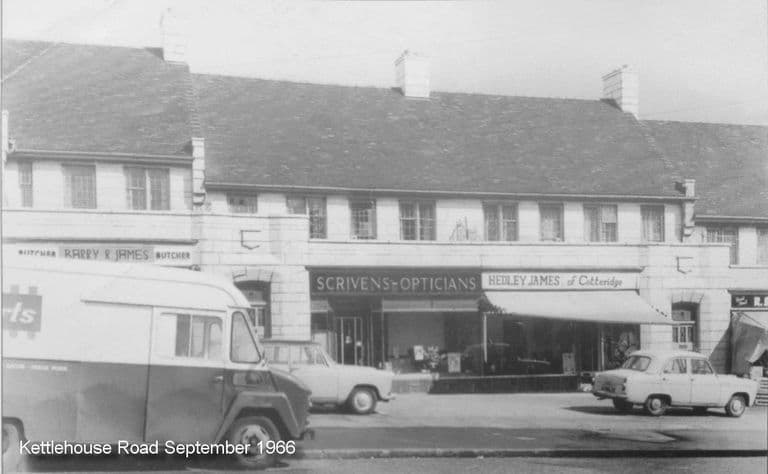 Shops on Kettlehouse Road, September 1966September 1966
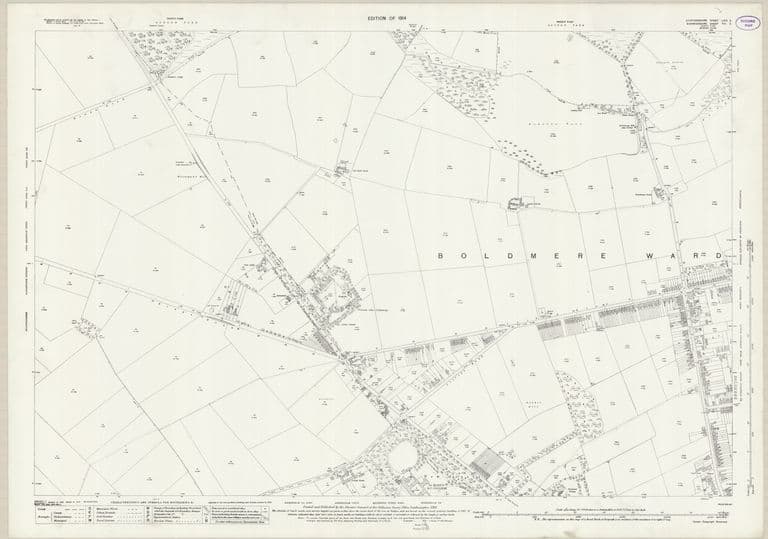 Kettlehouse and Warren Farm before the estate: OS 25-inch, 1914Revised 1913, published 1914
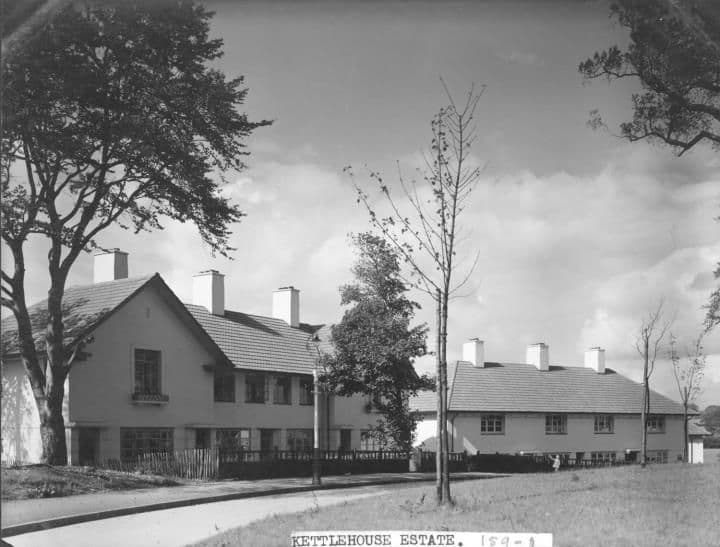 Bandywood Road1934
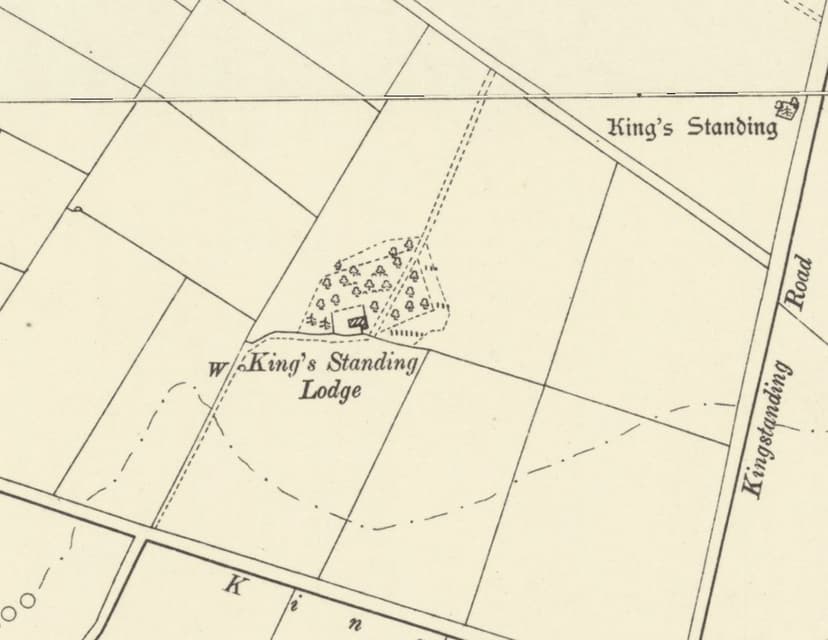
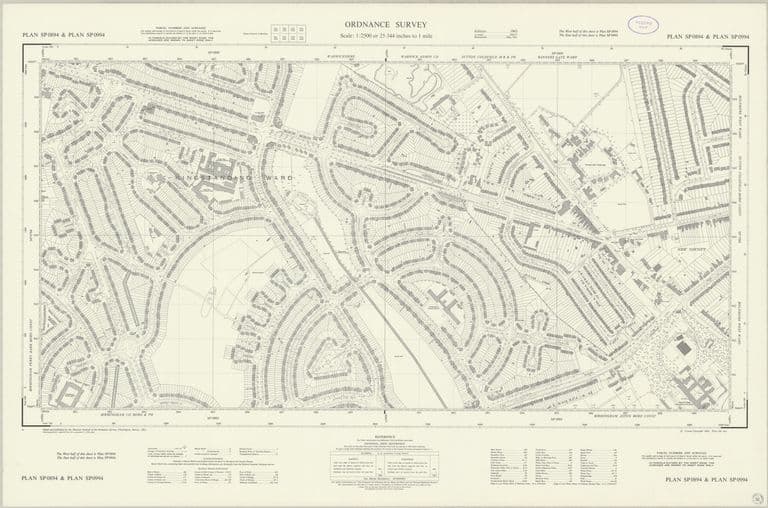 Kingstanding east to New Oscott, house by house: OS 1:2500, 1963Revised 1961–1962, published 1963
- Lease for a year and mortgage, Francis Beynon Hacket to Edward Tongue — Library of Birmingham, Gough of Perry Hall papers, 1814. Ref. MS 3145/36/6 a&b. Lists “enclosures from the common of Perry Barr … Kettle House … all in Oscott”.
- Extract from the Inclosure Award of Perry Barr, 1814, recording allotments to Francis Hackett — Library of Birmingham, 1843. Ref. MS 3145/36/10
- Particulars and plan of freehold estates at Oscott, E. & C. Robins — Library of Birmingham, 1842. Ref. MS 3145/36/9 a&b. Same sale as the newspaper advertisements of December 1842.
- Sale advertisement (Kettle House Farm) — Aris’s Birmingham Gazette; Wolverhampton Chronicle, 5–21 December 1842. Snippet only.
- Conveyance, Hacket to Lord Calthorpe, J. M. Paget and C. Littlehales — Library of Birmingham, 1846. Ref. MS 3145/36/12; also /36/13 and /36/14 (schedule of deeds 1780–1818). “Farm in Oscott called the Kettle House”.
- Post Office Directory of Birmingham, Staffordshire & Worcestershire — 1850. Ref. p.300. “Colley Richard, farmer, Kettle house”.
- White’s Commercial & Trades Directory of Birmingham, vol. II — 1875. Ref. p.762. “Foden Chas., Kettlehouse Farm”.
- Perry Hall estate sale report — Birmingham Daily Gazette, 23 September 1921. Kettle House Farm, 127 acres, passed over at £15,700.
- Council purchase of Kettlehouse Farm — Birmingham Daily Gazette, 7 March 1930; 1 January 1931. 162 acres.
- City of Birmingham. Kettlehouse Farm and Messuage Farm estates. Layout for 1,980 houses — City Engineer and Surveyor, 1930. Ref. MAP/416623; MAP/425365; revised plan MAP/544107 (1936)
- Kingstanding estate report — Walsall Observer, 6 June 1931. “206 acres and provides for 1,980 houses”.
- Kettlehouse Farm estate reports — Birmingham Daily Gazette, 2 February 1934; 30 January 1936
- Farm sale advertisement, Kettlehouse Farm (George Judd) — Lichfield Mercury, 14 and 21 February 1936
- Photograph captions (Kettlehouse Farm, George Judd) — Birmingham Images (Library of Birmingham), 1920s–1930s. Ref. WK-K10-0069; wk-p3-0374; ResourceID 1314. Captions quoted only; images not reproduced.
- Community News. A journal of events on the estates of Perry Common, Kingstanding and Kettlehouse Farm — Perrystanding Community Association, 1933–1937. Ref. L/./21/4; 413230
- Victoria County History (quoted in the heritage research report) — VCH, 1908. “does not exist as a modern road to the south of Kettle House in Perry”.
- OS six-inch maps, 1st and 2nd editions — Ordnance Survey, 1882–83; 1901. Ref. NLS 101597597
Comments
Comments will load here.