
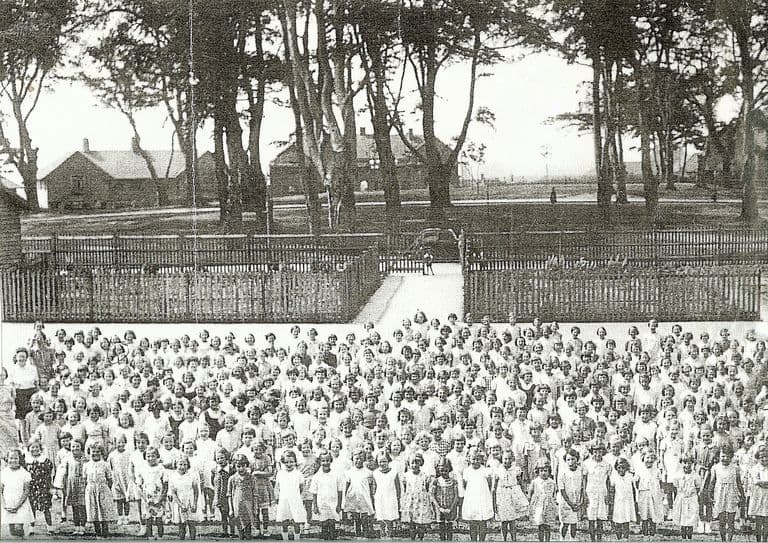
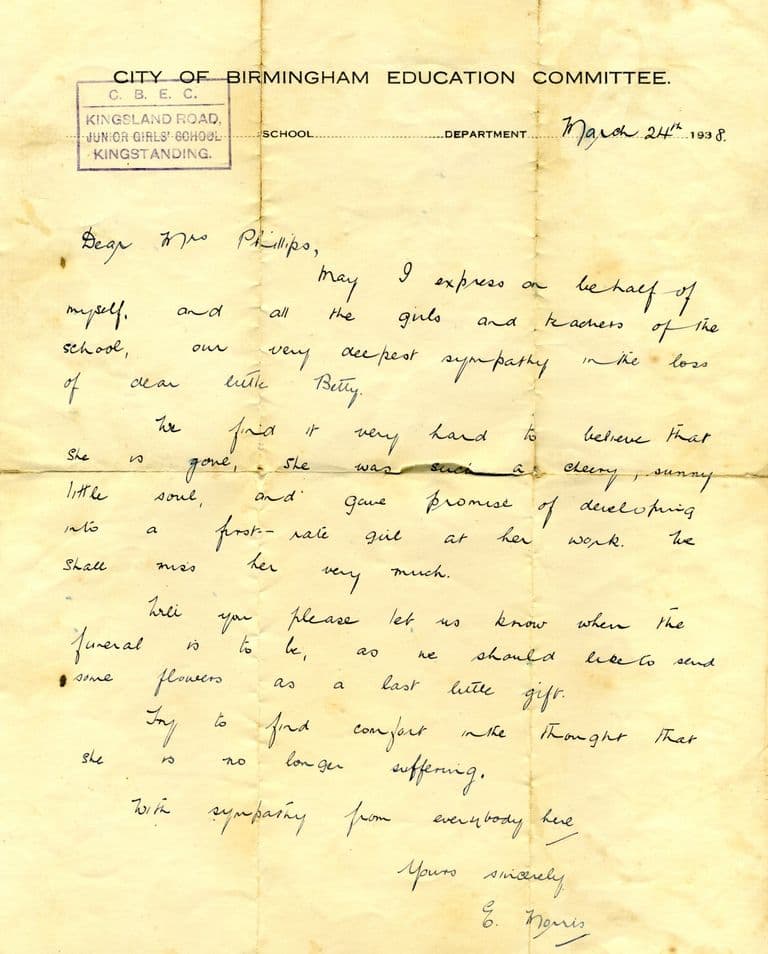
On 25 August 1937 Kingsland Road School was split in two. It had been open less than two years, and the change was made, Chris Hillcox’s timeline records, “owing to a large number of children attending the school (596)”. From then on there was a Junior Boys’ School under Mr C. Harding OBE and a Junior Girls’ School under Miss E. Morris, with the infants in a school of their own. Roy Brookes, there from 1946 to 1950, remembered how it worked: the boys’ classrooms on one side of the playground, the girls’ on the other, one playground between them, and the boys “not allowed to mix with the girls”.
From Kettlehouse to Kingsland
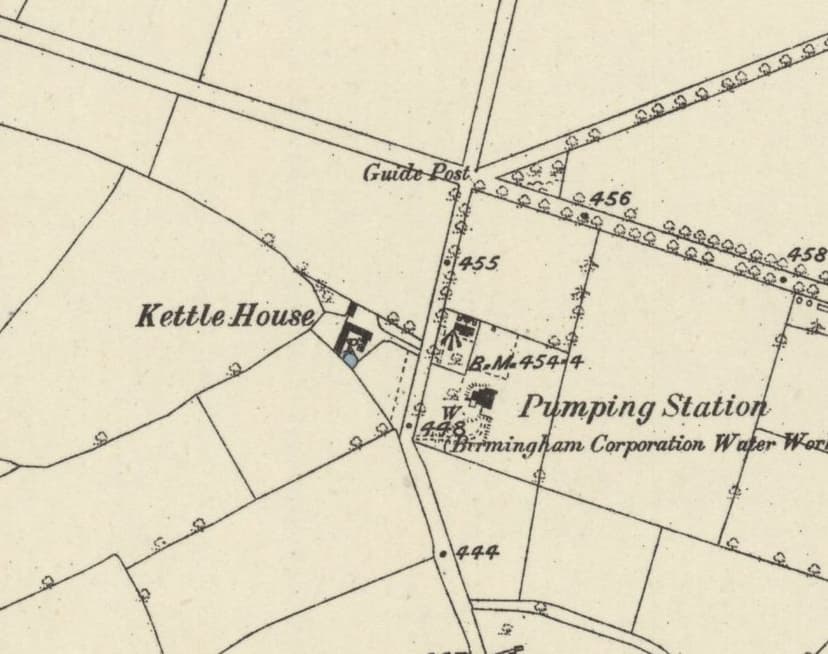
The school was planned while this corner of the estate was still called after the farm it replaced. A Board of Education file at the National Archives, covering 1931 to 1935, is headed “Kingsland Road Council School, formerly Kettlehouse Farm Estate Bandywood Road proposed Council School”. Chris Hillcox’s timeline records that it opened on 23 September 1935 as a joint infant and junior school under Miss Morris. The Victoria County History adds that it began in temporary buildings for 192 children, and that permanent buildings for 816 opened in 1937.
Wartime at Kingsland
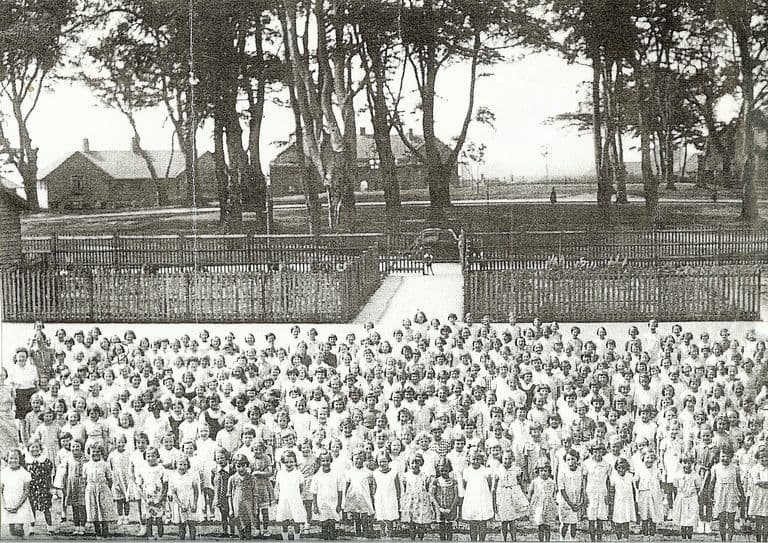
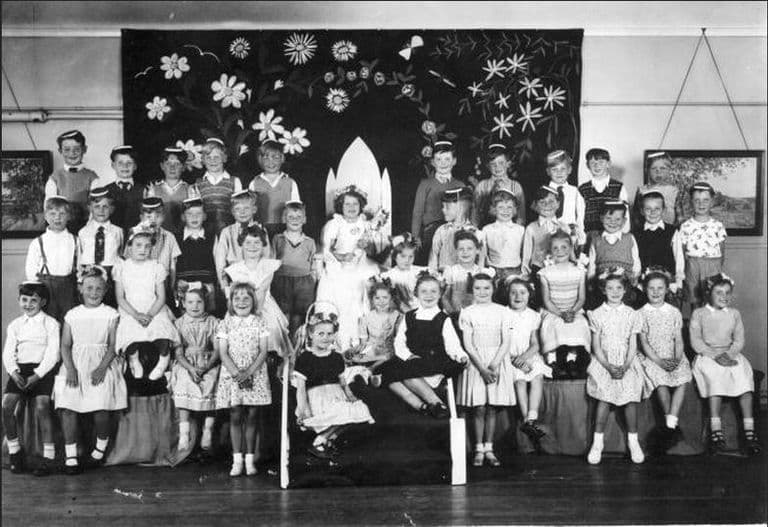
The whole of Kingsland Junior Girls’ School was photographed together in 1939. Maureen Eyles, who lived in Queslett Road, remembered starting in 1938 or 1939 at what she thought was “Bandywood infants”, and could find no trace of such a school; the Board of Education file may be the answer. She remembered queueing for gas masks at one of the new council houses in Queslett, and the class stopping at eleven o’clock every 11 November, “too young then to understand why”. One family on Voices of Kingstanding recalled children from Kingsland Road being evacuated to Ripley in Derbyshire. Decades later, pupils of the early 1980s still rolled down grassy mounds in the grounds that were, one remembered, “really atop of bomb shelters apparently”.
Maypoles and cheese-box hats
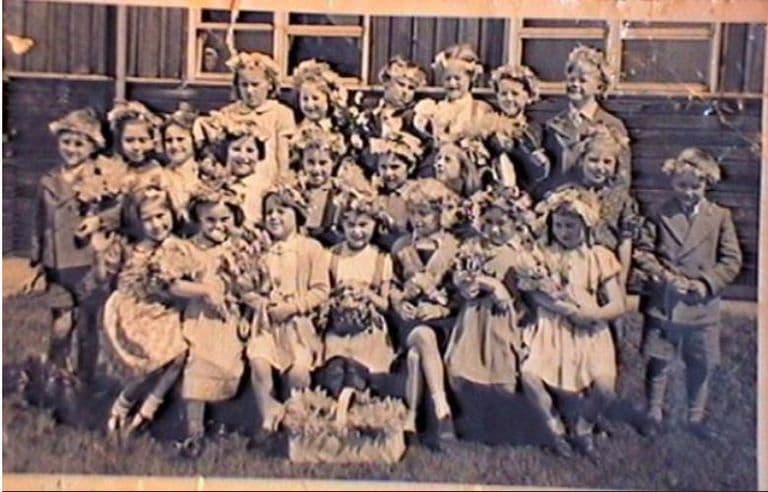
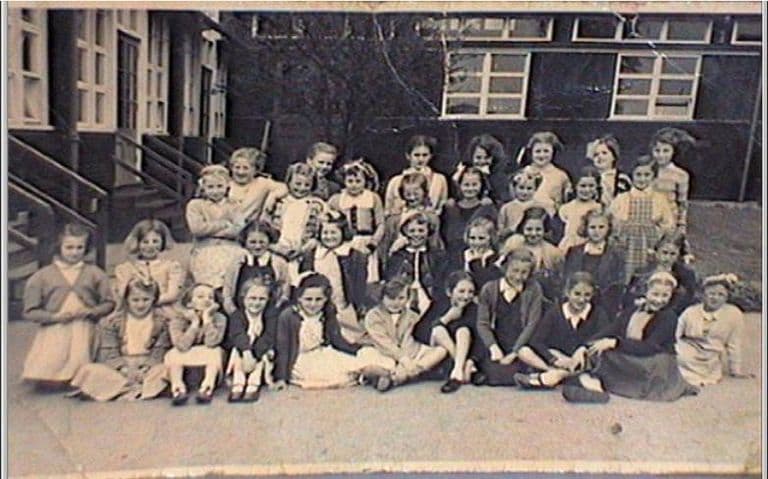
The memories that come back most are of May Day. Gwen Clifford described the celebrations at the infant school in the early 1950s: a May Queen chosen from the top class of seven- and eight-year-olds, a raised stage in the hall for her throne, garlands of coloured tissue paper, and greengrocers’ fruit baskets covered in paper and filled with flowers. Hazel Sherrard, who started in 1955, remembered making hats out of cheese boxes, and the maypole itself: “There was a hole in the middle of the floor for it to lock into. You had to be careful not to tangle the ribbons.” Paula Ann Walker remembered running along wooden corridors in which holes would appear, and a 1955 photograph shows steps leading up into the raised wooden classrooms.
Heads who stayed
Mr Harding died suddenly, and on 21 February 1957 the boys’ and girls’ schools were joined again. Miss Morris, who had opened the school in 1935, retired in August 1960, and Mr H. R. O. Dowle became head of the juniors, with Mrs W. Bailey leading the infants. When Mrs Bailey retired, at the end of 1969, infants and juniors became one school again. Former pupils remember Mr Dowle fondly; one noted that he was against using the cane. In the 1980s the heads were Mr Sulch and then Mr Penman, though pupils disagree about the year one handed over to the other. One remembered the nursery on the corner of Harringay Road and Kingstanding Road closing in 1982 and moving to Kingsland.
A new school on the old ground
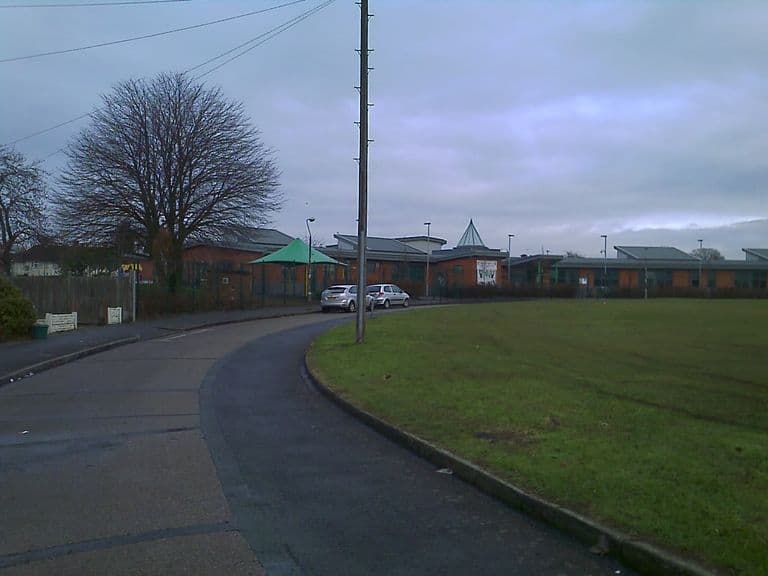
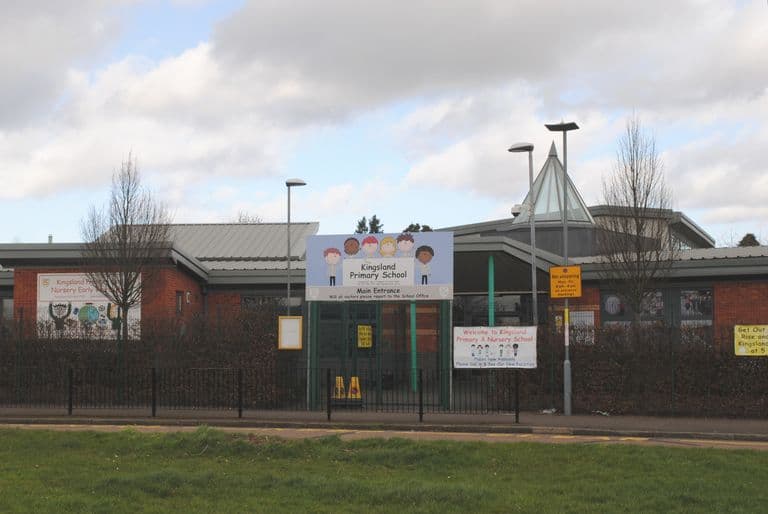
The wooden corridors have gone. Kingsland Primary was rebuilt from scratch under the second phase of Birmingham’s schools PFI programme, and its address today is Bandywood Crescent, the road the Board of Education named it after before it opened. The farm has gone and the huts have gone, but the name Bandywood came through it all.
From the Heritage Archive
- Victoria County History of Warwickshire, vol. 7: list of Birmingham schools — Victoria County History / British History Online, 1964. Ref. pp. 501–48. Kingsland County Primary School: Kingsland Rd. Council Sch. opened 1935 in temporary buildings, 192 JI; permanent buildings 816 JG, I, opened 1937, reorganised JB, JG, I; name changed 1954; JB and JG amalgamated 1957; 1961: 23 classrooms, 3 halls.
- Kingsland Road Council School, formerly Kettlehouse Farm Estate Bandywood Road proposed Council School — The National Archives, Kew (Board of Education), 1931–1935. Ref. ED 21/41764 (see also ED 21/41762). Catalogue title as quoted in the Heritage Archive record kingsland-primary-school-2020 and SOURCE_REGISTER S082.
- Kingsland Primary school (timeline and comments) — Chris Hillcox and contributors, Voices of Kingstanding. Timeline 1935–1980s; Gwen Clifford; Hazel Sherrard; comments by Paula Ann Walker, Maureen Eyles (gas masks, 11 November), Daniel Burrows and Claire (Sulch/Penman), Claire (mounds over shelters), Roy Brookes (boys and girls), Margaret Parkes (Mr Dowle and the cane).
- School timelines (Kingsland Junior girls, 1939) — Chris Hillcox and contributors, Voices of Kingstanding, 2012. Whole-school photograph of Kingsland Junior Girls, 1939.
- Evacuation (comment by Christine Phipps) — Chris Hillcox and contributors, Voices of Kingstanding. Children from Kingsland Road school evacuated to Ripley.
- Kings Vale / Kingsland Nursery (comment) — Chris Hillcox and contributors, Voices of Kingstanding. Nursery on the corner of Harringay and Kingstanding Roads closed 1982 and moved to Kingsland school (memory).
- Kingsland Primary School: About us — Kingsland Primary School, accessed 2026. Total rebuild under the second phase of the Birmingham Schools PFI Project (PPP2).
- Kingsland Primary School (NC) (URN 103221) — Department for Education, Get Information about Schools, accessed 2026. Ref. URN 103221. Community school, Bandywood Crescent, B44 9NA.
Comments
Comments will load here.