
What was here?
A large pool formed by damming the Hockley Brook below the Soho Manufactory. It took the water that had turned the works’ wheel, and Boulton’s gardens and boathouses lay along its banks.
History
A dam on the brook
Soho was built on water. Above the Manufactory was the Mill Pool, which fed the water wheel; below it the spent water ran on into a much larger sheet of water, Great Hockley Pool. Showell’s Dictionary of 1885 says the pool was formed by an embankment made in 1756–60, damming the Hockley Brook, just before Boulton arrived.
This was the lower pool, not the Mill Pool. In 1775 Boulton made another pool beside it, Little Hockley Pool, to store water that could be pumped back up to drive the wheel again. A causeway dam separated the two, and an island was made for swans.
Boulton’s view
For Boulton the pool was business and pleasure at once. Only in 1799, after Birmingham Heath was enclosed, could he buy land he had been renting and control all its banks, Val Loggie writes, drawing on Ballard, Loggie and Mason’s study of the Soho gardens. John Phillp’s watercolour of 1796 looks across Hockley Pool at the engine works, with the kitchen garden on its spit of land and the swans’ island. A boathouse was built on the former heath around 1802.
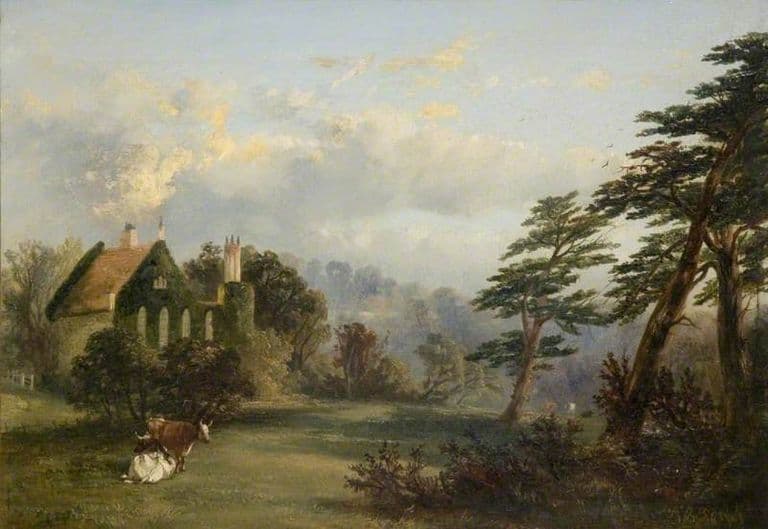
By 1820 the dam had been removed and the two pools had become one: Hockley Pool, or Big Hockley Pool. A neighbour, Richard Ford, made his Hockley Abbey, with its grotto, on waste land “near to, and overlooking Boulton’s Pool”, as Showell puts it.
Boats, and then trains
After the Boulton businesses closed, the pool took on a new life. It became known as Soho Pool or Soho Lake and in 1852 was leased for public recreation. Showell says it was a favourite place for boating. On 26 November 1864 a lifeboat named Birmingham, part-paid for by money raised in the town, was launched on Soho Pool before going to the east coast.
It did not last. The pool was drained in the late 1860s, and its bed became a railway goods yard, marked “Soho Pool Wharf” on later Ordnance Survey maps.
The water has gone, but the name has not. Soho Pool Way still runs across the bed of the lake that once mirrored Boulton’s works.
What happened here?
The pool received the water from the Soho Manufactory’s wheel and was part of the works’ water system and Boulton’s gardens. From 1852 it was a public boating lake; it was drained in the late 1860s and became Soho Pool goods wharf.
Why it mattered
The pool was part of the water system that powered Soho and the setting for Boulton’s landscaped estate. Its later life as a boating lake and railway yard shows how the estate changed after the Boultons.
Why it disappeared
Railway changes · Redevelopment
After the Boulton businesses closed, the pool was leased for recreation in 1852, then drained in the late 1860s. Its bed became a railway goods wharf and later industrial land.
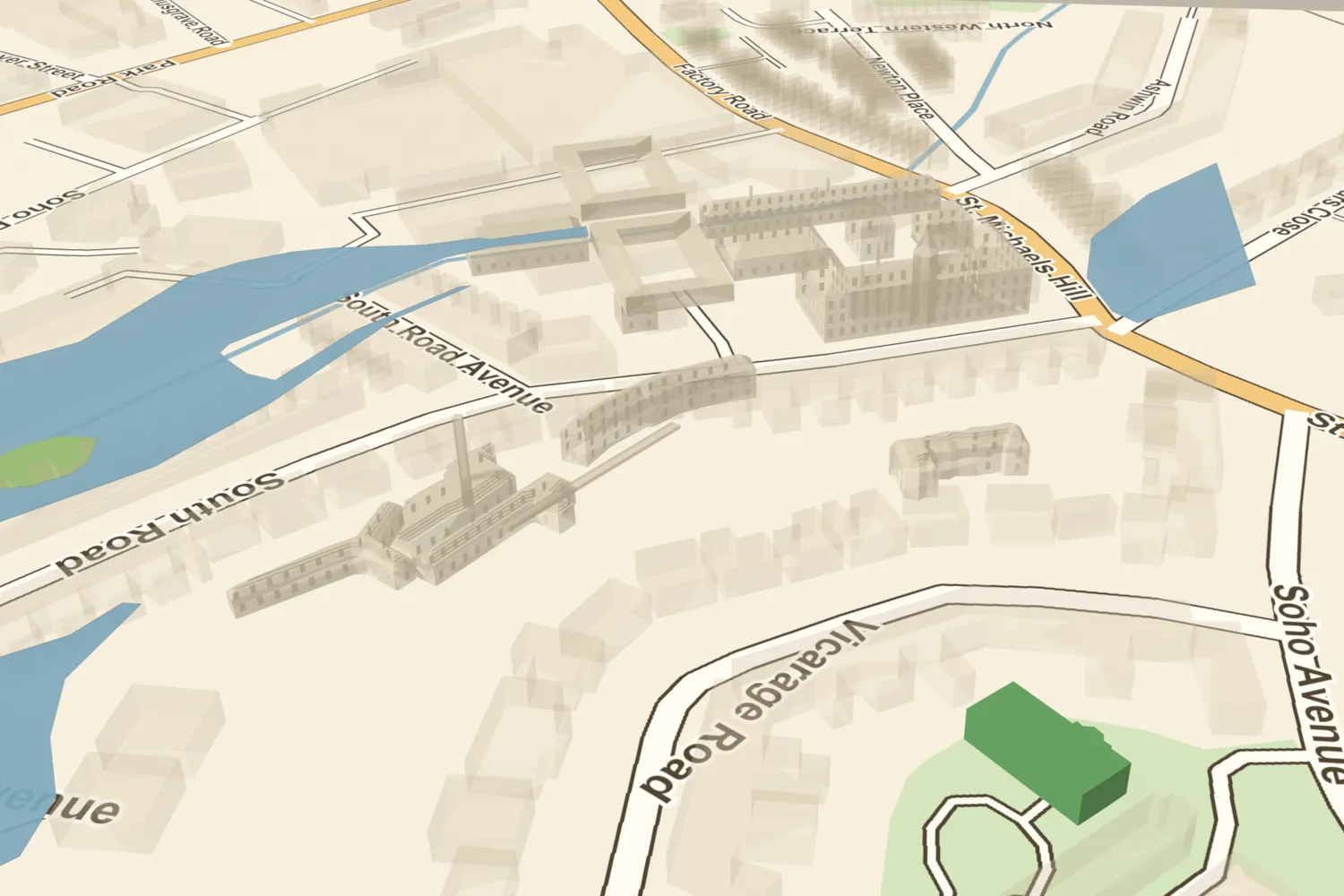
Soho’s pools, among Boulton’s works, on today’s streets
What’s there now
What replaced it
Soho Pool Wharf, a railway goods yard, and later industrial land and the road Soho Pool Way.
What survives
Nothing of the water. The name survives in Soho Pool Way. Phillp’s watercolours of the 1790s show the pool.
Today
Walk along Soho Pool Way in Hockley, south-east of the South Road site of the Manufactory. The road and the industrial units around it are on the drained bed of the pool and the old goods yard.
Sources and further reading
Draining: 1866 (Showell), 1868 (Loggie, citing Ballard et al.) or 1869 (Victoria County History); the text says ‘the late 1860s’. The Victoria County History implies the pool was renamed Soho Pool only after the Manufactory was demolished in 1862–63, while Loggie has the name in use earlier. Showell dates Richard Ford’s Hockley Abbey to 1799; Loggie gives 1779. The upper/lower and little/great names of the pools are confusing in the sources. No full outline of the pool was found, so the pin is general. This pool was not the Manufactory’s Mill Pool, which lay above the works near Soho Road.
- Soho Depicted: prints, drawings and watercolours of Matthew Boulton, his manufactory and estate, 1760–1809 (PhD thesis) — V. A. Loggie, University of Birmingham, 2011. pp. 307–309, 337
- A Lost Landscape: Matthew Boulton’s Gardens at Soho — Phillada Ballard, Val Loggie and Shena Mason, Phillimore, 2009. pp. 2, 10, 25, 62–63, 75–77 (via Loggie)
- Showell’s Dictionary of Birmingham — Thomas T. Harman and Walter Showell, Cornish Brothers, Birmingham, 1885. ‘Soho Pool’, ‘Hockley Abbey’, ‘Lifeboats’
- Economic and Social History: Mills, in A History of the County of Warwick, vol. 7, pp. 253–269 — W. B. Stephens (ed.), Victoria County History, 1964. Soho Manufactory
- The Soho Manufactory, Mint and Foundry, West Midlands: Where Boulton, Watt and Murdoch Made History — George Demidowicz, Historic England / Liverpool University Press, 2022
- Ordnance Survey six-inch map, second edition (1888–1913), georeferenced — National Library of Scotland. ‘Soho Pool Wharf’
Archive references: Birmingham Museums Trust BMAG 2003.31.26 (John Phillp, ‘Engine works from Hockley Pool’, 1796)
Comments
Comments will load here.