
What was here?
A sham ruin that was also a home: a Gothick house with a gabled front, lancet windows, a pointed doorway and a ruined arcade, built of slag from Aston furnace on waste ground overlooking Hockley Pool. Ivy soon covered almost all of it. Its grounds had walks and a grotto decorated with spar and shells.
History
Built from slag
About 1779 a Birmingham manufacturer called Richard Ford began building on a patch of “waste, boggy land” at Hockley. Charles Pye, who had the story from Ford himself, says Ford sent his horse and cart to Aston furnace for “large masses of scoriae, usually termed slag or dross”, and built with that.
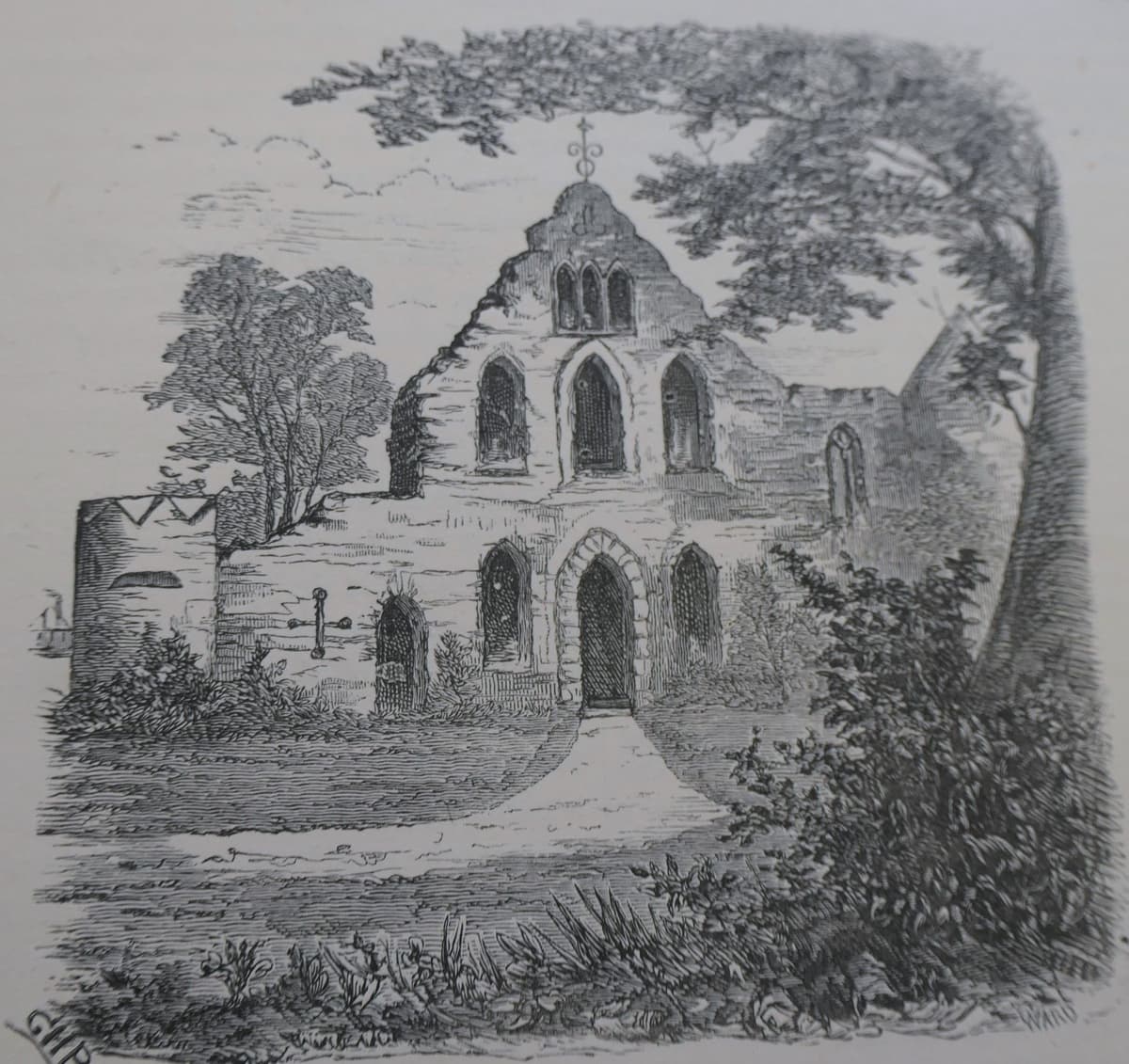
Slag made awkward walls. Showell says they had to be “constructed thicker than is usual”, and that this “took his fancy to make the place represent a ruined building”. So Ford built “to represent ruins”, and to add to the deception he set the date 1473 into the front in small pebbles. Without being told, Pye remarked, “posterity might have been at a loss to know what substance the walls were built with”.
Ford also had a good story about the money. He said he had built it out of what other men spent at the alehouse, saving two shillings a day, “without advancing any other money than the fourteen shillings per week”. It is his own account, and it has been repeated ever since.
A sight on the road to Soho
The Abbey stood near Matthew Boulton’s works at Soho, on ground overlooking the great pool on the Hockley Brook. Showell placed it “near to, and overlooking Boulton’s Pool”. Visitors heading to Soho passed it. Pye’s road tour has, on the left going down Hockley Hill, “Hockley abbey, and the plantations of Mr. Boulton”.
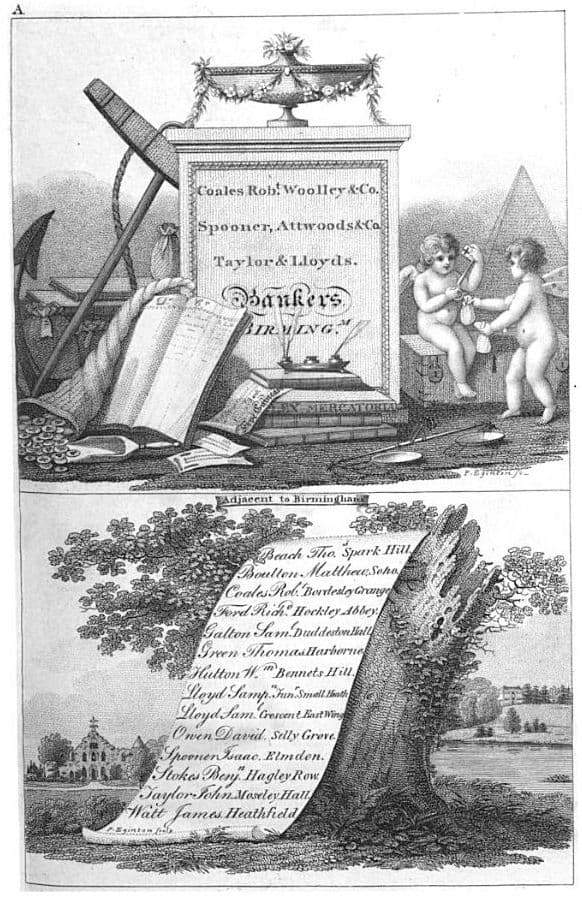
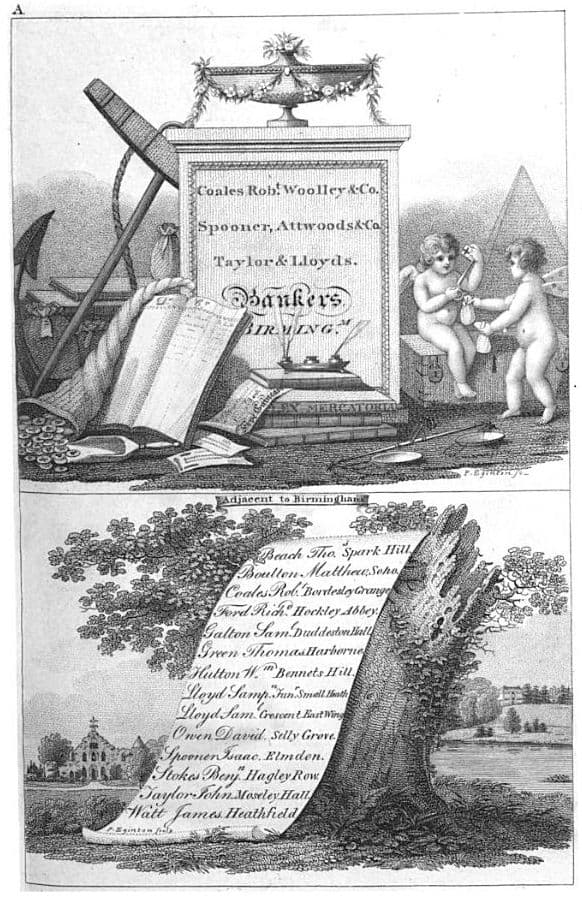
John Phillp drew it from across Hockley Pool in 1798. In 1800 James Bisset put it in his Poetic Survey round Birmingham, which described “A GOTHIC PILE, which seems some cent’ries old”, and in his Magnificent Directory, where a small view of Ford’s Hockley Abbey shares a plate with Boulton’s house at Soho. The grounds had walks and a grotto decorated with spar and shells.
Ford was more than a builder of follies. Pye says the Society of Arts awarded him its gold medal for an iron one-wheeled carriage.
Ivy and decay
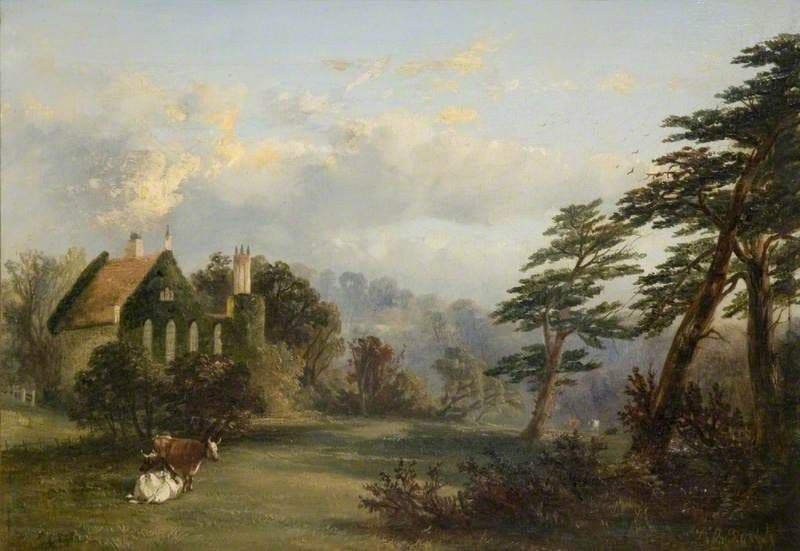
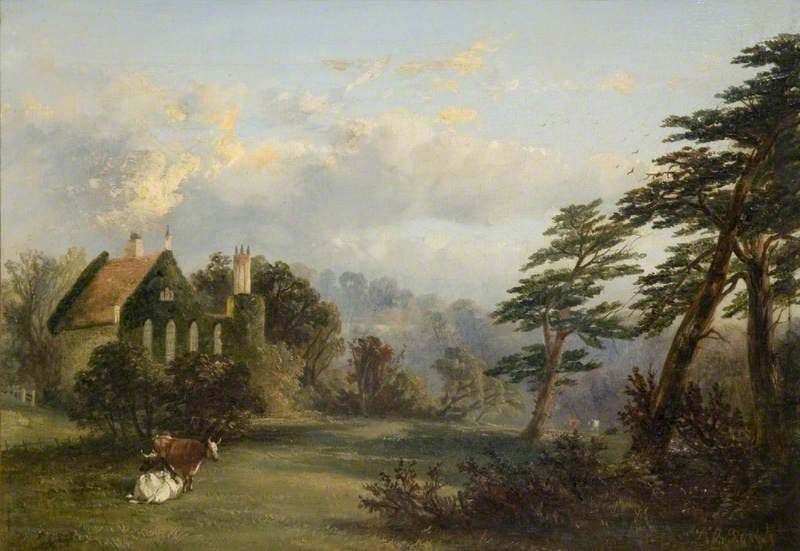
By 1816–17 the house was let to Hubert Galton, who paid over £100 a year for it with about 15 acres. The ivy now covered almost the whole building. Edward Orlando Bowley painted it in 1842: an ivy-clad house with a ruined Gothic arcade and a pinnacled turret, and cattle grazing in front. Pigott Smith’s survey of the early 1850s shows it, unlabelled, in landscaped grounds south of Soho Pool.
The same spot, then and now
1888–1913
Today
Old map: Ordnance Survey six-inch, reproduced with the permission of the National Library of Scotland (CC BY 4.0). Today: © OpenStreetMap contributors.
But the town was spreading towards it. In 1863 the estate was offered for sale as building land, and a photograph of 1868 shows the house dilapidated. By 1871 it had been demolished.
Built over
Ford Street, said to be named after the builder, and a court called Abbey Place were laid out over the site, with terraces and courts of houses. Across Ford Street, John Rabone & Sons, makers of rules, levels and measuring tapes, called their factory the Hockley Abbey Works and used the name as a trade name until the works closed in 2008.
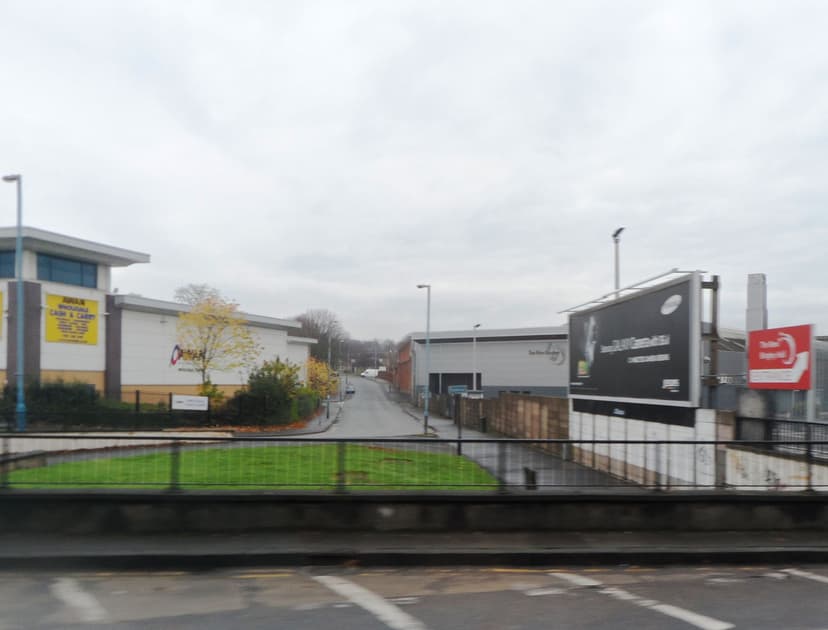
Today the site is industrial units just west of Ford Street, south of Whitmore Street. The sham abbey was built to look centuries old and lasted less than a hundred years. Its builder’s name is still on the street sign.
Why it mattered
Hockley Abbey was an early sham-ruin house: a Gothick folly built to be lived in, and made from industrial waste, the slag of a local furnace. It was one of the sights on the way to Boulton’s Soho, drawn by Phillp, engraved by Bisset and painted by Bowley. It shows a Birmingham manufacturer turning the waste of local industry into a romantic ruin on the edge of the town.
Why it disappeared
Estate sold and built over · Redevelopment
As Birmingham spread over Hockley, the estate was offered as building land in 1863. The house was dilapidated by 1868 and demolished by 1871, and Ford Street, Abbey Place and courts of houses were built over its grounds.
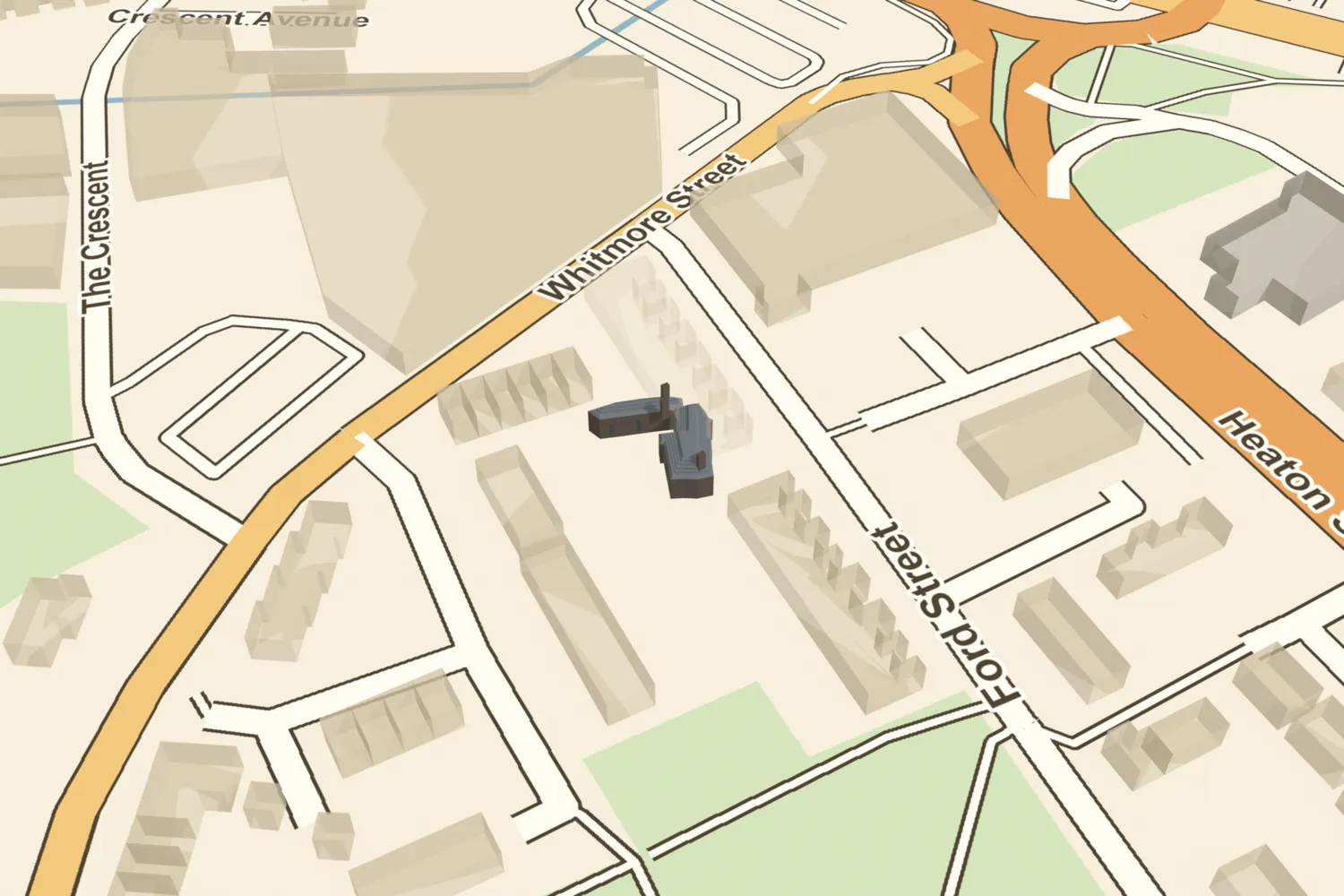
Hockley Abbey, on today’s streets
What’s there now
What replaced it
Ford Street, Abbey Place and courts of houses by the 1880s, with John Rabone & Sons’ Hockley Abbey Works across Ford Street. The site is now industrial units west of Ford Street.
What survives
Nothing above ground. The builder’s name survives in Ford Street, and Rabone’s Hockley Abbey Works on Whitmore Street carried the Abbey’s name until it closed in 2008.
Today
Walk down Ford Street from Whitmore Street, near Hockley Circus. The Abbey stood just west of Ford Street, among today’s industrial units. Soho Pool Way, to the north, crosses the bed of the pool it once overlooked.
Then and now
Then · 1842
Now · 24 November 2012
Today
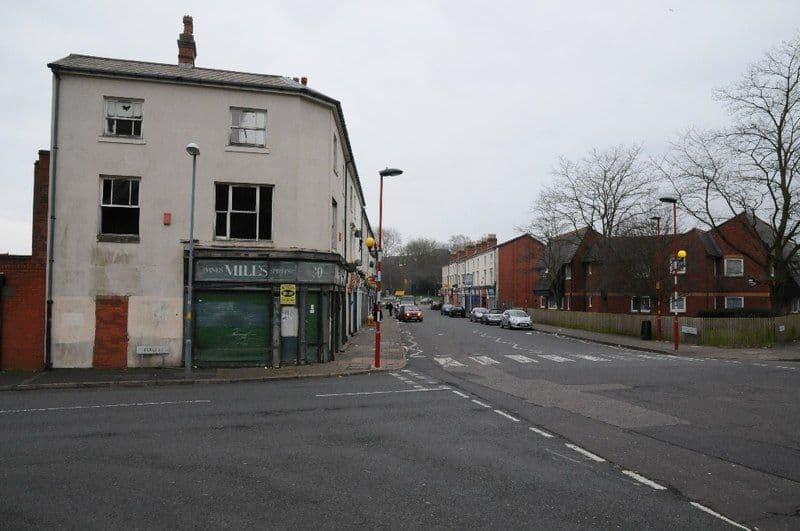
Derelict building on Ford Street, 14 March 2015Philip Halling, 14 March 2015. Geograph Britain and Ireland via Wikimedia Commons · CC BY-SA 2.0
Sources and further reading
The building date is c.1779–80 in Pye (who had it from Ford), Dent and the Birmingham Museums catalogue, but 1799 in Showell and Dargue. The demolition is not exactly dated: the house was dilapidated in an 1868 photograph and gone by 1871 (Dargue; Rabone’s move to Hockley Abbey in 1871). The 1863 sale and the 1868 photograph are reported by a secondary blog without full references. The house is unlabelled on the 1855 plan and is identified by its position overlooking the pool, with Ford Street and Abbey Place later laid over it. Rabone’s Hockley Abbey Works stood about 70 metres north-east, across Ford Street, not on the house site. That Ford Street is named after Richard Ford comes from a local-history forum. No dimensions or heights are recorded.
- A Description of Modern Birmingham — Charles Pye, 1818–19. Ford’s account: slag, 1473, cost, gold medal; Galton tenancy; road tour
- Showell’s Dictionary of Birmingham — Thomas T. Harman and Walter Showell, Cornish Brothers, Birmingham, 1885. ‘Hockley Abbey’: thick walls, overlooking Boulton’s Pool; rates 1816–17
- Old and New Birmingham: a history of the town and its people — Robert K. Dent, Houghton and Hammond, Birmingham, 1880. probably about 1780; engraving after Bisset
- An Historical and Descriptive Sketch of Birmingham — Beilby, Knott and Beilby (publishers), 1830
- A Poetic Survey round Birmingham, with a Magnificent Directory — James Bisset, Swinney & Hawkins for the author, Birmingham, 1800. verse and plate A
- Hockley Abbey, Birmingham, West Midlands — The Folly Flâneuse, 2026. Bisset’s verse; 1863 sale; 1868 photograph
- Hockley — A History of Birmingham Places & Placenames from A to Y — William Dargue, 2020. demolished by 1871
- John Rabone and Sons — Grace’s Guide. moved to Hockley Abbey 1871
- View of Hockley Pool, Birmingham Heath and part of Birmingham (John Phillp, 1798) — Birmingham Museums Trust (Birmingham Images), 1798. Ref. Birmingham Museums Trust 2003.0031.34
- Plan of the Borough of Birmingham (Pigott Smith), 1855 — J. Pigott Smith, National Library of Scotland (online), 1855. house in its grounds south of Soho Pool
- Ordnance Survey 1:500 town plan of Birmingham, 1887–88, georeferenced — National Library of Scotland, 1888. Ford Street and Abbey Place over the site
- OpenStreetMap data (Overpass and Nominatim), central Birmingham — OpenStreetMap contributors, 2026
Archive references: Birmingham Museums Trust 1997V166 (E. O. Bowley, 1842); Birmingham Museums Trust 2003.0031.34 (John Phillp, 1798)
Comments
Comments will load here.