
What was here?
Before Tyburn Road, the ground near Abbotts Road and Erdington Hall Road held Erdington Hall: the double-moated manor house of the de Erdington family, rebuilt in the 1650s or 1660s as a three-storey brick house with Dutch gables.
History
For three centuries the lords of Erdington lived inside water. Their manor house stood on what the antiquary William Dugdale, writing in 1656, called “a strong moated place”, ringed by a double moat.
The de Erdingtons
The de Erdington family held the manor from about 1166 to 1467. The records of Aston parish show their standing.
Early in the thirteenth century Thomas de Erdington had a private chapel in his manor house. That led to a dispute with the Rector of Aston, and the Victoria County History records the settlement. The chaplain was to hand over offerings to the mother church. Thomas and his wife were to attend Aston church on feast days. And every year, on the feast of St Peter and St Paul, they were to offer two wax candles weighing three pounds.
The family kept their chapel. In 1309 Henry de Erdington guaranteed 60 shillings a year for a priest to serve it. In 1449 Sir Thomas Erdington was licensed to found a chantry in the south aisle of Aston church, and the family’s effigies still lie there.
A new hall
The medieval house did not survive into modern times. The Victoria County History says a new hall was “built on or near the site of the old manor-house probably in the 1650s or 1660s by John Jennens or by his son, Humphrey”. It describes “a brick building with stone dressings and Dutch gables, having three stories and attics”.
After the Jennens family came Sir Lister Holte of Aston Hall, and later a series of tenants. In 1880–81 the local antiquary Everitt noted a bridge over the former moat.
The road
Erdington Hall was still lived in in 1908. Four years later it was gone. The Victoria County History says it was “demolished in 1912”. The Birmingham Historic Environment Record says it was “demolished in 1912 during the construction of a road”: Tyburn Road, which now runs past the site near Abbotts Road and Erdington Hall Road. One account says a fragment lingered until about the First World War.
What is left
Today there are “no visible remains”, in the words of the Historic Environment Record. There is no moat to see, and no stones.
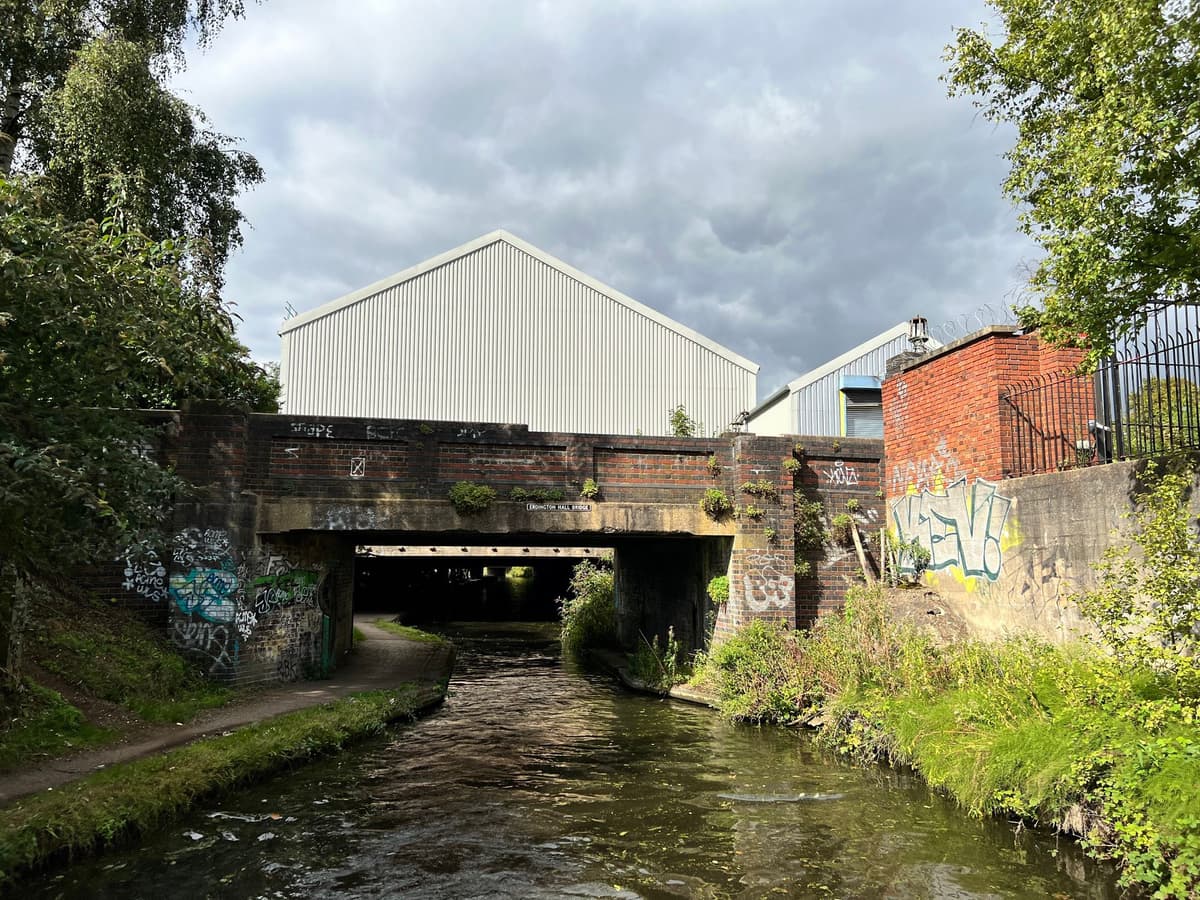
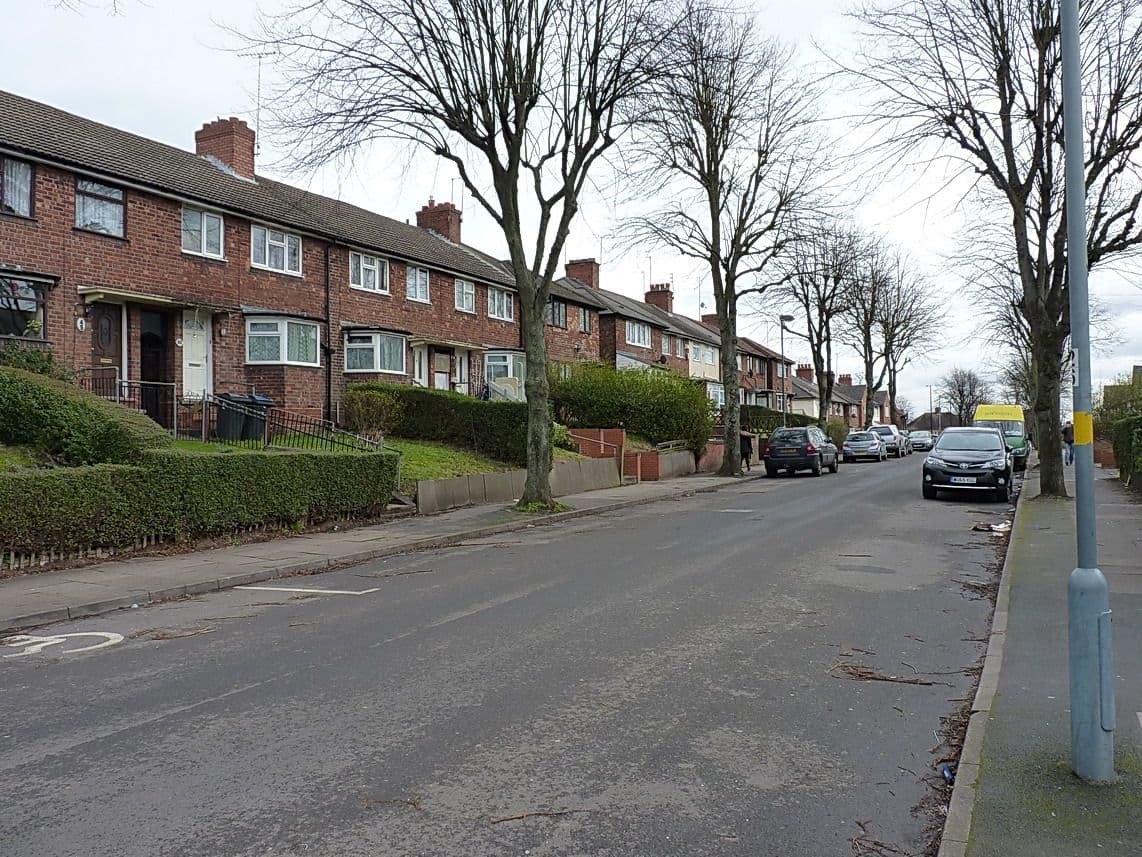
What survives is the name. Erdington Hall Road runs nearby, and Erdington Hall Bridge carries a crossing over the Birmingham and Fazeley Canal. To find the de Erdingtons themselves, go to Aston parish church. In its Erdington chapel lie the effigies of Thomas de Erdington, who died in the 1430s, and his wife. They have outlasted the house by more than a century.
That is the strange inheritance of Erdington Hall. A family that once argued with the Rector of Aston over two candles is now better remembered in his church than in the place they ruled.
Why it mattered
Erdington Hall was the seat of the manor that gave Erdington its name and its lords, the de Erdingtons, from the twelfth to the fifteenth century. Its successor house was one of the 17th-century gentry houses of the Aston area. Its demolition in 1912 for Tyburn Road is an early case of a historic house in north Birmingham giving way to a new road.
Why it disappeared
Road building
The hall was “demolished in 1912” (Victoria County History), “during the construction of a road” (Birmingham Historic Environment Record, via the Gatehouse Gazetteer): Tyburn Road.
Erdington Hall, on today’s streets
What’s there now
What replaced it
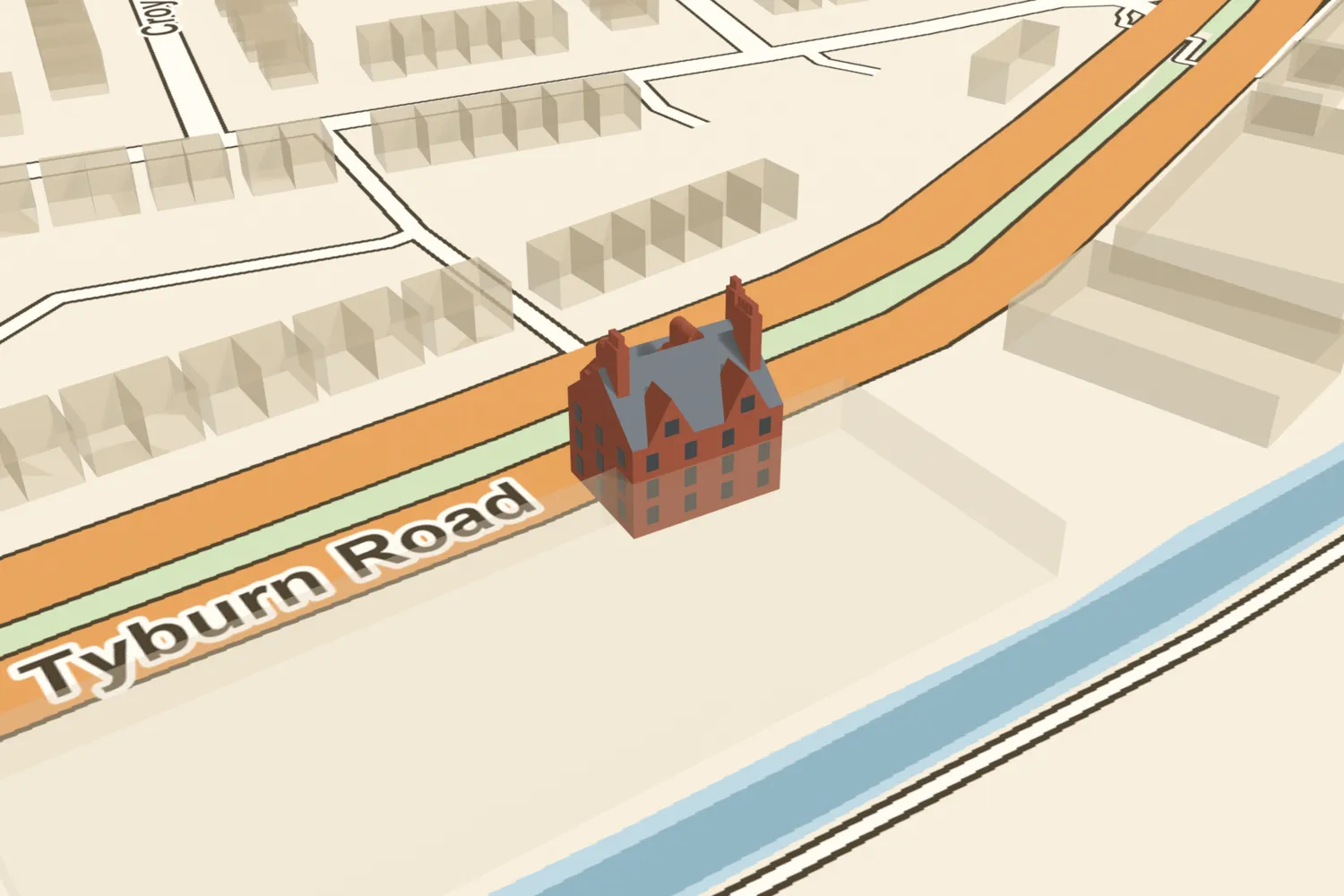
Tyburn Road, near Abbotts Road and Erdington Hall Road.
What survives
No visible remains (Historic Environment Record). The name survives in Erdington Hall Road and Erdington Hall Bridge over the Birmingham and Fazeley Canal. Effigies of the de Erdington family survive in the Erdington chapel of Aston parish church.
Today
Tyburn Road runs across the area of the site, near its junction with Abbotts Road. Erdington Hall Road and Erdington Hall Bridge are close by.
Then and now
Then · 15 September 2022
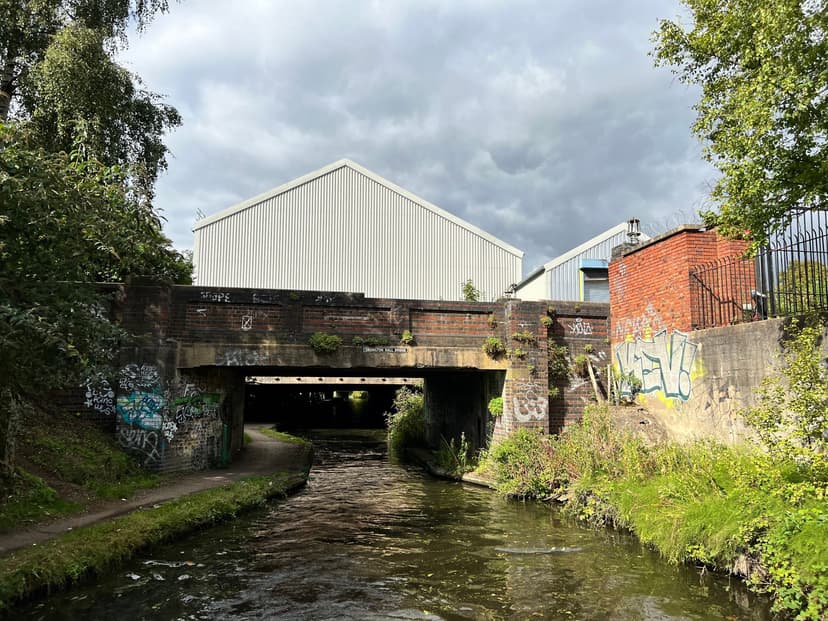
Now · 15 September 2022
Today
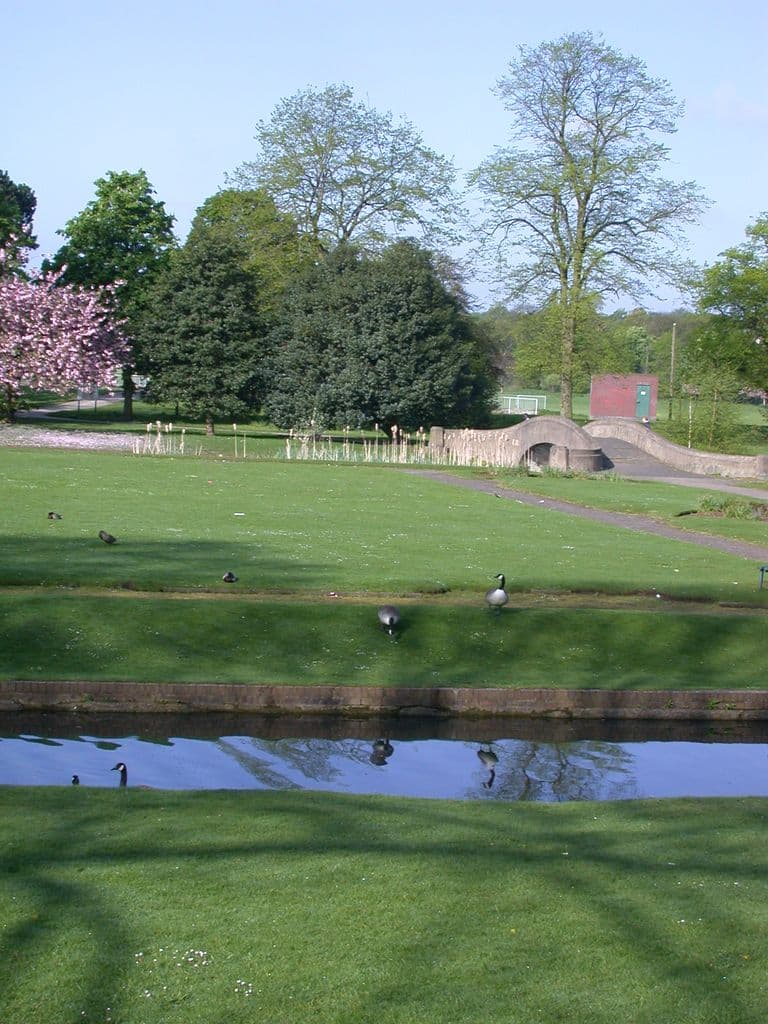
Erdington Hall Road, 28 February 2017Richard Law, 28 February 2017. Geograph via Wikimedia Commons · CC BY-SA 2.0
Key dates
- c. probably 1650s or 1660s — Erdington Hall rebuiltA new brick hall with stone dressings and Dutch gables is built on or near the old moated manor house, probably by John Jennens or his son Humphrey.
- 1912 — Erdington Hall demolishedErdington Hall is demolished during the construction of Tyburn Road.
Sources and further reading
Thomas de Erdington’s death is given as 1434 by the Victoria County History and 1433 by Historic England’s list entry for Aston church; the text says “the 1430s”.
The purpose of Tyburn Road, often said to have been built to serve industrial east Birmingham, has not been checked and is not stated.
The survival of a fragment until about the First World War is reported by the Gatehouse Gazetteer as a lead only.
No open-licence image of the hall has been found. An engraving in Alfred Davidson’s History of the Holtes of Aston (1854) is a lead.
- A History of the County of Warwick, vol. 7: The City of Birmingham — Manors, pp. 58–72 — W. B. Stephens (ed.), Victoria County History, 1964. pp. 58–72
- Erdington Hall — Gatehouse Gazetteer
- A History of the County of Warwick, vol. 7: The City of Birmingham — Religious History: Churches built before 1800, pp. 361–379 — W. B. Stephens (ed.), Victoria County History, 1964. Aston parish church, pp. 361–379
- Anglican Church of SS Peter and Paul, Aston — National Heritage List for England entry 1290008 — Historic England
- Erdington — History of Birmingham Places & Placenames A to Y — Bill Dargue
Archive references: Birmingham Historic Environment Record MBM837
Comments
Comments will load here.