
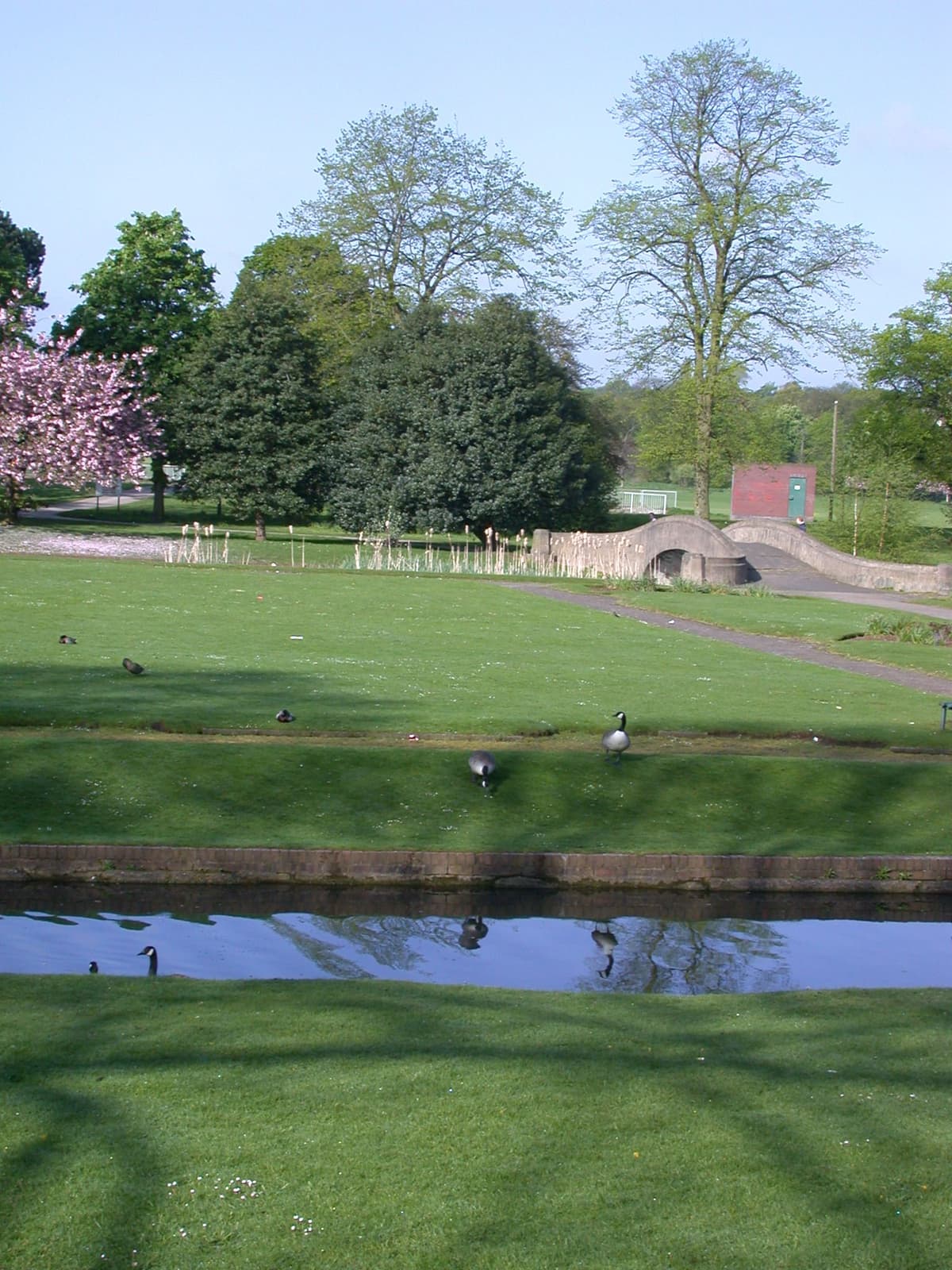
What was here?
Before Perry Hall Park and the playing fields, this ground held Perry Hall, the moated house of the Gough family and the centre of an estate whose farms covered much of what is now Kingstanding. The water-filled moat, with its central island, is still there.
History
If you live in Kingstanding, there is a fair chance your house stands on land that was once run from here.
The Goughs of Perry Hall
Perry Hall was a moated house in Perry Barr. The moat is old enough to have been recorded in 1908 in the Victoria County History of Staffordshire, in its survey of ancient earthworks; Perry Barr was then in Staffordshire.
The hall belonged to the Gough family, later the Gough-Calthorpes and Lords Calthorpe. Their deeds, now in the Library of Birmingham (MS 3145), include a bargain and sale of 1658 for the “messuage called Perry Hall”. The family is usually said to have held it from 1669.
The same spot, then and now
1888–1913
Today
Old map: Ordnance Survey six-inch, reproduced with the permission of the National Library of Scotland (CC BY 4.0). Today: © OpenStreetMap contributors.
What did it look like? A painting by Thomas Bardwell, View of Perry Hall, near Birmingham, made about 1720–30 and now owned by Birmingham Museums Trust, depicts the hall. Around 1900 the photographer Philip Whitehouse photographed the hall for the Warwickshire Photographic Survey; that print is in the Library of Birmingham (WK-P3-12).
An estate that became a suburb
Perry Hall mattered most for what it owned. The Gough and Calthorpe Perry Hall estate held most of the farms that later became the Kingstanding, Kettlehouse and Warren Farm council estates. The Gough deeds include papers on Kettle House Farm and Perry Barr Common, and the 1811 Act that enclosed Perry Barr Common, Perry Warren and Kingstanding Warren.
That world ended in the 1920s. In 1921 the Perry Hall estate went to auction, handled by Fox and Sons; Warren Farm was photographed for the sale catalogue. A second sale followed in 1923. In 1928 Perry Barr was brought into the city of Birmingham, and in 1928–29 compulsory purchase orders took the farms for council housing. The files survive at The National Archives.
The end of the hall
The house did not outlast its estate. The Library of Birmingham’s own catalogue says simply: “Perry Hall was demolished in the late 1920s.” Other accounts give years from 1927 to 1931. The grounds became public open space: Perry Hall Park and Perry Hall Playing Fields, surrounded by inter-war housing.
The moat
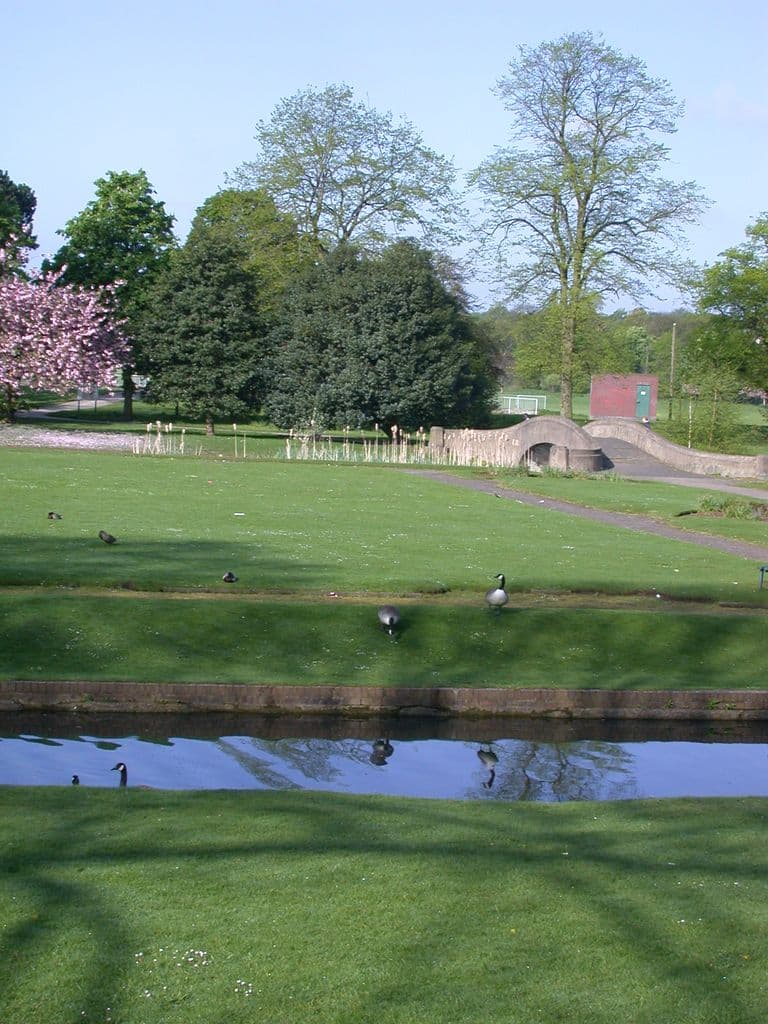
One thing outlived the house. The moat is still there, water-filled, around a central platform where the hall stood. It has been altered over the years and is not a scheduled monument, but it is the clearest trace of the Goughs’ home, now in a public park.
Nearby, the Grade II-listed Church of St John the Evangelist, Perry Barr, and its gates are linked with the Gough family.
Why it belongs here
Perry Hall is the missing link between Birmingham’s lost country houses and the Kingstanding estates that replaced their farms. The family that owned it shaped the map of north Birmingham long before the council builders arrived. When the estate was broken up and the hall pulled down, a landscape of farms, warrens and commons became a suburb.
Stand by the moat in Perry Hall Park and you are standing at the old centre of that world.
Why it mattered
Perry Hall was the centre of the Gough and Calthorpe Perry Hall estate, which owned most of the farms that became the Kingstanding, Kettlehouse and Warren Farm council estates. The 1921 and 1923 sales and the compulsory purchases of 1928–29 broke it up. That makes the hall, and its surviving moat, the link between north Birmingham’s landed past and the council suburbs that replaced it.
Why it disappeared
Estate sold and built over
The Perry Hall estate was sold off in 1921 and 1923, Perry Barr came into Birmingham in 1928, and the land passed into public hands for housing and open space. The Library of Birmingham records that the hall “was demolished in the late 1920s”.
Perry Hall, on today’s streets
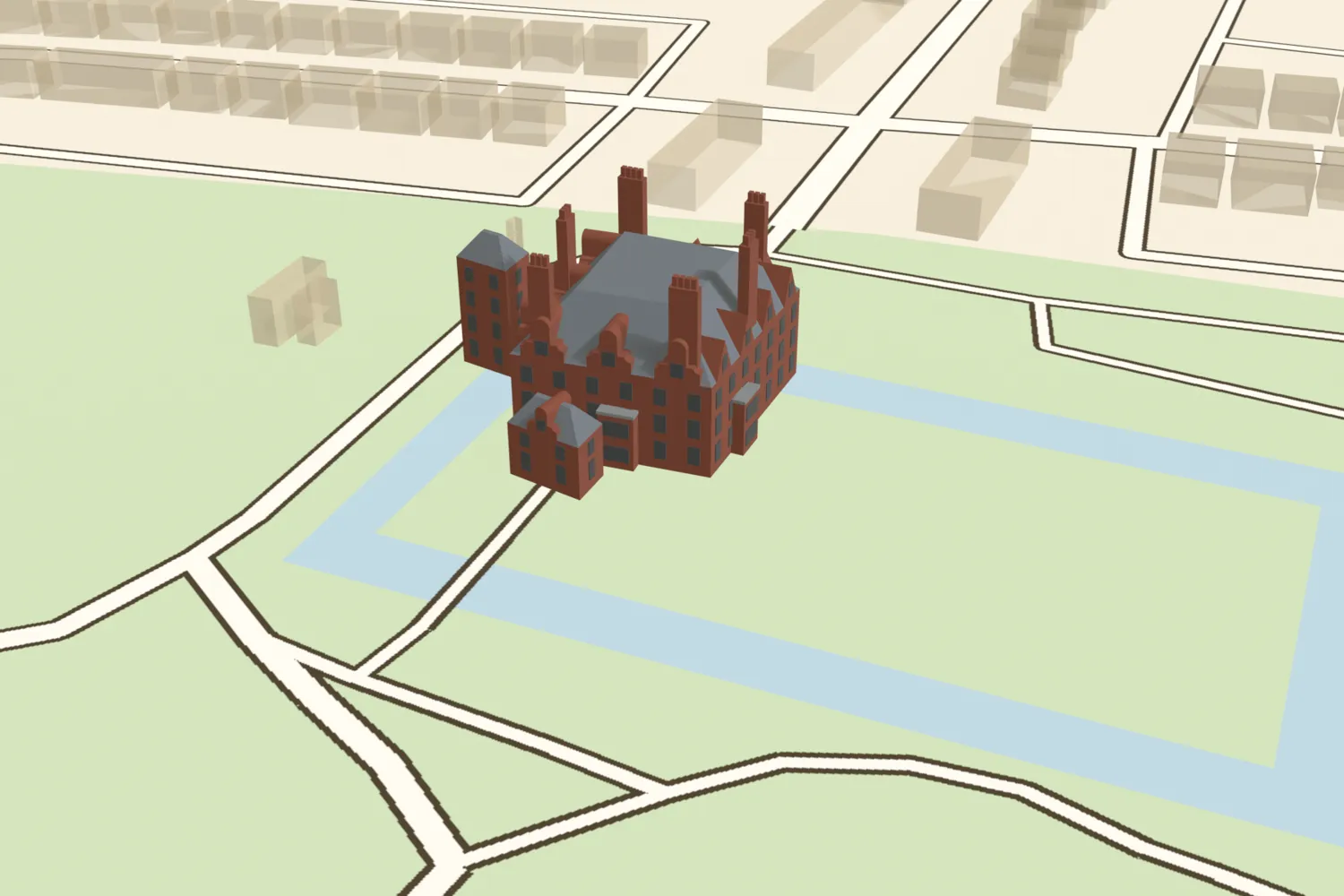
What’s there now
What replaced it
Perry Hall Park and Perry Hall Playing Fields (public open space), surrounded by inter-war housing.
What survives
The moat, water-filled with a central platform, in Perry Hall Park (not scheduled). The Gough of Perry Hall deeds (Library of Birmingham MS 3145). Thomas Bardwell’s painting of about 1720–30 (Birmingham Museums Trust) and Philip Whitehouse’s photograph of about 1900 (Library of Birmingham WK-P3-12). The Grade II Church of St John the Evangelist, Perry Barr (NHLE 1075658), and its gates (NHLE 1343383) are nearby.
Today
The moat survives as a water-filled feature in Perry Hall Park, beside Perry Hall Playing Fields in Perry Barr.
Then and now
Then · 2 May 2005
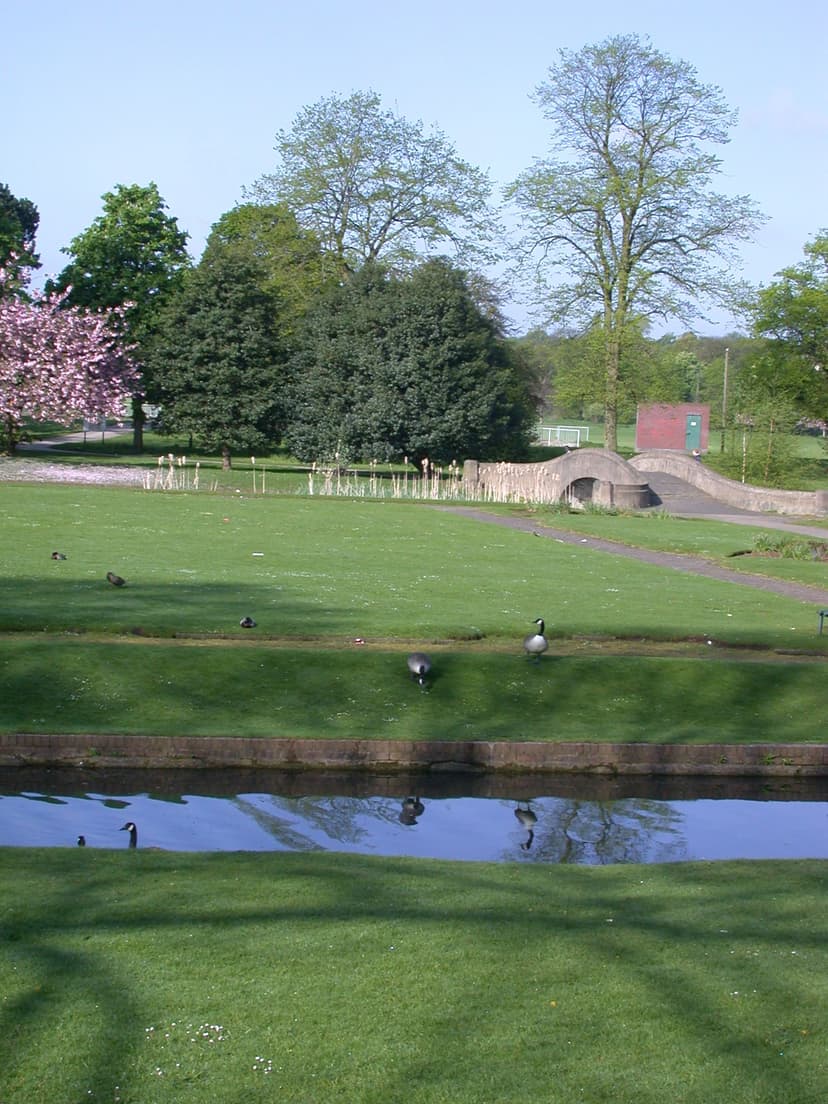
Now · 2 May 2005
Key dates
- c. late 1920s — Perry Hall demolishedAfter the sale of the Perry Hall estate in 1921 and 1923, the Goughs’ moated hall is demolished. Its grounds become Perry Hall Park; the moat survives.
Sources and further reading
Demolition date: the Library of Birmingham says the late 1920s. Other dates in circulation are 1927 (Wikipedia), 1928 and 1929 (Birmingham History Forum) and c.1930–31 (secondary). The text uses the Library’s wording.
A building date of 1576, reportedly over the door, and Sir William Stanford as builder come from Bill Dargue’s gazetteer and forum posts only and are not used. The Goughs’ ownership from 1669 rests on Wikipedia and forum posts; the 1658 deed in MS 3145 is confirmed.
The sale of the estate to Birmingham Corporation in 1929 with about 500 acres for housing is reported by Wikipedia and forum posts and is not stated as fact. A forum claim that the Corporation chose to save Aston Hall rather than Perry Hall for reasons of cost is unverified and left out. Residents’ memories of the moat as a boating pool, and of its reshaping in the 1930s, come from forum posts.
The Gough connection of St John’s Church, Perry Barr, is noted but its details have not been researched here. Whether Philip Whitehouse’s photograph (WK-P3-12) is out of copyright depends on his death date, which has not been found; it is not reproduced.
- Perry Hall (Library archive collections directory, WK-P3-12) — Birmingham City Council / Library of Birmingham. Ref. WK-P3-12
- A History of the County of Stafford, vol. 1 — Ancient Earthworks — William Page (ed.), Victoria County History, 1908
- Gough of Perry Hall deeds and papers (MS 3145) — Library of Birmingham. Ref. MS 3145
- Compulsory purchase files for the Kingstanding area, 1928–29 (HLG 49/959, HLG 49/960, HLG 50/223–224) — The National Archives. Ref. HLG 49/959; HLG 49/960; HLG 50/223–224
- Thomas Bardwell (1704–1767) — artist record, including View of Perry Hall, near Birmingham — Art UK
Archive references: Library of Birmingham MS 3145 (Gough of Perry Hall deeds); Library of Birmingham (Warwickshire Photographic Survey) WK-P3-12; Birmingham Museums Trust 1920P674 (Thomas Bardwell, View of Perry Hall); The National Archives HLG 49/959, HLG 49/960, HLG 50/223–224; Library of Birmingham WK/K10/70 (Warren Farm, photographed for the 1921 Perry Hall sale)
Comments
Comments will load here.